

A one-way ticket to Canada can be completely reasonable in the right situation. Maybe you are visiting family and the return date depends on school holidays. Maybe you are traveling onward to the United States. Maybe you are waiting for a conference schedule, a family event date, or a final approval before choosing the return flight. The problem is not the one-way ticket by itself. The problem is arriving with no defensible exit plan.
This guide explains when a missing return ticket actually becomes a problem, why airlines may ask before Canada border officers see you, when one-way travel is defensible, what to show instead of a return ticket, and how to decide whether to fly now, reserve onward travel, buy a flexible return, or fix the file before departure.
In This Guide
- When a missing return ticket becomes a problem
- Why airlines may stop you before Canada border officers
- When a one-way ticket is reasonable
- What to show instead of a return ticket
- Border questions that matter most
- Travel profiles with higher risk
- Decision framework before you leave
- Canada one-way ticket pre-flight checklist
- Common mistakes without a return ticket
- FAQ
When a Missing Return Ticket Actually Becomes a Problem for Canada Entry
The clean answer is that Canada does not evaluate visitors only by asking whether they hold a return ticket. The bigger question is temporary intent. Can you show that your visit has a purpose, a realistic length, enough money, and a credible reason to leave Canada when your authorized stay ends?
A return ticket is one easy way to support that story. It gives the officer and airline staff a clear date. But it is not the only evidence. A visitor may have an onward ticket, a flexible reservation, a work restart date, school obligations, family responsibilities, an invitation with fixed dates, or evidence of travel onward to another country.
Why “Not Required” and “Not Risky” Are Two Different Things
Travelers often ask the question in the wrong form: “Is a return ticket required?” The practical question is better: “Can I defend my exit plan without one?” Those are not the same question.
Being technically able to board or apply without a return ticket does not mean the missing ticket creates no risk. It shifts the burden onto other documents and your answers. If the rest of your file is strong, the one-way ticket may be explainable. If the rest of your file is thin, the missing return date can make the trip feel open-ended.
That distinction matters most for temporary visitors. IRCC says visitors must satisfy an officer that they will leave Canada at the end of the stay. A return ticket is just one way to support that. Without it, your ties and timeline need to work harder.
The Three Moments Where Your Exit Plan Gets Judged
Your exit plan can be judged at three separate points:
- Visa or eTA stage, where the application must show temporary intent.
- Airline check-in, where staff decide whether your documents appear sufficient for travel.
- Canada port of entry, where the border services officer decides whether you may enter and for how long.
These checkpoints are connected but not identical. A visitor visa does not guarantee entry. An eTA does not guarantee entry. A return ticket does not guarantee entry either. The officer still decides based on the full situation at arrival.
How Canada Interprets Temporary Intent When Your Return Date Is Unclear
Temporary intent means your stay has a reasonable end. That end can be shown through travel, obligations, funds, ties and purpose. If the return date is unclear, the officer may look more closely at why you are coming, who you are visiting, how long you plan to stay, who pays, and what brings you back home.
A vague answer such as “I will see after arrival” is weak by itself. It may be honest, but it does not give the officer a clear boundary. A better answer names a planned window, a reason for that window, and supporting evidence. For example: “I plan to stay three weeks for my sister’s graduation, then return before my approved leave ends.”
The missing return ticket is less concerning when the rest of the answer is structured. It becomes more concerning when every part of the trip is flexible, unfunded or unsupported.
Situations Where Travelers Commonly Arrive Without Return Travel
Many honest travelers arrive without a fixed return ticket. That does not automatically make the trip suspicious. It simply means the explanation must be credible.
Common examples include:
- Visitors leaving Canada for the United States or another destination.
- Family visitors whose exact return date depends on a family event.
- Business visitors waiting for a meeting schedule.
- Tourists on a multi-country North America trip.
- Travelers using points, open-jaw tickets or separate bookings.
- Students or workers entering with the correct permit and separate travel plan.
The safe version has evidence. The risky version has only an open-ended promise.
Why the Missing Ticket Becomes Louder When the Rest of the File Is Quiet
A missing return ticket is rarely judged alone. It becomes louder when other parts of the file are quiet. If there is no hotel booking, no clear host address, no leave letter, no strong bank balance, no onward itinerary and no obvious home ties, the one-way ticket starts to carry too much weight. It becomes the visible symbol of an undefined trip.
The opposite is also true. If the traveler has a strong invitation, clear visit dates, enough funds, a job letter, family obligations and a temporary onward reservation, the missing paid return ticket becomes less dramatic. The officer can still see a temporary plan.
Think of the return ticket as one piece of a temporary-intent puzzle. If the puzzle has many other strong pieces, one missing piece may be explainable. If the puzzle is mostly empty, that missing piece becomes the first thing everyone notices.
Return Ticket vs Onward Ticket vs Proof of Exit
These phrases are often used interchangeably online, but they are not identical. A return ticket usually takes you back to your origin or home country. An onward ticket takes you from Canada to another country. Proof of exit is the broader category: any credible evidence that you will leave Canada when required.
For example, a traveler flying Mumbai to Toronto and then Toronto to New York has onward proof, not a classic return ticket. A traveler flying Delhi to Vancouver and later Seattle to Delhi has a regional exit plan, but the Canadian exit segment needs to be clear. A traveler staying with relatives and leaving by a later separate booking may need a temporary reservation to make the plan visible.
The best document depends on the route. Do not force a round-trip ticket if the real plan is onward travel. Do not show only a later flight from the United States if nobody can see how you leave Canada. Make the first exit from Canada easy to understand.
Why Airlines May Stop You Before Canada Border Officers Ever See You
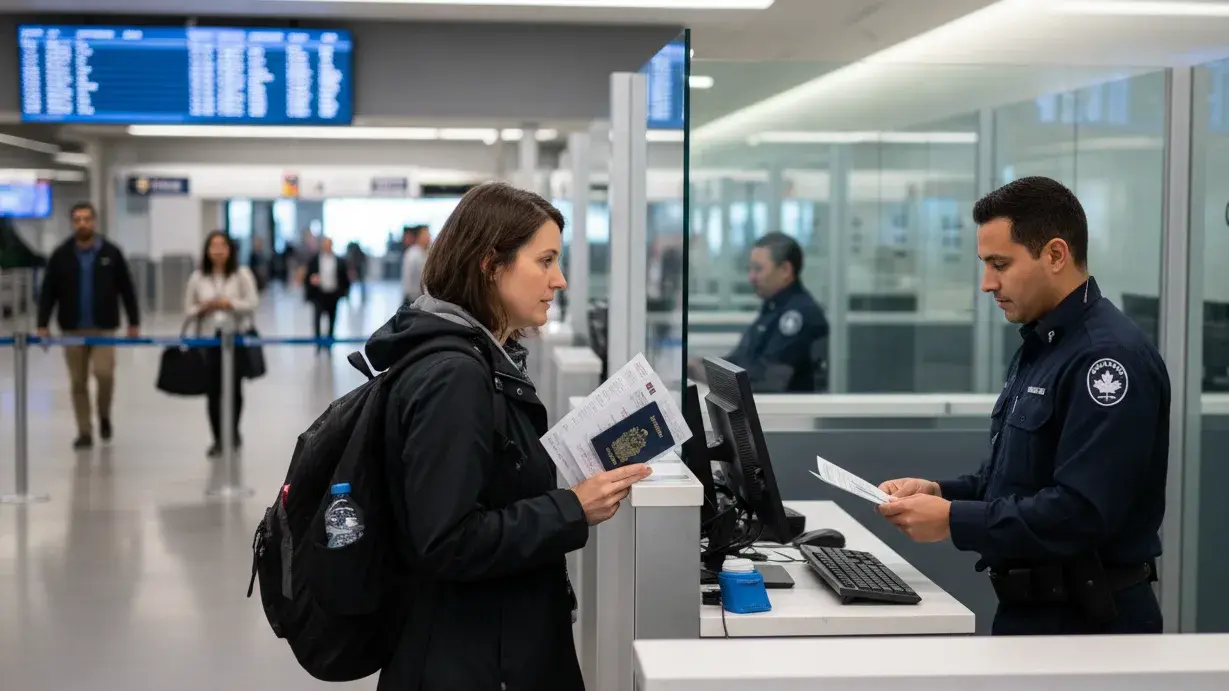
Many travelers focus entirely on the Canada border interview and forget the airline counter. In practice, the airline may be the first gatekeeper. If staff believe your documents are incomplete, they may ask for a return or onward booking before boarding.
The Boarding Counter Is Often Stricter Than the Border in Practice
Airline staff work under time pressure. They are not there to analyze every nuance of Canadian immigration law. They need to decide whether you appear document-ready. A one-way booking can trigger a simple question: “Where is your return or onward ticket?”
The staff member may ask because:
- Your ticket is one-way.
- Your visa or eTA does not show how long you will stay.
- Your travel purpose sounds flexible.
- Your documents are incomplete or hard to read.
- Your destination or transit routing requires clearer proof.
Sometimes the airline asks even when a return ticket is not listed as a universal legal requirement. This is why “I read online that Canada does not require it” may not calm the counter. The staff want a document they can understand quickly.
How Check-In Agents Read a One-Way Booking to Canada
A one-way booking does not tell the whole story. To a traveler, it may mean flexibility. To a check-in agent, it may mean uncertainty. If the rest of the file answers the uncertainty, the conversation stays easy. If not, the agent may ask for more proof.
They may look at:
- Visitor visa, eTA or permit status.
- Passport validity.
- Purpose of travel.
- Accommodation or host details.
- Length of intended stay.
- Funds and onward plan if visible.
You do not need to give a speech. You need a clean answer and a document that supports it.
Documents That Calm Airline Concerns Faster Than Long Explanations
If you travel without a return ticket, prepare a compact proof-of-exit file. It should not be a messy folder full of unrelated papers. It should answer the practical question: “How do you plan to leave Canada?”
Useful documents include:
- Onward or temporary flight reservation.
- Flexible return reservation.
- Invitation letter with visit dates.
- Hotel booking or host address.
- Employer leave approval with return-to-work date.
- School calendar or class restart date.
- Evidence of onward travel to the United States or another country.
A verifiable dummy ticket for visa can be the middle-ground document when you need exit proof but do not want to buy the final return fare before plans are stable.
When the Airline Is More Likely to Ask Extra Questions
Airline questions become more likely when the one-way ticket is combined with other weak signals. The risk is rarely one single factor. It is the pattern.
Higher-risk patterns include:
- One-way ticket plus vague purpose.
- One-way ticket plus no accommodation address.
- One-way ticket plus very long intended stay.
- One-way ticket plus limited funds.
- One-way ticket plus unclear permit or visa status.
- One-way ticket plus “I will figure it out later” answers.
Any one of these may be explainable. Several together create avoidable stress.
Low-Cost, Separate-Ticket and Transit Situations
Airline risk rises when your trip is stitched together with separate tickets. If one airline only sees your one-way ticket to Canada, it may not see the later onward segment booked elsewhere. If the onward segment is on another airline, another account or another email, you need to have it ready.
This is common with travelers who:
- Use points for one leg and cash for another.
- Book India-to-Canada separately from Canada-to-US travel.
- Plan to enter Canada and later leave from a US airport.
- Use low-cost regional airlines for onward travel.
- Split tickets to save money or manage baggage rules.
Separate tickets are not wrong. But the traveler needs to bridge the information gap. Carry the onward proof, not just the first flight. If your onward plan is still flexible, a temporary reservation can show the missing exit leg until the final ticket is safe to buy.
Why Airline Staff Prefer Documents Over Verbal Plans
An airline employee at check-in may be handling a long queue, baggage issues, document checks and boarding deadlines. A verbal explanation is harder to evaluate than a document. A reservation with your name, date and route gives the staff something concrete to review.
This is why a calm traveler with prepared documents usually has a smoother experience than a traveler with a long explanation. If the staff asks for return proof, show the reservation. If they ask how long you will stay, answer with the same date range shown in the document. If the route is onward to another country, show that segment clearly.
The less the staff has to infer, the lower the friction.
Why “I’ll Book My Return Later” Is Usually Too Weak Alone
“I’ll book later” is not a plan. It is a possibility. It may be true, but it gives the airline or officer nothing concrete to evaluate. A better approach is to show a departure window and explain why the final ticket is not purchased yet.
For example, a flexible family visit can still have a structure: “I will stay about four weeks, and I have funds for the stay and return. I am keeping the final return flexible because my host’s medical appointment date may shift.” That answer becomes stronger if you also carry a temporary return reservation or onward booking.
When a One-Way Ticket to Canada Is Reasonable and When It Looks Reckless
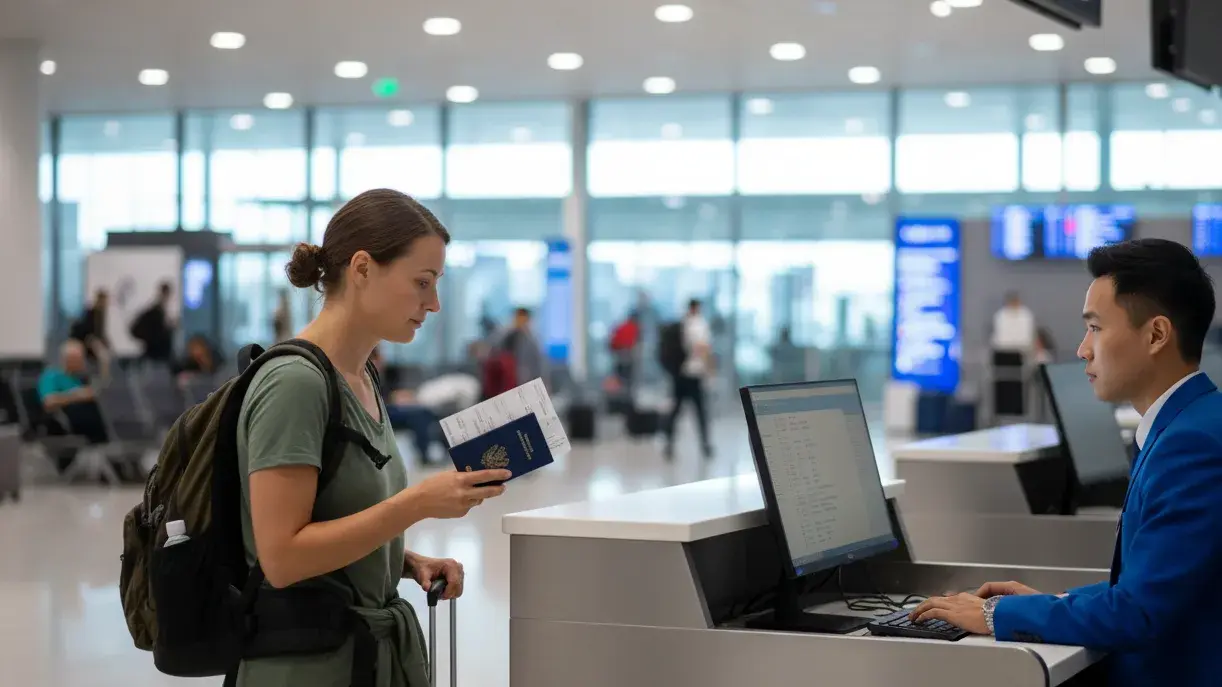
A one-way ticket can be reasonable. It can also be reckless. The difference is whether the traveler has a credible exit structure. Canada’s visitor rules do not require every visitor to show the same document. They require the officer to be satisfied that the traveler meets the requirements.
The Difference Between Flexible Travel and Poor Travel Planning
Flexible travel has reasons. Poor planning has gaps. A flexible traveler can explain the departure window, funding, host, accommodation and return ties. A poorly prepared traveler only says the plan will be decided later.
Flexible travel sounds like:
- “I will visit family for three to four weeks, then return before work resumes.”
- “I will attend meetings in Toronto and may continue to New York afterward.”
- “I am waiting for the conference agenda before buying the return flight.”
- “I have a temporary onward reservation and will finalize after arrival.”
Poor planning sounds like:
- “I do not know how long I will stay.”
- “Maybe I will work if I find something.”
- “My friend will decide later.”
- “I have no return plan yet.”
Visitor Scenarios That Can Sometimes Support a One-Way Arrival
Some visitor scenarios naturally support one-way travel. The key is documentation.
Examples include:
- Family visit with flexible return but clear leave approval.
- Tourism followed by onward travel to the United States.
- Cruise or overland itinerary leaving Canada by another route.
- Business meetings with schedule not finalized at ticket purchase time.
- Visitors using miles or separate bookings for the return leg.
In these cases, the one-way ticket is not the problem. The lack of proof is the problem. Carrying a temporary onward reservation can close that gap.
Cases Where a Return or Onward Reservation Is the Smarter Move
A return or onward reservation is the smarter move when your file already has uncertainty. It is not about fear. It is about removing an easy objection.
Use a reservation when:
- You are a first-time visitor to Canada.
- You have a long planned stay.
- You are staying with friends or relatives and have few hotel records.
- Your work or study ties are not obvious from documents.
- You are traveling on a newly issued visa or eTA with limited travel history.
- Your return depends on a flexible family or event timeline.
A dummy ticket gives the trip a visible boundary without forcing a final fare purchase. If your plans firm up later, you can buy the real ticket that actually fits.
Why Open-Ended Family Visits Raise More Questions
Family visits are emotionally normal but document-sensitive. A traveler may genuinely want to stay until a family event, health matter or school holiday settles. But to an officer, “I will stay with relatives until we decide” can sound indefinite.
Make family visits more defensible by carrying:
- Invitation letter with approximate visit dates.
- Host address and contact details.
- Proof of your employment, school or family obligations at home.
- Proof of funds for your own stay and return.
- Temporary return or onward reservation if the final date is flexible.
This does not make the trip fake. It makes the temporary nature clear.
Visitor Scenarios Where a One-Way Ticket Can Be Defensible
A one-way ticket can be defensible when it reflects the real trip structure. For example, a traveler may enter Canada for a family wedding and then continue to the United States for business meetings before returning home. Another traveler may arrive in Vancouver, take an Alaska cruise, and leave from a different country or port. A parent may accompany a student to Canada, help with settling in, and return after the move-in date is confirmed.
These scenarios work when the evidence is organized:
- The invitation or event date explains the visit.
- The onward leg explains the exit from Canada.
- The funds support the full stay.
- The traveler’s home ties explain why the trip is temporary.
- The documents do not imply unauthorized work or open-ended stay.
The one-way ticket is not the issue. The absence of a visible ending is the issue.
When a One-Way Ticket Starts Looking Reckless
A one-way ticket starts looking reckless when it is paired with language that suggests uncertainty about the purpose of travel. Phrases like “I might look for opportunities,” “I will see how long I can stay,” or “my friend will help me decide” can weaken a visitor profile. Canada visitors must stay within the conditions of their authorization. If the purpose sounds open-ended or work-oriented, the missing return ticket becomes more sensitive.
It also looks reckless when the traveler cannot show funds for the return. If you have not bought a return ticket and also cannot show enough money to buy one later, the officer may question whether you can leave when required. This is why proof of funds is not just about daily spending. It also supports your ability to exit.
A temporary reservation cannot fix a trip that is not actually temporary. It can only make a genuine temporary plan clearer.
The Cost of Being Technically Right but Practically Unprepared
You may be technically correct that a return ticket is not an absolute universal rule. But if an airline agent refuses boarding until you show onward proof, being technically right will not feel very useful. The practical outcome is what matters.
Preparation protects you from airport panic, expensive last-minute purchases and weak answers. A return or onward reservation is not always mandatory, but it is often the easiest way to make a flexible plan look organized.
What to Show Instead of a Return Ticket if Your Canadian Plans Are Flexible
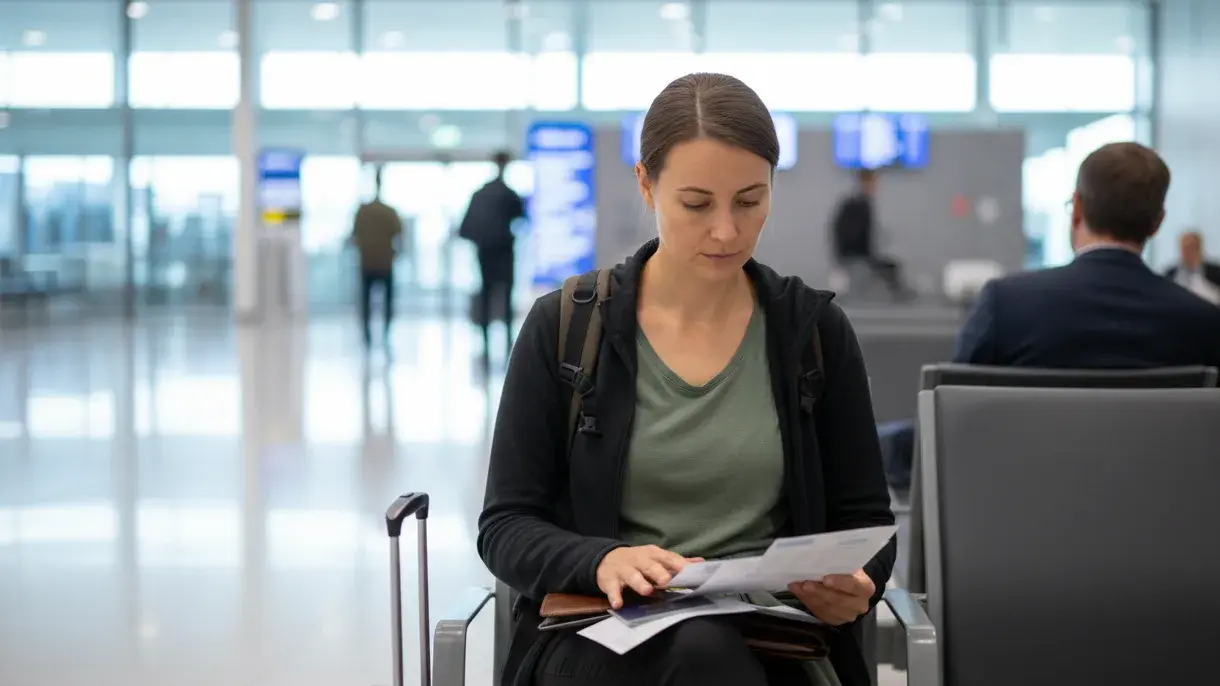
If you do not have a return ticket, do not rely on one replacement document alone. Build a proof-of-exit file. That file should show the trip has a purpose, a planned length, enough money, and a reason to leave.
Build a Proof-of-Exit File, Not Just a Backup Document
A strong proof-of-exit file includes several small pieces that reinforce one another. The flight reservation is useful, but it works best when paired with the reason for your stay and the reason you return.
Include what fits your situation:
- Temporary return or onward flight reservation.
- Invitation or event letter with dates.
- Hotel booking or host address.
- Leave approval or employer letter.
- School enrollment or semester dates.
- Bank statements or proof of funds.
- Evidence of family, property, business or other home ties.
- Onward visa or ticket if continuing to another country.
The Strongest Alternatives to a Fixed Return Booking
| Alternative | What it proves | Weakness |
|---|---|---|
| Verifiable dummy ticket | Shows intended exit date and route. | Must be current and consistent. |
| Fully flexible return ticket | Shows stronger travel commitment. | Higher cost and refund/change complexity. |
| Onward ticket to another country | Shows you leave Canada without returning home immediately. | Next country requirements must also be satisfied. |
| Employer or school return evidence | Shows reason to leave Canada. | Does not show transport by itself. |
| Host or invitation dates | Shows planned visit window. | Needs travel/funds evidence around it. |
How to Present a Flexible Departure Window Without Sounding Evasive
Flexible does not mean vague. You can give a window without pretending the date is final. For example, “I plan to stay around three weeks. My temporary return reservation is for May 20, and I will finalize the paid ticket after confirming my family schedule.” That answer is clearer than “I will book later.”
Your answer should include:
- Approximate stay length.
- Reason for the flexibility.
- Proof you can afford the stay and exit.
- Evidence of home ties or onward obligations.
- A current reservation if transport proof is requested.
A Smart Reservation Strategy if You Do Not Want to Buy a Full Return Yet
If the final return date is not stable, use a temporary reservation that matches the most likely exit window. Make it realistic. Do not pick a date outside the planned stay. Do not pick a route you cannot explain. Do not carry a reservation that expired weeks ago.
A good strategy looks like this:
- Define the intended length of stay.
- Choose a return or onward date inside that window.
- Create the temporary reservation close to travel or review.
- Match the date with host, hotel and funds evidence.
- Carry digital and printed copies.
- Buy the final ticket when the trip is confirmed.
If you need that proof document, you can create a dummy ticket booking with route and dates that match your Canada plan.
Weak Substitutes Travelers Overestimate
Some documents feel useful but do not answer the exit question clearly.
Weak substitutes include:
- Only a hotel booking with no departure plan.
- Only a bank balance with no stay length.
- Only a message from a friend saying you will leave later.
- Only a rough itinerary with no transport.
- Only a promise to buy a ticket after arrival.
These can support the file, but they are not replacements for a clear exit plan when someone specifically asks for one.
How a Dummy Ticket Fits Without Overpromising
A dummy ticket is useful because it gives a flexible visitor a transport document without forcing an early final purchase. But it should be described correctly. It is a temporary reservation or itinerary, not a boarding pass, not a guarantee of entry and not proof that Canada will admit the traveler.
The safest wording is simple: “This is my intended onward or return reservation.” If asked whether the final ticket is purchased, answer truthfully. Do not claim a temporary reservation is a paid ticket if it is not. The credibility comes from accurate details and consistency, not from exaggeration.
A good dummy ticket should match:
- Your passport name.
- Your intended Canada stay length.
- Your host, hotel or itinerary dates.
- Your leave approval or home obligation timeline.
- Your actual onward or return plan.
If you need the concept explained more broadly, the what is a dummy ticket guide breaks down the difference between a temporary reservation, PNR, issued ticket and fake document.
What Makes a Canada Proof-of-Exit Reservation Strong
A strong proof-of-exit reservation is boring in the best way. It shows a normal route, a plausible date and a passenger name that matches the passport. It does not try to impress anyone with a complicated itinerary. It simply answers the exit question.
For Canada visitors, strong proof usually has these qualities:
- Departure from a Canadian city that matches the visit route.
- Exit date within a reasonable visitor stay window.
- Destination that matches home return or onward travel story.
- No impossible transit or visa-problem route.
- No conflict with invitation, hotel or leave dates.
- Current reservation status during the travel or review moment.
If the document passes these checks, it helps. If it fails several, it may hurt.
The Border Questions That Matter Most When You Land Without a Return Ticket
The border conversation is not a debate. It is a short assessment. Officers are trying to decide whether your visit is temporary, funded and consistent with the documents you carry.
The Real Question Officers Are Trying to Answer
The officer is not simply asking, “Where is your return ticket?” The deeper question is: “Will this person leave Canada when required?” Every answer you give should help answer that question.
Useful evidence includes:
- Return or onward plan.
- Funds for stay and exit.
- Home-country ties.
- Visit purpose and duration.
- Host or hotel details.
- Compliance with visa, eTA or permit conditions.
“How Long Are You Staying?” Needs a Better Answer
Do not answer with uncertainty if you can avoid it. “Maybe a few months” is weaker than “I plan to stay four weeks for tourism and family visits, then leave before my work resumes.” The second answer gives a boundary.
If the date is flexible, say so clearly but within a range. A temporary return reservation can support that range. It shows you have thought about the exit even if the final ticket is not purchased.
“Who Is Paying for Your Trip?” Can Expose a Weak Exit Plan
Funds and return proof are connected. If you do not have a return ticket, the officer may care more about whether you can afford to leave. A traveler with strong funds, stable employment and a return plan looks different from a traveler with limited funds and no exit booking.
Carry evidence that fits the length of stay. A long stay with thin funds can create more concern than a short stay with a clear budget.
“What Ties You Back Home?” Becomes More Important Without a Return Booking
IRCC specifically mentions ties such as a job, home, financial assets or family. Without a return ticket, those ties become more important because they help explain why you will leave Canada.
Examples of ties include:
- Employment letter or approved leave.
- Business ownership documents.
- School enrollment or exam schedule.
- Family responsibilities.
- Property, lease or financial assets.
- Confirmed commitments after the trip.
How to Stay Truthful Without Over-Explaining
Answer the question asked. Do not volunteer a long, nervous story. If asked about your return, show the reservation or explain the planned departure window. If asked about funds, show funds. If asked about ties, show ties.
Truthful, short answers work better than a complicated explanation. The goal is to make your plan easy to understand.
Sample Answers That Sound Clear Instead of Evasive
Preparing a short answer helps because border questions can feel stressful. You are not memorizing a script; you are clarifying your own plan.
For a family visit:
- “I am visiting my sister in Toronto for about four weeks. My leave ends on June 28, and I have a temporary return reservation for that week.”
For tourism plus onward travel:
- “I will spend 10 days in Vancouver and Banff, then continue to Seattle. Here is my onward reservation.”
For flexible business meetings:
- “I have meetings in Toronto and Montreal over two weeks. I will finalize the return after the second meeting date is confirmed, and I have funds and a temporary return booking.”
For a parent accompanying a student:
- “I am helping my daughter settle in for school. I plan to stay about three weeks, then return home before my work resumes.”
Each answer gives purpose, length and exit logic. That is stronger than “I do not know yet.”
What Not to Say at the Counter
Avoid answers that make the trip sound indefinite or outside visitor rules. Do not say you might stay as long as possible, look for work, decide after arrival, or rely entirely on a host for money and exit. Even if you mean something harmless, the wording can create the wrong impression.
Replace vague phrases with structured ones:
- Instead of “I will stay as long as I can,” say “I plan to stay about three weeks.”
- Instead of “My cousin will decide,” say “I am visiting my cousin from July 2 to July 20.”
- Instead of “I will buy later,” say “I have a planned departure window and a temporary reservation.”
- Instead of “Maybe I will find work,” keep the purpose within your authorized visitor activity.
Travel Profiles That Face Higher Risk Without Return Proof
Some travelers can defend a one-way ticket more easily than others. The risk is not moral; it is documentary. If your profile already needs more explanation, skipping return proof makes the conversation harder.
First-Time International Travelers With One-Way Plans
A first-time traveler with a one-way ticket can still be genuine, but there is less travel history to support the pattern. Carry stronger proof of purpose, funds and return ties. A temporary return reservation can make the file more balanced.
Travelers Saying They Will “Figure It Out After Arrival”
This phrase creates unnecessary risk. It sounds like the trip has no boundary. Replace it with a planned window, a reason for flexibility and a support document.
Visitors Staying With Friends or Relatives
Staying with friends or relatives is normal, but it can look open-ended if there are no dates. Use an invitation letter with a visit window, host address, proof of relationship where relevant, and a return or onward plan.
People Mixing Tourism Language With Work-Oriented Intent
If you are visiting as a tourist, do not describe work-like plans unless you are authorized. Saying you might look for work, try opportunities or “see what happens” can damage temporary intent. A return plan becomes especially important if your answers drift toward work intent.
Travelers With Weak Paper Trails Despite Honest Intentions
Honest intent is not always visible. If your paperwork is thin, help the officer understand the trip. Carry a short itinerary, proof of funds, host details, ties and a planned exit. Do not rely on the officer guessing your sincerity.
Visitors With Long Stays but Short Explanations
A long stay is not automatically a problem. Canada allows many visitors to stay up to 6 months unless the officer authorizes a shorter or different period. But a long intended stay with a one-way ticket and a short explanation can feel unbalanced. The officer may ask how you will support yourself, what you will do, and why you will leave.
If you plan a long visit, prepare a stronger file:
- Detailed stay plan or city outline.
- Accommodation or host evidence for the whole period or a reasonable first stage.
- Proof of funds that matches the stay length.
- Home obligations after the trip.
- Temporary return or onward reservation if the final ticket is not bought.
Do not rely only on the fact that visitors may be allowed up to 6 months. The officer can decide a different authorized stay at entry. Your documents should support the stay you are requesting.
Super Visa, Study Permit and Work Permit Travelers
Not every Canada-bound traveler is a simple tourist. Parents and grandparents may travel under a super visa. Students may enter with a study permit. Workers may enter with a work permit. These categories change the document logic, but they do not remove the need to satisfy entry requirements.
A permit or visa is not the same as a travel ticket. IRCC guidance says work permits are not travel documents, and travelers still need a valid visa or eTA where required. A student or worker may reasonably travel one-way because the stay is longer, but the file should still show that the travel category is legitimate and that the person understands the conditions.
For these travelers, the “return ticket” question becomes category-specific:
- A student may show school start dates, permit documents, funds and a future travel plan rather than a short tourist return.
- A worker may show work authorization, employer documents and planned stay logic.
- A super visa traveler may have a much longer permitted family visit, but should carry the supporting documents used in the application.
- A visitor accompanying a student or worker should still show their own temporary purpose and exit plan.
Do not copy tourist-ticket advice blindly across categories. The core question remains temporary compliance, but the evidence changes.
Travelers With Previous Refusals or Border Issues
If you have a previous visa refusal, removal issue, overstay, denied boarding or complicated travel history, a one-way ticket can attract more attention. The officer may already need more reassurance. In that situation, arriving without a clear exit plan is usually not smart.
Prepare more carefully:
- Bring the current approval document and any explanation of past issues if relevant.
- Keep the purpose of travel narrow and consistent.
- Carry proof of funds and ties.
- Use a return or onward reservation that matches the intended stay.
- Avoid saying anything that suggests you may repeat a past compliance issue.
A dummy ticket will not erase a previous refusal or immigration record. It can only help show that the current trip has a clearer exit plan.
Digital Nomads and Remote Workers Visiting Canada
Remote-work language can be risky if it sounds like unauthorized work in Canada. Some travelers say “I work online, so I can stay as long as I want.” That is not the message you want to send as a temporary visitor. Even if your situation is lawful, the wording can make the trip sound open-ended.
If your visit is tourism or family-based, keep the purpose there. Show a reasonable stay length and a departure plan. If you need to discuss work, keep it factual and within the rules that apply to your status. A return or onward reservation can help prevent the trip from sounding indefinite.
Digital nomad profiles benefit from structure:
- Defined travel dates.
- Accommodation plan.
- Funds independent of Canadian employment.
- Onward or return plan.
- Evidence of obligations outside Canada.
How to Decide Whether to Travel Now, Reserve Onward Travel, or Rethink the Trip
Before leaving for the airport, run a practical decision test. This prevents the common mistake of being legally confident but practically unprepared.
The Four-Question Self-Test
- Can I explain my exact purpose of visit in one sentence?
- Can I explain how long I plan to stay?
- Can I show enough money for the stay and departure?
- Can I show why I will leave Canada at the end of the stay?
If you cannot answer these clearly, fix the file before travel. A missing return ticket may not be the only issue.
When Proceeding Without a Return Ticket Is Defensible
Proceeding without a return ticket is more defensible when you have a strong onward explanation, solid funds, clear ties, a realistic stay length and documents that support your plan. For example, a visitor traveling onward to the United States with proof of the next leg may not need a classic round-trip ticket.
When a Temporary Reservation Is the Most Rational Middle Ground
A temporary reservation is the middle ground when you have a genuine plan but not a final ticket. It is especially useful when dates may shift after arrival or after family, work or event details settle. It gives the travel file a boundary without locking you into the final fare.
When Buying a Fully Flexible Return Ticket Is Worth It
A fully flexible return ticket may be worth it if your trip is high-stakes, your dates are mostly fixed, your budget can handle the upfront cost, and you want the strongest transport proof. Read refund and change conditions carefully. “Flexible” does not always mean free or instant refund.
When the Smartest Move Is to Delay Travel
Delay travel if the story is too weak to defend. If you cannot explain purpose, funds, stay length or return ties, a dummy ticket alone will not solve the problem. Fix the underlying file first.
When to Reserve Onward Travel First
Reserve onward travel first when the only weak point is the missing exit document. If your purpose is clear, funds are adequate, host or hotel details are ready, and ties are easy to explain, then a temporary return or onward reservation may be the missing piece.
This is the most common middle-ground scenario. You are not trying to repair a weak file. You are simply making a flexible file easier to read. In that case, a verifiable dummy ticket is often more rational than buying a nonrefundable return ticket too early.
When to Buy the Real Return Ticket
Buy the real return ticket when the trip is fixed and the fare risk is acceptable. If your employer leave is approved for exact dates, your hotel is booked, your event is fixed, and your budget can handle the fare, the real return ticket may simplify everything.
This is especially true if the ticket is flexible or refundable and you understand the conditions. But do not assume “refundable” means instant or cost-free. Airline and OTA rules can include service fees, fare differences or refund delays. Read the conditions before treating the ticket as risk-free.
When to Rethink the Trip Entirely
Rethink the trip if your answers create more questions than confidence. If you cannot say where you will stay, how long you will stay, who pays, what you will do, or why you will leave, the return ticket is not the real issue. The travel plan itself is unfinished.
In that situation, the smartest move may be to delay travel until the file is coherent. Book accommodation, clarify the invitation, gather funds, confirm leave, and choose a realistic stay length. Then decide whether a dummy ticket, flexible return or final ticket fits the corrected plan.
Canada One-Way Ticket Pre-Flight Checklist
Before you leave for the airport, run the same check an airline counter or border officer may run mentally. The goal is not to carry a giant folder. The goal is to avoid being caught with no answer when the obvious questions come.
Identity and Entry Documents
- Passport valid for the trip.
- Visitor visa, eTA, study permit, work permit or other required document.
- Same passport used for the eTA or visa where applicable.
- Printed or offline digital copy of approval documents.
- Any supporting documents linked to a super visa, study or work category.
Purpose and Stay Documents
- Invitation letter or event confirmation if visiting someone or attending an event.
- Hotel booking or host address.
- Short itinerary for tourism.
- Business meeting schedule if visiting for meetings.
- School or family documents where relevant.
Exit and Return Documents
- Return ticket if already purchased.
- Onward ticket if continuing to another country.
- Temporary return reservation if final date is flexible.
- Funds available to buy the return ticket if not purchased.
- Home-country obligation that explains the departure window.
Funds and Ties
- Recent bank statement or financial proof.
- Employment letter or approved leave.
- Business ownership or client commitments.
- School enrollment, exam schedule or semester dates.
- Family responsibilities, property or lease evidence if relevant.
If you are missing several items from this checklist, do not expect a return ticket alone to fix the file. If most items are strong and only the return date is flexible, a dummy ticket can help close the gap.
How to Organize the File on Your Phone
Airport stress often comes from poor organization. Save documents offline, not only in cloud storage. Put the current versions in one folder and remove old conflicting versions. Rename files clearly so you do not open the wrong PDF at the counter.
A simple folder can include:
- Passport scan.
- Visa or eTA confirmation.
- One-way ticket to Canada.
- Return or onward reservation.
- Hotel or host details.
- Invitation or event letter.
- Funds and leave documents.
Carry a printed copy of the most important documents if your route is high-risk or your phone battery is unreliable. Printed proof is still useful at busy counters.
Common Mistakes Travelers Make Without a Return Ticket
The source article’s strongest practical value is its warning about being unprepared while technically right. These mistakes are the ones that create avoidable stress.
Mistake 1: Treating the Visa Expiry Date as the Stay Length
The expiry date on a visitor visa is not the same as permission to stay until that date. IRCC explains that the visa expiry date is the date by which you must arrive, while the authorized stay is decided at entry. Most visitors may stay up to 6 months, unless the officer sets another date.
If you build your return plan around the visa expiry date without understanding this, your itinerary may look unrealistic. Build the plan around the intended visit length and what the officer authorizes, not simply the sticker or approval expiry.
Mistake 2: Carrying a Return Reservation That Conflicts With the Story
A return reservation helps only when it supports the story. If your invitation says two weeks but your return reservation is five months later, that mismatch can raise questions. If your employer letter says you return to work on June 1 but your ticket leaves Canada on June 20, the proof hurts.
Always compare the ticket against the supporting documents before travel.
Mistake 3: Using a Fake or Edited PDF
A fake ticket is not the same as a dummy ticket. A genuine temporary reservation is created from truthful details. A fake or edited PDF pretends to be something it is not. If it cannot be explained or verified, it can damage credibility.
Use clean documents. Do not manually edit dates, names, PNRs or ticket numbers.
Mistake 4: Letting the Reservation Expire Before Travel
Temporary reservations can expire. That is normal. The mistake is showing an expired one as if it is current. If the reservation is likely to be checked at the airport, make sure it is active during the travel window.
If travel is delayed, refresh the reservation and update any matching documents.
Mistake 5: Overloading the Officer With Unrelated Documents
More paper is not always better. If you hand over a stack of unrelated documents, you may make the plan harder to understand. Keep the proof focused: purpose, stay, funds, ties and exit.
Have extra documents available, but lead with the few that answer the question.
Mistake 6: Saying Too Much About Future Possibilities
Visitors sometimes create trouble by talking about plans that are not part of the authorized visit. “Maybe I will study,” “maybe I will work,” or “maybe I will stay longer” can shift the conversation away from tourism or family visit and toward immigration intent. Stay truthful, but keep the answer focused on the approved or intended temporary purpose.
Mistake 7: Forgetting the Airline Has Its Own Practical Check
Even if you are confident about Canadian rules, the airline can still ask for proof before boarding. Prepare for both checks: airline counter and border officer. The same proof-of-exit file can help at both points.
Special Canada Scenarios Where the Return-Ticket Question Changes
Not every Canada traveler has the same return-ticket risk. The question changes depending on the document you hold, the reason for travel and the length of stay you are trying to explain. A short tourist visit, a parent visiting family, a student arriving for studies and a worker entering with a permit all need different exit logic.
The safest way to think about it is simple: the more permanent or long-term your Canada plan sounds, the more carefully your documents should show what legal status you are using and what happens after that status or trip purpose ends.
Tourists and Short Family Visitors
Tourists and short family visitors usually benefit most from a clear return or onward plan. Their purpose is temporary by nature, so the absence of a return ticket can look like an unfinished file unless the supporting documents are strong.
A strong tourist file usually shows hotel dates, a realistic itinerary, enough funds and a departure window. A strong family-visit file usually shows an invitation, host address, relationship context, trip length and ties back home. In both cases, a temporary return reservation can make the file easier to read if the final fare is not yet purchased.
Parents and Grandparents Visiting Family
Parents and grandparents often travel with flexible emotional plans: helping with a newborn, attending a family event, supporting relatives or staying for a longer visit. That flexibility is understandable, but it should still be framed clearly.
If the visit is open-ended, the traveler should avoid sounding as if Canada is becoming the new default home without a proper status plan. A better explanation gives a realistic visit length, host support, medical insurance if relevant, funds and a return window tied to obligations outside Canada.
For these travelers, the return proof does not need to look artificially rigid. But it should show that the traveler has thought about leaving Canada and can afford to do so.
Students Arriving for a Program
Students may not always hold a classic return ticket when entering Canada for a longer program. That can be reasonable, because the stay length is tied to study dates rather than a short vacation. But the student still needs a coherent entry file.
Important documents include the letter of acceptance, study permit approval where applicable, funds, accommodation details and a sensible explanation of the program timeline. If the student plans to visit home during breaks or after the program, that explanation can support temporary intent better than a vague “I will decide later.”
The mistake is trying to use a tourist-style one-way story for a study-purpose entry. If the real purpose is study, the documents should say study.
Workers With Canadian Work Authorization
Workers with valid Canadian work authorization may also have a different return-ticket pattern. A fixed return ticket may not make sense when the job contract or permit has a longer duration. But the traveler should still carry proof of the work authorization, employer details, contract or offer context, accommodation plan and funds for arrival.
IRCC also explains that a work or study permit is not a travel document by itself. Depending on nationality and situation, the traveler may still need a visa or eTA to travel to Canada. This matters because a traveler can be document-ready for work but still poorly prepared for airline or border questions.
Travelers Transiting Canada
Transit travelers are different again. The question is not whether they will return home from Canada, but whether they are genuinely passing through and have the documents needed for the next destination. In that case, onward travel is usually more important than a Canada return ticket.
The clean file shows the onward flight, destination entry permission if required, luggage and connection logic, and enough time to transit. If the traveler plans to leave the airport or stay overnight, the explanation should match the booking and the entry documents.
Visitors Planning a Side Trip to the United States
Some visitors enter Canada and plan to visit the United States before returning to Canada or going home. This can be normal, but it needs clean dates. The traveler should carry the U.S. entry document if required, the side-trip booking and a final exit plan from North America.
The weakness appears when the traveler says “I may go to the U.S.” but has no U.S. visa or ESTA where required, no onward booking and no clear final departure. That creates uncertainty rather than flexibility.
Visitors With an eTA Instead of a Visa
Travelers who need an eTA can still face the same practical questions. The eTA lets eligible travelers board a flight to Canada, but it does not remove the need to satisfy the officer at entry. A return or onward plan can still matter when the trip purpose is unclear.
If the traveler has a one-way ticket and only an eTA, the supporting file should be especially tidy: stay address, funds, purpose, duration and exit plan. The weaker the file, the more the missing return ticket becomes a visible gap.
How to Match Your Canada Exit Proof With the Rest of Your Documents
Most return-ticket problems are not caused by the missing ticket alone. They are caused by documents that do not agree with each other. The flight says one thing, the invitation says another, the hotel dates say a third thing and the traveler tries to explain the gap verbally at the counter.
Before departure, place every document on one calendar. This simple exercise catches contradictions faster than reading each PDF separately.
Match the Arrival Date
Your arrival date should make sense with your hotel, host letter or event schedule. If you arrive in Toronto on May 3 but your host letter says the visit starts May 10, the gap needs an explanation. If you arrive late at night, your first accommodation should not begin the following evening unless you can explain where you sleep.
Small timezone effects are normal. Large unexplained gaps are not.
Match the Departure Window
Your return or onward reservation should match the trip length you actually state. If you tell the officer you will stay three weeks, a reservation five months later creates doubt. If your invitation is for one month, a two-day return can also look strange unless there is a reason.
Choose a departure window that matches the story, not just the cheapest or easiest reservation.
Match Your Funds to the Stay Length
IRCC guidance asks visitors to show enough money for the stay and return. A longer stay needs stronger financial logic. If your funds support a two-week visit but your exit proof suggests a six-month stay, the documents are fighting each other.
The cleanest approach is to make the stay length, accommodation type and available funds feel proportional. A short visit with family support may need different proof than a long independent hotel stay.
Match Your Ties to the Return Date
Return proof is stronger when it connects to a real obligation. Work restart dates, school schedules, family obligations, property commitments or business responsibilities can explain why you leave. Without those anchors, a return reservation may look like a standalone document rather than part of a believable plan.
If you have a home-country obligation, let the exit date sit close to it. Do not create an itinerary that returns long after the document that supposedly pulls you home.
Match Names and Passport Details
The name on the reservation should match the passport and entry document. Middle-name formatting differences are common, but the record should map cleanly to the traveler’s identity. If you recently renewed your passport, use the current passport details across the visa, eTA, ticket, reservation and supporting documents.
Identity drift makes verification harder. It is an avoidable problem.
Make Your Canada Entry Plan Easy to Defend
You can enter Canada without a return ticket in some situations, but you should not enter without an exit plan. Canada’s visitor framework is built around temporary stay, funds, ties and officer discretion. A return ticket is one document in that story, not the whole story.
If your travel plan is flexible, prepare smarter proof. Use a verifiable onward reservation, invitation dates, funds, home ties and a clear explanation. If your dates are fixed, a flexible return ticket may be worth the cost. If your documents are weak, delay the trip and fix them.
Create a temporary onward or return reservation through DummyFlights.com and keep your Canada travel story clear before buying the final ticket.
FAQ: Entering Canada Without a Return Ticket
Can you enter Canada without a return ticket?
Sometimes, yes. Canada focuses on whether you meet entry requirements and will leave at the end of your stay. Without a return ticket, your exit plan and supporting documents need to be clearer.
Does Canada require visitors to show a return ticket?
IRCC guidance emphasizes convincing an officer that you will leave Canada, having enough money and showing ties. A return ticket can help, but it is not the only possible evidence.
Can an airline ask for a return or onward ticket to Canada?
Yes. Airlines may ask for proof of return or onward travel before boarding, especially when a traveler holds a one-way ticket or the exit plan is unclear.
Can I use a dummy ticket as proof of exit from Canada?
Yes, if it is a genuine temporary reservation with accurate details and dates that match your planned stay. Do not use fake or expired documents.
Does a visitor visa guarantee entry to Canada?
No. IRCC says a valid temporary resident visa is not a guarantee of entry. A border services officer decides at the port of entry.
How long can most visitors stay in Canada?
Most visitors can stay up to 6 months, but the border services officer may allow less or more and may stamp a specific leave date or issue a visitor record.
What should I show if I do not have a return ticket?
Show a proof-of-exit file: onward reservation, funds, host or hotel details, invitation dates, home ties, leave approval and a clear stay-length explanation.
Is a one-way ticket risky for a Canada visitor?
It can be risky if the rest of the file is vague. It is more defensible when you have a clear purpose, stay length, funds, ties and onward plan.
Is “I will book later” a good answer?
Not by itself. A better answer gives a planned departure window, reason for flexibility and evidence that you can and will leave.
Should family visitors to Canada carry return proof?
Often yes, especially if the visit length is flexible. An invitation letter, home ties, funds and a temporary return reservation can make the visit easier to explain.
Is a refundable return ticket better than a dummy ticket?
It can be better when dates are stable and you can afford the upfront cost. A dummy ticket is usually more flexible when you only need temporary proof.
What is the safest way to travel to Canada without a return ticket?
Carry a clear proof-of-exit file, stay truthful, match documents, show funds and ties, and use a current onward or temporary reservation if your return is not booked.