

An onward ticket can be useful for working holiday visa holders because a valid working holiday visa does not always stop airline staff from asking how you will leave the country later. The visa may allow flexible long-term travel, but the airline counter still has to decide whether your one-way booking, funds, insurance, visa conditions and onward proof look safe enough to board today.
Working holiday travelers are in a strange middle ground. They are not normal tourists with a fixed return date, but they are also not permanent residents. They may plan to work, travel, change cities, extend a stay, or leave to a nearby country later. That flexibility is the whole point of the visa — but it can make a one-way ticket look unfinished at check-in.
This guide explains when working holiday visa holders should prepare an onward ticket, when funds may be enough, and how to keep the airport conversation calm without buying final airfare too early.
The important point is simple: working holiday travel is flexible, but airport screening is not always flexible. A traveler may have a valid visa, a real plan, and enough money, yet still be asked to show a next destination because airline staff work from practical boarding rules. A clean onward ticket gives that conversation a visible answer.
Key facts for working holiday travelers:
- A working holiday visa can allow flexible travel, but airlines may still ask for onward proof.
- Some official schemes accept either a ticket to leave or enough money to buy one.
- A one-way ticket creates more check-in questions when the exit plan is vague.
- An onward ticket should match the traveler’s realistic regional plan, not a fake holiday script.
- Fresh, clean onward proof is strongest when airline staff may be the first checkpoint.
Entering on a working holiday visa with a one-way ticket? Create clean onward proof with DummyFlights before the airline counter turns flexibility into stress.
In This Guide
- Official-source check
- Why a working holiday visa does not end the airline conversation
- What check-in staff usually want to see
- How to choose the right onward ticket strategy
- Country patterns working holiday travelers should understand
- When to create onward proof
- Details that make onward proof credible
- How to handle the check-in conversation
- Common mistakes
- FAQ
Official-source check: working holiday rules often recognize flexible travel, but still require funds or exit capacity. Australia’s Work and Holiday visa guidance says applicants usually need evidence of AUD5,000 and enough money to buy a ticket to leave Australia, or already have the ticket. Immigration New Zealand says working holiday travelers need a return ticket or enough money to buy one, and New Zealand scheme pages may ask for evidence of travel arrangements to leave. Canada IEC guidance says participants need money for their return flight, and border officers may ask for financial proof. IATA traveler guidance also notes that correct documents do not guarantee entry and airlines may apply guidelines. That is why an onward ticket can be smart even when a one-way working holiday trip is legally possible.
Why a Valid Working Holiday Visa Still Does Not End the Airline Conversation
A working holiday visa gives permission to enter under a specific program, but the airline counter still has a different job. Airline staff are not planning your year abroad. They are deciding whether your documents look boardable in the next few minutes.
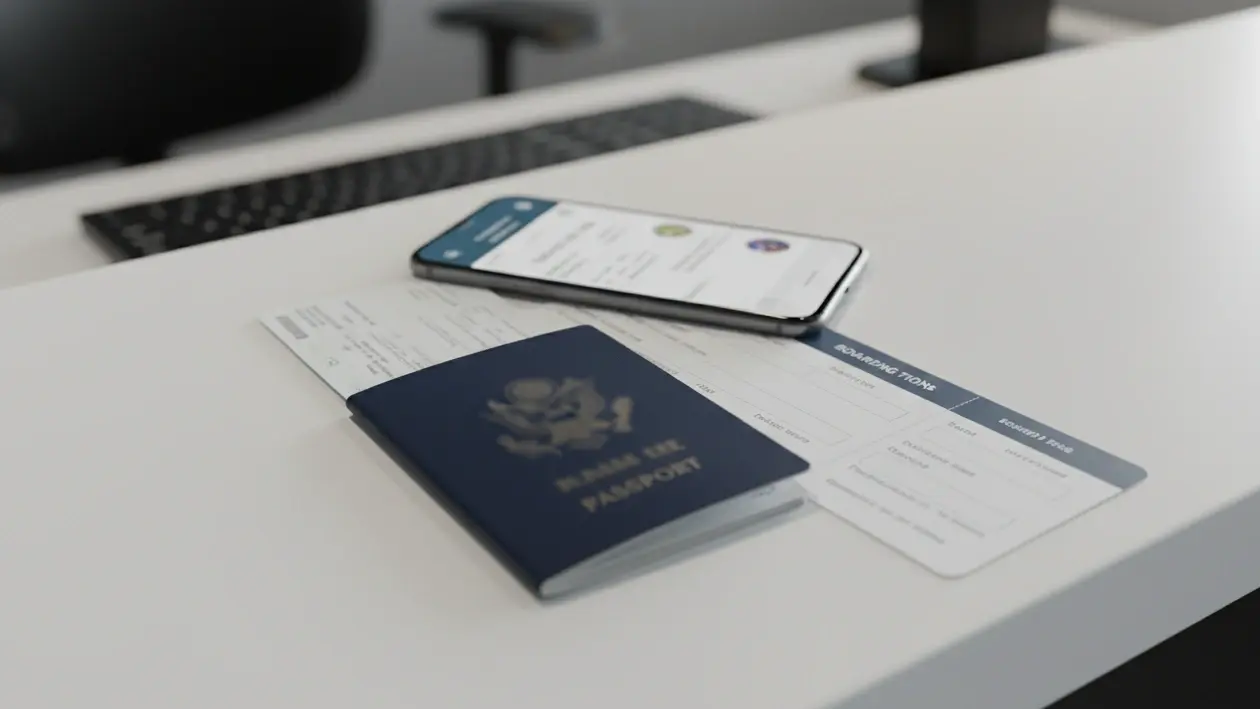
The Airline Is Judging Boarding Risk, Not Your Whole Life Plan
Working holiday travelers often say, “But my visa allows me to enter one way.” That may be true for the destination. But the airline staff member may still ask for proof that the traveler has a credible way to leave later, or enough funds to buy that ticket if required.
This is not always a legal debate. It is often a practical document check. The staff member sees a one-way ticket, a young traveler, a long-stay visa, and an open-ended plan. The onward ticket helps close the uncertainty.
That is why “I have a working holiday visa” and “I am easy to board today” are not identical statements. The visa explains why you are allowed to travel. The onward ticket explains what happens after arrival if the airline or border officer wants evidence that your stay is temporary or financially manageable.
Allowed to Enter and Easy to Board Are Not the Same Thing
A traveler can be eligible under a working holiday program and still face extra questions at check-in. The airline may not want to interpret every rule nuance under time pressure. If the route, funds and onward proof are clear, the interaction becomes easier.
That is the real value of a clean onward ticket: it makes the traveler’s exit capacity visible before the counter becomes tense.
Working Holiday Visas Create an Undefined-Itinerary Profile
The entire working holiday model is flexible. Travelers may arrive in Sydney, work in Melbourne, leave to Bali, return to Australia, change employers, move cities, or extend the journey. That flexibility is normal, but it does not fit a simple tourist pattern.
Because the itinerary is undefined, the onward ticket should be simple. It should not pretend the traveler has every month planned. It should show a realistic exit pathway if one is requested.
Why This Issue Shows Up Globally
Working holiday rules differ by country, nationality and program. But the airport pattern is similar: one-way booking plus flexible long-stay travel can trigger questions. The solution is not memorizing forum opinions. The solution is preparing proof that answers the likely check.
For example, a traveler entering Australia on a working holiday plan may not know whether they will stay in Sydney, Brisbane, Perth or Melbourne after the first few weeks. A traveler entering New Zealand may plan seasonal work and regional travel. A traveler entering Canada under IEC may not know the final province or return month. All of those plans can be genuine, but they still need a clean document story at the first checkpoint.
A good onward ticket does not erase the flexibility. It protects it. It lets the traveler keep the long-term plan open while still showing that the first trip is not careless, undocumented or impossible to exit.
What Check-In Staff Usually Want to See From a One-Way Working Holiday Traveler
Staff are often looking for a credible exit pathway, not a perfect life plan. They do not need to know every hostel, job or road trip. They need to see that the traveler is not arriving with no onward capacity at all.

A Believable Onward Ticket Answers Three Questions
A strong onward ticket answers three silent questions:
- Where can this traveler go after the working holiday destination?
- Does the exit date make sense for the visa or travel pattern?
- Does the route look like something a real working holiday traveler would use?
If those answers are clear, the document has done its job.
The Format Matters
A messy screenshot, fake-looking PDF or unsupported booking can create more questions than it solves. An onward ticket should look clean, current and readable. Passenger name, route, date and booking details should be easy to scan.
Airline staff do not reward decorative design. They reward clarity.
Document anatomy: a working holiday onward ticket should make the passenger name, route, onward destination, travel date and booking reference easy to understand at a glance. The best document is not the loudest PDF. It is the one that makes the exit plan obvious without forcing staff to interpret messy details.
Your Explanation and Reservation Must Match
If you say you plan to travel around Southeast Asia after your working holiday, an onward ticket to a nearby regional destination can make sense. If you say you plan to return home after six months but the onward ticket shows a random nearby exit in two weeks, the story may feel weak.
The document should support your real pattern, not force you into a script.
Funds Still Matter
An onward ticket is not a replacement for every other requirement. If the destination expects working holiday travelers to show enough money, carry proof of funds too. The strongest file usually combines the visa, passport, insurance if required, funds proof and onward ticket into one consistent story.
This matters because some working holiday rules allow either a ticket to leave or enough money to buy one. But airline staff may still ask to see the exit plan. If you have both clean funds proof and onward proof, the conversation is usually easier.
How to Choose the Right Onward Ticket Strategy When Plans Are Still Fluid
Working holiday travelers usually do not know their exact exit date. That is normal. The goal is to choose onward proof that is flexible enough for reality but specific enough for the checkpoint.

A Fixed Onward Ticket Works Best When the Exit Window Is Known
If you already know your likely exit date — for example a pre-planned regional trip, a return home for a wedding, or a fixed end to insurance coverage — a fixed onward ticket can look clean and credible.
The exit does not always have to be home. For many working holiday travelers, a regional onward destination is more realistic than pretending the whole year is already fixed.
This is especially useful when you already know the next milestone. Maybe your insurance period ends after three months. Maybe you have a family event in another country. Maybe you plan to meet friends in a nearby destination. In those cases, the onward ticket can reflect a real next step instead of a random placeholder.
A Short-Term Onward Reservation Can Be Smarter Than a Long-Range Guess
If the long-term plan is genuinely open, a short-term onward reservation can be cleaner than guessing a far-future departure. The document should still make sense: date, route and destination should not look random.
The point is to show exit capacity, not to invent a rigid life plan.
Short-term onward proof can also work when the first stage of the trip is clear but the later stage is not. For example, if you know you are entering New Zealand first and then exploring Australia later, onward proof to Australia may be more believable than a far-future return home date that you cannot explain.
Regional Exit Planning Often Feels More Realistic
Working holiday travelers often move regionally. Australia to New Zealand, New Zealand to Australia, Canada to the United States, Europe to the UK, or Southeast Asia country-hopping can all be realistic depending on the traveler’s nationality and documents.
A good onward ticket follows that logic. It shows a next step that a real traveler would actually take.
Flexibility Can Matter More Than Headline Price
The cheapest option is not always the safest option. A cheap onward proof document that looks fake, mismatched or impossible can create airport friction. A clean document that matches the route is worth more than saving a few dollars and adding doubt.
| Working holiday situation | Better onward ticket strategy | Why it works |
|---|---|---|
| You know the next country after arrival | Use an onward ticket to that realistic next destination | It supports the real plan without pretending the whole year is fixed. |
| Your exit date is unknown | Choose a sensible short-term or regional exit window | It shows exit capacity while preserving working holiday flexibility. |
| The official rule mentions funds instead of a return ticket | Carry funds proof and consider onward proof for airline checks | Funds may satisfy the rule, but visible proof can reduce counter friction. |
| You are entering on a one-way long-stay route | Prepare onward proof before departure day | One-way travel is the pattern most likely to trigger extra questions. |
Country Patterns Working Holiday Travelers Should Understand
Working holiday programs are not identical. Some destinations focus heavily on funds. Some mention a return ticket or funds to buy one. Some border officers may check insurance, first accommodation or work-permit documents. The onward ticket should fit the destination’s actual pattern.
Australia Working Holiday and Work and Holiday Travelers
Australia commonly expects travelers to show enough money for the beginning of the stay and enough money to leave, unless the traveler already has a ticket to depart. That makes onward proof useful when a traveler is entering on a one-way ticket and does not want the airline counter to treat the trip as unfinished.
An onward ticket for Australia does not have to tell the whole year’s story. It should show a realistic exit option that matches the traveler’s funds, visa dates and first-stage travel plan.
New Zealand Working Holiday Travelers
New Zealand working holiday guidance commonly points to a return ticket or enough money to buy one. For travelers arriving one way, this means the practical question becomes: can you show that you can leave when needed?
If the traveler has strong funds proof, the onward ticket may be an extra confidence layer. If the route is complex or the airline is strict, it can become the document that keeps check-in moving.
Canada IEC Travelers
Canada’s International Experience Canada route has its own document pattern, including funds and insurance expectations. Travelers may receive permission to travel but still need to satisfy the officer at arrival. A one-way booking can still lead to questions about money, insurance and return capacity.
For IEC-style travel, an onward ticket is most useful when it supports a believable plan rather than replacing required funds or insurance documents.
Other Working Holiday Routes
Many working holiday destinations follow the same logic: permission to enter does not mean every airline will ignore exit proof. If your route is one way, long stay, multi-country or flexible, prepare the onward ticket around the checkpoint most likely to ask.
The safest habit is to check the official program page, airline requirements and transit rules before travel. Then make the onward ticket match that route instead of copying another traveler’s example from a forum.
Why Timing Can Make or Break Your Onward Proof
Working holiday travelers should time onward proof around the checkpoint. The useful question is not only “Do I need this?” It is “When should I make it visible?”
Booking Too Early Can Create a Different Problem
If you create onward proof too early, the route may expire, become stale or stop matching your updated plan. Long-stay travelers often change cities, jobs, dates and regional ideas before departure.
Booking Too Late Creates Airport Stress
Waiting until the check-in desk asks can be expensive and chaotic. Airport Wi-Fi, payment failures, stress and time pressure can turn a simple document into a messy scramble.
The better strategy is to prepare shortly before travel when your route, visa, funds and insurance are stable enough.
For many travelers, that means after the visa is granted, after the main one-way flight is booked, and after the first accommodation or arrival city is reasonably clear. Creating the onward ticket before those details are stable can lead to mismatched proof. Creating it after the airline asks can lead to panic.
Transit Structure Matters
If your one-way ticket includes transit, the onward ticket should not create a second route problem. Check whether the transit country, airline and final destination make sense together.
A traveler flying to Auckland through Singapore should not carry onward proof that makes the overall route look contradictory.
Validity Should Cover the Moment of Inspection
An onward ticket is most valuable when it is current at the moment someone checks it. If the document is stale, expired or clearly disconnected from the travel date, it may not calm the conversation. Working holiday travelers should avoid relying on old screenshots, old PDFs or old reservations from an earlier version of the trip.
If your flight date changes, passport is reissued, airline changes or destination plan shifts, review the onward proof again. The document should support the current trip, not an outdated plan.
Small Details That Make an Onward Ticket Look Credible
The difference between credible onward proof and improvised proof is often small detail.
Route Choice Should Look Real
A believable route follows geography, airline networks and traveler logic. A random exit to a distant country with no reason can make the file look fake even if the PDF is polished.
Think like the person scanning the document. If the traveler is entering Canada from Europe, onward proof to a nearby or logical onward destination may be easier to explain than an unusual route with no connection to the itinerary. If the traveler is entering Australia and planning regional travel, the onward ticket should not contradict the first-stage plan.
The Onward Date Should Support the Story
The date should fit the working holiday profile. Too soon can look like a throwaway booking. Too far away can look like a final plan the traveler does not actually have. The best date depends on the visa, funds, insurance and travel pattern.
A date just a few days after arrival may look odd unless there is a real reason. A date close to the visa expiry may look neat, but it may not fit a flexible traveler who has not decided the full route. The strongest date is the one you can explain naturally.
Clean Documents Reduce Staff Effort
A clean onward ticket is persuasive because it saves staff time. They can see the name, route, date and exit plan quickly. That is the practical standard.
Supporting Details Should Not Contradict the Ticket
Insurance, funds, accommodation, employment plans and visa dates should not tell a different story. If the onward ticket suggests one plan and your documents suggest another, the proof becomes weaker.
Passenger Details Must Match Exactly
Working holiday travelers sometimes overlook small details because the trip feels informal. Do not. Passport spelling, middle names, dates and route details should be consistent. A mismatch can make a legitimate-looking onward ticket appear rushed or unreliable.
The Document Should Not Pretend to Be a Paid Final Ticket
An onward ticket should support travel-proof questions. It should not misrepresent itself as a fully paid final airfare if that is not what it is. The safer framing is a temporary onward reservation used for planning and documentation support.
Citation-ready baseline: a working holiday onward ticket is strongest when it gives airline staff a credible exit pathway while still matching the traveler’s flexible long-stay visa, funds, insurance and regional travel plan.
How to Handle the Check-In Conversation
The goal is not to win an argument. The goal is to make the staff member comfortable boarding you.
Use a Short, Direct Answer
A strong answer sounds like this: “I’m entering on a working holiday visa. My plans are flexible, and I have onward proof here if needed.” Then show the document.
That answer is calm, factual and supported by visible proof.
Keep the explanation short because the staff member does not need your entire itinerary history. If you give too much detail, you can accidentally make a simple file look complicated. Let the onward ticket do the work.
Do Not Lead With “But the Visa Allows It”
That phrase may be true, but it can sound argumentative. If staff are concerned about boarding risk, show the visa, funds and onward ticket instead of turning the counter into a debate.
Prepare for Follow-Up Questions
Staff may ask where you will stay first, how long you plan to remain, whether you have insurance, or where you will go next. Keep answers short and consistent with the onward ticket.
If you do not know the exact long-term plan, say that the working holiday plan is flexible, but your documents show the immediate entry plan and onward capacity. That is usually stronger than inventing a detailed route you cannot support.
Ask for a Supervisor Calmly if Needed
If the first staff member is unsure, ask politely for a supervisor. Do not panic, argue or volunteer confusing old documents. Present the current visa, onward ticket and funds proof in order.
Use One Clean Document Set
Do not show five different versions of the same plan. Old onward tickets, cancelled routes, outdated hotel bookings and previous screenshots can confuse the check. Use the newest, cleanest version of your documents.
Common Mistakes Working Holiday Travelers Make With Onward Tickets
Assuming Visa Approval Ends Airline Questions
Approval helps, but it does not stop every airport check. The airline still has to decide whether your documents satisfy the route on departure day.
Confusing “Return Ticket” With “Onward Ticket”
A return ticket usually means a trip back to the starting country. An onward ticket means proof that you leave the destination for another place. For working holiday travel, onward proof can be more realistic than a full return-home ticket when the next step is regional travel.
Choosing the Cheapest Proof That Looks Weak
A cheap document that looks fake can create more risk than it solves. For onward ticket searches, users are not just looking for low price. They are looking for something that works at the moment of pressure.
Using an Exit Route That Does Not Match the Traveler Profile
If the onward ticket does not fit your visa, route or regional plan, it looks improvised. Choose a route you can explain without sounding scripted.
Ignoring the Next Country’s Entry Rules
An onward ticket to a country you cannot enter does not solve the problem. Before using a regional exit, make sure your passport, visa status and onward route make sense for that next destination.
Waiting Until Airport Stress Makes Every Option Worse
Do not wait until the airline asks if you already suspect onward proof may be needed. Prepare before departure day.
Using a Fake-Looking Document Because It Was Cheap
Working holiday travelers are often budget-conscious, but the onward ticket is not the place to look careless. A document that looks edited, unsupported or mismatched can create more suspicion than having no document ready at all.
When Your One-Way Ticket Meets a Real Check-In Desk
A working holiday visa is built for flexible travel, but airline counters like clear answers. An onward ticket gives that clear answer when a one-way booking raises questions.
If your destination accepts funds instead of a booked exit, carry current proof of funds too. If your airline or transit route is likely to ask for onward proof, bring a clean onward ticket. If you are unsure, the safer move is preparation, not airport improvisation.
The best working holiday file feels flexible but not vague. It shows the visa, the first-stage plan, the money or insurance required by the program, and an onward ticket that explains how the traveler can leave if asked. That balance is what makes one-way travel feel organized instead of risky.
Do not let one-way flexibility become check-in friction. Create an onward ticket with DummyFlights before departure so your working holiday route looks clean, current and easy to understand.
Frequently Asked Questions
Do working holiday visa holders need an onward ticket?
Sometimes. Some working holiday schemes require either a return or onward ticket, or enough funds to buy one. Even when one-way entry is allowed, airlines may still ask for onward proof.
Can I enter on a one-way ticket with a working holiday visa?
It depends on the destination, nationality, visa conditions, funds and airline checks. A one-way ticket may be allowed, but onward proof can still make boarding smoother.
Is proof of funds enough instead of an onward ticket?
Sometimes. Some official schemes allow proof that you have enough money to buy a ticket to leave. But airline staff may still prefer a visible onward ticket depending on the route.
What kind of onward ticket looks credible for working holiday travel?
A credible onward ticket has a realistic route, sensible date, correct passenger details and a destination that fits the traveler’s regional plan.
Should my onward ticket show return home?
Not always. Many working holiday travelers use regional exit proof instead of a return-home ticket, as long as the route is realistic and the traveler can enter the next destination.
When should I create my onward ticket?
Create it close enough to departure that it is current, but not so late that you are solving airline concerns under airport pressure.
Can DummyFlights help with onward proof for working holiday travel?
Yes. DummyFlights helps travelers prepare clean onward ticket and temporary travel-proof documents for working holiday routes, one-way entry questions and airline check-in situations.
Does an onward ticket guarantee boarding or entry?
No. An onward ticket can support exit-proof questions, but it does not guarantee airline boarding, visa approval or immigration entry.
Friendly reminder: DummyFlights provides temporary travel-proof documents for planning and application support. Requirements vary by destination, airline, route and applicant situation. A dummy ticket can support a file, but it does not guarantee approval, boarding or entry.