

An onward ticket for Indonesia is proof that the traveler plans to leave Indonesia or continue to another country. It may be a return ticket to the traveler’s home country, a ticket from Bali or Jakarta to a third country, or a temporary onward reservation when the final route is still flexible. The document is most useful when it is simple, current and consistent.
This guide focuses on the travel-proof part of Indonesia visitor travel. It does not replace the official visa rules. Instead, it explains how the onward-ticket requirement shows up at airline counters, e-VOA or visitor-visa workflows, airport arrival and document checks. It also explains when a dummy ticket for Indonesia can reduce upfront airfare risk without turning the document into fake proof.
In This Guide
How Indonesia Really Checks Onward Tickets
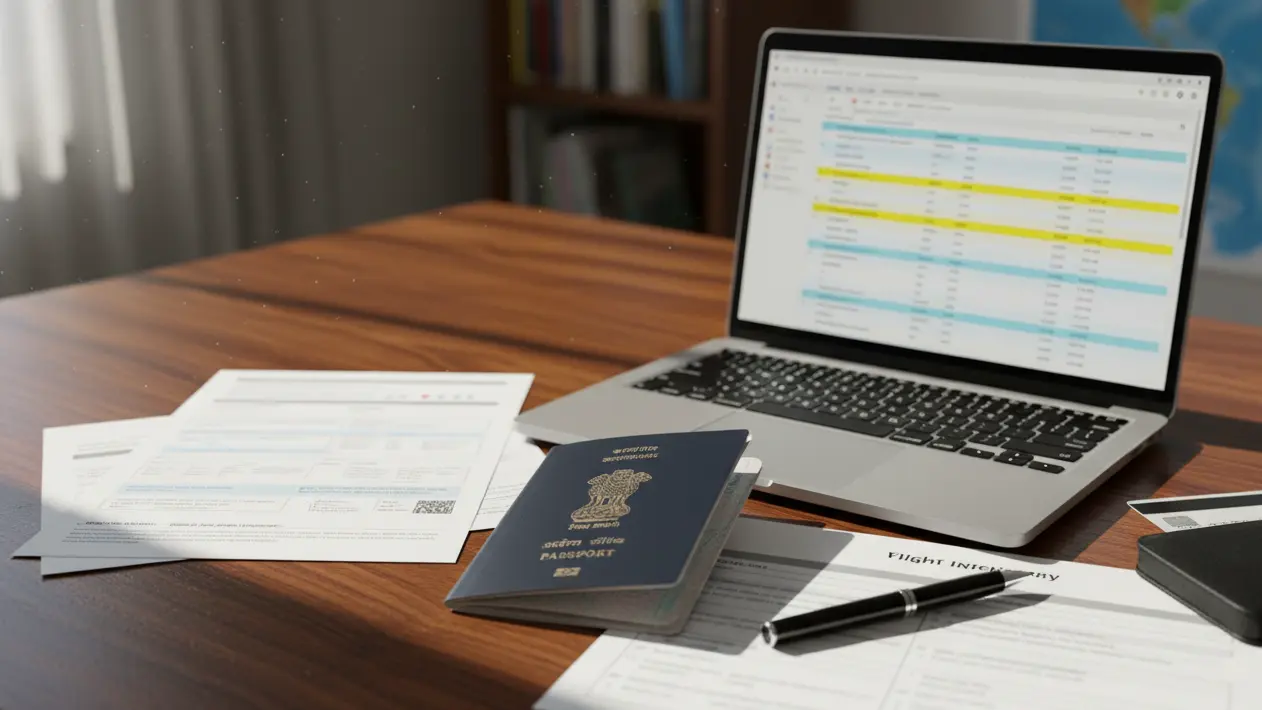
Indonesia onward-ticket checks can happen before the traveler reaches immigration. The airline counter may ask first because carriers want to avoid carrying a passenger who appears not to meet destination-entry conditions. The immigration counter may ask again on arrival, especially when the traveler’s route, stay length or purpose needs clarification.
Why airlines in India check onward tickets first
For Indian travelers flying to Bali, Jakarta or other Indonesian airports, the check-in counter can be the first real test. Staff may ask for passport, visa or e-VOA status, return or onward ticket, hotel details and sometimes next-country proof. This is not the airline deciding the visa outcome. It is the airline checking whether the traveler appears boardable for Indonesia.
That is why the onward ticket should be easy to show in one screen or printout. If the traveler opens three old PDFs, two route drafts and one expired reservation, the counter check becomes harder. A clean document pack saves time.
What Indonesia’s official rules say
Indonesia’s immigration guidance consistently uses the phrase return ticket or onward ticket to continue traveling to another country for visitor-entry paths such as e-VOA, VOA and visa exemption. The recurring logic is simple: a temporary visitor should have a documented plan to leave Indonesia.
The official wording does not mean every traveler is questioned in the same way at every airport. It means the traveler should be prepared. A short Bali holiday with a return flight can be checked quickly. A one-way ticket to Indonesia with no onward plan can trigger questions before boarding or on arrival.
Why the experience changes from airport to airport
The experience can vary because route, airline, nationality, visa type, stay length, passenger history and staff workflow differ. One traveler may pass without being asked. Another traveler on the same route may be asked for a return ticket, hotel proof and visa confirmation. Planning should be based on the requirement, not on a friend’s lucky experience.
Purpose and duration matter
A short tourism trip has different proof expectations from a long family visit, business meeting, remote-work style stay or regional multi-country route. The longer and more flexible the plan looks, the more important it becomes to make the exit date and next destination clear. A visitor visa or e-VOA does not allow the traveler to treat the stay as open-ended.
What Counts as Valid Onward Proof for Indonesia?

Valid onward proof should show a believable exit from Indonesia. It should include the traveler’s name, an exit route, a date inside the allowed stay, and enough booking detail to make the plan understandable. The next destination should be realistic for the traveler’s passport and visa status.
Clear-cut options airlines rarely question
- A return flight from Indonesia to India within the allowed stay.
- An onward flight from Indonesia to a country the traveler can enter.
- A multi-city itinerary that clearly exits Indonesia before the stay period ends.
- A temporary onward reservation with accurate passenger, route and date details.
Regional transport that may not read clearly
Some travelers use ferries, buses or regional transport in Southeast Asia. These may be valid for the real trip, but they are not always recognized as easily at an airline counter. A flight-style onward ticket is often easier for counter staff to understand because it shows a dated exit from Indonesia in a familiar format.
Temporary or flexible reservations for open-ended trips
A temporary onward reservation can be useful when the traveler’s Indonesia plan is real but the exact post-Indonesia route is still flexible. This is where a dummy ticket can help. It should show truthful intended travel details and should not be a fabricated PDF. If the plan changes, update the reservation properly rather than editing the document.
If you need the foundational distinction between a genuine temporary reservation and a fake document, read what is a dummy ticket. This Indonesia page applies that concept specifically to onward-ticket proof.
What a strong Indonesia onward ticket shows
| Field | What to check | Why it matters |
|---|---|---|
| Passenger name | Matches passport spelling. | Name mismatches slow document review. |
| Exit date | Falls within the allowed Indonesia stay. | Shows the visit is temporary. |
| Exit airport | Fits the traveler’s local route. | Bali exit proof should match a Bali stay, or the transfer should be clear. |
| Next country | Traveler can enter or transit there. | An onward ticket to an impossible destination weakens the plan. |
| Hotel dates | Cover the stay or explain gaps. | Onward proof and accommodation proof should not fight each other. |
Risks of Flying to Indonesia Without Onward Proof
Traveling without onward proof can create friction before the trip even begins. The risk is not limited to Indonesia arrival. The traveler can be slowed or stopped at check-in, asked to buy a ticket urgently, or forced to explain the route under pressure.
Why Indian airports take onward checks seriously
Indian airport counters are often cautious with Southeast Asia routes because many travelers use flexible plans, multi-country tickets, one-way flights or budget airlines. If Indonesia requires return or onward-ticket proof for the traveler’s entry path, the counter may ask for it before boarding.
The cost of being stopped at check-in
The worst time to solve onward proof is at the counter. Last-minute fares can be expensive, routes may be awkward, and the traveler may buy the wrong ticket just to satisfy the immediate check. A prepared onward ticket or dummy ticket can prevent rushed decisions.
Transit and arrival complications
If the trip includes transit through another country, the traveler must also consider that transit country’s rules. An onward ticket out of Indonesia does not solve a transit-visa problem on the way there. Likewise, arrival in Indonesia can still involve questions about stay purpose, hotel details, funds and return or onward plan.
Small details that trigger bigger issues
- Exit date after the allowed stay.
- Onward ticket to a country where the traveler lacks entry permission.
- Hotel booking ending days before the exit ticket.
- Passport name not matching the ticket.
- Old reservation shown instead of the current one.
- One-way ticket with no clear onward proof.
Evidence That Supports the Travel Story
Onward proof is only one part of the file. It works best when the rest of the documents tell the same story. A strong Indonesia visitor file usually reads like a simple trip: entry date, stay location, purpose, funds, and exit date all make sense together.
Build a clear travel story through documents
The travel story should be visible without a long explanation. If the traveler enters Bali on May 2, stays in Seminyak until May 9, then flies to Singapore on May 9, the documents should show that sequence. If the plan includes Jakarta first and Bali later, the accommodation and domestic travel should make that route readable.
Financial profile and ties still matter
An onward ticket does not replace funds, ties or purpose. For visitor travel, the traveler should be able to explain how the trip is funded and why they will leave when planned. This is especially important for long stays, first-time international travelers or routes that look unusually flexible.
Personal statements should stay short
If a cover letter or travel note is used, it should clarify the route rather than over-explain. A useful sentence is direct: “I will enter Bali on May 2, stay at the listed hotel until May 9, and leave Indonesia for Singapore on May 9.” That is better than a long paragraph that introduces new dates or uncertain future plans.
The broader dummy ticket for visa complete guide explains how temporary reservations fit into a complete visa-document package. This page keeps the focus on Indonesia onward-ticket proof.
India Airport and Bali Route Issues

Bali routes from India often combine budget airlines, transit stops, separate bookings and flexible hotel plans. That makes the onward-ticket check more sensitive. A traveler may be fully eligible but still lose time if the exit proof is not easy to read.
Routes that are easier to explain
- India to Bali, Bali to India within the allowed stay.
- India to Jakarta, domestic route to Bali, Bali to India.
- India to Bali, Bali to Singapore, Singapore to India.
- India to Bali with a clear onward flight to another country the traveler can enter.
Routes that need more care
A one-way ticket to Bali with no onward proof is the obvious risk. A ticket from Bali to a third country can also be questioned if the traveler cannot enter that country. Separate self-transfer tickets can create confusion when the exit from Indonesia is not clearly connected to the route.
Keep hotels consistent and light
If the onward ticket exits Indonesia on June 14, hotel proof should usually explain the stay until June 14. If the traveler switches islands or stays with friends, the itinerary should explain those nights. Do not let the hotel record imply one trip while the onward ticket implies another.
Indonesia-Ready Workflow
Use this sequence before applying, checking in, or flying to Indonesia.
Step 1: Confirm your entry path
Check whether you are using e-VOA, VOA, visa exemption, visitor visa or another arrangement. Do not assume rules from a friend’s trip apply to your passport and route.
Step 2: Check the allowed stay
Your onward ticket should leave Indonesia within the stay period allowed by your visa or entry basis. If the entry permission can be extended, do not rely on a future extension unless the travel plan and documents support that choice.
Step 3: Choose the exit route
Decide whether you will return to India or continue to another country. A return ticket is usually easiest to understand. An onward ticket to another country can work when the next-country entry plan is credible.
Step 4: Create or refresh the onward ticket
Create the onward proof after the route and dates are stable. If using a dummy ticket for Indonesia, keep the details truthful and current. Do not use a fake or manually edited document.
Step 5: Carry one clean document pack
- Passport.
- e-VOA, VOA, visa exemption or visitor-visa proof as applicable.
- Return or onward ticket.
- Hotel booking or host proof.
- Funds and purpose documents if relevant.
- One current itinerary version.
Create your onward travel reservation with DummyFlights after your exit date, route and next destination are clear.
Common Onward-Ticket Mistakes for Indonesia
Using an exit date outside the stay period
This is the easiest mismatch to spot. If the traveler is allowed to stay for 30 days, the onward proof should not show departure after that window unless another valid basis explains the stay.
Choosing a next country without checking entry rules
An onward ticket to another country is useful only when the traveler can enter or transit there. Do not use a random cheap destination if the route is not realistic for your passport.
Relying on an expired reservation
Temporary reservations can expire. If the onward proof is meant for airport check-in, it should be current for the departure day. If it is meant for a visa upload, it should be current enough for that submission or review moment.
Making the file too complicated
Simple usually wins. Avoid unnecessary city jumps, self-transfers and unexplained gaps. If the trip is genuinely multi-city, make the route clear with hotel dates and transport logic.
Confusing a dummy ticket with a fake ticket
A genuine dummy ticket uses truthful itinerary details. A fake ticket invents or alters important information. For Indonesia travel, the document should support a real exit plan, not create a false one.
Make Indonesia Onward Proof Easy to Read
Indonesia onward-ticket proof should answer one question quickly: how will this traveler leave Indonesia within the allowed stay? If the passenger name, exit date, route, hotel dates and next-country eligibility all line up, the document is doing its job.
For visa-file use cases, the main dummy ticket for visa guide explains how temporary reservations should align with forms, accommodation and supporting documents.
FAQ
Is an onward ticket required for Indonesia visitor visa travel?
Indonesia immigration guidance lists a return ticket or onward ticket for several visitor-entry paths, including e-VOA, Visa on Arrival and visa exemption. Travelers should be ready to show proof that they will leave Indonesia.
Can I use a dummy ticket as onward proof for Indonesia?
A genuine dummy ticket or temporary onward reservation can help when it shows truthful passenger, route and date details. It should not be fake, manually edited or inconsistent with the travel plan.
Is a return ticket better than an onward ticket for Indonesia?
A return ticket to your home country is usually easiest to understand. An onward ticket to another country can also work when you can enter or transit that next country.
Do airlines in India check onward tickets for Bali?
They can. Airline counters may ask for return or onward proof before boarding if Indonesia entry rules require it for your traveler category.
What date should my Indonesia onward ticket show?
The onward ticket should usually show departure from Indonesia within your allowed stay or visa period. It should also match hotel dates and itinerary details.
Can my onward ticket go from Bali to Singapore or Malaysia?
Yes, if that is your real next destination and you can enter or transit there. The route should make sense beside your hotel and travel plan.
Do I need hotel proof with an Indonesia onward ticket?
Hotel or host proof may be requested depending on your visa or entry situation. It should match the dates shown by the return or onward ticket.
What if my Indonesia travel dates change?
Update the onward ticket, hotel proof and itinerary together. Do not keep old versions in your active document pack.
Is a ferry or bus ticket enough as onward proof?
It depends on the route and checkpoint. A flight-style onward ticket is often easier for airline counters to recognize, especially before boarding.
What is the biggest Indonesia onward-ticket mistake?
The biggest mistake is showing an exit plan that falls outside the allowed stay, points to a destination you cannot enter, or conflicts with hotel and itinerary dates.