

Short answer: An onward ticket for an indirect or unusual route should prove the next credible international exit—not necessarily a return home. Show how the traveler leaves the country being entered, can enter the next destination and connects each land, sea or air segment. A bus, train, ferry or flight may work only when the applicable destination and carrier accept that form of evidence.
An unconventional trip is not automatically suspicious. It simply asks the document reviewer to connect more points: an arrival airport, a different departure city, an overland border, an island transfer or a final flight from another country.
The safest response is not to make the route look like a round trip when it is not. Build a short evidence chain that follows the real journey, uses dates inside each permitted stay and distinguishes immediate exit proof from a later flight home.
This guide explains how to choose onward proof for indirect routes, how airline and border checks differ, how to prepare mixed-mode documents and what to do if a check-in team questions the plan.
Key facts
- An onward journey can lead to a third country; it does not always need to return home.
- The next country must be one the traveler is allowed to enter or transit.
- Bus, rail and ferry evidence is destination-specific, not universally accepted.
- A reservation proves only the details recorded while it is active; it does not guarantee boarding or entry.
- Use the shortest clear evidence chain that explains the immediate exit and any later regional departure.
Need onward proof for a route that does not loop home? Map the immediate exit, next destination and final regional departure before preparing the reservation.
Prepare an Indirect-Route Onward TicketIn This Guide
- Why indirect routes receive closer review
- Panama-to-Costa Rica overland example
- Island-hopping and land-border routes
- One-way flight versus onward exit proof
- Matching proof to a route that does not loop home
- What airline staff may check
- Choosing bus, ferry, rail or flight proof
- Refundable, temporary or paid ticket
- Responding to a rejected document
Official-source check: Costa Rica’s official tourism guidance provides a useful mixed-mode example: visitors must show a return ticket or onward plan, and permitted commercial evidence can include a pre-purchased flight, bus ticket or cruise passage. Review the current Costa Rica entry requirements when that country is on the route. Do not assume this example applies to Panama, Southeast Asia or another destination; check each destination authority and carrier separately.
Reviewed for: third-country eligibility, mixed-mode exits, route sequence, carrier-versus-border roles, reservation terminology, document-verification limits and country-specific evidence boundaries.
Why an Indirect Route Can Receive Closer Onward-Ticket Review
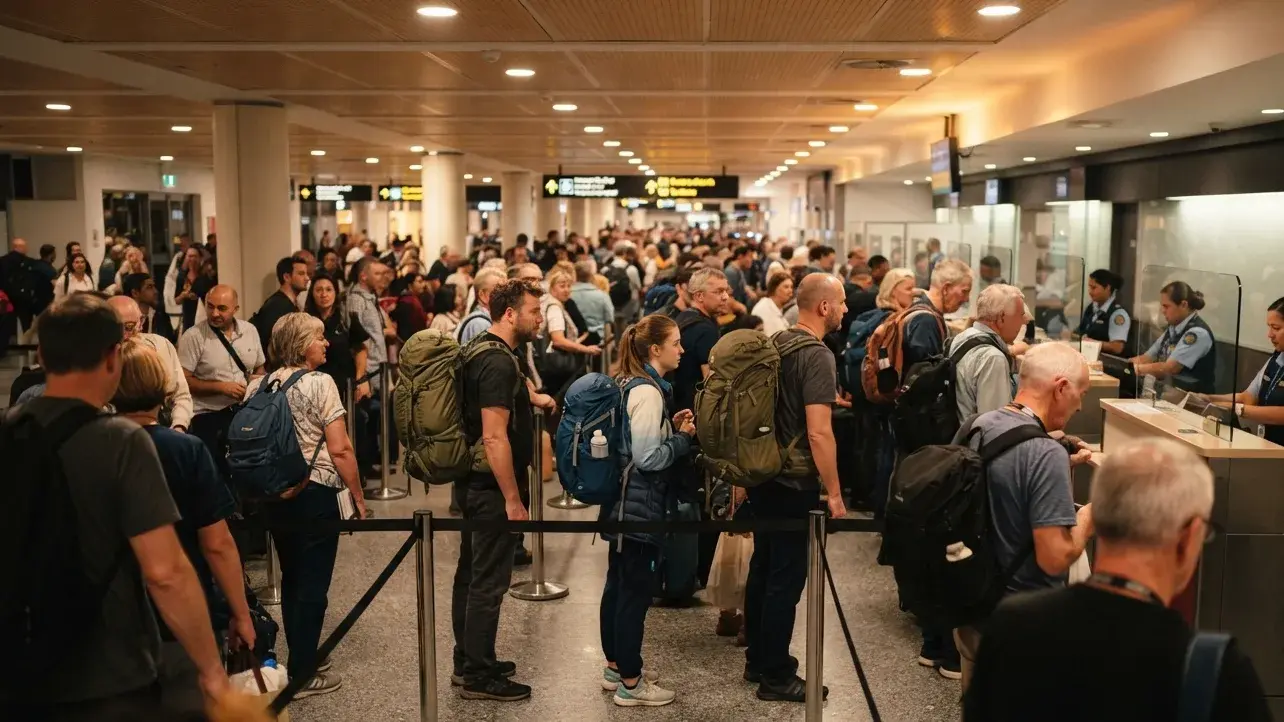
A simple round trip makes the arrival and departure easy to see. An indirect route raises additional questions, which is why the connection between documents matters more.
The Assumption Behind Every Onward Travel Rule
Many countries require proof of onward travel for entry because immigration systems are built around a simple pattern: you arrive, you stay for a defined window, and you leave again. When your route breaks that pattern, an officer has to work a little harder to confirm you still fit it.
Where onward proof is required, it helps answer whether the traveler has a documented plan to leave within the permitted period. A flight into one country with no visible exit can look incomplete even when the traveler intends to continue by land or sea.
What Counts As Onward Proof When The Route Isn't A Loop
An onward ticket documents an intended departure. It does not have to bring the traveler home when the applicable rules allow travel to a third country. The traveler must also have the documents needed to enter or transit that next destination.
This matters for travelers moving through a region rather than visiting one stop. If you fly into Bangkok, spend three weeks in the region, then fly out of Ho Chi Minh City, your entry ticket into Thailand doesn't need to bring you back to Thailand.
The evidence should show a credible departure within the permitted period and a next destination that fits the route and the traveler’s admission documents.
Reading The Route Like An Officer Would
Unusual travel routes can raise red flags with border control, not because anything is wrong with them, but because they don't match the majority of travelers passing through the same checkpoint. A route with three countries, two land borders, and one open-ended flight looks different on paper than "vacation, one week, fly home."
That does not make the plan improper. It means the traveler should carry documents that close the gaps an officer or airline employee would otherwise need to clarify. When onward proof is a condition, missing or unsuitable evidence can contribute to denied boarding or entry.
Building A Paper Trail That Matches Your Actual Plan
Having a clear itinerary aids in explaining unconventional travel routes to border agents. This isn't about over-explaining your trip. It's about making sure the documents in your hand tell the same story you'd tell out loud if asked.
A few things help this paper trail hold together:
-
A dated onward ticket showing departure before your permitted stay expires
-
A rough written itinerary noting each country and approximate dates
-
Confirmation for at least the first few nights of accommodation
-
A bank statement showing you can fund the trip you're describing
None of these documents guarantees admission. Together, they make the route, funding and initial stay easier to understand.
Nationality and Residence Can Change the Document Set
Two travelers following the same indirect route may have different visa, transit or entry requirements because of nationality, residence status, passport validity or existing visas. Check the rules for the actual traveler instead of copying another person’s document set.
This is especially important when the onward leg goes to a third country. Proof of a seat or reservation does not prove the traveler is admissible there. Carry the relevant visa, residence permit, entry authorization or exemption evidence where applicable.
Why Immigration And Airlines Don't Always Agree
Here's the part that trips up a lot of travelers on indirect routes: immigration authorities may require evidence of onward travel for entry, but the airline checking you in before your flight has its own separate set of rules, and its own reasons for enforcing them.
Airlines perform document checks because carriers can face operational and financial consequences when a passenger lacks the documents required for the destination. The exact rules and consequences vary by jurisdiction and route.
Airlines check onward tickets specifically to ensure compliance with immigration requirements at the destination, since boarding a passenger who fails that check becomes the airline's problem, not just the traveler's. That's why airline staff sometimes hold a stricter line than the immigration officer you'll eventually meet.
A carrier may rely on its document-check system and escalation process, while a border authority makes the admission decision. Passing one check does not guarantee the other.
Tourist Visa Rules Add Another Layer
A visa or approval notice may contain travel conditions separate from the airline’s check and the border officer’s admission decision. Compare the onward date with the visa validity, permitted stay and any entry deadline that applies to the traveler.
Missing this detail is one of the more common reasons a traveler gets stopped despite carrying a seemingly valid document.
A date outside the traveler’s permitted window can make otherwise genuine evidence unsuitable. Use the individual visa and admission conditions rather than a general stay period that applies to someone else.
The Cost Of Getting This Wrong
A documentation gap can lead to extra questions, delayed check-in, a requirement to obtain stronger proof, denied boarding or—at the border—refusal of entry. The exact outcome depends on the authority and circumstances.
What indirect-route onward proof can establish:
- The named traveler’s intended next international movement.
- A date that can be compared with the permitted stay.
- The carrier or operator, route and destination recorded by the issuer.
What it does not establish: the right to enter the next country, payment of every segment, guaranteed reservation validity, guaranteed boarding or guaranteed admission.
None of this reflects badly on the route itself. It reflects a paperwork mismatch that better preparation would have caught.
Flying Into Panama and Leaving Overland for Costa Rica
This route is a useful example because the exit from Panama may be by land while the later regional departure may be by air.
Why This Route Looks Incomplete On Paper
You land in Panama City with a flight ticket in hand. Your plan is to spend two weeks in Panama, then cross into Costa Rica by bus and continue your trip from there. No flight booking exists for that second leg, because you're not planning to fly it.
To an airline checking documents before departure, this can look like a one-way arrival with no visible exit. The separate bus plan needs to be documented clearly enough to connect the arrival with the intended departure.
Overland Exits Aren't Always Treated The Same As Flights
Whether an overland ticket is accepted depends on current Panama entry rules and the airline’s document check. Do not rely on a forum report or another traveler’s experience as proof that a bus confirmation will be sufficient for the present journey.
For the Costa Rica entry, its official tourism guidance recognizes specified commercial onward evidence, including a pre-purchased bus ticket. That does not automatically establish what Panama or the inbound airline will accept before departure.
This is the gap that catches travelers off guard. You've done nothing wrong. You simply have proof that satisfies one authority and not necessarily the other, at least not without extra documentation to back it up.
What Actually Works For This Route
A coherent evidence set for this route may include:
-
A bus ticket or reservation with the traveler’s name where available, a confirmed date, operator, route and destination
-
A short written itinerary noting the exact date you'll cross from Panama into Costa Rica
-
A later flight reservation only when it reflects the real planned departure from Costa Rica or the region
The immediate bus crossing and the later flight answer different questions. Pairing them can clarify the sequence, but neither should be invented merely to create a stronger-looking file.
Timing The Crossing Against Your Permitted Stay
When onward evidence is required, the departure date should fall within the stay permitted to that traveler. The same date logic applies whether the accepted exit is by land, sea or air.
Use the stay period actually granted or expected for the traveler, not a maximum copied from a general article. If the real plan is two weeks, the bus date should reflect that plan rather than being placed near the outer edge without reason.
A date well inside the permitted period may make the timing easier to understand, but no document removes an officer’s authority to ask further questions.
Booking The Bus Leg Early Versus Waiting
Operator schedules, inventory, cancellation terms and border routes can change. If the bus leg is genuinely planned, check availability early enough to obtain a usable confirmation without locking into a date before the route is reasonably settled.
Booking this leg a few days ahead, even loosely, gives you a confirmed document to carry through the rest of your time in Panama, rather than scrambling to secure both a seat and a valid confirmation on the same day you intend to cross.
What Border Officers On This Route Actually Ask
Possible questions include the next destination, intended stay, accommodation, transport and funds. Carry only the documents relevant to the traveler and provide them truthfully when requested.
Must the document return you to your home country? Not necessarily, but the current Panama requirement and carrier check must be confirmed. A third-country exit works only when that evidence is permitted and the traveler can continue to the named destination.
Is a bus ticket enough on its own? It may be, but only the current destination and carrier rules can answer that. A later flight can clarify the regional plan when it is genuine; it does not automatically cure an unacceptable immediate exit document.
Why An Exit Ticket Beats A Verbal Explanation
A documented plan is generally easier to assess than a verbal statement alone. The document should identify the real operator, date, route and destination in a format the applicable authority accepts.
That evidence can reduce ambiguity, but it does not determine the decision by itself.
Once the Panama dates and overland route are reasonably settled, obtain the real bus or other permitted exit evidence and keep it accessible with the later Costa Rica or regional departure document.
The same gap between what immigration accepts and what an airline recognizes shows up again once you're deeper into a multi-country trip, especially in regions where island hopping and land crossings both play a role in getting from one stop to the next.
Onward Tickets for Island-Hopping and Land-Border Routes

A Southeast Asia route rarely moves in a straight line, and that's precisely what makes onward ticket planning here different from almost anywhere else.
A Route With No Single Exit Point
Picture a common path: fly into Bangkok, bus into Cambodia, ferry to an island, fly to Vietnam, then eventually out of the region entirely. Each leg uses a different mode of transport, and no single ticket covers the whole journey. Frequent travelers on this kind of route often carry three or four separate proof-of-travel documents across a few weeks.
This is where the definition of onward travel needs care. A flight, bus, train or ferry may document an exit, but acceptance depends on the destination and carrier. The challenge is choosing evidence that fits the immediate border and keeping each document organized as the route changes.
Why Budget Carriers Complicate This Further
A budget carrier may use the same destination-document requirements as another airline while applying different check-in procedures or escalation paths. Do not assume that ticket price predicts how strictly the document will be reviewed.
An airline may ask for onward proof before issuing a boarding pass. The prompt can depend on the destination, traveler’s documents and carrier system, so prepare the relevant evidence before arriving at the counter.
Matching Documents To Each Leg Of An Island-Hopping Route
A workable approach can involve layering proof rather than relying on one document for the entire journey:
-
A confirmed onward ticket for your first international entry point
-
A ferry or bus reservation for inter-island or cross-border legs where relevant
-
A temporary reservation or dummy ticket covering your eventual exit flight from the region, updated as your route firms up
This layered approach also helps when plans change. Compare a refundable ticket’s actual fare rules with a temporary reservation’s validity and replacement terms. They are different products and are not automatically equivalent.
The Neighboring Country Problem
A common gap appears when the only document is a flight from a country the traveler has not yet reached. That later flight may show an eventual regional exit without proving the immediate land or sea movement to that departure country.
Where the rules require it, carry proof of the immediate next leg alongside the later regional departure. Each document should reflect a real intended segment and a next destination the traveler may enter.
Handling Visa Approval Timelines Across Multiple Countries
A multi-country route may include a destination whose visa or entry authorization is still pending. Do not use that destination as the only onward plan unless the traveler is likely to have the required permission before the crossing. Build the route around confirmed or realistically obtainable admission.
Coordinating these dates across a multi-country trip takes some upfront planning, but it prevents a situation where you're cleared to enter one country only to find your visa for the next isn't ready by the date your onward ticket promised.
Temporary reservations have no universal 48-hour validity rule. Confirm the specific record’s expected life and prepare it close enough to the relevant check that it remains useful without misrepresenting a settled plan.
Questions That Come Up Repeatedly On This Route
Can one flight reservation cover an entire multi-month Southeast Asia trip? It may explain the eventual regional exit, but it may not satisfy a requirement tied to the immediate country. Check each entry separately.
Do ferry tickets get treated the same as flight tickets? Not universally. A ferry can be valid exit evidence where the applicable rule permits it and the confirmation identifies the traveler, date, route and destination sufficiently.
| Route pattern | Immediate evidence to consider | Supporting evidence | Main risk to check |
|---|---|---|---|
| Fly in, international bus out | Dated bus booking if permitted | Later regional flight when genuinely planned | Whether the inbound carrier accepts overland proof |
| Fly in, ferry to another country | Named international ferry confirmation if permitted | Next-country entry permission | Informal receipt lacking route or passenger details |
| Island hop within one country | Proof of the later international exit | Domestic ferry or flight sequence | Confusing domestic movement with onward exit |
| Self-drive across a border | Destination-approved exit evidence | Rental permission, border route and later departure | Rental agreement alone may not prove an international exit |
| Open-jaw regional trip | Arrival plus departure from a different city | Transport connecting the two cities | Unexplained gap between arrival and departure points |
Crossing Borders Without Losing Track Of Your Own Paper Trail
Crossing borders repeatedly over a few weeks makes it easy to lose track of which document applies to which leg. A traveler who crossed from Cambodia into Vietnam three days ago may struggle to recall whether they still have that ferry confirmation saved, or whether it was deleted along with a dozen other travel emails.
A simple habit helps here: renaming each saved document with the date and the border it covers before moving on to the next leg. This turns a folder of identically named PDFs into something you can actually search through quickly if an officer or airline staff member asks to see proof from a crossing that happened earlier in the trip.
Currency And Payment Quirks That Slow Down Bookings Mid-Trip
Booking a ferry or bus reservation from inside the region sometimes runs into payment friction that travelers don't anticipate. A foreign card gets declined by a local booking site, or a ferry operator only accepts cash at a physical counter rather than an online payment. This can delay securing the exact document you need right when you need it most.
Keeping a small buffer of local cash for these bookings, and testing a payment method a day or two before you actually need the ticket, avoids a last-minute scramble at a counter with a line behind you and a ferry departing soon.
Island hopping and overland crossings both raise a related but distinct question: what happens when your ticket is genuinely one-directional, with no return leg planned at all, anywhere in your trip. That distinction, between a one-way flight and a one-way ticket with a clear exit plan, is worth unpacking on its own.
One-Way Flight Versus Onward Exit Proof
These two phrases get used interchangeably in casual conversation, but they mean very different things to an airline check-in counter or an immigration desk, and mixing them up causes real problems.
Two Different Things Hiding Behind One Phrase
A one-way flight simply means you booked a single leg with no return included. A one-way ticket out, in the context most border officers care about, means you have proof you're leaving the country you're entering, even if that proof isn't a return flight home.
A one-way arrival contains no return leg. Without separate onward evidence, it may not show what happens next. The confusion begins when a traveler assumes the arrival booking itself proves a future exit.
Why Flying One Way Reads As A Risk Signal
Flying one way with no visible next movement can prompt questions where onward proof is required. The traveler’s visa type, residence status or other permission may change that requirement, so do not assume every one-way passenger needs the same evidence.
An airline may deny boarding when required travel documents are missing or unsuitable. One-way travel is not inherently prohibited, but a one-way arrival alone may not answer an applicable onward-travel condition.
What Turns a One-Way Flight Into A Valid Exit Plan
Where onward proof is required, the one-way arrival may need a separate document such as:
-
A separate onward ticket, flight or otherwise, showing your planned departure
-
A visa or entry permit for a next destination that implies a clear timeline
-
A dummy ticket or temporary reservation specifically built to demonstrate onward travel
These documents can explain that the one-way arrival is the first leg of a longer trip. The relevant question is whether the evidence satisfies the actual rule and describes a credible departure—not merely whether a return home is booked.
Long Trips Without A Fixed Return Date
Travelers on a long trip, whether a gap year, an extended work-from-anywhere stretch, or a multi-country tour with fixed plans that don't include coming home for months, run into this constantly. There's often no interest in booking a return date at all, since the whole point of the trip is flexibility.
In these cases, a temporary reservation or dummy ticket for the next leg, updated as the trip evolves, tends to be the most practical solution.
It can avoid locking into paid travel before a flexible plan is settled, but only when a temporary reservation is accepted and accurately reflects the intended next leg.
Why Some Travelers Avoid Flying One Way Altogether
Some travelers consider buying a return they do not intend to use. That can waste money, conflict with the real route and create airline sequencing issues if segments are skipped. Prefer evidence that describes the actual onward plan.
A return flight purchased purely for documentation purposes still costs money, and if it goes unused, that money is simply gone unless the fare included free cancellation.
A temporary reservation may be more proportionate when permitted and when the plan is not final. Compare its terms with a flexible or refundable fare instead of assuming one option always costs less.
How This Plays Out At The Check-In Counter
Airline staff may review the destination requirement, passport, visa or residence status and onward evidence. A clear explanation helps, but the documents must still satisfy the applicable check.
Review can take longer when the answer is vague or the traveler has no relevant document. Staff are checking whether the carrier may transport the passenger under the destination requirements.
When The Trip Includes A Road Trip Leg
Some one-way flights are the opening leg of a larger road trip, where a traveler flies into one country, rents a vehicle, and drives across one or more land borders before flying home from somewhere else entirely.
This structure combines the one-way flight question with the land border question covered earlier, and it benefits from the same fix: proof of the onward journey, even if that journey is self-driven rather than booked through a carrier.
A rental agreement may show mobility without proving an international exit. Add the evidence required for the actual border crossing or eventual flight, and confirm that the rental contract permits the planned cross-border movement.
If your trip includes any leg that's genuinely one-directional, treat that leg the same way you'd treat entry into a country requiring proof of onward travel. Have something ready, whether that's a real ticket, a valid ticket for the next leg, or a temporary reservation built specifically to cover the gap.
This mindset carries directly into the next challenge: building an onward ticket for a route that never actually loops back to where it started, which is common on long, multi-country trips with no single return date in mind.
Matching an Onward Ticket to a Route That Does Not Loop Home
Not every trip ends where it began, and an onward ticket built for that kind of route needs to reflect the actual shape of the journey, not a simplified version of it.
Why A Non-Looping Route Needs Different Proof
A traveler doing a one-directional trip across multiple countries, ending somewhere entirely different from their home country, faces a specific documentation challenge. Their onward proof for each country along the way isn't a return home. It's the next country on the route.
Where the rules permit a third-country exit, each leg should show credible forward movement and the traveler’s ability to continue. Returning home is not the only possible route, but the next destination cannot be arbitrary.
Sequencing Your Documents To Match Your Actual Itinerary
The most reliable approach is treating each country entry as its own separate question. Rather than trying to find one document that covers an entire six-month trip, match documentation to each stage:
-
Entry into Country A: onward proof showing departure to Country B
-
Entry into Country B: onward proof showing departure to Country C
-
Final stretch: proof of an eventual flight home or to a final destination
This sequencing keeps every document relevant rather than relying on one distant flight that may not explain the immediate exit. For a visa application built around a complex route, the visa flight itinerary requirements guide covers the separate BookForVisa-owned documentation intent.
Why Fixed Plans Aren't Always Realistic On Long Trips
Long trip travelers often resist locking in fixed plans weeks or months ahead, and understandably so. Plans shift, routes change, and a paid ticket booked too early can end up wasted if your itinerary evolves. This is exactly the situation where a verifiable flight reservation or dummy ticket earns its value.
A legitimate temporary reservation can document the proposed flight without the same commitment as paid airfare. It may not display on every public airline tool, and a booking reference does not automatically mean an e-ticket has been issued.
Why Sequencing Matters More Than Total Trip Length
A common mistake on long, non-looping trips is focusing on the total length of the journey rather than the sequence of individual entries. A six-month trip across eight countries isn't one long onward travel problem. It's eight separate, smaller ones, each with its own deadline, its own accepted document types, and its own risk of a mismatch.
Breaking the trip down this way, country by country rather than as one continuous block, makes the planning far more manageable and reduces the chance that a single overlooked leg causes a problem weeks into the journey.
What A Valid Onward Ticket Actually Needs
Regardless of the route shape, a few elements make an onward ticket function as valid proof:
-
A genuine booking reference with an appropriate verification path explained by the issuer
-
Passenger details consistent with the passport and the booking system’s supported format
-
A departure date that falls comfortably before your permitted stay expires
-
A destination that makes sense given your stated travel plans
A booking reference can help establish that a reservation exists, but no single field guarantees acceptance. Public lookup behavior varies across airlines, agencies, codeshares and reservation systems.
Revisiting Documents As Your Route Firms Up
A long trip rarely stays exactly as planned from day one. A country you weren't sure you'd visit becomes a confirmed stop, or a border crossing you assumed would happen by bus ends up happening by budget flight instead because of a schedule change.
Every time a leg of the route changes, the onward document tied to it should be revisited.
A temporary reservation may be easier to replace than a restrictive paid ticket, but issuer terms vary. Update the underlying record rather than editing a PDF, and compare the new route with every connected visa, accommodation and transit document.
Avoiding The Fake Ticket Trap On Long Routes
The temptation on a long, multi-country trip is to create something that looks like a ticket without actually being a real, checkable reservation. This is a mistake worth avoiding entirely. Fake tickets can lead to serious immigration consequences, and those consequences can follow you well beyond the single border crossing where the ticket was presented.
The difference between a fabricated ticket and a legitimate temporary reservation is the underlying booking record. Verification may occur through an airline, agency or reservation-system path; it is not always a public website lookup.
Travelers should ensure their onward ticket aligns with visa and entry rules for each specific country on the route. What satisfies one border crossing may not satisfy the next, particularly when a later visa depends on the travel sequence. The broader dummy ticket for visa guide explains how temporary travel proof fits an application without becoming a false paid-ticket claim.
Why Chasing The Best Onward Ticket Option Beats A One-Size Approach
There is no single best format for every leg. A permitted bus reservation may fit an immediate land crossing, while a later flight may need its own genuine reservation record. Relevance to the actual leg matters more than using the same document type everywhere.
Treating each leg on its own terms, rather than searching for one document type to cover the whole journey, tends to produce a stronger overall paper trail and fewer moments where a border officer has to ask a follow-up question you weren't ready for.
Having the right documentation prepared solves half the equation. The other half happens at the airline counter itself, where staff apply their own checks before you ever reach an immigration desk, and where the rules can differ meaningfully from what immigration alone requires.
What Airline Staff May Check Before Boarding
By the time you reach an immigration desk, an airline has already made its own decision about whether to let you board, and that decision follows its own logic.
The Airline's Perspective Is Different From The Border's
Airline staff perform carrier document checks before transport, while the destination authority makes the admission decision. Carriers can face operational and financial consequences for transporting improperly documented passengers, so staff may escalate an unusual route for confirmation.
The airline and border authority can therefore reach the same conclusion through different processes. Do not interpret boarding as guaranteed entry, or a check-in question as a final immigration decision.
What Gets Checked At The Counter
A typical check-in review for an indirect or unusual route includes:
-
Passenger details matched against your passport and visa documents
-
Flight number and booking confirmation reviewed through the available carrier or issuer system
-
Departure date confirmed to fall within your permitted stay for the destination
-
Destination country cross-checked against visa or entry requirements you'd need there
A material mismatch—a different passenger identity, unexplained route, unsuitable date or inaccessible record where public lookup is expected—can trigger additional review.
Why Core Identity and Route Details Should Match
Documentation should match personal and travel information to avoid issues at check-in, and this becomes more important, not less, on complex routes. A traveler juggling three or four documents across a multi-country trip has more opportunities for a small inconsistency to slip through.
Check that identity, dates and route align across the onward ticket, visa, accommodation and other documents that apply. Account for legitimate airline name-format or transliteration rules rather than altering identity data.
One Airline's Policy Isn't Universal
A route that involves switching between one airline for the first leg and a different one for a connecting or return flight adds another layer. One airline's check-in staff may accept a document that a different carrier's staff would flag, since interpretation of onward travel rules varies by airline even when the destination country's actual requirement stays the same.
Check the operating carrier and the destination requirements in advance. Do not assume a budget, regional or full-service label predicts the decision.
Why an Unusual Route May Need Escalation
A front-line employee may need help interpreting an uncommon mix of air, land or sea segments. That does not mean the traveler’s evidence has failed. It may mean the carrier needs to confirm the destination rule or next-country admission.
Carry the smallest complete set: the immediate onward document, relevant entry permission for the next country and a route summary. Extra unrelated paperwork can make the explanation harder rather than easier.
What Happens When The System Flags Something
If an airline’s process flags a mismatched date, unusual route or missing onward document, staff may request evidence or escalate the check.
Staff may request the onward evidence, check the next destination’s documents or ask a supervisor or document-support team to review the route. Additional financial or accommodation evidence should be supplied only when relevant and requested.
Having your documents organized and easily accessible, rather than buried across different apps or email confirmations, makes this process considerably faster when it happens.
Why Airline Check-In Feels Different On Complex Routes
Check-in for a route involving several countries and a land border may take longer because staff may need to review more than one document.
Arriving with a confirmed booking already pulled up, rather than searching for it at the counter, saves meaningful time when staff is working through a longer review.
A printed copy of each booking relevant to the immediate leg can be easier to review and remains available if a phone battery, connection or app fails. Keep the digital original as well.
Why A Second Opinion At The Counter Sometimes Helps
If a check-in agent seems uncertain about whether your documentation satisfies onward travel rules for a specific destination, asking politely whether a colleague or supervisor has handled a similar route before can sometimes speed things along.
Staff who deal with a narrow range of common destinations daily may simply be less familiar with a less typical routing than one who's seen it before.
This isn't about escalating unnecessarily. It's about recognizing that not every staff member has equal familiarity with every possible route, and a second set of eyes occasionally resolves confusion faster than repeating the same explanation to the same person.
Preparing For The Counter, Not Just The Border
Most guidance around onward tickets focuses on satisfying immigration at your destination. Equally important is satisfying the airline before you ever leave the ground, since a denied boarding at your departure airport never gives you the chance to argue your case with the destination's official immigration at all.
The next discussion looks specifically at how to choose the right kind of onward proof, bus, ferry, or flight, when your route includes a land border crossing that a standard flight ticket simply doesn't cover.
Bus, Ferry, Rail or Flight: Choosing Mixed-Mode Onward Proof
When your exit plan involves crossing a border by land rather than flying out, the right choice of ticket depends heavily on which authority you're trying to satisfy at that specific moment.
The Core Rule That Makes This Possible
Some destinations accept onward evidence by flight, bus, train, ferry or cruise; others define the requirement more narrowly. Start with the official rule for the country being entered and the carrier transporting the traveler there.
Where mixed-mode proof is permitted, travelers do not need to distort an overland route into unnecessary flights. The document still needs to show a real, identifiable international exit.
When A Bus Ticket Works Best
A bus ticket or bus reservation tends to work well when:
-
Your exit is genuinely overland, and the destination is a neighboring country
-
The bus company provides a real, dated confirmation you can present as valid proof
-
You're dealing directly with immigration at a land border checkpoint, rather than an airline
Land-border procedures vary. Do not assume they are more flexible than airport checks; confirm the operator’s document format and the destination’s requirements.
When A Bus Ticket Falls Short
The limitation shows up specifically at airline check-in counters.
Tickets for overland travel may not be accepted in place of flight tickets by some airlines, meaning if you're flying into a country and later leaving by bus, the airline that flew you in may still ask for a flight-based onward document at the time of your original check-in, before you've even started your trip.
If a carrier does not accept the planned overland evidence, ask what form is required before creating another document. A temporary flight reservation should represent a real intended alternative or later flight, not a segment invented solely to bypass a document check.
Ferry Tickets And Island Routes
Ferry travel can serve as onward proof where the applicable rule permits it. The practical challenge is that not every operator issues a named confirmation with the route, date and destination clearly displayed.
Where possible, request a printed or emailed confirmation rather than relying on a verbal booking or a payment receipt alone, since the format of the document matters almost as much as the fact that the booking itself exists.
Choosing Based On Who You're Trying To Satisfy
A useful way to think through this decision:
-
For a land-border check: use the genuine bus, rail or ferry document the destination accepts.
-
For airline check-in before the trip: confirm whether that carrier accepts the planned overland or sea evidence for the destination.
-
For a mixed route: carry both the immediate exit and later regional departure documents when both describe genuine segments and help explain the sequence.
Reading Local Signage And Officer Cues At Land Crossings
Land border crossings often have less standardized signage than airports, and the specific document an officer asks for can vary slightly from what's posted or published online.
Carry the documents that correspond to the real route rather than several unrelated alternatives. A printed bus ticket and a later flight reservation can work together when the itinerary genuinely contains both segments.
Cost Considerations Across Ticket Types
The cheapest flight for a route you're not actually planning to take rarely makes sense as a long-term solution, especially across a long trip with multiple borders.
A temporary reservation may cost less than a flexible or refundable fare, but current provider fees and terms must be compared. Price does not determine whether the document fits the rule.
Keeping Overland Documentation Organized
On a route with several overland crossings, keep each ticket, bus, ferry, or otherwise, saved in a single accessible folder or app, labeled by date and border crossing.
This also helps when the traveler needs to explain how an earlier land or sea segment connects to the current flight.
What To Do When No Formal Ticket Format Exists
Some smaller bus operators or informal ferry services in remote border regions don't issue anything resembling a standard booking confirmation.
A receipt showing payment, date, operator and route may help explain the plan, but it may not satisfy a formal onward-proof requirement. Ask the operator for the strongest available confirmation and check whether the destination accepts that format.
Where a formal confirmation exists, prefer it to an incomplete receipt. The important details are the real operator, passenger where available, date, route and destination—not a document that merely looks like an airline ticket.
Once you know which type of ticket fits your border crossing, the next decision is how to structure the booking itself, whether that means paying for a refundable option, using a temporary reservation, or committing to a fully paid ticket outright.
Refundable, Temporary or Paid Ticket: Choosing What Fits
Three main paths exist for covering onward proof on a route that doesn't follow a simple pattern, and each comes with a different balance of cost, flexibility, and reliability.
Option One: A Fully Refundable Flight
A genuinely refundable flight is a paid ticket whose fare rules allow cancellation under stated conditions. “Refundable” does not always mean every fee, add-on or currency difference is returned, so read the rules before purchase.
This can cost more than a restrictive fare, so it is best suited to a segment the traveler genuinely may use rather than a route selected only to produce paperwork.
A flexible fare may still be the right choice when the traveler expects to use the segment and wants the option to change it. Compare total cost and refund method rather than the headline label alone.
Option Two: A Temporary Reservation Or Dummy Ticket
A temporary reservation, sometimes called a dummy ticket, can document an intended flight without presenting it as paid airfare. Before using one, understand what a dummy ticket is, how the issuer describes the record and whether the destination accepts a reservation for the relevant check.
This option may fit an unsettled indirect route because the record can sometimes be replaced as plans evolve. Confirm validity and replacement terms instead of assuming unlimited changes.
A properly built temporary reservation typically includes:
-
A real flight number tied to an actual, existing flight
-
A genuine booking reference and an appropriate verification method
-
Passenger identity consistent with the passport and supported booking format
-
A departure date set comfortably before your permitted stay expires
Option Three: A Real, Paid Ticket
For a small number of scenarios, particularly when your onward plans are fully locked in and unlikely to change, a real ticket booked directly with an airline remains the most straightforward option. If you already know your exact departure date, destination, and airline, and you're confident in the plan, booking directly avoids any ambiguity.
This makes the most sense when the ticket represents travel you're actually going to take, rather than a document created purely to satisfy a check-in requirement or a visa application.
Weighing The Three Against An Indirect Route
An unusual route can involve uncertainty from weather, border rules, visa timing or transport schedules. Use a temporary reservation only for a flight that is genuinely intended and only where a reservation is an acceptable form of proof.
A paid ticket usually fits a settled leg the traveler expects to use. A refundable fare fits a real but changeable plan. A temporary reservation fits a permitted proof requirement before the flight is ready to be purchased.
Why Transparent Pricing Matters More On A Long Trip
A long, multi-country trip often means needing onward proof for several legs, not just one. Transparent pricing on each reservation, rather than variable fees that change depending on the route or destination, makes it far easier to budget for this recurring need across the entire journey.
A predictable cost per reservation, known upfront, removes one more variable from a trip that already has plenty of moving parts.
How A Travel Agent Fits Into This Decision
A travel agent can help build a complex itinerary and explain fare rules. A specialist reservation provider can focus on temporary travel proof. Whichever route you choose, verify delivery time, record type, replacement terms and the correct lookup method before relying on the document.
Why A Real Flight Reservation Isn't Always The Safer Choice
It seems intuitive that a real flight reservation, fully paid and confirmed, would always be the safest choice for proving onward travel. In practice, on a route that's still taking shape, this often means spending more money on a ticket you'll likely need to change, cancel, or simply abandon once your actual plans solidify.
A temporary reservation and an issued paid ticket do not have identical status. Use the document type the destination or carrier accepts, and save a committed ticket for a leg the traveler expects to take.
Travelers often end up comparing one document against another ticket they've seen recommended somewhere else, a friend's bus confirmation, a forum post about a specific airline's policy, a template from a visa agency. Rather than defaulting to whatever format worked for someone else's trip, match the ticket type to your own specific leg.
Timing Your Booking Relative To Each Border Date
Whichever structure you choose, timing the booking itself matters. Securing a temporary reservation or refundable option too far ahead of a border crossing risks the details going stale if your plans shift even slightly. Booking too close to the date risks scrambling if a system issue or payment delay comes up unexpectedly.
There is no universal three-to-five-day window. Time the document according to provider delivery, reservation validity, operator inventory and the date of the relevant check.
Making The Final Call For Your Route
For a multi-country route, use real tickets for settled legs and permitted temporary reservations for genuine flights that are not ready for payment. Do not create speculative segments merely to fill gaps on paper.
That said, even the best-prepared documentation doesn't eliminate every risk on the road. The final piece of this puzzle is knowing what to do if boarding gets denied anyway, mid-trip, at a location you didn't expect.
When Onward Proof Is Rejected at Check-In
Even well-prepared travelers occasionally hit a wall at check-in, and knowing how to respond in the moment matters as much as the preparation itself.
Why Denied Boarding Happens Even With Documentation
Boarding can be delayed or denied even when a traveler carries onward proof—for example, when the route does not show the immediate exit, the next-country documents are missing, the date falls outside the permitted stay or the record cannot be verified through the expected path.
An airline may refuse carriage when required documents are missing or unsuitable. Ask which requirement is not met and what evidence would resolve it rather than arguing that another traveler used the same format.
The Immediate Options When This Happens
If boarding is denied at a counter, a few paths typically remain open, roughly in order of speed:
-
Present the correct existing document. If a relevant reservation, bus, rail or ferry confirmation was not shown initially, provide the complete record in the clearest available format.
-
Provide relevant context. A route summary or entry permission for the next destination may help explain why the onward segment is credible.
-
Request document-review assistance. A supervisor or support team may be able to confirm an unusual mixed-mode route.
When A Last-Minute Booking Becomes Necessary
In some cases, none of the above resolves the situation, and travelers may be forced to buy expensive last-minute tickets just to satisfy the airline's requirement before departure. This is genuinely one of the worst outcomes of poor preparation, both financially and in terms of the stress it adds to a trip that was otherwise on track.
Preparation reduces this risk, but no reservation can guarantee acceptance. If a real last-minute ticket becomes necessary, check that it is usable, compliant and refundable where possible rather than buying the first expensive option shown under pressure.
Avoiding This Outcome On Future Legs Of A Long Trip
For travelers midway through a long, multi-country trip, a denied boarding incident on one leg is a strong signal to review documentation for every remaining leg before it happens again. A few adjustments worth making immediately:
-
Update any temporary reservations to reflect current, accurate departure dates
-
Confirm that passenger identity matches the passport and follows the booking system’s supported name format
-
Keep both digital and printed copies of onward proof for each remaining border crossing
Documenting The Incident For Your Own Records
If a denied boarding happens, keep a note of what was asked for, what was shown, and how the situation resolved. This isn't about filing a complaint. It's about having a clear reference for the rest of your trip, especially if a similar checkpoint comes up again later on the same route with a different airline or a different border.
A quick written record, even a few lines saved in a notes app right after the incident, is far more reliable than trying to remember the exact sequence of events days or weeks later when planning the next leg.
What Not To Do In This Situation
Under pressure, some travelers consider fabricating a document rather than obtaining legitimate evidence. This can create serious airline or immigration consequences. A booking that does not appear in one public tool is not automatically fake, but a locally manufactured or altered document has no truthful underlying record.
A legitimate underlying reservation is fundamentally different from a fabricated ticket. Speed does not excuse false information or a locally altered PDF.
Learning From A Denied Boarding Without Losing Trip Momentum
A denied boarding decision may require a compliant new document, a real ticket, a different route or a later departure. Confirm the exact deficiency before spending money or rebooking.
Keeping this in perspective, rather than treating it as a sign the whole route is doomed, helps travelers make clearer decisions in a stressful moment rather than panicked ones.
Knowing the route, the next-country documents and the correct provider or operator contact can make the response more controlled. The outcome still depends on the carrier and applicable rules.
Building Resilience Into The Rest Of Your Trip
The travelers who move through indirect, multi-country routes with the fewest problems tend to share one habit: they treat onward documentation as an ongoing task throughout the trip, not a single box checked before the first flight.
Review proof before each international leg rather than assuming an earlier document still applies. Replace it only when the real plan changed or the record no longer fits the next requirement.
Planning An Unusual Route Doesn't Have To Mean Guessing At The Paperwork
An indirect trip, one with land borders, island hops, or a route that never loops back home, asks more of your documentation than a standard round trip ever would.
The good news is that every gap this creates has a workable answer, whether that's a bus ticket for a land crossing, a temporary reservation for a leg still in flux, or a real ticket for the parts of your journey that are already locked in.
What matters most is treating each leg as its own question rather than assuming one document covers everything. A short, truthful evidence chain lets airline and border staff see the immediate exit, the next destination and the later regional departure without inventing a round trip.
Ready to prepare onward proof for an indirect route? Confirm the immediate exit, next-country eligibility and the transport mode each authority permits before creating the reservation.
Create an Indirect-Route Onward TicketFAQ
Does an onward ticket have to return me to my home country?
Not always. It may show travel to a third country when the applicable destination and carrier permit that form of proof and you have the documents needed to enter or transit the next country.
Can a bus or ferry ticket count as proof of onward travel?
It can where the current destination and carrier rules accept that transport mode. The confirmation should clearly show the real operator, route, date and destination, plus the passenger where available.
Is a flight from another country enough for an overland route?
It may prove an eventual regional departure, but it may not explain how you leave the country being entered or reach the flight’s departure country. Carry immediate-leg evidence when required.
What should an onward ticket show for an unusual route?
It should identify the traveler, departure date, operator or carrier, route and next destination, with an appropriate verification path and dates inside the traveler’s permitted stay.
Can I use one onward ticket for an entire multi-country trip?
Sometimes it can support the final regional exit, but each country may require proof relevant to that specific stay. Review every international entry as a separate document check.
What should I do if airline staff reject my onward proof?
Ask which requirement is not met, present the complete relevant document, show next-country permission where applicable and request document-review assistance. Do not fabricate or alter a ticket.
Friendly reminder: DummyFlights provides temporary travel-proof documents for planning and application support. Requirements vary by destination, airline, route and applicant situation. A dummy ticket can support a file, but it does not guarantee approval, boarding or entry.