
Canada spouse cases are easy to overbook because applicants mix three different journeys: permanent residence sponsorship, temporary travel to visit a spouse, and spousal open work permit planning. A flight reservation can support travel timing, but it cannot replace relationship proof, sponsor eligibility, immigration forms or admissibility checks.
This guide separates what IRCC reviews inside the spouse file from what airlines and border officers may ask around travel day, so you can decide whether a dummy ticket is useful or just early noise.
If your Canada spouse plan still needs a wider visa-document framework, use the dummy ticket for visa 2026 complete guide to understand how temporary reservations should line up with forms, accommodation, passport details and travel dates without pretending that a flight proves eligibility.
For applicants comparing spouse sponsorship, TRV and work-permit timing, the broader dummy ticket for visa guide helps separate consular-document logic from airport-document logic. That distinction matters in Canada spouse routes because the relationship file and the flight plan are reviewed for different reasons.
If you are unsure what a dummy ticket actually is, start with what is a dummy ticket. The useful version is a temporary, reviewable reservation that reflects a real travel plan; the risky version is a fake or edited PDF that introduces contradictions into a sensitive family-immigration file.
Canada Spouse Visa Flight-Proof Matrix
| Canada spouse pathway | What matters most | Where a dummy ticket may help |
|---|---|---|
| Outland spousal sponsorship | Relationship proof, sponsor eligibility, forms, police certificates, medicals and completeness | Usually after approval or when planning passport return and landing timing |
| Inland sponsorship | Valid in-Canada status, relationship evidence and complete PR package | Usually not central unless travel outside Canada is being planned separately |
| Spousal open work permit | Eligibility under current IRCC spouse/family-member work-permit rules | For travel timing after issuance, not as a substitute for work-permit eligibility |
| TRV to visit spouse in Canada | Purpose of visit, funds, ties, temporary-stay logic and admissibility | When a short, consistent travel window supports the visit plan |
Dummy Ticket For Canada Spouse Visa: Is It Required?
Booking flights before you even know your application result feels backwards. For Canada spouse routes, it usually is. For most applicants in India, a dummy ticket is usually not needed when you file. Officers weigh relationship evidence, eligibility, medicals, and background first, travel plans second. That said, your pathway and timing matter.
Outland sponsorship, a Spousal Open Work Permit, inland filings, or entry at the airport each carry different expectations. Airlines care about a confirmed ticket to board. Immigration cares that your documents and timeline make sense together.
In this guide, we cut the noise and show where an itinerary helps, where it adds risk, and when to skip it. You will learn how to use a dummy ticket as a planning tool, not a crutch. Get a verifiable itinerary now with our dummy ticket booking.
Do You Really Need A Dummy Ticket? It Depends On Where You Apply
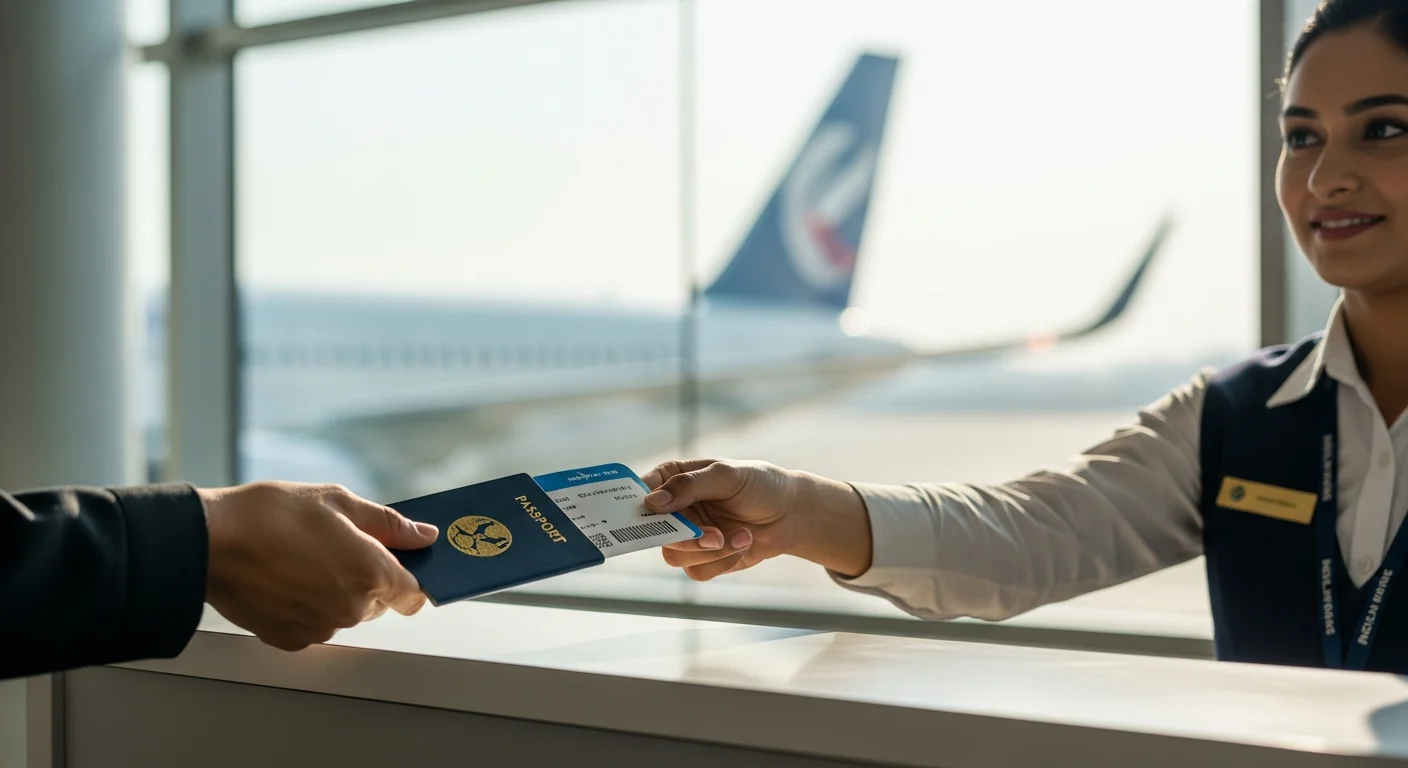
Most confusion starts with a simple assumption. People think “visa file” and “flight booking” move together. They rarely do for Canada spouse routes. What matters is where you apply and how you plan to travel once a decision arrives. Ready to file with confidence? Book a dummy ticket.
How Officers Actually See Travel Itineraries
You are issued or refused based on core evidence. That means relationship genuineness, eligibility of the sponsor or principal applicant, medicals, police checks, and admissibility. A travel itinerary sits in the supporting cast. It can help your story feel organized. It does not fix weak documentation. If you include one, keep it realistic, consistent, and easy to verify during its short validity.
Filing From India: Outland Sponsorship And SOWP
Most readers here are from India. Good news. You do not need a flight booking at the filing stage for either outland spousal sponsorship or a Spousal Open Work Permit linked to a student or worker in Canada. Your job at this point is to present a clean, well-indexed file. Focus on marriage proof, communication history, financial links, and the spouse’s status documents.
Where can a dummy itinerary add value? Use it to show that your timing lines up with life on the ground. Maybe your spouse’s university semester restarts in September. Maybe you have a 60-day notice period at work. In a brief cover letter, you can map a month window that follows biometrics and medicals. Keep it broad, like “late October,” not “16 October at 02:40 via Doha.” The broader you keep it, the lower the risk of conflicts later.
Applying Inside Canada: Inland Sponsorship Or In-Canada SOWP
If you are already in Canada with a valid status and you apply inland, a dummy ticket is usually irrelevant. Inland files are about maintaining status, completing biometrics and medicals on time, and proving a genuine relationship. Future travel plans barely feature. If you plan a short trip to India during processing, keep a simple note about dates in your personal history, not a flight hold in your upload list.
The Airport Reality Check: What Happens At Boarding And Arrival
Two different players care about two different things. Airlines check whether you have a confirmed ticket and the right travel authorization to board. Immigration officers at the port of entry check whether your purpose and documents match your category. These are not the same checkpoints.
For new permanent residents with a visa and Confirmation of Permanent Residence, a one-way confirmed ticket is normal. No dummy needed at that point. For SOWP holders, a confirmed ticket is also needed to fly, but a return is usually not expected. Your permit approval and your spouse’s status are the focus. Airline agents in India will scan your PNR. They will not accept a long-expired hold as proof of travel.
Avoiding Mixed Signals On Your File
Conflicts sink credibility. If your cover letter says “we will travel in June,” but your employer's letter shows your last working day in August, an itinerary will not save it. Align your dates across IMM forms, personal history, and any timeline notes you provide. Keep the same destination city across your plan and your spouse’s address in Canada. If your spouse lives in Calgary, routing to Vancouver with a same-day connection is fine. Stating a settlement in Toronto while showing a Calgary address is not.
When Including A Dummy Ticket Makes Practical Sense
There are India-specific moments when a temporary itinerary helps. You might need to schedule a panel physician appointment in Delhi or Hyderabad. You might want to demonstrate that your proposed entry falls after your biometrics slot. You might be budgeting around Diwali peak fares. In each case, a simple, short window is enough. Think “second half of November via the Middle East” instead of granular flight numbers.
Remember validity. If your dummy booking has a two-day PNR, plan your upload timing so it remains verifiable for a brief period after submission. If it expires before anyone looks at it, that is acceptable. Officers know these are placeholders. The key is that the plan should make sense when viewed against your forms.
A Quick Decision Path You Can Use
- Filing from India for outland PR. Skip the ticket. Add a one-paragraph timing note only if it clarifies your story.
- Filing from India for SOWP. Skip the ticket. If you add a plan, connect it to your spouse’s semester or job cycle.
- Filing inland in Canada. Do not attach itineraries. Stay focused on status and relationship evidence.
- Traveling to Canada after approval. Buy a real ticket. Airlines will require a confirmed PNR to board.
- Unsure whether a plan helps. Include a month window, not a specific date, and keep all documents consistent.
Common Pitfalls We See In India
Submitting a hyper-detailed multi-stop itinerary that you cannot keep. Uploading a booking with mismatched names or passports. Using a hold that lists a different destination from your intended residence. Quoting exact arrival dates that clash with notice periods, school exams, or passport return timelines from VFS. Each of these creates questions that delay files. Keep it clean, simple, and believable.
For most spouse applicants from India, a dummy ticket is usually not needed at filing. Use one only to show plausible timing, and only if it supports the story your documents already tell. The real ticket comes after approval, when you are ready to fly. That separation keeps your file stronger and your wallet safer.
Who Actually Needs Onward Or Return Proof, And When? Read This Before You Book
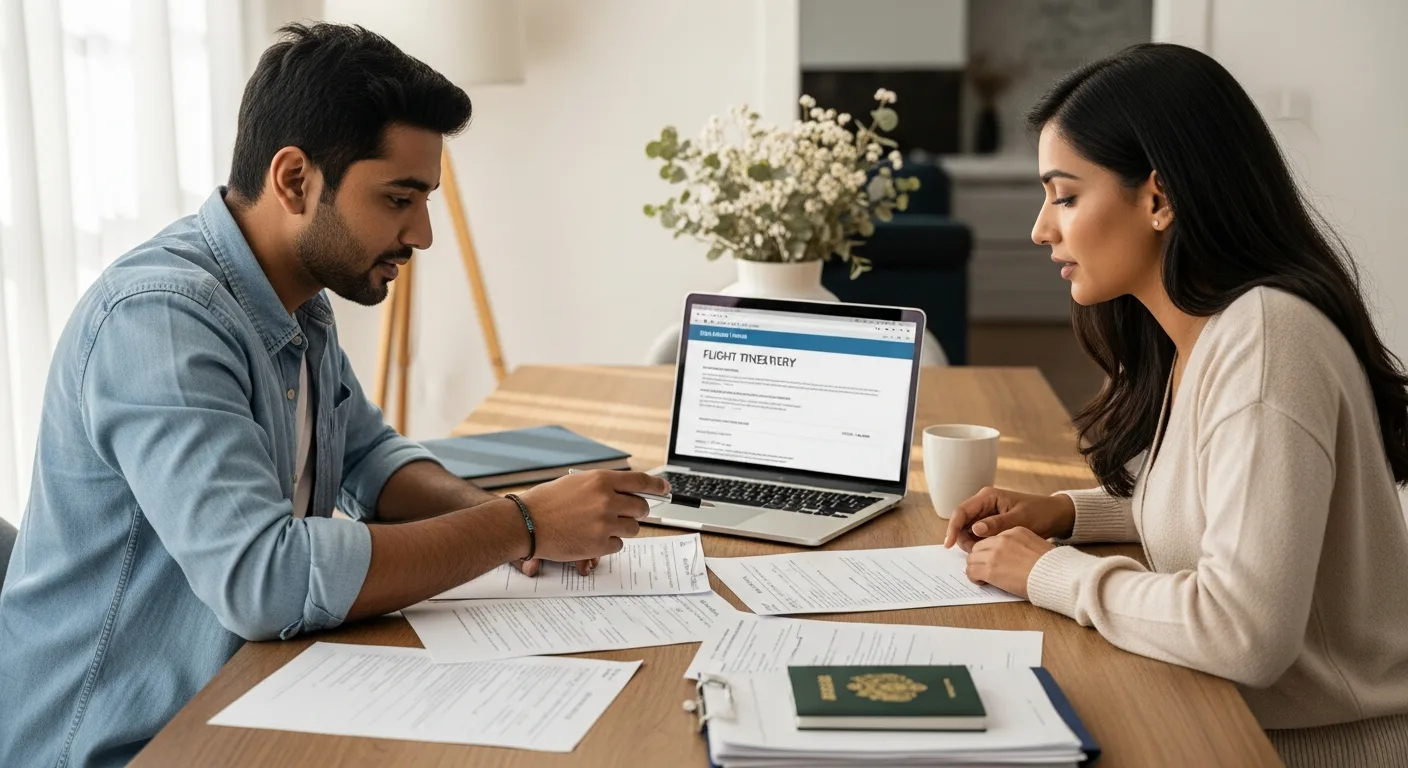
Before you spend on any ticket, map the checkpoints. Filing, airline check-in in India, and arrival in Canada each ask for different things. When you know who checks what, you stop overbuying and start planning with confidence. Lock a travel window in minutes with dummy ticket booking.
Two Paths, Two Playbooks: PR Sponsorship Versus SOWP
Canada gives spouses two common routes from India. Each has its own travel logic.
- Spousal Sponsorship To Permanent Residence: You apply, clear eligibility and admissibility, receive a visa and COPR, then travel to land as a PR. Travel proof at filing is not part of the decision. Real tickets come after approval.
- Spousal Open Work Permit (SOWP): You apply based on your spouse’s valid study or work status in Canada. Again, the file rises or falls on documentation, not on tickets. You buy a confirmed ticket only when you are ready to fly.
Think of it like cricket roles. Documentation is your top-order batter. A ticket is a field placement. Helpful, but not what wins the match.
At Filing: What IRCC Expects From You
IRCC looks for a coherent, well-supported story at the moment you submit.
- For PR Sponsorship: Relationship genuineness. Sponsor eligibility. Police certificates. Medicals. Fees. Accurate forms. A ticket is not listed as a requirement.
- For SOWP: Proof of marriage. Spouse’s permit and status. Enrollment or employment letters. Proof of funds where relevant. Personal history and ties. Again, no ticket needed.
If you attach a simple itinerary, use it to show your intended month of travel and city of arrival. Keep it broad. Keep it consistent with forms. If it adds clutter or contradicts your timeline, leave it out.
At Airline Check-In In India: What Staff Will Verify
When you finally travel, airline agents in Delhi, Mumbai, Bengaluru, or Hyderabad will check three things.
- Your Identity: Names on passport and booking must match.
- Your Eligibility to Board: TRV or eTA, or immigrant visa as applicable. Workers and new PR landings follow different permissions, but both need a valid travel authorization.
- A Live, Confirmed Ticket: Staff will scan the PNR. A long-expired hold or an unverified reservation will not pass.
This is where many applicants mix up rules. Airlines do not evaluate your relationship proof. They simply ensure the booking and authorization are valid for boarding that day.
At Arrival In Canada: What Officers Care About
Border officers at the port of entry focus on purpose and documents.
- New PR Landings: You present your visa and COPR. One-way travel is normal. No return ticket is expected.
- SOWP Entries: You show your work permit approval or visa, proof of relationship if asked, and your spouse’s status. A return ticket is not generally needed. Officers care that your entry matches your permit and your story.
The key is alignment. If your spouse studies in Halifax and you declare Halifax as your residence, a Toronto entry is fine if you connect onward. Just keep your plan consistent with what you wrote in your forms and cover letter.
Edge Cases That Confuse Applicants In India
A few situations create noise. Here is how to cut through it.
- Visitor Mindset Spilling Over: Return proof is often discussed for tourist visas. PR landings and work permits work differently. Do not import visitor rules into spouse categories.
- VAC Appointments: Biometrics and passport submissions at VFS do not require a ticket. The staff handles prints and logistics, not travel plans.
- Scholarship Timelines and Project Deadlines: Students and tech workers in Canada run on fixed calendars. If you mention those in your Statement of Purpose, keep your tentative travel window in the same range.
- Family Travel: If you include school-going children, ensure the month you state matches term breaks in India. Officers notice when your plan respects real life.
How VFS, Biometrics, And Medicals Shape Timing
Your Indian timeline often revolves around three blocks.
- Biometrics: You schedule a VAC slot. Processing continues after submission. Do not pick an entry date that precedes this step.
- Medicals: Panel physician appointments in major Indian cities can be busy. Results flow to IRCC after your visit. If your plan mentions travel, place it after expected medical clearance.
- Passport Stamping: After approval, your passport needs time for stamping and return by courier. Factor buffer days before you book a real fare.
Treat these as milestones. Your travel window should sit after them, not before.
Quick Scenarios To Benchmark Your Plan
Use these common situations to sanity check your approach.
- Spouse Of A Student, Filing SOWP From India: No ticket at filing. In your SOP, note that you aim to arrive before the next semester starts. Buy a real ticket after approval and stamping.
- Spouse Of A Skilled Worker, Filing SOWP: No ticket at filing. State that you will serve a 60-day notice period in India. Target a one-month window that follows notice and stamping.
- Outland PR Sponsor and Applicant: No ticket at filing. After COPR, choose a one-way ticket that lands within your COPR validity and medical expiry.
- Inland Applicant Already In Canada: Do not attach itineraries. Focus on maintaining status, biometrics, and medicals. Travel only if permitted and consistent with processing.
Short, clear notes are stronger than detailed, rigid dates that you cannot keep.
Practical Rules To Keep You On Track
Here is a simple checklist you can follow.
- Keep travel plans out of the file unless they add clarity.
- If you include a plan, state a month, not a day.
- Match the destination city with your spouse’s address in Canada.
- Place travel after biometrics, medicals, and stamping.
- Buy the real ticket only once you are issued and ready.
Follow these rules and you avoid rework, refunds, and questions that slow you down. You also keep your story tight across every touchpoint, from forms to the airport counter.
Process And Paperwork, Simplified: Where Travel Plans Actually Fit
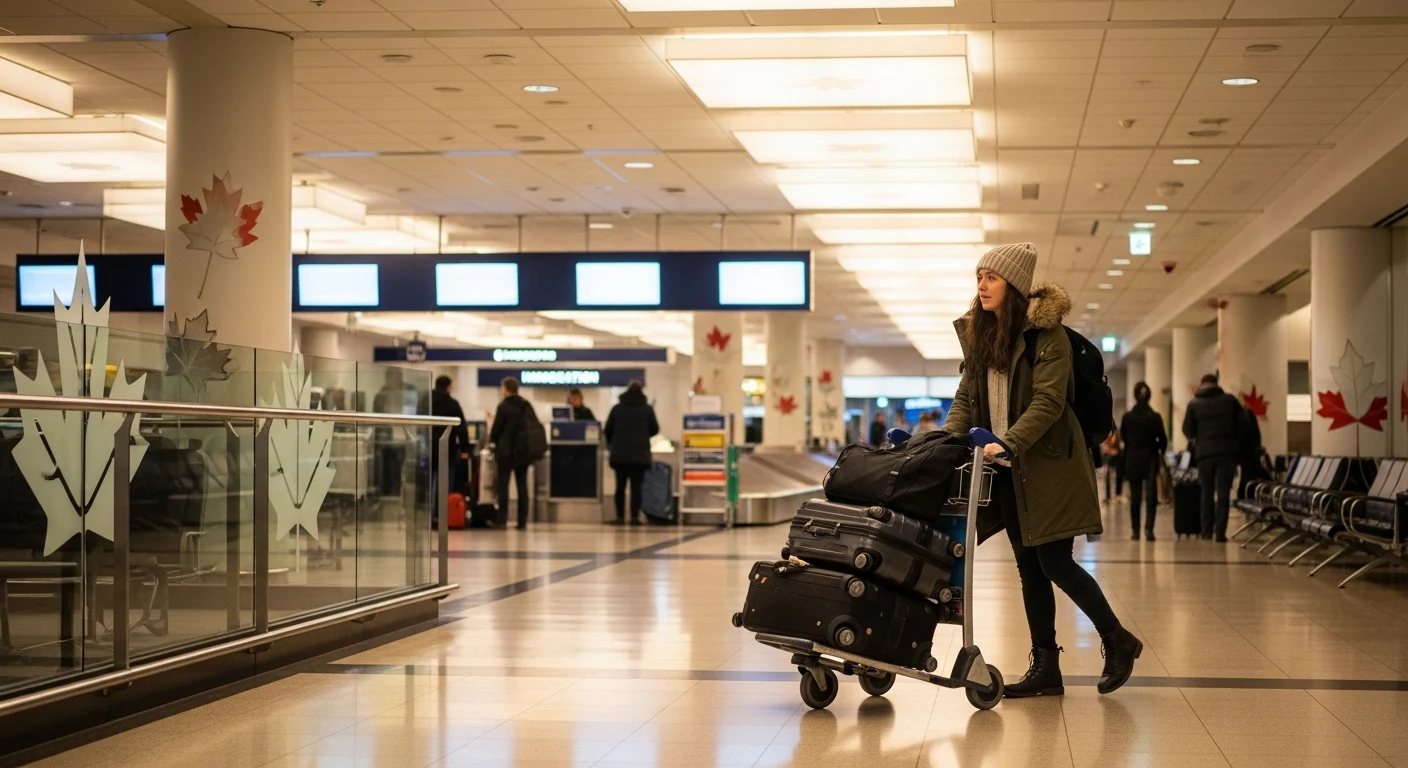
Before you think about flights, get your file airtight. A clear, consistent package helps the officer read fast and decide faster. Your itinerary should sit behind the essentials, not in front of them. Avoid pricey fares until approval—book a dummy ticket.
Start Right: Build A Clean File
Begin with the category you qualify for and the proof that backs it up. If you are a Canadian citizen ready to sponsor your spouse or partner, you will follow the spousal sponsorship program and its eligibility criteria. If you are a foreign national applying for a Spousal Open Work Permit, you will show ties to your spouse’s study or work status.
List all the documents you will provide. Think civil documents, relationship evidence, and financial support plans for family members, including any dependent child. Add supporting documents that prove a marriage-like relationship or a common-law relationship that is legally recognized. If your situation involves a conjugal partner, make that basis clear.
Spousal Sponsorship From India: The Milestones
For sponsorship from outside Canada, map each step. You complete the sponsorship application and the permanent residence application for the sponsored person. You pay the sponsorship fee, the principal applicant processing fee, and, when you are ready, the permanent residence fee. These processing fees are separate from any application fee you might see on other forms.
You also sign the undertaking agreement that confirms you will provide financial support and cover basic needs without relying on social assistance. If you have one or more children, plan for child support and support payments where applicable. A Canadian sponsor who has declared bankruptcy or owes previous spouse obligations should resolve those issues before filing.
Next, prepare application forms that are consistent across names, dates, and addresses. Include social media conversations only if they add clarity without flooding the officer. Gather additional documents like police certificates and schedule your medical exam with a panel clinic in India. Keep your valid passport current through the passport submission window.
When you submit documents, expect a visa office review and background checks. Processing times vary. Do not attach tickets to chase a quicker final decision. Officers focus on Canadian immigration rules, not flight holds.
SOWP From India: What To Prepare
For a spouse or common-law partner of a student or worker in Canada, anchor your file to your spouse’s current status. If your spouse is a Canadian permanent resident or a Canadian citizen living in Canada, that is a different route than SOWP. For SOWP, show enrollment or employment letters, pay stubs, and legal status in Canada for the spouse or common-law partner.
As the applicant, you must hold or seek a valid temporary resident status with a temporary resident visa if needed to travel later. Until then, you apply online, complete other forms, and keep your plan consistent. A temporary visa or visitor visa is separate from a work permit and follows different checks, so keep categories straight.
Inside The File: Consistency Beats Over-Detailing
Your travel plan should not contradict your narrative. If you intend to live in the same city as your spouse, ensure the plan aligns with that destination. If you promise to leave Canada for a family event, your personal history should reflect that time away after you obtain the correct status.
Use the same names across every form. If a person registered your marriage in a different state, attach proof so the officer sees why the addresses differ. If you are legally married, mention it once and tie it to the right civil proofs. If you are a spouse or common-law partner, label it correctly and only once.
When And How To Mention Travel
Keep travel language short. Place it in a cover letter that explains timing around biometrics, stamping, and the medical exam. Mention that you will purchase a confirmed ticket after approval. Do not promise a day you cannot meet.
If you discuss work or study calendars, keep the month window realistic. A visa officer wants coherence, not granularity. Reliable dummy ticket providers book you with major airlines like Air India, Emirates, Qatar Airways, or Lufthansa. That kind of verifiable plan is fine to show timing, but it should never replace core proofs.
India Logistics That Influence Timing
Your timeline in India has real anchors. Some employers need 60 days’ notice. Exam seasons and school transfers for a Canadian permanent resident family can push dates. VFS courier returns can take time after stamping. Build buffers.
If you are aiming for Canadian permanent residency, you travel after issuance, not before. Once you land and become a Canadian permanent resident, your permanent resident status governs your stay. If your goal is to live in Canada permanently, as in Canada permanently for work or family, keep your file focused on substance rather than tickets.
If you hold a valid temporary resident status already, confirm that your legal status stays intact while you wait. If not, wait for approval before you plan to fly. Citizenship Canada materials may guide formats for some forms, but always follow current instructions from the Canadian government.
Money And Forms: Pay The Right Fees, In The Right Order
Fees vary by route. A partner sponsorship fee is different from the fees for a work permit. The Canadian class distinctions and labels can be confusing, so read the guide for your stream. Some applicants use an immigration loan to cover government charges. Pay only what your stream requires. Keep every receipt.
Remember that a visa officer reads for clarity first. Use simple labels, number your exhibits, and make sure other forms mirror the same data. If you switch from a visitor mindset to a worker route, state that clearly and explain why. If you ever need to leave Canada during processing, confirm the rules for reentry before booking anything.
What Happens After Approval
Once you receive approval, you plan the real trip. A Canadian citizen sponsor does not need to travel for the applicant to land. A Canadian permanent residency case moves to passport submission and visa issuance. After stamping, buy a confirmed ticket that fits your COPR or permit validity.
If the officer asks for clarification, respond with exactly what is requested. Submit documents in the format provided. Keep copies of everything. When you arrive, carry a tidy set of printouts. You want a smooth entry, not a debate at the counter.
The takeaway is simple. Build a strong file first. Keep travel talk light and consistent. Then purchase the real ticket when your status and documents line up.
Smart Ways To Use A Dummy Ticket Without Risking Your File
You do not win approvals with flight holds. You use them to show timing and keep costs low until a decision arrives. Think of a dummy ticket as a sketch, not a contract. Keep your timeline consistent with fast dummy ticket booking.
Use It To Sketch Timing, Not To Prove Eligibility
Visa officers decide on evidence, not itineraries. Your relationship proofs, financials, admissibility, and your spouse’s Canadian status do the heavy lifting. A dummy ticket can help the story read clean by placing your planned entry in a sensible window. That is all.
Keep the plan broad. State a month and route, not a day and flight number. If your spouse studies in January, show a late December or early January arrival window. If you have a 60-day notice period in India, set the window after your last working day. Coherence beats precision.
Align With India Milestones: Biometrics, Medicals, Passport Return
Your timeline runs through three checkpoints in India. Place your tentative travel after all three.
- Biometrics at the VAC. Appointments can take a few days. Results move forward in the system after submission.
- Medicals with a panel physician. Slots in Delhi, Mumbai, Bengaluru, Hyderabad, or Chennai can be busy during exam seasons. Add time for the clinic to upload results.
- Passport stamping and courier return. After a decision, you still need your passport back before you can fly.
If your plan or cover letter points to a window, make sure that window sits after these milestones. Officers should see a realistic sequence with no overlap.
Keep It Verifiable And Short-Lived
If you attach a dummy booking, it must be checkable while it is meant to be seen. That means a live PNR during the week you file or respond to a request. It is fine if the hold expires later. Officers understand these are placeholders.
Do not bury the officer in multiple versions. One PDF is enough. Place it at the end of your evidence list or reference it once in your cover letter. Use the same name spelling and passport number that appear in your forms. Consistency keeps you out of avoidable questions.
Avoid These Traps At Stamping And Check-In
You will buy a real ticket only after approval. Until then, avoid the traps that cause stress later.
- Conflicting dates. Your letter says June, your employer's letter says the last working day in August. Fix the conflict before you upload anything.
- Wrong destination. Your spouse lives in Winnipeg, but your plan shows arrival in Vancouver with no onward leg. Either add the connection or switch the city in your plan.
- Expired or fake records. An uncheckable PNR makes the entire file look careless. Use a verifiable hold, not a screenshot of a cart.
- Over-detailing. A six-segment itinerary across three alliances invites unnecessary scrutiny. Simplicity reads as credible.
At the airport, airline staff in India will scan your PNR. They want a paid, confirmed ticket on the day you fly. A dummy booking will not get you on the plane. Upon arrival, border officers look for purpose and status. They do not award points for holding tickets for months.
Use It To Control Costs, Not To Rush Decisions
Fares spike around Diwali, Christmas, and summer breaks. A dummy reservation lets you pencil a plan into your file while you wait for the decision and stamping. You avoid cancellation penalties and date change fees. You also protect yourself from booking too early and chasing refunds.
If your Confirmation of Permanent Residence has an expiry tied to medical validity, a dummy ticket helps you show that you intend to land before that date. Keep the window within its validity. Do not commit to the very last week. Build buffers for courier delays and personal commitments.
Get A Verifiable Flight Reservation
If you need a verifiable itinerary for filing, keep it minimal. One page. One PNR. One window. If you prefer a quick option, DummyFlights.com issues a live, checkable reservation with instant delivery for a small fee. Use it only where it clarifies timing. Your approval still rests on core documents.
A Simple Playbook You Can Copy For Your Canada Spouse Visa
When used sparingly, a dummy ticket makes your file easier to read and your wallet safer. This is the approach we recommend.
- Decide whether your route even benefits from an itinerary. Inland cases usually do not.
- If you include one, write a short cover note that places travel after biometrics, medicals, and stamping. Reference a month, not a day.
- Ensure your destination city matches your spouse’s location or shows a clear connection. Keep the same city across forms, letters, and plans.
- Use a verifiable PNR. Save the PDF. Keep only one version in your upload.
- Cross-check dates against employment notice periods, school calendars, and family obligations in India. Adjust the window before you submit.
- After approval, buy a paid ticket that fits your permit or COPR validity. Do not rely on a hold for boarding.
A dummy ticket can tidy up your story, protect your budget, and keep your timing believable. It cannot replace strong evidence or fix contradictions. Treat it like a pencil sketch that proves you have thought through the journey. Keep it short, verifiable, and consistent. Then let your documents carry the case, and save the real booking for the moment you are truly ready to fly.
Ready To Book Smart, Not Early
For Canada spouse routes, you usually do not need a ticket at filing. Officers decide on relationship evidence, eligibility, medicals, and background. Use a dummy ticket only to show a sensible window after biometrics, medicals, and passport return. Keep it simple, verifiable for a short period, and consistent with every form and letter. Do not overdetail or lock yourself into dates you cannot meet.
When issued, buy a real, confirmed ticket that fits your visa or COPR validity. That split keeps your file clear and your costs low. Plan confidently, tidy your story, and save the final booking for the moment you are truly ready to fly. Submit a cleaner file today—book a dummy ticket.
Need a Canada spouse travel plan without buying flights too early?
Create a reviewable dummy ticket that keeps passenger details, route and dates consistent with your application timeline.
FAQ
Do I need a dummy ticket for a Canada spouse visa?
Usually no for spousal sponsorship itself. IRCC mainly reviews relationship evidence, sponsor eligibility, required forms and admissibility. A dummy ticket is more useful for temporary travel planning, TRV support, work-permit travel, passport stamping or post-approval arrival timing.
Can a flight reservation improve a Canada spouse sponsorship file?
It can support a travel timeline, but it does not prove the relationship or sponsor eligibility. If included too early or inconsistently, it can distract from the stronger evidence IRCC actually needs.
Is a paid ticket better than a dummy ticket for a Canada spouse case?
Not automatically. A paid ticket can create cost risk if processing shifts. A temporary reservation is often more practical when the date is not final, as long as it is truthful, reviewable and consistent with the rest of the file.
When does travel proof matter for a spouse going to Canada?
It matters most around temporary resident visa travel, airline check-in, CBSA arrival, passport stamping and post-approval planning. The permanent residence sponsorship decision itself is usually driven by eligibility and relationship evidence.
Can my spouse apply for an open work permit in Canada?
Eligibility depends on the current IRCC category and the principal applicant or sponsor situation. IRCC changed several spouse/family-member work-permit rules in 2025, so check the official eligibility page before relying on old advice.
Should India applicants include a dummy ticket at filing?
Usually only if it supports a specific temporary travel plan. For outland sponsorship from India, the stronger focus is a complete application, relationship proof, police certificates, medicals, biometrics and accurate forms.
Can a dummy ticket cause problems in a Canada spouse file?
Yes, if it is fake, manually edited, expired, inconsistent with forms, or suggests a travel plan that conflicts with the application story. A clean reservation should reduce confusion, not create a new contradiction.
What should a Canada spouse dummy ticket show?
It should show the passenger name, route, travel date, airline or booking details, and a timeline that matches the visa, work permit, passport validity and stated purpose of travel.
Does CBSA require a return ticket for every spouse entering Canada?
No single rule fits every case. CBSA officers assess identity, documents and admissibility at arrival. Airlines may also check documents before boarding, and their requirements can differ from the final border decision.
When should I create the dummy ticket for Canada spouse travel?
Create it only when the travel window is reasonably clear. For many spouse cases, that means close to passport submission, visa issuance, work-permit travel, or the actual planned trip—not at the earliest sponsorship filing stage.