
A onward ticket for a Schengen family visa helps show that a short family visit has a believable exit plan without forcing you to buy final airfare before approval. For India-based applicants, the strongest file aligns the invitation letter, stay dates, accommodation, insurance, funds and return or onward proof. A verifiable dummy ticket can work when it matches the real trip and stays consistent with the consulate checklist and airline check-in expectations.
Picture this: you are at check-in for your Delhi to Frankfurt flight and the agent asks for return or onward proof. For a Schengen family visa, that moment can feel confusing because you are not planning a normal tourist trip; you are visiting a spouse, parent, child or close relative. The practical answer is not “always buy a paid ticket.” It is to show a clean, consistent travel plan that supports the family-visit purpose and still protects your money until the visa decision is clear.
This guide keeps the decision simple for India-based travelers. You will see when onward or return proof is expected, when a reservation is enough, how airlines think at the counter, and how to keep invitation, accommodation, insurance and travel dates aligned. The goal is a file that looks prepared, realistic and easy to review.
Key facts before creating Schengen family-visa travel proof:
- Schengen family visits still need a believable exit plan, even when the purpose is visiting relatives.
- An onward ticket or return reservation should match the invitation dates, accommodation and travel insurance window.
- A dummy ticket is strongest when it is treated as temporary travel proof, not as a fake paid e-ticket.
- Airline staff can ask for onward or return proof even after a visa is issued.
- Do not buy non-refundable airfare too early unless your route, dates and visa timing are stable.
Visiting family in Schengen and need onward proof? Create a clean onward ticket with DummyFlights after your host dates, insurance and application timeline are confirmed.
Create Your Onward TicketIn This Guide
Official-source check: the EU Visa Code says Schengen applicants may be asked for supporting documents that help assess the purpose of stay, accommodation, means of subsistence and intention to leave the Member States. The European Commission also frames a Schengen short-stay visa around stays of up to 90 days in any 180-day period. Sources: EU Visa Code and European Commission Schengen visa policy.
Reviewed for: Schengen family-visit intent, onward and return proof timing, India applicant document alignment, PNR wording, airline check-in practicality and dummy-ticket claim safety.
When Is an Onward or Return Ticket Expected?

Let’s set the frame. You are applying for a Schengen Family Visa from India, and you want zero drama at the counter and zero wasted money. The key is to understand who is asking for what and at which stage. Then you can choose the safest proof of travel for your profile. Heading to the application center soon? Use onward or return proof that matches your invitation, stay dates and real route before you spend on final airfare.
Real-World Moments When Officers Expect It
Consulates often look for a clear exit plan on short-stay C visas. They know you are visiting family, not settling. A dated return or onward plan helps them see that your stay fits within 90 days.
You will usually see this asked when:
- You are a first-time Schengen traveler, or your past travel is thin.
- Your stay length is close to the permitted limit.
- Your accommodation story is vague or split between cities without a clear timeline.
- Your employment or course calendar in India is not strongly documented.
In all these cases, a clean itinerary with an exit date makes the file feel complete. It matches the story in your form, invitation, and insurance.
Times A Reservation Beats A Fully Paid Ticket
Many missions in practice accept reservations. They want to see dates that align, not proof that you paid in full. A verifiable booking works well during the application stage because processing can shift.
A reservation is especially useful when:
- Your appointment date has moved, and you expect more slippage.
- You are traveling near Indian festive peaks when fares swing hard.
- You need to fine-tune entry and exit to match your host’s schedule.
- You have internal Schengen hops and want to lock your exit last.
The goal is simple. Show intention to leave with a verifiable, date-aligned plan while keeping money safe until the decision.
Why Airlines Can Still Stop You At The Counter
Even if a consulate is fine with a reservation, airlines have their own compliance checks. The gate agent protects the carrier from fines if a passenger is refused at the border. Some agents ask for a return on short stays as a conservative practice.
Practical takeaways for India departures:
- Full-service carriers usually read documents carefully. They often accept a clear, verifiable reservation with dates.
- Some budget carriers apply stricter checks on short-stay passengers. Be ready to present a reservation that the agent can pull up and verify.
- Keep your itinerary consistent across your visa sticker dates, insurance, and accommodation letters. Inconsistency triggers extra questions.
If your plan is a one-way entry into Schengen followed by exit from a different country, ensure your multi-city layout is obvious. Show both segments or provide the onward booking separately.
Embassy Rules, VFS Checklists, And The Gate Agent: Who Calls What
Think of three layers.
- The consulate sets the document requirements. They decide if a reservation is fine during the visa decision.
- VFS manages collection and logistics in India. They check your file order, but do not decide the rules.
- The airline controls boarding. It can still ask for return proof at check-in if your situation looks uncertain.
You need to satisfy all three stages. That means using the consulate’s current wording for submission, and carrying something the airline finds convincing on the day of travel.
A Simple Decision Path For Indian Applicants
Use this quick path to choose the right proof now.
- Short, predictable trip with fixed family plans and solid travel history
Choose a paid return or a refundable fare if prices are stable. - First-time traveler or dates likely to move
Start with a verifiable reservation. Keep it aligned with your invitation and insurance. Refresh it if processing runs long. - Internal Schengen travel or multi-city exit
Present a clear plan that shows the exit city and date. Avoid tourist-style zigzags that weaken the family-visit story. - Peak-season timing or tight budgets
Avoid non-refundable buys until the visa arrives. Reservations or flexible fares protect you from fare spikes and change fees.
How To Cross-Check Current Rules Without Guesswork
Rules can vary by consulate and can change without fanfare. Do a quick verification before you book anything non-refundable.
- Read the consulate’s short-stay family-visit page. Look for language like “travel reservation” or “tentative itinerary.”
- Check the appointment portal or VFS subpage for file checklists and recent updates.
- If unclear, send a short email to the mission using their listed contact form. Ask one concise question about “reservation vs paid ticket at application.”
Then prepare for the airline reality. Before you fly, keep a printout or PDF of your reservation with a checkable record. Carry travel insurance that matches the same dates. Keep accommodation confirmations and your host’s address handy. If a counter agent has doubts, present the whole picture quickly. A tidy, consistent pack often ends the conversation in minutes.
For a Schengen Family Visa from India, proof of onward or return is common but not always a prepaid ticket. Many applicants succeed with a verifiable reservation at application, then convert to a paid ticket after approval. Plan for both the consulate and the airline. If your dates are fluid or your profile is early-stage, a reservation is the safer bridge. If your plan is locked and you want fewer moving parts, a refundable or confirmed return is fine. Keep the story consistent, and you will avoid last-minute surprises.
Family Visit Is Not a Tourist Trip: Why Your Itinerary Still Matters
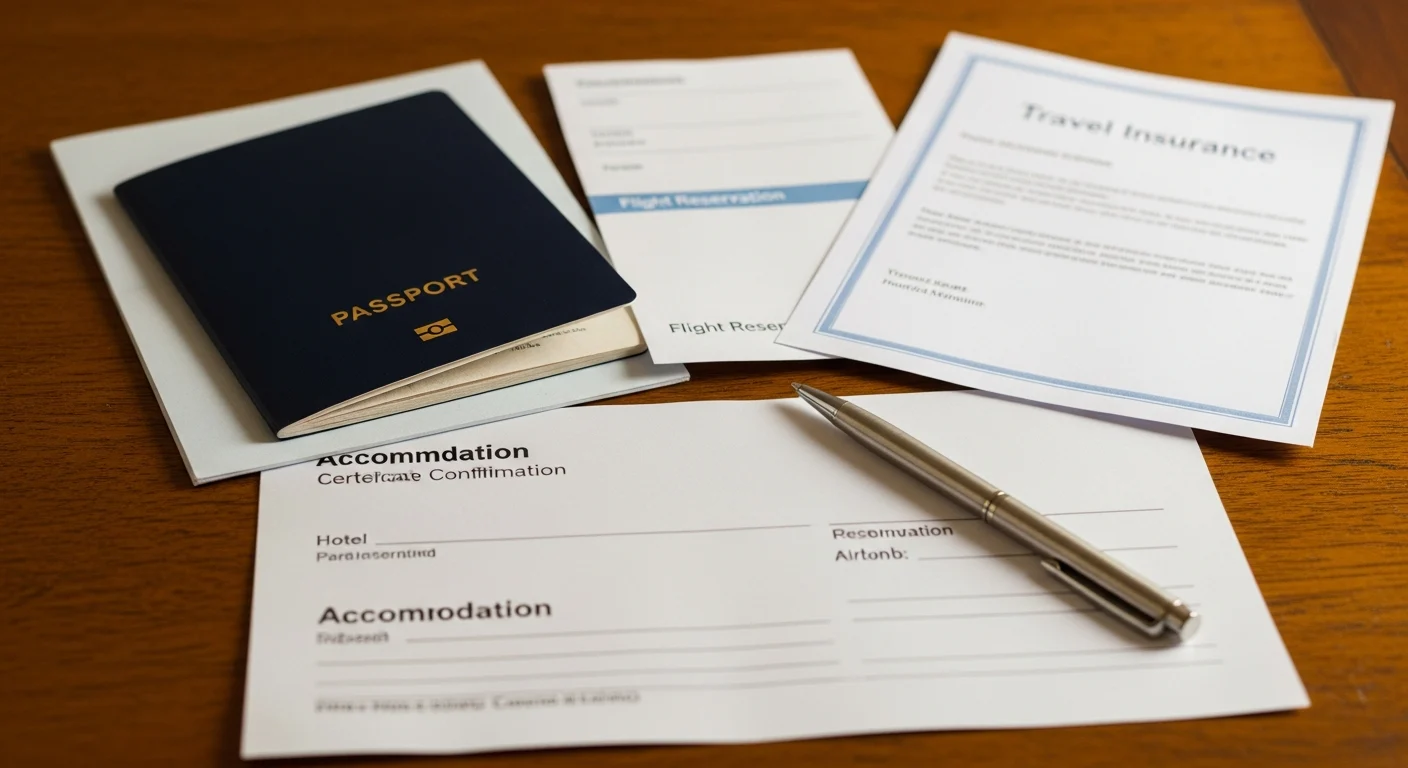
You are visiting people, not landmarks, and that changes how officers read your file. A Schengen Family Visa carries a family story, yet it is still a short stay with clear limits. Your itinerary ties the narrative together and shows a clean exit plan. Keep plans flexible with a onward ticket proof you can update anytime.
Who Counts As “Family” In Practice
Each mission defines family for short stays with its own nuance. The core list is steady across most consulates, and you should mirror it in your documents.
- Spouse or registered partner
- Minor children and sometimes dependent adult children
- Parents of minors, and in some cases, elderly parents, when care is the reason
- In-laws in limited scenarios, usually if the host is central to the visit
Match every relationship with official proof. Use a marriage certificate for spouses, birth certificates for parent-child ties, and translations where originals are not in English. If names differ between Indian documents and your passport, add an affidavit or a notarized statement to connect the dots.
Family Member Visit Vs. Tourist Visa: What Actually Changes
Your purpose is to see your people. That means your invitation and host documents do more work than in a tourist file. The officer checks whether your plan reflects family time rather than a fast city hop.
What shifts in emphasis:
- The invitation letter, host ID, or residence proof, and contact details become primary.
- Accommodation can be with the host if they confirm it in writing.
- The day count still obeys the 90 in 180 rule for Type C.
- The return plan matters because the visa is for a short, defined visit.
Tourist-style scatter itineraries can dilute the message. If you plan internal travel, link it to family reality. For example, a weekend in a nearby city with your spouse is reasonable. A five-city sprint is harder to explain for a family visit.
The Itinerary Test: Does It Prove A Coherent Story
Think of your plan as the thread that pulls the file tight. Dates, places, and documents must speak the same language.
- Entry and exit dates align with application form fields.
- Insurance covers the full period, from entry to exit.
- Accommodation letters match the same nights.
- Internal travel is short, logical, and close to family addresses.
- The exit point is believable. You return from a realistic airport, not a last-minute far corner.
A coherent itinerary calms the most common concerns. It shows you know where you will be on given dates, who you will stay with, and when you intend to leave.
India-Specific Document Habits That Save Time
Indian paperwork can be messy around names, addresses, and recent renewals. Clean these early so your itinerary is not questioned for technical reasons.
- Name variants across Aadhaar, PAN, and passport
Add a simple affidavit that confirms the same person. Keep it short and precise. - Passport renewals
If you changed your address or name, include the old passport copy and any Gazette or marriage certificate that explains the change. - Translations and apostilles
Where required by the mission, arrange these before the appointment. Officers do not enjoy guessing what a regional language certificate says. - Consistency checks
Your invitation, accommodation, and travel dates must match, even if your reservation expires later. If you refresh a booking, keep the same sequence of days.
EU Host Or Non-EU Resident Host: What That Means For You
Your host’s status shapes the tone of the file. It does not remove the need for a clear itinerary.
- If your host is an EU citizen
Officers often accept a straightforward, short plan with limited internal travel. The focus is on genuine relationships and realistic stay length. Your exit plan still needs a date that fits insurance and accommodation. - If your host is a non-EU resident of a Schengen country
Expect closer scrutiny of how long you will stay and whether your host’s permit covers your dates. Keep the itinerary tight. Use the host’s address as the anchor and add only short side trips.
Mixed nationality families should attach both the relationship proof and the host’s legal status. This reduces back and forth and keeps your timeline credible.
Multi-City Plans Without Mixed Signals
Family visits can involve more than one household. That is fine. Show it with a simple timeline.
- City A with your spouse and in-laws for the first week
- Train to City B for two days with a sibling
- Return to City A for the final days
- Fly out from the nearest major airport on a clear date
Support each segment with accommodation proof or the relevant family invitation lines. If a relative cannot host you every night, add a short hotel reservation that overlaps correctly. Officers prefer a tidy mixed plan to a vague claim.
The Quiet Red Flags To Avoid
You do not need a perfect plan. You need a believable plan with supporting paper. Avoid these patterns that trigger questions.
- Open-ended stays that drift near the 90-day limit without purpose
- One-way arrival with no visible exit plan
- Insurance that ends earlier than your return date
- Invitations that name the wrong passport number or miss the address
- Internal hops that make no sense for a family purpose
Run a five-minute self-audit. If any item looks off, fix it before your appointment.
A Schengen Family Visa is purpose-driven. Your itinerary proves the purpose and your intention to leave. Keep the plan family-centric, align every date, and anchor the trip around your host’s address. When the story is coherent on paper, you make life easy for the officer and for the airline. That is how you travel to your people without last-minute surprises.
Ways to Prove Travel Plans for a Schengen Visa Application

You have options. The goal is to show a believable exit plan for your Schengen Family Visa without risking money. Pick the proof that matches your dates, budget, and how firm your plans are. For interviews or submissions, create an onward ticket and avoid buying non-refundable fares.
Option 1: Lock In A Fully Paid Return Ticket
This is simple to understand for officers and airline staff. For a short family visit, a dated round-trip fits the story in most cases.
Pros
- Clear evidence that the visa applicant will exit the Schengen area on a set day.
- Easy to verify at the counter or by email.
- Works well if your intended date is fixed by school or office leave.
Cons
- Fare changes and cancellation fees can hurt.
- If processing slips, you may pay to move dates.
- Risky if your visa requirements are still unclear.
Best For
- Travelers with steady plans and strong family ties in Europe.
- Files that already include a valid passport, insurance covering the entire duration, and complete supporting documents.
Paperwork Fit
- Keep the ticket dates aligned with your Schengen visa application form and insurance.
- Ensure the airline routing matches your host’s city.
- If you will make several visits on a multiple-entry visa in one year, consider buying only after approval.
Option 2: Use A Verifiable Reservation Or “Dummy” Booking
This is popular for first-timers from India. You show a valid travel document plan without paying in full.
Pros
- Low financial risk while your visa application is under review.
- Dates are easy to refresh if the appointment shifts.
- Many missions accept reservations as required documents at submission.
Cons
- Holds expire after a short time limit.
- You must keep dates consistent across other documents.
What Officers Expect
- A checkable record with the passenger's name and routing.
- Coherent dates that match accommodation letters and insurance.
- Clean alignment with family relationship proofs and host status.
Airline Reality
- Carry the PDF and be ready to present it at check-in.
- Reliable dummy ticket providers book you with major airlines like Lufthansa, Air France, or British Airways.
- If you book a non-refundable flight, even with a low-cost airline, keep screenshots of fare rules in case an agent asks.
Get Verifiable Reservations From DummyFlights.com
- For a verifiable reservation during a Schengen visa application, DummyFlights.com issues instantly delivered PDFs with live PNRs for $15. Use this only if a reservation suits your file and your consulate’s wording.
Compliance Notes
- Some member states accept a reservation for submission at the external service provider counter.
- Refresh the booking if your fingerprint appointment moves.
- Add additional documents if your host’s residence permit was issued date has changed recently.
Option 3: Buy Flexible Or Refundable Fares
You pay more upfront, but you keep control. Good when plans might shift.
Pros
- Easy changes with minimal fees.
- Safer if your applicant intends to travel near peak Indian holidays.
- Works for families coordinating several cities.
Cons
- Higher base fare.
- Real flexibility varies by carrier and Schengen state route.
Best For
- Travelers who cannot risk a hard ticket before the decision.
- Applicants dealing with complex files, like a Swiss citizen hosting parents, or a Dutch national inviting in-laws.
Paperwork Fit
- Attach terms that show flexibility with your other documents.
- Keep the refundable return within the insurance window and the visa fee receipt period.
Special Situations You Might Face
India-based families see unique cases. Choose the proof that fits the story and attach the following documents that support it.
- Mixed routing with an entry visa to a neighboring Schengen state
Show a clean map of cities and your exit airport. Keep other documents aligned. - Travel involving international transit areas
If you cross hubs like DXB or DOH, check whether you need an airport transit visa based on nationality. Add this as an original document if requested. - Files touching sensitive family events
If visiting due to a deceased parent, attach the death certificate and explain the stay. Keep dates, insurance, and return proof tight. - Host status or legal residence changes
If your host upgraded to a new residence permit, include the newest copy. Clarify legal residence so the officer reads the timeline at a glance. - Applicants using the accelerated visa procedure
Keep your reservation valid through the fast track. If the Directorate General guidance changes, update your plan and note it in a short cover letter.
Embassy Preferences And How To Read Them
Different missions phrase things differently. Look for cues like “travel reservation,” “tentative itinerary,” or “paid ticket.” If unclear, send a short request through the mission contact form.
- If the mission wants a reservation at the application stage, carry that to VFS or any external service provider.
- If they ask for paid tickets only after approval, convert your hold once the sticker is issued.
- Keep every page valid and legible. Officers prefer neat files with clear labels.
Practical File Assembly For India-Based Families
Your pack should feel calm and consistent. Use this checklist to close gaps.
- Valid travel document with at least three months beyond exit.
- Insurance that covers the entire duration.
- Invitation, proof of family member status, and proof of legal residence for the host.
- Financial means that match your plan and your home country ties.
- Biometric data and fingerprints receipt if taken earlier.
- Any specific categories, like exempt fees or cases involving repatriation or appeal, are marked clearly as other documents.
For most cases, a reservation works at the start of a Schengen visa journey. Convert to a paid ticket after approval. If your dates are fixed, a refundable fare is efficient. If everything is locked, a confirmed return is fine. Keep documents coherent, respect the time limit on holds, and follow the documents list on the mission site. That is how you satisfy visa requirements in the European Union while keeping your money protected until the outcome.
Your India Application Playbook: What to File and When to Show Travel Proof
Before you start collecting papers, decide on the flow. You want a file that reads in one pass and a plan for when to show your onward or return proof. Follow this playbook and you will keep the process calm and predictable. Align your itinerary quickly using a onward ticket proof that matches your dates.
Choose The Right Mission And Category
Start with jurisdiction. Apply to the country where you will spend most nights. If nights are equal, use the country of first entry. For a short family visit, you are filing a Type C. If you are reuniting long-term, that is a different route. Choosing correctly stops delays later.
If your trip includes two countries to see relatives, write a simple night count. Officers appreciate a clear main destination. You avoid round-trip flights that do not match your story.
Nail The Invitation And Relationship Proofs
The invitation is the anchor. Ask your host for a signed letter with their full name, address, contact information, and the dates they expect you. Include a copy of their passport or residence card. If they support accommodation or daily costs, they should say so in plain words.
Match the relationship with clean evidence. Marriage certificate for spouses. Birth certificate for parent child. Add translations if a document is not in English. If names or dates differ across Indian records, include a short affidavit that connects them.
Align Accommodation With Your Dates
If you will stay with family, the invitation should state that clearly. If you will split nights between relatives, show a simple timeline. When a relative cannot host you for one segment, add a short hotel reservation that fits those dates.
Keep addresses precise. Use the same spelling in your form and invitation. Officers notice when a street name changes between documents. You want everything to point to the same doorbell.
Match Insurance To Your Itinerary
Buy travel medical insurance for the exact period you plan to be in Schengen. Start one day before entry and end one day after exit to give yourself breathing room. Print the certificate that lists your name, policy number, and date range. If you refresh your travel reservation later, make sure the policy still covers the new dates.
Show Enough Funds Without Overcomplicating It
Demonstrate that you can complete the trip without strain. Three to six months of bank statements keep things straightforward. Add recent salary slips or business proofs. If your host will cover some costs, include their statement and any local form your consulate uses for sponsorship.
Do not flood the file with random accounts. Choose the accounts that actually pay for the trip. Officers read for clarity, not volume.
When And How To Attach Onward Or Return Proof
At the application stage, many consulates accept a dated reservation. It proves your plan to leave without locking you into a fare. Align the dates with your invitation, accommodation, and insurance. Carry the PDF with a checkable record.
After approval, convert that reservation to a paid ticket. If your approved dates shift from your original plan, update insurance and any hotel bookings. Keep the record tidy for airline check-in. If a counter agent asks, you can show the full picture in thirty seconds.
Complete The Form Without Tripping On Details
Fill the form in a quiet moment. Use the same spelling of names used in your passport. List the inviting family member exactly as it appears on their ID. Entry and exit dates should match your reservation. If you plan internal travel, keep it minimal and close to your host’s city.
Double-check contact numbers and email addresses. A wrong digit can slow down verification. Print a copy of the form for your file and sign where required.
Plan The Appointment Like A Pro
Book a slot early if you are traveling near Indian holiday peaks. Prepare one master set and one spare set of documents in the order your local VFS page suggests. Use clips, not staples, unless the center instructs otherwise. Carry the originals for verification and clean photocopies for submission.
At biometrics, relax. Keep your passport, appointment letter, and payment proof within reach. If the center offers optional services, choose only what helps you. A simple SMS update can be useful. You do not need extras that do not add value to your file.
After Submission: Keep Your File Fresh
Watch your email for any request for additional documents. Reply fast with exactly what is asked, nothing more. If processing runs longer than your reservation’s validity, reissue a fresh reservation with the same sequence of dates. Keep a small note in your pack that explains the refresh. Consistency is the goal.
When a decision is ready, check that the visa sticker matches your name and passport number. Verify the validity window and the number of entries. If something looks off, raise it at the counter before you leave.
Avoid These Common Pitfalls
- Buying a non-refundable ticket before a decision
- Submitting an itinerary that does not match accommodation dates
- Letting insurance end before your planned exit
- Forgetting to update a reservation when the appointment moved
- Mixing names or addresses across documents without an explanation
- Packing a scatter itinerary that looks like pure tourism for a family visit
Create a single checklist with dates for each document. Put the invitation and relationship proof at the top. Add insurance and funds. Attach your travel reservation last. When each page supports the same story, you make the officer’s job easy and your journey smoother from the first counter to the final gate.
Choose Proof That Matches Your Story
Your Schengen Family Visa should read like a clear, time-bound visit to loved ones. Keep every date aligned across invitation, accommodation, insurance, and travel proof. For most applicants from India, a verifiable reservation at the application stage is the safest start. Convert to a paid ticket only after approval. If your plan is fixed and fares are reasonable, a refundable return works well.
Prepare for the airline too. Carry a coherent pack that shows where you stay and when you leave. Check your consulate’s current wording before you spend on anything non-refundable. Do this, and you protect your money, satisfy the officer, and board with confidence on the day you fly. Travel with a cleaner file when your onward proof, invitation, accommodation and insurance all tell the same story.
Need Schengen family-visa travel proof without locking money into final airfare? Create a clean onward ticket with route, passenger details and dates aligned before you submit or travel.
Create Your Onward TicketFrequently Asked Questions
Do I need an onward ticket for a Schengen family visa?
You may be asked to show return or onward proof because the file must show a time-bound stay. A reservation or dummy ticket can be enough at the application stage when it matches the invitation, accommodation, insurance and intended travel dates.
Is a dummy ticket acceptable for a Schengen family visa?
A dummy ticket can support the file when the checklist asks for travel proof or a reservation, not a fully paid ticket. It should be realistic, readable and consistent. Always follow the wording used by the consulate or visa center handling your case.
Should I buy a full return ticket before visa approval?
Usually, it is safer not to buy non-refundable airfare before approval unless the checklist clearly requires it or your fare is refundable. A temporary reservation helps show travel intent while avoiding unnecessary financial risk.
Can airline staff still ask for onward proof after I get the visa?
Yes. A visa allows you to travel for inspection, but airline staff may still check whether you have a believable onward or return plan before boarding, especially on one-way or flexible routes.
What should my Schengen family-visa travel proof match?
It should match the host invitation, planned arrival and exit dates, accommodation plan, travel insurance, passport name and the purpose stated in the application form or cover letter.
Is an onward ticket the same as a paid ticket?
No. An onward ticket used for proof may be a temporary reservation-style document. A paid ticket is final airfare. Do not present a temporary reservation as a guaranteed paid e-ticket if it is not one.
When should I create the onward ticket?
Create it after your appointment date, host invitation, intended stay and insurance period are stable. If the appointment moves or processing takes longer, refresh the proof so the dates still make sense.
Can I use one document for both embassy and airport checks?
Often yes, if the details remain valid and consistent. But if the reservation expires before travel, create fresh onward proof instead of carrying an outdated document.
What is the biggest red flag?
The biggest red flag is mismatch: travel dates that contradict the invitation, insurance ending too early, a route that does not fit the family visit, or a booking reference that looks edited or unclear.
Does an onward ticket guarantee approval or boarding?
No. It supports the travel-proof part of the file, but approval and boarding depend on the full application, official rules, airline checks and the traveler’s situation.
Friendly reminder: DummyFlights provides temporary travel-proof documents for planning and application support. Requirements vary by destination, airline, route and applicant situation. A dummy ticket can support a file, but it does not guarantee approval, boarding or entry.