Dummy Ticket for Transit Passengers: Do You Need It?

Dummy Ticket for Transit Passengers: Do You Need It?
Flight Booking | 10 Mar, 26

Do Transit Passengers Need Proof of Onward Travel?

At check-in, the agent scans your itinerary and pauses at the layover. “Where’s your next flight out of the transit airport?” That question can decide whether you board, even when you are only connecting and never planned to enter the country.

In this guide, we’ll map the exact transit situations that trigger proof requests, so you can tell when a dummy ticket is truly needed. You’ll learn how airside versus landside transfers change the rules, why separate tickets and baggage re-checks raise scrutiny, and what makes an onward reservation easy to verify in seconds. For uncertain layovers or self-transfers, use a verifiable dummy ticket that matches your transit onward flight.

Table of Contents

  1. The Transit Situations That Actually Trigger “Show Your Next Flight”
  2. Itinerary Patterns That Make Transit Passengers Get Flagged
  3. Choosing The Right Reservation For Transit: What Must Match And What Can Flex
  4. A Transit-Safe Plan When You’re Not 100% Sure You’ll Be Asked
  5. Making Transit Proof Simple When It Matters

When you're in the early stages of planning your visa application, securing proper documentation is crucial for a successful submission. A dummy ticket for visa serves as essential visa application proof, demonstrating your travel intentions without the financial commitment of actual flights. Many applicants use a dummy airline ticket generator with PNR to create temporary flight itineraries that perfectly align with their planned route and dates. These tools simplify the entire process by generating realistic dummy flight tickets that look professional and meet embassy standards for onward ticket requirements. The advantage is clear: you get verifiable proof of your plans without any risk of losing money on changeable bookings. Whether preparing for Schengen, UK, or other international visas, these dummy reservations provide the confidence needed during your application. The process is quick, secure, and designed specifically for travelers who need flexibility. Take the next step in your preparations by exploring advanced options in our detailed guide to using a dummy airline ticket generator with PNR for seamless visa documentation.


The Transit Situations That Actually Trigger “Show Your Next Flight”

The Transit Situations That Actually Trigger “Show Your Next Flight”

Transit does not mean invisible. On routes like Istanbul to Frankfurt via London Heathrow, you can be fully “in transit” and still face a proof-of-onward check that decides your boarding in the first two minutes.

Many travelers are surprised to learn that a dummy ticket for transit passengers can still be relevant in 2026, depending on the airport, airline, and visa rules of the connecting country. Even when you don’t plan to enter the country, immigration or airline staff may ask for proof of onward travel to ensure your transit route complies with their entry policies.

Requirements vary widely between regions: some airports allow seamless airside transit with no document checks, while others require clear onward itineraries before boarding the first flight. Having a verifiable onward reservation helps avoid complications such as denied boarding, extended questioning, or being forced to rebook at the airport.

Last updated: March 2026 — Based on current airline transit rules, IATA regulations, and updated immigration screening procedures for connecting travelers.

Airline Check-In Is Often the Real Decision Point, Not the Transit Airport

Most proof requests happen before you ever reach the transit country. A Qatar Airways desk in Doha, an Emirates counter in Dubai, or a Lufthansa counter in Singapore may ask for your next flight out of the transit airport because they carry the liability if you are refused onward movement.

This is why two passengers on the same connection can have different experiences. The check is tied to your passport, your route, and the transit rules staff are trained to enforce for that corridor. If your itinerary is Karachi to Toronto via a Schengen hub, you might be asked for the onward segment even if your bags are tagged through.

When the agent says “Show me your next flight,” they usually want something that passes a fast verification test. Keep these ready on your phone and offline as a PDF:

  • The booking reference (PNR) for the onward segment

  • A clear itinerary page showing airport codes, dates, and times

  • Any transit visa or valid entry document relevant to that airport (if your route triggers it)

Airside Transit vs Landside Transit: The One Detail That Changes Everything

Airside transit is the cleanest case. Think Tokyo Haneda to Los Angeles via Seoul Incheon on one ticket, where you stay behind security and never approach immigration. Proof checks can still happen, but the risk is lower because your path is controlled.

Landside transit changes the stakes. If your route is Nairobi to Paris via London and you must switch terminals in a way that requires passing UK border control, you can be treated like a short visitor. That is when onward proof becomes more than a formality.

Common situations that push you landside include:

  • Terminal changes that require exiting the sterile transfer zone (seen at some large hubs)

  • Overnight layovers where the airside area closes or transfer corridors are restricted

  • Self-transfer journeys where you must collect bags and re-check at public counters

If you are unsure which one you have, check the airport’s official “connections” guidance for your exact terminal pair and airline. “Follow Flight Connections” is not always the same as “Remain Airside.”

Transit Visa Rules Are Not the Same as Onward Travel Proof Rules

A UK Direct Airside Transit Visa (DATV) rule is about whether you may transit airside at all. Onward proof is about whether your journey looks complete and verifiable. They overlap, but they are not the same question.

For example, on a Delhi to Cancun itinerary via London, you may be DATV-exempt due to a valid US visa, yet still be asked at origin to show a verified next segment out of Heathrow. The staff member is not debating your eligibility. They are confirming you have a credible onward plan that fits the transit corridor.

Similarly, on a Manila to Madrid itinerary via Paris, you might not need a French airport transit visa for your setup, but you can still be asked to prove the onward flight to Spain if the itinerary looks like a self-managed connection.

The Layover Length Thresholds That Increase Scrutiny

Layover length is a quiet trigger. A 55-minute connection through Frankfurt on a single ticket often looks clean. A 14-hour layover through Istanbul can look like an attempted stopover, even if you booked it as “transit.”

Overnight timing raises questions because it increases the chance you will need to go landside. For example, Johannesburg to Rome via Amsterdam with an overnight connection can lead to staff asking, “Where will you be during the night?” The moment you are expected to leave the airside area, your onward proof becomes more important.

Also, watch the “impossible connection” problem. A 35-minute self-transfer at Paris CDG between two separate tickets can trigger a closer check because it looks operationally risky. If staff expect you might miss the onward flight, they may ask for stronger proof that you can complete the journey.

Route-Based Triggers That Make Staff Ask More Questions

Some routes are simply policed more tightly at the check-in stage. A one-way itinerary from Istanbul to Mexico City via Madrid may prompt questions about whether your final entry conditions are strict or if your transit hub is known for document checks on that corridor.

Route friction increases when:

  • Your final destination has tight entry screening, and you are transiting through a major hub.

  • Your transit point has complex rules (for example, UK transit categories or certain Schengen airport transit visa setups).

  • Your ticket pattern looks like a chain of one-way rather than a coherent trip.

The point is not to fear specific airports. It is to recognize that the probability of being asked is shaped by the corridor your booking represents.

When You Need Proof for the Transit Country vs Proof for the Final Destination

Not every “show me proof” request is about transit. On a Bangkok to Toronto itinerary via Vancouver, staff may be checking Canada transit rules and also verifying that you can enter your final destination. Those are two separate checks, and mixing them up wastes time.

A quick way to tell which one you are facing is to listen to the wording:

  • If they reference the layover city or terminal change, they are thinking about transit movement and whether you will be forced landside.

  • If they reference your destination visa or entry permission, they are verifying you can complete the trip beyond transit.

When you understand who is asking and why, it becomes much easier to spot the itinerary patterns that trigger these checks most often, especially on self-transfer and mixed-airline journeys.


Itinerary Patterns That Make Transit Passengers Get Flagged

Itinerary Patterns That Make Transit Passengers Get Flagged

The fastest way to get questioned in transit is not your passport stamp history. It is an itinerary that looks like you might not be able to complete the journey you are claiming, especially when the transfer is self-managed.

Self-Transfer and Separate Tickets: The Fastest Way to Lose “Protected Transit”

A single-ticket connection signals that the airline has accepted responsibility for getting you to the end of the itinerary. Separate tickets do the opposite. They tell staff you are stitching the trip together yourself.

That matters on routes like Casablanca to Bangkok via Istanbul. If your first segment is on one booking and your onward flight is on another, the origin counter may treat you as a passenger who might get stuck in transit. That is when a proof request becomes sharper, because the staff wants to see that the second flight is real and usable.

Separate tickets also make it harder to explain what happens if you miss the onward flight. If your connection time is tight, expect questions like:

  • “What will you do if you miss the next flight?”

  • “Do you have a confirmed booking out of the transit airport?”

  • “Are your bags checked through?”

If you cannot answer those quickly, you can get sent to a supervisor for a longer document review.

Baggage Re-Check Scenarios That Quietly Turn Transit Into Entry

Many travelers think transit is only about the time between flights. Baggage rules often matter more.

If you must collect baggage in the transit city, you may have to pass immigration to enter the baggage hall. That turns a “connection” into a practical entry attempt, even if you plan to leave again a few hours later.

This shows up frequently in these situations:

  • Two separate tickets where airlines do not interline bags

  • Mixed full-service and low-cost segments

  • Different airports in the same city (for example, arriving at one airport and departing from another)

On a Lima to Rome route via Madrid, a bag pick-up requirement can force you to go landside. Staff at origin may anticipate that and ask for stronger proof that you will be allowed to exit again, including an onward reservation that lines up with your connection time.

If you are checking a bag, confirm in advance whether the first airline will through-check it to your final destination. If the answer is “no,” treat your layover as a high-scrutiny connection.

Low-Cost Carriers and Mixed Airlines: Enforcement Is Different

Low-cost carriers run on strict rules and quick decisions. They usually do not have the same flexibility for misconnects, and they do not always have transfer desks designed for complex itineraries.

If your route is Athens to Kuala Lumpur via Abu Dhabi, and your onward leg is with a carrier that does not support through-checking, the first airline may ask for proof of the onward flight because they expect you to be landside in transit.

Mixed airline itineraries also create verification friction. A staff member may be able to verify the first booking instantly, but struggle to validate the second one if it is on a different system. That is often when you hear, “We can’t see it.”

To reduce that friction, keep:

  • The onward booking reference

  • A clean itinerary page with the flight number and date

  • A second verification path, such as the airline’s manage-booking page, was saved offline

Open-Jaw, Multi-City, and Indirect Returns That Confuse Desk Staff

Transit passengers get flagged when the itinerary takes mental effort to understand. Open-jaw and multi-city plans can be perfectly legitimate, but they often look incomplete at a glance.

Example: You fly Tunis to Paris via Rome, but your “return” is from Lyon two weeks later. A rushed desk agent may read that as “one-way” and ask for proof that you will leave the Schengen area or your final destination.

The fix is not to simplify your trip. The fix is to make the story easy to verify.

Make your onward segment match one of these clear patterns:

  • The next flight out of the transit airport on the same calendar day

  • The next flight that clearly continues to your final destination

  • A next flight that matches the entry permission you already hold for the destination

When your booking looks like a puzzle, the staff stop processing and start questioning.

The “Transit to Nowhere” Problem: When Your Next Stop Looks Unclear

Some itineraries create a credibility gap. The route technically continues, but the onward leg looks disconnected from your plan.

This happens when:

  • The onward flight departs from a different terminal or airport with too little time

  • The onward flight is scheduled days later without an obvious reason

  • The onward flight goes to a third country that requires extra entry permissions, which you have not addressed

For instance, if you are flying from Jakarta to São Paulo via Doha, and your onward segment shows a stop in a country with strict entry rules, you might be asked how you plan to enter that country, even if it is only a short layover. The issue is not curiosity. It is whether the chain of travel is plausible.

Your onward proof should reduce questions, not create new ones.

Tight Connections and Impossible Timings That Invite Extra Questions

Desk staff is trained to spot itineraries that look operationally unrealistic. A 30-minute connection on separate tickets at a large hub can trigger extra scrutiny because it suggests you might miss the onward flight and become stuck in transit.

A common mistake is presenting an onward reservation that departs before you could realistically clear transfer security or move terminals. Even if the reservation is verifiable, the timing can still raise questions.

Before you rely on a transit onward reservation, check:

  • Minimum connection time for the airport and terminal pair

  • Whether you must clear transfer security again

  • Whether you have to change terminals using public transport

If the timing looks impossible, staff may push for a different plan that looks achievable. Always keep these ready to avoid delays:

  • Onward booking reference and itinerary PDF for the second ticket

  • Baggage policy confirmation for the first airline, especially if it will not through-check

  • A realistic connection time that matches the hub’s terminal transfer process


Choosing The Right Reservation For Transit: What Must Match And What Can Flex

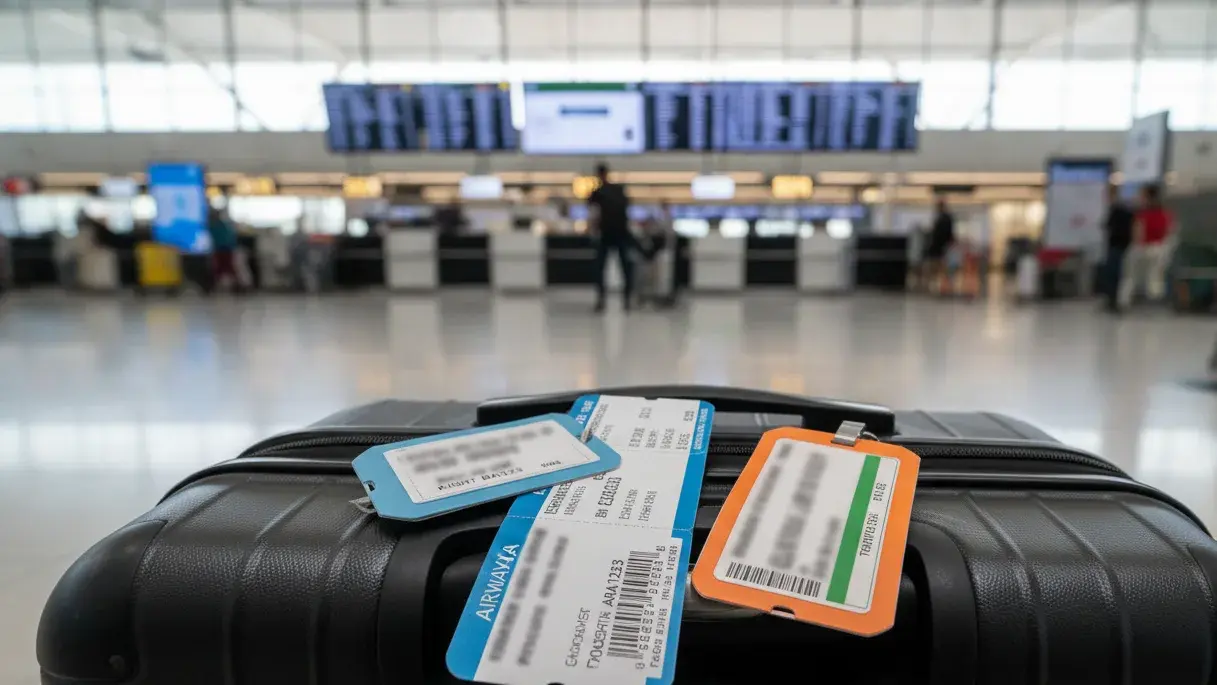
Once you know your connection has scrutiny triggers, your next job is choosing proof that matches how transit really works on that route. The goal is simple: when someone asks, you can show a clean flight itinerary that holds up under a fast system check.

Match The “Proof Window” To Your Transit Window

Transit questions are time-bound. Staff care whether your onward journey is real within the hours you are connecting, not whether you have a perfect plan weeks out.

If you use a temporary flight reservation, make sure the “valid until” window comfortably covers:

  • Your check-in time at the origin airport

  • Your arrival time at the transit hub

  • A realistic buffer for delay and re-screening

This matters most for a dummy ticket for visa cases where your visa appointment is still ahead, but you are also flying soon as part of your visa application process. A proof document that expires mid-trip invites extra questioning, even if your travel plans are solid.

Also, align the departure date with your connection logic. For multi-city flights, the onward segment should sit naturally after your arrival, not before it, and the travel dates should not create a gap that looks like an unplanned stopover.

The Verification Test: What Staff Can Actually Check In 60 Seconds

In transit, the strongest proof is a verifiable flight reservation that can be validated while you stand at the counter. Staff do not have time for long explanations. They want a booking reference number that returns a result.

A verified flight reservation usually passes because it offers at least one quick check path, such as:

  • Lookup on the airline's website using a PNR code and surname

  • A PDF showing the valid pnr and core flight details

  • A reference that matches what the airline system expects at check-in

What often causes delays is proof that cannot be checked outside a screenshot. A dummy airline ticket generator may output a neat layout, but if it does not connect to a real locator in an airline system, staff cannot treat it as valid proof. The same issue arises with a dummy flight ticket online that shows a route but has no confirmable record.

If the agent asks for an e-ticket number, it helps to know what you have. Some documents show a ticketed flight. Others are a flight reservation only. Both can be useful, but they answer different questions during transit document checks.

Name Formatting And Passport Consistency That Prevents Instant Rejection

Most “not found” problems are name problems. In transit, small mismatches become big fast because staff assume the proof is unreliable.

Check these before you travel:

  • Passenger details match your passport details, including spacing and order

  • Your surname is exactly the same across segments

  • The reservation shows a valid passenger name record that the system can retrieve

Be careful with middle names and shortened first names. If your booking form creates a different name string than your passport, you may end up with proof that is technically correct but practically unusable at the desk.

If you are a valid passenger on the flight, your proof should read that way immediately. A staff member should not need to “interpret” your name across documents.

Choosing The “Next Segment” That Makes Sense To Humans And Systems

Your next segment should look plausible for the airport, terminals, and connection time. If it looks strange, staff start asking questions that have nothing to do with transit.

A good onward segment has three qualities:

  • It continues your travel itinerary in a way that matches normal routing.

  • It reflects actual travel timing, including transfer security and terminal moves.

  • It fits your entry status at the final destination, whether that is a Schengen visa, UK visa, or another permission structure tied to your visa requirements.

Keep the story simple. If your final destination is in Europe and your route is structured for Schengen visa applications, the onward flight should be a logical continuation, not a detour that raises new border questions.

It is also fine if your onward leg is operated by a major carrier like Lufthansa, Emirates, or United Airlines. The key is not the brand. The key is whether the record can be verified and whether the routing appears to be an actual flight you could reasonably catch.

When A Confirmed Reservation Is Better Than A Refundable Ticket For Transit Purposes

There are two common approaches. Some travelers use a dummy flight ticket or dummy airline ticket as proof of onward travel. Others buy a paid ticket, sometimes a refundable fare, to feel closer to a real ticket.

For transit, the decision should be based on what you expect to be checked:

  • If the risk is airline verification at check-in, prioritize a verifiable flight itinerary

  • If the risk is needing flexibility after disruption, prioritize change options over price

  • If staff tend to ask for stronger evidence on your corridor, a confirmed record can reduce back-and-forth

A non-refundable ticket is not automatically “stronger” if it is hard to change and your connection is fragile. At the same time, a cheap, unvalidated dummy ticket can lead to lengthy counter discussions. The sweet spot is proof that is checkable and aligned with your timings, whether it is a temporary reservation or a ticketed booking.

Also, avoid anything that looks like a fake ticket. Even if your intent is honest, unclear formatting or unverifiable data can cause staff to treat the document as unreliable.

If you rely on dummy ticket services, make sure the output is a verifiable dummy ticket with a clean record lookup. Many visa applicants prefer genuine dummy tickets that behave like a real flight reservation during quick checks. That is how you keep the process calm and professional.

What To Carry: The Transit Document Stack That Solves Most Disputes

Transit questions are usually solved by clarity, not volume. You want a tight set of files that answer common counter prompts without opening new debates.

Carry this as offline PDFs on your phone:

  • Your flight booking confirmation shows the booking reference number and route

  • The onward segment proof showing the return ticket if your itinerary includes one

  • A short page with key travel details, including times and terminals if shown

  • Your visa proof or entry permission documents relevant to the destination and transit corridor

If someone tries to steer the conversation toward hotel bookings, keep it focused. A hotel reservation or dummy hotel booking rarely answers a transit check, because the question is about onward movement, not where you sleep.

The convenience of booking dummy tickets online has transformed how travelers prepare for international journeys and visa applications. Professional services now offer secure platforms where you can instantly receive your dummy ticket PDF for visa compliance, complete with accurate passenger details and verifiable PNR codes. This approach ensures your onward ticket meets strict embassy requirements while providing peace of mind during both visa processing and actual transit checks at the airport. Security features, instant delivery, and full compliance make these online dummy flight ticket solutions far superior to manual arrangements. You avoid expensive refundable fares while still presenting documentation that satisfies airline staff and immigration officers. The documents are formatted professionally and ready for immediate use or printing. For anyone dealing with complex itineraries or transit situations, having quick access to properly structured proof of onward travel is invaluable. Learn more about creating and using these essential documents by checking our complete resource on how to download dummy ticket PDF for visa applications efficiently.


A Transit-Safe Plan When You’re Not 100% Sure You’ll Be Asked

Transit checks rarely come with a warning. You can have a smooth transfer 10 times and then be asked for proof on the 11th, usually when your route looks self-managed or your connection is fragile.

The 5-Minute Decision Flow Before You Book Anything

Before you commit to any dummy ticket booking, take five minutes to map what the airline counter will see. We want your proof to match the reality of your transit route, not an idealized version.

Start with these questions:

  • Are you transiting on one ticket, or are you on separate tickets with a self-transfer?

  • Will your baggage be checked through, or do you need to collect it and re-check?

  • Are you switching terminals in a way that might push you landside?

  • Is your layover overnight, long, or likely to face operational changes?

  • Can your onward booking be verified quickly if staff try to confirm it?

If your answers point to a higher-risk connection, a dummy ticket online can be useful when it behaves like a real record, not just a document. Your goal is simple. You want a valid ticket pattern for transit movement, even if you are using a temporary solution to support the visa process.

What If Your First Flight Delays And Your Transit Plan Collapses

Delays change the story at the worst time, usually mid-journey when you have fewer options. A missed connection can also change whether you stay airside.

If your first flight is delayed and you are rebooked, staff may ask for updated proof of onward travel before issuing new boarding passes, especially if you have separate tickets. The question becomes, “Can you still leave the transit airport legally and practically?”

We recommend preparing two things before you travel:

  • A flexible onward booking that can adjust to a new departure time if your connection shifts

  • An offline copy of your updated flight itinerary, so you are not dependent on airport Wi-Fi

A missed onward journey can also create a timing mismatch. Your proof may show a departure date that is no longer realistic. That is where people scramble and end up showing a random booking that does not line up with their new travel details. Keep your proof aligned with the new plan, not the plan you hoped would happen.

How To Handle “We Can’t Verify This” At The Counter

When staff cannot verify your proof, the problem is usually not your route. It is what they can see on their screen.

Stay calm and make the verification easy. Offer a clean path first.

Try this sequence:

  • Provide the booking reference number and your last name exactly as shown

  • Open the record lookup on the airline's official site if you have it saved

  • Show the PDF that includes the flight number, date, and passenger name

If the agent says your proof looks like a dummy air ticket, do not argue about labels. Keep it practical. Ask what they need to see for validation. Some desks want a record they can check themselves. Others only need a consistent itinerary that matches your visa application and onward plan.

Avoid mixing in unrelated documents. A hotel booking does not solve a transit boarding check. Keep the discussion focused on the next flight out of the transit airport.

If You Get Forced Landside Unexpectedly

Forced landside situations often happen after irregular operations. The transfer corridor closes. A terminal shuttle stops running. The airline asks you to collect baggage. Suddenly, you are dealing with immigration when you expected a simple connection.

If you get forced landside, you may face two immediate questions:

  • Do you have permission to enter, even briefly?

  • Do you have a clear onward booking that shows you will leave?

This is where a real, verifiable dummy ticket can be useful, because it answers the second question quickly. It does not replace entry permission, but it can support your story that you are moving onward and not trying to remain in the transit country.

Also, be ready for the pressure of timing. If immigration or the airline gives you a short window to re-check and depart, your proof should not be locked to a schedule you can no longer meet.

If you decide you need a verifiable dummy ticket for a transit route, DummyFlights.com can provide an instantly verifiable flight reservation with a PNR with PDF, unlimited date changes, and transparent pricing: $15 (~₹1,300).

Mumbai To Europe With A Long Layover That Turns Into Landside Transit

An applicant flying out of Mumbai to Europe with a long layover can run into a common surprise. The layover looks like transit on paper, but the airport flow or airline instructions push you to exit and re-enter for the onward segment.

In that moment, staff may ask for verifiable proof of your onward plan. If you have a book dummy flight ticket record that matches your passport name and onward timing, you can usually keep the process moving without escalating to a supervisor.

The best setup is proof that reads like a real airline ticket to staff doing a quick check, even if you are using it for visa assistance during the broader travel-planning phase.


Making Transit Proof Simple When It Matters

When your route includes a tight layover, separate tickets, or a possible landside transfer, the right flight document keeps the transit conversation short. We want your flight proof to look consistent and credible when airline staff or visa officers ask for it, without forcing you to commit to a real flight ticket too early in the visa process.

If you choose to book dummy ticket support, treat it like a practical safeguard for visa approval and smoother boarding checks. Keep your paperwork aligned with your onward plan, especially on routes that pass through UK hubs where UK visas and transit rules can trigger extra questions, and always keep your proof within what is a dummy ticket legal for your visa application.

As you wrap up your visa preparations, understanding the role of quality dummy tickets becomes the key to a confident application. Embassy-approved documentation requires clear evidence of your onward travel plans, making a reliable dummy ticket for visa one of the smartest tools available. These documents provide verifiable proof of your ticket onward for visa purposes and help satisfy both consular officers and airline check-in requirements without locking you into inflexible bookings. Always verify that your dummy reservation includes consistent name matching, realistic timings, and proper formatting to serve effectively as proof of onward travel. The most successful applicants choose services that deliver authentic-looking dummy flight tickets designed specifically for immigration and transit scenarios. This strategy minimizes risks while keeping your options open. For complete clarity on these essential travel documents and best practices, be sure to read our in-depth explanation of what is a dummy ticket and how it supports smooth visa approvals and international travel.

More Resources

  • Blog — Latest dummy ticket and visa tips
  • About Us — Meet the team behind verified reservations
  • FAQ — Answers to every dummy ticket question

About the Author

Visa Expert Team — With over 10 years of combined experience in travel documentation and visa assistance, our editorial team specializes in creating verifiable flight and hotel itineraries for visa applications. We have supported travelers across 50+ countries by aligning documentation with embassy and immigration standards.

Editorial Standards & Experience

Our content is based on real-world visa application cases, airline reservation systems (GDS), and ongoing monitoring of embassy and consular documentation requirements. Articles are reviewed and updated regularly to reflect current practices.

Trusted & Official References

Important Disclaimer

While our flight and hotel reservations are created to meet common embassy requirements, acceptance is not guaranteed and may vary by country, nationality, or consulate. Applicants should always verify documentation rules with the relevant embassy or official government website prior to submission.

Visa Resources

Need official visa guidance before you submit?

For embassy checklists, visa document rules, and proof-of-travel requirements, read our trusted guides: Expert visa guides by BookForVisa .

Tip: For official embassy checklists and visa documentation requirements, consult reliable government or travel advisory sources before submission..