
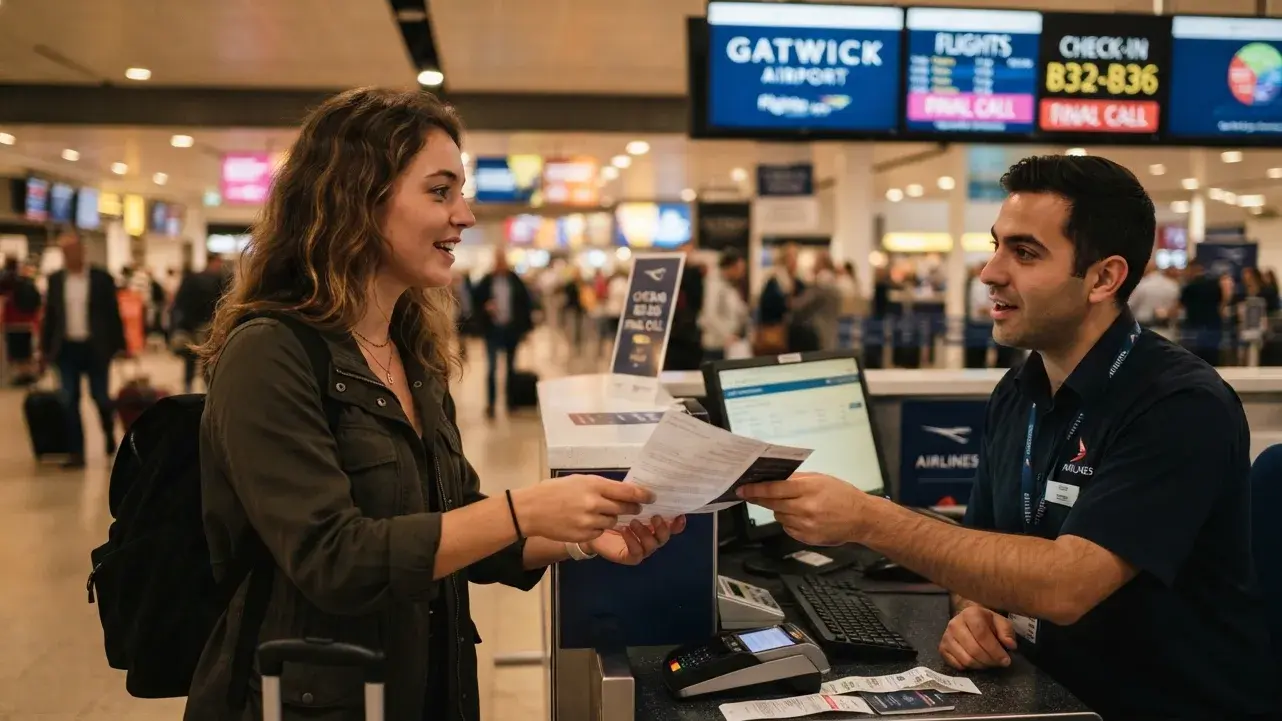
Your visa gets approved. Your hotel is booked. Your bags are packed. Then the agent at baggage drop asks a question your embassy never did: where is your onward ticket? This is not a visa formality resurfacing late. It is a separate airline check, run for the airline’s own protection against fines, return-transport costs and denied-entry problems if you are refused abroad.
That means passing a visa interview guarantees nothing at the counter. Kiosks, online check-in and manned baggage drop can handle verification differently, and a document that looks fine to you can still read as weak or unconfirmed when the agent checks the booking screen. What matters at that moment is not just having a PDF. It is having a reservation that answers the airline’s exact question before the bag-drop window closes.
Key facts before baggage drop:
- Airline checks are separate from embassy or visa checks.
- Online check-in does not always clear onward-travel proof.
- Bag drop is often where a human agent resolves destination-document flags.
- The ticket onward should be readable, current and matched to your passport name.
- One clean onward document is usually stronger than several conflicting backups.
Flying one-way or using flexible onward plans? Create clean onward ticket proof before baggage drop so the airline counter can review your route, date and booking details quickly.
Create Onward ProofIn This Guide
Official-source check: IATA describes Timatic as an airline-used source for checking passenger travel-document requirements, including passports, visas and health rules. UK carrier-liability guidance also explains that carriers can face charges when they bring inadequately documented passengers, which is why airline staff review destination documents before carriage. U.S. CBP’s Carrier Liaison Program also supports international air carriers with entry requirements, document validity advice and fraudulent-document detection. Sources: IATA Timatic, GOV.UK carrier charging procedures and U.S. CBP Carrier Liaison Program.
Reviewed for: airline baggage-drop wording, onward-ticket proof logic, counter-screen practicality, PNR terminology, carrier-liability context and safe travel-document claims.
The Handshake Between Airlines and Immigration You Never See
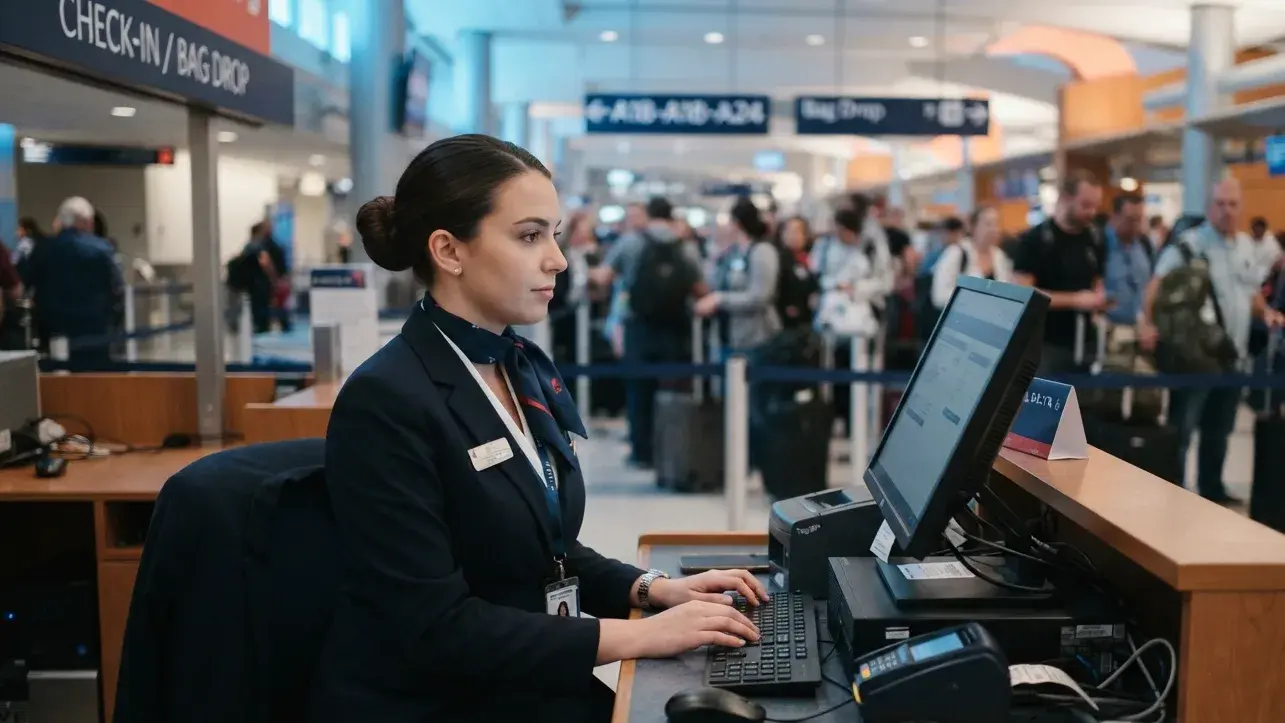
Your visa approval and your boarding pass come from two different systems, and they rarely talk to each other the way travelers expect. To understand why an airline agent cares about your onward ticket at all, you need to see the process from the counter side, starting with what happens when your passport is scanned.
Why airlines care about your missing onward ticket
Immigration officers assess admissibility and travel intent at arrival, not before you board. That timing matters. If you land somewhere and get refused entry, the airline that carried you can be left with return-transport duties, admin costs or regulatory exposure.
That is the practical reason ground staff ask about onward travel. They are not trying to re-run your visa interview. They are trying to clear the airline’s own carriage risk before your checked baggage is accepted and before you become harder to remove from the process.
Scrutiny also changes by route. A flight into a country with stricter entry conditions may be checked harder than a familiar low-risk route, because the airline’s exposure changes. You might fly a route once without being asked and then get asked the next time. That does not always mean the rule changed. It may mean the risk flag, airport process, agent workflow or destination-document profile changed.
The background check happening behind the counter screen
Long before an agent looks up and asks you a question, the system may have already flagged your file. Airlines use destination-rule tools and booking records to review whether the passenger appears to have the documents needed for the journey.
This check can include simple mechanics that matter more than most travelers realize:
- Whether the passenger name matches the passport or accepted ID.
- Whether the active booking reference matches the passenger record.
- Whether the itinerary shows a believable exit or onward route where required.
- Whether the document appears current enough for the check-in date.
- Whether the airline can accept baggage for the routing shown.
If something does not line up, the agent is not improvising a random question. They are often responding to a flag or missing detail the system has already raised. That is why onward-travel questions can feel automatic. In many cases, the agent is clearing a workflow, not personally judging the trip.
There is also a ticket-structure mechanic tied to baggage. Through tickets can allow bags to be tagged to a final destination in one motion. Separate tickets, booked as individual one-way segments rather than one connected itinerary, may require you to collect baggage and recheck it before the next flight. A traveler using separate onward plans should understand whether the onward proof is only for entry-document review or also part of the actual baggage route.
Baggage tags carry barcodes tied to the accepted journey. But that automation works cleanly only when the underlying check-in record and baggage route make sense. If your onward proof is separate from your operating flight, keep the explanation simple: the document shows how you leave the country or region, not necessarily where this airline is tagging the checked bag.
Visa-on-arrival and e-visa countries where airlines still ask
It is reasonable to assume that if a country offers visa on arrival or pre-approved e-visas, the airline has less to check. In practice, the onward-travel question can still appear.
A visa approval confirms one part of the entry story. It does not always answer whether you intend or are able to leave the destination within the permitted stay. One-way tickets tend to face higher scrutiny because the arrival side is visible but the exit side is not.
This catches straightforward travelers off guard. You may have done everything right on the visa side and still get stopped at the airline counter because your ticket only shows entry. The airline’s system is not reading your whole travel life. It is reading the documents in front of it.
There is also a matching layer underneath all of this. Name matching between passport, ticket and booking record is fundamental at baggage drop. Self-service bag drops can still require passport or ID scans because identity matching cannot be skipped just because a kiosk is handling part of the journey.
None of this is designed to trap travelers. It is designed so the airline can close the liability question before your bags leave the counter. The clearer your ticket onward answers “this passenger has a credible exit plan,” the smoother the interaction tends to be.
Kiosk, Online Check-In and Baggage Drop Are Not the Same Check
Most travelers assume check-in is one continuous process. It is not. Each stage runs its own logic, and knowing where the onward-travel check actually happens changes how you prepare.
Self-service kiosks can print a pass and still route you to staff
Walk up to a kiosk, scan your passport, and you may receive a boarding pass in under a minute. That speed creates a false sense of completion.
A kiosk can issue a boarding pass without fully resolving the onward-travel question. In many airports, the kiosk prints the pass but still routes you to a staffed counter because a human needs to verify destination documents before bags are accepted.
Travelers who treat the printed pass as a green light sometimes walk straight to bag drop expecting a quick tag-and-go. Instead, they get stopped and asked for the same onward ticket the kiosk never fully cleared.
The lesson is simple. A boarding pass from a kiosk confirms you are in the system. It does not always confirm your onward proof has been accepted. Those are two different checkpoints wearing the same piece of paper.
Why online check-in sometimes skips this check
Online check-in can feel even more final because you complete it from home, often a day ahead, with your documents already open. That feeling can be misleading.
Many airline apps and websites are built to move fast at this stage. The document verification that a manned counter performs may not run in the same way online, or it may defer final review until the airport. You can complete online check-in successfully with an itinerary that still gets questioned the next morning.
This creates a specific risk. Say you are flying from Mumbai to a country with strict onward-travel enforcement, and your ticket is one-way. Online check-in might go through the evening before. You arrive at the airport feeling settled, only to have the manual bag-drop check catch what the app did not resolve.
By that point, you have far less room to react. There is no evening left to book, update or call support calmly. You are standing at the counter with a closing check-in window.
Because of this, treat online check-in as a first step, not the finish line. Keep your onward-ticket documents somewhere you can pull up instantly: a saved PDF on your phone, a printed copy in your bag, and a booking reference you can read without searching.
The exact moment ground staff ask
The actual moment usually looks unremarkable. Your passport gets scanned, the agent’s screen shows a destination-document prompt, and they ask whether you have a return or onward ticket.
This is rarely an interrogation. Agents are working through a queue, and an onward-travel flag is one of many small checks they clear every hour. Their goal is to resolve it and move you along.
What they are looking at is whether your documentation answers the flag cleanly. That can include:
- A booking reference or PNR that looks active and readable.
- Travel dates that make sense beside the allowed stay or visa period.
- A document format that can be checked quickly, ideally a clear PDF or printout.
- A route that shows exit from the country or required travel zone.
- A passport-name match without confusing initials, spelling gaps or swapped names.
There is a second layer running underneath the same interaction: checked-luggage rules. Restricted items, batteries, liquids and bag-tag issues can create a separate hold at the same counter. If your bag and your onward proof both need attention, a two-minute check can become a stressful delay.
Keeping power banks, spare batteries and other restricted items out of checked luggage removes one variable from the interaction. It does not make your onward ticket stronger, but it keeps the agent focused on one issue instead of two.
If you need the reservation quickly, DummyFlights can create an onward ticket with clean route, passenger and booking details so you are not scrambling under time pressure while the baggage-drop deadline closes around you.
Once the onward-travel flag clears and any luggage restrictions are sorted, the counter interaction usually wraps up quickly. Whether it clears smoothly often comes down to one question: does your reservation appear the way you assumed it would appear when someone else checks it?
Reading Your Reservation the Way Ground Staff Do
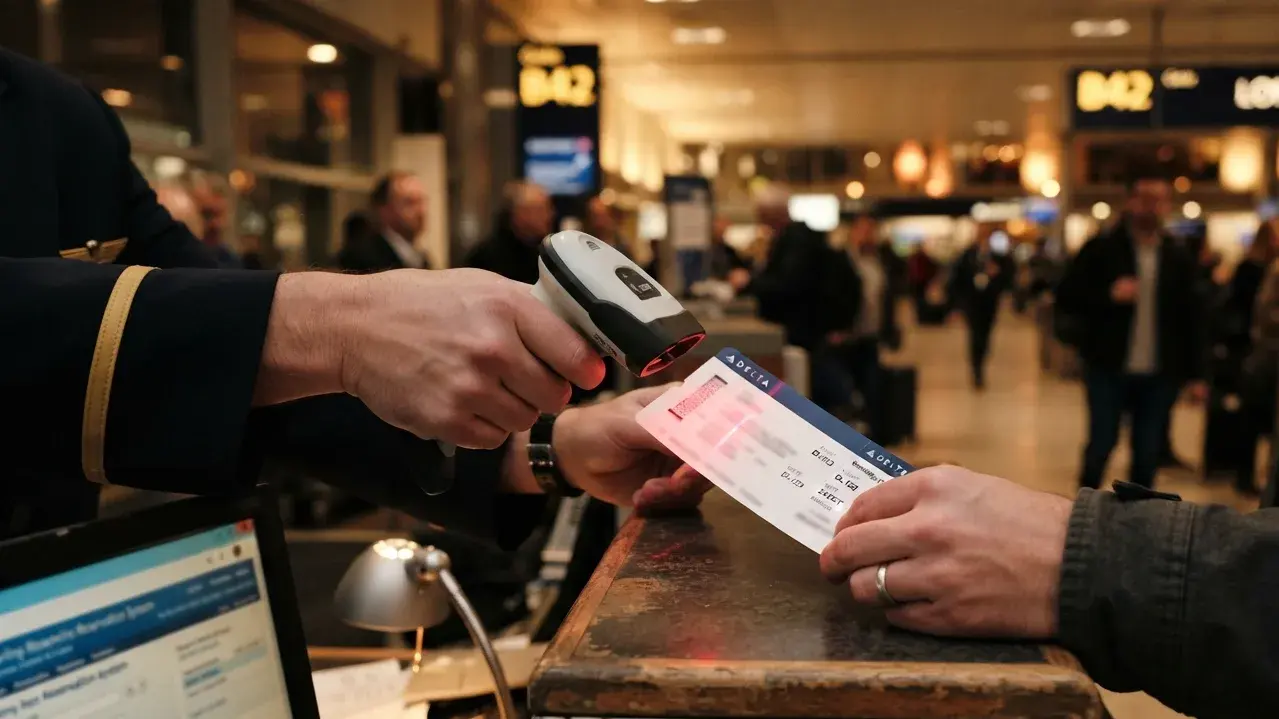
Your onward flight may look perfectly fine on your phone. That does not guarantee it will look equally clear to the airline’s system or the agent’s workflow. That gap is where many last-minute counter problems start.
Ticketed, held and temporary reservations are not read the same way
Many reservation-hold services generate a document that looks complete to a traveler. It has a flight number, departure city, dates and a layout that resembles an e-ticket. To the airline’s system, the status may still be limited, expired, on hold or not visible in the way the traveler expects.
That distinction matters. During document verification at baggage drop, an agent is not admiring a PDF design. They are trying to decide whether the document satisfies the destination rule quickly enough to accept the passenger and baggage.
This is where a what is a dummy ticket explanation helps: the document should be understood as temporary travel proof, not a fake screenshot or edited ticket. It needs to look professional, show the right details and match the rest of the travel story.
A quick way to protect yourself is to confirm the booking reference and PDF before travel day. Do not wait until a crowded airport counter to discover that a name is wrong, a date is stale or the onward route no longer matches your entry plan.
Open-jaw and multi-city itineraries can confuse quick checks
Not every trip is a clean round trip, and that is completely normal. But it does create more friction at the counter than a simple return flight.
Picture a journey that starts in Delhi, continues overland or by a separate short flight, and exits from a different city, sometimes through a different airline than the one you started with. This open-jaw or multi-city pattern can be legitimate, but it does not visually match the standard “arrival city, return city, same airline” pattern many agents can clear quickly.
An agent glancing at your file may expect symmetry. When the pattern breaks, expect a follow-up question. That is not a rejection. It is usually the agent trying to confirm that the itinerary makes sense before proceeding.
A few practical notes help here. If your route involves a transfer desk, a change between terminals or an onward departure from another city, mention the logic calmly instead of waiting for the agent to reconstruct it. For route-heavy files, BookForVisa’s visa flight itinerary requirements guide is the cleaner cross-platform reference for planning itinerary structure without turning this DummyFlights article into a flight-itinerary target page.
Build enough time at connection points too. Hubs such as Kuala Lumpur, Singapore, Doha, Istanbul, Dubai and London can involve long walks, security checks, transfer desks or baggage recheck. An itinerary that looks fine on paper can still be tight in practice if the layover does not leave enough room for the airport process.
Name mismatches and small errors trigger second looks
Of every issue covered so far, this one has the least to do with your trip and the most to do with simple data entry. It still causes real delays.
A passport reads one way. A reservation reads slightly differently: a missing middle name, a transposed first and last name, a typo introduced during booking. On paper, it seems minor. At the counter, it can pause the entire check-in and send an agent back to compare both documents side by side.
This kind of mismatch usually surfaces at the worst possible moment, right as you are trying to get through bag drop before the closing window. An agent may not proceed on a hunch that the names are “close enough.” They may recheck spelling, call a colleague or ask for another document.
The fix costs nothing. Compare your reservation name against your passport character by character before the journey, not with a quick glance at the airport. Do this before departure day if your route is complex, your name format is unusual or you are traveling through a busy hub.
None of this is about outsmarting an agent or rushing a busy desk. It is about giving the staff nothing unnecessary to question, so baggage, boarding and gate timing stay on schedule.
If They Push Back: Handling a Counter Challenge Without Losing Your Flight
Even with a clean reservation, an agent may still ask a follow-up question or two before waving you through. How you respond matters almost as much as the document itself.
What to say when an agent doubts your onward reservation
Keep your response short and direct. State your travel dates clearly, hand over the reservation, and let the agent verify it instead of explaining your whole trip verbally.
Agents at a check-in desk are usually managing a long queue with a fixed closing time. Over-explaining, getting defensive or arguing a point tends to slow the interaction down. A calm response normally moves the process faster.
If you completed mobile check-in earlier and are only now facing a question at bag drop, do not assume the earlier step protects you. Have the onward document ready in a clean format the agent can read at a glance.
Useful counter wording:
- “Here is my onward ticket showing my exit date.”
- “The booking reference is shown here.”
- “My stay is from this date to this date.”
- “I exit to this country before the allowed stay ends.”
- “This PDF is the current version of the reservation.”
Carrying a backup without overcomplicating your documents
It is tempting to carry two or three different reservations “just in case.” In practice, this can create more confusion than protection.
Conflicting onward documents, especially ones showing different dates, routes or airlines, can raise more questions than one clear reservation. An agent trying to verify exit proof does not want three versions of the story. They want one version that checks out cleanly.
A better approach is to keep one accurate, current reservation rather than a stack of alternatives. Since travel plans shift, especially around layovers, return dates or a flexible exit month, use a booking option that can be kept current instead of relying on an outdated PDF.
Pricing transparency matters here. When a reservation is inexpensive and easy to update, there is less reason to carry old proof or gamble with a document that no longer matches your trip.
When denied boarding becomes the airline’s problem too
It helps to understand what is at stake if a boarding decision goes wrong. If a traveler is carried without required documents and then refused entry, the airline can face costs. If a traveler with valid, clear proof is refused incorrectly, the airline may also create a service problem for itself.
This is not something to use as a threat at the counter. It is simply useful context. Airlines have a practical incentive to resolve an ambiguous case correctly before refusing boarding. That is why most onward-travel questions end in quick verification, not a long dispute.
The same logic applies later in the journey. If your route requires collecting bags and rechecking for the next leg, especially on separate international-to-domestic or international-to-international tickets, keep documents for that next segment just as easy to show.
The aim is not to win an argument with ground staff. The aim is to give the system nothing messy to flag, so your checked baggage moves with you instead of waiting at a desk while someone sorts out a question a clearer document could have answered.
One Ticket, Two Checks, Zero Guesswork
Your visa approval gets you through one door. Your onward ticket gets you through another, and those two checks are run by different people for different reasons.
A reservation that satisfies an embassy does not automatically satisfy a check-in agent looking at a status screen. Once you understand what that agent is actually looking for — route clarity, passenger-name match, current date logic, readable booking details and proof of exit — the counter feels less unpredictable.
Walk up expecting a document check, not a gamble. Keep your ticket onward current, easy to hand over and aligned with your actual route. If your trip is one-way, open-jaw, multi-city or built on separate tickets, do the extra preparation before the baggage-drop window starts closing.
For a broader travel-proof strategy, the dummy ticket for visa pillar explains how temporary flight proof fits visa files, while the complete dummy ticket guide covers timing, PNR clarity, hotel alignment and document consistency in one place.
Need onward proof before baggage drop? Create a clean, readable ticket onward with DummyFlights before the counter asks for exit proof.
Create Your Onward TicketTicket Onward Before Baggage Drop FAQ
Why does an airline ask for a ticket onward before baggage drop?
Airlines may ask because they can be responsible if a passenger is refused entry after being carried to a destination. The bag-drop desk is often the last staffed checkpoint before baggage is accepted, so onward-travel proof can be reviewed there even after online check-in or a kiosk boarding pass.
Is online check-in enough if I need onward proof?
No. Online check-in can succeed before a staffed document check happens. If the route requires exit proof, keep your ticket onward PDF or printed proof ready until baggage has been accepted and the airline has cleared your travel documents.
What should a ticket onward show at the counter?
It should show the passenger name, route, departure date, destination, booking reference or PNR, and a believable exit plan that matches your stay length. The document should be readable without the agent needing to search through emails or screenshots.
Can a baggage-drop agent reject a weak onward reservation?
Yes, an agent can pause check-in or ask for clearer proof if the reservation looks expired, unconfirmed, mismatched or impossible for the destination rules. A clean, current reservation reduces that risk because the agent has less to question.
Should I carry multiple onward tickets as backups?
Usually no. Multiple conflicting onward documents can confuse the story. It is better to carry one current, accurate ticket onward and one clean explanation of your route than several reservations with different dates or airlines.
What if my onward travel is by train, ferry or another airline?
Show the proof that explains how you leave the country or travel zone. If the airline expects a flight, be ready to explain the non-flight exit clearly and keep supporting documents easy to read. The route should still make sense beside your visa, stay length and accommodation.
When should I create the onward proof before flying?
Create or update it close enough to departure that the reservation is current, but not so late that you are fixing documents at the counter. For stricter routes, prepare it before leaving for the airport and keep a saved offline copy.
Friendly reminder: DummyFlights provides temporary travel-proof documents for planning and application support. Requirements vary by destination, airline, route and applicant situation. A dummy ticket can support a file, but it does not guarantee approval, boarding or entry.