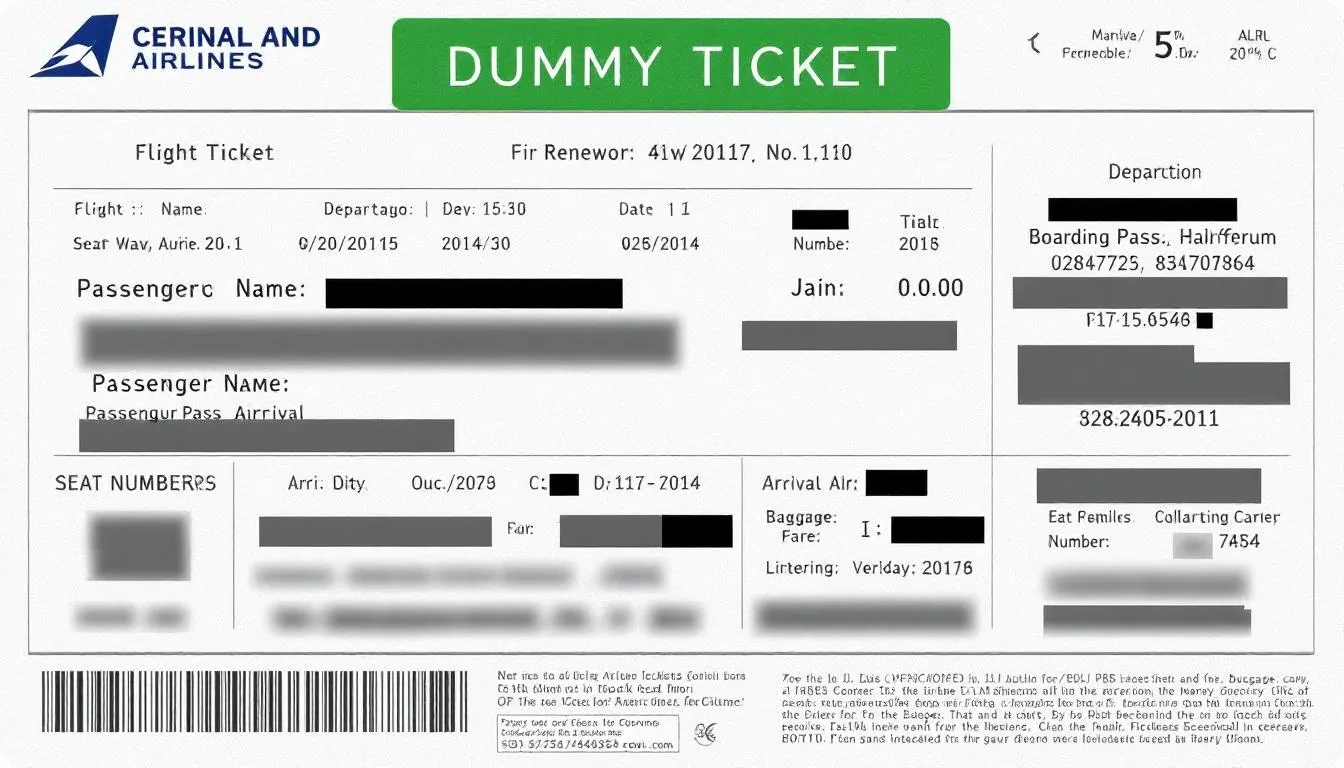

Short answer: If you travel without a fixed return date, you still need a credible way to leave before your permitted stay ends. A dummy ticket for visa or temporary onward reservation can support that plan where the destination or carrier permits it, but it must show a truthful route, passenger name and usable dates. Check transit rules, keep the record retrievable and do not imply a paid ticket when none was issued.
Key facts
- Open-ended travel still needs a lawful and explainable exit plan.
- Airlines and border officers may apply different checks.
- Exit dates must fit the permitted stay and any transit rules.
- Temporary reservations are not universal substitutes for visas or paid tickets.
- Overland and multi-country routes need every major movement explained.
Need onward proof before a flexible trip? Prepare a truthful reservation that matches your route, permitted stay and planned exit country.
Create your dummy ticketIn This Guide
- Why Open-Ended Trips Draw Extra Questions at the Border
- How Airline Staff Handle Your Ticket Before You Board
- Where Countries Ask for an Exit Plan and How Firmly
- What Counts as Proof When You Cannot Name a Return Date
- Picking the Right Ticket Type for a Flexible Journey
- Lining Up Your Exit Date With Your Permitted Stay
- Planning Overland and Multi-Country Routes Without Fixed Plans
- How Visa Officers Read an Open Itinerary
- What to Say, Show, and Do If Someone Doubts Your Plan
- Leave Every Border Desk With a Clear Way Out
Official-source check: Confirm onward, transit and entry requirements with the destination authority and operating airline before departure. For passport, visa and route-facing checks, consult the IATA Travel Centre; each authority controls the final permitted stay and exit-proof requirements.
Reviewed for: open-ended travel, onward-ticket proof, permitted-stay timing, transit rules, overland exits and airline-facing verification.
You reach the check-in desk in Delhi with a one-way ticket, a backpack, and no return date. For terminology and document scope, review the what a dummy ticket means guide before deciding what proof to carry. The agent asks how you plan to leave your destination. You answer honestly: you have not decided yet. That answer feels harmless, yet it can stop your trip before it starts.
Open-ended travel always needs a clear way out on paper. We will show you which documents satisfy officers, when to book them, and how to match them to your permitted stay.
You will also see how to choose between a refundable fare, a paid ticket, and a temporary reservation without wasting money or risking your boarding. Cover your open-ended trip with a dummy ticket for visa that shows a clear, believable exit before any agent even asks.
Why Open-Ended Trips Draw Extra Questions at the Border

A flexible trip feels freeing to you. To a border officer, it can look like missing information. Once you see how officers read that gap, you can close it before anyone asks.
What an Officer Sees When Your Trip Has No End Date
Immigration officers handle hundreds of arrivals in a single shift. They rely on quick signals to separate a genuine visitor from someone who might overstay. An open-ended trip removes one of the strongest signals: a date when you leave.
Picture Daniel, who flies from Mumbai to Bangkok with a rough plan to explore for a month. He has a hotel for the first week and nothing booked after that. To him, the plan is flexible. To the officer, the plan is unfinished.
Most travelers never notice this gap because they carry a return ticket. That single document answers three questions at once. It shows how long you will stay, where you go next, and whether you will leave. Without it, the officer has to guess.
That is where proof of onward travel comes in. It shows your exit plan from a country in a form an officer can read in seconds. You do not need a full itinerary. You need one credible way out.
Officers also notice patterns. A traveler with no return, no bookings after week one, and a vague answer about next steps looks different from one with a short, confident reply. Your documents speak before you do.
Officers usually want to confirm three things:
-
You intend to leave within the allowed period
-
You can reach a place that will accept you next
-
Your story matches the documents in your hand
Border control officers often require this proof to verify visitor status. It is a routine check, not a personal accusation. Treat it like a form field that simply needs to be filled.
Onward travel proof is often required for one-way ticket travelers, and officers apply that expectation consistently. A traveler with a return ticket rarely faces the question. A traveler without one nearly always does.
It also helps to understand the officer's workload. A long queue waits behind you, and the officer has seconds to reach a decision. A document that answers the exit question instantly keeps you moving.
How a One-Way Ticket Changes the Conversation
A one-way ticket is the most common trigger for extra questions. Officers and airline staff see it and think of people who may settle, work, or stay beyond their permission. That does not make you a suspect. It just starts a script.
One-way tickets frequently trigger requests for onward proof, and the request can arrive at several points. It might come at the departure airport, at the arrival desk, or at both. Each stage expects a different level of detail.
You may hear questions like these:
-
How long are you staying?
-
Where are you going after this country?
-
Can I see your onward ticket?
Answer briefly and point to the document. Long explanations create new questions. Short answers close them.
Immigration may ask for onward proof upon arrival, even when you passed the airline desk without trouble. Officers work independently from airline staff. One clean check does not guarantee the next one.
Here is how the same traveler can experience two very different arrivals:
|
Your Situation |
What Usually Happens |
|---|---|
|
One-way ticket and no exit document |
Extra questions and a possible refusal |
|
One-way ticket and a clear exit booking |
A short check and normal processing |
Immigration may question entry if no onward ticket is shown. In the worst case, travelers can be denied entry when they lack one. Even a delay of a few hours can cost you a prepaid transfer or your first night's booking.
Notice that the difference is not your itinerary. It is your paperwork. Two people with identical plans can get opposite outcomes because only one of them carries proof.
Timing also plays a role. Airline desks check you hours before departure, while arrival officers check you after a long flight. You may be tired at the second check, so having your proof ready matters even more. Fatigue is the enemy of clear answers.
Some travelers assume a strong bank balance replaces an exit document. It helps, but it answers a different question. Funds show you can support yourself. An exit shows you will leave.
Why Easy Entry Rules Still Come With Conditions
Many visitors assume relaxed entry rules mean fewer checks. Often the opposite is true. Countries with visa-free entry frequently require onward proof, because there is no application stage where anyone reviews your plans in advance.
A visa exemption removes the paperwork before you travel. The paperwork then moves to the border. Officers make up for the missing review by asking about your exit plan on the spot.
Many countries legally require proof of onward travel as a condition of entry. That is why countries require proof of a way out even from visitors who look completely relaxed. The rule sits in the entry conditions, so it is not a courtesy request.
Your home country passport does not change this as much as you might expect. A strong passport lowers visa hurdles. It rarely removes the exit check.
Consider Emma, who leaves Delhi for a three-month career break. She has a beach hut for ten days and an open mind afterward. Her entry allowance covers the whole trip. Her exit proof is the only piece missing.
Emma's situation is common. She is not worried about the rules, which is exactly why she is at risk. The travelers who get stopped are rarely the ones who planned to break a rule. They are the ones who never knew the rule applied to them.
Before you fly, settle three details:
-
Your planned stay, counted in days
-
Your next destination after arrival
-
The document that proves you can reach it
If your fixed plans end after a few weeks, say that clearly. Officers respond better to a short, honest plan than to a vague one. Your travel plans do not need to be rigid, but they do need to be readable.
So treat the exit document as part of your packing list. Passport, charger, proof of exit. Once it becomes routine, it stops feeling like a hurdle.
Officers are not the first people to ask, though. Your airline usually raises the question long before you reach airport immigration.
How Airline Staff Handle Your Ticket Before You Board
Your first exit check rarely happens at immigration. It happens at the airline desk, where staff decide whether you receive a boarding pass at all.
What Happens at the Counter When You Have No Return
Airlines often check for onward proof before boarding. During airline check-in, the agent reviews your passport, your entry status, and your ticket together. A one-way route to a country that asks for an exit document sets off a quick question.
Say Sophie flies from Delhi to Bali on a one-way fare. The check-in agent sees the destination rules on screen and asks for her next flight. If she has none, the conversation slows down fast.
At the check-in counter, the agent usually compares four things:
-
Your passport nationality
-
The entry rules of your destination
-
The type and dates of your ticket
-
Whether an exit document is on file
Airline check-in staff are not trying to block you. They follow a rule that protects the airline. When the rule is unclear, they choose the safe option and ask for proof.
The lack of an onward ticket can lead to denial of check-in or boarding. It can happen even when your entry permission is valid. The desk cares about the document, not your intentions.
Have your exit proof open before you reach the front of the queue. Show it once, clearly. Do not offer three different plans. Airline staff look for one match with your stated destination.
Some travelers try to explain the whole trip. That rarely helps. A long story gives the agent more to doubt. A single document gives them something to tick.
Agents often follow internal guidance that is stricter than the public rule. That is why a friend's smooth experience on the same route does not guarantee yours.
Airlines may deny boarding without proof of onward travel, even when you are otherwise fully documented. Staff treat the missing document as a risk they cannot accept. Fix that risk, and the desk relaxes.
If the agent hesitates, stay friendly and ask what exactly they need to see. Often it is a small detail, such as a missing date or a name mismatch. You can fix that in minutes if you know what to look for.
Why Airlines Carry the Risk, Not Just You
Airlines face penalties for transporting passengers without onward proof. If a country refuses you on arrival, the carrier may have to fly you back at its own cost. Airlines enforce onward proof to avoid repatriation costs.
Look at the numbers from the airline's side. A single refused passenger can mean a return seat, extra staff time, and a fine. Multiply that by a full flight, and you see why desk instructions are strict.
This also explains why staff rarely bend the rule. A kind agent may sympathize with your story. The same agent still cannot override a policy that carries a penalty.
The same logic applies to online check-in. Some airlines ask you to confirm your travel documents in advance. If the system flags your booking, you may be told to visit the desk anyway. Read every prompt before you skip it.
If you booked through a third party, contact the airline directly, not the seller. Airlines own the boarding decision. A seller's reassurance carries no weight at the desk.
Requirements can differ by route and by date. The specifics of onward ticket requirements can change, so it is best to confirm with airlines before you travel. Read the airline's travel documents page, or contact its support desk a few days ahead.
Questions worth asking before you fly:
-
Does my passport need an exit document for this destination?
-
Is a bus ticket or a train ticket accepted as proof?
-
How does the desk verify the document?
Write down the answer and the name of the person who gave it. If a different agent challenges you at the airport, you can refer to that earlier reply. It will not always change the outcome, but it shows you acted in good faith.
Also remember that codeshare and connecting itineraries add complexity. The agent who checks you in for the first leg may apply the rules of your final country. Your exit proof should therefore relate to the country where you finish the journey, not only where you connect.
The Gate Is a Second Checkpoint
Many travelers relax after check-in. That is a mistake. Some airlines run a second document check at the boarding gate, where a gate agent scans passports again before you step onto the plane.
Denied boarding at the gate is the most stressful version of this problem. Your bags may already be in the hold. Your seat is assigned. One missing document can still stop you.
Airlines may deny boarding without visible exit plans. So keep your proof accessible on your phone and in print. Do not bury it inside an email thread from three weeks ago.
Your departure airport matters here. Smaller airports often have fewer desk staff, which leaves less time for explanations. Large hubs may have specialist document teams, which can be faster but stricter.
Arrive early enough to fix problems. If the desk flags your booking three hours before departure, you have time to reserve an exit. If it flags you at the final call, you have none.
Keep these details easy to spot on your exit proof:
-
Passenger details exactly as they appear in your passport
-
A clear flight number and travel date
-
A booking reference that can be looked up
Airline staff scan for these items in seconds. If they are hard to find, the check slows down. If they are missing, the check fails.
An exit flight that shows all three details gives the gate agent nothing to question. You walk through, the boarding pass scans, and the trip continues.
Ask the agent to confirm that your document has been accepted. A verbal confirmation costs nothing, and it can save you a repeat check at the gate.
Once the airline is satisfied, the next test comes on arrival. There the question shifts from the airline's risk to the country's own rules, and those rules vary widely.
Where Countries Ask for an Exit Plan and How Firmly

Rules differ from one border to the next, and the tone differs even more. Here is how the main destinations tend to treat your exit plan.
Thailand, Indonesia, and Other Southeast Asia Entries
Countries like Thailand require proof of onward travel for entry. Airlines flying there often ask for it at the desk, long before an officer sees you. If you plan to enter Thailand as a short-stay visitor, expect the question.
Your proof should show how you plan to leave Thailand within your allowed days. That can be a flight to a neighboring country. It can also be a confirmed overland booking, if your airline accepts it.
Indonesia requires onward travel proof for visa-free arrivals. Travelers landing in Bali or Jakarta may be asked to show it at the airline desk, at arrival, or at both.
Across Southeast Asia, the pattern is similar. Cheap regional flights and easy land links make exits simple, so officers and airlines expect you to have one.
A short regional flight is often the easiest proof. Low-cost tickets to nearby countries can satisfy onward travel requirements. A hop to a neighboring capital shows a real exit without a large bill.
What you should be ready to show:
-
A flight, train, or bus booking that leaves the country
-
A date inside your allowed stay
-
Your name spelled exactly as in your passport
The check itself is usually quick. Officers glance at the booking, compare the name to your passport, and move on. Trouble starts when the date is missing, or the route makes no sense.
Watch out for one common mistake. Some travelers book an exit that leaves before their allowed period even begins to matter, such as a flight on the day after arrival. That looks odd for a leisure trip. Choose a date that fits your story.
Timing your booking matters too. Reserve the exit before you reach the airport, not on airport Wi-Fi. A calm purchase at home lets you check the name, the date, and the route properly.
Airlines serving these routes see the same situation every day. A backpacker with a one-way fare and an open plan is a familiar sight. The desk has a script, and your proof lets you follow it in seconds.
UK, Schengen, and US Visitors
Western destinations feel more relaxed, but they still look for an exit story. The UK expects evidence of onward travel for visitors. Officers may ask where you go next and how you plan to leave.
Schengen countries require onward proof for short stays. A short stay means a limited period inside a shared travel area. Officers check that you will not remain beyond it, and a booked exit answers that question at once.
The US may ask for proof of onward travel upon entry. This is most common for visitors under the visa waiver program, who arrive without a separate visa stamp and rely on a short authorization. An officer may want to see how you plan to leave.
Your own passport does not exempt you from other countries' rules. Even a US passport holder flying one way to another region faces the exit check there. The rule belongs to the country you are entering, not the country that issued your passport.
Each of these places treats the request as routine, not hostile. Your job is to hand over a clear document quickly and calmly.
Here is a simple way to prepare:
-
Read the official entry page for your destination
-
Check what your airline says about your route
-
Carry proof that matches the dates you plan to stay
Do not rely on a friend's experience. Two travelers entering the same country in different months can meet different expectations. Officers have discretion, and policies get updated without much notice.
Business visitors and short-course students meet the same expectation. A short stay of any kind invites the question, so your purpose does not remove it. Keep your invitation letter or enrollment proof with your exit booking.
Families should check the rules for every member. Children usually need their own booking reference, printed with their own name. One parent's document does not cover everyone.
Confirm current rules with the airline or the official immigration page before you fly. A rule that applied last year may be looser or tighter today.
Costa Rica and Other Places Where Bus Tickets Matter
Costa Rica shows how far this rule reaches beyond the usual Asian hotspots. Airlines flying there often ask for an exit document. Many travelers present a bus ticket to a neighboring country, and some carriers accept it.
Acceptance depends on the airline, not only the country. Some desks are happy with a bus booking. Others insist on a flight. If your carrier is strict, a cheap flight to a third country avoids an argument.
Bus and train proofs make sense in regions with easy land links. They show a real plan that fits local geography. They also cost less than a long-haul flight home.
Ask before you buy. A short message to the airline can save you a full day of refund requests and stress.
Look at your visa type as well. A tourist entry, a transit stop, and a short business trip can carry different expectations. Your citizenship can change the answer too. Two travelers on the same flight may hear different questions.
Some countries state a maximum stay in days, and your exit date must fall within it. A booking that leaves after the limit does not help you. In fact, it can create a new problem.
If you plan to leave by train, confirm that the service crosses the border. Some routes end at a station before the frontier, and the last leg needs a separate ticket. A booking that stops short of the border will not satisfy an agent.
A bus receipt is also weaker than a booking that shows a passenger name. Some small operators sell unnamed tickets. Ask for a version that shows your name and travel date before you pay.
When you plan an overland exit, keep proof of both the ticket and the payment. A booking without a receipt can look thin at a quiet border post.
Knowing the rule is half the job. The other half is choosing a document that officers and airlines will actually accept.
What Counts as Proof When You Cannot Name a Return Date
You do not need to know when you will come home. You only need a document that shows how you will leave the country you are entering.
| Exit-plan state | What to show | What to avoid |
|---|---|---|
| Return date known | A current return or onward reservation matching the permitted stay | Dates that exceed the visa or entry window |
| Return date flexible | Permitted temporary proof with a credible route and exit country | Calling a reservation a paid ticket or changing the PDF manually |
| Overland or multi-country exit | Each border crossing, transit permission and final exit plan | Leaving the next movement unexplained |
Flights, Trains, and Buses That Count as an Exit
An onward ticket can be a one-way flight to a third country, or a confirmed bus or train booking. Onward travel proof can be a flight, train, or bus ticket. The common thread is that it takes you out of the country you are entering.
An onward flight is the format airline staff understand best. It carries a flight number, a date, and your passenger details in one line. Nobody has to interpret it.
If you carry both a flight and a bus booking, do not hide one. Present the one that best fits the question, and keep the other ready. A second document rarely hurts, and it can save you when one is rejected.
A bus ticket works well where land borders are easy to cross. A train booking suits regions with cross-border rail. Both work only if the booking is confirmed and shows your name.
Notice what does not count. A screenshot of a search result, a price quote, or a wish list of destinations is not proof. Officers want a booking, not an idea.
A strong exit document has these features:
-
A confirmed booking with a reference code
-
Your name matching your passport
-
A departure date and a destination outside the country
-
A clear route, not a search page
Your onward travel ticket should also make sense for the place you are entering. A bus from a country with no land border makes no sense. A train that does not exist raises doubts fast.
Keep the document in a readable format. A crisp PDF beats a blurry photo of a phone screen. An officer who cannot read the text will not spend time squinting.
Avoid mixing formats in one document. A flight in one tab and a bus voucher in another forces the officer to search. Combine what you can into a single, tidy PDF.
If you hold more than one document, lead with the strongest. A confirmed flight usually beats a bus receipt at an airline desk. A bus receipt may be stronger at a land crossing.
Why a Third Country Ticket Works Better Than a Faraway Return
Travelers without a return date often think the exit must lead home. It does not. An exit flight to a third country is usually enough, because the officer only cares that you leave.
Consider Lucas, who flies from Delhi to Bangkok with no return. Booking a long-haul flight home would be costly and pointless. A short hop to a neighboring country shows the same intent for a fraction of the price.
Buying a cheap ticket can provide quick proof of onward travel, and you can often do it the same day. That speed helps when your departure is close, and the desk is asking for a document.
A ticket to a third country also reflects real behavior. Many people leave one place for another nearby. It matches the pattern of open-ended travel and makes your story believable.
Keep the route sensible. A ticket to a country that is hard to reach from your entry point raises new doubts. Choose a neighboring or regional destination that a real traveler might visit.
Your onward journey should look like something you might actually take. Officers know the local routes. A wildly impractical connection reads as a paper exercise.
Think about the second country's rules too. If your exit flight lands somewhere with its own entry conditions, you may need to satisfy them later. A ticket to a country with easy entry rules keeps things simple.
Ask what the officer will do with your document. If the officer can read it, look up the reference, and see a sensible route in ten seconds, it does its job. If it needs a story to make sense, replace it.
A return flight ticket home is not the only answer, even if it feels like the traditional one. It is one option among several, and often the most expensive.
What Makes a Reservation Verifiable
Genuine, verifiable reservations are essential for satisfying onward travel requirements. An officer or agent may check the booking reference against the airline system. If it does not appear, the document fails.
A verifiable flight reservation carries a real booking reference and matches your passport details. It can be looked up on the airline's manage booking page. That is what turns a piece of paper into evidence.
A real flight reservation also shows a consistent route and date. Random dates, duplicate names, or impossible connections create doubts. Consistency is what makes the document credible.
A dummy ticket serves as valid proof of onward travel when it meets these tests. It gives you a checkable booking without forcing you to commit money to a full fare.
Temporary flight reservation services generate valid onward ticket bookings for a fee. Look for one that provides a booking reference, a printable PDF, and an itinerary you can verify yourself.
Run this quick checklist before you rely on any exit document:
-
The booking reference retrieves your reservation online
-
Your name is spelled as in your passport
-
The flight number, route, and date appear together
-
You can open the PDF on your phone and print it
Test the lookup at home, not at the airport. Ten minutes at your desk can save an hour at the gate.
Consider what happens if the airline updates the schedule. A changed departure time is fine. A canceled flight is a problem. Check your booking a day before you travel, so you can replace it if something has changed.
Keep the confirmation email, too. Some officers ask where the booking came from, and the email shows the sender and the issue date. It supports your document without adding clutter.
If the reference does not retrieve anything, contact the provider straight away. Most issues come from a simple typo in a name or a delay in system updates.
Now that you know what counts, the next question is how to obtain it without overspending on a trip that has no fixed end.
Picking the Right Ticket Type for a Flexible Journey
Once you know what proof looks like, you must decide how to get it. Your choice depends on cost, flexibility, and how sure you are about leaving.
Weighing a Refundable Fare Against a Temporary Reservation
A refundable ticket can be purchased and canceled later. That makes it a safe way to cover a border check. The risk is timing. Refund processing can take weeks, and fees may apply.
Check the fare rules before you pay. Some airlines return the full amount, while others keep a portion. Read the cancellation window carefully, and set an alert to act before it closes.
Also check whether the refund goes back to the original card. If your card expires or you close the account, the refund can get stuck. Small details like this cause the biggest headaches.
A confirmed reservation can offer flexibility without committing to a return flight. That is the main appeal of a temporary booking. You show an exit, keep your plans open, and avoid a large upfront charge.
Here is how the two options compare:
|
Feature |
Refundable Fare |
Temporary Reservation |
|---|---|---|
|
Upfront cost |
Full fare, refunded later |
Small one-time fee |
|
Verifiable booking |
Yes |
Yes, if reliable |
|
Effort to undo |
Cancel and wait for refund |
Nothing to cancel |
|
Best for |
Trips you may really fly |
Trips with open plans |
The refundable route suits you if you might actually use the flight. The temporary route suits you if you only need proof at the border.
Neither choice is wrong. The right one depends on how likely you are to fly the exit leg and how much cash you want tied up during your trip.
Timing your refund matters more than most travelers realize. If you cancel a week after buying, the money may return after your trip has moved on. Plan your budget so a delayed refund does not leave you short.
What a Cheap Ticket Costs You in Practice
A cheap ticket is tempting, and it works. Yet cheap fares are often non-refundable tickets, so the money is gone once you buy. A low price does not help if you never board.
Think about the true cost. A ticket you paid for and never used is a sunk expense. Expensive tickets are worse, especially when you buy several across a long trip.
Even a low-cost airline may charge a change or cancellation fee, and these fees can approach the fare itself. Watch for fares that look cheap because they exclude extras. Compare the final total before you decide.
Many travelers buy a fresh exit ticket for each new country and never fly any of them. The costs add up quietly, one border at a time.
A round-trip fare can look like a bargain. It often costs less than two separate one-way legs. But it locks you into dates, and changing the return leg can trigger a fee.
Buying a separate ticket for the exit leg gives you more control. You can change it or drop it without touching the rest of your plan. That freedom matters when your route keeps moving.
A return ticket bought too early can also become stale. If your trip grows from three weeks to three months, the old date no longer matches your story. You then pay to fix it.
Frequent travelers price this out before each trip. They compare the fee for a change against the cost of a fresh booking, and they pick whichever leaves more money in their pocket.
Use this quick test:
-
Will you really fly this leg? If yes, a paid fare makes sense
-
Will the date probably move? If yes, avoid rigid fares
-
Is cash tight? If yes, avoid large deposits
When a Temporary Reservation Is the Cleaner Choice
A temporary reservation may support onward-travel proof for an open-ended trip where the destination or carrier permits it, but it is not a universal substitute for a paid ticket or required permission. You pay a small fee, receive a checkable booking, and skip the sunk cost of a fare you will never use.
Temporary flight reservations can be used for visa applications as well as border checks. That flexibility matters when you do not yet know your route or your final dates.
Choose a provider only after checking how its reservation is issued, where the PNR can be verified, how long it remains valid and what its current update terms are. Requirements vary, so a temporary reservation is travel proof only where the destination or carrier permits that type of evidence.
Whichever route you pick, match the choice to your risk. If you are certain you will leave on a specific date, a real paid ticket may be fine. If your plans keep shifting, a temporary booking keeps your money free.
Also think about how often you cross borders. One trip with one exit is simple. A journey with six borders is a different budget problem.
Whatever provider you use, confirm that the reference can be checked through the relevant issuing system and that the route details are accurate. That check matters more than the price. A cheap booking that fails the lookup is worthless at the desk.
Keep the receipt and the confirmation email. If an agent asks how you obtained the booking, you can show both. Clear records keep the conversation short.
Ask yourself three questions before you decide:
-
Will I really fly this ticket?
-
Can I change the date without a big fee?
-
Does the booking reference verify online?
If the answer to the first question is no, a temporary reservation is usually the cleaner tool. It gives officers what they need and keeps your travel budget intact.
Also plan what happens after the trip. A temporary booking lapses without any action from you. A refundable fare needs a cancellation. Add that task to your list, so you never forget it.
Even the best ticket fails if the dates do not fit your permission to stay. That fit deserves a closer look.
Lining Up Your Exit Date With Your Permitted Stay
A perfect ticket with the wrong date still fails. Your exit date must sit inside the time the country allows you.
Choosing an Exit Date Inside Your Allowed Days
Every entry permission carries a limit. Look up the maximum permitted stay for your passport and your visa type before you pick a date. The limit may differ from what a friend received last year.
Count from the day you land, not the day you book. Then place your onward date a few days before the limit ends. This buffer protects you from delays and small mistakes.
An exit date is not a promise. It is a statement of intent that fits the rules. You can still change your plans later, as long as you leave within the allowed period.
Follow this simple routine:
-
Find the maximum stay for your entry type
-
Count from your arrival day
-
Leave a buffer of two or three days
-
Match the date to a real departure
Take Oliver, who lands in Bangkok on the first of the month. His allowance is limited, so he picks an exit flight a few days before the limit. Officers see a plan that respects the rules.
Do not pick the very last permitted day. A canceled flight or a late arrival can push you past the limit. Officers also notice when a date sits right on the edge.
Your departure date should also suit your trip. If you tell the officer you are staying two weeks, a booking for eight weeks later looks inconsistent. The story and the document must agree.
Some travelers forget that arrival day counts differently in different places. Read the wording on the official page. If it is unclear, choose the shorter interpretation to stay safe.
Different entry types also carry different limits. A visitor arriving under one scheme may receive fewer days than a visitor arriving under another. Do not copy the number a friend received. Look up your own.
Officers may compare your exit date with the days shown on your entry authorization. If your document says thirty days and your exit shows fifty, the mismatch is immediate. Fix it before you fly.
Matching Names and Details to Your Passport
Passengers must ensure their name on a temporary ticket exactly matches their passport. One missing middle name can stall the desk. Copy the spelling straight from the photo page of your passport.
Present clear proof that matches your stated travel plans. If you tell the officer you will stay three weeks, the exit date should reflect that. A mismatch invites new questions.
Double-check the other traveler information too: date of birth, title, and nationality. Airlines compare these against your passport at the desk. A small difference can slow everything down.
Keep a spare copy of your proof. A PDF on your phone and a paper printout cover most situations. A dead battery should never decide the fate of your trip.
Keep a verifiable dummy ticket ready for onward checks. Store it in your email, your phone files, and a cloud folder, so you can pull it up in seconds from any device.
Name the file clearly, using your surname and the date. When you scroll through a crowded downloads folder at the desk, you will find it faster.
If your name has special characters, check how the booking prints them. Systems often drop accents or hyphens. Your passport's machine-readable line is the safest guide to follow.
Do not shorten your name to save space. A nickname on the booking and a full name on the passport leave the agent with a mismatch to resolve.
Check the order of your names as well. Some forms ask for the surname last, while your passport lists it first. Follow the machine-readable line if in doubt. Then compare your printed proof with your passport, letter by letter.
If you spot a mistake after booking, act at once. Providers can usually correct a small typo, but the window may be short. Waiting until the airport leaves you no room to fix it.
Adjusting the Booking When Your Plans Shift
Open-ended travel means your plans will change. Your exit proof must keep up. A stale date that no longer fits your trip can be worse than having no proof at all.
Ask your provider how date changes work before you pay. Some allow several changes, while others charge each time. Knowing the policy in advance saves money and stress.
If you used a refundable fare, update it before the free-change window closes. Set a reminder for the deadline, and treat it like a visa expiry.
Your situation may also change for reasons outside your control. A friend invites you to stay longer. A job comes up in the next country. A storm cancels a bus route. Each event can shift your exit date.
When a change happens, ask what it does to your entry permission. A longer stay may need an extension. A shorter stay may leave a gap you can fill with a plan for the next country. Decide first, then update the booking.
Immigration authorities do not see your changes. They see the document you carry on arrival. Make sure it is always the latest version, and delete outdated copies from your phone.
A few weeks before your current date runs out, review your plan. If you want to stay longer, check the official rules for extensions rather than simply overstaying. An extension request is safer than an overstay record.
Keep the old and new booking references in your notes for a few days. If the desk finds a conflict, you can explain which one is current. Delete the old copy once the new one is confirmed.
Use this checklist whenever your plan shifts:
-
Update the exit booking to the new date
-
Download the fresh PDF
-
Remove old copies from your devices
-
Confirm the date still fits your allowed stay
Not every trip stays in one country, though. When you move overland or across several borders, the exit logic changes again.
Planning Overland and Multi-Country Routes Without Fixed Plans
Some journeys do not have a neat start and end. If you plan to move from country to country, your paperwork must move with you.
Crossing Land Borders With No Flight Booked
Land borders are where plans change most. You may cross on a whim, on a bus schedule, or after a chat with a fellow traveler. Officers at these crossings still ask where you go next.
Immigration desks at land posts are often small, and officers know the local routes. A bus ticket to the next town across the border is a strong answer. It shows you know the region and have a plan.
An overnight bus from Kuala Lumpur to Singapore is a good example. It leaves in the evening, arrives at dawn, and the ticket is easy to buy. It shows a genuine exit toward a new country.
Check the rules for your entry point before you go. Some countries ask for a flight even if you arrive overland. Others accept a bus ticket without question. Rules can vary by border post and by nationality.
Carry these items to a land crossing:
-
A printed booking for the next leg
-
A backup flight reservation on your phone
-
Some local cash for ticket counters
Timing matters as well. Land posts may close at night or run limited hours. A bus that arrives after closing can leave you waiting, and officers may ask why your plan did not fit the schedule.
Avoid tickets that depart on a day when the route does not run. Officers who know the line will notice. Check the timetable before you book, and keep a screenshot of it.
Small border posts often lack reliable internet. If you need to show a booking, do it offline. Save the PDF to your phone and carry a printed copy. Assuming a signal at a remote crossing is a risky bet.
If you plan to fly out of the next country instead, say so and show a flight from there. Officers accept a plan to leave by a different route, as long as it fits your allowed days. Just keep the story consistent.
Stitching Together a Route Across Several Countries
A multi-country trip forms a chain. Each country wants to see how you leave that country, not how you finish the whole journey. Your proof should reflect the next link, not the last one.
Build the chain one link at a time. Book the next exit when you enter the next country. This keeps costs low and plans flexible.
Think of Grace, who starts in Mumbai and plans Vietnam, Cambodia, and Thailand over eight weeks. She needs an exit for Vietnam when she lands in Hanoi. She needs another when she enters Cambodia. Each link is small, but each must be real.
The region makes this easy. Budget flights and cross-border buses connect neighbors at low prices, and you can often book them a day ahead.
A distinct booking for each leg is normal. Airlines treat them as unrelated reservations, so a problem with one leg does not affect another.
A simple routine at every border helps:
-
Confirm the rules for the new country before crossing
-
Book or reserve the next exit
-
Save the proof offline
-
Check the date against your allowed stay
Keep a short log in your notes app. Write the entry date, the allowed days, and the exit date for each country. When an officer asks, you can answer in seconds without digging through paperwork.
Avoid overlapping bookings that confuse the picture. Two exit flights on the same day, to different places, look strange on paper. One clean exit per country reads better.
Some travelers worry that several exit bookings look suspicious. In practice, officers see a chain of short stays with a matching exit each time. That pattern looks like a normal backpacking route.
If you plan to re-enter a country you already visited, check how the allowed days are counted. Some systems track cumulative time across visits. Your new exit date must fit what remains, not the full allowance.
Working Remotely on the Road as a Long-Term Nomad
Digital nomads meet this rule more often than most travelers. They stay longer, cross more borders, and rarely know their next move. Their exit proof must be cheap and easy to replace.
For them, temporary reservations are a practical tool. A checkable booking gives officers what they want without locking the nomad into a plane seat they may never use.
Experienced nomads keep a rolling exit reservation. Each time they enter a new country, they replace the old proof with a fresh one for the new border. The habit takes minutes.
Even long stays deserve an exit plan. If you plan to stay for months, check whether your entry permission allows it. A tourist entry may cap your time, no matter how remote your job is.
Remote work also raises questions about purpose. Officers may ask why you are staying so long. A calm answer and a matching exit booking show that you respect the rules.
Some nomads pair their exit proof with proof of funds and a short note about their work. That combination tells a coherent story: you can support yourself, you will leave on time, and you are not competing for local jobs.
Schedule border days with margin. A nomad who finishes a client call at midnight and then travels risks arriving exhausted at a strict desk. Keep your proof on top of your bag, where you can reach it fast.
Long rentals may also require local registration. Ask your host what they need. Your exit proof and your registration should tell the same story about how long you plan to stay.
Keep your documents in one folder that syncs across devices. If your laptop fails at a border, your phone should still hold everything. Redundancy is cheap, and a refused entry is not.
Border officers are one audience. Visa officers are another, and they read open itineraries very differently.
How Visa Officers Read an Open Itinerary
Some countries want your plan before you fly, inside a visa file. That audience reads your itinerary very differently from an airline agent.
What Consular Staff Check Before They Decide
For a visa decision, officers look for proof that you will leave. They read your bank statements, your job letter, and your travel plans together. An open itinerary asks them to trust you.
Your visa type shapes what they expect. A tourist visa expects a short trip with a clear end. A study visa expects a course timeline. A business visa expects a set of meetings.
Officers also weigh your ties back home. A job, a family, or property makes an open itinerary safer. Weak ties make a fixed exit more important, because the officer has fewer reasons to believe you will return.
They look for a consistent story. If your cover letter says three weeks and your booking says ninety days, the mismatch hurts. Every document should point in the same direction.
Some consulates prefer a round-trip itinerary. Others accept any exit. Check the checklist for your specific application, and follow it closely.
Some checklists ask for a return flight ticket by name. In that case, a one-way exit will not satisfy the form, even if it would satisfy an airline. Read the wording, then match it.
Do not assume that a longer itinerary is better. A short, clean plan that fits your purpose often looks stronger than a long list of uncertain stops. Officers prefer clarity over ambition.
Financial evidence supports the same story. Officers compare your funds with the length and cost of your trip. If your account shows enough for three weeks but your itinerary runs three months, the gap needs an explanation.
Past travel history also helps. Earlier trips that ended on time show that you follow the rules. Mention that record in your cover letter, and let your passport stamps speak.
Application forms often ask for a planned arrival and departure. Treat those fields seriously. Officers compare them with your booking, and they treat differences as a red flag.
Using a Temporary Reservation Inside Visa Applications
Temporary flight reservations can be used for visa applications. They give the officer a concrete exit plan without forcing you to buy a non-refundable fare before approval.
That matters because many applicants must submit an itinerary before the visa decision. Paying full price for a ticket you cannot use if the visa is denied is a real risk.
Include the reservation in your file, next to your other documents. Keep the dates consistent with your cover letter. Avoid extra pages that repeat the same information.
Genuine, verifiable reservations are essential here too. Officers may check the booking reference. A booking that cannot be verified damages your credibility at the worst moment.
Choose dates that fit your purpose. A tourist plan should show a short stay. A family visit may run a little longer, and the itinerary should reflect that.
Timing your reservation is a practical step. Reserve it a few days before you submit the file, so the dates are fresh and the booking is active when an officer checks. A lapsed reservation can look like a careless mistake.
Some applicants worry that a temporary booking looks weak. It does not, as long as it is genuine and verifiable. Officers care about the plan the document shows and its consistency with the rest of your file.
Make sure your file includes:
-
A reservation with a checkable reference
-
Dates that match your cover letter
-
A route that fits your stated purpose
-
Contact details of the booking provider
After approval, you can decide whether to keep the reservation or replace it with a real ticket. Many applicants do the second when dates become firm.
Keep a copy of the provider's confirmation email, too. If the consulate asks where the booking came from, you can answer without delay.
Keep the visa approval and the booking together in your travel folder. At the border, both may be checked, and matching dates make the review smooth.
Student and Long-Stay Applicants With Loose End Dates
Students and long-stay applicants face a special problem. Their end date depends on a course, a contract, or a research project that may shift. Officers still want to see an exit.
Your student status often defines the expected stay. Use the official course end date for your exit reservation, plus a small buffer for graduation or paperwork.
Show the officer a plan that follows the institution's timetable rather than a made-up date. A booking that lines up with your enrollment letter feels natural and easy to trust.
Long-stay applicants may hold a temporary reservation now and swap it later. Once the visa is issued and dates become firm, you can rebook with more certainty.
Be honest about uncertainty. A short note explaining that your end date depends on a project milestone helps. Officers value clarity over false precision.
If you may extend your studies, do not book an exit that contradicts that possibility. Choose a date that fits your current permission, and plan to renew through the official process when the time comes.
Long-stay work applicants face the same pattern. A contract may have a start date but no firm end. Use the contract's stated term for your exit, and add a note if renewal is possible.
For long stays, remember that entry is only the first step. Many countries require a residence permit after arrival, and that process has its own paperwork. Your exit booking helps at the border, while the permit covers the rest.
Keep the tone of your documents steady. Notes that read like sales pitches or that overexplain draw attention. A plain sentence with dates is more convincing.
Also keep proof of enrollment close at hand. When an officer sees an enrollment letter and a matching exit booking together, the story feels complete, and the questions stop quickly.
Visa files and border desks test your plan in different ways. Both reward preparation, and both punish confusion. What you say when you are challenged matters as much as what you carry.
What to Say, Show, and Do If Someone Doubts Your Plan
Even with a strong document, someone will eventually question you. Calm, short answers and organized papers make those moments quick.
Simple Answers That Match Your Documents
Officers listen for consistency. Your spoken answer should echo your document. If your booking shows a flight in three weeks, say that you plan to leave in three weeks.
Keep answers short. One sentence is often enough. Long stories give the officer more details to test, and each detail is a chance for a mismatch.
Do not invent details you cannot support. If you are unsure, say what you know and point to the booking. Honesty beats a polished story with holes.
Useful lines to practice:
-
"I plan to stay for about three weeks."
-
"My exit flight is booked for the date on this page."
-
"I will decide after that, but I must leave by then."
Answers should stay calm. Officers deal with nervous travelers all day. A steady voice signals that you have nothing to hide.
Avoid saying "I might stay longer." That phrase can undo a good document. If you need to mention flexibility, say that your exit date is set and you may adjust it within the rules.
Practice your answers aloud before your flight. It feels silly, but it helps. Rehearsed answers come out smoother, especially after a long journey.
Prepare a slightly longer answer too, in case the officer keeps asking. Know your first night's stay, your rough route, and your reason for traveling. You will rarely need all of it, but having it ready keeps you steady.
If you do not understand a question, ask the officer to repeat it. A clarifying request looks honest and calm. A wrong guess looks careless.
Watch your body language. Eye contact, an open posture, and a relaxed pace tell the officer you have nothing to hide. Fidgeting with papers or looking away does the opposite, even when everything is in order.
Do not argue about the rule itself. Whether it seems fair does not matter at the desk. Your goal is to satisfy it and move on.
Organizing Your Papers for Quick Checks
Most travelers lose time because they cannot find a document fast. Organize before you queue. Put your passport, exit proof, and accommodation details in one folder.
Open your files before you approach the desk. A locked phone or a dead battery makes you look unprepared, even when your paperwork is perfect.
Carry printed copies of your exit proof, since airport Wi-Fi can fail. Keep one copy in your bag and another in your pocket.
Your folder should hold:
-
Exit proof, printed and digital
-
First night's accommodation details
-
Proof of funds if the country asks
-
A contact number for your booking provider
Arrange the papers in the order an officer will ask for them. Passport first, exit proof second, accommodation third. A smooth handover looks confident.
Keep the folder in your hand baggage, never in a checked bag. If your luggage goes missing, your proof should not go with it.
If you travel with family, give each adult a copy. One person might get called to a separate desk, and the others should not be stuck without documents.
Label your files so you can find the right one instantly. A name like exit proof beats a string of numbers. When an officer waits, every second of scrolling feels long.
Keep a second copy of your key documents with someone you trust at home. If you lose your phone or your bag, they can send you a fresh copy. Redundancy keeps small problems small.
Check your documents the night before each border day. Confirm the date, the name, and the reference. Five minutes of review beats an hour of repair. Charge your phone and carry a power bank, too.
Steps to Take After a Refusal at the Desk
If a check-in agent or gate agent refuses you, stay polite. Ask exactly what document is missing and whether a supervisor can review it. Many refusals come from one missing detail.
If your proof is valid but unclear, offer to open the booking on the airline's website. This can settle the matter in seconds. Agents prefer a live lookup over a screenshot.
If you are refused boarding, ask for the reason in writing where possible. Note the time and the name of the staff member. These details help if you need to contact the airline later.
If you are refused entry on arrival, ask what options exist, such as leaving on the next flight. Do not argue. Follow instructions, and ask for contact details of your embassy if you need support.
After any refusal, fix the gap before you try again. Update the booking, correct the name, or choose a different type of proof. Repeating the same attempt rarely changes the result.
If a supervisor steps in, repeat your answer calmly and show the same document. A consistent message helps. Changing your story in front of a second person reduces trust.
If you have no valid proof at that moment, ask about your options. Some airports have desks or partner services where you can arrange a booking quickly. Ask staff where to go, and act before your flight closes.
Ask whether a different document could satisfy the rule. A bus or train booking might work where a flight is not available, depending on the airline and the route. Staff will tell you what they can accept.
Keep receipts and screenshots of any new booking. If the airline reviews the case later, records make it easier to resolve.
Most travelers never reach this point. When it does happen, staying calm and holding clear documents usually resolves it quickly. Many travelers who prepare in advance clear the check-in under a minute.
For broader onward-proof planning, see the complete dummy-ticket guide.
If the checklist specifically asks for a flight reservation rather than a dummy ticket, see BookForVisa's flight reservation for visa guide so the document type remains clear.
Leave Every Border Desk With a Clear Way Out
An open return date is not the problem. A missing exit plan is. You now know who asks, where they ask, and which documents satisfy them. Pick a ticket type that fits your risk, match the dates to your allowed stay, and keep your paperwork ready before you queue.
Your trip can stay flexible while your proof stays firm. Whether you enter a visa-exempt country, apply at a consulate, or cross a quiet land post, the same rule holds. Keep one checkable booking in your bag, and let the officer see a traveler with a plan.
Ready to travel without a fixed return date? Carry one retrievable, truthful exit plan and confirm the route remains permitted before each border or check-in.
Prepare your dummy ticketFrequently Asked Questions
Do I need an onward ticket if I do not know my return date?
You may still need proof of onward travel, depending on the destination, carrier, nationality and route. Check the current authority and airline requirements.
Can a temporary reservation work for an open-ended trip?
It may support travel proof where permitted, but it must be truthful, checkable and within the allowed stay. It cannot replace a required visa or paid ticket.
How should I choose an exit date when plans are flexible?
Choose dates that fit the permitted stay and your stated route. Do not show an exit after the visa or entry window ends.
What if I plan to leave overland?
Show the next country, border or transport leg where relevant and confirm any transit or entry permission needed for that movement.
Can I change my onward date later?
Use the issuing process, obtain a new record and update any supporting documents. Never edit an old PDF to hide a changed date.
Does onward proof guarantee entry or boarding?
No. It can support a lawful travel plan, but the airline and border authority make their own decisions under current rules.
Friendly reminder: DummyFlights provides temporary travel-proof documents for planning and application support. Requirements vary by destination, airline, route and applicant situation. A dummy ticket can support a file, but it does not guarantee approval, boarding or entry.