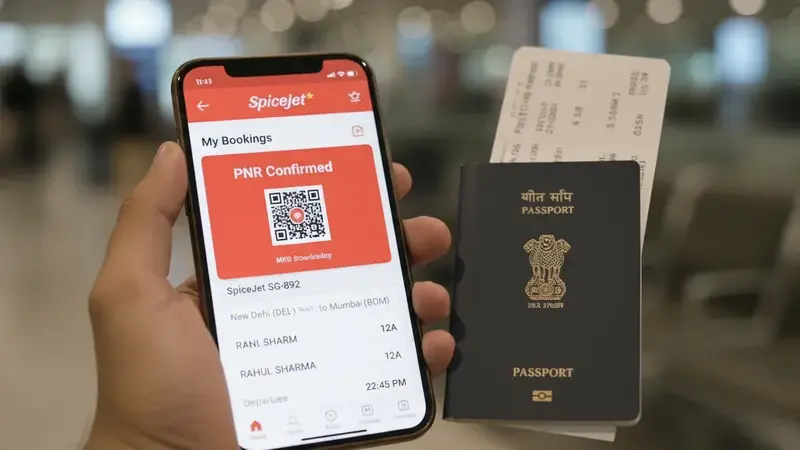
Short answer: A Thailand work-visa applicant may not face the same onward-ticket expectations as a tourist, but an airline can still ask for proof before boarding. Confirm the current Non-Immigrant B or work-related checklist, employer documents, transit rules and carrier requirements for your route. If temporary travel proof is permitted and useful, keep the passenger name, dates, route and work purpose consistent; it cannot guarantee approval, boarding or entry.
Your Non-Immigrant B visa is stamped, your bags are packed, and then the airline staff at the Indian airport asks the dreaded question: “Where is your return ticket to India?”
You were told that a work visa means you do not need one. Now you are stuck between what your HR said and whatcheck-inck in the counter wants to see.
If that sounds familiar, you are not alone. Indian professionals heading to Thailand often get caught in this exact confusion. In this guide, we will walk you through how Thailand really treats onward tickets for work visas, how airlines think, and what actually happens at immigration, so you can plan your move with confidence instead of last-minute airport panic. Before your next embassy visit or flight check-in, book a dummy ticket and travel with confidence.
Key facts:
- Work-visa applicants and tourists may face different document questions.
- Airline check-in rules can be stricter or more operational than an immigration officer’s review.
- Match the reservation with employer letters, work-permit steps, accommodation and stated dates.
- Applicants from India should check the current application channel and carrier requirements for the exact route.
- A temporary travel-proof document supports planning; it does not replace a Thai visa, work authorisation or entry decision.
Need temporary flight proof for a Thailand work-visa file? Use the route and dates your employer documents and destination checklist actually support, then keep the record consistent.
Official-source check: Confirm the current Thai visa and work-authorisation checklist with the destination authority or Thai mission, and confirm the airline’s document and onward-travel rules for your departure route. Use the IATA Travel Centre for passport, visa, health and carrier-facing checks; the destination authority and airline control their respective decisions.
Reviewed for: Thailand work-visa versus tourist-document differences, airline check-in, onward proof, employer evidence, India-origin applications, transit rules and document consistency.
How Thailand Really Looks At Onward Tickets For Workers Vs Tourists
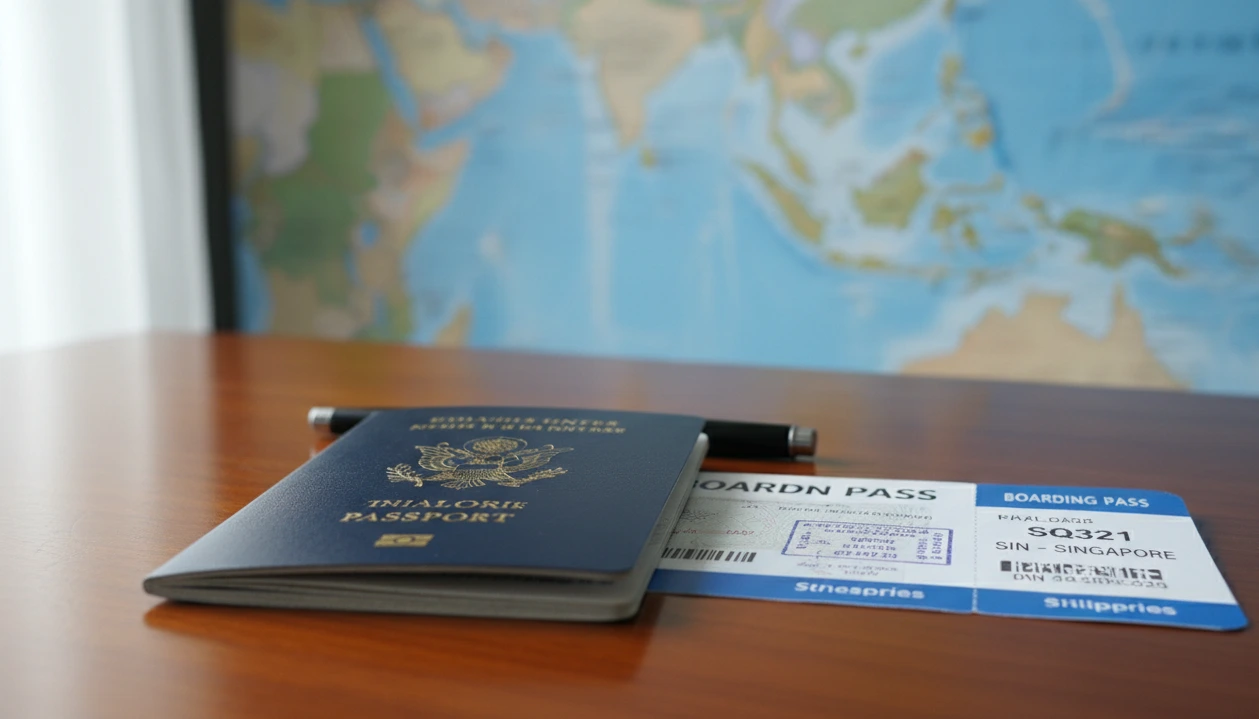
Before we talk about loopholes or tricks, you need to see the big picture.
Thailand does not look at every Indian traveller through the same lens.
| Situation | What may happen | Best preparation |
|---|---|---|
| Non-Immigrant B or work documents are complete | Immigration may focus on purpose and authorisation | Carry the current visa, employer and entry evidence |
| Airline cannot confirm the route or entry basis | Check-in staff may request onward or return proof | Use the airline’s current document rules for the exact route |
| Transit country or airport changes | Transit permission and carrier checks may change | Recheck every transit segment before departure |
| Dates do not match employer or accommodation evidence | The file can look inconsistent | Align the itinerary, work timeline and supporting documents |
Tourists, visa-exempt entries, and work visa holders are all judged differently.
The confusion usually starts when you mix up these categories or rely only on what an HR email says, while the airline staff follows an internal checklist. Keep your plans flexible while satisfying visa requirements using a verified dummy ticket booking.
Why Tourist Entries From India Face Tougher Onward Ticket Checks
If you fly from India to Thailand on a tourist visa or visa-exempt entry, you are telling everyone in the chain that you plan a short stay.
For that kind of entry, immigration expects you to leave within a fixed period.
Airlines know this very clearly.
Their training often highlights that many travellers try to stretch tourist entries into long stays or informal work.
So what happens in practice?
At Indian airports, especially on popular routes like Delhi–Bangkok or Mumbai–Bangkok, check-in staff often ask for:
-
A clear return or onward booking within the allowed tourist stay.
-
Basic proof of funds and hotel, if they feel something is off.
They are not trying to be difficult with Indian passport holders.
They are trying to avoid a situation where Thai immigration refuses you and sends the bill for your return flight back to the airline.
Because of that risk, tourist entries from India get treated as “high scrutiny” by many carriers.
If your passport history shows frequent short trips to Thailand or other Southeast Asian countries, staff may ask even more questions.
In short, if you enter as a tourist, you should fully expect strict onward ticket checks, no matter what your future work plans are.
Where Your Non-Immigrant B Visa Changes The Conversation
Now, let us look at the Non-Immigrant B visa.
This is the standard route if you already have a job offer in Thailand and your employer is ready to sponsor you.
When this visa is stamped in your passport, you are sending a very different message.
You are not just visiting temples and beaches.
You intend to live and work there, then extend your stay through a work permit and further renewals.
Because of that, Thai immigration officers at the airport often focus on different things.
They want to see that your employment is real and legal.
So they may look at:
-
Your employment contract and salary.
-
An invitation or guarantee letter from your Thai company.
-
Basic details like where you will stay and when you start work.
An onward ticket becomes less central at this stage.
Your “exit plan” is not a fixed date flight back to India.
It is a proper work permit and extension process that will be handled in Thailand.
However, that is how immigration thinks.
Airline staff at the Indian departure airport may not be so relaxed.
They might not fully understand the difference between a Non-Immigrant B and a tourist visa, especially if they rarely see work visas for Thailand.
So even though your visa type changes the logic, you cannot assume everyone in the chain will automatically treat you as a long-term worker.
Why Consulates, Airlines, And Airports Rarely Sing The Same Song
Here is where things get messy for many Indian travellers.
There is no single rulebook that every person you meet will apply in the same way.
Start with the Thai Embassy or Consulate in India.
Their Non-Immigrant B checklist may not clearly demand a return ticket.
Most of the time, they care more about your job offer, employer documents, and the tentative date you plan to enter Thailand.
A one-way reservation that matches your planned start date often makes complete sense for them.
Move to the airline side.
Their internal policy is built around risk, not just visa labels.
If immigration in any country turns you back, the airline usually has to carry you home.
So some carriers apply a simple rule for their staff.
No clear onward travel, plus no residence status, equals a potential problem.
That is why one traveller can board easily with a one-way ticket and a Non-Immigrant B, while another is stopped at the same airport a week later.
It depends on the specific airline, the route, and how confident the supervisor feels about your documents.
Finally, there is Thai immigration at the arrival airport.
Here, officers actually understand their country’s visa categories.
If your Non-Immigrant B is genuine and your employer paperwork is in order, they usually care more about your work setup than a pre-booked exit flight.
The problem is that you need to pass all three checkpoints without issues.
Consulate, airline, and immigration each read the rules through their own lens.
Understanding this mismatch is the first step.
Once you accept that “officially not required” and “practically never asked” are not the same thing, you can plan your Thailand work move from India with far fewer surprises.
So, Is An Onward Ticket “Officially” Needed For Thai Work Visas?
For the broader temporary-document standard, compare the route with the dummy ticket for visa guide and use only evidence that accurately reflects your work plan.

By now, you can see why there is so much mixed advice floating around.
The next step is to separate written rules from what actually happens when you apply from India and board your flight.
When you do that, the picture becomes clearer, and you can plan your documents with far less stress. Avoid last-minute airport chaos and book a dummy ticket that fits your visa dates and itinerary.
What Thai Missions Usually Expect In Non-Immigrant B Applications
When you submit a Non-Immigrant B file at a Thai Embassy or Consulate in India, the focus is simple.
They want to see that your job and employer are real, and that your move to Thailand follows the proper route.
So the typical file for an employed person includes things like:
-
A job offer and contract that show your role, salary, and start date.
-
Company documents from Thailand, such as registration papers, shareholder list, tax ID, and sometimes balance sheets.
-
An invitation or guarantee letter where the company states that they are hiring you and will support visa and work permit processes.
-
Your personal documents, like a passport, photos, education certificates, and sometimes bank statements.
Where does the onward or return ticket sit in this picture?
In many cases, the consulate may only ask for a tentative flight reservation that shows:
-
When you intend to enter Thailand.
-
That your arrival roughly matches your employment start date.
For a worker, a one-way booking usually makes more sense than a return.
You are relocating, not going on a quick holiday.
The key point is that, at the visa stage, Thai missions in India are primarily checking the legitimacy of your job and employer rather than forcing you into a fixed exit date from Thailand.
How Airline Checklists Can Override Your “Technically Fine” Case
Things feel different the moment you stand at the check-in counter in India.
You have a valid Non-Immigrant B visa.
Your consulate did not insist on a return ticket.
On paper, you are fine.
But airline staff are trained in a different way.
Every airline carries the risk of fines and return costs if immigration in any country refuses a passenger.
To reduce that risk, many carriers use simple internal rules that are easy for staff to follow during busy check-in hours.
For routes like India to Thailand, those rules often look like:
-
If the passenger is not a resident of Thailand and does not have long-term permission to stay, ask for a return or onward ticket.
-
If the visa type is not clear or the staff are unsure, treat the case as higher risk.
This is why you see such different experiences online.
One Indian professional boards with only a one-way ticket and a Non-Immigrant B.
The agent is confident, looks at the visa, and waves them through.
Another person, at a different airport or on a different airline, gets stopped.
The supervisor simply follows a stricter interpretation of the same guidelines and insists on proof of exit.
From your side, both feel unfair because your visa situation is identical.
From the airline side, they are protecting themselves against any chance of having to fly you back to India for free.
This is the gap you need to plan for.
Why Strong Employer Paperwork Often Calms Ticket Questions
The good news is that you have more control than you think.
Airline staff and even some immigration officers feel much more relaxed when your employment story is clearly documented.
That means you should carry, in both print and digital form:
-
A signed employment contract that mentions your role, salary, and Thai office location.
-
An invitation or guarantee letter that explains your purpose of travel and confirms the company will handle visa extensions and work permits.
-
Copies of company registration documents, at least the key pages.
When you present these along with your Non-Immigrant B visa, it shows a complete picture.
You are not a tourist stretching a short stay.
You are a worker entering the country through the correct channel.
In many real travel cases, this kind of file has been enough to convince check-in staff who were unsure at first.
They may still ask about your plan to extend your stay in Thailand, but the level of suspicion drops.
However, even with perfect paperwork, there is still a small chance someone will say, “We also want to see how you leave.”
That is why it helps to think of onward proof as a backup tool rather than a rigid legal rule.
Bottom Line For Indians With Thai Work Visas
So, is an onward ticket “officially” required for a Thailand work visa?
In many cases, no.
Your Non-Immigrant B and employer documents are the main pillars.
But in real life, Indian travellers move through three different filters.
Consulate, airline, and immigration do not always apply the same standard.
If you respect that reality and prepare for airline concerns in advance, you can still travel on a one-way plan, while having a smart answer ready whenever someone asks, “How are you exiting Thailand later?”
Your Thailand Work Visa Journey From India
Applicants from India may receive VFS or destination-portal instructions, while applicants elsewhere may follow a Thai mission or consular checklist. In every case, the destination authority, employer documentation and airline’s current route rules control; do not assume a tourist rule answers a work-visa question.
If the destination or airline asks for a flight reservation rather than a temporary dummy ticket, review BookForVisa’s flight reservation for visa guide so the document type and explanation remain clear.
Once you understand the onward ticket confusion, the next big question is what the full journey actually looks like.
Let us walk through the real path an Indian professional follows, from job offer to work permit, so you know exactly where flights, reservations, and paperwork fit into the picture. Planning a Thailand work move but not ready to buy a return flight yet? Just book a dummy ticket instead.
Start With The Job Offer, Not The Flight Booking
Your priority is not a ticket. It is the job.
Before thinking about planes, make sure you clearly meet the Thailand work visa requirements for your role. Thai employers usually prefer candidates who already understand what it takes to work in Thailand and can explain their long-term plan confidently.
Most Indian applicants move into roles such as IT, finance, hospitality, education, or specialist services. In every case, you are treated as a foreign employee, which means the company must follow specific rules on hiring foreigners.
At this stage, you should:
-
Clarify your role, salary, and location in writing.
-
Confirm that the employer is legally allowed to hire a foreigner.
-
Check whether they have hired Indian professionals or other foreign nationals before.
As an Indian ordinary passport holder, you will typically apply for a Non-Immigrant B category once the company is ready. Good employers explain this clearly and share their internal timeline so you do not rush into booking flights too early or locking money into non-refundable tickets that may not match your visa period.
How Your Future Employer Prepares The Ground In Thailand
Once you accept the offer, the real work shifts to Thailand.
Your company has to coordinate with several Thai authorities, often starting with the Ministry of Labour and related units such as the foreign workers administration in Bangkok. For many roles, the company must prove proper business registration, sufficient registered capital, and the correct ratio of Thai staff to foreign staff.
Behind the scenes, they may interact with the Immigration Bureau and the Provincial Employment Office in the respective province where you will work. This groundwork is what makes your future Thailand work permit or Thai work permit possible.
If you are joining a company that runs export business, hotels, IT services, or education, they often know this process well because they have previously worked with foreign staff. That is usually a good sign.
During this phase, ask your employer:
-
Which office in Thailand is handling your case?
-
How many weeks do they expect for initial approval?
-
Whether they plan to use a business visa option first, if you will conduct business meetings before your full employment starts.
When this foundation is solid, your own side of the paperwork becomes much easier.
From Visa Sticker To First Stamp At Thai Immigration
While your employer works in Thailand, you prepare your file in India.
You will submit a visa application to the Royal Thai Embassy or a Royal Thai Consulate General that covers your region. Check the Thailand embassy website or the nearest consulate general listing to confirm where you should apply, because the embassy's consulate jurisdiction can depend on your state of residence.
Your Non-Immigrant B is a type of non-immigrant visa, so read the guidelines carefully. The exact visa application form and application form layout can differ slightly between missions, but they usually ask for the following documents:
-
Passport, photos, and correctly completed fields, including visa number if applicable.
-
Employer letters and company papers as required documents.
-
Education certificates and professional history are as follows.
-
Any additional documents requested by the mission, such as financial proof.
These items together are your supporting documents.
Once approved, you receive a Thailand visa sticker in your passport. Check the visa period, entry validity, and whether you received a single entry or a multiple entry option. These details control when you must enter Thailand and how your first stay is structured.
Work Permits, Extensions, And Everyday Compliance
After you land in Thailand and clear immigration, the next chapter begins.
Your employer will move ahead with the work permit process, often in coordination with the Ministry of Foreign Affairs and the relevant Thai ministry responsible for your sector. Different government agencies may be involved if you work in regulated fields monitored by the Private Education Commission or the Basic Education Commission.
With a valid stay permit, you can live and work in Thailand legally while your paperwork is processed. Once your work permit is granted, your permission to stay is usually extended in line with your job, and you will need a re-entry permit if you travel out and back during that period.
During your time in Thailand, you must:
-
Keep your address updated with the authorities.
-
File your income tax correctly through your employer.
-
Respect any limits on what you can do outside your defined role, especially if you conduct business on behalf of the company.
If you plan to visit family, continue long-term medical treatment, or perform official duties linked to royal Thai events or other public functions, your HR team should guide you on any extra approvals so that you always match the status written on your documents required by Thai authorities.
Real Airport Situations Indians Face With Thai Work Plans
So far, we have talked about rules and processes.
Now, let us drop into the actual scenarios you are likely to face when you combine Thai work plans with flights from India.
These are the moments where onward ticket confusion becomes very real at the check-in counter or immigration desk. If airline staff worry about your return plan, stay relaxed and simply show them your confirmed dummy ticket booking.
Job Hunting In Thailand On A Tourist Entry: How Far Can You Push It
Many Indian travellers still try the classic route.
Fly into Thailand on a tourist visa, look around, attend a few meetings, and hope a company offers a job on the spot.
On paper, a tourist entry is meant for holidays and short visits.
You are expected to leave before your permitted stay ends.
That is why airlines check onward tickets so strictly for this category.
If you tell check-in staff you are going for a short break, they will expect to see a round-trip booking.
If you start explaining that you might interview for jobs, they may get nervous that you are mixing tourism with work intentions.
At the Thai immigration, officers also listen carefully to how you describe your purpose.
Saying that you are coming for tourism, but your bags and plans look more like a relocation can trigger deeper questions.
So if you enter as a tourist while secretly hoping to convert to a work setup, you carry double risk.
The airline wants proof that you will leave.
Immigration does not want tourists who are actually planning to stay and work.
If your main goal is to work in Thailand, applying directly for a Non-Immigrant B before flying from India is usually cleaner and safer.
Turning Tourist Status Into Work Status Without Losing Sleep
Sometimes you do everything right and still end up needing a change of status inside Thailand.
Maybe you visited friends on a tourist visa, then unexpectedly received a strong job offer.
In that case, your employer has two broad options, depending on current rules.
In some periods, it is possible to convert a tourist entry to a Non-Immigrant B from inside Thailand.
This usually involves extra paperwork, fees, and patience, but it can be done if the authorities allow it at that time.
In other periods, you may need to exit Thailand and apply for the work visa at a Thai mission abroad.
Many foreigners choose nearby countries like Laos or Malaysia for this step.
You then return to Thailand holding a fresh Non-Immigrant B.
Where does the onward ticket question appear here?
Each time you leave and re-enter, airlines and immigration see you as a new arrival.
If you are re-entering on a tourist visa again, expect the full onward ticket check each time.
If you re-enter on a Non-Immigrant B, the focus usually shifts to your employer documents, but some airlines will still ask how you plan to leave later.
For you as an Indian traveller, this means every visa run or status change trip needs its own travel plan.
You cannot rely on what happened during your previous entry.
Different agents, routes, and cities can treat you in different ways.
When Someone Suddenly Demands Proof Of Exit
The most stressful moment is usually not the visa interview.
It is when a staff member suddenly says three words that can ruin your day.
“Show return ticket.”
This can happen at three points in your journey.
At the Indian airport check-in counter.
You present your passport and visa, and the agent calmly asks for a return booking.
If you do not have one, you enter a negotiation where the supervisor might get involved.
At a transit airport.
If you are flying through another country on the way to Bangkok, transit staff can recheck your documents before letting you board the final leg.
Some carriers do this more strictly if you connect through their hub.
At the Thai immigration on arrival.
This is less common for holders of a clear Non-Immigrant B with strong employer paperwork, but it is still possible, especially if your case looks unusual or you have a long history of short stays.
In all three situations, you usually have three options.
-
Convince them that your work visa and documents are enough without an exit ticket.
-
Buy an expensive last-minute outward flight just to satisfy the rule.
-
Present a pre-arranged onward booking that they can quickly check and move on.
The last option is often the least stressful and cheapest if you plan it.
Smart Use Of Temporary Reservations When Your Plans Are Still Fluid
When you are relocating for work, locking yourself into a fixed return date often makes no sense.
You do not know when your probation will end, when your first leave will be approved, or when you will next visit India.
That is why many Indian professionals use temporary, flexible reservations as a middle path.
You keep a one-way main ticket into Thailand, then carry a separate onward booking purely as proof if anybody asks at check-in or immigration.
The onward booking does not have to match your real long-term plan.
It only needs to look reasonable in the context of your visa and initial permission to stay.
When temporary travel proof is permitted and the route is settled, DummyFlights can help you prepare a clear document around the dates and passenger details you actually support. Confirm current service terms and the destination checklist before relying on any document.
Used correctly, a temporary reservation is not a trick.
It is a risk management tool that respects the rules while giving you the flexibility to let your Thai work situation settle first.
When you combine that with solid employer paperwork and a clear story, most onward ticket conversations at airports become very short and very boring, which is exactly what you want on a big relocation day.
Can You Really Skip The Return Ticket?
So, can you get a Thailand work visa without an onward ticket?
On paper, yes. With a solid Non-Immigrant B visa, a real job offer, and proper company documents, Thai immigration usually focuses on your employment and future work permit, not on a fixed exit flight back to India.
In real life, the airline, transit hub, and border officer you meet can still ask for proof of exit at any stage. That is why your safest route is simple. Travel with a clear story, strong employer paperwork, and a practical onward solution in your back pocket. Do that and your Thailand move feels like a planned relocation, not a risky gamble at the check-in counter. Secure your onward proof in minutes with a quick dummy ticket booking before your visa appointment.
Ready to check your Thailand work-visa travel file? Confirm the visa category, employer evidence, route, transit points and airline requirements before submitting one current version.
FAQ
Do Thailand work-visa applicants need an onward ticket?
Not always in the same way as tourists, but requirements can depend on the visa category, route, carrier and current instructions. Verify the exact checklist and airline rules.
Can an airline ask for onward proof even with a Non-Immigrant B visa?
Yes. Check-in staff may need evidence that the route and entry documents satisfy carrier-facing requirements, which can differ from an immigration review.
What documents should an Indian applicant carry?
Carry the current Thai visa or application evidence, employer and work-authorisation documents, accommodation details, route information and any additional documents requested by the responsible Thai mission or carrier.
Can I use temporary flight proof for a Thailand work-visa application?
Only when it is truthful, permitted by the checklist and consistent with your actual work plan. Do not present a temporary document as a paid ticket or guaranteed entry.
What if my employer has not booked the final ticket yet?
Explain the timing honestly and use only the travel proof the destination and airline permit. Keep the dates and route aligned with the employer letter and expected start date.
Does an onward ticket guarantee Thai visa approval or entry?
No. It may support a coherent file, but visa approval, boarding, work authorisation and entry depend on the responsible authorities, employer evidence and airline checks.
Friendly reminder: DummyFlights provides temporary travel-proof documents for planning and application support. Requirements vary by destination, airline, route and applicant situation. A dummy ticket can support a file, but it does not guarantee approval, boarding or entry.