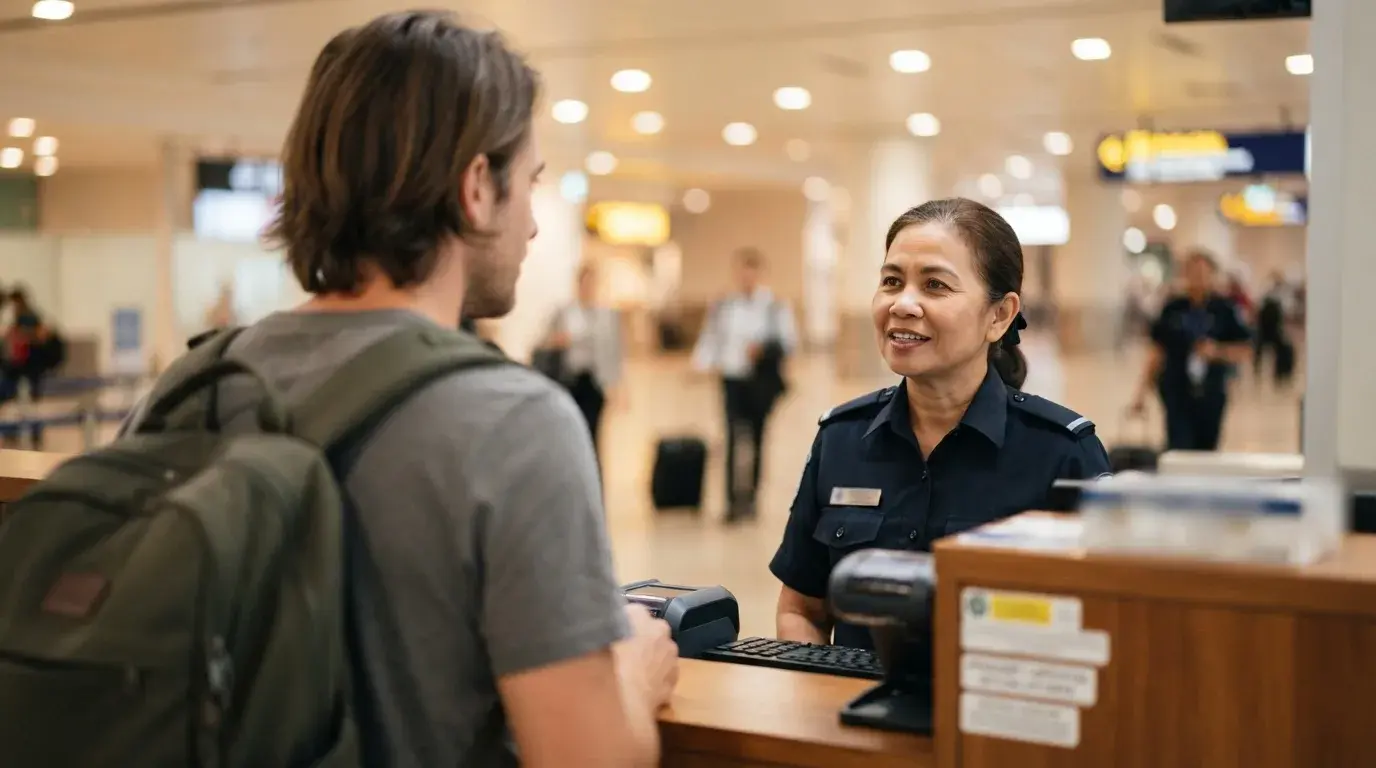
Short answer: Jamaica's official tourism guidance says visitors should carry a return or onward ticket. If you fly in one-way, show a genuine exit route within the period actually granted to you, and check with the operating airline whether an unticketed temporary reservation is acceptable for your itinerary. Complete the free C5 Passenger Declaration separately; that form does not replace onward travel proof.
A one-way arrival is not itself a problem, but a missing or expired exit record can trigger questions at airline check-in or Jamaican immigration. This guide keeps the draft's airport, fare, document and final-check workflows while distinguishing a live reservation, an issued ticket and the government C5 declaration. Acceptance depends on the current rule and the traveler's status; no PDF guarantees boarding or admission.
Key facts
- Jamaica's official tourism site states that visitors need a return or onward ticket; passport and visa conditions depend on nationality and status.
- The free online C5 Passenger Declaration is a separate immigration/customs step, not a flight ticket.
- The tourism authority says the C5 can be completed up to 30 days before travel and that each traveler, including a child, needs individual details.
- A booking reference helps locate a reservation but does not prove that an airline ticket has been issued or that the carrier accepts a hold.
- Use the visitor period actually granted, not a generic online maximum, when choosing an exit date or applying for an extension.
In This Guide
- What Jamaica Expects You to Show Before You Step Off the Plane
- Choosing the Gateway and Fare Style for an Open-Ended Jamaica Trip
- When a Temporary Reservation Can Support Jamaica Exit Proof
- Getting Through Check-In and the Arrival Hall Without a Hitch
- Your Jamaica Exit-Proof File, Ready Before You Board
- Frequently asked questions
Official-source check: Jamaica's official tourism entry guidance states the onward/return-ticket expectation and free C5 details. PICA's travel-document page covers passport, visa and C5 checks; PICA's extension page explains that extra stay must be approved before the current permission expires. Check current airline requirements for the precise route and status.
Reviewed for: visitor versus citizen status, return/onward proof, C5 timing and child details, airline-versus-border review, issued-ticket versus temporary-hold status, actual admission period and realistic exit routing. Examples are illustrative.
What Jamaica Expects You to Show Before You Step Off the Plane
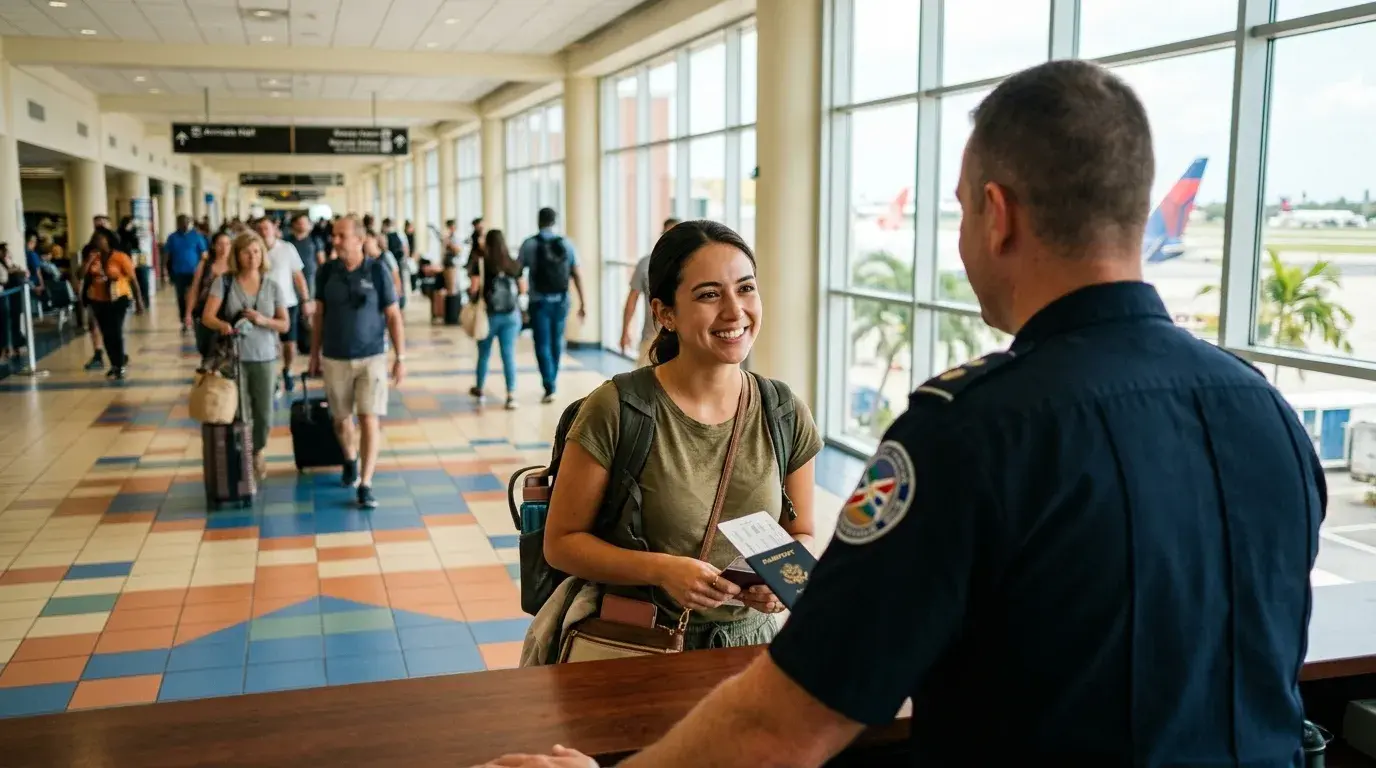
Jamaica's official tourism guidance says visitors should have a return or onward ticket. The airline may check it before boarding, while immigration assesses entry on arrival. Keep that travel record separate from the C5 declaration.
The Exit Question You Will Hear at the Desk
Every visitor answers the same basic questions on arrival. Why are you here? Where are you staying? When are you leaving? The last question is where weak paperwork shows. Jamaican immigration wants evidence that your stay has an end date and that you will keep it.
Official tourism guidance calls for a return or onward ticket for visitors. Citizenship, residence and visa status can change the wider document set, so verify the rule for the actual traveler rather than applying one checklist to everyone.
Officers work quickly. A clean printout or a PDF on your phone answers the question in seconds. A search through old emails does the opposite. Open the document before you reach the front of the line.
Officers also compare your answer with your paperwork. If you say two weeks and the document shows two months, expect more questions. Your spoken answer, your hotel booking, and your exit proof should tell one story.
Do not reduce the entry rule to a mandatory PNR. A booking reference can help an issuer trace a reservation, but it does not by itself prove an issued ticket or guarantee that an airline or officer will accept a temporary hold. Present only a current, genuine record and confirm the required ticket status.
What a One-Way Arrival Looks Like to an Officer
A one-way flight into Jamaica can be part of a genuine multi-country route. The issue is whether you can show a credible, acceptable exit plan, not whether your first fare returns to your origin.
Put the exit date within the visitor period actually granted on entry, or update the plan after an approved extension. Do not assume that a nationality-based visa exemption is the same as your personal landing permission.
An officer may ask how you will fund your stay. Carry genuine funds evidence when appropriate, but no particular banking screenshot or major currency is universally prescribed in the official visitor document list.
How Airlines Enforce the Rule Before You Even Fly
The operating airline may review destination entry documents before departure. That check is distinct from the decision made by Jamaican immigration after arrival.
Airline staff can ask for return or onward proof at check-in and may withhold boarding if the documented rule is not met. Check the carrier's current requirement before travel rather than assuming a provisional reservation will be enough.
Illustrative example: Daniel has a one-way Toronto-to-Kingston ticket and intends to fly onward to Panama. Before travel he confirms what exit proof his operating carrier accepts, obtains the required genuine onward record and checks that he can enter Panama. No boarding result is guaranteed.
Without suitable exit evidence, Daniel could face a delay or refusal at check-in or arrival. Prepare before leaving home, leaving time to resolve a status or date mismatch with the issuer.
Counter checks vary by airline and route. Keep the passport, any visa, C5 confirmation, onward record and next-destination documents accessible; ask the carrier which condition it is checking if the file is questioned.
When Your Visa Application Asks for the Same Document
Some passport holders need a Jamaican visa before travel, and an application may ask for travel plans. Confirm the actual visa checklist with Jamaica's authorities. A visa-stage itinerary is not automatically an acceptable boarding ticket later.
Keep the dates consistent across every document. If your application says you leave on the 20th, your exit proof must say the same. A mismatch of even a few days invites questions at the border.
If applying well ahead, build a truthful tentative route and track any changed decision or travel dates. Ask the issuer to update a reservation when possible; do not alter its PDF yourself or assume a visa can be changed without process.
Check the official entry rules for your passport close to travel, since requirements can change. Rules for one nationality may differ from another, and your airline will follow the current ones.
The Paperwork That Travels With Your Exit Proof
Jamaica's tourism authority directs air and cruise passengers to complete the free online C5 Passenger Declaration. PICA's general document page also refers to a completed C5. Keep its confirmation beside, but distinct from, your onward ticket.
Carry these items in one place:
- Passport and visa or residence evidence, as applicable
- Completed C5 Passenger Declaration confirmation
- Genuine return or onward travel proof
- Accommodation or host address
- Funds evidence if relevant to the case
Keep an offline digital copy and a readable paper backup where practical. Neither format cures an expired booking or missing ticket issuance.
Note that you should also save a copy of the completed form and any confirmation page. Offline copies help when the airport network is slow, and they cost you nothing.
With the rules clear, your next decision is which gateway and fare style to build the rest of your plan around.
Choosing the Gateway and Fare Style for an Open-Ended Jamaica Trip
Your gateway into Jamaica shapes your cost, your options, and your paperwork. A little planning here pays off at the counter later.
Sangster and Norman Manley Compared on Traffic and Feel
Sangster International Airport serves Montego Bay and many north-coast itineraries. Check current routes and schedules rather than relying on a fixed annual passenger count to choose an airport.
Peak arrival periods can bring queues, while flight options and change rules vary by carrier. Compare the actual onward services from your chosen airport before committing to a date.
Norman Manley International Airport serves Kingston and south/east Jamaica routes. Historic 2021 traffic is not a sound basis for promising shorter lines or more relaxed document review today.
Queue length does not determine how closely an officer reviews paperwork. Prepare the same genuine, organized record whichever Jamaican airport you use.
Choose your airport based on where you will stay. Resort guests on the north coast save a long drive by landing near Montego Bay. Travelers heading to the capital, the Blue Mountains, or the south coast usually land in Kingston. A cheap fare to the wrong airport can cost you a taxi ride that erases the savings.
One-Way Routes Travelers Actually Book
One-way flights to Jamaica allow flexible travel without return dates. That suits people with an open plan, such as a month of remote work or a long stay with friends.
Check that each proposed route actually reaches the named Jamaican airport. Negril is not a substitute name for Montego Bay airport, and a connection via London may trigger separate UK transit requirements for some travelers.
One-way and round-trip fares can price differently by route, carrier and date. Compare the real total, including change fees and baggage, rather than assuming the one-way leg is cheaper.
Prices vary by carrier and by season. Compare both fare types for your exact dates before you purchase. Do not assume either one wins.
Ask about change terms before you buy any fare. A cheap one-way ticket that cannot be changed may cost more than a flexible fare when plans move.
An open-ended trip may offer flexibility, but it does not remove Jamaica's onward/return-ticket expectation. Plan a genuine exit before check-in, and distinguish the fare you have bought from any temporary hold you carry.
Timing Your Trip Around the Busy Season
Jamaica has seasonal travel demand, but there is no universal 'best' month or guaranteed fare pattern. Compare weather, schedules and prices for the actual dates you can travel.
Booking early may help on some routes but can create change costs if the plan moves. Compare an issued flexible fare, a genuine onward leg and any permitted provisional option under their current terms.
Travel demand and fares move. Set price alerts if useful, but do not present a predicted price increase as certain for a particular market or week.
Shoulder-season fares may differ, but weather and availability also vary. Compare the total cost and your real travel dates before choosing a departure record.
Remember that busy weeks also mean busy immigration halls. Allow extra time between your landing and any onward connection.
Where the Cost Math Changes for Different Travelers
A one-way fare is not always the better deal. Some airlines charge a premium for single legs, especially on peak weekends. If the one-way price sits close to a full return ticket, the return may offer more value.
A return ticket also doubles as exit proof. That solves two problems with one purchase. The catch is that your return flight date must stay inside your permitted stay, and changing it later may cost money.
If you truly continue to another country, compare a genuine onward leg with a return-home fare. The next country must admit you, and the carrier must accept the form and status of the ticket you intend to show.
Think about the whole trip before you choose. Add up the fare, the change fees, and the time you might lose at the counter. The lowest sticker price is not always the lowest total cost.
Payment details matter too. Some airlines add card fees, and some charge extra for seats or bags on the cheapest fares. Read the fare rules page before you pay. A fare that looks low in the search results can climb quickly once extras are added.
Once you know your fare style, the next job is building exit proof that an officer will accept without a second glance.
When a Temporary Reservation Can Support Jamaica Exit Proof

A temporary reservation can document a proposed route only where the airline and destination accept that status. The important check is what the record actually is, when it expires and whether an issued ticket is required.
What a Booking Reference Can and Cannot Prove
A genuine booking reference can help locate a reservation, but a PNR alone does not prove payment, ticket issuance or acceptance at a checkpoint. Verify the record with the issuer and ask the operating carrier which status it needs.
A supplier may use different airlines and booking channels. Do not assume any named carrier, universal verification system or guaranteed visible record; ask how to check the actual itinerary and what to do if it is not found.
A visa-application itinerary and an airline check-in ticket can serve different purposes. A lawful temporary reservation may be suitable where a checklist permits an itinerary, but do not describe it as a paid ticket or promise it will pass at the counter.
Any travel record should correctly identify the passenger, international exit route and date, plus the issuer's details. Match the passport name and confirm the document's current status.
Before relying on a hold, check its reference, passenger and route, expiry, and whether it is ticketed. If an issued fare is required, a searchable reference is not enough.
DummyFlights offers temporary flight-reservation services. Check the current price, expiry, verification and change terms on the product page; no fixed price, unlimited changes or instant acceptance is promised here.
Setting the Departure Date Inside Your Stay Window
Use your actual arrival date and planned stay, then compare the proposed exit with the time granted to you. Leave a practical margin where possible and confirm the onward leg is real and usable.
That small buffer protects you. Flights get delayed. Plans shift. A date right on the edge of your permitted stay leaves no room for either.
Consider time zones as well. A flight that departs just after midnight may count as the next calendar day. If your permitted stay ends on a given date, avoid a departure that sits on that boundary. Pick a daytime flight with a clear date.
Use a simple method:
- Record the arrival date and permission actually granted
- Calculate the intended stay and next-country admission requirements
- Choose a truthful international exit date within that period
- Check ticket status and the carrier's required evidence
If your plans change, update the reservation and carry the new copy. An officer who sees an old date next to a new hotel booking will ask why.
The Right Moment to Book
There is no universal rule to book an onward record one or two days before departure. Plan early enough to confirm the real route and carrier rule, while ensuring any temporary reservation will still be valid at each checkpoint that may ask for it.
Booking too early can mean carrying a document that no longer fits your trip. Booking too late means you risk a rush at the airport, with no time to fix a typo.
After you book, check the confirmation email. Look at the spelling of your name, the date, and the route. Fix any error at once, while it is still simple.
Keep the PDF in three places: your phone, your email, and a paper copy. If one fails, you still have the others.
A short-validity booking made at a fixed interval can still lapse before airline check-in or Jamaican arrival. Check the issuer's expiry and the journey timeline, and arrange issued carriage if the carrier requires it.
Choosing Between Onward Flights and a Return Home
Your exit leg should match your real plan as closely as possible. If you will go home after Jamaica, a return flight to your city makes sense. If you will continue elsewhere, a flight to the next country tells a more accurate story.
Illustrative example: Emily intends to spend two weeks in Jamaica before traveling to the Cayman Islands. She checks Cayman entry rules and obtains an accepted, current onward document for that actual route; the example is not a promise of admission.
Do not choose a destination just because it looks cheap. A random city with no link to your trip invites questions. A logical route does not.
Keep your story short and consistent. If asked, you should be able to say where you are going next and why in one sentence.
Think about the country you will visit next. Some destinations ask for their own exit proof, so the document you build for Jamaica may help again later. Note that each reservation should match the real order of your trip.
Plans can change after arrival, but a temporary reservation does not grant a free cancellation, unlimited rebooking or a longer visitor stay. Check supplier terms and update the real exit record if the itinerary changes.
With your exit proof ready, the final stretch is getting it past two checkpoints on travel day.
Getting Through Check-In and the Arrival Hall Without a Hitch
Travel day brings two tests. The first is the counter at your departure airport. The second is the immigration desk in Jamaica.
What to Say at the Home Airport Counter
Have your passport and exit record accessible at check-in. Show the specific documents the agent requests and make the route, date and booking status easy to inspect.
If the agent asks why you have no return ticket, answer in one calm sentence. For example, say you plan to leave by another route and show the reservation. Keep your tone friendly.
Personally, we suggest practicing this answer once before you leave. It sounds simple, but nerves can scramble even easy sentences. A rehearsed line keeps you steady.
Arrive early. Counters with extra document checks run slower, and you want time to spare. Rushing is how people forget papers.
Any carrier may apply destination-document checks. Allow time for a supervisor or issuer check, especially when an exit booking sits on a separate record.
Preparing for Kingston Without Assuming Stricter Rules
Do not claim that Kingston applies a uniquely strict onward-ticket policy without official evidence. The same national visitor requirement applies; the individual officer and itinerary determine which documents are examined.
Have a clear and truthful answer about your stay and departure. Preparation helps, but no document guarantees that the arrival review will be quick.
Jamaica has no land border, so an international departure is generally by air or sea. Confirm that any sea booking is an accepted onward document for your arrival mode and airline; a domestic road leg alone is not an exit.
Queues at Kingston can grow when several flights land together. Stay patient. Keep your passport open to the photo page, your C5 form ready, and your exit proof within reach. Officers appreciate order.
When you enter Jamaica, keep your phone charged and your documents within reach. Do not pack them in a checked bag. You will not have that bag until after the immigration desk.
A Calm Routine for the Last 48 Hours
Use the final two days to recheck the documents, but complete the C5 whenever it suits the official permitted window. Its online submission is not restricted to the last 48 hours.
- Confirm the free C5 submission and save its confirmation
- Recheck the genuine exit ticket or permitted reservation status
- Keep an offline copy of passport, visa and accommodation details
- Check funds and next-country documents if relevant
- Review flight schedules and the operating airline's check-in time
Keep a small amount of cash in a common currency for the first hours. Card systems sometimes go down, and you do not want to be stuck at the airport.
Handle these small tasks early, and travel day feels stress-free. You can spend your energy on the trip itself, not on fixing paperwork.
Back up travel files securely and share only with someone you trust. A backup can recover a lost PDF, but it cannot make an expired reservation current.
When the Officer Asks One More Question
Sometimes an officer wants more detail. That is normal. Answer clearly and keep your documents ready to present. Do not offer extra stories that no one asked for.
Typical follow-ups include where you will stay, how long, and how you will pay. Know the name of your hotel and your rough budget. If you are visiting friends, have their address and phone number handy.
If a problem arises, stay polite and patient. Officers have wide discretion, and courtesy helps. Never argue about the rules at the desk.
If you travel with family or a group, have each person's documents ready at the same time. Officers often process families together, and one missing paper delays everyone.
Remember that an officer's job is to confirm your story, not to test you. Short, honest answers work best. If your plan changed since you booked, say so and show the updated document.
Once the officer is satisfied, you collect your bags, clear customs, and step out into the warm air. Your preparation did its job.
Your Jamaica Exit-Proof File, Ready Before You Board
Jamaica's tourism guidance asks visitors for a return or onward ticket. Complete the free C5 separately, check your permitted stay and next destination, and verify the status of the real exit record with the operating airline.
Do not rely on a fixed one- or two-day purchase rule. Prepare before check-in, keep the record valid through the relevant review, and obtain issued carriage if required. A temporary booking is not a boarding or admission guarantee.
Need an exit record for a flexible Jamaica itinerary? Check the airline's document rule first. A temporary reservation may support a plan where accepted, but buy an issued ticket if that is what the carrier or authority requires.
Review onward reservation optionsFrequently Asked Questions
Does Jamaica ask visitors for a return or onward ticket?
Yes. Jamaica's official tourism guidance says visitors should show a return or onward ticket. The form and status needed for a particular traveler should also be confirmed with PICA and the operating airline.
Can I enter Jamaica on a one-way flight?
A one-way inbound flight can fit a genuine onward itinerary, but carry accepted proof of departure within your permitted stay and documents for the next destination. The airline may check before boarding and immigration makes the final admission decision.
Is a PNR or temporary dummy ticket guaranteed to work?
No. A PNR locates a booking; it does not prove ticket issuance or carrier acceptance. Check its live status and ask whether an issued ticket is required. Never present an expired or fabricated record.
Does the C5 form count as onward proof?
No. The free C5 is Jamaica's passenger immigration/customs declaration. A return or onward travel document answers a different question.
When should I complete the C5 form?
The official tourism page says the online form can be submitted up to 30 days before travel. Use the official portal and retain the confirmation. If you submit an error, official guidance says to submit a fresh corrected form.
How should I choose my Jamaica departure date?
Use the trip you actually intend and the visitor time actually granted. Keep flight, accommodation and any extension evidence aligned; apply for an extension before permission expires if needed.
Friendly reminder: DummyFlights provides temporary travel-proof documents for planning and application support. Requirements vary by destination, airline, route and applicant situation. A dummy ticket can support a file, but it does not guarantee approval, boarding or entry.