

Manual check-in airports create a different kind of travel-proof problem. Your trip may be legitimate, your passport may be valid, and your visa may already be issued, but the airline can still stop online check-in because staff must inspect documents at the airport. That is where a weak screenshot, random PDF, expired reservation or unclear onward plan becomes stressful.
The goal is not to carry more paperwork than everyone else. The goal is to carry the right proof in the right order. For manual check-in routes, your onward ticket should make the exit plan obvious before a boarding pass exists: where you are going next, when you leave, whose name is on the reservation, and whether the document looks current enough to support boarding.
- No online boarding pass does not mean your onward proof is invalid.
- Airlines may require counter review when passports, visas or destination rules need manual inspection.
- A clean onward ticket should show passenger name, route, date and booking reference clearly.
- PNR visibility helps, but only when the route and timing also make sense.
- Screenshots should support the file, not replace the main onward ticket PDF.
- Fake-looking PDFs, mismatched dates and vague explanations create avoidable counter friction.
Create Your Onward Ticket
- Official-source check
- Why manual check-in changes onward-ticket proof
- The proof ladder for manual check-in airports
- How to prepare your onward-ticket file
- What to show at the airline counter
- What arrival officers usually want
- Timing, PNR visibility and validity
- How to handle counter problems
- Which proof fits your situation
- FAQ
Why Manual Check-In Changes Onward-Ticket Proof
Online check-in feels like a simple travel step, but for international travel it often depends on document logic. If the airline system cannot automatically confirm your eligibility, it may push you to the airport counter. That does not automatically mean something is wrong. It often means a human must review the passport, visa, destination requirement, return or onward proof, transit details, or route risk before the boarding pass is released.
No online boarding pass does not mean no valid onward proof
A boarding pass proves the airline has accepted you for that flight. An onward ticket proves your next travel plan after arrival. They are related, but they are not the same document. At manual check-in airports, the boarding pass may not exist until staff review your documents, so your onward ticket must stand on its own as exit proof.
This is especially important when you are entering visa-free, using visa-on-arrival, transiting a sensitive route, holding a one-way ticket, or traveling to a destination where airlines commonly ask for proof that you will leave within the permitted stay. The airline’s concern is practical: if the destination refuses you, the carrier may have to manage the cost, return movement and reporting process.
How manual check-in changes the evidence you need
Manual check-in rewards clarity. The counter agent does not want a long explanation first. They want a document that can be scanned quickly. Your onward ticket should therefore show the essentials without forcing the agent to dig through unrelated attachments.
- Passenger name exactly as shown on the passport.
- Departure country or airport after the stay.
- Next destination outside the country or travel zone when required.
- Travel date inside the allowed stay window.
- Airline-style route and timing.
- Booking reference or PNR when available.
- PDF format that opens offline on your phone.
The three places where your onward ticket may be questioned
The first checkpoint is usually the airline counter at departure. This is where manual check-in matters most because the staff member must decide whether to issue your boarding pass. The second checkpoint can be transit, especially when the connecting airport also applies document checks before allowing onward movement. The third checkpoint is arrival immigration, where the officer may ask how long you plan to stay and where you go next.
The same onward ticket can support all three moments if it is built around a realistic route. If the document is only designed to look pretty on paper, but the route, date or passenger details do not make sense, it becomes weaker the moment a real person asks a practical question.
Why manual check-in routes make travelers nervous
Manual check-in feels stressful because travelers often discover the issue late. They try to check in online, the website refuses, and the airline message says they must visit the airport counter. That is when people begin to worry that their visa, passport or onward plan has a problem.
In many cases, the solution is calm preparation. If your onward ticket is current, readable and aligned with your trip, you can present it confidently. If your onward proof is expired, vague or inconsistent with the rest of the file, manual check-in exposes the weakness faster than online check-in would.
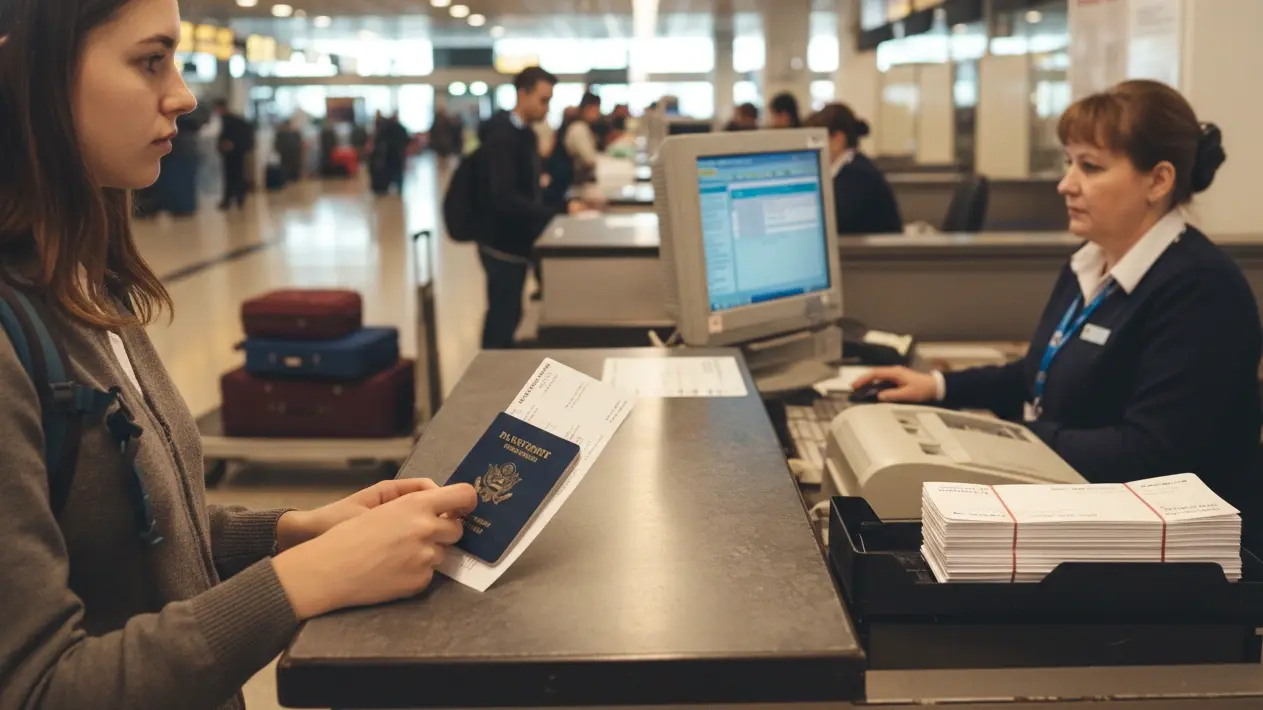
The Proof Ladder for Manual Check-In Airports
Not every onward proof carries the same strength. At manual check-in airports, think in layers. The strongest layer is a clean onward reservation with realistic route details and a booking reference. The second layer is a professional PDF itinerary that is readable offline. The third layer is support evidence such as a manual check-in notice, airline message or screenshot. Weak proof begins when the file relies only on a cropped image, edited PDF, random route or expired reference.
A verifiable onward reservation with a booking reference
The strongest practical option is an onward reservation that looks like a real travel document and includes a booking reference or PNR when available. The PNR is useful because it gives the document a reference point. But the PNR alone does not rescue a weak file. The route, date, passenger name and intended stay must still make sense.
For example, if your visa-free stay allows 30 days, an onward ticket leaving on day 28 is easier to understand than one leaving after the permitted period. If your hotel booking ends on day six but your onward ticket leaves on day 29, you need a credible explanation of where you stay between those dates. The document must fit the travel story.
A PDF itinerary that looks like a real travel document
A clean PDF matters because airport counters are busy. Staff may not have time to interpret a messy screenshot or a cropped email. A good PDF should show the travel path without clutter. It should not pretend to be a boarding pass, and it should not present itself as a paid e-ticket unless it is actually a paid e-ticket.
- Passenger name visible near the top.
- Route shown in normal airport-city format.
- Date and time readable without zooming.
- Airline name or flight-style route detail.
- Reservation number easy to locate.
- No fake seals, fake approval language or confusing stamps.
Airline-style confirmation details without overloading the officer
There is a difference between complete and overloaded. Complete means the key travel facts are visible. Overloaded means the document is packed with unnecessary claims, graphics, warnings and irrelevant text. At manual check-in, a clean layout usually works better because the staff member can find the important details quickly.
Keep the file simple: passport, visa or entry permission, onward ticket, hotel or address proof if relevant, and insurance or funds proof if the route commonly requires it. Do not begin by showing everything. Begin with what was asked for.
Manual check-in notice or airline message
If the airline website blocks online check-in and shows a message telling you to visit the counter, save that message. It can help explain why you do not have a boarding pass yet. But it is not onward proof by itself. It only explains the check-in situation.
The manual check-in notice says, “The airline wants to inspect something.” Your onward ticket says, “Here is the planned exit travel.” Keep those roles separate.
Screenshots as backup, not the main proof
Screenshots are helpful only as backup. They are easy to crop, easy to misread and sometimes impossible to verify. A screenshot may support a PDF, but it should not be your primary onward ticket at a manual check-in airport unless no better option exists.
If you carry screenshots, keep them full-screen and readable. Do not crop out the airline name, passenger name, date or booking reference. A cropped image often creates more doubt than confidence.
What not to use as onward proof
Manual check-in airports punish weak proof because the review happens face-to-face. If the counter agent sees something suspicious, they can ask follow-up questions immediately. Avoid anything that makes the onward plan look disposable, fictional or disconnected from the trip.
- A fake-looking edited PDF.
- A screenshot with missing passenger details.
- An onward date outside the permitted stay window.
- A route to a destination you cannot reasonably enter.
- A booking reference that cannot be read.
- A document that contradicts your visa, hotel or cover story.
How to Prepare Your Onward-Ticket File Before Travel
The best time to fix onward proof is before the airport. Once you are at the counter, every correction feels more urgent. Before departure day, build a simple file that answers the airline’s likely questions and supports your route without sounding rehearsed.
Match the onward date to the travel story
The onward date should sit inside the permitted stay and match the reason for travel. A weekend tourist, a 30-day visa-free visitor, a backpacker with flexible plans and a long-stay traveler all need different exit logic. The document should not look randomly selected from the cheapest flight available.
If you are using a visa, your onward date should not contradict the visa validity, appointment letter, hotel dates, invitation letter or insurance period. If you are entering visa-free, the onward date should help show that you are leaving before the allowed stay ends.
Choose a route that looks plausible
A strong onward ticket shows a believable next step. That does not always mean flying home. It can be a flight to another country, a regional continuation, or a route that fits your broader itinerary. But it should not create a new problem. If you show an onward ticket to a country that requires a visa you do not have, the airline may ask more questions.
Route logic matters more at manual check-in because staff may have to make a practical decision quickly. If the route looks normal, the conversation stays short. If the route looks impossible, the onward ticket becomes a new issue.
Keep the passenger name passport-matched
Name mismatch is one of the easiest problems to avoid and one of the hardest to explain at the counter. The onward ticket should match the passport sequence as closely as the booking system allows. Middle names, compound surnames, initials and spacing should be handled consistently across passport, visa, main ticket and onward proof.
Save the onward ticket in three formats
Manual check-in can expose phone, internet and app problems. Save your onward ticket in a way that works even if the airport Wi-Fi is poor or your airline app is slow.
- Keep the PDF in your phone files, not only in email.
- Save a full-screen screenshot as backup.
- Keep one printed copy when the route is sensitive.
- Email the PDF to yourself and one travel companion.
- Make sure the document opens offline before leaving home.
Prepare one sentence for missing online check-in
If staff asks why you do not have an online boarding pass, keep the answer short. Do not over-explain. Say that online check-in directed you to the counter for document review, then present the required document. The onward ticket should do most of the work.
“Online check-in asked me to complete document review at the airport. Here is my passport, entry document and onward ticket showing my planned departure.”
Check timing before submission or travel
If the onward ticket is for a visa file, arrange it close enough to submission that the details are current. If it is for airport travel proof, arrange it close enough to departure that the PNR and document still feel fresh. Old proof creates friction because staff may wonder whether the travel plan has changed.
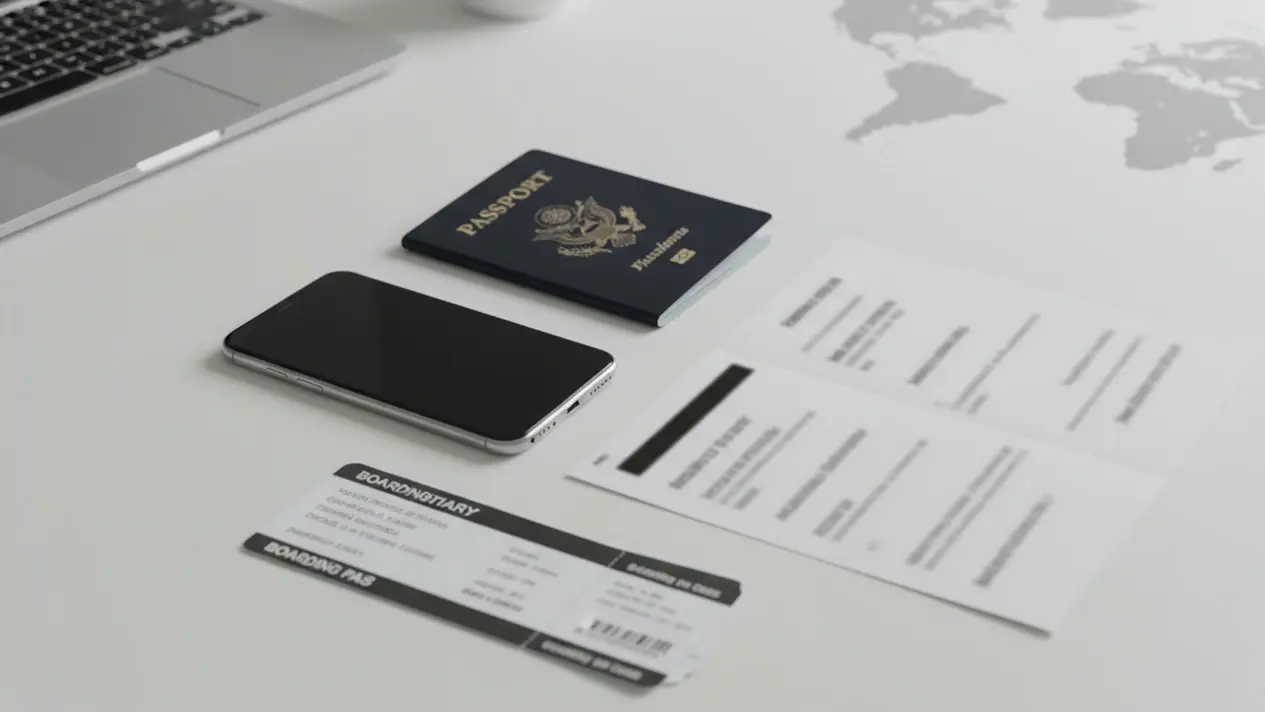
What to Show at the Airline Counter
At the counter, do not begin with a speech. Start with the document the agent asked for. If they ask for onward travel, show the onward ticket. If they ask why you could not check in online, show the airline message. If they ask for entry documents, show the passport and visa or entry permission. Keep the flow simple.
Start with the onward reservation
The best first move is to present the onward reservation calmly and let the staff member scan it. Do not say it is “just for formality,” “not a real trip,” or “only needed to pass check-in.” Those phrases weaken the document because they shift attention from the travel plan to your intention to discard it.
The cleaner answer is practical: this is your planned onward travel, it matches your route, and it shows you leave within the permitted stay.
How airline staff think about onward proof
Airline staff usually care about whether the destination will let you travel. They may not be trying to judge your entire itinerary. They are trying to avoid a boarding decision that creates a refusal, carrier liability issue or passenger handling problem later. That is why onward proof can be requested even when the trip feels obvious to you.
Manual check-in puts that decision in front of a person. A clear onward ticket gives the person a document-based reason to proceed.
Documents to keep ready without handing over everything
Have the full file ready, but present only what is relevant. Overloading the counter can make the situation feel more complicated than it is.
- Passport.
- Visa, ETA, eVisa, visa-on-arrival approval or entry permission when applicable.
- Main flight ticket.
- Onward ticket PDF.
- Hotel or address proof when relevant.
- Insurance or funds proof when the destination commonly checks it.
- Manual check-in message if online check-in was blocked.
If the counter agent cannot verify the PNR immediately
Do not panic if the agent cannot verify the booking instantly. Systems differ, access may be limited, and staff may not check every PNR the same way. Ask calmly whether they need the airline, date, route or booking reference repeated. If the issue is timing, show that the onward date is inside the allowed stay. If the issue is destination eligibility, show that your next destination is realistic.
The goal is not to argue. The goal is to identify what they doubt and answer that exact doubt.
When a fully paid ticket may be safer
An onward reservation is useful in many cases, but it is not the strongest answer for every traveler. If your nationality, route, previous travel history, destination rule or airline policy creates high risk, a fully paid flexible ticket may be safer. This is especially true when the destination explicitly demands a paid return ticket, when your onward country requires documents you do not hold, or when airline staff refuse to accept reservation-style proof.
DummyFlights is strongest when you need clean temporary travel proof for planning, visa support or practical onward-ticket presentation. It should not be used to ignore a rule that clearly requires a different document.
What Arrival Officers Usually Want
Arrival immigration usually cares less about why online check-in failed and more about whether your stay makes sense. The officer may ask how long you will stay, where you will stay, what you will do, and where you go next. Your onward ticket supports that conversation by showing planned departure.
Proof of exit, not proof of check-in
A boarding pass is not the same as proof of exit. If an officer asks for onward travel, show the onward ticket, not the check-in message. The check-in message explains why you had to visit the airport counter. It does not prove where you go after arrival.
Why some borders ask more questions
Some destinations enforce onward travel more strictly because overstays, visa-free misuse, one-way tourist routes or regional migration patterns create practical risk. Other destinations rarely ask unless the traveler profile looks unclear. You cannot predict every officer, so the safer plan is to carry proof that can answer the question if it appears.
Visa-free and visa-on-arrival routes
Visa-free and visa-on-arrival travelers should be especially careful with onward proof because the entry decision often happens closer to travel day. The airline may check before boarding, and the border officer may check again at arrival. If your stay is flexible, your onward ticket should still show a clean exit from the country or travel zone within the permitted period.
Long-stay travelers and flexible travelers
Long-stay travelers sometimes assume they do not need onward proof because their plans are open. That can be true for some visa types, but manual check-in staff may still ask for evidence that the route is allowed. If your travel plan is flexible, your explanation should be more precise, not less.
For example, “I will decide later” is weak. “I am entering for 25 days, staying in Bangkok first, then leaving to Singapore on this date” is stronger because the onward ticket supports a specific route.
Timing, PNR Visibility and Validity
Timing can decide whether onward proof feels real. A document created too early may no longer match the trip. A document created too late may create airport stress. Manual check-in airports make timing more important because the counter conversation happens before boarding.
Best timing for a visa file
If the onward ticket supports a visa file, create it after your route, appointment date, hotel plan and insurance period are reasonably stable. The document should match the file you submit. If your travel dates change after submission, update the onward proof before using it again at the airport.
Best timing for departure-day checks
If the onward ticket is mainly for check-in or arrival questions, create it close enough to departure that the details are current and easy to explain. A fresh document is not automatically better than a realistic one, but an old document with stale dates is weak.
How PNR visibility helps
A booking reference or PNR helps because it gives the document a recognizable reservation structure. At the same time, not every airline staff member will verify every PNR in the same way. PNR visibility is a support signal, not a guarantee of boarding. It works best when the passenger name, route and date also line up.
Final pre-travel proof check
- Your onward ticket opens offline.
- Your name matches the passport.
- Your onward date is inside the allowed stay window.
- Your next destination is logical and enterable.
- Your booking reference is readable.
- Your hotel or address proof does not contradict the exit date.
- Your phone battery and printed backup are ready.

How to Handle Problems at the Counter
If your onward ticket is questioned, stay calm and narrow the issue. Counter problems usually fall into a few categories: the agent wants a boarding pass, the PNR is not immediately visible, the route looks strange, the onward country raises eligibility questions, or the agent prefers a return ticket. Each issue needs a different answer.
If they say “this is not a boarding pass”
Agree calmly. An onward ticket is not a boarding pass. It is proof of planned onward travel. Then show the manual check-in message if needed and explain that the boarding pass is issued after document review. Keep the focus on the requirement: proof that you will leave the destination within the allowed time.
If they ask for a return ticket instead
Some staff use “return ticket” loosely when they mean proof of leaving. If your onward ticket leaves the country or travel zone for another destination, ask whether onward travel is acceptable. Do not argue about wording. Show that the next destination is real and the date is inside the stay period.
If the reservation cannot be verified
Ask what detail they need. Sometimes the issue is a spelling mismatch, date confusion, airline code, route display or system limitation. If the counter still refuses the document, you may need to contact support, arrange a stronger proof option or buy a ticket that satisfies the airline’s interpretation. The safest decision depends on the route and how strict the airline is being.
If you are asked to buy a new ticket at the airport
Airport purchases are expensive because you have little time and few choices. Before buying, ask exactly what the airline needs: a return ticket, any onward ticket, a paid ticket, a ticket to your passport country, or proof of leaving the travel zone. A precise answer can prevent you from buying the wrong thing under pressure.
What to avoid saying
- “It is only for formality.”
- “I will cancel it after arrival.”
- “It is not a real trip.”
- “The website said this always works.”
- “Can you just accept it?”
Those phrases make the document sound weaker. At manual check-in, your onward ticket should speak through its route, date, passenger details and booking reference.
Which Proof Fits Your Situation?
The right proof depends on when and why the onward ticket is being used. A visa appointment weeks before travel is different from a departure-day check. A low-risk return journey is different from one-way entry to a strict destination. Choose the proof level that fits the risk.
If you are applying for a visa weeks before travel
Use an onward ticket that matches the submitted travel plan. Keep dates consistent with hotel bookings, insurance, invitation letters and any cover letter. Do not submit one route to the visa office and carry a conflicting route to the airport later.
If you already have the visa and are flying from a manual check-in airport
Focus on airport readability. Carry the onward ticket PDF, the manual check-in message, your main ticket, visa or entry permission, and any accommodation proof that supports the stay. The counter agent should not need to reconstruct your whole itinerary.
If you are entering visa-free or on arrival
Make the exit plan obvious. The onward ticket should leave before the allowed stay ends and should go to a destination you can reasonably enter. This is where an onward ticket can be more useful than a vague explanation of flexible travel.
If your onward flight is with a different airline
Separate airlines are normal, but the handoff must make sense. If your arrival flight and onward flight are on different bookings, the onward ticket should still show a credible next step. Keep both PDFs easy to open so staff can compare the dates quickly.
If the destination has strict exit-proof enforcement
Use stronger proof. Do not rely on a weak screenshot or an unclear reservation. If the destination or airline clearly demands a paid ticket, follow that requirement. If reservation-style onward proof is acceptable for your use case, make it clean, current and consistent.
Create Your Onward Ticket
Carry Onward Proof That Works Before the Boarding Pass Exists
Manual check-in airports do not change the basic travel-proof rule. They simply move the document conversation to the counter. If online check-in is blocked, your onward ticket becomes part of the evidence that helps staff understand your route before issuing the boarding pass.
A strong onward ticket is clean, current and believable. It does not need fake approval language. It does not need to pretend to be a boarding pass. It needs to show a realistic departure plan that matches your trip, your permitted stay and your other documents. That is the kind of onward proof that keeps the conversation short.
Frequently Asked Questions
Can I use an onward ticket if online check-in is not available?
Yes, an onward ticket can still support your file when online check-in is unavailable. Manual check-in usually means the airline wants to review documents at the counter before issuing the boarding pass.
Is an onward ticket the same as a boarding pass?
No. A boarding pass shows the airline has accepted you for a specific flight. An onward ticket shows planned travel out of the destination or travel zone. At manual check-in airports, the onward ticket may be reviewed before the boarding pass is issued.
What should an onward ticket show at manual check-in?
It should show passenger name, route, date, airline-style details and a booking reference or PNR when available. The document should be readable offline and match your passport, visa, hotel and wider travel plan.
Does a PNR guarantee that the airline will accept my onward ticket?
No. A PNR is helpful, but it does not guarantee boarding. Airline staff can still question the route, date, eligibility or document quality. The strongest proof combines a readable booking reference with realistic travel logic.
Should I show screenshots or the PDF first?
Show the PDF first. Screenshots are useful as backup, but a clean PDF is usually easier for staff to read and less likely to look cropped or incomplete.
What if the airline asks for a return ticket instead of an onward ticket?
Ask whether proof of leaving the destination is acceptable. Some staff use “return ticket” to mean any exit proof, while some routes may require a specific return or paid ticket. Follow the airline and destination rule for your case.
When should I create onward proof for manual check-in?
Create it after your route and stay dates are stable, and close enough to travel that the details are current. For airport checks, freshness and consistency matter more than creating the document very early.
Does an onward ticket guarantee boarding or entry?
No. An onward ticket supports your travel-proof file, but boarding and entry decisions depend on airline policy, destination rules, documents, route, nationality and officer discretion.
Friendly reminder: DummyFlights provides temporary travel-proof documents for planning and application support. Requirements vary by destination, airline, route and applicant situation. An onward ticket can support a file, but it does not promise approval, boarding or entry.