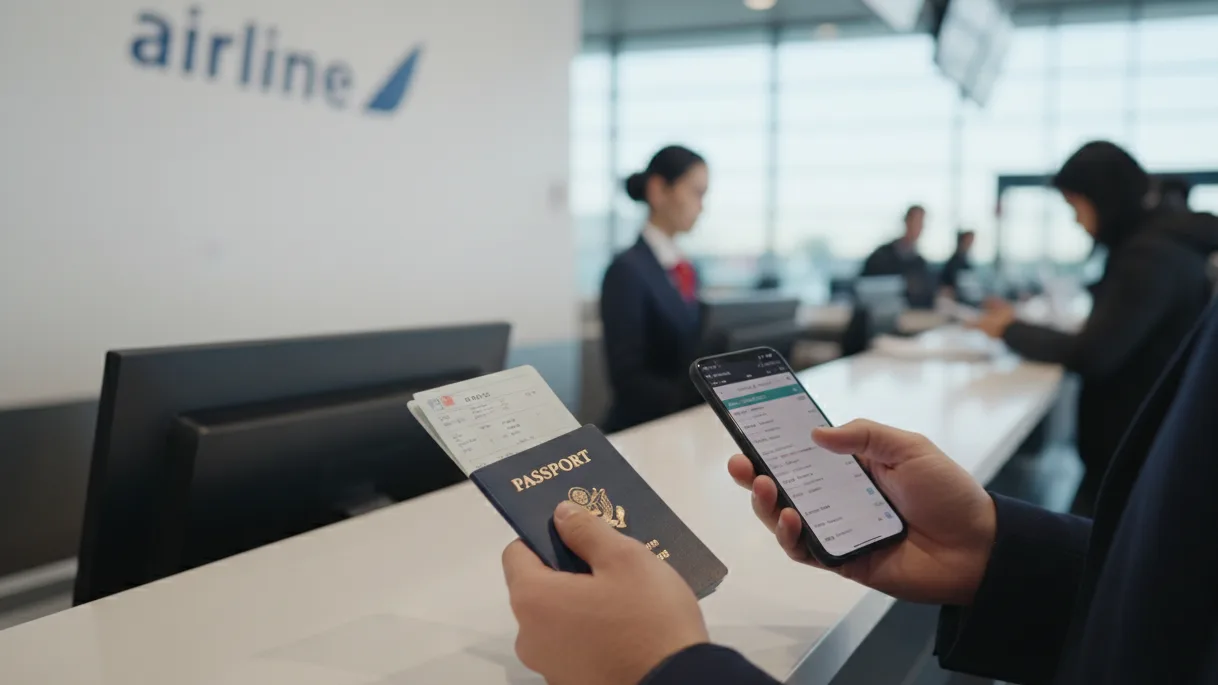
Short answer: Date an onward ticket inside the stay you will actually be granted: within 30 days for a visa-free Philippines entry or an Indonesian visa on arrival, and inside the current Thai exemption. Book it 48-72 hours before you land, so the real PNR is still live at the desk, for a flat $15 per person.
Immigration officers can ask for proof that you will leave before your stay ends, and a one-way flight into Manila, Bali or Bangkok makes the question more likely. The document matters less than its date: an exit that falls one day outside the permitted stay, or after a visa expires, starts exactly the conversation you were trying to avoid.
This guide is about getting that date right. It explains what officers look for, how to work out the permitted stay for the Philippines, Indonesia, Thailand, Malaysia and Costa Rica, how to time a reservation so it is still valid when you land, and how a fictional Mumbai-to-Bali traveller lines everything up.
Key facts
- Dummy ticket: a flat $15 per person, with a real PNR (booking reference) you can check.
- Valid for 48-72 hours, so order it close to your appointment or travel date.
- Dummy ticket dates can be changed free of charge on the booking day only.
- Can be issued even while you are at the embassy or visa centre.
- For visa files and onward-travel proof at immigration; it is not a paid ticket for flying.
- Accepted by embassies worldwide as travel-plan evidence.
Flying one way? Show a dated exit inside your permitted stay: a reservation with a real PNR, valid 48-72 hours, for a flat $15 per person.
Get your $15 onward ticketIn This Guide
- What Is an Onward Ticket and Why Does Immigration Ask for It?
- What Do You Get With a DummyFlights Onward Ticket?
- How Do You Book an Onward Ticket in 3 Steps?
- Which Dates Should Your Onward Ticket Show?
- What Counts as Proof of Onward Travel?
- What Stay Length Do Popular Visa-Free Destinations Allow?
- Should Your Onward Ticket Go Home or to a Third Country?
- Is Onward Proof for Immigration Different From Carrier Rules?
- Which Date and Name Mistakes Make Onward Proof Look Weak?
- What Does a Mumbai to Bali Onward Plan Look Like?
- Frequently Asked Questions
Official-source check: Stay lengths and exit evidence come from the Philippine Bureau of Immigration, the Directorate General of Immigration of Indonesia and the Royal Thai Embassy's visa-exemption information; Malaysia's list comes from its Ministry of Tourism, Arts and Culture and the Immigration Department. Costa Rica and Spain are named from US State Department and Spanish foreign-ministry guidance. Rules change, so check the current page for your passport.
Reviewed for: onward-date arithmetic against permitted stays, Southeast Asia visa-free and visa-on-arrival wording, 48-72 hour PNR timing, passport name matching and immigration-only use.
What Is an Onward Ticket and Why Does Immigration Ask for It?

An onward ticket is a booking that shows you will leave a country after you arrive. It can be a flight, a bus ticket, a train ticket, or a ferry ticket, as long as it carries you out of the destination country and into another one.
For immigration purposes, it works as an exit plan: proof that the visit has an end date.
Many countries require proof of onward travel for entry, and the reason is overstays. A visitor admitted for 30 days is expected to be gone on day 30, and a dated departure is the quickest way for an officer to see that the stay is temporary.
Onward tickets prevent illegal overstays and ensure compliance with the stay a visitor was granted.
Who Asks, and What Are They Looking For?
Two parties care about your onward proof, and their reasons differ. The immigration officer at passport control cares about your permitted stay: whether you will leave inside it. Your carrier has its own reasons for asking document questions, because carriers can be held responsible for passengers who are refused entry.
Immigration officials look at three things together: how long you are allowed to stay, whether your documents show you leaving within that window, and whether the whole story hangs together. Immigration authorities set the rules, so the clearest travel plan is one that follows them: a booked bed for the first nights and a dated departure.
Those carrier questions are a separate matter from immigration, and this guide does not cover them. Carriers set their own document rules, so check with your carrier before you fly.
What Makes the Request More Likely?
One-way tickets often draw more questions about onward travel. A one-way ticket says when you arrive and nothing about when you leave, so the gap gets filled by a question at the immigration desk.
Visa-free entry raises the odds in a different way. When you arrive without a visa that was approved in advance, nothing in your passport describes the trip. The onward booking does that job. Travelers entering on a visa on arrival face the same logic: the stay is short, and the officer wants to see the exit.
A stay with no accommodation attached, or a vague answer about plans, can also make an officer ask for the document. Each is a reason to carry an onward travel ticket instead of hoping the question never comes.
What Does the Officer Actually Need to See?
An officer wants a booking that is verifiable. A flight reservation with a PNR that can be checked is the usual form of onward proof, because the reference ties a named traveler to a specific departure. A screenshot with no reference, or a confirmation that does not match the name on the passport, gives the officer nothing to check.
The booking also has to make sense against your own paperwork. The departure should sit inside the permitted stay, the name should match the passport letter for letter, and the route should leave the country rather than hop between two of its own cities. A domestic flight shows that you are moving, not that you are leaving.
If you are applying for a visa rather than arriving visa-free, the same idea applies at an embassy. DummyFlights reservations are accepted by embassies worldwide for visa applications, and they are used for that purpose and for onward-travel proof at immigration. They are not paid tickets for flying.
What Matters More Than the Price of the Booking?
The officer is not testing whether you spent money on a seat. The question is whether you have a plan to depart. What matters is that the proof is real, readable, checkable, and aligned with your travel dates; for how officers read exit evidence in practice, see how onward proof works at the border. The rest of this guide is about making those four things true before you reach the desk.
What Do You Get With a DummyFlights Onward Ticket?
The product is a flight reservation, and it is priced at a flat $15 per person. Each traveller needs their own reservation in their own name, and the price does not depend on the route, the season or the country you are heading to.
The reservation carries a real PNR in the traveler's name, stays valid for 48-72 hours, and arrives as a PDF.
Each part of that description does a specific job, so it helps to take them one at a time.
A Real PNR in Your Name
A PNR is the booking reference that ties a traveller to a flight. Ours is real, and it is created in the traveller's name, which is what lets someone check it while the reservation is active.
The word verifiable is the point of the whole exercise.
Verifiable means the reference can be checked. It does not mean that any particular officer, embassy, or airline will check it, accept it, or approve it, and nobody can promise that. What it does mean is that the reservation is not a drawing. A verifiable flight reservation holds up if somebody does look, and a fake ticket does not.
That last difference is the one that matters at a counter. Fake bookings can easily be detected by authorities, and a document built from a template with an invented reference is the quickest way to turn a routine question into a refused entry. A real PNR in your own name is the opposite situation: it is a reservation that exists.
Valid for 48-72 Hours
The reservation stays valid for 48-72 hours. That window is short on purpose, and it shapes when you should book. A reservation made a month before your trip may not be live on the day you stand in front of an officer, while one made close to departure will be.
Treat the validity period as a reason to book near your travel date, not as a number to memorize.
Different providers use different windows, so do not carry assumptions over from another service. This one is 48-72 hours.
If your plans mean you will show the document more than 72 hours after booking, make the booking later. If you are showing the PDF to an embassy for a visa application, think about when the appointment is, and book accordingly. Nothing about the reservation improves by being made early; the opposite is more likely.
Delivered as a PDF
The reservation is delivered as a PDF. That format matters more than it sounds. A PDF can be printed, saved to a phone, emailed to a friend as a backup, and opened without an app or a login. It looks the same on every device, which is what you want when you are handing a phone to an officer.
Save the file in more than one place before you leave home. Arrival-hall wi-fi is not something to rely on, and a document that lives only in an email you cannot load is not much help at passport control. Keep one copy on your phone, one printed, and one in a cloud folder or an email to yourself.
Free Date Change on the Day of Booking
You get a free date change on the same day you book. Pick the wrong date, notice a clash with your visa window, or change your mind about the trip within hours, and the change carries no change fee.
This only applies on the day of booking, so check the dates before you pay and use the same-day change for genuine corrections.
That feature is useful for the common slip: choosing a departure that falls one day outside the permitted stay. Catching it on the day is free. Catching it later means starting a new booking. Read the dates on the confirmation page once more before you close the tab.
Who It Is For
The reservation is for visa applications and for onward-travel proof at immigration. It suits the traveler who needs to show an exit plan without buying a full-fare plane ticket that they do not intend to use.
It is an affordable option for people with flexible plans, such as digital nomads who move on when the mood changes, and for travelers who have not yet decided how they will leave.
It is also the sensible choice when the cheapest real alternative is a cheap one-way ticket to a neighboring country that you would then have to pay for in full. For someone who is certain of an exit, that real ticket is a fine decision. For someone who is not, a flat $15 reservation is a smaller commitment.
What It Is Not
It is not a paid ticket for flying. The PDF is proof for immigration and for visa applications, and nothing else. Use it as paperwork for the border and the embassy; your carrier's own document rules are a separate matter.
Nothing here promises that a particular officer will accept it or that a visa will be approved. The reservation is evidence, and evidence works best when it is accurate, readable, and consistent with the rest of your documents.
How Do You Book an Onward Ticket in 3 Steps?

Booking takes three steps: settle your dates, enter the traveler details, and pay and download. The work that decides whether the document helps you happens in the first step, before any form is opened. Most mistakes come from rushing past it.
Step 1: Work Out What Your Destination Needs
Start with the entry requirements for your passport, not with the booking. Look up how long you are allowed to stay, whether you need a visa or can enter visa-free, and whether the destination country asks for onward proof at all.
Official pages from the immigration authority, the embassy, or your own government's travel advice are the right place for that.
Write down three things: the date you arrive, the last day of the permitted stay, and the earliest date you could realistically leave. The onward departure belongs somewhere between the second and the third. If you hold a 30-day stay, a departure on day 31 is outside it, and a departure on day 29 is safely inside it.
Next, check what your visa or entry permission says about dates. Onward tickets should match your visa validity dates. A visa valid until the 20th with an onward departure on the 25th is a mismatch that an officer can spot in seconds, and it is the kind of detail that turns a friendly desk into a slow one.
Finally, decide on the route. The onward flight needs to leave the destination country, and it can go to your home country or to a third country. For a trip around Southeast Asia, the exit might be a short hop to a neighboring country.
Choose a route that looks like something a real traveler would do, rather than the most exotic option on the list.
Step 2: Enter the Traveler Details and Choose the Flight
Enter each traveler's name exactly as it appears on the passport. A reservation in the name "Jon" for a passport that says "Jonathan" gives an officer a reason to hesitate, and it takes a minute to avoid. Check middle names, hyphens, and the order of given and family names against the photo page.
Each person needs their own booking, because the reservation is priced and made per traveller. A family of four books four reservations, each a flat $15 per person in that traveller's own name.
Choose the departure date and route from the plan you made in the first step. This is where the free date change on the day of booking earns its place. If you notice that the date sits outside the permitted stay, you can correct it on the same day without a change fee.
After that day, the correction means a new booking.
Read the summary page slowly. Look at the name, the date, the origin and destination airports, and the direction of travel. Confirm that the origin is the country you are entering and the destination is somewhere else. It is easier to catch a reversed route on this page than at the immigration desk.
Step 3: Pay, Download the PDF, and Save It Properly
Pay the $15 for each traveller, then download the PDF. Open the file as soon as it lands and read it once from top to bottom. It can be issued even while you are at the embassy or visa centre, if that is where the question comes up.
Check that the name matches the passport, that the dates match your plan, and that a PNR is shown. Do not post the file on social media or in a public chat, since a booking reference belongs to you and to the person you are showing it to.
Then save it three ways: on your phone, as a printout, and in an email or cloud folder you can reach from another device. A phone battery can die, and a printout can be left in a hotel safe. Having a second and a third copy costs nothing and removes the most boring way for a trip to go wrong.
The validity window shapes when you book. The reservation stays valid for 48-72 hours, so book close to the moment you will need to show it. For a flight that leaves in two days, book today or tomorrow. For a trip months away, wait.
A Quick Pre-Travel Check
Before you leave for the trip or the embassy, compare four things side by side: the passport, the PDF, your visa or entry permission, and your accommodation booking if you have one. The names should be identical, and the dates should tell one consistent story.
A valid onward ticket that matches the rest of your paperwork is worth far more than a fancy one that does not.
If something does not line up, fix it while you are still at home. A same-day change handles date errors in the booking itself, and your other documents can usually be corrected faster than you expect. At the immigration desk, there is no time to repair anything.
One more habit helps: Carriers set their own document rules, so check with your carrier before you fly. Those rules are set by each carrier, not by us, and they vary.
Which Dates Should Your Onward Ticket Show?
The departure date should fall inside your permitted stay and leave a little room. That one sentence settles most cases, but the details behind it are where travelers slip, so this part works through the common situations: a standard 30-day entry, a stay you plan to extend, a multi-country trip, and a visa application.
The Standard Case: A Fixed Permitted Stay
Start with the number of days you will be admitted for. The Philippines grants tourists a visa-free stay of up to 30 days. Indonesia's visa on arrival is valid for 30 days. Thailand's visa exemption gives eligible passports 30 days as well.
Malaysia and Costa Rica use different periods, which you will find in the country notes later in this guide.
Count forward from the day you land and mark the last day of the permitted stay. Then choose a departure a few days before it. Counting conventions differ between systems, and a departure on the very last day leaves no buffer for a delayed flight or an arrival that crossed midnight.
Two or three days of slack is a sensible habit.
Do not choose the earliest possible departure either. A flight out the day after you arrive looks odd for someone who says they are on a holiday, and it invites questions about the rest of the plan.
The date that looks most natural is one that matches what you actually intend to do: a week for a short break, three weeks for a longer one.
When You Plan to Extend
Many visitors know from the start that 30 days will not be enough. Indonesia allows the visa on arrival to be extended once for another 30 days, and Thailand's embassy information describes an extension of up to 30 more days at an immigration office in the country. The Philippines also has extension procedures through its Bureau of Immigration.
The onward ticket you show at the border still has to fit the stay you are being granted at that moment, not the stay you hope to have. If you are admitted for 30 days, a departure on day 45 describes a trip longer than the permission in your passport. Officers see that gap, and it is easy to avoid.
Practically, that means showing a departure inside the initial period, then dealing with an extension in person if you decide to stay on. Extension rules, fees, and timing change, so confirm them with the immigration office in the country close to the date. This guide does not try to freeze those details, because they move.
A flexible traveler who is unsure whether they will extend should keep this logic in mind: the initial entry is the test, and the extension is a separate process later. Plans are allowed to change after entry. The onward proof only needs to describe the plan you are being admitted on.
Matching the Dates on Your Visa
If you hold a visa with its own validity dates, the onward departure should sit inside them. Onward tickets should match your visa validity dates, and booking onward tickets after visa expiry raises suspicion. A departure that falls after the last valid day tells the officer that you intend to overstay, whatever you meant.
The visa's validity window and your permitted stay are different things. A visa can be valid for months while the stay allowed on each entry is shorter. Read the visa for both: the dates between which you can enter, and the number of days you can remain after entering. Pick the shorter limit when you choose the date.
For visa applications at an embassy, the logic is similar but a little looser. The itinerary you submit should cover your trip dates and show the return date or exit date from the country you are applying to enter.
If your trip is a week in the destination country, a reservation showing a departure on day 7 or 8 is consistent.
Multi-Country Trips
A trip across several countries needs a little more thought. Each border can ask its own question, and the ticket that satisfies the first border says nothing about the second. A traveler flying into Kuala Lumpur, continuing to Bali, and then heading for Bangkok has three entries and three different stay limits.
Build the plan as a chain: for each country, a stay length and an exit. The reservation you carry for the first entry should show a departure from that country, and later legs can be arranged as you go. If you already hold a real ticket for the second leg, that ticket may serve as onward proof for the first.
If you do not, a reservation can fill the gap.
Do not show a flight to a country you cannot enter. If your onward route lands in a place that requires a visa you do not have, the officer can ask how you plan to get there. Choose an exit that your passport can plausibly complete.
Open-Ended Trips and Digital Nomads
Digital nomads and long-stay travelers often have no fixed end date, and that is fine. The border still asks for one. A flexible traveler can pick a plausible exit for the permitted stay and treat it as a placeholder for the proof, then adjust plans later in the country.
The long story of a gap year or a remote-work stint is harder to tell at a desk than a dated booking is to show. A clear departure date gives a short, documented answer, even when your real plans are looser.
A Quick Date Test
Before you book, run the date through four questions. Is it inside the permitted stay? Is it inside the visa validity, if there is a visa? Is it a date that matches a trip you would genuinely take? Does it leave a day or two of slack? If the answer to all four is yes, book it.
If the answer to any of them is no, move the date until it works. A free date change on the day of booking gives you room to correct a slip, but it is better to avoid the slip by getting the dates right at the start. The calendar is the cheapest document check you will do.
What Counts as Proof of Onward Travel?
Proof of onward travel is a booking that leaves the country by a route and on a date you can show. Proof of onward travel can include flight, bus, or train tickets, and some travelers use a ferry ticket where the geography allows it.
The mode matters less than three properties: the booking names you, it leaves the country, and its date makes sense.
Those three properties explain why some documents work and others cause trouble. A flight reservation with a reference, your name, and a departure inside the permitted stay meets all three. A screenshot of a search results page meets none. The next few discussions show where the lines fall in practice.
Flights, Buses, Trains, and Ferries
A flight is the most common form of onward proof, because airlines and booking systems produce a reference that someone can verify. A verifiable flight reservation is the most common form of proof, and it is easy to produce close to travel. It is also a familiar format for an officer to read.
A bus ticket or a train ticket can serve the same purpose when you are crossing a land border. Some countries in Southeast Asia are linked by rail and road, and an overland exit is a natural plan there. A ferry ticket works the same way when a sea route joins two countries.
The booking still has to name you and carry a date.
The catch with land and sea routes is verification. A seat on a flight sits in a global system with a reference that can be looked up, while a paper bus ticket from a local counter may not be checkable by anyone except the operator.
If your exit is overland, ask whether the officer at your entry point will accept it, and have a flight reservation as a fallback.
A Reservation Versus a Paid Ticket
A reservation holds a seat on a flight in your name. A paid ticket is a fare you have purchased in full. Both can serve as proof of onward travel, and the difference lies in what you are committing to. With a paid ticket, you have spent real money on a trip you may not take.
With a reservation, you have a verifiable record of a plan.
This is why many travelers choose a reservation for onward proof when they have not yet decided how they will leave. It is an affordable option when the alternative is a full-fare plane ticket that may go unused. For a traveler who knows the exit, buying a real ticket remains a perfectly good choice.
It is worth keeping the language honest. A reservation is not an issued ticket, and the document says what it is. When you show it to an officer or an embassy, you are showing a reservation with a real PNR, and that is how it should be described if anyone asks.
What the Document Should Show
A usable document carries a handful of details. Your name, written the way it appears in your passport. The origin and destination airports, with the origin in the country you are entering. A departure date inside your permitted stay. The booking reference. And the airline name and flight details as shown on the PDF.
An officer reading it should be able to answer four questions without turning the page: who is flying, from where, to where, and when. If any of those is missing or unclear, the document is less useful than it could be.
This is one reason to read the PDF carefully after you download it, before it is ever shown to anyone.
A confirmed booking also looks different from a draft. A page that shows "options" or a quote is not a booking. Provide proof that someone could actually look up: a reference, a name, a route, and a date.
What Does Not Count
Some documents look like proof and are not. A flight booked in a different name does not support your entry. A departure that precedes your arrival date is obviously wrong. A domestic flight inside the destination country proves only that you are moving around it, and leaves the exit question unanswered.
Also problematic is a ticket whose date falls after your permitted stay. It may be a perfectly real booking, and it still describes an overstay. The same goes for an onward journey that ends in a country you cannot enter, because it raises the question of how you intend to complete it.
Finally, an invented booking is worse than none. A reference that does not exist gives the officer something to disprove. If you are going to carry onward proof, make it a real reservation with a real PNR.
Choosing Between Formats
For a quick decision, use this order. If you have already bought a real ticket out, carry it. If your exit is overland and you have a bus ticket or train ticket, carry that and add a flight reservation as support.
If you have not decided, a flight reservation is the simplest way to provide proof for the stay you are about to be granted.
What Stay Length Do Popular Visa-Free Destinations Allow?
Many countries ask about onward travel, and the wording differs from one to the next. Some make proof of onward travel a condition for entry, and some list it among documents an officer may request.
The notes below cover destinations where the question commonly comes up, with the stay length and the exit evidence each one expects.
Rules change, and different countries update them on different schedules. Treat each note as a starting point, then read the official page for your passport before you book. Countries require proof in different ways, and your nationality, your arrival point, and your visa status can all change the answer.
Philippines
The Philippines lets tourists from many countries enter without a visa for up to 30 days, and the Bureau of Immigration lists a return or onward ticket for tourists among the documents checked at arrival. A passport valid for at least six months is also expected. Overstaying the admitted date can bring fines and detention.
That makes the onward date simple to choose: within the 30 days, with a day or two of slack. A traveller who lands in Manila on a one-way ticket from Delhi, Sydney or London has no exit shown, so the onward booking fills that gap.
If you plan to stay longer than 30 days, the extension is handled in the country at a Bureau of Immigration office. Your first onward proof still describes the initial stay. The extension is a later step, and its fees and forms are worth confirming with the Bureau closer to the date.
Indonesia and Bali
Indonesia expects exit evidence from travellers. Its visa on arrival requires a passport valid for at least six months and a return or onward ticket, and the fee is IDR 500,000. It is valid for 30 days and can be extended once, at an immigration office, for another 30.
Bali is the entry point most travelers think of, and the same rule applies at Ngurah Rai Airport as at Jakarta. An electronic visa on arrival can also be applied for online in advance; check the immigration directorate's site for the entry points it covers.
A flight from Bali to Jakarta does not count as an exit, because both cities are inside Indonesia; the onward flight has to leave the country. For an India-origin view of the same route, see proof of exit for Bali and Malaysia.
Overstays in Indonesia are charged per day, and the penalty can include detention and deportation, so the dates on your onward proof deserve care. Pick a departure inside the first 30 days, even if you expect to extend, and handle the extension in person.
Thailand
Thailand's embassy information describes a visa exemption for eligible passports, with an extension possible at an immigration office in the country. Visa-exempt travellers can be asked to show confirmed onward travel by air, train, bus or boat that leaves Thailand within the permitted stay, along with proof of sufficient funds.
The exemption period has changed more than once since 2024, and the list of eligible nationalities is published separately, so check the current length for your passport on the Thai embassy page rather than relying on older advice. Land-border entries for visa-exempt travellers have also been limited in the past, so check that rule if you plan to cross by road.
For a traveller arriving in Bangkok on a one-way ticket, the safe plan is a reservation that shows a departure well inside the current exemption period. Our guide to the onward ticket for Thailand goes through typical routes from India.
Malaysia
Malaysia's tourism ministry, alongside the Immigration Department of Malaysia, publishes a list of requirements for foreign tourists at immigration inspection. It includes proof of accommodation for the stay and a valid return ticket to the home country or an onward ticket to a next destination country. A passport valid for at least six months is also needed.
That wording is clear about what counts. A valid ticket out of Malaysia, to home or to a third country, satisfies the requirement as published. Travelers arriving in Kuala Lumpur from Europe or Australia, or crossing from Thailand by land, are covered by the same list, so a departure date and an accommodation booking should be ready together.
Malaysia is a common first stop on a loop around Southeast Asia, which is why travelers often need an exit shown from there into the next country. If the next leg is already booked, the real ticket can serve as the onward proof. If it is not, a reservation covers the gap until it is.
Costa Rica
Costa Rica sits outside Asia but asks a similar question. Official US travel information says a visa is not required for stays under 180 days, but a return ticket is. Authorities may permit up to 180 days and are not obliged to, so the length of stay you receive can be shorter than you hope.
Because the final stay is decided at the border, the sensible approach is to book an onward departure that matches the time you honestly plan to stay. Overstays can lead to fines and trouble on a later visit. A booking that matches your plan is easier to defend than a vague one.
Schengen Area and the USA
Schengen countries are known for strict checks, and the documents an officer may ask for include a return ticket. Spain's foreign ministry, for example, lists a return ticket among the documents that can be requested to prove the purpose and conditions of a stay.
Different countries inside the zone apply the checks with their own emphasis, so look at the one you are entering.
The USA is often described as not officially requiring onward tickets for every visitor. Entry rules differ by passport and by visa category, so read the official guidance for yours, especially if you are travelling under a visa waiver.
If you are crossing the Atlantic or the Pacific on a one-way ticket, have your onward proof ready for the arrival desk, and a document that matches your travel plan will serve wherever the question is asked. Carriers set their own document rules, so check with your carrier before you fly.
Should Your Onward Ticket Go Home or to a Third Country?
A return ticket takes you back to where you started. An onward ticket takes you out of the country you are visiting and on to anywhere else. The two overlap when your next stop is home, and they diverge when it is not.
Many entry rules accept either, but the exact wording matters, so the difference is worth understanding before you decide which to carry.
The Practical Difference
A return flight is the second half of a round trip. It leaves the destination and lands at your origin, usually on a fixed return date. An onward flight leaves the destination and lands somewhere that is neither the destination nor, necessarily, your origin.
A traveler from Mumbai who flies to Bali and then on to Singapore is carrying onward travel, not a return.
For a border officer, the point of both is identical: they show an exit. The difference matters when a rule is written narrowly. Malaysia's published requirement accepts a valid return ticket to the home country or an onward ticket to a next destination country. Indonesia's visa on arrival asks for a return or onward ticket.
Costa Rica's official US travel guidance refers to a return ticket.
When a rule says "return ticket" and you do not hold one, an onward reservation to your home country is the closest match. If a rule names both, you are free to choose. If it is unclear, choose the version that goes home, since it satisfies the narrow reading and the broad one.
One-Way Travel and Why It Draws Questions
One-way tickets often trigger more scrutiny for onward proof, and the reason is structural. A round-trip fare contains its own exit, so the officer has nothing to ask. A one-way fare contains none, so the question has to be answered some other way.
This does not make one-way travel a problem. Many people fly one way because they are traveling for months, because they are moving, or because a one-way fare is cheaper than a round trip on the carrier they prefer.
Budget airlines and low-cost airlines price many routes this way, and a traveler who buys two separate one-way fares is in the same position.
If you are in that position, the onward proof is how you convert a one-way ticket into a visible exit plan. It is a short document that answers the question before anyone asks it, and it does so without forcing you to buy a full-fare plane ticket you may not use.
Which Is Cheaper, Which Is Safer?
Cost is the obvious difference. A cheap one-way ticket bought as proof and then not flown is money spent on paper, while a reservation at a flat $15 per person is a smaller outlay. The trade-off is that it is a reservation, not a flight you have bought.
A fully paid ticket is a booking in the airline's system with its own conditions, and it suits a traveler who will certainly use it. A reservation fits the traveler who wants to show an exit to the border and the embassy without committing to a specific flight.
Neither format is a guarantee of entry. The officer decides, and the document is one input among several.
Three Kinds of Evidence, Compared
Travelers sometimes blur three different documents. A reservation records a seat held in your name. An issued ticket is a flight you have bought in full. An entry stamp is what the officer gives you when you are admitted. They serve different purposes, and the table below keeps them apart.
| Document | What it is | Who it is for | What it proves |
|---|---|---|---|
| Reservation with a real PNR | A planned flight held in your name, delivered as a PDF | Immigration officers and embassies | A planned exit inside your permitted stay |
| Issued ticket | A flight purchased in full | The airline, immigration, and you | A paid seat on a specific flight |
| Entry stamp or record | The mark or record given at immigration | You and later border checks | When you were admitted and for how long |
The reservation sits in the first row, and it is used for visa applications and onward-travel proof at immigration. The other two rows describe what you would hold if you bought a full-fare ticket and what immigration gives you on arrival. Keeping the rows apart avoids a common misunderstanding: that one document can play all three roles.
Whichever you pick, match it to the entry rule in front of you. The best document is the one that satisfies the specific requirement for your passport, on your dates, at your border.
Is Onward Proof for Immigration Different From Carrier Rules?
The reservation is for visa applications and for onward-travel proof at immigration. It is not a paid ticket for flying, and it is not designed to satisfy any carrier's own document rules.
That limit is worth stating plainly, because travellers often hear about "onward proof" from two different places and assume the same document answers both.
Two Different Questions
The question this guide is about is asked at passport control in the destination country, where an immigration officer decides whether to admit you and for how long. Your onward reservation answers that question: do you have a plan to leave before your permitted stay ends?
Your carrier may ask its own document questions before you travel. Those questions, and the documents that answer them, belong to the carrier. Carriers set their own document rules, so check with your carrier before you fly. If someone tells you that "you need onward proof to fly," ask which question they mean, because the answer shapes which document matters and whom to ask.
What to Do About Carrier Rules
Start with the carrier's own information. Most carriers publish what they require from passengers heading to each destination. Ask what they need to see from a one-way traveller to your destination, and write down the answer.
If a carrier says it needs something our reservation does not provide, follow its instructions. That might mean buying a real onward ticket, or choosing a different carrier whose rules fit your plan. We make no claim about what any carrier will accept.
What the PDF Should and Should Not Be Used For
Use the PDF when an immigration officer asks to see proof of onward travel on arrival, and when an embassy or consulate asks for flight evidence as part of a visa application. Show it on a phone or as a printout, and have your passport open to the photo page so the names can be compared.
Do not present it as a ticket for a flight you are about to take, and do not describe it that way. If an officer asks whether you have bought the flight, answer truthfully: it is a reservation. Honest descriptions protect you, because the document is real and the officer can check it, and a mismatch between your words and the booking is the thing that creates doubt.
It is not a substitute for the ticket on your actual inbound flight, which you buy from the carrier you travel with. The reservation is paperwork for the border; your paid ticket is what gets you there.
Why Honesty Is the Practical Choice
It can be tempting to describe the reservation as something grander than it is. It is not worth it. A reservation with a real PNR in your name is a legitimate way to show an exit plan, and an accurate description invites no argument. If you have a reservation, show it as one.
Which Date and Name Mistakes Make Onward Proof Look Weak?
Most weak onward proof fails for ordinary reasons: a wrong name, a wrong date, or a document that cannot be read when it is needed. None of these is hard to avoid, and each one is a reason an officer may slow down.
Going through them before you travel is the quickest way to make your proof boring, which is exactly what you want it to be.
Name and Date Errors
A name that does not match the passport is the most common slip. The reservation should show the name the way the passport shows it, including middle names where they appear.
A nickname, a missing hyphen, or a swapped order of given and family names gives the officer a mismatch to examine, and it can happen in seconds at the booking stage.
Date errors come in three forms. The departure falls outside the permitted stay. The departure falls after the visa expires. Or the departure falls before the arrival date, which can happen when a traveler books the wrong direction of travel. Each is easy to spot on the confirmation page and hard to fix at the border.
Booking onward tickets after visa expiry raises suspicion, and it also tells the officer something you did not intend: that you plan to overstay. If your visa allows 30 days, the onward date needs to be within the 30 days. A one-day error can be enough to start a conversation you would rather not have.
A Route That Does Not Leave the Country
A domestic flight is not an exit. A traveler entering Indonesia who shows a flight from Bali to Jakarta has shown a trip, not a departure. The same goes for a bus from one Thai city to another, or a flight from Manila to Cebu. The onward leg has to cross the border and end in another country.
A less obvious version is a route that leaves the country and lands somewhere you cannot go. If the onward destination requires a visa you do not hold, an officer may ask how you plan to complete the trip. Check the entry rules for the third country as well as the one you are entering.
Showing Something That Cannot Be Checked
A screenshot of a search page, a blurred image, or a document with no reference is difficult to defend. Officers prefer a booking that can be looked up. A verifiable flight reservation gives them something to check, and that is the difference between a document that helps and one that invites doubt.
The same applies to a booking made through a template with an invented reference. Fake bookings can easily be detected by authorities, and an invented booking can turn a routine question into a serious one. The border officer is not looking for perfection; the officer is looking for something real. Real is also the only safe standard for you.
Letting the Validity Window Lapse
The reservation stays valid for 48-72 hours. If you book a week before you travel and show the document on the day, it may no longer be live. That is a timing mistake, not a document mistake, and it is avoided by booking close to the moment you will use the PDF.
Think through the sequence. If you will show the reservation at immigration on arrival, book within the last day or two before departure. If you will show it at an embassy appointment, book shortly before the appointment. If you need it for an online visa application with an upload deadline, book shortly before you upload.
Mixing Up Immigration Proof and Carrier Rules
Immigration proof and carrier rules are separate questions. A traveller can have flawless onward proof for immigration and still need something different for the carrier. Carriers set their own document rules, so check with your carrier before you fly.
The fix is the habit described earlier: read the carrier's documents page and, if in doubt, ask. It takes a few minutes, and a reservation made for immigration is not meant as an answer to a carrier's own policy.
Assuming the Document Guarantees Entry
No document guarantees entry. Officers apply the rules to the traveler in front of them, and they look at the whole picture: passport validity, purpose of travel, accommodation, funds, and the exit. A good onward reservation helps with one part of that picture, and a gap elsewhere can still end in denied entry.
Entry conditions also differ by country. Malaysia's published list includes proof of accommodation, and Thailand's embassy information mentions proof of sufficient funds. If you carry onward proof and nothing else, you may still be asked for more. Prepare the full set, and let the reservation do its job within it.
Leaving the Documents Where You Cannot Reach Them
Documents in a checked bag, a locked phone, or an email that will not load are useless at the desk. Keep the PDF on your phone, a printout in your hand luggage, and a copy in the cloud. Open the file before you reach the front of the queue, and have your passport ready beside it.
If you share a phone with a partner, make sure each person's reservation is on the device in use. If you travel with children, check that every passenger has a separate reservation in their own name. A family at the front of a queue with one document for four people is a family at the front of a longer conversation.
A Short Checklist
Before you set out, confirm the following: names match the passport, dates sit inside the permitted stay and the visa, the route leaves the country, the PNR is shown, and the PDF is saved in three places. Then confirm that you have read your carrier's document rules.
If all of it checks out, the document has done what it can, and the rest is your trip.
What Does a Mumbai to Bali Onward Plan Look Like?
The following example is fictional. It shows how the pieces from the earlier parts fit together for one traveler, and it contains no real booking reference, passport detail, or airline lookup. Use it as a pattern for your own dates, not as a template to copy.
The Traveler and the Trip
Daniel Foster is a British freelance designer flying one way from Mumbai to Denpasar on Monday 16 November, with a plan to spend a few weeks in Bali and then move on to Kuala Lumpur. He is entering Indonesia on a visa on arrival, which allows 30 days.
He has accommodation booked for the first week and no flight out yet.
His situation is typical: a one-way fare, a short permitted stay, and an open plan. The risk is not that his trip is unusual. The risk is that nothing in his documents shows an exit, so the question falls to the officer in Bali.
The Date Work
Daniel starts with the entry rule. The visa on arrival is valid for 30 days from arrival, so his stay runs to mid-December. He could extend it once in Indonesia, but he decides to plan around the initial 30 days. The extension, if he wants it, is a later conversation at an immigration office.
He picks Friday 11 December as the onward date. That is about 25 days after arrival, four or five days inside the limit, and it matches how long he honestly expects to stay. The route goes from Denpasar to Kuala Lumpur, which leaves Indonesia and lands in a country he can enter.
Because the reservation stays valid for 48-72 hours, Daniel books on Saturday 14 November, two days before he flies. If he had booked a week earlier, the window might have closed before he reached the desk in Bali. Booking close to departure is a deliberate part of the plan.
The Checks Before Paying
On the booking page, Daniel checks the name against his passport photo page: first name, middle name, and surname, in that order, with no nickname. He checks that the origin is Denpasar and the destination is Kuala Lumpur, not the other way round. He checks the date against his own count. All three match.
He pays the flat $15 for one traveller and downloads the PDF. He reads it from top to bottom and confirms that the PNR is shown and the dates are right. Had he spotted a date error, he could have used the free date change available on the day of booking.
Saving and Carrying the Document
Daniel saves the PDF to his phone, prints one copy for his hand luggage, and emails himself a third. He does this at home, where the connection is reliable. The printout goes in the same folder as his passport and his first-week accommodation confirmation, so all three travel together.
He also reads his carrier's travel-documents page for the Mumbai to Denpasar flight and writes down what it says about one-way passengers. That is the carrier's rule, set by the carrier, and his reservation is not designed to answer it. If the page had asked for something he did not have, he would have contacted the carrier before the trip.
At the Desk in Bali
At arrival, Daniel pays the visa on arrival fee, goes to the immigration counter, and hands over his passport. If the officer asks about his plans, he answers briefly: a few weeks in Bali, then Kuala Lumpur on the 11th of December.
If the officer asks for proof of onward travel, he opens the PDF and shows it as what it is: a reservation with a real PNR in his name.
The conversation is short because everything agrees. His passport shows the name on the reservation, the date sits inside the permitted stay, the route leaves the country, and his answers match the document. No document guarantees entry, and Daniel does not assume it, but there is nothing in the file that gives the officer a reason to dig.
Summary of the Worksheet
| Item | What Daniel decided | Why |
|---|---|---|
| Permitted stay | 30 days from arrival | Visa on arrival period |
| Onward date | Friday 11 December | Inside the limit with a few days of slack |
| Route | Denpasar to Kuala Lumpur | Leaves Indonesia for a country he can enter |
| Booking day | Saturday 14 November | Two days before travel, inside the validity window |
| Name check | Matches passport exactly | Avoids a mismatch at the desk |
| Copies | Phone, print, and email | Works if one copy fails |
Date worked out? Book your dummy ticket 48-72 hours before you land: a real PNR in your name, dated inside your permitted stay, for a flat $15 per person.
Get your $15 onward ticketFrequently Asked Questions
How do I choose the date for an onward ticket?
Count the permitted stay from your arrival date, then pick a departure inside it with a few days of slack, matching how long you honestly plan to stay. For a 30-day visa-free entry, day 25 is safer than day 30, and never later than your visa or entry permission allows.
Is a DummyFlights onward ticket a real booking?
It is a flight reservation with a real PNR in the traveller's name, valid for 48-72 hours. It is a reservation rather than an issued ticket, and it is meant for visa applications and onward-travel proof at immigration, where the reference can be checked if an officer or embassy looks it up.
When should I book an onward ticket for a visa-free arrival?
Because the reservation stays valid for 48-72 hours, book it a day or two before you fly, so it is still active when you reach the immigration desk. A reservation made a week or a month ahead may have lapsed by the time an officer asks to see it.
Can I change the travel date after booking?
You get a free date change on the booking day only. If you spot a date outside your permitted stay or your visa window, correct it that day. After the booking day, a new date means a new $15 reservation, so check the dates carefully before paying.
Does the onward flight have to go home?
No. An onward ticket can go home or to a third country, as long as it leaves the country you are visiting. Where a rule says return ticket, a reservation back to your home country is the closest match. A domestic flight, such as Bali to Jakarta, is not an exit.
Will embassies and immigration officers accept it?
DummyFlights reservations are accepted by embassies worldwide for visa applications. At the border, the officer makes the decision, and no document guarantees entry or visa approval. What the reservation gives you is a real, verifiable record of an exit plan that matches your dates and your name.
Friendly reminder: DummyFlights provides dummy tickets and dummy hotel bookings to support visa applications and onward-travel proof at immigration. Requirements vary by destination, consulate, visa category and traveller situation. A dummy ticket supports your file; it is not a paid ticket for travel and does not guarantee visa approval or entry.