Short answer: Costa Rica requires a return ticket or an onward plan, and its published list accepts a pre-purchased flight, a pre-purchased bus ticket out of the country, or proof of cruise-ship passage. Match the real exit to your nationality group and intended stay; the immigration officer sets the permitted period on arrival. If you need a genuine flight option, check a dummy ticket reservation’s status and validity before relying on it.
Key facts
- Costa Rica’s official guidance lists a return ticket or an onward-travel plan as an entry requirement.
- Nationality group maxima differ: up to 180 days for group one, and up to 30 days for the other listed groups; the officer decides the actual stay.
- A pre-purchased international bus ticket is expressly listed. A water taxi by itself is not the same listed document as cruise-ship passage.
- A PNR identifies a booking but does not necessarily mean a flight is ticketed or still active.
- The document and your spoken exit plan should describe the same genuine route.
In this guide
- What Costa Rican Immigration Officers Check Before Stamping Your Passport
- Why Your Airline Wants Your Exit Plan Before Costa Rica Does
- Fit Your Exit Date to the Stay You Are Actually Allowed
- Flight, Bus, or Cruise: Picking the Proof That Fits Your Route
- Leaving by Land Through Paso Canoas, Bocas del Toro, and Beyond
- Getting a PNR That an Agent Can Actually Look Up
- Small Mismatches That Trigger Big Delays
- What Happens If Officers Send You to Secondary Questioning
- A Departure-Day Routine for Smooth Entry Into Costa Rica
- Walking Into Costa Rica With Proof You Can Trust
Official-source check: The Costa Rica Tourism Board’s entry requirements specify return/onward evidence, list pre-purchased bus and flight tickets plus cruise-ship passage, and explain that nationality group and the immigration officer determine the permitted stay. Recheck the page before departure because entry rules can change.
Reviewed for: travelers preparing onward evidence for Costa Rica entry by air, including those who genuinely intend to leave by international bus or cruise. This guide distinguishes a booking locator from an issued ticket and does not promise admission.
An onward document for arrival is not the same question as an embassy’s visa-application itinerary. If you are choosing a route for a visa file, see the separate direct-versus-connecting visa itinerary guide; use this article for Costa Rica’s entry and exit-proof decision.
A check-in agent in Frankfurt or Miami can end your Costa Rica trip before you ever see an immigration booth. One missing line on your booking is enough. The agent looks for a way out of the country, and a blank result means no boarding pass.
Costa Rica asks visitors for a return ticket or an onward-travel plan. The permitted stay depends on the visitor’s nationality group and the period the immigration officer actually grants, rather than a universal 90 days. Choose an exit method and date that reflect your real plan, and carry evidence you can explain at check-in and on arrival.
What Costa Rican Immigration Officers Check Before Stamping Your Passport

Costa Rica does not stamp a passport on trust alone. Officers want to see that your visit has a clear end, and the question often lands on unprepared visitors at the worst moment.
The Law Behind the Question
Costa Rica requires proof of onward travel for all visitors. That includes people from visa-exempt countries, people staying one week, and people arriving for a long beach season. Nobody gets a pass because a trip looks simple.
The rule rests on Costa Rica's immigration law, which sets the terms for tourist entry. Costa Rica's immigration laws require proof that visitors will exit the country within their stay. In practice, you need a document showing where you go next and when you go.
An onward ticket is proof of exit from a country before a visa expires. Your tourist visa, or your visa-free permission, is temporary by design. The ticket shows that you plan to leave before your authorized stay ends.
An authentic onward booking is one piece of evidence that helps show your intended departure. The officer can also consider your itinerary, circumstances and answers. No single document proves visitor intent or guarantees admission.
The onward travel requirement also protects the state and the airline from stranded passengers. If someone overstays, somebody must arrange and pay for removal. A confirmed exit plan lowers that risk before it starts.
When Officers Ask You to Show It
Costa Rican immigration officials may request proof of onward travel upon arrival. Some officers ask every person in the line. Others ask nobody for an hour. You cannot predict which officer you will meet, so carry the proof every time.
Immigration checks for onward tickets occur at San José and Liberia airports. These two gateways handle most international arrivals. Most foreign visitors pass through one of them, which means most foreign visitors face the same question.
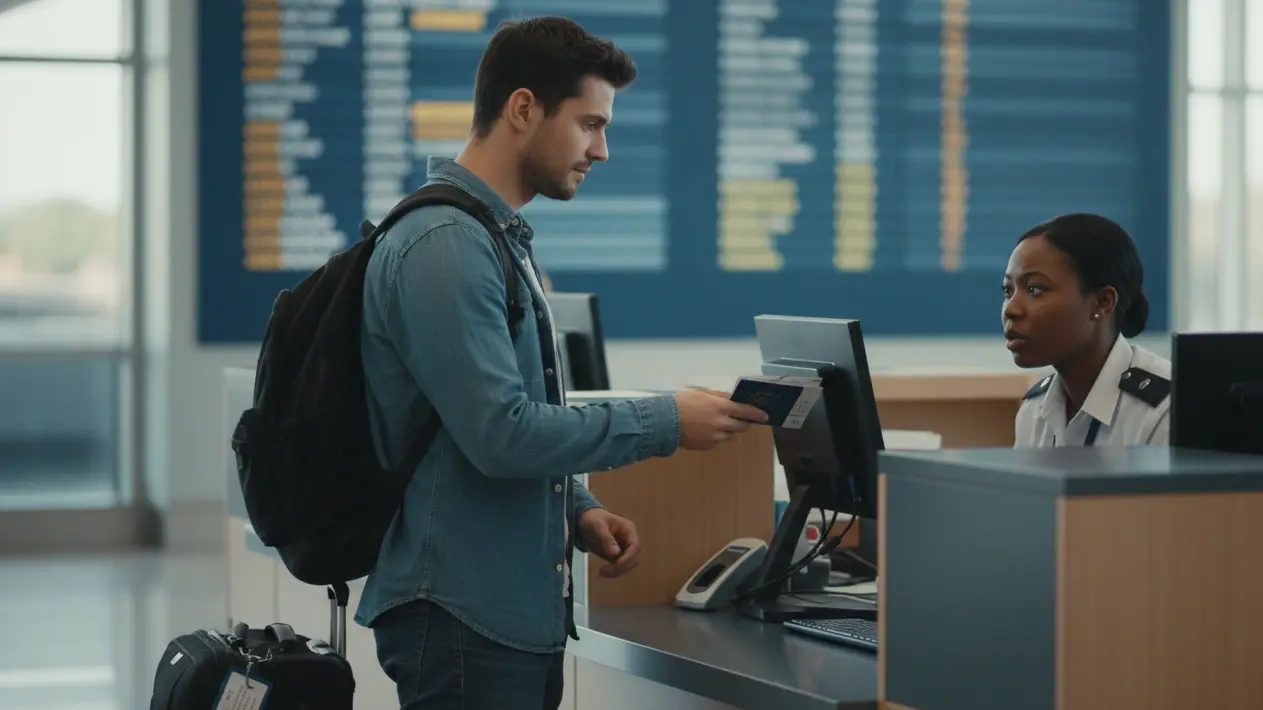
Picture Emily Carter landing in Liberia from Houston for a ten-day surf trip. She clears the aircraft door, walks to the booth, and hears a short question: "When do you leave?" She says the date. The officer asks to see the booking. Emily has it open already, so the exchange lasts under a minute.
Now picture her neighbor in the line. He says the date but has nothing to show. The officer asks again, then points to a side desk. The same answer, with different preparation, produces two very different evenings.
Expect questions in this order:
-
How long will you stay?
-
Where do you fly out from?
-
Can I see your onward ticket?
Answer plainly and hand over the document. Do not make the officer wait while you search a photo gallery. Open the file before you reach the booth.
Some officers also ask about sufficient funds. Keep a recent bank statement or card access ready. It is a separate question from the ticket, but it often follows right after.
What Counts as Enough in Your Hands
An officer scanning your proof looks for four details:
-
Your full name, as printed in your passport
-
A departure date inside your permitted stay
-
A route that leaves Costa Rica
-
A booking reference that can be checked
If any item is missing, expect more questions. The reference matters most, because it proves that the booking exists in a real system and not only on a screenshot.
Present proof that is easy to read at arm's length. A cropped image with tiny type forces the officer to lean in, squint, or ask you to resend it. Neither outcome helps you.
The format matters less than the content. A PDF, a printed page, and an email all work when the four details are visible. A confirmation that hides the date behind a button does not.
Keep the proof in the same place every time. Many visitors store the file in a folder named after the trip, and open it while standing in the immigration line. That small habit saves the scramble when your phone screen locks.
Costa Rica immigration officers also notice hesitation. If you answer the date question smoothly and the document matches your answer, the exchange ends quickly. If your spoken date and your written date differ, the officer slows down and starts asking follow-up questions.
That is why the document you carry must match the story you tell. Set both before you leave home, and the booth becomes routine. The airline, however, tests your paperwork even earlier than the officer does.
Why Your Airline Wants Your Exit Plan Before Costa Rica Does
Your first inspection happens at home, hours before the flight lands. The airline is the party that carries the risk, so the airline asks first.
The Check-in Counter Is the First Gate
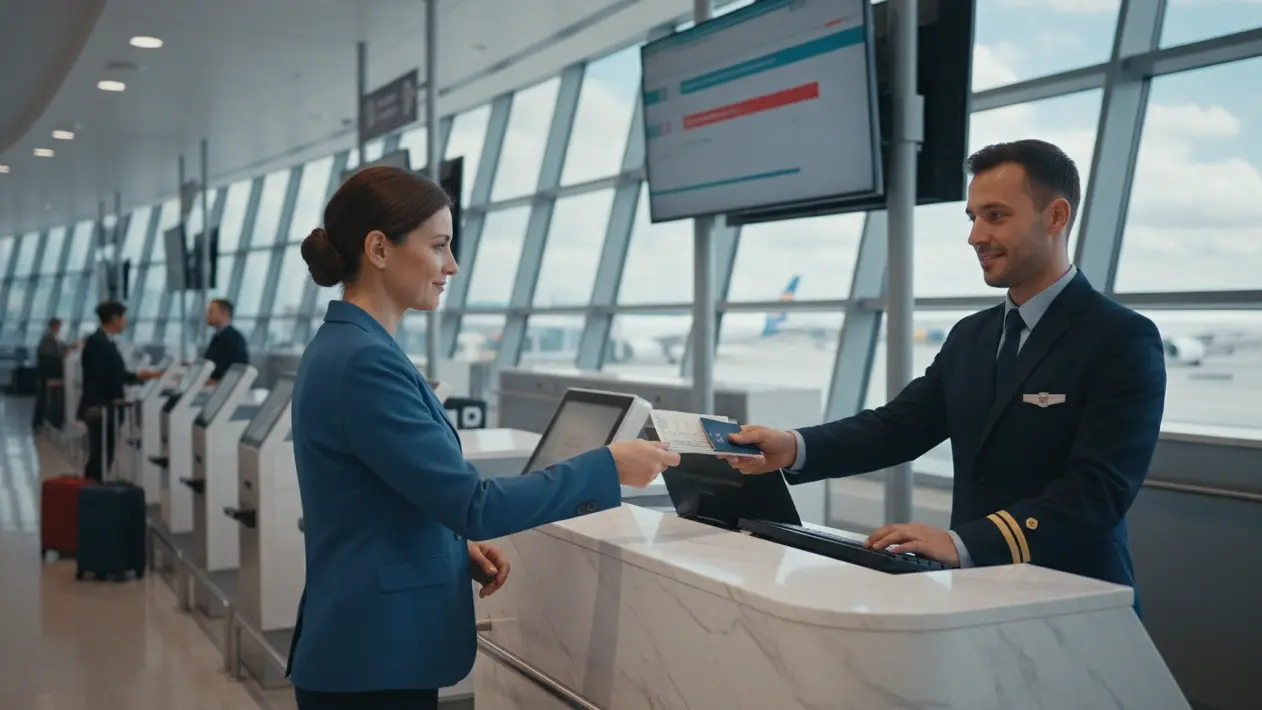
Airlines enforce the onward ticket requirement during check-in. They do not wait for the immigration booth to decide. The agent at the check-in counter reads your destination, sees Costa Rica, and opens a short mental checklist.
Airlines also enforce onward travel checks before boarding flights to Costa Rica. That means a second look can happen at the gate, even after you collect a boarding pass. Treat the proof as something you may show twice.
Airline check-in works through a system that flags destination rules. The airline's system shows the agent what each country asks of arriving passengers. When Costa Rica appears, the prompt about exit proof appears with it.
This is the reason a ticket in your inbox is not always enough. The agent often wants to see the reservation, and sometimes wants to look it up. A booking that cannot be found creates a pause, and a pause at the counter costs time.
Online check-in does not always remove the step. Some carriers let you skip the desk but still block the boarding pass until you answer a prompt. If the prompt asks about onward travel, answer honestly and upload the document it requests.
Arrive early on the day you fly. Agents have more patience at a quiet counter than at a crowded one. If your reservation needs a second look, you want that look to happen before the queue grows.
Why Carriers Review Documents Before Boarding
Airlines may face carrier obligations and costs when a passenger is refused admission, so document checks can occur before boarding. The precise consequences depend on the route and applicable rules; do not assume an airline has a universal, publicly stated fine for every missing onward ticket.
So the agent protects the company, and the agent is not trying to be difficult. A clean booking reference lets the agent close the file in seconds. A vague answer keeps the file open.
You can help the agent help you. Hand over your passport and the proof together, and say the date out loud. A short sentence such as "I leave Costa Rica on the twelfth" shows that you understand your own plans.
Agents also compare the date on your proof with the rest of your trip. If you tell them you stay for three weeks, and the proof shows departure after nine months, they will ask why. Keep the story and the document aligned.
Avoid arguing about the rule at the desk. The agent cannot change it, and the supervisor will not either. A calm answer, a clear document, and a polite tone solve nearly every counter problem.
Which Carriers Look Hardest
The check can vary by operating carrier, departure airport and route. Do not rely on a past trip or assume one named airline is uniquely strict. Carry the official Costa Rica guidance and your actual exit evidence even if online check-in succeeds.
A connecting itinerary may involve more than one document check. If the first carrier or a partner airline operates a segment, confirm which desk will review the onward proof. Keep the same named, dated exit evidence available at the counter and gate.
Some carriers ask at the desk. Others ask by email days before the flight. A few ask at the gate. The pattern changes by route, so do not assume that a past trip predicts the next one.
Your plane leaves on its own schedule, and the gate closes on time. If you reach the front of the line and the agent asks for a document you cannot find, the minutes run out quickly. Prepare the file the night before, and test that it opens.
Once the airline is satisfied, the next question is the booking itself. The most common mistake is choosing dates without checking them against the length of your allowed visit.
Fit Your Exit Date to the Stay You Are Actually Allowed

A good onward booking starts with arithmetic. Pick the wrong date and even a flawless confirmation fails the first glance.
Check Your Nationality Group and Granted Stay
Costa Rica does not apply one universal 90-day tourist period. Its official entry guidance lists up to 180 calendar days for the first nationality group and up to 30 days for the other listed groups, with different extension possibilities. The immigration officer determines the legal stay on entry and may authorize fewer days than the group maximum. Check the current guidance for your passport before choosing an exit date.
Your return or onward evidence should show a departure within the period you are entitled to use, and it must match the actual trip you intend to make. Do not treat a group maximum as a promise. A traveler whose itinerary extends beyond the permission ultimately granted must change the travel plan or seek an authorized extension where available; an exit document alone does not extend admission.
Count dates from arrival using the current rule for your nationality and the period shown on your entry record. If you plan a 20-day holiday, show a credible exit around the end of that holiday, not an arbitrary date chosen to exploit the longest possible stay. Re-check your permitted last day after immigration grants entry.
Do the count with a calendar app, not by memory. Months have different lengths, and a quick guess often lands two or three days off. Those days matter when the officer reads the date on your page.
Treat the official group maximum as a ceiling, not a target or guarantee. The officer may grant a shorter stay. Choose a genuine exit date that fits your stated trip and leave time to adjust if your permission is shorter than expected.
Choosing a Date That Leaves Room to Move
Choose an exit date that matches your actual trip, with a practical buffer before the last day you expect to be authorized. A 60-to-85-day formula is not appropriate for everyone: some visitors may be allowed only up to 30 days, while others may be eligible for longer. Make the planned stay, booking and spoken answer agree.
Avoid planning departure on the final day of your expected permission when a safer itinerary is possible. Weather, missed connections or changes in authorization can leave no margin. Recalculate against the number of days actually granted when you arrive.
Think about what your date says to the officer. A departure date that falls three weeks after arrival matches a holiday visit. A departure date two days after arrival can raise questions about why you came at all. Match the length to the story you tell.
Consider the outbound ticket in the context of your real route. If you plan to travel through Central America afterward, choose an exit that matches that direction. A booking from San José to Panama City reads logically for someone heading south.
Here is a simple way to pick:
-
Check the current nationality-group rule and your intended stay from arrival
-
Subtract at least five days for a buffer
-
Choose the nearest weekday that has real flights
-
Check that the date appears in your booking, in full
Real flights matter. A reservation that shows a route nobody flies on that day can look odd to an agent. Choose a date and a route that exist in the airline's schedule.
Some travelers also want flexibility. If your plans might shift, pick a reservation type that lets you edit dates. A one-way ticket bought as a plain fare carries change fees, while a reservation made for documentation can often be edited without that cost.
Checking Your Dates Against Real Flight Schedules
A date inside your applicable stay is only half the test. The route and schedule must also exist and match what you genuinely intend to use. Check the operating carrier’s current schedule rather than assuming a historic route still operates.
Open an airline timetable or a flight search page and look at your chosen route. Confirm that a flight operates on your date. If it does not, move your date a day or two until you find one that does.
Also check departure times. A flight that leaves at 5:10 AM is real, but it asks you to reach the airport in the middle of the night. If you ever plan to use the booking, pick a time you could actually make.
When Your Real Plans Run Longer Than the Granted Stay
Some visitors intend to remain in Costa Rica for months, including remote workers, volunteers and long-stay travelers. The relevant limit depends on their nationality group and admission status; the entry record, not a generic online 90-day statement, controls their legal stay. A visitor who needs more time should check the appropriate lawful status or extension process before travel.
Do not paper over a longer intended stay with an exit booking you do not plan to use. If your intended visit exceeds the permission you can lawfully receive, revise the trip or seek the correct status. A quick border trip does not guarantee a fresh admission or a reset of the permitted period.
Some travelers leave the country briefly, then return. That plan can work, but each entry is a new decision by a new officer. You should not count on a second stamp, and you should carry fresh proof of onward travel each time.
If you plan a longer visit through a different legal route, such as a residency application, speak to the immigration authority before you travel. The tourist rules in this article apply to tourist entry. Other statuses come with their own paperwork.
The practical rule is to make the onward evidence, stated itinerary and lawful permission tell the same story. If your plans change after arrival, monitor the date the officer granted and handle any extension or new status through the appropriate authority before the deadline.
Flexible transportation can help when legitimate travel plans change, but its terms differ by provider. Check the actual validity, change fee and refund terms. If the planned exit changes, update the genuine booking and keep the new confirmation.
Remember to keep an eye on refund terms. If your booking is a refundable fare, a full refund returns your money when you cancel in time. If it is a non-refundable fare, you lose that money. Read the terms before you pay.
Once the date is settled, you need the right kind of proof for your route. A flight is not the only option, and the next discussion looks at what else Costa Rica accepts.
Flight, Bus, or Cruise: Picking the Proof That Fits Your Route
Costa Rica does not insist on a plane. It insists on a way out, and your route decides which proof works best.
Why a Confirmed Flight Is the Gold Standard
Not all travel documentation is accepted. Airline agents prefer confirmed bookings, since a confirmed booking has a status the agent can verify in the airline's system. A vague email or a draft itinerary gives the agent nothing to confirm.
Consider the route you choose for the exit flight. A flight from San José to Panama City, or from Liberia to a hub in the United States, looks natural for most visitors. Both routes are busy, and both appear in many airline schedules.
You also have a choice between a one-way ticket and a return ticket. A return ticket to your home country shows that you plan to go back, and it fits most tourist stories. A one-way ticket out of Costa Rica works too, as long as it leaves the country within your stay.
When a Bus or Boat Booking Works
Onward tickets can be a bus ticket or flight reservation. That fact opens a cheaper route for overland travelers. A bus ticket out of Costa Rica shows that you plan to leave by road.
Acceptable forms of onward travel include flight, bus, or cruise reservations. A cruise booking that departs from a Costa Rican port also counts. If you arrive on a ship, your next port in the schedule serves the same purpose.
Costa Rica’s official list specifically includes a pre-purchased bus ticket out of the country, a pre-purchased flight, and proof of passage on a cruise ship. It does not list a stand-alone water-taxi receipt as a general equivalent. If you intend a land exit, use a real international bus booking where feasible and ask the operating airline in advance how it will review that document.
For an overland route to Panama or Nicaragua, use a pre-purchased bus ticket that clearly shows the cross-border journey, passenger and date. If an airline agent questions it, point to Costa Rica’s official entry guidance and ask for a supervisor or document-desk check. Do not replace your real bus plan with a contradictory flight itinerary merely to pass a visual check.
Some travelers genuinely keep both a bus booking and a flexible flight option when either exit is viable. Each document should describe a real, usable option. A flight that you never intend to take should not be represented as the planned exit.
Look at the carrier's own rules before you fly. Airlines publish their entry document guidance on their websites, and the language often mentions onward travel. A few minutes of reading can save an hour at the desk.
Consider these cases:
-
You arrive by plane and leave by bus: carry the pre-purchased international bus ticket as your actual exit evidence and verify carrier acceptance before departure.
-
You arrive by bus and leave by plane: the flight ticket is your proof at the border
-
You arrive and leave by sea: carry proof of cruise-ship passage if that is the actual route; do not assume an unrelated ferry or water-taxi receipt meets the published list.
Each case has a different gatekeeper, so match the proof to the person who asks.
Matching Names and Keeping an Offline Copy
Travelers should match the name on their onward ticket with their passport details. A single swapped letter can trigger a second look. Copy your name exactly as it appears in the passport's machine-readable line, with the same order and spelling.
If your passport lists a middle name, include it when the booking form asks. If the form has no middle name field, put it in the first name field. The goal is a match that an agent can read in one pass.
Travelers should keep a printed or offline copy of their onward ticket. Airport Wi-Fi fails, phones run out of battery, and email apps sometimes refuse to open attachments. A paper copy has none of those problems.
Save the PDF to your phone, and save a second copy in a different app. Print one page and place it with your passport. If one method fails, another stands ready.
A flight itinerary printout also helps when the agent wants to read the details closely. Large type and a clean layout make the check faster for everyone. Avoid cramped screenshots that cut off the reference code.
Check that the reservation code is clearly visible. Agents often look for that short code first, since it lets them find the booking in a few keystrokes. If the code is hidden or blurry, the agent has to ask you for it.
Take a moment before you fly to open each file and read it from top to bottom. Look for your name, your dates, and your route. A short check at home prevents a long delay later.
Some routes bring a second type of border check, because many visitors leave Costa Rica on foot or by road. The next discussion covers those land crossings in detail.
Leaving by Land Through Paso Canoas, Bocas del Toro, and Beyond
Plenty of visitors never plan to see another airport. They want to leave Costa Rica by road, and that choice changes the proof they need.
Crossing at Paso Canoas Into Panama
Travelers can use bus tickets for land border crossings as proof. The busiest of these crossings is Paso Canoas, on the southern Pacific side of the country. It connects Costa Rica with the Panamanian city of David, and from there onward to Panama City.
Land borders in Central America run on their own rhythm, and this one is among the busiest. Paso Canoas handles a steady flow of buses, trucks, and walking passengers. Officers on both sides see thousands of crossings every week. They know the routine, and they know what a normal bus booking looks like.
If you plan to leave through this crossing, a bus ticket with your name, date, and destination serves as your proof. Choose a ticket that runs from San José to Panama City, or from a nearby town to David. Either one shows a clear exit.
Your real exit evidence may be reviewed both by the airline and by Costa Rican immigration. The official entry list includes a pre-purchased bus ticket out of the country. If an airline agent is unfamiliar with the operator, show the complete booking and ask for a check against the official guidance; do not present a conflicting flight as your intended exit.
Arrive at the bus terminal early on departure day. Border crossings involve two sets of immigration lines, and the bus waits only so long. Keep your passport and your ticket in one hand, ready for each officer.
Panama has its own onward travel expectations at the border. Do not assume that the rule ends when you leave Costa Rica. Prepare proof for the next country in your route, and keep it with the rest of your documents.
Taking the Boat From Puerto Viejo Toward Bocas del Toro
Puerto Viejo sits on the Caribbean coast, and many visitors continue south to Bocas del Toro in Panama. The usual route runs by shuttle to the border at Sixaola, across a bridge, and onward by road and water taxi.
This route attracts backpackers, divers, and surfers. It also attracts officers who ask direct questions. Expect to answer where you go next, and be ready to show the plan.
A Puerto Viejo–Bocas del Toro shuttle itinerary can help explain your route, but it may combine road and water segments without clearly proving a pre-purchased bus departure from Costa Rica. Obtain a dated, named cross-border bus ticket or confirm with the Costa Rican authority and your carrier before relying on a composite shuttle receipt.
The official entry list names cruise-ship passage, not every boat or water taxi. A water-taxi receipt from the Panamanian side may support the rest of your itinerary but does not, by itself, establish the approved Costa Rica exit document. Keep the distinct bus, border and water segments clear.
Related destinations along this coast include Cahuita and Manzanillo. If you spend time in those towns, keep your onward plan clear in your documents. The officer who stamps your passport may ask about it long after you arrive.
Bocas del Toro is popular enough that many travelers book their onward plans from there too. Some continue to other parts of Panama, and some fly out from Bocas del Toro airport. Each leg may need its own proof, so plan one step at a time.
Weather can also affect this route. Heavy rain can delay boats, and strikes can block roads. Leave yourself a day or two of margin before your proof expires, so a delay does not leave you overstaying.
If timing is uncertain, select a bus service with workable changes or carry a separate flight only if it is a genuine alternative you could use. Confirm change terms directly with the operator; there is no universal free-change entitlement.
Why Airlines May Not Accept What a Border Agent Does
A border officer and an airline agent read the same rule through different eyes. The officer cares whether you will leave the country. The agent cares whether the airline will be fined.
An airline’s document desk may be cautious about an unfamiliar regional bus operator. Show the booking details and Costa Rica’s official accepted-document list, and allow time for a supervisor to check. Do not assume that every agent can access a bus operator’s reservation system.
If you fly into Costa Rica and truly plan to leave overland, present the qualifying pre-purchased bus ticket and explain the route consistently. If the airline doubts the document, request a check against the official Costa Rica entry guidance. A backup flight should be a genuine option, not a false story about your intended exit.
For visitors entering overland, the same requirement to show a credible exit still matters. Carry the actual onward bus, flight or cruise evidence that fits your trip, and separately confirm the entry rules of the next country. A flight backup is useful only if you could genuinely take it.
Think of your proof as a set, not a single page. Carry the document that the next gatekeeper expects, and keep a second option nearby. A small folder with two proofs handles most surprises.
Here is a short checklist for overland travelers:
-
Carry the named, dated pre-purchased bus ticket for the actual land exit, or qualifying proof for your real flight or cruise route.
-
Before departure, confirm with your operating airline that it recognizes the document matching your actual exit.
-
Keep both on paper and on your phone
-
Check that names and dates match your passport and your stated plan
Whichever route you choose, make sure the authentic confirmation clearly shows the passenger, transport operator, exit route and date. A reference may help verify a booking, but its format and availability depend on the operator; there is no universal airline PNR requirement for a bus or cruise exit.
Getting a PNR That an Agent Can Actually Look Up
A pretty document means little if the code on it leads nowhere. Agents care about the reference, and the reference must open a real record.
What Makes a PNR Verifiable
A clear booking or ticket reference makes travel evidence easier to review, but the Costa Rica guidance specifies a return/onward ticket or plan and the approved transport forms rather than mandating a universal PNR format. On a flight document, check the carrier, passenger name, route, date and booking status. For a bus or cruise, use the operator’s authentic confirmation.
An airline record locator is often six characters, but systems and display formats vary. A locator identifies a reservation; it is not proof that a ticket was issued, paid or still active. The operating airline or issuer can explain what the status shown on your confirmation means.
A fabricated code or edited template is not an acceptable substitute for a real booking. A genuine reservation can also expire, change or become unavailable in a public lookup. Check it with the issuer before travel, and ask for a corrected document if the details no longer match.
Look for these markers on your document:
-
A reservation code near the top, in clear type
-
Your full name in the passenger field
-
A flight number with a date and route
-
A status line that reads confirmed or ticketed
Agents also check that the airline named on the document matches the reservation code format. Each carrier has its own patterns, and agents handle them daily. A mismatch between airline and code format raises doubts.
Test the code before you travel. Many airline websites let you open a booking using the reference and your last name. If the page loads and shows your details, the reservation is live. If it shows an error, contact the provider right away.
Do this check twice: once on the day you buy, and again a day or two before you fly. Bookings can change if an airline updates its schedule. A quick look keeps you informed.
Do not assume any provider can guarantee a specific carrier, instant public lookup or acceptance. Obtain the issuer’s confirmation and verify the current status through an authorized channel before relying on the document at check-in.
Short-Term Reservations and How Long They Hold
Some providers offer short-lived reservations, but the validity and underlying booking status differ. A short-lived hold may expire before you reach Costa Rican immigration. If you need actual onward travel proof, make sure the option you obtain remains valid through both the airline and arrival checks and is truthful about its status.
Do not treat an expiring hold as a substitute for a departure you cannot actually take. Choose an option you could use, or a pre-purchased bus ticket or cruise passage that matches your trip. If plans change, replace stale evidence before check-in.
Check how long the reservation stays valid before you buy. Some last a day or two. Others last a week or more. If your flight leaves in three days, a two-day hold may expire before you reach the desk.
Match the validity to your journey. If you travel for twenty hours and land two days from now, you need a booking that stays alive through your arrival and your passage through the booth. Add a safety margin of at least a day.
Some providers allow you to change dates after purchase. That feature helps when your trip shifts. Instead of buying a new document each time, you adjust the dates and receive an updated PDF.
Ask these questions before you pay:
-
How long does the reservation stay active?
-
Can the dates be edited, and at what cost?
-
Does the document include a PNR with a PDF?
-
Can an agent confirm the booking on the airline's website?
If a provider cannot answer these clearly, look elsewhere. Clear answers show that the service understands what border checks demand.
A reservation service may help document a genuine flight option, but neither this site nor any provider can guarantee acceptance by a carrier or immigration officer. Check the current product terms, status, delivery time and change policy directly before purchase. Never present a non-ticketed reservation as an issued ticket.
A reservation and an issued ticket are different. If the document is only a hold, describe it accurately, check its validity, and do not rely on it as proof of an actual paid departure when the gatekeeper requires a ticket.
Reading a Confirmation Page the Way an Agent Does
An agent may review the passenger name, reference, route, date and status, but there is no universal sequence. Use those fields as your own checklist so that the document is internally consistent and legible.
Start with the name. Does it match your passport letter for letter? Move to the reference. Is it printed in plain type, with no extra spaces or characters? Then check the route and the date against your plans.
A status line matters, but “confirmed” is not necessarily the same as “ticketed.” Ask the issuing airline or provider which status applies. A pending or cancelled booking should not be presented as live proof.
Check the layout, too. A clean page with the airline name, flight number, and times looks credible. A page with cut-off lines or blurry type slows the check. Ask your provider for a fresh PDF if anything looks unclear.
A ticket number, when present, is distinct from a booking locator and generally indicates ticket issuance. A locator-only reservation does not prove a paid ticket or satisfy every check. Verify what your actual document represents with the issuer.
Finally, test how the document looks on a phone. Agents often read from a screen held at arm's length. Large type and a high-contrast layout make the page easy to read in a crowded hall.
If you share the document with a travel companion, send each person their own file. Group bookings can confuse a quick lookup, and each passenger should hold a page that lists only their own details.
Pricing, Refunds, and Reading the Fine Print
Provider prices and validity change. Compare the current total price, expiration time, underlying status, refund terms and support response rather than relying on an old advertised number. An inexpensive hold that expires before arrival is not a useful solution.
Compare what you get, not only what you pay. A low price that expires before your flight leaves you with nothing. A slightly higher price that lasts through your arrival protects your journey.
Look at payment terms before you enter your card details. Check the currency, the total after fees, and whether the provider charges extra for date changes. A clear price page shows all of this without hidden lines.
Refund policies differ widely. Some providers offer free cancellation within a short window. Others offer a full refund only if you cancel before the booking is issued. Read the terms closely, since the rules are rarely the same between companies.
If you decide to buy a real ticket instead, ask whether the reservation can be cancelled. A real return flight bought on a flexible fare may also allow free changes or a refund. Compare the total cost of each path before you choose.
Budget carriers often have strict rules about refunds. A cheap fare may be non-refundable, and a change can cost more than the fare itself. If you buy a real ticket on such a carrier, read the fare conditions line by line.
A purchased fare may cost more up front and may have different refund timing, while a reservation may have a shorter lifetime and may not be ticketed. Compare the real terms for the specific itinerary; do not assume a cheap reservation automatically provides the same evidence as a purchased ticket.
Keep every confirmation email. If an agent questions your booking, a message from the provider with a clear reference helps settle the matter. Save these messages in a folder on your phone and in cloud storage.
When the reference is solid, the next risk comes from small details. Mismatched letters, dates, and amounts can undo an otherwise good document, and the next discussion explains how.
Small Mismatches That Trigger Big Delays
Most failed checks come from tiny errors, not from missing proof. A swapped digit or a stray comma can send an agent back to the screen.
Passport Details That Do Not Line Up
You already know to match the name. Other details can also trip you up. Check the passport number if the booking form asks for it, and confirm that the format follows your passport exactly.
Some forms ask for the date of birth in a specific order. A day-month swap turns March 4 into April 3, and the agent may see a different person. Read each field twice before you submit.
Watch for passports that were recently renewed. If your old passport appears on the booking, the number will not match the new one. Update the booking, or buy a new reservation with the correct document.
Passport validity rules are a separate entry check and can depend on nationality group. Consult the current Costa Rica entry page for your passport, then verify that your document remains valid for the applicable period. Do not assume an onward ticket can cure a passport problem.
Titles and suffixes can also cause trouble. If your passport lists a suffix such as Junior or III, put it where the form allows. If the field does not exist, leave it out and keep the rest exact.
Agents see these errors all day. A small mismatch is usually fixable on the spot, but it costs minutes. At a busy desk, minutes make the difference between a calm check-in and a missed flight.
Compare your reservation with your passport line by line before you leave home. Hold the two documents side by side and read each letter. This takes one minute and prevents most name problems.
Dates That Contradict Your Story
Your documents tell a story, and agents read it as a whole. If the story contradicts itself, they look for the cause. Make sure your arrival, your departure, and your spoken plans fit together.
Imagine Daniel Brooks, flying from Chicago to San José for a two-week trip. His onward reservation shows an exit on day eighty-nine. When the agent asks about his plans, Daniel says he stays two weeks. The agent pauses and asks why the date is so far out.
Daniel could have avoided the pause. A reservation that exits fifteen or twenty days after arrival would match his words. A flexible provider lets him change the date later, so no cost arises when his plans grow.
Here are common contradictions:
-
A stated stay of one week with an exit eleven weeks away
-
A return flight that departs before your arrival
-
An exit from a different country than the one you plan to leave from
-
A date that falls on a day with no flights on that route
Each one gives the officer a reason to ask more. A calm explanation usually ends the matter, but you save time by avoiding the contradiction.
Also check time zones. A flight that leaves at midnight can appear on a different date in different systems. If your reservation shows a late-night departure, confirm which day applies.
Review your documents the night before you fly. Read the arrival date, the departure date, and the route. If anything looks odd to you, it will look odd to the officer.
Format Slips That Look Small but Cost Time
Some errors have nothing to do with names or dates. They come from format. A page printed in a different language, or with a currency the agent does not expect, can cause a brief pause.
Time formats confuse many readers. A twenty-four-hour clock shows 18:30, while a twelve-hour clock shows 6:30 PM. If your document uses a format you do not normally read, double-check the times so you can explain them clearly.
Date formats cause the biggest slips. A page that reads 04/05 can mean April 5 or May 4, depending on the system. Look for a version with the month written out in letters, such as 5 May, so no one has to guess.
Airport codes can also trip people up. San José appears as SJO, and Liberia appears as LIR. If your document shows a code you do not recognize, look it up and confirm that it matches the city you plan to visit.
Be careful with layovers. If your reservation shows a stop in a third country, check that the stop makes sense for your route. An odd connection may raise a question about why you picked it.
Language matters less than clarity. English pages work for most agents, but a Spanish version can also help at the booth. If your provider offers both, carry the one that you can explain with ease.
Keep your answers aligned with the page. If the agent points at a line, read it back in your own words. This shows that you understand your own plans, and it ends the check faster than any argument could.
Paperwork That Looks Real but Cannot Be Checked
Not every document that looks official passes a check. A screenshot, a text message, or an edited PDF may look convincing, but an agent cannot confirm it.
An authentic operator confirmation is more useful than an edited image or uncheckable template. For a flight, ask the issuer whether the reservation is live and ticketed; for a bus or cruise, verify directly with that operator. A polished PDF alone does not establish validity.
Immigration officials may also ask for a second proof. If the first document raises further checks, they might ask about your funds or your lodging. Having sufficient funds in your account and a recent statement ready helps close the conversation fast.
Many tourists carry a printed hotel booking and a bank statement along with their onward proof. Together, they paint a complete picture of a short and well-planned visit. Each piece supports the others.
Keep your statement simple. Show a balance that covers your trip, with your name at the top. Remove unrelated pages if you prefer, and keep a digital copy as backup.
If an agent asks about your plans, answer in plain terms. Give your arrival date, your departure date, and the place you stay. Short answers sound confident, and long explanations invite more questions.
Some visitors panic when an agent asks for more. Stay calm, and hand over what they request. A prepared traveler produces each document in seconds, and the check ends quickly.
Even with good preparation, some travelers still land in a side room. The next discussion looks at what happens there and how to handle it.
What Happens If Officers Send You to Secondary Questioning
Even prepared visitors sometimes land in a side room. Knowing what to expect there turns a stressful moment into a routine one.
What the Side Room Actually Looks Like
Travelers may be sent to secondary questioning for missing onward tickets. The officer at the booth marks your file, and a second officer takes over in a separate area. The room is usually plain, with a desk, a few chairs, and a computer.
Secondary questioning is an additional review, not itself a refusal. Processing time is unpredictable and depends on staffing and the issue being reviewed; do not count on being finished within an hour. Stay calm, keep your documents accessible and follow instructions.
The second officer starts with simple questions. Where are you from? How long do you plan to stay? Where are you staying? The answers go into the system, and the officer compares them with your documents.
You may wait for a while before someone calls your name. Costa Rica immigration officers handle many cases at once, and queues form during busy flight banks. Bring water and patience, and keep your documents in your hand.
The officer may ask to see your phone, your onward proof, and your hotel reservation. Hand over each item when asked, and let the officer read it. Do not rush the process by talking over the screen.
Some officers also ask about your work, your income, and your reasons for visiting. These questions are standard, and the tone is usually polite. Answer in short, clear sentences, and avoid guessing when you do not know a detail.
If you hold a real flight ticket, the officer may check it against the airline's records. If you hold a reservation, the officer will try to verify the code. A reference that opens a live booking shortens this step.
The officer may also check how many days you have used in past visits. If you have stayed in the country several times in a short period, expect extra attention. Keep a record of your past entries and exits, in case the question arises.
Remember that this is a process, not a verdict. The officer wants to confirm that you are a genuine visitor who will leave on time. Your job is to make that confirmation easy.
Answers That Keep the Conversation Short
Prepare a short summary of your trip before you land. Include your arrival date, your departure date, the places you will stay, and the reason for your visit. Practice saying it out loud, in two or three sentences.
Match every detail with your documents. If you say you leave on the fourteenth, your reservation must show the fourteenth. If you say you stay in Manuel Antonio, your hotel booking should list it.
Here are answers that work well:
-
"I arrive on June 3 and leave on June 24, flying out from San José."
-
"I stay at a hotel in Manuel Antonio for the first week, then travel to Arenal."
-
"I have my onward booking here, and the reference is on the first page."
Notice what these have in common. They are specific, short, and easy to verify. They give the officer something to check, and they leave little room for doubt.
Avoid answers that sound uncertain, such as "maybe," "I think," or "we will see." These words invite follow-up questions. If your plans are flexible, say so in a calm way, and point to the document that shows your exit date.
Do not offer more documents than the officer asks for. A thick stack of papers can look disorganized. Hand over each item when asked, and keep the rest in your bag.
Costa Rica’s official entry page states a minimum of US$100 per month or partial month of lawful stay for economic means, while an officer may ask you to demonstrate funds. Check current official guidance and carry truthful evidence appropriate to your trip.
If the officer asks you to explain a mismatch, answer plainly. For instance, if the name on the booking misses a middle name, say so and show your passport. Honest answers resolve most problems quickly.
Stay polite throughout. Officers deal with tense travelers all day, and a respectful tone helps. Raised voices or long arguments rarely change the outcome, and they can lengthen the process.
If Entry Is Refused: Your Realistic Options
In rare cases, officers decide not to admit a visitor. This outcome usually follows a pattern of missing proof, mismatched documents, or doubts about the purpose of the trip. It is not common among prepared travelers.
If the officer refuses entry, the airline is responsible for returning you to your point of origin. This is why airlines care so much about the check at the counter. The cost falls on them, and sometimes on you.
Ask the officer for the reason in clear terms. Write down the reason, the time, and the officer's name if it is given. This record helps if you need to contact your embassy or the airline afterward.
Do not sign a document you do not understand without asking what it means and requesting language assistance if needed; do not assume an interpreter is automatically available. If entry is refused, ask the authority about the reason and available next steps, then contact your consulate if necessary.
You may be able to fix the problem on the spot. If the issue is a missing onward ticket, you might buy one at the airport with the help of an agent. Some airlines sell flights at their desks, while others direct you to their website.
Airport Wi-Fi may be enough to buy a reservation or a ticket online. Check that the new booking shows a real code and the right dates. Hand it to the officer, and ask if it meets the requirement.
If your situation is complicated, contact your embassy. Consular staff can explain your rights and help you reach the airline. Keep the number saved on your phone before you fly.
Before you travel, think about how you would respond if a problem appeared. A clear plan lowers stress, and it helps you make good choices under pressure. Most visitors never use it, but those who do value it.
A Departure-Day Routine for Smooth Entry Into Costa Rica
Good proof helps only when it is easy to reach. A simple routine keeps your documents ready from your front door to the immigration booth.
The Night Before You Fly
Start with a document check. Open your onward booking, your hotel confirmation, your passport, and your flight itinerary. Read each one slowly, from the top line to the bottom.
Confirm that the reservation code works. Visit the airline's website, enter the code and your last name, and look for your booking. If it opens, you are set. If it does not, contact the provider before you go to bed.
Print one copy of each document. Place them in a folder with your passport. Keep the folder in your carry-on bag, not in a checked suitcase, so you always have it nearby.
Save digital copies in two places. Use your phone's files app and a cloud service you can reach from any device. If one fails, the other stands ready.
Charge your phone, and pack a small battery pack. Airports are long, and phones drain fast when you use maps, messages, and boarding passes. A dead phone at the counter creates avoidable stress.
Check the weather and the traffic on your way to the airport. Delays happen, and you want a margin before your check-in closes. Aim to arrive at least three hours before an international flight.
Think about what you will say at the desk. Prepare a short sentence about your trip, and say it to yourself once. It sounds simple, but it makes you calmer when the agent asks.
Write down the address of your first hotel, and keep it in your phone. Officers often ask where you stay, and a clear answer helps. If you stay with friends, keep their address and phone number handy.
If you need any exit ticket for your route, make sure it is in hand before this night. Last-minute purchases leave little time for checking details. Give yourself a day of margin.
At the Airport and on the Plane
At the airport, go straight to the check-in counter for your flight. Keep your passport and your folder in your hand, and greet the agent politely. When the agent asks about onward travel, hand over the proof at once.
If you checked in online, still keep the proof ready at the gate. Some airlines run a second check before boarding. A gate agent may ask for the document again, even after a smooth start.
Watch your documents at all times. Do not leave the folder on a counter, a seat, or a table. A lost passport or a lost reservation can ruin a well-planned trip.
Once you are on the plane, take a moment to prepare for arrival. Many airlines hand out customs forms or share links to digital forms. Fill them in carefully, using the same details as your passport and your booking.
Keep your proof in your seat pocket or your small bag. When you leave the plane, you want to reach it without opening a suitcase. The line at immigration moves quickly, and you do not want to hold it up.
If the flight includes a connection, check the rules for each stop. Some transit airports ask about onward travel as well. Your reservation should cover the final exit from Costa Rica, but carry it through every stage.
Use the flight time to rest. A tired traveler answers questions slowly, and a calm one answers well. Drink water, stretch, and avoid last-minute stress.
If you have a question about your proof, ask the cabin crew or the airline's staff before landing. They cannot change the rule, but they can often point you toward the right desk. Asking early gives you time to adjust.
Arriving in San José or Liberia
When you arrive, follow the signs to immigration. Keep your passport open to the photo page and your documents in your hand. Stay calm, and wait for your turn at the booth.
When the officer greets you, answer the questions in simple terms. State your length of stay, your departure date, and your first stop. If the officer asks for your onward proof, hand it over without delay.
The officer will stamp your passport and note the number of days you receive. Check the stamp before you walk away. If the number looks wrong, speak up politely, and ask the officer to confirm.
Write the final day of your stay in your phone's calendar. Set a reminder a week before, and another three days before. Staying past your authorized stay can lead to fines and trouble on your next visit.
If your plans change, update your booking early. Costa Rica expects you to leave before your authorized stay ends, and your documents should reflect any new date. A quick change at home saves a long conversation later.
Then collect your bags, clear customs, and step into the arrivals hall. The hard part is over. A prepared visitor reaches this point with energy to spare.
Take a moment to enjoy the beginning of your trip. You prepared well, and the country is waiting. Safe travels begin with a good start, and you have just made one.
Walking Into Costa Rica With Proof You Can Trust
Costa Rica asks visitors to show a return ticket or credible onward plan. Use the form of commercial transport you truly intend, check the nationality-group maximum and the stay actually granted, and keep the document’s name, route and date consistent with your trip. Neither a PNR nor a polished PDF guarantees boarding or admission.
Choose the proof that fits your route, test the code, and keep a printed copy beside your passport. Then walk up to the counter and the booth with confidence. Safe travels, and enjoy every day of your stay.
Need a flight option that fits your real route? Compare the status, expiration and change terms before ordering. If your actual plan is a land exit, use the qualifying bus proof instead of a contradictory flight document.
Review onward reservation optionsFrequently asked questions
Does Costa Rica require an onward ticket?
Costa Rica’s official entry guidance calls for a return ticket or onward-travel plan. The stated forms include a pre-purchased flight or bus ticket out of the country, or proof of passage on a cruise ship.
Is a bus ticket accepted for a land exit?
A pre-purchased bus ticket out of Costa Rica is explicitly listed. It should identify the cross-border journey and date; confirm the operating airline’s document review before flying.
Is the tourist stay always 90 days?
No. Current official guidance lists different nationality groups, including up to 180 days for group one and up to 30 days for the other groups. The immigration officer determines the legal stay on entry.
Does a flight PNR prove I hold a ticket?
No. A PNR is a reservation reference. Ticket issuance and live status are separate facts. Check with the airline or issuer and never call a hold a paid ticket.
Can I show a flight booking if I really plan to leave by bus?
Do not use a contradictory flight as a false account of your exit. Costa Rica expressly accepts a qualifying pre-purchased bus ticket; present your real plan and ask the airline to check the official rule if necessary.
What if my exit date changes after arrival?
Check the end date of the stay actually granted and change your real travel arrangements before it expires. If you need more time, consult the appropriate Costa Rican authority about lawful options.
Travel-document and immigration requirements can change and can vary by passport, route and individual circumstances. This guide is informational, not legal advice or a guarantee of boarding or admission. Confirm current requirements with Costa Rican authorities and your operating carrier.