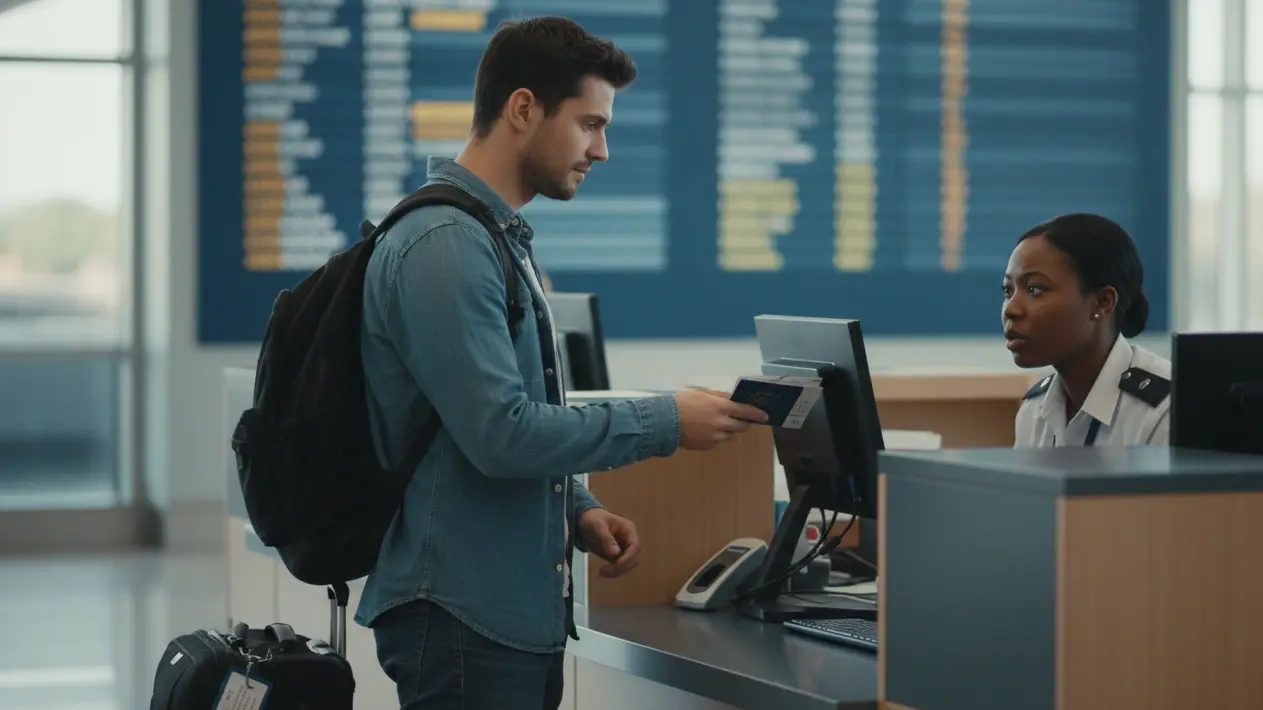
Short answer: Mexico’s immigration authority may ask a visitor for a return itinerary to support the trip’s purpose, but there is no single paid-onward-flight rule for every passport and status. Carry a truthful exit plan that fits the stay actually granted. A live dummy ticket shows a provisional reservation, not a paid seat; a real overland exit needs its own route evidence. Check your operating airline’s document rule before departure.
Key facts
- INM may request a return itinerary, hotel or tour evidence to establish travel purpose.
- Up to 180 days is a maximum visitor period, not an automatic grant to every arrival.
- For air arrivals, INM says travelers do not complete the old physical/electronic FMM in advance; the digital FMM can be downloaded after entry.
- A PNR shows a current reservation, not necessarily payment or ticket issuance.
- A flight departing a third country does not itself prove how you leave Mexico.
In this guide
Official-source check: Mexico’s INM visitor-entry page says an officer may ask for hotel, return-itinerary or tour evidence. INM’s digital FMM guidance says air arrivals do not fill the older FMM before travel and can download the digital record after entry. Check current instructions for your nationality and entry mode.
Reviewed for: Mexico-bound one-way visitors comparing paid flights, temporary reservations and genuine land exits. This is Mexico-specific rather than a general open-return-date guide.
Match the proof to the Mexico exit you intend
| Exit plan | Evidence | Important limitation |
|---|---|---|
| Return or onward flight | Issued ticket, or live reservation where accepted | PNR alone does not prove an issued seat. |
| Bus to Guatemala or Belize | Genuine cross-border ticket/route confirmation | Check next-country entry and airline acceptance. |
| Flexible stay | Truthful provisional route plus current booking status | Adjust to the actual authorized stay; 180 days is not automatic. |
A one-way arrival in Mexico can prompt a return-itinerary question at airline check-in or immigration. The useful distinction is not whether every tourist must buy a flight: Mexico’s INM says an officer may request evidence of trip purpose, including a hotel booking or return itinerary. Your nationality, permission, route and the stay actually granted determine what you can show.
This guide compares an issued flight, a live temporary reservation and a genuine bus exit for a Mexico visit. It corrects two common mistakes: treating a PNR as a paid ticket and assuming every visitor automatically receives 180 days. It also explains the current digital FMM process for air arrivals.
If a temporary dummy ticket matches your real proposed route and the reviewing party accepts reservation evidence, check its current status and expiration before relying on it.
When Mexico May Ask for a Return Itinerary

Mexico’s immigration authority may ask visitors to establish the purpose and length of a trip. Its published examples include hotel reservations, return itineraries and tour bookings. That is not a universal instruction to purchase a paid onward flight for every foreign visitor.
Who Gets Asked and Who Gets Waved Through
Mexico does not apply one undifferentiated “onward flight required” rule to every foreign visitor. The INM entry page says officers may request a return itinerary among documents supporting the trip purpose. Check the current requirements for your nationality, visa or exemption and operating carrier.
Mexican citizens, residents and temporary visitors have different document positions. This guide is for visitors preparing a short-trip exit explanation; residents should follow the rules attached to their own status rather than assume tourist-ticket guidance applies.
At the border, the officer decides admission and the authorized duration. A coherent exit plan can support a visitor’s purpose and intended length of stay, but it cannot replace a required visa, passport or other permission.
Everyone else sits in a gray area. The vast majority of travelers arriving are never questioned at the desk. Still, you cannot predict which agent you will meet or what kind of day they are having.
Mexico’s published INM entry instructions allow an officer to ask for return-itinerary evidence; they do not state that every visa-exempt visitor must present the same issued flight ticket. The operating carrier may also request documentation under its route-specific check.
Mexico's immigration authority can request proof of onward travel on arrival. Treat the request as possible every single time, even if a friend told you nobody ever asked them.
Here is the practical math. In most cases, you will not be asked. When you are asked and have nothing to show, a routine entry turns into a long and uncomfortable conversation.
Why 180 Days Is a Ceiling, Not an Automatic Grant
A Mexico visitor permission may have a maximum of 180 days, but the officer can grant a shorter period. Read the actual authorized stay recorded for your entry and keep your proposed departure within it. Do not build the plan around an assumed automatic six months.
Your actual departure must be within the period granted. If asked for an itinerary before entry, choose a credible date that fits your real intended stay; if a shorter permission is granted, adjust your plan lawfully rather than assuming the original 180-day maximum.
An onward ticket shows your intention to leave Mexico within your permitted stay. It is a promise written in the language of airlines, and officers read it in seconds.
This is why your departure date deserves real thought. If you plan a long stay, choose a date that sits comfortably inside the likely window. If you plan a short stay, choose a date that matches your actual plan.
A confirmed onward flight ticket is valid proof of travel. A date far beyond the allowed stay does the opposite job. It invites questions instead of answering them.
For example, Sophie proposes a three-month visit but cannot know in advance how many days the officer will authorize. Her exit booking should match the intended visit, and she must check the granted period at entry. A reservation dated day 85 is not automatically safe if she receives less time.
Why Carriers Care More Than Officers Do
Your first checkpoint is rarely a Mexican officer. It is the airline check-in desk at your departure airport, hours before you reach Mexican soil.
The operating airline checks whether travel documents fit the route before boarding; an INM officer makes a separate entry decision on arrival. A carrier can ask for itinerary evidence, but the specific rule depends on passport, visa and current travel conditions.
Carriers can face obligations when transporting an ineligible passenger, but that does not prove that every Mexico-bound traveler must hold an onward flight. Ask the carrier which document rule applies to your status.
A check-in agent may apply a conservative document check. If a genuine bus plan is questioned, ask for the cited rule or supervisor review rather than buying a contradictory flight without understanding the requirement.
Potential problems from not having an onward ticket include denied boarding. You could lose your seat, your fare, and your first night's hotel in one moment.
Airlines often check for onward travel proof at check-in. Airlines often check for onward travel proof before boarding. Some agents look the record up in the airline's system, while others only glance at a printout. Prepare for the careful version every time.
Paperwork That Looks Similar but Does Not Count
An onward ticket is not the same as hotel reservations or proof of funds. Many first-time visitors carry plenty of paperwork and still miss the one document that matters.
These items are useful, but none of them replaces an exit document:
-
Hotel confirmations for your first nights
-
Bank statements or card balances
-
Travel insurance certificates
-
Online tourist forms and arrival declarations
Keep a single folder for exit documents so you can find them fast. Name the files clearly, such as exit-reservation.pdf, so you can open the right one under pressure. If you also file visa applications for other countries on the same journey, keep one consistent itinerary across every file. Mixed dates create avoidable doubt.
Immigration officials may ask for an onward ticket to verify a visitor's intentions. Consistent paperwork makes that check short and boring, which is exactly what you want. Once the rule is clear, the next question is which documents actually satisfy it.
Compare Flight, Bus and Reservation Evidence for Mexico
Not every exit document earns the same reaction at the counter. Some pass in seconds, and some start a second round of questions, so it helps to know the difference before you pack.
Return Legs, Third Destinations and Overland Exits
An onward ticket can be a return ticket or a ticket to a third destination. Both show that Mexico is a stop on your journey, not the end of it.
An onward ticket can be a low-cost flight or a confirmed bus ticket out of Mexico. Price does not matter to the desk. Clarity does.
A reservation can show a proposed exit route, while an issued ticket confirms a paid or ticketed journey. Those are different statuses, and a route may still fail if the next country will not admit the traveler.
An issued onward flight is one clear form of departure evidence, but Mexico’s official visitor guidance frames a return itinerary as possible evidence of trip purpose. The required form can vary with the case and carrier. Do not present an unpaid PNR as an issued ticket.
Here are the common shapes this takes:
-
A round trip that brings you back to your home city
-
A one-way ticket out of Mexico to a third country, such as Costa Rica
-
An outbound ticket from Mexico City toward another region of Latin America
-
A return flight from a different Mexican city than the one you entered
Choose a record that matches the actual exit. A bus or third-country flight may make geographic sense, but the next country’s entry requirements and the carrier’s acceptance still matter.
Take Marcus, who enters through Mexico City and plans to explore for six weeks. His exit is a one-way ticket from Cancún to San José. The desk sees a clear end date and a real destination, and the conversation ends there.
Onward Travel: Bus Routes Toward Guatemala and Belize
Bus tickets to neighboring countries can also serve as proof. That matters if you plan to travel overland and never touch another airport.
A genuine international bus ticket may help explain an actual overland exit. Keep the named passenger, date, operator and cross-border route visible, and ask the airline ahead of time whether that format satisfies its check.
Overland exits suit travelers heading from Chiapas into Guatemala or from Chetumal into Belize. A border crossing by road feels informal, but your carrier still needs paper before it lets you fly in.
Be careful with one detail. Many bus companies sell tickets only a day or two ahead, and some only at the station. If you fly in from abroad, the airline will ask for your exit proof long before you reach a bus counter.
If your true exit is overland, do not add a conflicting flight merely because it is easier to display. Keep the bus confirmation and route details, and verify the rule with the carrier before travel.
Details Every Accepted Document Must Carry
A flight itinerary should identify the traveler, route, date and issuer, with a reference when one exists. Bus operators use different record formats. There is no official universal PNR-format requirement for every Mexico exit plan.
A flight record should identify the traveler and route clearly enough to compare with the passport. Resolve material name discrepancies with the issuer; airlines differ in how they display middle names and punctuation.
Before you rely on a document, check this list:
-
Your full name as it appears on your travel document
-
A booking reference that an agent can type in
-
Flight number, route, and a clear departure date
-
A PNR code that appears on the document
A retrievable PNR can show that a flight reservation exists at that moment. It does not prove payment or ticket issuance and is not an official Mexico-wide requirement for all departure evidence.
Airlines prefer an aviation-format flight reservation for onward tickets. The layout looks familiar to them, so they read it faster and trust it more.
A live PNR may be useful where provisional reservation evidence is accepted. If staff require a paid ticket, confirm issuance or obtain the required ticket. The PNR itself is not a guarantee of boarding or admission.
Why a Verifiable Record Beats a Screenshot
A genuine, verifiable reservation is safer than an unverified booking reference. The difference shows up the moment an agent tries to look you up.
When a carrier lookup supports it, a live reservation can show passenger, route and date. Lookup availability varies by issuer and carrier; use the stated verification method and do not promise that every agent can retrieve every record.
Think of it as onward proof that survives a second look. A screenshot may pass a quick glance, but a record that opens in a live system passes a careful one. When the stakes are your seat, choose the careful version.
Next comes the practical side: where to get such a record, what it should cost, and which offers deserve a pass.
How to Use a Temporary Reservation Without Misstating Its Status

Most visitors never buy a fully flexible fare just to satisfy an agent. Many choose flight reservations instead, because a short-term record shows the exit without locking up their money. Good planning at this stage saves both cash and stress.
What You Should Expect to Spend
Travelers may use temporary flight reservation services for their onward ticket. This is a normal choice for people with open plans, and it removes the need for a refundable fare.
Compare that with a fully paid ticket. A paid ticket ties up hundreds of dollars and often needs a cancellation request later. Even a low-cost airline may charge a cancellation fee, so the extra cost adds up fast.
Price claims become stale quickly. Compare the current total price, refund and change terms, issuance time, and validity shown by each provider; do not select a document solely because it is cheap.
There is no reliable universal price band for temporary reservations. Review the provider’s current checkout terms, airline/PNR visibility, cancellation policy and support before paying.
A temporary reservation’s active window varies by issuer and product. Confirm the exact expiration and check whether it remains live during airline check-in and arrival; never assume a fixed 48-hour rule.
DummyFlights.com offers temporary reservation options, but current price, delivery, verification and change terms should be checked on the site before ordering. A booking is not a visa, paid seat or entry guarantee.
Red Flags to Spot Before Checkout
Cheap is fine. Vague is not. Before you type card details into any page, run through a short safety check.
Watch for these warning signs:
-
Hidden fees that appear only at the final payment step
-
No sample of what the PDF looks like
-
A vague promise of a ticket with no mention of a PNR
-
A demand to open a PayPal account or create a login just to pay
-
Reviews that praise speed but never mention the record itself
A clean checkout shows the final price on the first page. If the number changes on the last screen, close the tab.
Carrier choice and retrieval methods vary by provider. A recognizable airline name does not prove the itinerary is genuine, paid or acceptable. Verify the specific record and the terms you are offered.
Reviews from other travellers help, but read them for substance. A line praising excellent service should explain what happened, such as quick delivery or a clear answer to a question. Slogans tell you nothing.
Compare a few booking sites before you commit. Ask whether the ticket opens in a live system, whether support replies, and whether you can fix a typo in your name. Missing answers are an answer.
A rushed night before a flight is the most stressful option. A calm check one week earlier costs nothing.
Time a Reservation Around Its Actual Validity Window
Time the document around the issuer’s actual stated validity. Check the PNR status shortly before check-in and, if necessary, before arrival. A reservation may expire sooner or later than a generic 48-hour example.
Book close to your travel day. A record made two weeks early may expire before you reach the airline check-in desk. A record made the day before flying stays active when the agent looks it up.
Here is a simple rhythm that works:
-
Confirm your flying date and your hotel for the first night.
-
Choose an exit date inside your likely stay.
-
Order the reservation within a day or two of departure.
-
Save the PDF to your phone and keep a printout in your bag.
Change terms vary. If the trip changes, ask the issuer whether the existing record can be amended and what it costs. Do not assume unlimited changes or an indefinite active PNR.
If you have fixed plans, you can order once and travel. If your travel plans are loose, treat the reservation as a placeholder and update it as soon as your real exit becomes clear.
Build a short night-before routine. Open the PDF, check your name against your travel document, and confirm the date still sits inside your likely stay. Five minutes of checking beats an hour of arguing at a counter.
Be ready to show the record at more than one point. The agent at check-in may ask, and a second agent at boarding may ask again. Keep the PDF easy to open without a signal.
With the buying process settled, let us see how different travel styles turn these rules into real itineraries.
Real Itineraries and How to Match Them to Your Exit Plan
The same rule feels different depending on how you travel. A beach week, a backpacking loop, and a remote-work season each call for a slightly different exit document.
Backpacking From Cancún Down Through Guatemala
Emma starts in Mumbai, connects in Europe, and arrives in Mexico City with a plan to head south by land. She will cross into Guatemala, continue through Central America, and fly home from somewhere near Panama.
If Emma really plans to leave Mexico by land for Guatemala, a flight from Costa Rica does not itself document her exit from Mexico. She should assemble genuine Mexico-to-Guatemala route evidence and check carrier acceptance before departure.
A flight departing a third country does not prove when or how the traveler leaves Mexico. Show the intervening border route and documents; do not use a regional endpoint as a substitute for the actual Mexico exit.
Backpackers face one more trap. Your route may pass El Salvador, Honduras, or Nicaragua, and each country may ask its own questions. A single clean exit record from the first stop helps you handle those later requests more calmly.
Guides to related destinations such as Belize and Guatemala describe the same pattern, so expect the same question on each leg.
For travelers on loops like this, a round trip rarely makes sense. A one-way ticket out of Mexico, or a flexible record for the region, fits the real plan better.
Remote Workers Who Do Not Know Their Next Move
Digital nomads face a puzzle. They love open plans, yet the desk wants a date.
Daniel, a developer from Australia, lands in Mexico City for a season of remote work. He might stay two months or five. He might move on to Latin America, or he might return home.
Daniel can use a truthful provisional booking if the applicable check accepts one, but he must not assume it satisfies every officer. He should verify permission to work remotely, the actual authorized stay and the reservation’s current status.
Keep these habits if you work on the road:
-
Choose an exit date inside the stay you expect, not the stay you dream of
-
Keep a copy of the PDF in your email and on your phone
-
Note any other countries on your route and match dates across them
-
Review the date monthly and update it when your plans shift
Remote workers also benefit from consistency. If you apply for a visa elsewhere during the trip, make sure your dates line up with the Mexico record. Conflicting dates are the most common avoidable mistake we see.
Long stays raise one more point. Mexico's rules look at your authorized stay, not your mood. Stay inside it, or arrange a proper extension before it ends.
What to Do If an Agent Questions You at the Desk
Stay calm and keep your documents ready. Most questions end in under a minute when you answer plainly.
Airlines often check onward travel proof at check-in. Expect the first question at your departure airport, then again, in lighter form, as you board.
A booking may be retrievable through the issuer’s supported method, but that does not automatically settle a ticketing or entry question. Ask the agent which status or document remains unresolved.
Immigration officers in Mexico may ask the same question in a different style. They may ask where you will go next or when you leave. Answer with your real plan and point to the document.
Here is what to do if things go sideways:
-
Ask politely for a supervisor if an agent seems unsure
-
Show the booking details on your phone and the paper copy
-
Keep your answers short and consistent with the document
-
Avoid explaining your whole life story
Other travellers on the same flight may report different experiences. Some are never asked, and others are asked multiple times. Do not let their stories relax your preparation.
If boarding is denied despite a valid record, ask for the reason in writing and request another agent. Calm, clear steps usually fix what a rushed argument cannot.
Families should apply the same logic to every traveler. Each person needs a record in their own name, and each name must match its travel document. One shared page for four people rarely satisfies a careful agent.
Every route above ends with the same lesson: a small document, prepared early, protects a large trip.
Your Mexico Entry Plan Starts With One Reliable Exit Document
You now know how Mexico asks, who asks first, and what an agent expects to see. Choose an exit that fits your route and your stay, check the booking carefully, and keep it easy to open on your phone.
Carry the record through check-in, boarding, and arrival. Keep the dates realistic and the name exact. With that one habit in place, you can focus on the part that matters, which is enjoying Mexico.
Need a provisional Mexico flight plan? Check your passport’s current rule, the operating carrier’s requirement and the exact reservation validity. Choose a record that matches the route you actually intend; if an issued ticket is required, a temporary PNR is not enough.
Review current reservation optionsFrequently asked questions
Does every Mexico visitor need a paid onward flight?
INM says an officer may request a return itinerary as evidence of trip purpose. Requirements depend on status and route; it is not a universal paid-flight rule for all travelers.
Will Mexico automatically grant 180 days?
No. Visitor permission can be up to 180 days, but the officer determines the actual authorized period at entry.
Do air travelers complete a paper FMM before landing?
INM says the physical/electronic FMM is no longer filled in advance for air arrivals; the digital record can be downloaded after entry. Land-entry processes differ.
Can a bus ticket show that I will leave Mexico?
A genuine cross-border bus booking can support an actual overland plan. Verify the route, next-country permission and carrier acceptance before relying on it.
Is a verifiable PNR the same as a paid ticket?
No. A live PNR can show a reservation. Confirm whether the ticket is issued and whether the document type meets the rule.
Does a flight from Costa Rica prove I left Mexico?
Not by itself. You need a coherent documented route from Mexico to Costa Rica, including the intervening borders.
Entry and airline checks vary by nationality, permission and route and can change. This is general travel information, not legal advice or a guarantee of boarding or admission.