Short answer: Panama’s visitor guidance calls for a verified reservation of exit within the period established for your status. An issued flight is clear evidence; a live dummy ticket shows only a provisional booking, and an actual bus exit needs a verifiable route. Check the current immigration rule and operating airline before travel—there is no universal 90-day departure date or guaranteed acceptance of every PNR.
Key facts
- Panama’s immigration FAQ lists a verified exit reservation for foreign visitors; tourist-category wording can vary.
- A 2021 resolution describes up to three months for specified visa-exempt tourists, not every traveler.
- The FAQ also lists an original passport valid at least three months and B/.500 financial means for the relevant entry check.
- A live PNR does not itself prove payment or ticket issuance.
- A bus exit needs a real cross-border route, next-country eligibility and carrier/border acceptance.
In this guide
Official-source check: Panama’s National Migration Service FAQ lists a verified exit reservation within the established period, passport validity and financial means. Its tourist rules qualify return-ticket wording by category; the 2021 resolution for visa-exempt tourism specifies up to three months. Tourist-visa paperwork may request a verified flight reservation or e-ticket. Recheck current requirements for your passport and route.
Reviewed for: Panama-bound visitors choosing between a paid flight, a live temporary booking and a real land exit. This country-specific entry-and-carrier guide differs from the general boarding-refusal guide and BookForVisa’s embassy-file content.
Choose a Panama exit document you can explain
| Real exit plan | Evidence | Verify |
|---|---|---|
| Fly out of Panama | Issued ticket or live reservation if accepted | Ticket status, expiration, date and next-country permission |
| Bus to Costa Rica | Actual cross-border operator booking | Bus route, border operation and airline/border acceptance |
| Still deciding | Truthful provisional plan; update it when fixed | Category rule and actual authorized stay, not a generic 90 days |
An airline agent may ask where you will go after Panama before issuing a boarding pass. Panama’s immigration FAQ lists a verified exit reservation within the period established for the visitor, while its tourist rules qualify some return-ticket wording by category. A real route and current status matter more than a generic “90-day onward ticket” slogan.
This guide separates the published Panama entry documents from the airline’s pre-boarding check. It compares an issued flight, a live but possibly unticketed reservation, and a genuine land exit. A temporary dummy ticket can help document a proposed flight only when that record is truthful, active and accepted for your status.
Panama Entry Documents: Verified Exit Reservation and Stay

Panama keeps its entry checks simple on paper and strict in practice. Knowing the exact list saves you from scrambling at the counter.
The Official Wording and Who It Covers
Panama’s immigration FAQ lists a verified reservation of exit within the period established for foreign visitors. The tourist regulation says a return ticket to the country of origin or residence is required when the relevant category calls for it. Check your nationality, visa category and operating carrier rather than claiming every traveler faces an identical format rule.
A visitor should be ready to show the exit reservation specified in Panama’s published entry guidance. The exact document standard can differ at the visa-application, airline and border stages; do not equate an unpaid reservation with an issued ticket.
Visa exemption and onward-proof requirements are separate issues. Visa-exempt tourists can still be asked for an exit plan, but residents and other categories should check their own document rules rather than use a tourist checklist unchanged.
U.S. and EU passport holders should not assume a visa exemption removes all document checks. Verify the applicable entry duration and exit-document wording on Panama’s immigration site before travel.
Why does the rule exist? The government wants assurance that foreign visitors will leave when their time ends. Your ticket answers that question before anyone asks it.
What Counts As Valid Proof At The Desk
A paid flight is straightforward evidence of a dated exit. A live flight reservation may match Panama’s “verified reservation” wording, but its status and validity must be checked. A real international bus exit needs the actual operator, crossing and next-country permission, and acceptance should be confirmed with the carrier and Panamanian authority.
Your proof should show:
-
Your name exactly as printed in your passport
-
A booking reference or PNR
-
A flight number and route, or a bus operator and route
-
A departure date that sits inside the allowed window
Save the issuer’s original confirmation and an offline copy. A screenshot may help you present it, but it does not itself establish a live booking or ticket issuance. Keep a legible passenger name, date and route.
The next country must be one you can lawfully reach. For a flight to Bogotá, Lima or San José, verify the departing airport, date and onward entry permission; a paper route that cannot be used is weak evidence.
Documents That Travel With Your Ticket
Your ticket is only one piece of the file. Officers may ask for more, and being ready keeps the conversation short.
Panama’s immigration FAQ currently specifies an original passport with at least three months’ validity for the relevant foreign-visitor entry check. A visa category or carrier may apply additional rules, so read the current requirement for your passport before booking.
Travelers may need to show proof of accommodation details upon request. A hotel booking or a host's address usually satisfies this. Keep your hotel reservations on your phone, along with the address and dates.
Panama’s immigration FAQ currently lists minimum financial means of B/.500 for the relevant visitor category, with a stated exception for minors. Check the acceptable evidence and your status with the authority before travel; do not assume an onward booking replaces the funds check.
Missing a required visa, exit reservation or financial evidence can lead to further questions, boarding refusal or refusal of entry. The decision and process depend on the facts; do not promise that a missing document always leads to deportation.
Counter delays and document refusals can disrupt a trip. Prepare the records early, but do not assume that any folder guarantees admission.
Which Travelers Arriving In Panama Face The Most Questions
Some profiles draw more attention than others. Officers do not single out nationalities for fun. They respond to signals in your story.
A one-way arrival, long proposed stay or unclear next destination can reasonably prompt questions, but no official source establishes a reliable profile-based questioning rate. Prepare a truthful route and the documents actually required for your status if you:
-
Arrive on a one-way ticket with no exit plan
-
Travel alone for a long stay with no fixed address
-
Carry a passport with many recent stamps
-
Cannot name your next country when asked
None of this means trouble. It means your documents need to answer the questions before they come up.
A coherent itinerary makes it easier to answer questions consistently, but it does not guarantee a quick clearance or admission. State your actual destination and departure date without rehearsed claims that conflict with the record.
An airline agent may ask follow-up questions when a route or document is unclear. A complete file makes the check easier, but it does not guarantee immediate clearance.
If you do not need a tourist visa for your passport, do not assume the onward ticket is optional. The two rules are separate. One covers your right to enter, and the other covers your plan to leave.
Matching Your Ticket Dates To Your Real Itinerary
The exit reservation should be dated within the period established for your entry category and the stay actually authorized. Panama’s 2021 resolution describes up to three months for specified visa-exempt tourists; do not generalize that into a universal 90-day rule or use an exit date beyond your permission.
Take Oliver, who lands in Panama City from Delhi on 3 March. He plans two months between Boquete and Bocas del Toro, then a flight to Bogotá. His departure date of 28 April sits inside the window and well before his authorized stay expires.
A six-month exit date may conflict with a visitor category limited to three months. Oliver should verify his own permitted period and change the route lawfully if the intended stay is longer.
Choose a departure date that matches your real itinerary. If your plans are loose, pick a sensible date inside the window. Then confirm that the ticket still shows your exit before your authorized stay ends.
Your ticket is only useful if you can get it past the person who sees you first. That person is usually not an immigration officer.
Why a Carrier Checks Panama Exit Proof Before Boarding
Your first test happens before you meet a Panamanian officer. It happens at the airline counter, and the stakes are just as high.
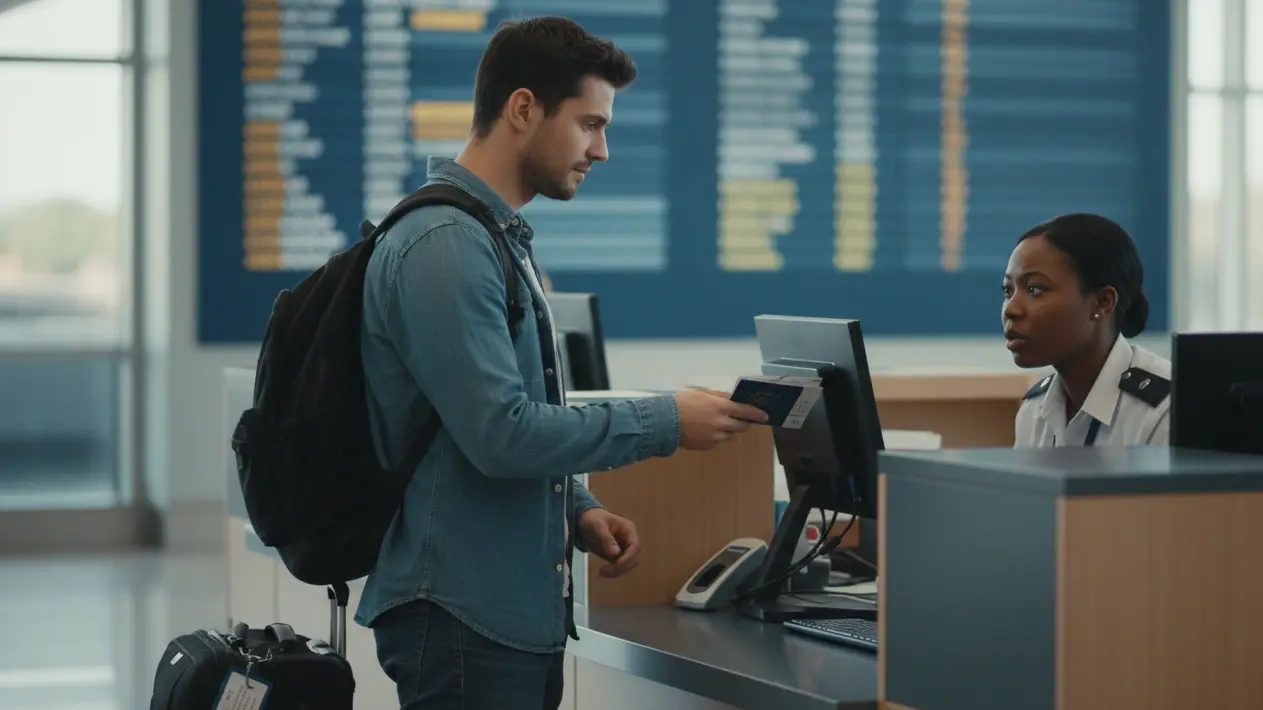
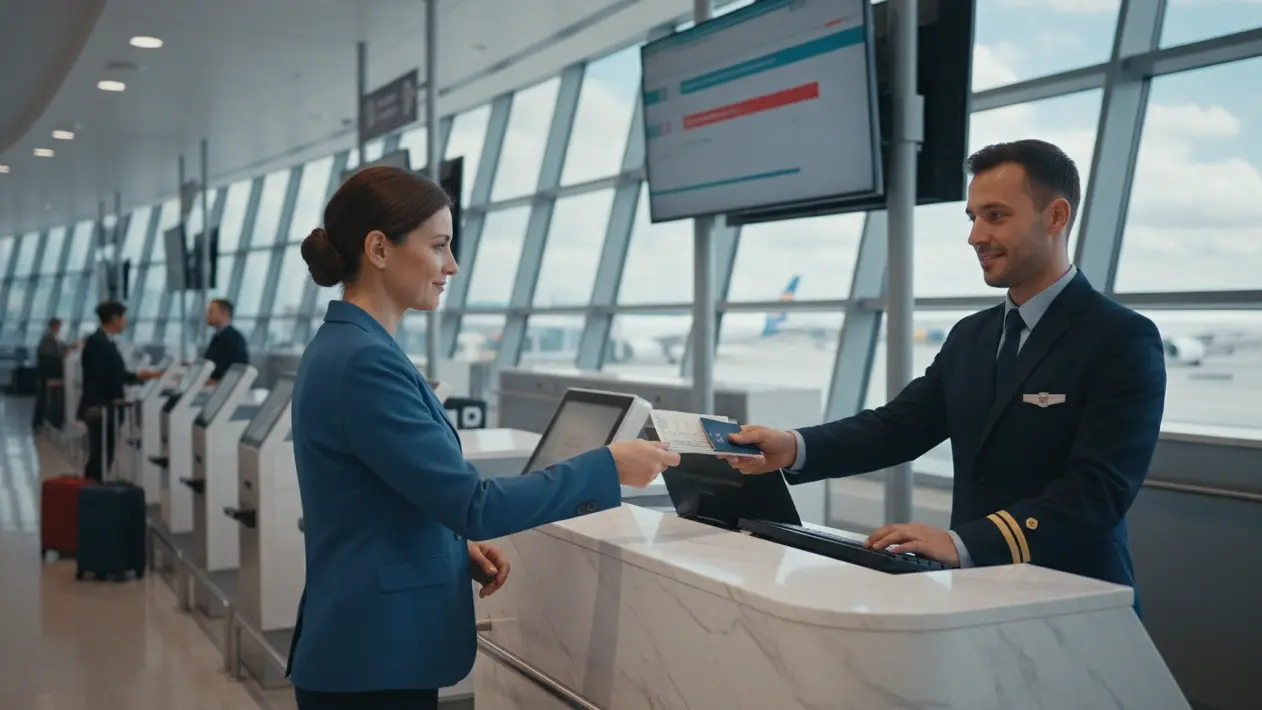
What Happens At The Check-In Desk For A Flight To Panama City
The operating carrier may request Panama exit evidence at check-in. Ask which document satisfies the applicable rule for your passport, permission and route, particularly if your departure will be by land.
During airline check-in, the agent looks for three things:
-
Your full name matching the passport
-
A flight itinerary or bus ticket leaving the country
-
A booking reference the agent can confirm
An airline may refuse boarding when it concludes a required travel document is missing or unacceptable. The exact check can vary by route and operating carrier; an online boarding pass is not a guarantee that airport staff will waive document review.
The destination rule is important on any Panama-bound flight, but the operating carrier’s check and transit-country rules can differ. Confirm each leg, especially when a connection requires a separate transit permission.
Arrive early. If a question comes up, you want time to answer it, not minutes before the gate closes.
Why Airline Agents Cannot Afford To Be Flexible
Airlines have responsibility for passenger-document screening, but staff do not apply a single universally documented PNR test. Ask which Panama rule and document status the agent needs to verify.
A carrier can have obligations when transporting an inadmissible traveler, but penalties depend on the jurisdiction and circumstances. That does not establish that every traveler must buy an identical flight ticket.
So agents protect themselves. A vague or unclear document makes them cautious, and a cautious agent says no.
Another detail matters here. Certain forms of onward travel may not be accepted by every airline; verification is essential. A screenshot with no booking reference raises doubts. A ticket whose reservation details do not appear in the airline's system raises more.
Panama’s published visitor guidance uses “verified reservation of exit,” while tourist-visa paperwork may ask for a verified flight reservation or e-ticket. A live PNR can help verify a proposed flight, but the reference alone does not prove payment, issuance or acceptance.
Before you head to the airport, run through this short list:
-
Open the booking reference on the issuing airline's website
-
Check that your name has no spelling errors
-
Save the booking confirmation as a PDF and as an email
-
Confirm the departure date falls inside the allowed window
If one item fails, fix it at home. Fixing it at the counter costs far more.
A Mumbai To Panama City Trip That Nearly Stopped At Check-In
Emily leaves Mumbai for a month in Panama with a connection through Europe. She holds a hotel booking for the first week and a confirmed seat to Panama City. She has no ticket out.
At the connecting airport, the agent asks for her onward plans. Emily offers her hotel confirmation. The agent explains that it does not show her leaving the country. The boarding pass stays on hold.
She has about two hours. She books a one-way ticket from Panama City to Medellín on her phone and sends the confirmation to the agent. The agent checks the booking reference, nods, and prints her pass.
Emily boards with minutes to spare. Her trip survived, but the stress was avoidable.
The lesson is simple. A hotel booking proves where you will sleep. It does not prove where you will go next.
Questions To Settle Before You Pay For Any Booking
A rushed purchase is where most mistakes happen. Spend ten minutes on these questions first.
-
Does the departure date fall within the period that applies to this visitor category and the stay actually authorized? If not, correct the plan before travel.
-
Does the airline you fly with accept this type of proof? Verification is essential, so ask if unsure.
-
Can the booking reference be checked online? If an agent cannot look it up, the ticket loses its value.
-
Will the reservation still be active when you check in? Short validity windows can lapse early.
-
Does the route make sense for your story? Your exit should match the plans you describe.
Some carriers also require proof of onward travel to be shown at the counter, even when you hold a visa. Others rely on the destination's rules alone. Either way, you gain nothing by guessing.
Write your answers down. They also become the script for any conversation at the desk. If an agent asks where you go next, you already know the answer and the date.
Plan your proof before you leave home, and treat the airline as your first checkpoint. Then the only choice left is which kind of proof fits your trip.
Compare an Issued Ticket, Live Reservation and Real Land Exit

Once you know the rule, the real decision is which document you carry. Each option fits a different kind of trip and a different budget.
Flight Reservation Or Refundable Ticket For Your Panama Plans
A temporary flight reservation can show a proposed flight, with its own booking reference, flight number, date and validity window. Confirm whether it is actually ticketed, and whether the reviewing carrier or authority accepts reservation-level evidence.
A refundable flight is an issued seat with fare-specific change and refund terms. Buy one only if it fits a journey you can take; do not assume cancellation is free, immediate or appropriate after entry.
Provider, carrier, price and verification method vary. A familiar airline logo is not evidence of a paid ticket. Check the issuer’s live-status method and expiration instead of treating any provider as automatically reliable.
Here is how the options compare:
-
Flight reservation: low cost, fast to get, and no fare commitment
-
Refundable ticket: higher upfront cost, and you handle the refund yourself
-
Bus ticket: only useful for a regional exit by road
A one-way ticket into Panama with no exit proof is the exact situation the rule targets. Pair it with an outbound ticket from Panama to somewhere else, and the picture is complete.
An issued return ticket may satisfy an applicable exit check when it leaves Panama during the authorized period. Check whether a visa category requires a particular form and whether any transit country on the return route admits you.
Reading Reservation Details Before You Rely On Them
A booking is only as good as its details. Look at yours the way an airline agent would.
Start with the issuer’s verification method. If a carrier lookup is supported, check that the booking is live, the passenger and route match, and whether a ticket number has been issued. A retrievable record is not automatically a paid seat.
Compare the passenger name against the passport and the operating carrier’s format. A minor spacing or middle-name variation is not automatically fatal; ask the issuer to correct a material mismatch. Then confirm dates, route and flight number.
Make the document readable offline, but do not assume readability alone makes it legally sufficient. Recheck the live status at check-in and, if still required, on arrival.
Keep the paperwork consistent across your trip. If you also handle visa applications for other countries, align the dates on every document. Mismatched dates make officers pause, and pauses lead to questions.
An operating airline may need to verify a booking or ticket, but airlines use different systems. If staff cannot retrieve the record, contact the issuer and ask what document status the airline requires before making a rushed purchase.
A strong onward flight ticket also fits your story. If you tell the officer you are heading to Bogotá, your ticket should say Bogotá. If you tell the officer you are heading to Lima, it should say Lima.
Finally, think about your onward journey beyond Panama. A ticket that matches your real plans is easier to defend than a random one.
Price and Reservation Validity Are Product-Specific
Prices vary, and the validity window matters as much as the price.
Temporary reservation windows vary by provider and fare. Ask for the actual expiration timestamp and allow for travel time, time zones and connections; never assume a standard 24- or 48-hour term.
If plans change, check the issuer’s current price, delivery, amendment and validity terms. Do not rely on an unverified $15 price, instant delivery or unlimited date changes.
Think about when you will show the document. You will show it at airline check-in, and you may show it again to an officer in Panama. Make sure it is still valid at both moments.
Do not spend hours hunting for the cheapest fare. A small saving is not worth a document that expires before your flight.
Time Your Booking Against Both Document Checks
Timing decides whether your proof works when it counts. Book too early and a short-lived reservation lapses. Book too late and you risk a stressful scramble at the airport.
There is no universal one- or two-day booking rule. Time the record so it is active when the carrier checks it and, where necessary, when Panama reviews it. A paid ticket and temporary PNR have different validity constraints.
If your itinerary has a long connection, count the hours from the first leg. Delays eat into short windows. A missed connection can push your arrival past the point where the booking is still active.
Download the confirmation as soon as it arrives. Then email it to yourself and keep it offline on your phone. Mobile data is not always reliable in arrivals halls.
Finally, set a reminder for your real departure date. Your onward plans only matter if you act on them before your authorized stay expires.
If your trip starts in Latin America or South America rather than abroad, the same logic applies. Pick proof that lasts until you are through the border.
Not every trip ends with a flight, though. Plenty of visitors leave Panama on the road, and that changes what you carry.
Land-Border Exit: What a Genuine Bus Plan Must Explain
Land crossings follow their own rhythm. The officers are the same, but the paperwork you show can change.
Paso Canoas And The Other Border Posts That Handle Bus Proof
An actual cross-border bus booking can support an overland plan, but Panama’s official visitor FAQ uses “verified reservation of exit” without guaranteeing every bus format. Confirm the required document with the border authority and the operating carrier before relying on it.
Paso Canoas is the busiest crossing between Costa Rica and Panama. Other border posts handle fewer travelers and often give you less guidance. Wherever you cross, expect the same question about your plans.
At a land border crossing, officers want to see your next move. An international bus ticket from a company such as Tica Bus, which runs routes across Central America, can show it.
A land arrival is still subject to the entry rules for the traveler’s status. The acceptable way to document a later land exit needs confirmation; do not assume the airport and road-post review are identical.
Consider the following before you rely on a bus ticket:
-
Ask the bus company for a printed receipt with your name
-
Check that the route leaves Panama, not just crosses a region of it
-
Keep the booking confirmation in both digital and paper form
-
Bring a flight reservation as a backup in case the officer prefers one
A second document can create a contradictory itinerary if it names a flight you do not intend to take. Prefer a clear genuine bus booking and a verified route; ask for guidance if the accepted format remains unclear.
Planning A Costa Rica Exit Without The Stressful Option
Many visitors link Panama with Costa Rica, and some plan a border run to reset their time. A border run means leaving a country briefly and coming back.
The stressful option is turning up at a crossing with no plan. Officers may ask where you are going, and an empty answer slows everything.
Imagine Daniel, who rides from San José to the Panamanian side and spends three weeks in Bocas del Toro. He then plans to continue toward El Salvador.
Daniel’s bus booking should actually leave Panama on the stated date and lead to a country he can enter. If he also holds a provisional flight reservation, he should explain honestly which route is current rather than present two incompatible exits.
Your exit plan should name a real destination and a real date. That is true whether you head north through Central America or south toward South America.
If you leave Panama by air on the way out, keep your proof ready for the airline check as well. The same rules apply in reverse for the next country on your list.
A brief border exit does not guarantee a fresh permission on re-entry. Officers assess each entry under current rules; do not plan a “visa run” as an automatic reset.
Packing A Small Folder For The Road Crossing
Land crossings are less predictable than airports. Offices can be crowded, printers are rare, and signal can drop. A small paper folder solves most of that.
Your folder should hold:
-
Your passport and a photocopy of the photo page
-
The onward bus or flight confirmation, printed
-
Your hotel reservations or a host's address
-
A bank statement or cash that covers the $500 USD funds check
-
Any other papers that officers might require proof of, such as vaccination records
Officers at remote posts do not always speak English. Simple, printed documents with clear dates and names travel better than screens. Keep the folder in your day bag, not in your luggage, so you can reach it in the queue.
What To Do When An Officer Questions Your Proof
Even with good paperwork, an officer may ask follow-up questions. Stay calm and answer plainly.
Officers can also be immigration officials with different habits. One may glance at your ticket. Another may read every line. Prepare for both.
If the officer doubts your document, offer another one. Show the booking reference on your phone, then the PDF, then the printed copy. Explain your route in one sentence.
Be ready to explain your timeline. Say where you plan to stay, how long, and where you go next. Short answers that match your documents are the most convincing.
Avoid arguing about the rule. Officers apply it every day, and a debate does not help your case. Politeness does.
Preparation reduces preventable document gaps but cannot guarantee admission. If an officer questions your record, answer truthfully, ask which requirement is unmet and use the proper review or correction process available at that post.
After admission, check the recorded authorized stay and keep the supporting documents. An exit reservation does not extend your permission.
Check the period actually authorized on your admission record; ask the authority for clarification if it is unclear, and update your departure plan within that period.
Walk Into Panama With Your Onward Proof Ready
The reliable Panama workflow is: verify your visitor category and permitted stay, choose a genuine exit route, check whether the document is an issued ticket or a live reservation, and confirm the operating carrier’s rule. Keep a readable copy and recheck its status when it will be reviewed.
Before travel, check the live booking status, passenger name, route and date, then save the original confirmation offline. Answer any questions truthfully and leave before the stay actually granted expires.
Need a provisional Panama flight exit? Match it to your real itinerary and confirm that reservation-level proof is acceptable. Before ordering, check current price, validity and ticket status; an active booking cannot guarantee boarding or entry.
Review current reservation optionsFrequently asked questions
Does Panama require exit proof from every visitor?
Its foreign-visitor FAQ lists a verified exit reservation within the established period, while tourist-category rules qualify some return-ticket wording. Check your particular nationality and status.
Does the ticket have to leave Panama within 90 days?
Not as a universal rule. A 2021 resolution gives specified visa-exempt tourists up to three months. Other categories differ; use the actual period applicable to you.
Is a verifiable PNR the same as a paid ticket?
No. It may prove that a reservation is live at a given moment, but it does not by itself prove payment, issuance or acceptance.
Can a bus ticket show a Panama land exit?
A genuine cross-border bus booking can document your intended route. Verify that the specific format is accepted by the airline and Panama authority and that the next country will admit you.
What other documents should I prepare?
Panama’s visitor FAQ lists an original passport valid at least three months and minimum financial means of B/.500 for the relevant category, plus a visa when required. Check current exceptions and evidence requirements.
What if the airline cannot verify my exit booking?
Ask what document status it needs, contact the issuer, and correct the record or obtain the required ticket. Do not describe an unpaid reservation as an issued seat.
Rules and carrier checks change by nationality, status and route. This is general travel information, not legal advice or a promise of boarding or admission.