Short answer: For Colombia, carry an onward or return document when your entry category and carrier require exit proof. Make it match your passport, actual route and allowed stay. A paid ticket and a live temporary dummy ticket are not the same: verify the status and what the rule accepts. Migración Colombia calls CheckMig optional; it does not replace exit proof.
Key facts
- Colombia lists an exit ticket among entry documents when applicable; check your nationality and visa category.
- CheckMig is free and optional under current Migración Colombia guidance.
- A PNR shows a booking record, not necessarily a paid or issued ticket.
- A genuine land exit should be supported by a real route and the next country’s entry eligibility.
- The airline and border officer may make separate document decisions.
In this guide
Official-source check: Migración Colombia’s entry and exit requirements list an exit ticket where applicable. Its CheckMig page calls that form optional. Its FAQ describes additional visa-category distinctions. Recheck the current official rule and the operating airline before travel.
Reviewed for: travelers entering Colombia with a one-way or flexible itinerary, particularly those choosing between a paid flight, a temporary reservation and a real land exit. This page is Colombia-specific, unlike the broader airline boarding-refusal guide.
Choose the proof that matches your actual exit
| Actual plan | Document to prepare | Check before travel |
|---|---|---|
| Fly to a known destination | Paid flight or, where accepted, a live reservation | Ticket status, name, route and next-country permission |
| Leave by land | Genuine bus/land itinerary and confirmation | Border operation, next-country entry and carrier acceptance |
| Route still flexible | Truthful provisional plan, then update it | Reservation expiration and applicable document standard |
A gate agent in Madrid asks one question before your Bogotá flight boards: Where do you leave Colombia? If your phone shows nothing, your trip can stall right there. The rule is simple, but the way you meet it shapes your budget, your stress level, and your odds of boarding on time. It happens every single week.
This guide separates Colombia’s conditional exit-ticket requirement from airline document checks and the optional CheckMig form. Compare a paid flight, a live but unpaid reservation, and genuine bus or other overland proof against your actual route and visa status. It also shows how to verify each document before check-in without inventing a flight you will not take.
What Gate Agents Ask Before You Board For Bogotá
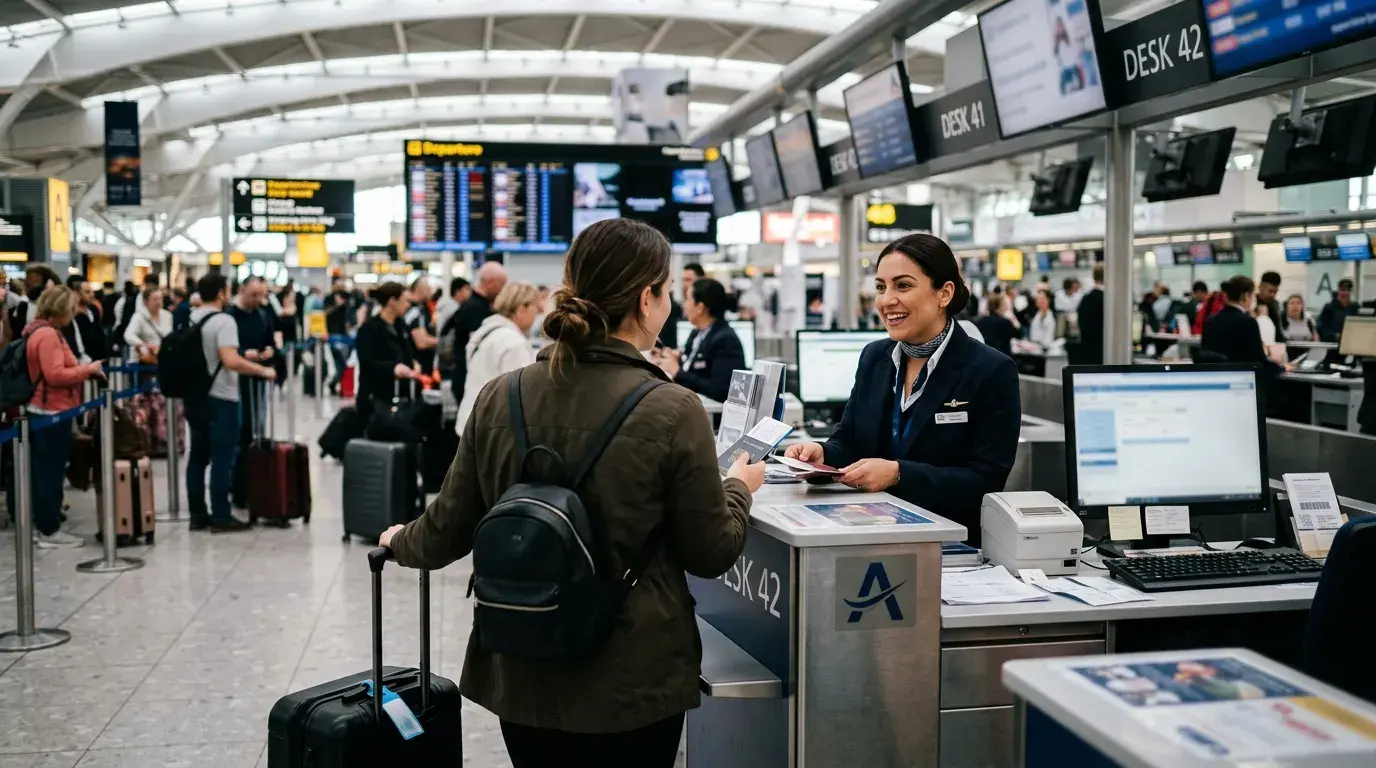
Your trip to Colombia can stall at home, long before you see the Andes. Airline staff act as the first filter, and they know this rule by heart.
The Exit Plan Colombia Expects From You
Colombia may require an exit ticket from a foreign visitor according to visa category and the applicable entry conditions. Migración Colombia lists an exit ticket among entry documents “as applicable”; its FAQ describes exit-ticket checks for travelers without a visa or with a visa valid for six months or less. Verify the current rule for your passport, permission and carrier instead of treating every arrival as identical.
An exit plan is useful because it connects your intended stay to a departure route. The relevant requirement is the one that applies to your status—not a generic promise that every tourist must show the same document. A carrier can ask before boarding and a Colombian officer makes an independent admission decision.
Your exit plan does not need to be expensive. It needs three things:
-
Your name, spelled exactly as on your travel documents
-
A departure date after your arrival in Colombia
-
A route that leaves the country
Meet those three points and most agents move on in seconds. Miss one and the conversation gets longer.
Many travellers assume the rule only applies to people with no return plans. That is not how it works in practice. Even someone with a home country job and a family waiting may be asked, because the agent cannot see your life. The agent sees only your documents.
Does Colombia require exit proof from every visitor? No universal answer follows from the official wording. Migración Colombia says an exit ticket may be required “as applicable,” and its FAQ distinguishes certain visa categories. Prepare truthful proof where your status calls for it and ask the airline about its document check before departure.
Other countries in the region run similar checks, and many countries around the world do the same. Colombia is not unusual, but its enforcement is steady. Airlines would rather you provide proof at home than argue at the gate.
These onward travel requirements apply whether you fly a budget carrier or a legacy one. Treat them as part of your packing list, right next to your charger and your insurance papers.
Why Avianca And LATAM Counters Slow Down Without An Exit Document
Avianca, LATAM and other operating carriers may review route and entry documents at check-in. Their checks depend on the traveler’s status and route; do not assume either airline applies one universal policy to every passenger.
Airlines often check for onward tickets at check-in. The check may happen at the desk, or during the airline check-in step online, depending on your carrier. A missing document can block your boarding pass.
Carriers have obligations under destination entry rules and may decline boarding when a required document is missing. The specific consequence and the carrier’s process vary; ask which requirement the agent is applying rather than asserting a universal fine.
Picture Emma Carter flying from Frankfurt to Bogotá on a one-way ticket. She has a hotel booked and a friendly smile. She has no exit document. The agent asks for one, and Emma now has twenty minutes to fix it.
This example illustrates the question, not a measured daily frequency. A traveler with a one-way arrival should confirm the applicable exit requirement and carry the record that matches the real onward plan.
What Happens When The Agent Cannot Find Your Exit Flight Reservation
Agents work from your itinerary, not from your promises. They look at the airline's system, then at the document you show. If the two do not agree, trouble starts.
A mismatch usually looks like one of these:
-
The booking reference does not load
-
The name differs from your arrival booking
-
The flight number does not exist on that date
-
The document shows a departure date that falls too early
When this happens, agents tend to follow one of three paths. Some ask you to refresh the booking and try again. Some call a supervisor. A few simply refuse boarding until you buy a fresh document.
Your best defense is a booking that loads cleanly. Open it on your phone before you leave for the departure airport. Confirm that the booking reference still shows your name. Save a PDF copy too, since terminal Wi-Fi tends to fail at the worst moment.
Match your dates as well. Your exit date should sit inside the stay you plan to declare. An exit scheduled for the day after you arrive may raise a question. An exit scheduled two years away raises a bigger one. Choose a date that fits a normal tourist visit.
CheckMig Is Optional: Keep It Separate From Onward Proof
Migración Colombia currently describes CheckMig as free and optional, not a mandatory boarding document. Its official page says travelers can submit it from 72 hours to one hour before travel. Check current carrier instructions separately and do not confuse a CheckMig confirmation with an exit ticket.
If you choose to submit CheckMig, make the entered dates and flight details agree with your current itinerary. The form is optional and does not replace a visa, ticket or other entry document. Keep its confirmation with your travel records if you used it.
Common slips include:
-
Typing your name differently from your travel documents
-
Entering an arrival date that differs from your flight
-
Saving the confirmation in an email you cannot open offline
You can complete optional CheckMig within the official time window; there is no need to buy a second document solely because of the form. Check the official site shortly before travel for the current process and use only genuine itinerary details.
How Officers At Bogotá Arrivals Read Your Paperwork
Landing does not end the checking. A second review waits in the immigration hall, and it looks at your documents through a different lens.
The Questions You Can Expect At The Desk
An officer at El Dorado or another Colombian entry point may ask about the planned departure when exit proof applies to the traveler. Published rules do not establish a reliable airport-by-airport questioning rate. Be ready with a truthful answer and the relevant documents.
Immigration officers usually keep the exchange short. Expect three questions:
-
How long will you stay?
-
Where will you sleep on your first nights?
-
How and when do you leave Colombia?
Travelers arriving after a long overnight journey tend to answer slowly. Practice your replies before you land. A calm, specific answer helps you clear immigration without delay.
Say your plan the way it appears on paper. If your exit document shows a departure on 14 November, do not say "maybe December." Officers compare your voice with your documents. Any gap invites follow-up questions.
Keep everything in one folder, either on your phone or in your bag. The El Dorado queue can be long after several flights land together. Fumbling through screenshots makes a short question feel like a long interview.
What an Officer Can Actually Verify in Your Exit Proof
A confirmed onward ticket must show your name and flight details. Officers scan for a few quick signals:
-
Your full name
-
The airline and flight number
-
The departure airport and arrival city
-
The departure date
-
The booking reference
A paid, confirmed flight ticket clearly shows an exit when the route and date fit. A temporary reservation with a retrievable PNR may show a proposed flight, but a PNR alone does not prove ticket issuance or guarantee that a carrier or border officer will accept it. Check the live status and the actual rule.
A code that retrieves a live booking helps verify that a reservation exists. It does not by itself establish that the ticket is paid, still active through the border check, or sufficient under the applicable entry rule.
A genuine international bus, flight or other exit booking can support the route when the relevant authority and carrier accept that format. If you plan to leave by land, verify whether the specific ticket is adequate before you rely on it; a random flight to another place would misstate your plan.
Keep the original issuer confirmation and a retrievable reference where available. A booking reference proves only that a record exists at that moment; it does not prove payment, ticket issuance, legal eligibility for the next country or future validity.
A printed itinerary without an easy reference can be harder to verify, but the official rule does not categorically invalidate every such document. Preserve the original confirmation, issuer details and any ticket number; ask the airline what it needs to see.
Think about how the officer reads your pages. They do not study design or layout. They look for the same five items, in the same order, and they want to see them fast. Put your name at the top of the file, and keep extra pages out of the way.
Going Back Home Or Moving On: Which Exit Reads Better
Acceptable formats for onward tickets include a return flight or a ticket to a third country. Both work. They simply tell different stories.
A return ticket to your home country says you are visiting and going back. It is the cleanest story for a two-week holiday. An outbound ticket to another country says Colombia is one stop on a bigger route. That suits backpackers and people crossing the continent.
Take Daniel Brooks, who flies from Mumbai to Bogotá for two weeks. He plans to continue to Panama City afterward. His exit document should show Panama City, not a random city he never mentions. Officers trust stories that match.
If you tell an officer you are heading to Costa Rica, your document should show Costa Rica or a nearby stop. A short hop to a neighbouring country is the most natural exit for visitors exploring the region. A mixed story creates questions you do not need.
Your onward journey should also look natural on a map in the officer's mind. Group your stops by region, with related destinations in the same part of the continent, so your plan stays believable. A trip that jumps across oceans every three days invites a longer conversation.
Be ready to explain the link between your stops. A sentence such as "I am visiting friends in Medellín, then taking a short trip north" works better than a long story. Short answers sound confident, and confident answers move the line along.
Flight Tickets: What To Keep On Your Phone And On Paper
Keep the reservation as a PDF, as a screenshot, and as a printed page. Batteries die. Apps crash. A paper copy takes three seconds to show.
Add your first night's address and your CheckMig confirmation to the same folder. When the officer asks for one item, you can pass over a neat stack of three.
Check one last detail before you leave home: the spelling of your name. A single swapped letter can send an agent back to the keyboard. With the document rules clear, the next question is price, and the price gap is wider than most people expect.
Choose Paid Flights, Temporary Reservations or Genuine Overland Exits
Every exit document costs something, but the range is huge. Your choice depends on how firm your plans are and how much risk you accept.
From Cheapest Option To Priciest Seat
A paid flight ticket should represent a trip you can actually take. Review change and refund conditions before purchase, because flexibility and fees vary by fare. If you expect to leave overland, do not purchase a contradictory flight only to create a document.
A flexible or refundable fare may reduce change risk, but restrictions and refund timing vary. Compare total cost and terms with your real route, not a generic price claim.
The rule of thumb is simple. If you are sure you will fly the route, buy a real flight ticket. If you are not sure, use a reservation that proves intent without locking up your money.
A short-lived reservation should be active when staff review it, but availability, price, issuance time and validity vary by provider. Confirm its actual window and leave time to correct errors before check-in.
Also think about refunds. A real ticket may return part of your money, but only after paperwork and delays. A reservation avoids that chase, because you never held a seat you needed to cancel.
What a Temporary Flight Reservation Can—and Cannot—Prove
Temporary onward ticket rental services provide verifiable reservations with a real booking reference. The reservation sits in the airline's system long enough for you to show it at the desk and in the arrival hall.
Temporary flight reservations do not all last 48 hours. Ask the issuer for the exact activation and expiration time, and verify the booking in the operating airline’s system while it is active. Do not assume a booking will remain retrievable through a long connection or arrival queue.
A provider’s airline choice and fulfillment terms vary. What matters is a truthful route, a retrievable live record where available, transparent validity and support if an error appears. Do not imply that a major carrier name guarantees acceptance.
When you compare any onward ticket service, look for these basics:
-
Instantly verifiable reservations
-
A PNR delivered with a PDF
-
Unlimited date changes if your arrival moves
If the trip loads in the operating carrier’s system, you have evidence of a live reservation at that moment. Check whether it is ticketed and whether the document type satisfies the rule. A live PNR cannot turn an invented route into a truthful exit plan.
A temporary reservation is different from a fabricated PDF if it corresponds to a real, retrievable booking. But it may be unpaid and short-lived. Disclose it accurately and never present it as an issued ticket when it is not.
When A Ferry or Bus Ticket Makes Better Sense
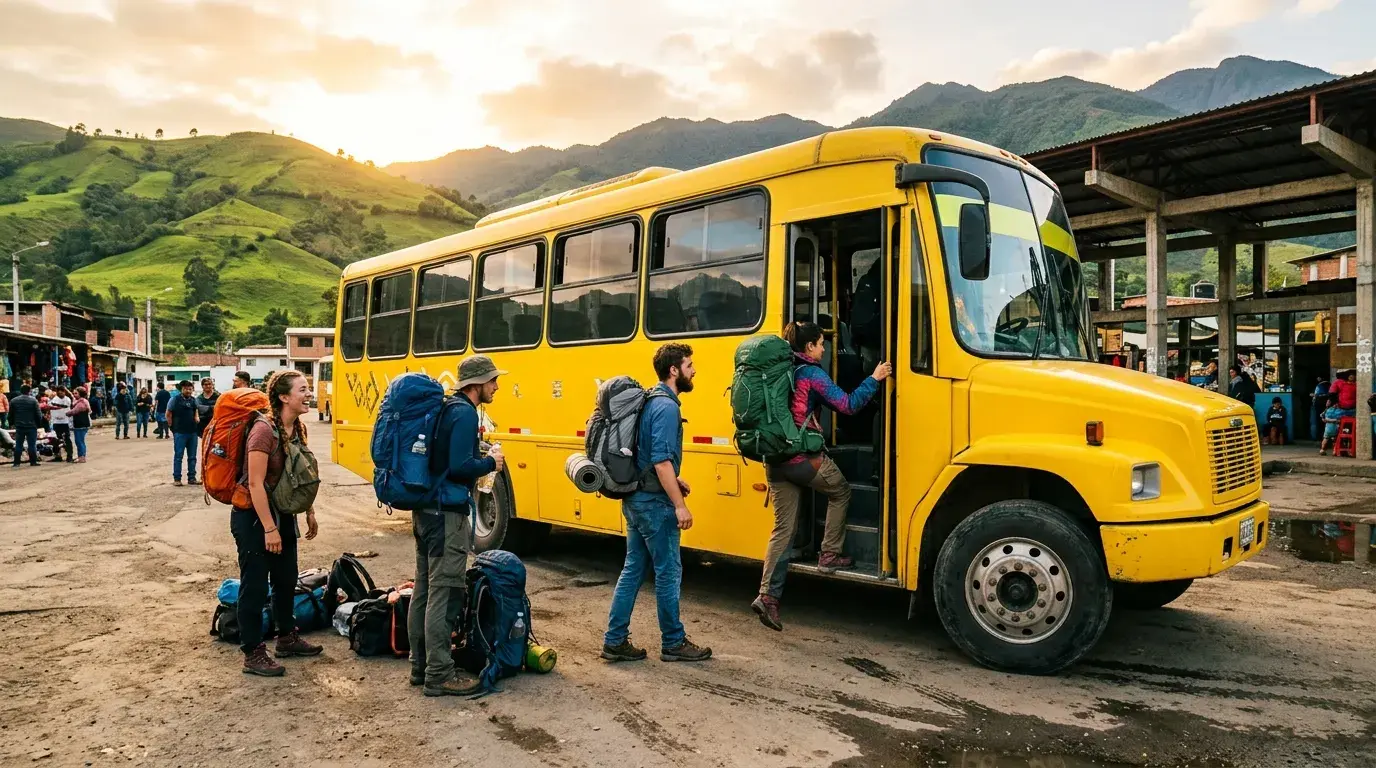
Not every exit needs wings. A bus ticket or a ferry ticket can show the officer that you plan to leave by land or water. That fits travelers who prefer slow routes and cheap crossings.
A genuine bus across a permitted land border can make sense for an actual overland itinerary, subject to current safety, border, visa and carrier requirements. Confirm the route operates and that the traveler can enter the next country before relying on its ticket.
A flight record may be easier for some staff to retrieve, but convenience is not a reason to submit a route you do not intend to use. Ask whether the genuine land-exit booking meets the applicable check.
If you plan to leave by land, bring extra proof. A route printout, a seat confirmation, and a clear booking reference help. Without them, the agent may suggest you buy a seat, which defeats the purpose.
Booking Slips That Cost Travelers Their Seat
Most failures come from small errors, not from the document type. Watch out for these:
-
A reservation that expires before your flight leaves
-
A departure date earlier than your arrival
-
A name that differs by one letter
-
A file with no code to look up
-
A booking with no real flight number
Each one gives the agent a reason to stop. Fixing them takes minutes at home and much longer at the counter.
Test your onward proof twice. Check it on the day you buy it and again 24 hours before departure. If anything changed, you still have time to correct it. Once you know the price and format, you can design the actual route, especially if your trip runs long.
Planning The Exit Route For Long Stays And Loose Itineraries
A weekend visit and a six-month loop through the continent need different exit documents. Your route, your visa, and your habits all matter.
Remote Workers And Slow Travelers Need Dates That Hold
Digital nomads and long-term travelers rarely have fixed plans. They book a city, find a cafe, and decide the next stop later. That freedom is great until the rule meets it.
A visitor’s authorized stay depends on entry status and the period granted by the officer or permission. Do not infer a universal 90-day entitlement from a travel blog. Put the exit date within the actual allowed stay and verify extension procedures separately.
If you juggle visa applications for another country, keep every document consistent. Different dates across forms can raise questions. Officers may compare what you declare with what you show.
A changeable reservation may help at the planning stage if the issuer actually allows changes. Confirm its validity, change terms and whether the relevant rule accepts reservation proof; do not assume an unpaid PNR substitutes for a paid ticket.
The key is to stay honest about your stay. A reservation shows your intended exit, and you can adjust your actual plans within the rules.
Build a small routine for long trips. Every time you move cities, glance at your exit document. Confirm that the date still sits ahead of you and that the name still matches. Five seconds of checking beats five minutes of panic at a counter.
Do the same before every border or regional flight you take later in the trip. Other countries on your route may ask the same question, and the document you already hold may answer it.
Exit Routes From Bogotá That Match Your Story
Colombia sits at a crossroads, so exit stories come in many shapes. Pick one that matches your real plan.
Central America is the most common next destination. Panama City is a short hop, and Copa Airlines connects the two cities. Costa Rica is another popular stop for people following the isthmus north.
South America offers wide options too. Buenos Aires is a favourite for travelers heading to the far south. Others look toward Peru, Chile, or Brazil, depending on their season.
Some visitors return north instead. Fort Lauderdale is a common gateway, and US airlines such as American Airlines link Colombia with many American cities. For travelers coming from North America, that gives a simple return story.
Whatever you choose, tie it to your plan. Latin America is large, and officers know it. A clear route is more convincing than a random one.
Consider the season as well. Rainy months can disrupt overland roads, and holiday weeks fill flights quickly. A date that falls on a major holiday may look odd, or may simply be sold out. Pick a normal weekday and a plausible time of day.
Match your luggage to your story, too. If you claim a two-week visit, a small bag looks natural. If you claim a long trip, officers expect more. Small details like these make the whole picture believable.
Fixing Problems On Departure Day At The Terminal
Even careful travelers hit trouble. A name typo, an expired booking, or a missing code can appear at the counter. Staying calm helps more than anything.
Ask the agent what format they accept, then fix the issue on your phone. If your reservation provider offers support, contact them right away. Many can correct a name or reissue a document within minutes.
Buying at the counter is the most stressful option. Prices spike when you have no time, and you pay for a seat you may not use. This is why checking your documents the day before beats everything else.
Do not create contradictory backup exits. Keep an offline copy of the genuine confirmation and the issuer’s contact details; if the first document is invalid, fix or replace it with an accurate record that matches your real plan.
Breathe, stay polite, and keep your documents tidy. Agents respond better to prepared travelers than to frantic ones. A little preparation turns that scramble into a non-event, which brings us to your final checklist.
Your Colombia Exit Plan Is Ready Before You Fly
Colombia asks a fair question, and a clear answer keeps your trip moving. Match your name, dates, and route, then carry the proof where you can reach it. With a verifiable booking reference from DummyFlights.com, you can pass the desk, clear the airport, and enter Colombia with confidence.
Choose the exit that suits your plans and budget. Check it the day before you fly. Then focus on what comes next: the coffee, the mountains, and the Caribbean coast.
Need a Colombia exit-plan reservation? Confirm your actual next destination and the document type your carrier will accept. A temporary flight booking can show a proposed route while active, but it cannot guarantee boarding or entry and should not be used to disguise a land exit.
Review temporary reservation optionsFrequently asked questions
Is an onward ticket required for every Colombia visitor?
Migración Colombia lists exit tickets as applicable, and its FAQ distinguishes visa situations. Check the rule for your nationality, visa or entry status and operating airline.
Is CheckMig mandatory for Colombia?
No. Migración Colombia currently calls CheckMig optional. It is free and may be submitted within the window stated on its official page.
Does a PNR prove my flight is paid?
No. A PNR can identify a live reservation. Check ticket issuance and the rule being applied; an unpaid booking is not a paid ticket.
Can I show a bus ticket out of Colombia?
A genuine international bus booking may support an actual land-exit plan where accepted. Confirm the border route, next-country entry rights and carrier document policy.
When should I verify a temporary reservation?
Check its current status and expiration before check-in and again if travel timing changes. Do not assume a fixed 48-hour validity.
What if the airline refuses my exit proof?
Ask for the specific rule and document deficiency, then contact the booking issuer or operating carrier. Correct the real route rather than presenting a contradictory document.
Entry and airline document requirements can change and depend on nationality, permission and route. This is general travel information, not legal advice or a guarantee of boarding or admission.