

Your UAE trip is set. Bags packed. Hotel pinned. Then the check-in agent asks for proof that you’ll leave the Emirates. That’s the moment many travelers flying from India stumble. Not because plans are weak, but because documentation is. Airlines and immigration want clean, credible onward proof. When you have it ready, the conversation is short and shorter. When you don’t, things slow down fast.
We wrote this guide to help you move through that moment. You’ll see how visa on arrival really works at UAE airports, what officers and airline staff actually verify, and how you can show onward or return plans that stand up to scrutiny. Use a dummy ticket responsibly only when it reflects a real onward or return plan and matches the rest of your trip evidence. If your airline asks for onward proof before boarding, use a dummy ticket booking that matches your real exit plan and passenger details.
If you need the broader visa-document strategy before focusing on UAE arrival checks, start with the dummy ticket for visa 2026 complete guide. That pillar explains how a temporary reservation fits beside the application form, hotel proof, funds, insurance and travel timing. This UAE page stays narrower: who may face airline or arrival proof questions, and how onward proof should match the exact trip.
For country-by-country use cases beyond the Emirates, the dummy ticket for visa hub is the better page. It separates Schengen, UK, US, Canada, Japan and other visitor-style document expectations so UAE-specific advice does not compete with broader dummy-ticket-for-visa intent.
If you are unsure what separates a responsible reservation from a risky edited document, read what is a dummy ticket. For UAE visa-on-arrival planning, that distinction matters because airline staff may care less about the phrase “dummy ticket” and more about whether your exit plan is real, readable and consistent with your passport and stay period.
In This Guide
UAE Visa On Arrival Without Guesswork: What Eligible Travelers Need At The Airport
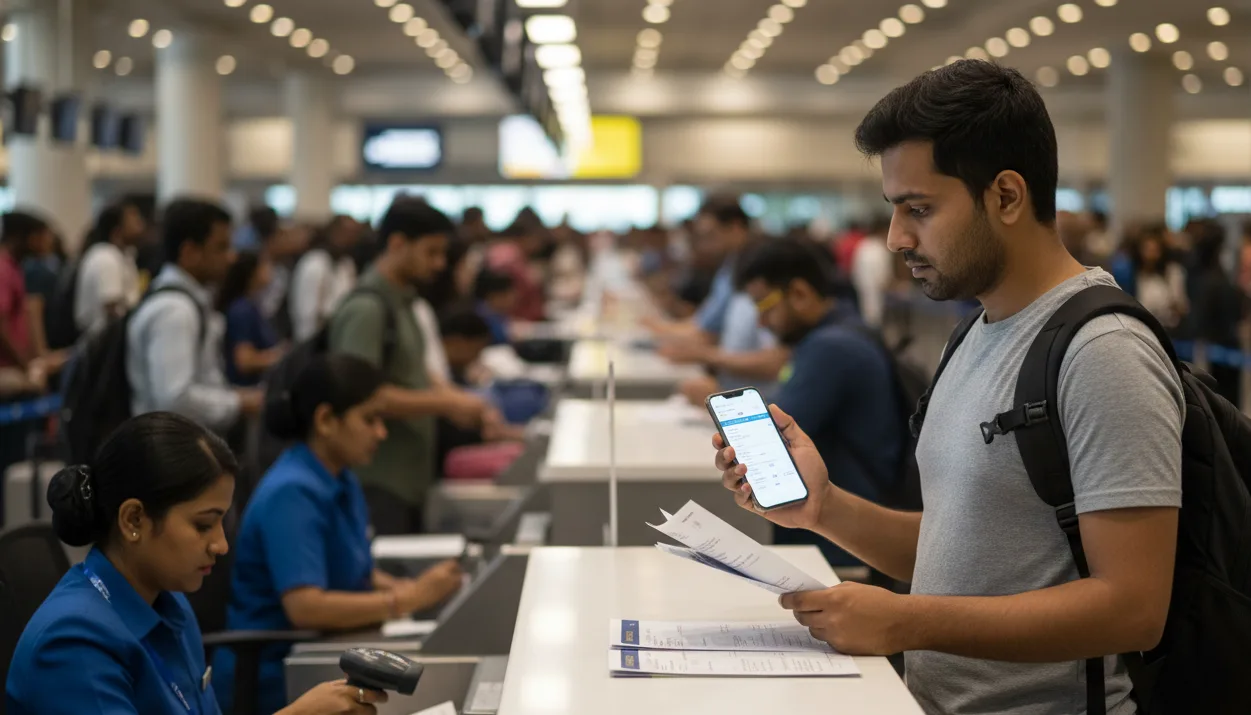
You already know you qualify. The goal here is to make your documents speak clearly when airline staff and immigration ask for them. Think of this section as a run-of-show for the paperwork conversation you’ll have from your Indian departure gate to the UAE arrivals hall.
Use this to tune your folder, your phone, and your timing so you glide through each stage. Need a verifiable PNR today? Book a dummy ticket and travel with confidence.
| Traveler situation | What to verify first | Onward-proof move |
|---|---|---|
| Eligible Indian passport holder with qualifying US/UK/EU/listed residence or visa document | Passport validity and qualifying document validity, usually at least six months. | Carry a return or onward reservation within the 14-day stay window. |
| Selected 2026 expanded nationality with eligible residence permit | Whether GDRFA/MoFA eligibility covers your nationality and residence-permit country. | Match exit proof to the 14-day or 60-day route you are using. |
| Transit through Abu Dhabi or Dubai | Whether you will leave the airport and whether transit visa rules apply. | Show confirmed onward travel to a third destination when required. |
| Not eligible for visa on arrival | Pre-arranged tourist visa, sponsor, airline visa service or official entry permit path. | Do not rely on a dummy ticket to solve eligibility; arrange the correct visa first. |
Who Usually Qualifies, In Real-Life Scenarios
You know the broad idea of eligibility. The question that matters is how it plays out at counters. Staff think in patterns. If your case fits a familiar pattern, the check feels quick and routine.
- Clean passport history: Six months of validity remaining is the comfort zone. If your passport is close to expiring, expect extra questions about your return date.
- Consistent story: Your dates, hotels, and onward flight line up. Staff glance for alignment first, details second.
- Prior travel signals: Previous UAE or Gulf entries, or frequent short international trips, make the conversation shorter. Your immigration stamps do part of the talking.
We are not listing every technical eligibility rule here. Your goal is simpler. Present a tidy, believable trip profile that mirrors what staff see every day.
The Core Checks You Actually Face, From India To The UAE
You will encounter two audiences. Airline staff at departure, and immigration after landing. They look for similar things, but for different reasons.
- Airline check-in: Carrier liability drives the questions. If you get denied entry, the airline pays to send you back. That is why proof of exit matters so much here.
- Immigration on arrival: Officers want to see that you will exit on time, stay at a traceable place, and can support yourself during the visit.
What usually gets verified:
- Return or onward plan: A dated booking that matches your stay.
- Accommodation: Hotel confirmation or a host address that can be explained in one sentence.
- Funds and insurance: Proof exists, is current, and is easy to read.
- Passport validity: Enough runway for your intended stay and a cushion beyond it.
Keep the documents simple, consistent, and easy to scan in 30 seconds.
Where You Land Matters: How UAE Airports Feel On Arrival
Each airport has its rhythm. The process is the same in principle, but the flow differs.
- Dubai International (DXB): Clear signage, multiple VoA counters, and separate queues during peak hours. Expect brisk movement, but also expect peak surges aligned with India arrivals.
- Abu Dhabi (AUH): Efficient lines, good wayfinding from the jet bridge to immigration. Staff are used to mixed itineraries with complex onward plans.
- Sharjah (SHJ): Popular with budget itineraries. Carry printed copies here if your phone battery is low. Staff accommodate digital files, but printed backups speed things up during crowd bumps.
- Dubai World Central (DWC) and others: Smaller footprint, shorter walks. Fewer counters during off-peak times, which can be fast or slow depending on your flight bank.
Choose your first UAE touchpoint with your itinerary in mind. A late-night arrival into a busy terminal benefits from extra copies and a charged phone to avoid delays while you dig for files.
Airline Reality Check Before You Fly From India
Your first screening starts at the Indian airport. The style of questioning can vary by airline and route.
- Full-service carriers: Staff often cross-check your onward booking in their system if it is on the same airline or an alliance partner. They are comfortable with multi-city returns.
- Low-cost carriers: Expect a closer look at onward proof, particularly on one-way tickets. Keep your files ready for a quick presentation.
- Separate tickets: If your onward sector is on a different airline, highlight it upfront. A quick line like “Return is on [Airline], here is the PNR” saves time.
When staff call a UAE station for a spot check, it is not a red flag. They are de-risking the situation. Your job is to make verification effortless.
The Documents That Reduce Questions, Beyond The Basics
You already plan to carry the essentials. These extras help when a conversation needs to move faster.
- Two formats per file: A PDF and a screenshot. Screenshots open faster when airport Wi-Fi is patchy.
- File names that speak: “Return_Dubai_to_Mumbai_28Feb_PNR1234.pdf.” Staff see the date and direction at a glance.
- Printed packet for peak hours: One A4 set in order, clipped. It is old-school, but it calms tense queues.
- Group travel map: For families or friends with split PNRs, carry a one-page summary listing each traveler’s exit flight and date.
- Name clarity note: If your Indian documents have initials or name variations, include a short line that matches the PNR name to the passport name. Keep it factual and simple.
These small touches shorten the back-and-forth and show you are prepared.
Accommodation That Looks Credible On Paper And Phone
Accommodation checks are often quick, but they do happen. Make them easy.
- Hotel bookings: Ensure the booking shows full names, dates, and the property’s contact. “Pay at hotel” is fine, provided dates match your entry and exit plan.
- Apartments and serviced stays: Include the property address and a contact number. Add the booking platform page as a secondary proof if needed.
- Staying with family or friends: Carry the host’s full address and phone. A short message from the host confirming your stay can help in edge cases.
If your exit is from a different emirate than your arrival, keep your accommodation chain coherent. The story should read naturally from day one to departure day.
Funds, Cards, And Insurance: What Officers Actually Look For
No one wants to show bank statements unless asked. Keep the proof ready, but light.
- Travel insurance: A one-page certificate that shows your name, coverage dates, and emergency contact number. Avoid multiple attachments for policy wording.
- Funds: A recent statement or an app screenshot of an international card with a visible available balance. You can blur specific transactions, keep totals clear.
- Forex cards and UPI reality: UPI is useful in the UAE in many places, but do not rely on that as your sole proof. A travel card or international credit card is a stronger signal.
Think of these as comfort documents. Most officers will not deep-dive, but being ready keeps you confident.
Timing And Queue Strategy That Works From India
Your preparation matters most during two moments. Check in at the origin, and the first 15 minutes after landing.
- At origin: Arrive with a cushion. If staff need to confirm something with the UAE station, you have time for it. Keep your documents on top of your bag, not inside it.
- On arrival: Follow VoA signage immediately. Join the correct queue early, then open your folder while you wait. Have the onward booking and hotel ready on your phone before you reach the desk.
Confidence comes from order. Your calm, quick presentation sets the tone.
Common Indian Traveler Patterns That Raise Questions, And How To De-Risk Them
You can still travel cleanly with non-standard plans. Just shore them up with the right proofs.
- One-way into Dubai with return from Abu Dhabi: Carry both bookings. Add a simple one-liner in your summary sheet that shows your intercity travel plan.
- Exit by land to Oman or Saudi Arabia: Have a booked bus ticket or a dated hotel in the border city that supports your timeline. Officers look for realistic sequencing.
- Separate onward on a low-cost carrier: Make sure the name, date, and route align. Include the airline’s manage-booking link or a QR boarding pass if available.
Non-standard is fine. Unclear is not.
A Simple, Reusable File Structure You Can Keep On Your Phone
Keep a single folder named “UAE Trip Docs” on your device and in your email.
- 01_Passport.pdf
- 02_ReturnOrOnward.pdf
- 03_Accommodation.pdf
- 04_Insurance.pdf
- 05_Trip_Summary_OnePage.pdf
- 06_Group_Exit_Map.pdf if traveling with others
Add a printed version if you expect peak-hour queues. When your name is called, you can present the exact file in seconds.
Quick Self-Check Before You Leave Home
You want five yeses.
- Dates align: Entry, hotel, and exit connect logically.
- Names match: PNR name equals passport name, including middle names.
- Validity is low-risk: Passport and insurance cover your full stay.
- Proofs open offline: PDFs and screenshots are stored on the device.
- Backups exist: Copies in your email and a small printed set.
If the answer is yes to all five, you are good to go.
The Mindset That Keeps The Process Smooth
Treat every document as a conversation starter that ends quickly. You are not trying to impress anyone with volume. You are showing that your trip makes sense, you have a place to stay, and you have a clear way out.
- Be concise: One line to introduce each document.
- Be consistent: The same dates across all files.
- Be ready: Phone brightness up, file open before you reach the counter.
That is the real framework. You present a logical trip. Staff confirm it fast. You walk to arrivals with time to spare.
Picking The Right Door: Visa On Arrival, Tourist Visa, Transit, Or GCC Resident Route
You have more than one way into the UAE. The best choice depends on your dates, your exits, and how much certainty you want before you reach the counter. Think of this section as a map. We will compare the options you are most likely to use and show where each one shines for India-based travelers.
Read through once. Then match your trip to the scenario that feels closest. Small tweaks now save big delays later. Tight timeline before check-in? Finish your dummy ticket booking now.
The Big Picture First: What Actually Changes For Your Trip
All four routes can get you through the door. What changes is the shape of your stay and the kind of proof you must show.
- Control vs speed: Visa on arrival moves fast at the airport. A pre-arranged tourist visa gives you control before you fly.
- Date certainty: Transit visas lock you to the stopover plan. VoA and tourist visas give more room to adjust.
- Paperwork load: GCC resident pathways simplify checks if you qualify. Tourist visas add pre-decision steps but reduce airport uncertainty.
- Cost exposure: Fees vary by option and by season. Use a ballpark mindset and avoid relying on exact figures that change.
Your aim is to pick the path that matches your risk tolerance and your calendar, not just what a friend used last year.
When Visa On Arrival Is Your Most Effortless Choice
Visa on arrival fits travelers who value flexibility and already meet entry conditions. It pairs well with short, focused trips.
Choose VoA when you want:
- Fast decisions at the airport: You complete formalities after landing. This suits last-minute plans.
- Short stays with clean exits: A return to India or a through-ticket to a third country within the typical VoA stay window.
- Simple accommodation proofs: Clear hotel bookings or a host address that matches your dates.
- Frequent flyers’ rhythm: You have a travel pattern that staff recognize. Your documents already align.
VoA rewards order. If your onward proof looks credible and your stay is tight, you move quickly.
Where A Pre-Arranged Tourist Visa Keeps Things Calm
A pre-arranged tourist visa works when your trip is longer, your itinerary is locked, or you prefer certainty before you step on the plane.
Pick a tourist visa when:
- Your stay is extended: You plan to be in the UAE beyond the typical VoA comfort. You want an decision that supports that plan.
- Peak season pressure is high: School holidays or big events can lead to extra checks. Pre-decision reduces friction.
- Your return is complex: You exit from another emirate weeks later, or your route loops through several countries.
- Separate tickets are risky: You are on different airlines with tight connections. Pre-decision offsets the doubt.
Tourist visas demand more prep at home. In return, check-in conversations feel shorter because your status is already established.
Transit Visas That Turn A Layover Into A Mini Trip
Transit visas make sense when the stop is the plan, not a by-product. You are in and out within a short window, and the onward flight is fixed.
Use a transit visa when:
- You want a quick city break: A short stop to see friends or explore a few sights between long-haul legs.
- Your onward sector is locked in: You hold a confirmed booking out of the UAE within the allowed hours.
- Baggage and terminals align: You can clear immigration and be back for your next flight without cutting it close.
Transit visas are about precision. Keep your timings realistic, and keep your onward proof front and center.
GCC Resident Advantage: Why This Path Feels Smoother
If you are an Indian national with a valid GCC residence status that qualifies, the airport experience often simplifies. Staff see residency as a strong tie that supports compliance.
This route helps when:
- You travel frequently for work: Your GCC card and residence sticker signal stability.
- Your trips are short and functional: Meetings, family events, or quick leisure breaks.
- You want fewer questions at counters: Residency details often shorten the verification arc.
Still carry the same core proofs. Residency complements your file; it does not replace it.
How Each Option Handles The Big Three: Stay, Cost, And Flexibility
Think of this as a practical matrix, not a calculator. Local fees and policies shift, so keep it qualitative and current.
- Stay length
- VoA: Good for short trips. Comfortable when your exit is clear.
- Tourist visa: Better for longer, planned stays.
- Transit visa: Strictly short. Tied to your next flight.
- GCC resident pathway: Typically shorter for brief visits, with smoother checks.
- Cost exposure
- VoA: Pay on arrival. Budget for the fee and possible add-ons.
- Tourist visa: Pay before travel. Costs are spread across processing and service.
- Transit visa: Often minimal, but it depends on the airline and window.
- GCC route: Varies by policy and airline handling. Usually efficient.
- Flexibility
- VoA: High. Best for last-minute adjustments if your documents stay aligned.
- Tourist visa: Medium to high. Good for fixed plans with some wiggle room.
- Transit visa: Low. Your clock is set by your onward flight.
- GCC route: High for frequent, short trips, provided residency stays are valid.
How Indian Check-In Desks Treat Each Route
Indian departure airports are consistent on one point. They want to be sure you will be admitted at the destination.
- VoA passengers: Staff focus on your onward plan and accommodation. Expect quick checks if your story is clean.
- Tourist visa holders: The visa does the heavy lifting. Staff still glance at your exit and hotel, but the tone is lighter.
- Transit visa users: Timings matter most. Keep boarding passes and connection details visible.
- GCC residents: Residency proof plus onward plan is persuasive. Carry the physical card where applicable.
If your ticketing is split across airlines, introduce it early. A sentence that links both PNRs avoids follow-up questions.
Date Changes, Multi-City Loops, And Family Travel
These are the common patterns that challenge a plan. Handle them once, on paper, and your airport time gets easier.
- Flexible return dates
- VoA: Works if you can show a credible exit within the stay window.
- Tourist visa: Better when you know you will stay longer and do not want to rework proofs mid-trip.
- Multi-city route across Gulf countries
- VoA: Feasible if each border sees a logical exit from the UAE.
- Tourist visa: Useful when hotels and activities are prepaid and your calendar is set.
- Family or group with mixed PNRs
- Any route: Prepare a one-page group exit map. List names and exit flights. It saves time at busy counters.
- Return from a different emirate
- Any route: Keep accommodation and transport between emirates in the same chain of dates. Consistency is your best friend.
Reducing Risk When You Hold Separate Tickets
Separate tickets are common in Indian metros. The trick is to show that your plan survives a small delay.
- Build buffer time: Avoid tight turns. Add an hour more than you think you need.
- Show both bookings: Keep both PNRs ready. A simple summary sheet links them.
- Prepare a backup: If your first leg slips, be ready to adjust the second leg without breaking your exit claim.
This is where a clear onward plan is valuable. Staff do not need your theory. They need your proof.
Decision Paths You Can Use In Two Minutes
Match your plan to one of these quick picks. They cover most India-to-UAE trips.
- Two to five days, fixed return: Visa on arrival if you meet conditions and hold a clean return. It is quick and light.
- Ten to fifteen days, prepaid hotels: Tourist visa keeps airport checks calm and your calendar stable.
- Eight to forty-eight hours stop with confirmed onward: Transit visa if timings are comfortable and baggage handling is clear.
- Frequent short hops with GCC residency: GCC resident pathway if you qualify. Carry all proofs, travel feels seamless.
If your trip mixes patterns, pick the route that protects your tightest constraint. Long stays and prepaid plans lean toward pre-arranged visas. Short, focused trips lean toward VoA.
How To Keep Options Open Until The Last Week
You can hold your choice lightly while you finalize dates. Then lock it with a short checklist.
- Watch hotel policies: Choose rates that allow changes until close to arrival.
- Keep an exit in draft: A return you can confirm once meetings or family plans settle.
- Review airline rules: Split tickets and no-show policies can affect your exit proof if plans change.
One final review seven days before departure prevents rushed fixes at check-in.
Pick the route that mirrors your reality, not the ideal version of your trip. If you need flexibility, VoA is strong. If you want certainty for a longer stay, a tourist visa feels calmer. Transit visas reward precision. GCC resident pathways simplify checks when you qualify.
Whichever door you choose, keep your dates consistent, your exit credible, and your accommodation clear. That is what staff look for. Do those three things well, and the rest of your airport day feels simple.
From Check-In To Stamp: Your Minute-By-Minute UAE VoA Playbook
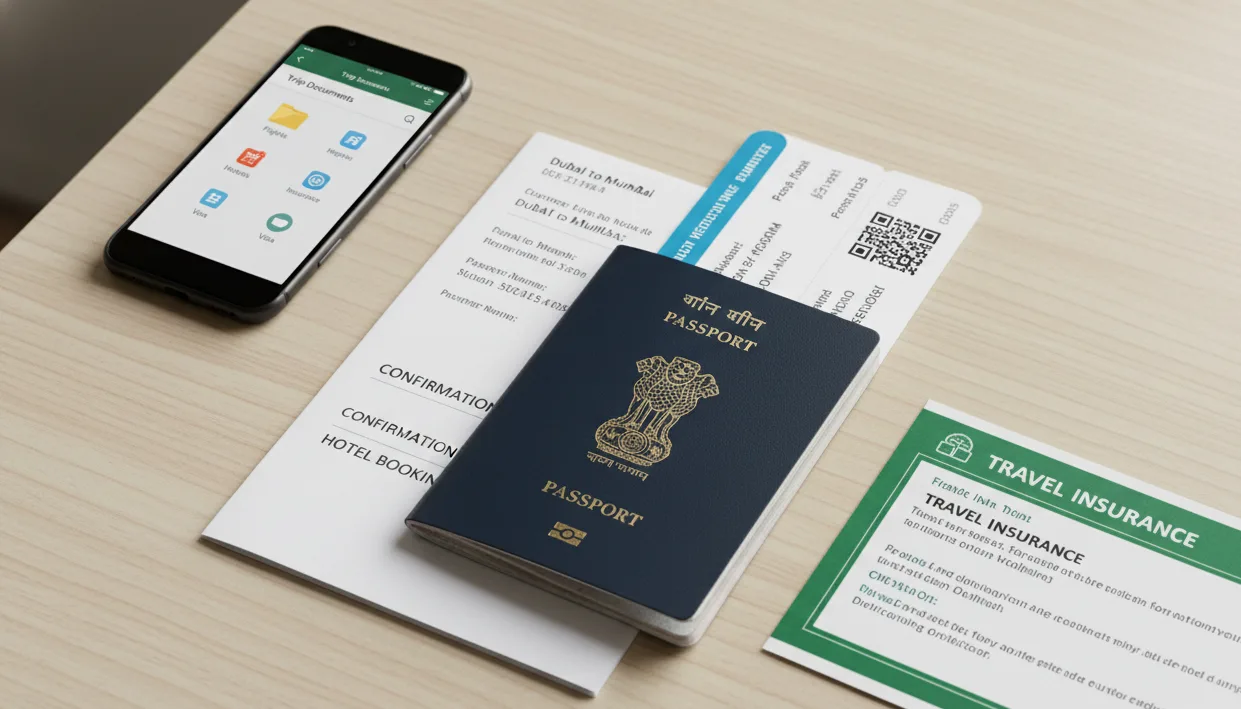
You want a smooth airport day with no surprises. This section gives you a clear, ground-level walkthrough that starts at home and ends with your entry stamp. Keep it handy, and you will move fast through every counter.
Read once, then set up your documents exactly as described. Small habits here save big time later. Keep immigration simple—book a dummy ticket that matches your dates.
Set The Stage At Home: Pack Proofs That Open Fast
Preparation starts before you book a cab to the airport. Keep your evidence simple, current, and offline-ready.
- One folder, clear order: Passport, onward or return booking, accommodation, insurance, funds. Put them in that sequence.
- Two versions of each file: A PDF and a screenshot. PDFs look official. Screenshots open instantly.
- Readable file names: “Return_DXB-BOM_17Mar_PNRAB12.pdf.” Agents read the date first, then the route.
- Battery and backups: Phone charged, power bank packed, and all files saved in your email. Printed set for peak hours.
Do this once and reuse the structure for future trips. You will feel calmer at every desk.
Indian Airport Check-In: Make The First Conversation Easy
Check-in is where most travelers lose time. You will not, because you will lead the conversation.
- Introduce your plan in one line: “Visa on arrival. Return on 17 March. Hotel at Dubai Marina.” This frames the check.
- Present the exit first: Airlines care most about carrier liability. Show the onward or return confirmation before they ask.
- Connect separate tickets: Say it before they discover it. “First leg on Indigo, return on Emirates. Here are both PNRs.”
- Keep names aligned: The PNR name must match the passport. If your passport has initials or a middle name, ensure the booking mirrors it.
If staff call the UAE station, relax. That is routine. Your job is to keep every answer short and your files ready.
Security And Boarding Gate: Quick Reality Checks
Occasional spot checks happen near security or at the gate, especially for one-way tickets.
- Hold the same order: Exit booking on top, then hotel, then insurance.
- Be consistent: Use the same one-line description you used at check-in.
- Avoid last-minute edits: Gate areas are busy. Do not reshuffle dates now. If something changed, present the updated file cleanly.
Calm body language helps. You are ready, so show it.
On The Ground In The UAE: Find The Right Line Early
Landing is the second stage of verification. Your speed depends on how quickly you reach the correct counter.
- Follow the airport VoA signs: They appear before the main immigration hall. Join the VoA queue that matches your passport and purpose.
- Open the right files in the queue: Onward booking and accommodation first. Keep brightness high so officers can read easily.
- Respect the queue rhythm: Officers move faster when travelers present documents in the same order. Match that rhythm.
If your family or group is split across PNRs, keep a one-page exit map ready. It prevents separate interviews.
Biometrics And Photo: What Happens At The Counter
Biometrics take a minute when you are prepared.
- Face forward, documents in hand: Passports open to the photo page. Remove covers that block machine scans.
- Answer tight and direct: Dates of entry and exit. Hotel name. City of departure from the UAE. Keep answers short.
- Name clarifications: If your passport and booking show a spelling variation common in India, offer both documents side by side. Let the officer see the match.
Most biometric counters are quick. Delays usually come from mismatched dates or unclear exits. You will avoid both.
Fee Payment: Card, Cash, And Receipts That Matter
You will pay the visa on arrival fee at a designated desk or integrated counter, depending on the airport.
- Carry both options: an International card and some cash. Card machines usually work. Cash is a solid fallback.
- Check the receipt: Confirm your name, passport number, and the stay category shown. Place the receipt with your passport until you exit the hall.
- Keep the card ready: Do not search inside a backpack at the window. It slows you and everyone behind you.
If the payment desk is separate from biometrics, follow the signs back to immigration with the receipt visible.
The Entry Stamp: Verify The Dates Before You Walk Away
Your stamp is your contract with the country. Confirm it carefully.
- Read the allowed stay: Count the days against your exit date. If the math does not work, ask politely for clarification immediately.
- Match to your plan: If your exit is close to the limit, consider building a small buffer for comfort.
- Photograph the stamp: Take a clear picture and email it to yourself. It helps if you misplace the passport at hotels.
Officers help when you ask clearly. This is the moment to double-check, not after you reach baggage claim.
If Systems Lag: Handle Delays Without Stress
It happens. Queues stop. A desk freezes. Stay in control of what you can control.
- Keep your spot: Do not switch lines randomly. Most slowdowns clear fast.
- Prepare a second set of files: If the officer asks for re-verification, hand the alternate copy without scrolling.
- Use short confirmations: “Return on 17 March. Same hotel throughout.” That signals order and reduces further questions.
Your calmness helps the officer move you along. You are a prepared traveler, not a puzzle to solve.
Tight Connections And Late-Night Arrivals: Time-Savers That Work
Many flights from India arrive at busy windows. Late-night and early morning banks are common. Build your own shortcuts.
- Choose forward seats when possible: Getting off the aircraft early buys minutes at immigration.
- Use airport Wi-Fi wisely: Download your files offline before boarding. Do not wait to log in to cloud storage in a congested hall.
- Know the hall layout: DXB, AUH, and SHJ all signpost VoA counters clearly. Follow the first VoA sign you see. Do not overshoot to explore.
If you have a separate onward flight the same day, pad your layover. You control this variable before you fly.
Extension Plans: When You Decide To Stay Longer
Sometimes meetings extend or family plans shift. Handle extensions with the same clean structure.
- Know where to ask: Information desks or official service centers will point you to the right counter or portal.
- Carry the basics again: Passport, current entry stamp photo, updated onward booking, and hotel extension. Keep them in the same order as day one.
- Avoid last-day rush: Start the process while you still have runway. Officers will ask for a credible exit plan tied to the new dates.
Fees and rules can change. Keep your documents flexible so the paperwork keeps pace with your plans.
Departing The UAE: Exit Controls And What Officers Check
Exits are usually quick when your stamp and ticket align.
- Self-check at the hotel: Confirm your stay does not overshoot the allowed days. Adjust plans if needed.
- At the airport: Immigration sees your exit flight and stamp. If asked, show the return booking you used at entry. Consistency matters.
- For multi-emirate trips: If you entered via Dubai and exit via Abu Dhabi or Sharjah, the system reflects your movement. Your job is to keep dates aligned and accommodation coherent.
You should leave with the same tidy profile you presented on entry. That is how you keep future trips smooth.
A Two-Minute Pre-Flight Drill: Run This Before You Lock Your Door
End with a fast final check. It is simple and powerful.
- Dates line up: Entry, hotel, exit. No gaps. No overlaps.
- Files open offline: PDFs and screenshots on your phone and one printed set.
- Names match perfectly: PNR to passport, including middle names.
- Power ready: Phone charged, charger in bag, power bank topped up.
- Plan summary saved: One page that lists your arrival date, hotel, and exit flight. Group travelers add everyone’s exit flight under their names.
When all five boxes are green, you are ready to travel. You will glide through check-in, move smartly at immigration, and step into the UAE with time to enjoy your day.
Make Your Exit Obvious: Onward Proof For Airline And Immigration Checks
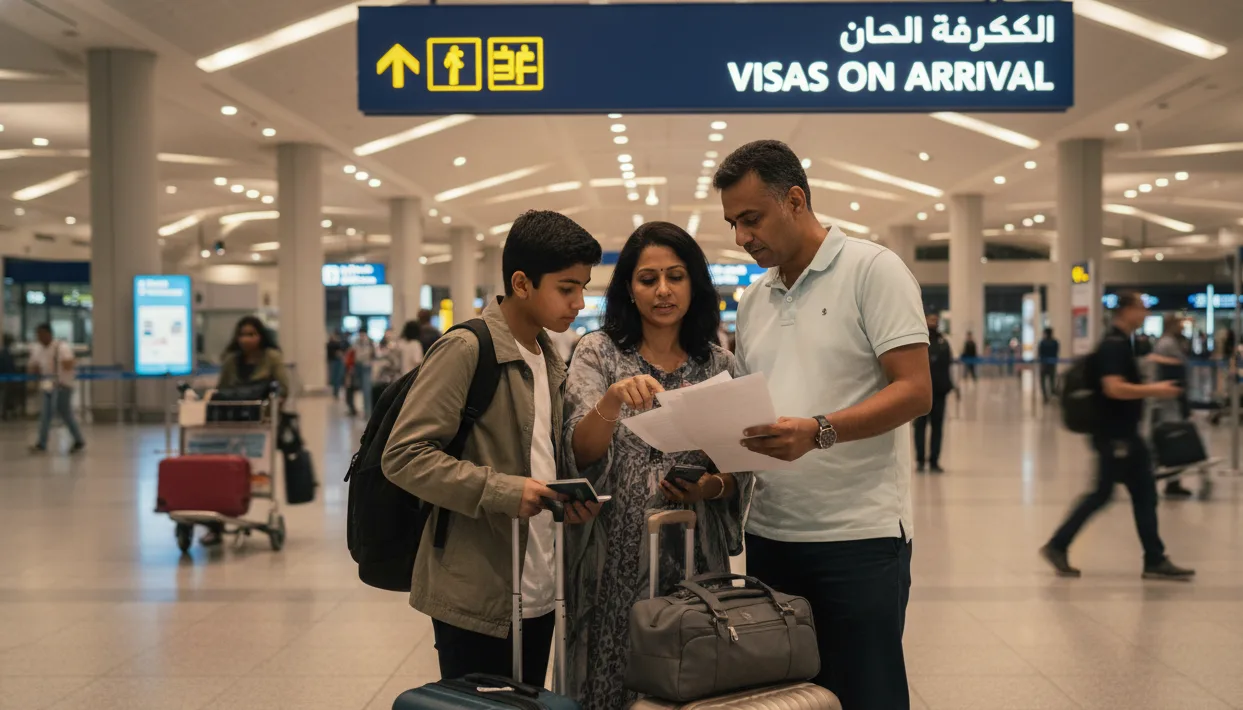
Onward proof is simple when we treat it like a story that reads in one pass. Your entry date, your stay, and your way out. That is the arc staff want to see. When the plot is clear, the questions are short.
Use this section to build evidence that answers the only real concern at the counter. You will leave on time, through a route that makes sense for an Indian traveler. Make your documents airtight with a fast dummy ticket booking.
How Airlines Think: Reduce Their Risk In 30 Seconds
Airlines check onward proof because they pay if you are denied entry. Your job is to remove doubt quickly.
- Lead With The Exit: Show the return or next-country ticket first. Date, route, and PNR visible.
- Mirror The Stay Window: Exit within the allowed days. If you are close to the limit, carry a buffer plan.
- Keep The Route Logical: UAE entry via Dubai with an exit from Abu Dhabi is fine. Show how you move between cities.
- Present Realistic Timings: No 45-minute cross-emirate dashes. Padding equals credibility.
When staff see a believable exit, everything else gets easier.
What Immigration Looks For: A Trip That Fits Together
Immigration wants to confirm three things. You will exit, you have a place to stay, and you can fund your visit.
- Onward Ticket That Matches Your Dates: Exact names and aligned stay length.
- Accommodation That Tracks Your Movement: Hotel or host details for each emirate you visit.
- Funds and Insurance In Reserve: Ready to show if asked, easy to read, and valid through your trip.
Think of this as a quick audit. You are presenting a tidy set that checks all boxes.
What Counts As Solid Onward Proof For Indian Travelers
You have options. Pick the one that matches your route and comfort level.
- Round Trip To India: The cleanest choice. Same carrier in and out simplifies checks.
- Return From Another Emirate: Works well with a simple note showing your intercity plan.
- Exit To A Third Country: Common for Gulf loops or Southeast Asia hops. Make the sequencing obvious.
- Separate Tickets On Different Airlines: Fine if names match and the dates align. Keep both PNRs ready.
Avoid open returns that look speculative. If you like flexibility, hold a changeable ticket that still shows a real seat.
Land Or Sea Exits: Make Non-Flight Plans Believable
Many readers travel to Oman or Saudi Arabia by road. That is fine. Prove the path.
- Bus Tickets or Operator Confirmations: Dates that fit your stay and border hours.
- Hotel In The Border City: Shows intent and timing. It fills the gap when coach apps do not issue neat PDFs.
- Driving With Friends: A short note with the car plate and driver contact. It is not often required, but it helps.
Land exists to pass scrutiny when the supporting details match the calendar.
Multi-Country Loops: Keep The Chain Unbroken
If you are doing UAE → Oman → Qatar → India, make each handover clear.
- One Page, Three Moves: UAE exit, Oman entry and exit, final flight home. Dates in one column.
- Emails To Yourself: Forward all confirmations to one thread titled “Loop Exit Proof.” It is fast to open at counters.
- No Conflicting Times: Check time zones so a late arrival does not collide with a same-day coach.
Everything should read like a sequence, not a puzzle.
Make Proofs Skimmable: Format Matters More Than You Think
Agents skim. Help them.
- Top-Right PNR: In your PDF or screenshot, crop so the PNR sits near the top right.
- Clear File Names: “Exit_AUH-DEL_28Feb_PNR7X3Q.pdf.” This is not art. It is a label that reduces questions.
- Screenshots Without Clutter: No notification banners. Use airplane mode or a gallery image.
- Printed Set For Peak Hours: One clip. Exit on top, then accommodation, then insurance.
Good formatting is a courtesy to the person helping you move faster.
Responsible Use Of Dummy Tickets: Keep It Real And Consistent
A dummy ticket is a tool, not a shortcut. Use it only when the situation calls for proof and your plan is still moving.
- Align With Real Dates: Do not show an exit you cannot actually make. Move the dates if your plan shifts.
- Match Names Exactly: Passport to PNR, including middle names that appear on Indian passports.
- Keep Routes Plausible: If you enter Dubai, an exit from Abu Dhabi is fine. An exit from a distant airport on a tight clock is not.
- Replace With A Live Ticket When Ready: Once your schedule confirms, switch to the actual booking.
Staff respect coherence. They challenge obvious placeholders.
Where A Verifiable PNR Helps Most
When an agent wants to check your PNR in the system, a verifiable record saves time. Use it for tight timelines or gate checks where proof must be confirmed fast.
A Practical Choice: At DummyFlights.com, we issue instantly delivered, visa-purpose reservations with a verifiable PNR and unlimited date changes. Pricing is $15, which is about ₹1,300 per reservation. Use it only when documentation is requested, and keep dates honest so your file remains credible.
Separate Tickets, Same Outcome: How To Make Them Work
Split bookings are common out of Indian hubs. Present them as one plan.
- Link The PNRs In A One-Liner: “Inbound on Indigo PNR AB12CD. Return on Emirates PNR EF34GH.”
- Show Minimum Connection Times: If your onward is the same day, point to a low-risk buffer.
- Account for Terminal Moves: Add a line about how you will transfer if airports differ.
You are not asking staff to trust your optimism. You are showing that your timing survives minor delays.
Families And Groups: Provide Everyone’s Exit In One View
Groups add complexity. Solve it with a single sheet.
- Exit Map: Names in the left column. Exit flights and dates in the right column.
- Mixed PNRs: Mark each PNR next to the name. Staff do not need to hunt through six phones.
- Guardian Details For Minors: Add the responsible adult and their PNR next to the child’s line.
This keeps the group together at counters during busy windows.
When Your Plans Shift Mid-Trip: Update Proofs Without Drama
Trips evolve. Keep your documentation evolving, too.
- Change The Exit First: Update the onward ticket, then extend the hotel. It shows you still plan to leave on time.
- Reprint Or Resave: Replace old files in your folder. Do not carry conflicting versions.
- Note The New Sequence: One paragraph to yourself summarizing the new dates. Read it before you approach the counter.
You control the narrative when your files are clean.
Common Edge Cases And How To Handle Them
These are the hiccups we see most often. All are fixable with simple moves.
- Return Flight Cancelled On Travel Day: Show the airline message, hold a fresh exit, and keep both on top. Airlines understand same-day disruptions.
- Name Order Mismatch: If your passport shows given name and surname differently from the booking, carry a second ID that matches the pattern. Better yet, fix the booking before departure.
- PNR Shows “On Hold” Or “Pending”: Bring the manage-booking link or a live status page. Ask the agent to refresh the screen if systems lag.
You are not the first traveler with these issues. Prepare two proofs, and you will be fine.
A Quick Pre-Counter Script You Can Use Anywhere
Keep this short script in your notes app. Use it before every desk.
- Opener: “Visa on arrival. Exit on 28 February. Here is the booking.”
- Follow-Up If Asked: “Accommodation at [Hotel], dates match the stay. Insurance covers the same period.”
- If Separate Tickets: “Inbound and outbound on different airlines. Here are both PNRs.”
You are guiding the check. That is how you keep it fast.
Your Onward-Proof Checklist: Five Greens Before You Fly
Run this list the night before departure.
- Exit Ticket Visible And Aligned: Date within allowed stay, realistic route.
- Accommodation In Sequence: No gaps between cities or emirates.
- PNR and Passport Names Match: Including middle names where applicable.
- Files Open Offline: PDFs and screenshots saved. Printed set clipped.
- Backup Plan Ready: Changeable fare or a placeholder you can swap quickly.
If all five are green, you are presentation-ready. Staff see order. You feel in control. And your UAE entry becomes one of the easiest parts of your trip.
Real Trips, Real Fixes: India-To-UAE Scenarios And How To Handle Each One
Plans look clean on paper. Real life adds curveballs. That is fine. When we anticipate the common patterns, we remove the surprise factor at counters and keep the trip moving.
Use these scenarios as playbooks. Pick the one that matches your plan, then copy the setup. Your documents will look confident and complete from the first hello. Switching return dates? Just book a dummy ticket and update when needed.
One-Way Into Dubai, Return From Abu Dhabi Weeks Later
You are flying into DXB and flying out of AUH. The gap is a few weeks. This is a classic multi-emirate loop for Indian travelers.
Start by aligning three items. Your entry date, your intercity move, and your exit flight.
- Book the return from AUH before you reach the Indian check-in. Keep the PNR visible in a cropped screenshot.
- Add a one-line transfer note. “Dubai to Abu Dhabi on Day 5 by coach.” Keep the coach booking if dates are fixed, or add a hotel in Abu Dhabi that starts a day before your exit.
- Make the accommodation chain read like a story. The Dubai hotel covers the first stretch. Abu Dhabi hotel covers the final week. No gaps.
At the counter, lead with the AUH exit. Then show the Dubai and Abu Dhabi hotel confirmations. Staff see a smooth handover between cities and send you forward.
Weekend Dash During Peak Events Or School Holidays
You are taking a short hop from India during a busy week. Airports feel crowded, and checks can be sharper.
Keep your file short and strong.
- Use a return that sits well within the comfortable VoA window. Short stays invite fewer questions when the route is common.
- Carry printed copies. Queues are tight, and Wi-Fi can stumble. Handing over a paper set speeds the interaction.
- Add a one-page plan that lists event dates if you are attending something big. It explains your timing and hotel choice without a long chat.
Arrive a little earlier at the origin. If staff call a UAE station to confirm capacity or event surge rules, you have the time to let them finish calmly.
Gulf Triangle: UAE To Oman To Qatar, Then Home To India
Multi-country loops are popular. The trick is to keep the handoffs clear.
Sequence it like this.
- Show your UAE exit first. For example, DXB to Muscat on Day 4.
- Next, show Muscat to Doha. Then, Doha to India. Each with dates that read cleanly across time zones.
- Keep one email thread titled “Loop Itinerary” with all tickets in order. Agents skim one thread, not five separate emails.
- Add hotels or host details that match each border. Do not leave unexplained overnight gaps.
If a bus replaces a short flight on one leg, include the operator PDF and a border city hotel for that night. It proves timing without debate.
Separate Tickets On Different Airlines, Same-Day Connection
You booked the India to UAE leg on one carrier and the onward sector on another. Same day. This is normal out of Indian hubs. Staff want to know if the plan survives a small delay.
Build margin into your schedule and show the math.
- Keep at least a two-hour buffer, more if terminals differ. State it in one line beside the PNRs.
- Confirm baggage rules. If the onward leg cannot through-check bags, show that you know you must collect and recheck. Your confidence reduces follow-ups.
- Print both airline manage-booking pages. If systems lag, the printout gets you through a manual check.
If a delay hits, present the revised onward booking quickly. You will look in control, not reactive.
Traveling With Parents, In-Laws, Or Minor Children
Family trips add split PNRs and name variations. Make it simple for the person checking your file.
- Create a group exit map. Names on the left. Flight numbers and dates on the right. PNR next to each name.
- Put child entries under the responsible adult. This avoids separate mini-interviews when queues are busy.
- If a parent has a passport with initials or a different surname order, match the booking to the passport pattern. If booked already, carry a second ID that shows the same ordering.
Present the map first. Then the tickets. Staff love a single view of the group’s plan.
Name Variations, Initials, And The Middle-Name Tangle
Indian documents can show names differently across bank cards, PAN, and passports. Airlines and immigration care about passport matching.
Fix it before you fly if you can.
- Ensure your PNR carries the full name as it appears on the passport. Middle names included.
- If your existing booking is missing a middle name, request a correction through the airline. If time is tight, carry a second ID and be ready to explain calmly with both documents visible.
- Keep your hotel reservations in the same full-name format. Small consistency signals help at busy counters.
The more exact your name handling, the faster the agent closes the file.
Enter Dubai, Exit By Land To Oman, Fly Out From Muscat
This route works well for budget and sightseeing. You will enter the UAE, leave by road, and catch a flight home from MCT.
Make the land border easy to believe.
- Book a bus from Dubai to Muscat for the correct day. If your dates are still moving, place a hotel in Sohar or Muscat for that night to show a real plan.
- Keep your India-bound ticket from Muscat ready on top. The end of the story matters most.
- Add a short note with border hours if your timing is tight. Officers appreciate proof that you checked the schedule.
Onward plans with buses pass checks when the calendar is coherent.
Working Trips With Meetings That Shift By A Day Or Two
Your dates are fluid. You will know the final return only a week before you fly. You still need an exit to show at check-in.
Structure flexibility without looking speculative.
- Hold a changeable return within the comfortable stay period. If it moves, update the file and replace the old version everywhere.
- Keep all files in one folder, not scattered across chats. When plans move, you will update once and avoid presenting stale tickets.
- Add a one-paragraph trip summary and keep it current. It is your script for every desk.
The aim is to stay flexible while maintaining a clean proof trail.
Short VoA Trip With A Day In Sharjah And The Rest In Dubai
You land at DXB, spend a day in Sharjah, then return to Dubai for the last two nights. This is common and easy to show.
- Use an accommodation that mirrors the move. One night in Sharjah. Two in Dubai. No empty days.
- Exit from DXB with enough buffer on the final morning. If you prefer AUH for the return, add a coach booking the day before.
- Keep a simple city sequence note. It prevents questions about why you hopped across Emirates.
Staff only need to see that each day leads to a clear exit.
Last-Minute Return Changes After You Arrive
Plans shift mid-trip. We plan for it.
- Move the exit first. Replace the old return with the new one in your phone folder and printed pack.
- Extend the hotel to match the new dates. Keep the updated confirmations on top.
- If you need more time than your entry stamp allows, visit the right desk early. Bring the new exit and hotel to show intent and structure.
You are not asking for exceptions. You are presenting a coherent update.
Handling Flight Cancellations Or Schedule Changes
Disruptions happen. The person at the desk needs to see your solution.
- Save the airline message that announces the change. Put it above your replacement exit.
- Rebook quickly, then present both pieces in that order. “Cancellation notice. New exit on Day 6.”
- If you switch airports for the new flight, add a short transfer note with a booked bus or car.
You show that your intent to exit never changed. Only the flight did.
Cash, Cards, And Insurance When Questions Get Detailed
Most checks are quick. Sometimes officers ask to see your support plan.
- Keep a one-page insurance certificate with your name and travel dates. Avoid a packet of policy fine print.
- Show an available balance screenshot from your travel card or bank app. Blur transactions if you prefer. Keep totals visible.
- Do not rely on UPI screenshots as your only proof. Great for payments. Not a strong immigration document.
Be ready to show the document. Most of the time, you will not need it. When you do, you will be glad you packed it.
Two-Minute Scenario Drill Before You Leave For The Airport
Run this quick drill to catch loose ends.
- Does your exit match your latest plan and stamp window
- Do your hotels cover all nights, including city hops
- Are both PNRs saved if you used separate carriers
- Do names match passport formatting, middle names included
- Do you have a printed set for peak-hour queues
If each answer is yes, you are ready. Your real-world plan now reads like a neat story. Airline staff see certainty. Immigration sees order. You see the arrivals hall sooner and start the trip the way you intended.
Stay Longer, Stay Legal: Extensions, Overstay Risk, And Keeping Your File Clean
Trips evolve. Meetings run long.. Family plans shift. That is normal. What matters is how you keep your documents aligned while the calendar moves. This section shows you how to extend cleanly, avoid overstay mistakes, and track policy changes without stress.
Read it once now. Save it for the moment you consider adding a few more days.
Extending Your Stay Without Stress
Extensions are straightforward when your proof stack stays tidy. Think of it as a mini replay of day one, with updated dates.
Start early: Begin the extension process several days before your permitted stay ends. A clean buffer shows intent and avoids last-day queues. Officers focus on whether your normal passport is valid for the whole stay and whether your onward plan is realistic.
Carry the same core documents: Passport, entry stamp photo, updated onward ticket, and extended accommodation. Keep them in the same order you used upon arrival. If you traveled on a visit visa earlier and switched plans, keep the change trail clear.
Show a clear new exit: The fresh return or onward ticket is your anchor. Officers want to see that you still plan to leave on time. If you paid a visa fee upon entry, keep the receipt with your revised file.
Match accommodation to the new dates: No gaps. If you are switching hotels or moving emirates, keep confirmations in sequence. A confirmed hotel reservation that mirrors your exit date is the simplest proof.
Keep insurance current: Extend coverage to match the new timeline. A one-page certificate is enough. If your policy required a colour photograph or ID at purchase, carry a colour copy with your pack.
You are proving continuity. Yesterday’s plan, plus a few more days,is still structured and credible.
When Plans Change Mid-Trip
You can change your mind and stay longer. Just update your files in the right order.
Change the exit first: Secure a new onward or return that remains within the allowable stay once extended. Replace the old ticket everywhere. If your carrier rates are non-refundable, decide quickly so you are not paying twice.
Extend the hotel next: Confirm accommodation that covers every night until departure. Save and print the new confirmation. If a family member joins late, add their booking to the same folder.
Revise your one-page summary: Update dates and flight numbers. This becomes your script for any counter conversation. If a travel agent helped you book, keep their application form or change note attached for clarity.
Clean up duplicates: Delete outdated PDFs from your phone folder. You do not want to show conflicting dates by accident. If you changed to a new passport mid-trip, keep both numbers listed so records link cleanly.
These small actions protect you from confusion at immigration or airline desks.
Overstay Risks To Avoid
Overstays create problems that follow you. You can prevent them with simple checks.
Know your day count: Do not guess. Count the permitted days from the stamp or e-permit and note the validity period. Add a small low-riskty margin to your exit.
Watch midnight departures: A 00:45 flight on the next day is a different date. If your permission ends at midnight, move the flight back a day or extend officially. Consider airport transit time when you pick flights.
Do not assume grace periods: Treat the stamped or recorded date as final. If you need more time, apply to extend. Immigration authorities look for intent and order, not assumptions.
Keep proof of extensions: Save the receipt, reference number, and updated permission record. Photograph them and email the set to yourself. If a regular paper visa was used in the past, keep that scan in your archive.
Resolve issues before airport day: If a hotel or airline change puts your exit close to the limit, adjust earlier in the week. Last-minute fixes are where mistakes happen. Avoid relying on handwritten passports or any unclear scans; machine-readable passports keep verification smooth.
An overstay can affect future applications and airline checks. Staying inside the lines keeps travel smooth for months, not just days.
If You Are Close To The Limit
Sometimes the calendar backs you into a corner. Move quickly and clearly.
Bring a strong exit: Rebook to an earlier date if needed. Show the ticket first at any desk. If you obtained an entry visa with a single entry, do not plan to hop out and back without checking conditions.
Shorten the hotel stay: Align your checkout with the new flight. Keep the chain clean. If your booking shows months of validity by mistake, correct the dates and keep the updated email.
Carry a short note: One sentence that explains the change. “Meeting finished early, new return on 24th.” You are not asking for sympathy. You are signaling an order. If asked to provide proof of a schedule change, show the message thread.
Tidy evidence turns a tight situation into a routine check.
Handling Refusals Or Secondary Checks
Secondary checks feel intense. You can manage them with structure and calm answers.
Stay disciplined with your file order: Exit first, then hotel, then insurance. Repeat the same sequence each time you are asked. If the officer requests additional documents, hand them in the same order.
Answer only what is asked: Keep responses short and clear. Dates, hotel name, and exit flight. No long stories. If they need UAE visa information, point to the page or receipt you saved.
Provide a second proof if needed: A printed copy or a different screenshot of the same booking can unlock a slow system. A colour photograph of the entry stamp often helps when printers are down.
Note officer guidance: If the officer gives specific instructions, write them down and follow them exactly. This prevents repeat checks later in the trip. If they reference the general directorate website for updates, save that link in your notes.
Secondary checks are about clarity. When your documents are consistent, they end quickly.
Keeping Pace With Policy Updates
Rules and processes evolve. You want the newest information before you lock your plans.
Check close to departure: Review airline advisories and airport pages in the week before you fly. Do not rely on month-old notes. Some notices show visa requirements by the applicant’s nationality and route, so read the right line.
Confirm with your carrier: If your trip has separate tickets or a land exit, call the airline and confirm what the check-in team expects to see. If you must track the UAE visa application status for a pre-arranged plan, keep the reference handy.
Rehearse the current script: Adjust your one-page summary to reflect any new document recommendations. Present what staff are asking for today, not last season. If a white background is requested for a uae visa photo on any extension form, keep a compliant image ready.
Staying current takes minutes. It removes hours of uncertainty.
Insurance, Funds, And The Support Docs That Settle Questions
Most of the time, officers wave you through once the exit and hotel are clear. Still, bring comfort documents that answer deeper questions if they appear.
Insurance certificate: One page with your name and coverage dates. Keep a hotline number visible. If a birth certificate or marriage certificate helps connect dependents to the booking, add a scan.
Funds snapshot: A bank or card app screenshot showing available balance. Blur transaction details if you prefer. Carry some foreign currency for small payments during service visits.
Host confirmation when staying with family: A short message or letter with the address and phone number. Keep it polite and factual. If a residence permit issued by another country supports your profile, keep that card ready.
These are the extras that calm a conversation when staff need more assurance.
If Your Airline Or Hotel Plans Collapse
Cancellations, relocations, and double bookings happen. The key is to show that you solved the problem quickly.
Document the disruption: Save the cancellation email or message at the top of your file stack. If the airline mentions several factors for rebooking priority, note the relevant line.
Present the fix: New flight or hotel right below the cancellation proof. Officers appreciate the order. If you swapped carriers, keep both PNRs visible. For double-entry or single-entry questions, show the current ticket and clarify your exit.
Keep the sequence intact: Your revised exit still sits within your allowed stay. Your new hotel covers every night. If a refund is pending, note that separately so it does not clutter the exit chain.
You are not asking for exceptions. You are presenting a clean replacement plan.
Building A Simple Compliance Toolkit
Create a repeatable system that survives trip changes.
One master folder on your phone: “UAE Current Docs.” Move outdated files to an “Archive” subfolder so you never show the wrong version. If you hold a valid visa from another country, keep a scan in the archive.
A one-page trip summary: Arrival date, hotel chain by city, exit flight, and PNRs for split tickets. Update it whenever the plan moves. If you used an e visa for a prior leg, mark it as completed.
A printed set for peak times: Clip in order. Exit, hotel, insurance, summary. Keep one spare set in your carry-on. If you must visit New Delhi for any consular errand later, carry the same pack.
Offline first: Assume patchy Wi-Fi. Store PDFs and screenshots locally. Email the latest set to yourself as backup. Keep a colour copy of your valid passport in the same folder.
Calendar alerts: Set reminders for extension deadlines, hotel checkouts, and flight departure day counts. A 60-day look-ahead catch prevents last-minute scrambles.
This small toolkit turns last-minute changes into routine admin.
Name Accuracy And Document Consistency
Name issues create delays that you can avoid with one careful check.
Mirror the passport: Ensure bookings carry the name exactly as printed, including middle names where applicable. Holders of a normal passport valid for the trip should match every letter on the tickets.
Fix what you can before you fly: Request corrections if a ticket misses a middle name or uses initials that the passport does not show. If you need a travel document update, start early because visa processing time may vary.
Keep the pattern across hotels and insurance: Consistency at every touchpoint is a quiet but powerful signal. If you have ever held a green card or a residence permit, keep the dates separate so the staff do not confuse statuses.
Every exact match shortens the time an officer spends on your file.
Leaving Cleanly After An Extension
You extended. Now you are heading home. Finish as neatly as you started.
Verify the new permission window: Confirm that your exit falls comfortably within the updated allowance. Check the minimum validity on your documents if the airline lists it.
Carry the extension proof on top: Receipt, reference, or permit page. Show it with your passport if asked. If the service center references citizens or UAE nationals in notices, know that those lines do not apply to you.
Match every date: Hotel checkout and flight date line up, with no late-night surprises. If you need a business visa next time, keep this clean exit as part of your history.
A tidy exit keeps your profile strong for the next trip.
Quick Decision Trees For Common What-Ifs
Use these two-step checks when the plan moves.
Need three extra days
Step 1: Book a new exit within the extended window. If you need a new route, check whether you need a visa for any connection.
Step 2: Extend accommodation to match. Update insurance if needed. If the service charges are non-refundable, pick the shortest low-risk option.
Return flight cancelled on departure day
Step 1: Rebook the earliest possible exit within your permission. If a travel agent assists, ask them to obtain a written change note.
Step 2: Show the cancellation message above the new ticket. Keep a colour copy of both for the counter.
Moving from Dubai to Abu Dhabi for a new return
Step 1: Add a transport or a hotel in Abu Dhabi the night before the flight. Keep your VOA facility stamp photo handy.
Step 2: Replace older confirmations so your set has one coherent chain. If any application mentions medical purposes or transit time, carry that note separately.
Decision trees keep you action-focused. Two moves and you are back to a clean file.
The Mindset That Protects Every Trip
Compliance is not complicated. It is a habit.
Update fast: When dates move, change your exit first, then your hotel. Replace old files right away. If the portal asks you to track UAE visa application updates, note the reference.
Stay consistent: Names and dates match across every document. No gaps. No overlaps. Respect the minimum validity on every card you carry.
Present calmly: Short answers. Clear evidence. Same order every time. If asked who the applicant is, state your details plainly and confirm you are eligible under the current rules.
Do this, and you will not need to argue policies or memorize edge rules. Your documents tell a simple story. Officers say yes quickly. You walk out with time to spare and the confidence to plan your next visit whenever you like.
Need onward proof for a UAE arrival or airline check?
DummyFlights creates visa-focused dummy ticket PDFs with passenger details, route logic, PNR-style booking information, flexible date changes and transparent pricing at $15.
Arrive Ready, Leave On Time
You have everything you need to make the UAE visa on arrival feel routine. Keep your onward plan clear, your accommodation in sequence, and your support docs within reach. When plans shift, update the exit first, then hotels, and keep one tidy summary on top. That calm, consistent story is what airline staff and officers want to see.
Before you fly, run a two-minute check: dates align, names match, files open offline, and you have a realistic way out. Do that, and the airport becomes the easiest part of your trip. Smooth entry, controlled exit, and more time to enjoy the reason you came. Be airport-ready in one step—start your dummy ticket booking today.
Dummy Ticket for UAE Visa on Arrival FAQs
Do I need a dummy ticket for UAE visa on arrival?
You do not need a dummy ticket to qualify for UAE visa on arrival. You may need onward or return proof at airline check-in or arrival, and a genuine temporary reservation can help if it matches your real exit plan.
Who qualifies for UAE visa on arrival in 2026?
Eligibility depends on nationality, passport type and qualifying visas or residence permits. Emirates lists eligible Indian nationals with certain US, UK, EU or listed residence/visa documents, while GDRFA and UAE MoFA list selected expanded nationality/residence-permit routes.
Can Indian passport holders get UAE visa on arrival?
Some Indian passport holders can, but not all. The usual route requires a normal Indian passport plus qualifying US, UK, EU or listed residence/visa documentation with required validity.
Does UAE immigration require a return ticket?
Travelers should be ready to show a return or onward plan when asked. Airlines may also ask before boarding because they are responsible for document checks.
Can a dummy ticket be used as onward proof for UAE travel?
A genuine temporary reservation can support an onward or return plan, but it must be accurate, consistent and appropriate for the trip. It cannot replace visa-on-arrival eligibility.
Is UAE visa on arrival the same as a transit visa?
No. Visa on arrival is an entry route for eligible travelers. A transit visa applies to short UAE stopovers when you leave the airport and meet transit requirements.
What documents should I carry for UAE visa on arrival?
Carry your passport, qualifying visa or residence permit if relevant, onward or return proof, accommodation details, funds access, insurance if available, and copies saved offline.
What if my UAE visa-on-arrival eligibility is unclear?
Check official airline, GDRFA, ICP or UAE mission guidance before travel. If eligibility is uncertain, arrange a pre-approved tourist visa or entry permit rather than relying on arrival discretion.
Can I extend a UAE visa on arrival?
Extension rules depend on the visa-on-arrival category. GDRFA lists some 14-day routes as extendable once for a similar period and some 60-day routes as not extendable.
What is the biggest mistake with dummy tickets for UAE arrival?
The biggest mistake is using onward proof to cover an eligibility problem. First confirm you can enter, then use clean flight proof only to show how and when you plan to leave.