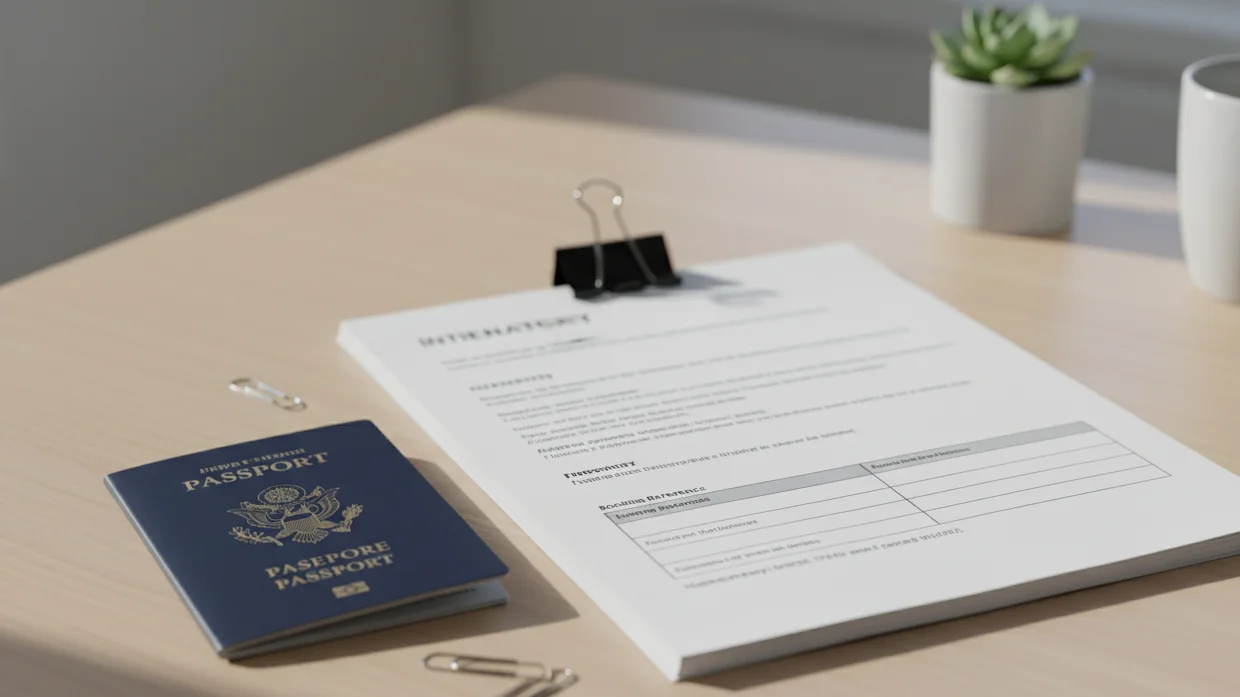
Emergency Dummy Ticket Before Embassy Appointment: What To Do
Last-Minute Dummy Ticket for Visa: Same-Day Embassy-Ready Flight Reservation (2026 Guide)
Your embassy appointment is tomorrow, and the staff expects a clean, believable flight plan on paper. Not a story. Not a half-finished screenshot. A reservation that matches your form dates, your leave window, and the route you can actually fly. When your timeline is tight, even small mismatches can turn into extra questions at the counter.
We’ll help you make the right last-minute move without creating new risks. You’ll know whether to replace your reservation, repair what you already have, or keep it and change how you present it. We’ll cover what gets checked in seconds, what looks suspicious when it’s rushed, and how to keep your file stable after the appointment so you do not trip verification later. Bring an embassy-ready dummy ticket that matches your application dates for tomorrow’s appointment.
emergency dummy ticket before embassy appointment is a situation many travelers face when appointments are scheduled suddenly or supporting documents expire unexpectedly. In 2026, embassies increasingly expect applicants to present clear, consistent proof of travel—even when preparing last-minute submissions—making document timing more important than ever.
When dealing with urgent appointments, applicants must ensure that any dummy ticket or travel itinerary aligns perfectly with other documents such as hotel bookings, invitation letters, and financial statements. Embassies review all information for coherence, especially in accelerated submissions. Understanding how to prepare a clean, accurate itinerary under time pressure helps reduce the risk of delays or additional document requests during urgent visa processing in 2026.
Last updated: February 2026 — Informed by current embassy processing behavior, urgent-case documentation patterns, and consular verification practices.
Table of Contents
- The First 30 Minutes: Decide What You Actually Need Before You Change Anything
- How Embassies Verify A Last-Minute Itinerary (And What Fails In Seconds)
- Build An Appointment-Ready Flight Reservation Packet That Doesn’t Create Questions
- Your Dates Aren’t Final: How To Stay Flexible Without Looking Suspicious
- Red Flags That Blow Up Emergency Reservations (And The Safer Alternatives)
- Embassy-Day Tactics: How To Present The Reservation Without Triggering More Questions
- After The Appointment: Keep Your File Stable Until A Decision (Without Creating New Risks)
- Leave The Counter With One Clear Story
When starting your visa application early, having a solid dummy ticket for visa can make all the difference in presenting strong visa application proof right from the beginning. Many travelers turn to a reliable dummy airline ticket generator with PNR to create temporary flight itineraries that align perfectly with their planned travel dates and routes. This approach eliminates financial risk because you don't need to commit to expensive real tickets upfront, allowing you to focus on gathering other required documents like bank statements and invitation letters without pressure. Tools like these provide instant, verifiable reservations that embassies recognize as valid proof of onward travel intentions. By using such services, you ensure your dummy ticket matches every detail in your application form, reducing the chance of discrepancies that could delay approval. Whether you're applying for a Schengen visa or a UK visitor visa, starting with a risk-free PDF version gives you peace of mind and keeps your plans flexible until the visa is granted. Explore how a professional dummy airline ticket generator with PNR can streamline your early-stage visa planning today and boost your confidence in the application process.
The First 30 Minutes: Decide What You Actually Need Before You Change Anything

When your embassy appointment is close, speed matters. Precision matters more. The goal is not to look fancy. The goal is to look consistent.
Start With The Clock: Same-Day, Next-Day, Or “This Week” Appointment?
If your appointment is in hours, you are not polishing a travel dream. You are presenting a flight plan that needs to hold up at a counter, with limited time for explanations.
Same-day appointment (today):
-
Get one clean, readable reservation PDF that matches your application dates.
-
Skip multi-city complexity and tight connections.
-
Timebox it: 15 minutes to choose, 15 minutes to print.
Next-day appointment (tomorrow):
-
Align dates across your form, cover letter, leave approval, and itinerary.
-
Fix small issues like name format and segment visibility.
-
Keep one stable version so you do not show conflicting pages.
“This week” appointment (3–7 days out):
-
Pick an itinerary you can keep stable through follow-ups.
-
Avoid tweaks that create new versions.
-
Make sure it matches what you already submitted online.
Pack for the process, not just the trip. Print a copy that is easy to file, and keep the same PDF on your phone in case they ask you to resend it to a visa center email address.
In many Schengen appointments handled through visa centers, staff often want a clear itinerary page they can file quickly. In other processes, the ticket may not be the centerpiece, but inconsistencies can still trigger questions. Your safest move is a coherent plan that does not contradict anything else in your file.
A simple rule works worldwide: the closer the appointment, the more you optimize for clarity over creativity.
The Three Outcomes: Replace, Repair, Or Reframe Your Existing Reservation
In the first 30 minutes, we make one decision. Do you need a new reservation, a cleaner version of what you already have, or a better way to present the same plan?
Replace when:
-
The booking reference or PNR is missing, hard to find, or inconsistent.
-
The document is a cropped screenshot with cut-off headers or blurry text.
-
The passenger name or dates conflict with your application.
Repair when the plan is fine, but the presentation is risky:
-
Key fields are buried or hard to read at a glance.
-
One segment is missing, or the return leg is not clearly shown.
-
The print layout cuts off flight numbers or dates.
Reframe when the itinerary is acceptable, but your wording will trigger questions:
-
Your dates are flexible, but your supporting documents show a fixed window.
-
Your cover letter makes the booking sound final when it is only a plan.
-
You are about to over-explain instead of letting the document speak.
Here is a fast tie-breaker: if you cannot “repair” it in ten minutes without creating a second version, replace it. Time pressure punishes half-fixes.
Two guardrails prevent panic edits:
-
One-file rule: carry one version into the appointment. Do not print two “options.”
-
Same-story rule: if you uploaded an itinerary online, keep the appointment version aligned unless you are correcting a clear mismatch.
This is not about acting perfectly. It is about removing friction points that invite extra probing.
Your “Mismatch Scan” Checklist (Fast, Brutal, Accurate)
Consular staff do not need special tools to spot problems. The file exposes them when two documents disagree. Run this scan before you edit anything else.
Identity alignment
-
Full name spelling matches the passport, including spacing and sequence.
-
Your reservation does not drop or add a given name compared to the form.
-
Passport number matches wherever it appears.
Date alignment
-
Departure date matches the dates on the application form.
-
Return or onward date matches the trip length you claim in writing.
-
Leave approval covers the travel window you show.
-
Date format stays consistent across your packet.
Route alignment
-
The departure city makes sense for where you live and where you will start your trip.
-
Arrival city matches the destination you declared.
-
Connection points look plausible for your purpose and trip length.
Submission alignment
-
If you already uploaded documents, your printed itinerary should not introduce a new route you never mentioned.
-
If a change is unavoidable, make sure the new itinerary solves one clear issue, like corrected travel dates or a corrected name, not a brand-new travel idea.
If you find more than two mismatches, pause. Replace or repair first. Explanations rarely fix a messy file under time pressure.
Decide The Route Style That Fits Your Case (Not Your Fantasy)
Your route is part of your credibility. Emergency reservations fail when they look engineered to impress instead of built to travel.
Choose direct when your file needs simplicity
-
Fewer segments mean fewer places for inconsistencies to appear.
-
Short trips read cleaner with straightforward routing.
Choose one reasonable connection when direct is not realistic
-
One connection with a workable layover looks normal in most regions.
-
Avoid overnight layovers unless your trip logic supports it.
-
Keep the connection consistent with your story. A business trip with a long detour looks like uncertainty, not planning.
Round-trip versus onward
-
If your story relies on a clear return, a round-trip format often reads cleaner.
-
If your plan is open within a defined window, onward can still work, but your dates must be consistent everywhere.
Timing realism
-
Ultra-tight connections can look like a mistake, even if they exist.
-
A return flight that lands after you leave creates an avoidable mismatch.
A strong emergency itinerary looks ordinary. It matches your paperwork. It avoids cleverness.
Sometimes the most realistic international departure point is not your home airport. A domestic leg can still look credible, but only if it stays simple and serves a real logistical reason.
Keep the domestic connection defensible:
-
Make sure it fits your appointment timeline and your stated starting city.
-
Build in realistic buffers so the itinerary reads like something you would actually attempt.
-
Do not add extra hops just to reach a bigger hub.
If you do not need the domestic leg, remove it. Every added segment is one more place for a mismatch to appear on paper.
Once you know whether you are replacing, repairing, or reframing, the next step is understanding what consulates can verify in seconds and what collapses immediately under a quick check.
How Embassies Verify A Last-Minute Itinerary (And What Fails In Seconds)

A last-minute flight reservation can work well at an embassy appointment, but only if it survives quick scrutiny. Here, we focus on the exact checks that happen fast, quietly, and sometimes without you realizing it.
The 10-Second Test At The Window: What They Visually Check First
At many consulates and visa centers, the first screening is visual. It is not about proving you already flew. It is about deciding whether your travel plan looks coherent enough to file without a back-and-forth.
They look for instant clarity in four places:
-
Passenger Identity Block
Your full name should be obvious and consistent with the rest of your file. If the document uses initials or trims a name that appears in your application, it invites a second look. -
Booking Reference Visibility
A booking reference or PNR should be easy to spot. If it is hidden in a corner, cut off by margins, or buried in tiny text, the staff member may treat the page as incomplete. -
Route And Date Readability
The route needs to read cleanly as a timeline. If the outbound date is visible but the return is unclear, or the segments appear out of order, it looks like a patchwork. -
Flight Segment Completeness
They want to see the full travel arc that matches your visa story. For a short Schengen tourist trip, two clear legs often read better than a maze of connections. For a business visit, the dates should align with the meeting window you describe.
This is where rushed formatting fails. A perfectly valid reservation can still create friction if it prints poorly. Embassies deal with hundreds of files. If your page creates work, you will feel it in the questions that follow.
The Quiet Verification Paths: What Can a Dummy Ticket For Visa Application Be Checked Without Telling You
Not every application is “verified” the same way. Some posts rely heavily on document consistency. Others have staff who are comfortable doing quick plausibility checks based on experience. Either way, you should assume your itinerary might be evaluated beyond the paper surface.
Here are realistic ways they can sanity-check a last-minute itinerary without any drama:
-
Cross-Checking Your File Internally
They compare dates against your application form, travel purpose, leave letter, invitation letter, and trip length. A UK visitor file with a five-day itinerary, but a cover letter describing three weeks creates a mismatch that does not require any external system to spot. -
Plausibility Checking Flight Details
Flight numbers, airport pairs, and timing can be checked for “does this exist” logic. This is not always a formal lookup. It can be an experienced glance that flags a route that does not fit your narrative. -
Pattern Recognition Across Applications
Consular teams see repeated document styles and common formatting issues. If a PDF looks like a stitched screenshot with inconsistent typography, it may receive extra attention, even if the plan itself is reasonable. -
Follow-Up Verification Later In The Process
Some checks happen after biometrics or after the interview, especially when the case is borderline. A reservation that looked fine at the window can still become a question if your documents later conflict.
What matters in emergency situations is predictability. If your itinerary matches the rest of your packet cleanly, it usually stays a “file and move on” item. If it introduces new ambiguity, it becomes a conversation.
The “Looks Fake” Triggers That Are Common In Emergency Bookings
A last-minute reservation does not need to look suspicious. But rushed handling can accidentally create signals that feel off in an embassy setting.
Here are the most common triggers that cause unnecessary questions, even when your travel plan is legitimate:
-
Phone Screenshot Artifacts
Cropped edges, status bar remnants, uneven scaling, and blurred text from zooming. Staff see these all the time. It reads like “unfinished paperwork,” which slows the interaction. -
Inconsistent Date Formats Across Your Packet
Your itinerary showing 03/04 while your form uses 04/03 can create confusion. In some posts, that confusion becomes a credibility issue, especially if it changes the trip length. -
Missing Context Fields
A page that shows airports and dates but hides the passenger name, booking reference, or segment details. Even if those details exist elsewhere, the single page in front of them looks incomplete. -
Over-Edited Layout
PDFs that show uneven spacing, misaligned rows, or text blocks that do not line up. That visual “handmade” feel is what triggers follow-up requests. -
Too Many Versions In One Folder
If you hand over two different itineraries “just in case,” you create doubt. If one has different dates from the other, the staff member now has to decide which story is true. -
Route Logic That Fights Your Purpose
A short Japan tourist visit that routes through three countries with long layovers reads like indecision. A business visit with an overnight detour reads like a plan that was assembled to look complex.
Notice what is not on this list. It is not about whether you already paid for a ticket. It is about whether your itinerary behaves like a normal, coherent travel plan that fits your declared timeline.
When They Ask For “Proof”: What Counts As Strong Supporting Evidence
Sometimes the itinerary is not the problem. The problem is what the itinerary implies. When an officer or visa center staff member asks for “proof,” they are often asking for something simpler than people assume: a reason to believe your dates and purpose are anchored.
Strong support is specific and aligned, not heavy.
Here are examples that tend to work across many tourist and visitor contexts:
-
A Leave Or Availability Anchor
An employer leave letter with dates that match your travel window. For self-employed applicants, a business document that explains your operational timeline can serve the same role. -
An Event Or Appointment Anchor
A conference registration, meeting schedule, or invitation letter that places you in the destination during those dates. This is common in Schengen business files and can also matter for visitor visas, where purpose clarity is critical. -
A Short Cover Note That Keeps The Story Stable
One paragraph that ties dates to a real constraint. Keep it practical. For example, “Travel is planned within approved leave dates, and final ticketing will follow visa issuance.” That line supports the timeline without inviting a debate. -
Financial Coherence
Your bank statement does not need to “prove” a flight purchase. It needs to support the trip length and overall plan. If your itinerary suggests a two-week trip but your funds only support a short stay, the itinerary becomes a pressure point.
If your itinerary is last-minute, support should reduce questions, not add new ones. Avoid attachments that create side stories, like multiple screenshots, email chains, or conflicting travel drafts.
Don’t Over-Explain The Tool—Explain The Plan
When you are nervous, it is tempting to explain the mechanics of how the reservation was obtained. That usually backfires because it shifts the conversation away from your travel plan and toward process details that staff did not ask for.
Here, we focus on keeping your answers aligned with embassy expectations.
If you get a direct question, keep your response short and anchored:
-
“Is This Confirmed?”
Answer in a way that reinforces the plan and your intent to finalize after the visa decision. Keep your tone calm. Do not volunteer extra details. -
“Why These Dates?”
Link to your leave window, event schedule, or planned trip length. The goal is consistency, not persuasion. -
“Why This Route?”
Give a simple logistical reason. Direct availability, reasonable connection, and arrival timing. Avoid long travel narratives. -
“Will You Change It?”
Emphasize that the plan will stay consistent with your travel window. Staff worry about shifting stories more than shifting seat numbers.
There is a big difference between flexibility and instability. You can be flexible with exact travel times while staying stable on purpose, duration, and overall routing.
Once you understand what can be spotted quickly and what can be checked quietly, the next step is building a clean appointment-ready reservation packet that reduces questions before they start.
Build An Appointment-Ready Flight Reservation Packet That Doesn’t Create Questions

When you walk up to a Schengen visa center counter, a Japan consulate window, or a UK visitor submission desk, your flight reservation should be easy to file in under a minute. Here, we focus on building a packet that reads cleanly for an embassy workflow, not just for you.
The Ideal One-Page Reservation Print: What Must Be Easy To Find
At many Schengen short-stay appointments (including visa-center handoffs), staff often scan your itinerary page like a checklist, not like a story.
Your one-page print should make these items obvious without searching:
-
Passenger Name Exactly As Filed
If your Schengen C-visa form uses your full given names, your itinerary should show the same sequence so the file does not look split across identities. -
Booking Reference Or PNR In One Clear Spot
When a Japan Temporary Visitor file is reviewed quickly, a visible reference reduces “what is this document” questions, even if they do not verify it in front of you. -
Full Routing With Airports And Dates
A UK Standard Visitor file often gets cross-checked against your stated dates, so both outbound and return should be visible in the same view. -
Flight Numbers And Carrier Details That Read Like A Normal Booking
A Canada TRV packet can be reviewed later, so your segment details should still make sense when read days after submission. -
Trip Length That Matches Your Visa Narrative
A US B1/B2 interview summary may rely on consistency more than attachments, but a short, coherent itinerary still supports a clear timeline when asked.
If your reservation spans multiple pages, choose the page that shows the complete journey arc, not the page with fine print. For a Schengen tourist plan, the cleanest print is usually the itinerary summary page that includes both legs in one view.
The “Two-Print Rule”: One For Them, One For You
Many visa centers handling Schengen, UK, and Australia visitor submissions keep your documents, and you may not get back what you hand over.
Bring two prints because the embassy workflow often creates small moments where a second copy saves you:
-
They Keep One Copy For Filing
In Schengen visa-center processing, the itinerary page often goes straight into a physical bundle, and you do not want to lose your only clean copy. -
You Keep One Copy For Questions
If a Japanese embassy counter asks, “Which date are you returning?” you can answer calmly when you can see the same page they see. -
You Keep One Copy For A Follow-Up Email
If a UK visitor file gets an additional document request, your retained copy helps you resend the exact same version, not a slightly different one.
Treat your “for you” copy as a reference tool. Use a light pencil mark only if it helps you point to dates under stress, and never write notes that could be misread in a consular context.
If your appointment is at a US consulate where you may not submit a full packet the same way, the second print still helps you stay consistent when the officer asks about dates and routing.
Add A Micro Cover Note (60–90 Words) Only If Your Dates Are Still Flexible
A micro cover note is useful when your itinerary is reasonable, but your dates can still move within a window, which is common in Schengen tourist planning and frequent in UK visitor planning around leave approvals.
Use it only when it prevents a predictable question.
Use it when:
-
Your leave approval is “between” two dates, and you chose a departure day inside that range for a Schengen short-stay plan.
-
Your invitation letter anchors a week, but your return date is set a few days later for a Japan Temporary Visitor trip.
-
Your UK visitor timeline is tied to an event, but you selected flights that fit the same week without buying a final ticket yet.
Keep it short, factual, and non-technical. Avoid explaining reservation mechanics in a way that invites debate at a visa counter.
Here is a sample 60–90-word note that fits a Schengen short-stay filing style while staying neutral:
We are planning travel within the dates listed in our application and supporting documents. This flight itinerary reflects the intended routing and travel window for the trip, including a return date that aligns with approved leave and the planned length of stay.
Final ticket purchase will be completed after the visa decision, so the itinerary remains consistent with the approved schedule. If any date adjustment is required, it will remain within the same travel window stated in the application.
If your appointment is for a US B1/B2 interview where attachments may not be collected, you can still use the same wording as a speaking anchor, not as an extra paper.
If you need an appointment-ready flight reservation quickly for a Schengen visa center or a visitor visa file, DummyFlights.com can provide instantly verifiable reservations with a PNR and PDF, unlimited date changes, transparent pricing of $15 (about ₹1,300), worldwide visa use, and credit card acceptance.
The “Print Quality” Details That Matter More Than People Think
Embassy staff and visa-center agents handle documents fast, and print quality issues create slowdowns that feel like “something is off,” especially in Schengen and UK paper-heavy submissions.
Focus on these details because they affect how your reservation is perceived at the counter:
-
Use A Full-Page Print With Safe Margins
A Schengen visa center often scans and staples documents, and cut-off margins can hide your PNR or passenger name. -
Avoid Screenshot Scaling
A Japan consulate clerk may read your itinerary under bright window lighting, and tiny screenshot text increases the chance they miss a critical date. -
Keep A Consistent Paper Size And Orientation
A UK visitor packet that mixes portrait and landscape pages can look messy when filed, and messy files get more handling. -
Choose A Clean File Name For Digital Backups
If an Australian visitor's file later requires email resubmission, a clear filename like “Flight_Itinerary_Name_Date.pdf” prevents confusion on the receiving end. -
Use High-Contrast Printing
A Canada TRV review may happen days later, and faint gray text can make the itinerary look incomplete when reopened.
If you are printing at a shop right before a Schengen visa-center slot, ask them to print at 100% scale with clear margins. That single instruction often fixes cut-off headers and cramped segments.
Also, keep a PDF on your phone that matches the print exactly. For consulates that sometimes ask for an emailed copy after intake, matching versions prevent accidental contradictions.
When You Should Not Add Extras
In an embassy context, extra pages do not always strengthen your file. They can create new questions, especially when the extras do not match the core itinerary.
Skip extras when they add noise:
-
Do Not Attach Multiple Itinerary Options
A Schengen short-stay file with two different return dates looks like you are undecided about the trip length, and the trip length is a core assessment point. -
Do Not Add Long Email Threads
A UK visitor submission that includes email back-and-forth about changing dates can look like instability, even if your final plan is coherent. -
Do Not Add Airline App Screenshots
A Japan Temporary Visitor packet that includes app screens can create mismatched timestamps and date formats that do not appear on your printed itinerary. -
Do Not Staple Random “Proof” Pages That Conflict With Your Story
A Canada TRV packet with extra pages that show different destinations than your form can shift attention away from your stated purpose. -
Do Not Highlight Unnecessary Details
A US B1/B2 interview is often short, and highlighted blocks can make you look rehearsed, while a clean itinerary and calm answers usually work better.
If you feel tempted to add “one more thing,” add consistency instead. Make sure your itinerary dates match your application dates, your route matches your declared destination, and your file contains only one version that you can repeat confidently at the counter.
Once your packet is clean, the next challenge is handling flexible travel dates without creating suspicion in visa files that depend heavily on consistency.
Booking a dummy ticket online offers unmatched convenience when you need quick visa documentation without the hassle of traditional travel agencies. With secure platforms, you receive an instant download dummy ticket PDF for visa that complies fully with embassy requirements, ensuring your onward ticket for visa stands up to scrutiny at any consulate. The process is straightforward: select your travel dates, passenger details, and preferred route, then complete the secure payment to get your professionally formatted reservation delivered directly to your email within minutes. This method not only guarantees data protection through encrypted transactions but also provides a verifiable PNR that major airlines recognize, making it ideal for dummy booking scenarios where proof of travel is essential. Unlike risky free generators, legitimate online services deliver clean, printable PDFs that avoid common formatting issues seen in screenshots or makeshift documents. Travelers appreciate the ability to make unlimited changes if plans shift before the appointment, all while maintaining full compliance. If you're preparing your dummy ticket submission, consider downloading a dummy ticket PDF for visa to experience seamless, secure support that keeps your application on track without any hidden fees or delays.
Your Dates Aren’t Final: How To Stay Flexible Without Looking Suspicious
A last-minute embassy appointment forces you to choose dates before your life is fully settled. Here, we focus on how to keep that uncertainty looking normal inside visa systems that reward consistency.
The Core Principle: Flexibility Is Normal, Inconsistency Is Not
Consulates understand that most travelers do not buy final flights before a decision. Schengen short-stay applicants do it. UK Standard Visitor applicants do it. Japan Temporary Visitor applicants do it. The part that causes trouble is not flexibility. It is when your file tells two different timelines.
Flexibility looks like this in a Schengen C-visa file: your itinerary sits inside a clear travel window, and every document supports that same window.
Inconsistency looks like this in a UK Visitor file: your online form says you will arrive on the 10th, your flight page shows the 14th, and your leave letter covers the 9th to the 13th.
Embassy staff react to inconsistency because it creates risk. They cannot tell if you made a mistake, changed your story, or do not control your plan.
So we treat dates like a single system. Every date in your packet should support one travel narrative:
-
One entry date range
-
One exit or return logic
-
One trip length that matches your purpose
-
One set of supporting documents that fits that window
If your dates might change after approval, that is fine. If your documents look like they are already changing before approval, that is where questions start.
Pick A Date Strategy That Matches Your Visa Category And Story
Different visas invite different date expectations. Your date strategy should match how that visa is commonly assessed at the appointment stage.
Schengen C-Visa (Tourist Or Visitor)
-
The application form often asks for intended entry and exit dates, and many visa centers file your itinerary next to that form.
-
A tight, coherent trip length usually reads better than a long, vague range.
-
If you are visiting friends or family, the invitation letter dates should not conflict with your itinerary dates.
UK Standard Visitor
-
The UK form asks for intended travel dates, and decision-making often leans heavily on overall credibility and ties.
-
A flight plan that aligns with your work leave window supports credibility, even when flights are not purchased.
-
Avoid a date span that implies you might overstay, especially if your stated funds and job timeline support a shorter visit.
Japan Temporary Visitor
-
Japanese applications often include a schedule of stay that can feel more structured than other tourist files.
-
If your itinerary shows a different day count than your schedule of stay, the file starts to look unmanaged.
-
Keep your flight dates consistent with the first and last dates in your schedule document.
US B1/B2 (DS-160 And Interview Context)
-
The DS-160 includes intended travel dates, and officers often test your consistency verbally.
-
Date strategy is less about the printout and more about how confidently you state your travel window.
-
If you bring an itinerary, it should match what you say at the window, down to the month and week.
Canada TRV Or Australia Visitor
-
These files are often reviewed after intake, so a stable date story matters for consistency across uploaded documents.
-
Avoid multiple itineraries with different dates across your uploads, because those versions can resurface later in review.
Your category determines what “normal” looks like. Your goal is to choose dates that fit the way that visas are processed, not just what feels convenient today.
The “Single Source Of Truth” Method For Dates
Emergency appointments create date chaos because your file has multiple date sources. We fix that by choosing one anchor and forcing everything else to align with it.
Pick one anchor that is already credible in your file:
-
Employer Leave Approval for Schengen, UK, Canada, Australia, tourist travel
-
Invitation Letter or Event Schedule for business travel and hosted visits
-
Prepaid Tour or Conference Registration when your trip is tied to fixed dates
-
School Calendar or Exam Window when your availability is constrained and documented
Then apply a simple rule: your flight itinerary must sit inside the anchor window, not outside it.
Here is how it works in practice.
If your leave letter says June 10 to June 19, do not set a UK arrival date of June 8 “to get cheaper flights.” That is how an officer sees contradiction, not budgeting.
If a Schengen invitation letter covers July 1 to July 10, do not show flights that arrive July 12 unless you also have a reason that your stay starts later. The file becomes harder to believe.
If your Japan schedule of stay is 8 days, keep the flight dates consistent with an 8-day stay. Do not show a 12-day return flight unless you are prepared to adjust the schedule document, too.
A fast alignment checklist keeps the “single truth” intact:
-
The flight departure date is inside the anchor start date
-
The flight return date is inside the anchor end date
-
Trip length matches the purpose stated on the form and cover letter
-
Any secondary document that mentions dates repeats the same window
This method works because it reduces interpretation. The embassy reviewer sees one timeline repeating across the file, which feels controlled even when your final ticket is not purchased.
How To Handle Return Dates When You’re Unsure
Return dates create more problems than departure dates because they signal how long you plan to stay. When you are unsure, you still need a return date that supports your visa story and your constraints.
Start with the visa logic.
A Schengen tourist file usually reads best when your return date matches a clear trip length that fits your stated funds and itinerary. A return that looks open-ended can invite “How long are you really staying?” questions, especially if your cover letter is vague.
A UK Standard Visitor file often triggers follow-ups when the return date conflicts with work ties. If your employer's letter says you must be back by Monday, do not show a return flight landing on Wednesday.
A Japan Temporary Visitor file can become messy when the schedule of stay and the return flight disagree. Japanese paperwork often wants tidy alignment between the stated plan and your itinerary.
So we treat the return date as a controlled decision.
Use one of these return approaches, based on your file:
Return Date Anchored To Leave End
-
Works well for the UK and Schengen when employment ties are a key strength.
-
Choose a return that lands before the next workday, not after it.
Return Date Anchored To Event End Plus Buffer
-
Works well for business travel, conferences, and hosted visits.
-
Add one or two days, not a week, unless your invitation supports it.
Return Date Anchored To A Reasonable Trip Length
-
Works for pure tourism when your file supports flexible timing.
-
Keep the trip length aligned with your budget and the way you describe the trip.
If you genuinely cannot commit to a precise day, do not solve it by printing two versions. Solve it by picking the most defensible return inside your anchor window and keeping everything else aligned to that choice.
Also watch the silent trip-length traps that show up in emergency bookings:
-
A return flight that turns a “one-week” Schengen plan into a 16-day stay
-
A return flight that overlaps with a work obligation described in your employer's letter
-
A return flight that creates an odd gap after your event ends with no explanation
The cleanest approach is not the latest date. It is the date that makes your file feel predictable.
Appointment In One City, Travel Starting From Another City
Sometimes your consular appointment location and your realistic departure airport do not match, and that can create date confusion if you panic-edit the itinerary.
If you have an appointment in Mumbai but you plan to fly internationally from another city, keep two things consistent in your Schengen or UK file:
-
Your travel window still matches your leave letter or invitation dates.
-
Your departure routing still matches your declared residence and logistics.
A common mistake is changing the international departure city without adjusting the timing. For example, a file shows a morning international departure that would require you to be at the other airport before your appointment day even ends. That is not a visa rule problem. It is a real problem.
Keep the logistics believable:
-
If your appointment is close to the travel date, avoid a route that requires same-day cross-country movement with no buffer.
-
If you add a positioning leg, keep the layover and connection time realistic for a traveler carrying documents and baggage.
-
Make sure your itinerary still reads like one coherent trip, not a stitched solution built to fit an appointment calendar.
Embassies rarely care where you attend the appointment. They care whether your timeline looks like a real plan that matches your file.
Once your dates are stable and your return logic is defensible, the next risk is the set of red flags that show up when emergency itineraries try to look too perfect or get changed too often.
Red Flags That Blow Up Emergency Reservations (And The Safer Alternatives)
When an itinerary is created in a rush, the biggest risk is not the reservation itself. The risk is the small signal that makes your file look unstable at a Schengen intake desk, a Japan counter, or a UK submission center.
The “Too Perfect” Trap: When A Clean Itinerary Raises More Questions
A clean itinerary is good. A “too perfect” itinerary can feel manufactured if it does not match how real travel planning usually looks.
Embassy staff sees patterns. They know that most travelers do not land at 9:05 a.m., check into life, and return exactly seven days later at 9:05 a.m. They know that some routes are chosen because they are available, not because they are artistically ideal.
The “too perfect” trap shows up in a few specific ways:
-
Mirrored Timings That Look Scripted
Outbound and return flights that share the same minute-level timing, especially when the route involves a connection. It can look like a template rather than a normal booking. -
Ideal Layovers That Ignore Real Airports
A two-hour connection through a busy hub during peak hours may be possible, but it can look unrealistic when the rest of your file suggests cautious planning. -
A Route That Is “Optimized” For Appearances
For a Schengen tourist trip, an itinerary that touches multiple countries in a short stay can look like it was built to impress, not to travel.
The safer alternative is not messy. It is normal.
Choose a route that looks like something a real traveler would pick under time constraints:
-
One direct flight when possible
-
One reasonable connection when needed
-
A return flight that matches your leave window and trip length
For Japan Temporary Visitor applications, “normal” also means alignment with your schedule of stay. If your schedule is simple but your flights look like a complex network, the mismatch creates questions even if the booking is clean.
Common Last-Minute Mistakes That Create Instant Doubt
Emergency reservations fail at the counter because of avoidable mismatches, not because your plan is temporary.
These mistakes are common because they happen when you are rushing to print.
Name Format Errors
-
Your visa form shows a middle name, but your itinerary omits it.
-
Your passport shows two given names, but your itinerary compresses them into one.
-
Your family name and given name order flip between documents.
In a Schengen file, this can trigger “Who is this ticket for?” at intake. In a UK visitor submission, it can raise a file consistency question. In a Japan paper-based application, it can cause the staff to ask for a corrected page.
Date Drift Across Documents
-
Your application date range is one set of days, but your itinerary shows a different departure.
-
Your leave letter covers a shorter window than your itinerary.
-
Your invitation letter suggests one arrival date, but your itinerary suggests a later one.
Date drift is especially risky for Schengen short-stays because the intended entry and exit dates can influence the visa validity window they issue.
Route That Conflicts With Your Stated Destination
-
Your cover letter says Paris, but your flight lands in a different country with no explanation.
-
Your form lists one destination city, but your itinerary shows a different entry point that changes the story.
For Schengen, it is normal to enter through a different airport than your “main destination,” but the file should still clearly support the main destination logic. If it does not, it looks like you do not control your plan.
Trip Length That Does Not Match Your Financial Story
-
A long trip with modest funds can look unrealistic.
-
A short trip with strong funds is usually fine, but it still needs a coherent purpose.
Officers rarely calculate your budget line by line at the window, but they do notice when the trip length and your profile do not match.
Multiple Versions Showing Up In Your Packet
-
Two itineraries with different dates “just in case.”
-
A printout that differs from what you uploaded online.
-
A phone PDF is not the same as the paper copy.
This is a silent credibility hit. It signals last-minute switching, which can look like story shifting.
The safer alternative is simple: one version, one set of dates, one route logic.
Avoid These High-Risk Patterns
Some patterns are not “mistakes.” They are choices that create avoidable scrutiny in emergency situations.
Here, we focus on the patterns that tend to get noticed because they create file friction.
-
Ultra-Tight Connections With No Buffer
If your itinerary requires a sprint through a large hub, it can look like a made-up plan, even if the flight exists. A Schengen intake agent may not debate aviation realities, but an officer reviewing later may see the route as unrealistic travel behavior. -
Overnight Layovers With No Purpose
A Japanese tourist itinerary with an overnight connection can look odd unless your schedule of stay supports it. For UK visitor files, it can raise “why this route” questions if your story is otherwise simple. -
Backtracking Routes That Fight Common Sense
Flying away from the destination to reach it later can look like you are trying to force a specific flight number combination rather than planning a trip. -
Return Flights That Land After Your Leave Ends
This is a straight mismatch. It is easy to spot. It is hard to explain at a counter. -
Arrival Times That Conflict With Your Story
If you claim you are attending a business meeting the morning after arrival, but your itinerary lands late at night with a long connection, the story strains.
The safer alternatives are “low-drama choices”:
-
A route that fits your declared trip length
-
Connection times that look survivable
-
Arrival and return times that match normal travel behavior
If you are unsure, choose the itinerary that would still make sense if an officer looked at it two weeks later with no context.
If You Already Submitted A Different Itinerary Online
This is one of the most sensitive emergency situations. Your biggest risk is showing a different plan at the appointment without a clear reason.
Different systems handle this differently, but the principle stays consistent.
When To Keep The Same Plan
-
Your submitted itinerary is coherent and readable.
-
The dates still match your form and supporting documents.
-
The route still matches your stated destination and purpose.
In this case, your best move is stability. Bring the same itinerary, printed cleanly, and avoid introducing new versions.
When A Change Is Necessary
-
Your submitted itinerary has a name issue that could cause identity confusion.
-
Your submitted itinerary has a clear date conflict with your leave letter or invitation.
-
Your submitted itinerary lacks key details like a visible reference, making it hard to file.
If you must change, make sure the new itinerary solves one specific problem and does not introduce three new ones.
How To Present A Change Calmly
Use a simple, factual frame if asked:
-
“We corrected the travel dates to match the leave approval.”
-
“We updated the itinerary so the passenger's name matches the passport format.”
-
“We adjusted the route to reflect the intended entry point stated in the application.”
Keep the explanation short. Do not volunteer extra background. Most counters are not looking for a story. They are looking for coherence.
Also, keep your digital uploads aligned if the process allows updates. For some visa centers, you cannot change what is already submitted. In those cases, the cleanest path is to bring the corrected itinerary and ensure your other documents support the corrected timeline.
Tight Connection Through Bengaluru On A Workday
If your itinerary shows a tight connection on a weekday morning, and your file also shows a full work schedule right up to departure, the plan can look like it was built without thinking through logistics.
This matters because embassy staff often interpret travel behavior as a credibility signal. A route that looks like it would fail in real life can make your plan feel artificial.
The safer alternative is to choose a timing that fits normal constraints:
-
A connection with enough buffer for delays
-
A departure time that does not require impossible same-day movement
-
A return time that still lands within your stated leave window
If you keep your route realistic, your dates aligned, and your versions stable, you remove the most common triggers that turn emergency reservations into extra scrutiny, which sets you up for the embassy-day tactics that matter most when you actually hand over the documents.
Embassy-Day Tactics: How To Present The Reservation Without Triggering More Questions
Your itinerary can be solid and still cause trouble if you present it in a way that invites scrutiny. Here, we focus on embassy-day handling, especially in paper-heavy Schengen intake settings, structured Japan submissions, and visitor visa desks that move fast.
What To Hand Over First (Order Matters)
At a Schengen visa center, the intake agent often follows a checklist and assembles your file in a fixed order. At a Japanese consulate counter, staff may be strict about document arrangement. At a UK visitor submission point, the focus is often on completeness and internal consistency.
So the way you place your flight reservation matters. Your goal is simple. Make it easy for them to file it without pausing to ask what it is.
Use an order that matches how your travel plan is assessed.
For Schengen Tourist Or Visitor Files
-
Application form and appointment checklist first
-
Cover letter or trip summary next
-
Flight itinerary next, right after your trip narrative
-
Proof of leave or ties after that
-
Financial documents later
Why this works: Schengen reviewers often compare the intended dates on the form with your itinerary quickly. Placing the itinerary right after the narrative helps them see one coherent window.
For Japan Temporary Visitor (Tourism Or Visit)
-
The application form and the required Japanese documents first
-
Schedule of stay next
-
Flight itinerary next, aligned with the schedule dates
-
Supporting documents after that
Why this works: Japanese paperwork often expects your schedule of stay and flights to match cleanly. Putting them together reduces mismatched-day questions.
For UK Standard Visitor
-
Required submission set first
-
Cover letter and purpose documents next
-
Flight itinerary placed near the leave and purpose evidence
-
Financials and ties after
Why this works: The UK file often hinges on credibility and ties. Your itinerary supports that when it matches leave and the reason you are traveling, not when it floats alone.
No matter the country, do not hand over your flight itinerary as a loose extra. Integrate it where it supports the story you already declared.
Also, keep the presentation clean:
-
One itinerary version only
-
One page, if possible
-
No stapled alternative routes
-
No highlighting that makes it look edited
Micro-Scripts For Common Questions (Short Answers Win)
Embassy counters reward calm, short answers. Your goal is to confirm consistency, not to negotiate your file.
Here are micro-scripts you can use if asked. Keep your voice steady. Stop after one or two sentences.
“Is This Confirmed?”
-
“This is our intended itinerary for the dates in the application.”
-
“We will finalize ticket purchase after the visa decision, so the dates stay aligned.”
This works for Schengen, Japan, and the UK because it keeps the focus on planned travel, not on ticketing mechanics.
“Why These Dates?”
-
“They match our approved leave window and the travel period stated in the form.”
-
“They match the schedule of stay and the planned length of visit.”
Use the first for Schengen and the UK. Use the second for Japan if you submitted a schedule of stay.
“Why This Route?”
-
“It is the most practical routing for the intended travel dates.”
-
“It is a normal connection option that fits the plan.”
Do not add a long explanation about airline pricing, loyalty programs, or personal preferences. Those details do not help in a visa context.
“When Will You Return?”
-
“On the return date shown here, within the leave period.”
-
“The return is within the travel window stated in the application.”
This is especially important in UK visitor contexts, where officers care about whether your timeline ties to your obligations at home.
“Who Is Paying For This Trip?”
-
“We are funding the trip, as shown in the financial documents.”
-
“The sponsor is covering expenses, as shown in the sponsorship and bank evidence.”
Keep it aligned with the documents you submitted. Do not improvise.
If you are in a US B1/B2 interview setting where the officer is more focused on verbal answers, the same scripts still work. They keep you consistent and prevent over-explaining.
What Not To Say (Even If You’re Nervous)
Some phrases trigger deeper questions because they sound like you are trying to justify the document rather than simply presenting your plan.
Avoid lines that create unnecessary debate:
-
Do Not Lead With “This Is For Visa Only”
For Schengen intake, it makes the agent wonder whether the document belongs in the file. For UK visitor settings, it can sound like you are distancing yourself from your own travel plan. -
Do Not Say “It’s Not Real” Or “It’s Temporary”
Even if you mean “not yet purchased,” those words can confuse the interaction. Use “intended itinerary” and “finalize after decision” instead. -
Do Not Explain The Reservation Process
Counter staff are not evaluating how you generated the itinerary. They are evaluating whether it matches your file. -
Do Not Volunteer That You Changed It Multiple Times
If you say, “We updated it last night,” you signal instability. If a change is necessary, let the document speak unless you are asked. -
Do Not Argue About What They “Usually Accept”
Every post and process differs. Arguing can turn a simple intake step into a longer conversation.
We want you to sound like a traveler with a clear plan, not like someone defending paperwork under pressure.
If They Push For Stronger Proof On The Spot
Sometimes a staff member asks for stronger travel proof. The reason varies. It could be a checklist item. It could be a consistency concern. It could be that your itinerary looks unclear when printed.
Your response should stay cooperative and controlled.
First, clarify what they need without sounding defensive:
-
“Do you want a clearer itinerary page with the booking reference visible?”
-
“Do you want the travel dates aligned with the schedule of stay page?”
Then offer the most relevant supporting document, not a new itinerary version:
-
For Schengen: leave approval or invitation letter that anchors the travel window
-
For Japan: a schedule of stay that matches the flight dates
-
For UK: leave letter and purpose evidence that shows a clear reason and return intent
If they ask for a “confirmed ticket,” do not panic-buy on the spot. Instead, keep it factual:
-
“We can provide an updated itinerary that stays within the same travel window, if required by your checklist.”
-
“We can provide any additional document you specify for travel proof.”
If your appointment is at a visa center, they may allow you to step aside, print again, and return. If your appointment is at a strict consulate window, they may tell you exactly what to bring and when. Either way, your goal is to respond with stability, not improvisation.
Also, avoid offering to email multiple alternatives. One clean updated page is better than three options.
Handling A Last-Minute Correction Without Looking Messy
Corrections happen. The key is how you make them.
The wrong move is to write on the page, cross things out, or add handwritten notes. That looks like you edited the document yourself, which creates uncertainty.
Use a clean correction approach instead:
-
Fix The Source And Reprint One Page
If the passenger's name has a missing letter, correct it in the reservation and print a fresh page. Do not attach both versions. -
Keep The Rest Of The File The Same
If you correct one page, do not also change your cover letter dates unless needed. Avoid ripple edits. -
Match The Corrected Page To Your Other Documents
A corrected itinerary should align with your form and leave dates. If you correct a date, check every place that date appears. -
Make The Correction About One Thing Only
Name fix only. Or date alignment only. Or route clarity only. Multiple changes at once can look like you are shifting your story.
If you are asked why the corrected page differs from what you uploaded earlier, keep it simple:
-
“We corrected the passenger's name to match the passport.”
-
“We corrected the travel date to match the leave approval.”
That is enough. Most staff want clarity, not a detailed explanation.
Embassy-day success is often quiet. You hand over a coherent page, answer two questions, and the file moves forward. Once you get past the counter, the next challenge is keeping your reservation and your overall file stable during the waiting period so nothing creates a new inconsistency later.
After The Appointment: Keep Your File Stable Until A Decision (Without Creating New Risks)
After you submit your documents, your itinerary becomes part of a file that may be reviewed again. The safest move is to keep your travel plan consistent until a decision is made.
The 72-Hour Rule: Don’t Create A Trail Of Conflicting Versions
In the first three days, lock your travel plan. Most problems after submission start when you keep generating new versions of the same idea.
Save the exact PDF you submitted as your master copy. Keep the same dummy ticket booking and do not “clean it up” again unless you are asked to.
Keep these items in one place:
-
booking reference no
-
pnr code
-
passenger name record
-
valid pnr
-
e ticket number (if it appears on your document)
If you need a backup, back up the file, not the plan. A second route often becomes a second story.
If you arranged a dummy ticket booking online or a dummy flight ticket online, treat it as just a temporary reservation that supports your intended dates. The point is stability for the visa application process, not constant re-optimization.
Also, avoid carrying multiple files named like sample ticket or “final final.” Online-generated dummy tickets can look inconsistent when you accidentally print the wrong one. Stick to one verifiable dummy ticket that matches your form dates and supporting documents.
If The Embassy Emails Asking for an Updated Itinerary
When a consulate or visa center asks for an update, respond to the exact request. Do not redesign your trip.
First, identify what they actually need:
-
A clearer flight reservation ticket with the key fields visible
-
A return ticket that matches the travel window you declared
-
Proof of an onward ticket for a transit-heavy routing
-
A round-trip ticket view that shows both legs cleanly
Then update only what is necessary. If the issue is readability, do not change dates. If the issue is a date mismatch, update the dates and keep the same route logic.
Keep your itinerary realistic. Reliable dummy ticket providers book you with major airlines like Lufthansa or Emirates, and the routing should look like something you would actually fly. If you see marketing phrases like Emirates dummy ticket, treat them as examples tied to inventory, not as something you control.
For countries that care about a structured schedule, align it tightly. A Japan file often reads best when the itinerary dates match the stay schedule day-for-day. For a Schengen file, keep the entry and exit dates consistent with your declared main destination logic.
If you are submitting an update for a uk visa, keep your revised dates aligned with your leave window and any event timing. Keep the travel details consistent with what you already declared, including your planned departure.
If you need to show airline context, rely on what can be verified through an airline website or the official airline website, because the embassy may check through the airline’s official channels. That is why verifiable flight reservations matter more than extra screenshots.
Monitoring Your Reservation Status (What To Check, What To Ignore)
After the appointment, check only what affects consistency. Do not chase minor display changes that do not alter your story.
Check these essentials:
-
Your passenger's name still matches your passport spelling
-
Your dates and airports still match your application timeline
-
The reservation reference details are still visible on the PDF
-
Your return flight ticket still matches the duration you declared
Ignore items that do not matter to an embassy file review:
-
Seat assignments
-
Meal codes
-
Small layout shifts between devices
A good dummy air ticket stays coherent even when it is viewed days later. That coherence is the real dummy flight ticket benefit for a time-sensitive visa application, because it prevents unnecessary follow-up questions.
Also, keep your expectations realistic. Airline inventory changes, and a temporary reservation can shift behind the scenes without changing what you submitted. Your job is to keep your submitted version stable unless the embassy requests an update.
When It’s Safe To Finalize Your Actual Ticket Purchase
Many applicants want to convert their plan into a paid ticket right away. Wait until you have a decision signal.
Your buying decision should track your case:
-
If you receive a decision notice or passport return instructions, you can finalize with a regular airline ticket.
-
If your case is still under review, hold off unless you have a strong reason.
If you do buy early, keep it consistent with what you filed. Choose a confirmed flight ticket that matches the dates and routing already in your documents. If you change the route or trip length, you create a mismatch that can surface later.
Keep one principle in mind: no booking can guarantee visa approval. Your purchase timing should support risk control, not hope.
If you decide to finalize, your goal is a confirmed air ticket that matches your intended itinerary. Treat the real ticket as a clean continuation of the same plan, not a new story. Your outcome ticket completely depends on the embassy decision, so avoid choices that create contradictions you might have to explain later.
If You’re Refused Or Delayed: How To Learn Without Burning Your Next Application
A refusal or delay does not mean your travel plan was wrong. It means something in the file did not satisfy the review standard for that route, purpose, or timeline.
Start by protecting your record. Archive what you submitted. Do not keep reusing files with different dates.
Then audit what your travel proof communicated:
-
Did your flight dummy ticket match the dates on the form and supporting letters?
-
Did your dummy return flight ticket match your stated trip length?
-
Did your itinerary look like a dummy ticket airline's inventory, or did it look like a patched document?
Avoid shortcuts that create credibility risk. A cheap dummy ticket is not a problem by itself, but a fake dummy ticket is. Embassies accept dummy tickets when they are genuine dummy tickets that are consistent with the rest of the file and meet visa requirements.
Also, keep the scope clean. If your case is about flights, do not distract the re-application with a dummy hotel booking unless your category specifically requires it.
If you decide to use a dummy ticket again, do it with discipline:
-
Book a dummy ticket once, then keep one version.
-
Avoid swapping routes repeatedly across submissions.
-
Rely on flight reservation services that provide dummy tickets in a format that can be checked against an official airline record when needed.
Remember the practical reality. Very few travel agents keep tickets delivered promptly, with a ticket immediately workflow under pressure, and that is where document chaos starts. Your goal is the best dummy ticket for your file, which means reserving flight seats in a way that stays consistent with your trip purpose and timeline, not chasing perfection.
Leave The Counter With One Clear Story
At a Schengen visa center in Paris, a Japan consulate window, or a UK visa intake desk in London, you win by keeping one stable travel plan on paper. We use a temporary flight reservation that matches your dates and routing, so your flight journey stays consistent from submission to review.
Whether you rely on a dummy ticket for a visa through dummy air ticket booking or an online dummy air ticket, keep one version that airline or visa embassies can file without question. Some dummy airline tickets appear under airlines' dummy ticket inventory tied to carriers like KLM Royal Dutch Airlines, Singapore Airlines, or Thai Airways International, but the goal stays the same: one clean flight booking you can show calmly, and a dummy ticket instantly available if they request an updated copy.
As you finalize your visa preparations, remember that understanding what constitutes proper documentation is key to success, which is why reliable dummy tickets serve as trusted proof of onward travel for countless applicants worldwide. Embassy-approved dummy tickets provide the exact format and details needed to demonstrate your travel intentions clearly, helping avoid unnecessary questions during interviews or submissions. Always ensure your dummy ticket includes a visible booking reference, accurate passenger information, and realistic flight segments that align with your entire application package. This approach reinforces your credibility by showing a coherent plan without requiring full payment upfront. For added assurance, review our comprehensive guide on what is a dummy ticket to confirm every element meets current embassy standards across popular destinations like Schengen countries, the UK, Japan, and beyond. By choosing professional services for your dummy reservation, you gain flexibility and peace of mind, knowing your proof of travel is both authentic and compliant. Don't leave your application to chance—secure your dummy ticket today and step into your embassy appointment with complete confidence in your documentation.
Related Guides
More Resources
About the Author
Visa Expert Team — With over 10 years of combined experience in travel documentation and visa assistance, our editorial team specializes in creating verifiable flight and hotel itineraries for visa applications. We have supported travelers across 50+ countries by aligning documentation with embassy and immigration standards.
Editorial Standards & Experience
Our content is based on real-world visa application cases, airline reservation systems (GDS), and ongoing monitoring of embassy and consular documentation requirements. Articles are reviewed and updated regularly to reflect current practices.
Trusted & Official References
- U.S. Department of State — Visa Information
- International Air Transport Association (IATA)
- UAE Government Portal — Visa & Emirates ID
Important Disclaimer
While our flight and hotel reservations are created to meet common embassy requirements, acceptance is not guaranteed and may vary by country, nationality, or consulate. Applicants should always verify documentation rules with the relevant embassy or official government website prior to submission.
Need official visa guidance before you submit?
For embassy checklists, visa document rules, and proof-of-travel requirements, read our trusted guides: Expert visa guides by BookForVisa .
Tip: For official embassy checklists and visa documentation requirements, consult reliable government or travel advisory sources before submission..