
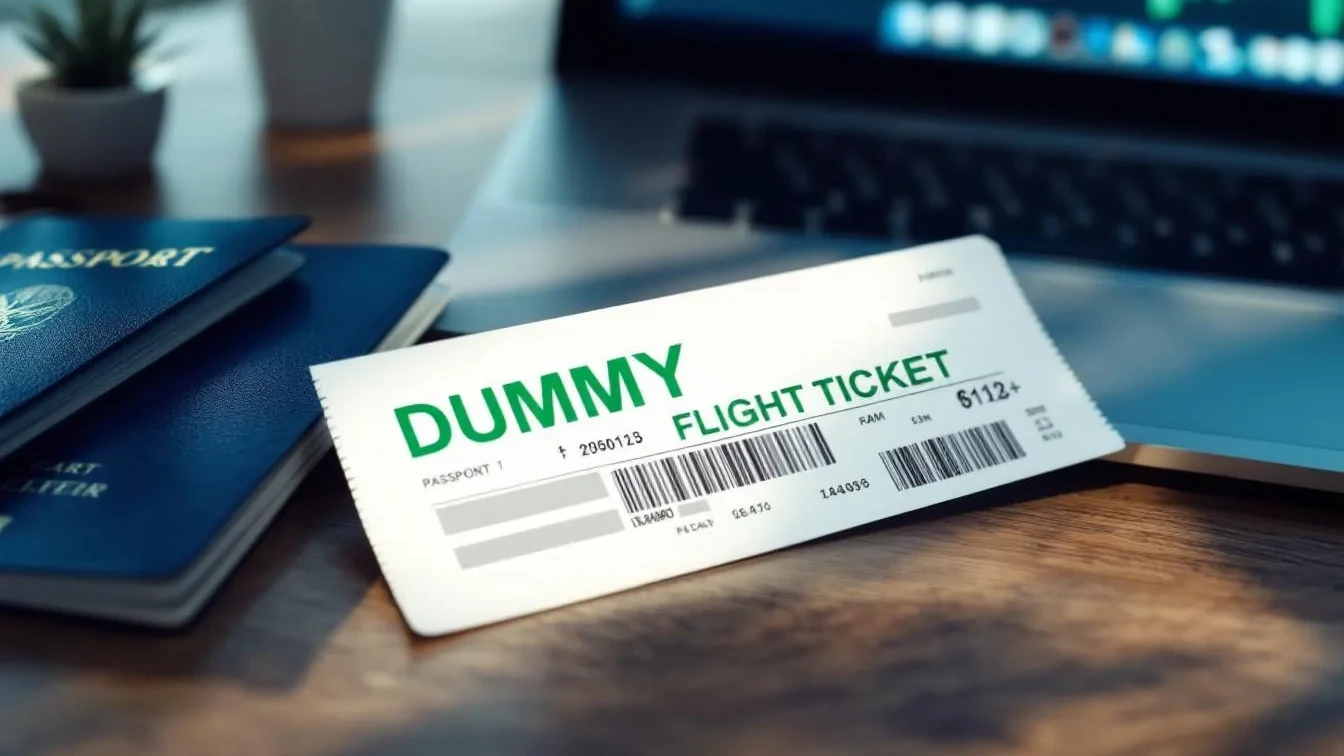
If you are applying for a visa, the point of a dummy ticket is simple: show a believable travel plan while protecting your budget until the visa outcome is clearer. It is not a shortcut to a visa decision, and it should never be treated as proof that an airline will board you. The document works only when the route, dates and identity details fit the rest of the file.
This page owns the core “dummy ticket” definition and buying-intent layer. For the longer visa-specific route, use the complete dummy ticket for visa guide. If you want a country and document checklist view, read dummy ticket for visa. If you are still comparing the basic meaning, legality and wording, start with what is a dummy ticket.
In This Guide
What Is a Dummy Ticket for Visa Use?
A dummy ticket is a temporary travel reservation that shows where you plan to fly, when you plan to leave, when you plan to return and which passenger name appears on the booking. The term sounds informal, but the document should not be fake. A useful dummy ticket is a reservation-style itinerary that can be checked through the booking reference or at least reconciled with the route and dates you submitted.
The main reason travelers use one is financial risk. Buying a non-refundable ticket before a visa decision can lock money into a trip that may be delayed, refused or approved for different dates. A reservation gives the visa file a travel plan without forcing the applicant to take that full fare risk too early.
The second reason is consistency. Visa applications are usually reviewed as a document story, not as one isolated PDF. Your flight reservation, hotel booking, invitation, insurance and leave letter should describe the same trip. If the flight shows July 10 to July 20 but your hotel begins July 12, the ticket stops helping and starts creating questions.
Dummy Ticket vs Paid Ticket vs Fake PDF
| Document type | What it means | Main risk | Best use |
|---|---|---|---|
| Dummy ticket / flight reservation | A temporary itinerary or booking record showing planned travel. | Can expire or become inconsistent if dates move. | Visa files where a reservation is allowed or requested. |
| Paid flight ticket | A purchased airfare with fare rules and travel rights. | Refund loss, date-change cost or mismatch with visa outcome. | After visa decision, or when the checklist clearly requires ticketing. |
| Fake PDF | An edited or fabricated document with no reliable booking behind it. | Verification failure, document inconsistency and credibility damage. | Never use it. |
When a Dummy Ticket Makes Sense
A dummy ticket makes sense when your visa checklist asks for a flight reservation, travel itinerary, onward travel proof or intended travel dates, and you do not want to buy the final ticket before the visa outcome. It is especially practical when your appointment is near, your dates are likely but not fully final, or you need to coordinate flight proof with hotel and insurance dates.
It is also useful for applicants who need a clean PDF quickly. Students often need a reservation that matches the semester or orientation window. Family visitors need dates that match invitations. Digital nomads and flexible travelers need a route that proves exit or onward movement without overcommitting to a fixed ticket.
The timing matters. If you create a reservation too early, it may expire before submission or before a second review. If you create it too late, you may rush and miss a spelling or date mismatch. The safest rhythm is to finalize the application travel window first, then create or refresh the reservation close enough to submission that the information remains useful.
Why Travelers Use DummyFlights for This Step
The old version of this article focused heavily on speed, global coverage and convenience. Those benefits still matter, but they should be framed correctly. A dummy ticket service is useful when it helps the applicant produce a clean reservation document quickly, not when it claims special influence over a visa outcome.
DummyFlights is useful for travelers who need a fast reservation PDF, a route that matches their intended travel window and support when appointment dates shift. The practical value is administrative: you avoid locking money into a final non-refundable ticket too early, while still giving the application a coherent flight plan.
Instant delivery is useful only after the details are right
Fast delivery helps when your appointment is close, but speed should never replace accuracy. The name, route, date range and trip length need to be checked before the PDF becomes part of the file. A five-minute document with a misspelled surname is worse than a slower document that matches the passport.
Flexible date support matters when appointments move
Visa-center appointments, biometric slots and travel plans can shift. A useful provider should help you keep the same trip logic while updating dates where needed. The goal is not to create multiple competing itineraries; the goal is to keep one clean version of the travel story.
Global routing should still look normal
A dummy ticket can be created for many destinations, but that does not mean every route is equally sensible. A strong itinerary uses normal city pairs, realistic layovers and destination logic that matches the stated purpose of travel. Simple routes are often stronger than complicated ones.
How to Get a Dummy Ticket Without Making the File Messy
The clean workflow is boring, and that is the point. You choose a realistic route, enter passenger details exactly as shown on the passport, receive a reservation document, check the important fields and keep one version of truth across the whole application.
Step 1: Lock the travel window
Before booking anything, choose the exact date range your application will use. This should match your leave letter, school calendar, invitation date, hotel booking and travel insurance if those documents are included. Do not let the flight PDF become the first place where the dates are decided.
- Choose the earliest reasonable departure date.
- Choose the latest realistic return or onward date.
- Keep the trip length consistent with funds and purpose.
- Use the same window in the form, cover letter and reservation.
Step 2: Use passport-name spelling
Name matching is where many rushed files break. Use the passport as the master source. Small airline formatting differences can happen, especially with spacing or middle names, but the booking should clearly map to the same person shown on the application.
Step 3: Pick a plausible route
A strong dummy ticket does not need dramatic routing. It needs a route a reviewer can understand quickly. For a tourist visa, a normal round trip is usually clearer than a complicated multi-city plan. For onward travel, the exit route should make sense from the country you are entering.
Step 4: Download, check and save one final PDF
After delivery, check the passenger name, city pairs, travel dates, flight sequence and booking reference. Save the final file under one clear name. Avoid multiple competing versions in your folder because that is how applicants accidentally upload an old reservation.

Which Traveler Profiles Benefit Most?
Not every applicant needs the same kind of dummy ticket. A student file, a family visit, a business visit and a digital-nomad itinerary each create different risks. The common thread is consistency: the reservation should support the purpose already shown by the rest of the documents.
Students
Students often need travel proof that aligns with enrollment dates, orientation windows, university reporting dates or semester starts. The ticket should not imply arrival before the applicant has accommodation, funding or permission timing in place.
Family visitors
Family visitors should keep the flight dates aligned with invitation letters, host availability and accommodation plans. If the visit is for a fixed event, the arrival should be before the event and the return should match the stated visit length.
Tourists and first-time travelers
Tourist files benefit from simple route logic. A normal round trip, one clear main destination and a believable stay length usually read better than an overloaded itinerary that tries to touch too many countries in too few days.
Digital nomads and flexible travelers
Flexible travelers should avoid overclaiming certainty. If the visa type or entry rule requires onward logic, the reservation should show a clean exit plan without pretending that every future stop is already finalized.
How PNR Verification Works in Real Life
A PNR is a booking reference used in airline and travel-reservation systems. It can contain basic booking information such as passenger name, itinerary and sometimes a ticket indicator. For visa use, the practical question is whether the reference supports the same route and dates shown on your PDF.
Verification is not magic. Some records are visible on an airline Manage Booking page. Some may be visible through the booking channel or agency system. Some temporary holds may expire quickly. That is why the document should be generated at the right time and checked before it enters the visa file.
The four-field verification check
- Passenger name matches the passport spelling.
- Departure and return or onward dates match the visa form.
- Route matches the destination and main purpose of travel.
- Booking reference retrieves or can be explained by the provider.
If any of those four fields fail, do not try to explain the contradiction in a long cover letter. Fix the reservation or fix the supporting document. A clean file is almost always stronger than a clever explanation for mismatched dates.
Common Dummy Ticket Mistakes to Avoid
The biggest mistake is treating the PDF as a design file instead of a travel-record file. A pretty layout means little if the route is strange, the date range conflicts with hotels, or the booking reference does not work. The second mistake is trusting ultra-cheap sellers who recycle old tickets, share one PNR across strangers or send screenshots instead of a coherent itinerary.
Red flags before submission
- The seller promises a positive visa decision.
- The PNR shows another passenger or a different route.
- The PDF uses stretched logos, fuzzy barcodes or inconsistent fonts.
- The price is unrealistically low and no support policy is shown.
- The route requires impossible layovers or a hidden transit problem.
- The ticket dates conflict with hotel, insurance or invitation dates.
Scam risk is not only about money. It is also about personal data. If a seller asks for more passport information than needed, refuses to explain data handling, or pushes you to send sensitive documents through random social accounts, step back.
What to do if dates change
If your appointment moves or your travel plan shifts, update the reservation only after checking the full document set. Keep the trip shape stable where possible. A seven-day trip can move by a week without changing the story. A multi-country route with fixed hotels may need more careful repair.
| Problem | Bad reaction | Cleaner fix |
|---|---|---|
| Appointment moved | Upload the old reservation anyway. | Check whether the old dates still make sense; refresh if they do not. |
| Hotel dates changed | Keep the flight dates unchanged. | Align hotel, flight, insurance and form dates as one calendar. |
| PNR expired | Submit the PDF screenshot. | Request a fresh reservation and verify the new reference. |
| Name spelling mismatch | Assume it is minor. | Correct it before submission if the name no longer maps cleanly to the passport. |
How to Choose a Dummy Ticket Provider
A good provider should make verification easier, not more mysterious. The seller should explain what the document includes, how changes work, what happens if the booking expires and how you can check the core details yourself. If the entire process depends on “trust me bro,” keep walking.
Provider checks that actually matter
- Clear booking details before payment.
- Passenger-name accuracy based on passport spelling.
- Realistic route and timing for the destination.
- Written support or change policy.
- Receipt or payment record.
- No promises about visa outcomes.
DummyFlights is built for applicants who need a fast, document-ready reservation without pretending that a flight PDF controls the visa decision. You enter your route and passenger details, receive a downloadable itinerary, check the booking details and keep your application dates aligned. If your appointment moves, support can help you keep the file coherent instead of creating a second, contradictory travel story.
Create a clean travel-reservation document through DummyFlights.com, then verify the passenger name, route and dates before you submit it with your visa file.
What a Dummy Ticket Cannot Do
A dummy ticket cannot replace official eligibility, financial evidence, travel history, accommodation proof or a truthful purpose of travel. It is one supporting document inside a wider file. If the bank statements, invitation, school documents or employment records do not support the trip, a flight reservation will not repair the entire application.
- It cannot control a government visa decision.
- It cannot guarantee airline boarding or entry.
- It cannot fix false information elsewhere in the file.
- It cannot make an unrealistic trip look realistic.
- It cannot replace the destination’s official checklist.
That limit is also what makes the document safer when used correctly. You are not presenting it as special leverage. You are presenting it as one coherent piece of intended travel evidence.
Final Check Before You Upload
Before you upload or print the dummy ticket, run one last review like a visa-center intake worker would. The ticket should answer where you enter, when you leave, who is traveling and whether the dates match the rest of the documents. If it creates a new question, repair it before submission.
- Passport name and reservation name match.
- Flight dates match the visa form.
- Hotel and insurance dates support the same window.
- Route matches the declared destination and purpose.
- PNR or booking reference is checked where available.
- Only one final version is saved and uploaded.
The best dummy ticket is not the loudest or most decorated PDF. It is the one that quietly supports the same travel story already shown by your form, cover letter and supporting documents.
Dummy Ticket FAQs
What is a dummy ticket?
A dummy ticket is a temporary flight reservation or itinerary used to show intended travel dates and route before buying a final paid ticket. For visa use, it should be consistent, realistic and verifiable where the booking reference allows lookup.
Is a dummy ticket the same as a paid flight ticket?
No. A dummy ticket is usually a reservation or itinerary, while a paid flight ticket is a purchased airfare with fare rules and travel rights. Visa applicants should not confuse a reservation with a guaranteed ticket for boarding.
Can I use a dummy ticket for visa applications?
Many visa files ask for proof of travel plan or reservation rather than a non-refundable paid ticket, but requirements depend on the destination and visa type. Always follow the latest checklist for your application.
How do I verify a dummy ticket?
Check whether the booking reference and surname retrieve the same passenger name, route and dates through the airline or booking channel provided. If the record cannot be viewed or explained, fix it before submission.
When should I create a dummy ticket?
Create it after your application travel window is stable and close enough to submission that the details remain useful. If your appointment moves, refresh the record only after checking whether your dates and supporting documents still match.
Should I buy a real flight ticket before the visa decision?
Some applicants buy paid tickets, but some official visa guidance warns that applicants may bear the loss if the visa outcome or permitted dates do not match the booking. A reservation often reduces financial exposure when rules allow it.
What information should appear on a dummy ticket?
A useful dummy ticket normally shows passenger name, route, dates, airline or operating carrier, flight numbers, booking reference when available and a clean itinerary layout that matches the visa form and supporting documents.
Can a dummy ticket be fake?
Yes. A fake dummy ticket is usually an edited PDF, expired hold, recycled PNR or document that does not match a real booking record. Do not submit files that cannot be verified or that contain inconsistent details.
Can I change dates on a dummy ticket?
Some providers allow date changes or refreshed reservations. Any change should keep the route story, trip length and supporting documents consistent, especially hotel dates, insurance dates, invitations and leave letters.
Is a one-way dummy ticket enough?
For short tourist or visitor files, a round-trip or onward plan is usually clearer because it shows exit logic. A one-way reservation may fit study, work, relocation or long-stay cases when the broader document story supports it.
What makes a dummy ticket safer to use?
The safer version has accurate passport-name matching, plausible routing, aligned dates, a checkable booking reference where applicable, written support terms and no unsupported promises about visa outcomes.
Where can I get a dummy ticket?
Use a provider that gives a clean reservation document, realistic route logic, support for corrections and enough information for you to check the booking details yourself. Always compare the final PDF with your visa form before submission.