
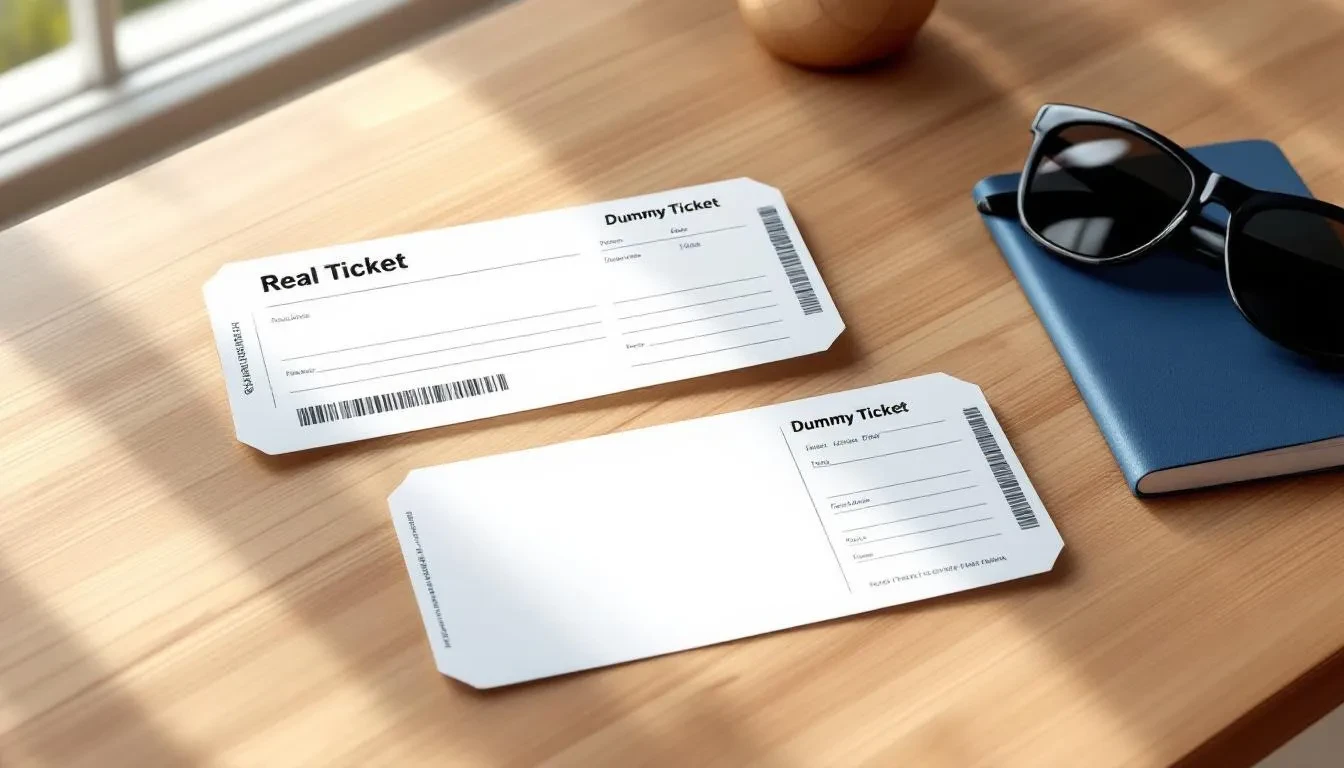
The wrong choice can cost money or weaken the application. A real ticket may look strong because it is paid, but it can expose the applicant to change fees, refund delays or loss if the visa is delayed or refused. A dummy ticket keeps the travel proof aligned with the application without forcing final purchase too early.
This comparison explains what each document is, how visa reviewers and airline systems may read it, when a dummy ticket makes more sense, and when a real ticket is justified. It also removes the old myth that a dummy ticket is automatically fake. A genuine dummy ticket uses truthful passenger and itinerary details; a fabricated PDF is a different and risky category.
In This Guide
What Exactly Is a Dummy Ticket?
A dummy ticket is a temporary travel-reservation document that shows planned flight details without requiring the applicant to purchase the final airfare first. It usually includes passenger name, route, travel dates, flight details and a booking reference or PNR when available. In visa language, it may also be called a flight reservation, dummy flight ticket or travel itinerary.
The clean definition matters because “dummy” can sound suspicious to new applicants. The useful version is not a fake ticket. It is a temporary reservation or itinerary based on truthful travel details. The unsafe version is a fabricated or manually edited document that invents ticket numbers, routes or booking references.
If you need the foundation before comparing options, read the what is a dummy ticket guide. This page focuses on the decision between using a dummy ticket and buying a real paid ticket before the visa result.
How a dummy ticket works
A dummy ticket works by presenting intended travel details in a structured reservation format. It helps the applicant show a proposed entry, exit and route while avoiding early payment for a final airline ticket. The document should match the passport name, visa form, hotel plan, insurance dates where relevant and cover letter.
Why visa checklists ask for flight proof
Flight proof helps a reviewer understand whether the applicant’s trip has a start, an end and a route that matches the stated purpose. It does not decide the visa by itself. It supports the larger file: funds, ties, purpose, accommodation, invitation, insurance where required and credibility.
When a dummy ticket makes life easier
A dummy ticket is useful when travel dates are still subject to the visa result, appointment timing or consular processing. It is also useful when a checklist asks for a reservation rather than a paid ticket. The applicant can present a coherent travel plan without locking money into a fare too early.
Cost and convenience compared with a full ticket
The financial difference is the main reason applicants compare these options. A real ticket can be expensive, especially for long-haul routes or family applications. A dummy ticket is usually used as a preparation document, not final transportation. That difference should be clear in the applicant’s own planning.
What Is a Real Ticket?
A real ticket is an issued airline ticket purchased under airline fare rules. It normally has ticketing status and may include an e-ticket number. Unlike a reservation-only dummy ticket, a real ticket represents a paid commercial transaction with the airline or travel seller.
A real ticket can be refundable, partially refundable, changeable, non-refundable or restricted depending on the fare conditions. The word “real” does not automatically mean financially safe. The refund and change rules matter more than the label.
The upside of a real ticket
A real ticket can make sense when travel is certain, the visa is already issued, the fare is flexible enough, or the official requirement specifically asks for ticketed proof. It may also be necessary for some entry, transit or airline situations where reservation-only proof is not enough.
The downside of a real ticket
The downside is financial exposure. If the visa is delayed, refused, returned for more documents or issued after the planned departure date, the traveler may need to change or cancel. Even refundable fares can involve deadlines, cancellation fees, fare differences or slow refund processing.
Dummy Ticket vs Real Ticket: Key Differences
The best choice depends on the document requirement and the applicant’s risk tolerance. The comparison below focuses on visa preparation, not the final flight you will take after the visa is issued.
| Factor | Dummy ticket | Real ticket |
|---|---|---|
| Purpose | Shows intended travel before final purchase. | Confirms a paid airline ticket. |
| Cost risk | Lower upfront financial exposure. | Higher exposure if plans change. |
| Flexibility | Better when dates may move before the visa result. | Depends on fare rules and change fees. |
| Identifier | May show booking reference or PNR when available. | Usually has issued ticketing information, often including e-ticket details. |
| Best timing | Before visa decision when proof is requested. | After visa issue or when specifically required. |
| Main risk | Weak if fake, expired, inconsistent or not retrievable when needed. | Expensive if visa timing changes or refund rules are restrictive. |
Upfront cost
Upfront cost is where the dummy ticket usually wins for visa preparation. The applicant can show a travel plan without paying the full fare. This matters more for expensive routes, families, last-minute travel seasons and applications where processing time is uncertain.
Flexibility
A dummy ticket is easier to align with a moving visa timeline. If the appointment changes or the travel window shifts, the reservation strategy can be adjusted before final purchase. A real ticket depends on airline fare rules, seat availability and the cost of changing the booking.
Visa-denial and delay risk
The real-ticket risk is not only refusal. Delays can create the same financial problem. If the passport is still under review when the flight date arrives, the traveler may need to cancel, rebook or pay fare differences. A dummy ticket reduces that early commitment.
Validity duration
A dummy ticket or reservation may have a limited active period. A real ticket remains governed by ticket and fare validity rules. The right question is not “which lasts longer?” The right question is “which document is appropriate for the checkpoint where it will be reviewed?”
When Should You Use a Dummy Ticket?
Use a dummy ticket when the visa checklist asks for flight reservation, itinerary or travel proof but does not require a fully paid ticket. This is the common visa-preparation situation: the applicant must show intended travel without taking unnecessary fare risk before the visa result.
Good-fit situations
- Your visa decision is pending.
- Your appointment date may move.
- Your leave approval is not final.
- The route or exact travel date may change.
- You are applying as a family and full tickets would be expensive.
- The official checklist asks for reservation or itinerary proof.
- You need a return or onward plan but not final ticketing yet.
Be practical about using a dummy ticket
A dummy ticket should not be treated as a magic document. It must support the real application story. If the form says the trip is seven days, the dummy ticket should not show twenty-six days. If the hotel proof starts after arrival, explain the first night. If the cover letter names one main destination, the route should not suggest a different main stay without context.
The dummy ticket for visa complete guide explains the broader visa-document workflow. This comparison page narrows the decision to dummy ticket versus real paid ticket.
When Should You Use a Real Ticket?
Use a real ticket when the trip is already certain, the visa has been issued, a specific authority requires paid ticketing, or the fare is refundable enough that the financial risk is acceptable. A real ticket can also make sense for travelers who must travel on fixed dates and have strong confidence in their documentation.
Why timing matters
Timing is the difference between confidence and waste. Buying after the visa result is straightforward. Buying before the result should be a deliberate decision based on the checklist, fare conditions and risk tolerance. If the only reason for buying is “it looks stronger,” pause and check whether the official guidance actually asks for a paid ticket.
Refundable does not always mean painless
A refundable ticket may still involve conditions. Some fares refund to the original payment method after a waiting period. Some charge fees. Some refund only taxes or part of the fare. Some require cancellation before departure. Read the fare rules before assuming the money is fully protected.
How Verification and PNR Details Differ
Many applicants confuse PNR, booking reference, e-ticket number and itinerary reference. That confusion can lead to weak documents or unrealistic expectations.
PNR versus e-ticket number
A PNR is a booking reference connected to a reservation record. It is not automatically proof that a ticket has been issued. An e-ticket number is generally associated with ticket issuance. A dummy ticket may show a booking reference when available; a real ticket normally includes stronger ticketing evidence.
How to confirm a dummy ticket is real
Check whether the passenger name, route, date and booking reference are consistent and whether the reservation can be retrieved through the method provided by the issuing channel. Do not manually edit the PDF. If the date or name is wrong, correct the reservation properly rather than changing the document image.
Myth busted: dummy tickets are not automatically fake
The fake-versus-genuine distinction is the whole point. A genuine dummy ticket is a temporary reservation or itinerary based on accurate travel details. A fake ticket is a fabricated or altered document that misrepresents booking or ticketing status. The first is a planning document; the second can create serious credibility problems.
Should you book dummy hotel proof too?
Only when the checklist or travel plan needs accommodation evidence. Flight proof and hotel proof should match the same dates and destination story. If staying with a host, an invitation or private accommodation proof may be more appropriate than a hotel reservation.
What Strong Dummy Ticket Proof Should Show
A strong dummy ticket is not strong because it looks decorative. It is strong because the essential travel fields are easy to read and easy to compare with the rest of the visa file. The reviewer should be able to understand who is traveling, when the trip starts, when it ends, where the applicant is going and whether the route matches the stated purpose.
Core fields to inspect before submission
| Field | What should be checked | Why it matters |
|---|---|---|
| Passenger name | Matches the passport exactly. | Name differences create avoidable identity questions. |
| Route | Matches the visa country, main destination and cover letter. | A route that points elsewhere weakens trip logic. |
| Dates | Match form, hotel proof, insurance and leave letter where relevant. | Date mismatches are easy to spot. |
| Return or onward segment | Fits the visa duration and stated plan. | Shows the trip has a defined exit. |
| Booking reference | Included when the reservation method provides one. | Helps distinguish a structured reservation from a loose plan. |
| Document status | Current enough for the appointment or review moment. | Stale reservations can lose usefulness. |
Examples that make the choice clearer
A first-time Schengen tourist with uncertain appointment timing usually benefits from a dummy ticket because the trip may shift after the visa result. A business traveler with a fixed event and refundable company fare may be comfortable buying a real ticket. A family applying together may avoid large upfront airfare exposure by using dummy tickets first, then buying final tickets after the decision.
A student visa applicant may not need the same proof as a short-stay tourist. If the school start date is fixed and the checklist asks for travel plans, a reservation can show the intended arrival. If the airline or country later requires final ticketing before travel, the applicant can buy after the visa and entry documents are ready.
What weakens either option
Both dummy tickets and real tickets can be weak if they contradict the application. A paid ticket with the wrong dates is still a problem. A dummy ticket with an impossible route is still a problem. A refundable ticket does not help if the hotel proof, invitation and form describe different travel windows. The proof type matters, but consistency matters more.
Need to Cancel or Update Your Dummy Ticket?
Travel plans move. Visa appointments are rescheduled, consulates request more documents, leave approvals change, and flight routes shift. The key is not to keep an outdated document just because it was already prepared. The key is to keep one clean version of the travel proof that matches the current application story.
When to update the dummy ticket
- Your appointment date moves and the trip window changes.
- The intended departure or return date changes.
- The destination city or main stay changes.
- Your passport name or spelling was entered incorrectly.
- Your hotel booking, insurance or invitation dates changed.
- The reservation is no longer current for the checkpoint where it may be reviewed.
Do not manually edit the PDF
Manual editing is where many applicants create risk. If the date or name is wrong, do not patch the PDF. Correct the reservation through the proper process and remove old versions from the file. A clean updated reservation is easier to explain than a document that appears altered.
How to keep one version under control
Create a small submission folder with the final visa form, current dummy ticket, hotel proof, insurance where required, invitation or leave documents, and cover letter. If a new reservation replaces an old one, archive the old file outside the submission folder. At the appointment or upload stage, there should be only one active travel calendar.
How DummyFlights Fits This Decision
DummyFlights is relevant when the applicant needs dummy-ticket proof before the final airfare purchase. The service should be used after the traveler has a realistic route, intended dates and supporting documents. It should not be used to invent a trip, hide weak eligibility or replace the official checklist.
What to prepare before creating the reservation
- Passport-name spelling.
- Departure and destination cities.
- Intended travel dates.
- Return or onward logic.
- Hotel or host plan.
- Visa appointment or submission timing.
- Any checklist wording about reservation, itinerary or ticket proof.
Why the decision should come before the document
Applicants sometimes buy or generate proof first and then try to make the visa story fit it. That is backwards. First decide whether the checklist needs a reservation, itinerary or paid ticket. Then decide whether your dates are stable. Then create the document that fits the trip. The document should follow the travel logic, not control it.
Decision Workflow Before Submission
Use this decision path before choosing between a dummy ticket and a real ticket.
- Read the official checklist for your visa type and location.
- Look for the exact wording: reservation, itinerary, booking, ticket or paid ticket.
- Check whether official guidance warns against buying tickets before the visa result.
- Lock your travel dates, hotel plan and return logic.
- If dates are uncertain, use a dummy ticket or temporary reservation where appropriate.
- If paid ticketing is required, read refund and change rules before buying.
- Before submission, compare the ticket proof with the form, cover letter, hotel proof and insurance.
Create your dummy ticket with DummyFlights after your travel dates, route and supporting documents are aligned.
Choose the Proof That Matches Your Risk
The best answer is not “dummy ticket always” or “real ticket always.” The best answer is document fit. If the visa process asks for intended travel proof and the result is not known, a dummy ticket is usually the cleaner financial choice. If the authority requires paid ticketing or the visa is already issued, a real ticket may be appropriate.
For most applicants, the smartest sequence is simple: prepare a coherent dummy ticket for the visa file, keep every date consistent, wait for the visa decision, then buy the final ticket when travel is ready. The main dummy ticket for visa guide explains how that proof fits into the complete application package.
FAQ
Is a dummy ticket better than a real ticket for visa applications?
A dummy ticket is often better before the visa decision when the checklist asks for flight proof but not a paid ticket. A real ticket is better only when paid ticketing is required or the travel plan is already firm.
Is a dummy ticket fake?
No, not when it is a genuine temporary reservation or itinerary based on truthful travel details. A fake ticket is a fabricated or manually edited document that misrepresents booking or ticketing status.
Does a dummy ticket have a PNR?
Some dummy tickets include a booking reference or PNR when available. A PNR is a reservation reference, not automatically an issued e-ticket number.
Should I buy a real ticket before visa approval?
Only if the checklist or your situation clearly requires it and the fare rules are acceptable. Some official guidance warns applicants not to buy final tickets before the visa is issued.
Can a real ticket improve my visa chances?
A real ticket may show payment, but it does not fix weak eligibility, funds, ties, purpose or inconsistent documents. Visa files are reviewed as a complete package.
What is the biggest risk of buying a real ticket too early?
The biggest risk is financial loss or disruption if the visa is delayed, refused, or issued after the planned travel date. Refundable fares can still have fees, deadlines or delays.
When should I use a dummy ticket?
Use a dummy ticket when the visa checklist asks for reservation or itinerary proof and final ticket purchase would be risky before the decision.
When should I use a real ticket?
Use a real ticket when the visa is issued, travel is certain, paid ticketing is specifically required, or the fare rules make the risk acceptable.
Should my dummy ticket match my hotel booking?
Yes. Flight dates, hotel dates, insurance dates where required, invitation details and the cover letter should describe the same travel window.
Can I update or cancel a dummy ticket?
That depends on the reservation method and provider process. If travel dates change, update the reservation properly and remove old versions from the visa file.