
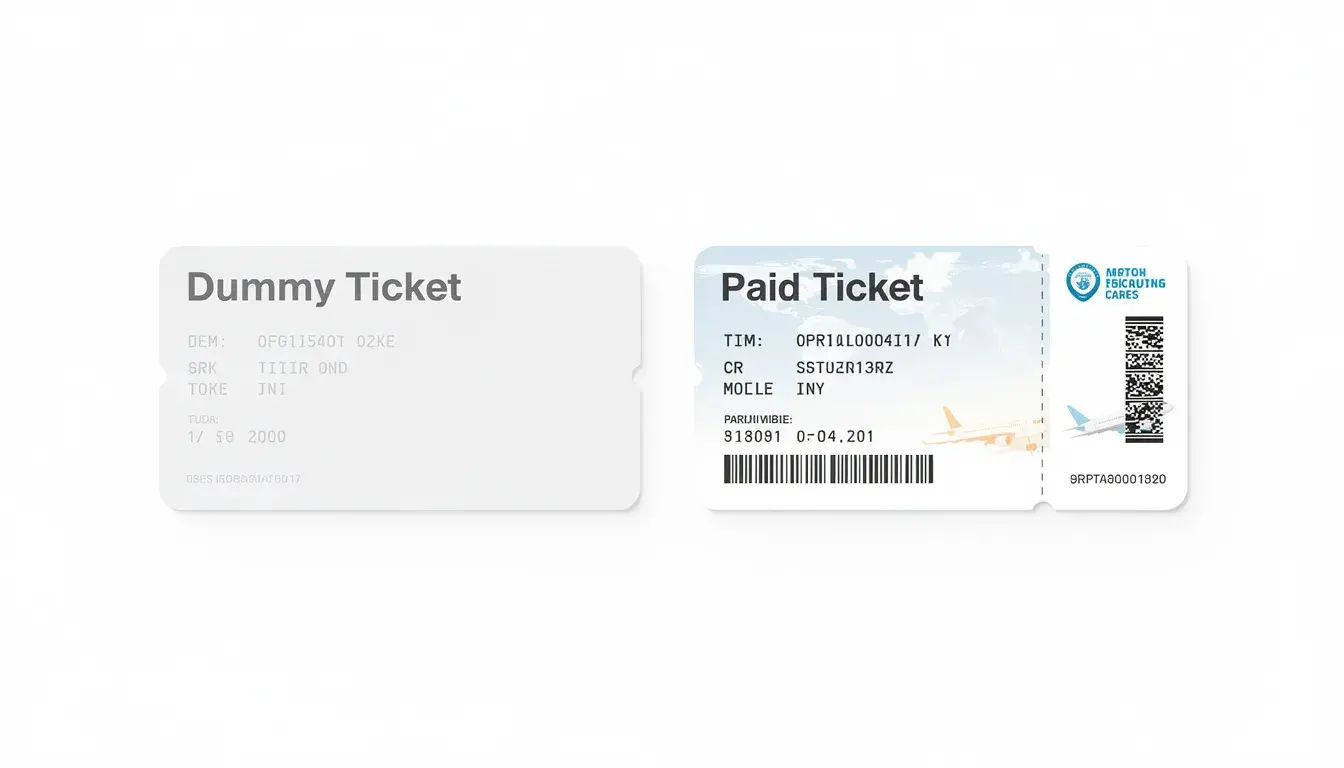
Key facts for 2026 planning:
- The U.S. Department of State tells visitor-visa applicants not to make final travel plans or buy tickets until they have a visa.
- GOV.UK says UK visitors should show they can pay for the return or onward journey, and warns that supporting documents do not guarantee success when making bookings.
- Appendix V says UK visitor applicants must have sufficient funds for reasonable visit costs, including the return or onward journey.
- The Schengen Visa Code asks for documents proving purpose, accommodation, means for the stay and return/transit, plus information to assess intention to leave.
- The European Commission’s Schengen application page says supporting documents include evidence of financial means, accommodation and intention to return home after the stay.
Official-source check: The U.S. Department of State visitor-visa page says there is no guarantee of visa issuance and applicants should not make final travel plans or buy tickets until they have a visa. GOV.UK’s visitor supporting-documents guidance says applicants should show they can pay for return or onward travel, and that presenting documents does not guarantee a successful application or border entry, so applicants should bear that in mind before making bookings. Appendix V uses a broader genuine-visitor and sufficient-funds test, including the return or onward journey. For Schengen, the Visa Code asks for supporting documents on purpose, accommodation, means and intention to leave, while European Commission guidance lists evidence of intention to return. Sources: U.S. Department of State visitor visa, GOV.UK visitor supporting documents, Appendix V Visitor, Schengen Visa Code and European Commission Schengen visa guidance.
Reviewed for: dummy-vs-paid decision logic, U.S. ticket-purchase caution, UK return/onward funds wording, Schengen supporting-document requirements, refund-risk clarity, PNR terminology, date-change risk, file-consistency checks and safe dummy-ticket claims.
In This Guide
Your appointment is next week, and the clerk flips to your flight proof. They do not care how pretty the PDF looks. They care whether the booking can be verified today and still makes sense when your file is reviewed later.
That is where the dummy vs paid ticket choice gets risky. Pay too early, and you can bleed money on fare rules, refunds, and date changes. Rely on the wrong reservation, and you can trigger a follow-up request or a refusal. In this guide, we will run a decision tree based on what your consulate asks for, how long processing may take, and how fixed your dates are. If you need a verifiable reservation for your visa file, use a dummy ticket that stays checkable through review.
“Safer” Depends On What You’re Trying To Avoid (And Most People Pick The Wrong Risk)

Your flight proof gets judged as part of a whole file, not as a standalone PDF. A decision that feels “safe” for a Schengen appointment in Paris can be the wrong move for a Canadian TRV timeline.
So we start by naming the risk you cannot afford before you upload anything for a Schengen or UK Standard Visitor file.
The Three Safety Lanes: Visa Decision Risk, Verification Risk, And Money Risk
When a French or Spanish consulate reviews a Schengen short-stay file, the fastest rejection triggers are usually basic credibility issues: dates that clash with your leave letter, routings that look random, or a return that does not fit your stated trip length.
When a UK Standard Visitor file gets assessed, the risk often shifts. Your itinerary is rarely the only deciding factor, but a booking that cannot be confirmed, or a plan that keeps changing between uploads, can invite extra questions at the worst time.
For a US B1/B2 case, money risk becomes a quiet trap. If you buy a nonrefundable fare for Los Angeles before an interview outcome, you can end up paying change fees and fare differences for a trip that was never locked in.
Here is the practical way to separate the three safety lanes for a Schengen or Canada TRV file:
-
Visa Decision Risk: Will a Berlin or Rome Schengen reviewer doubt the trip is real because the dates, cities, and purpose do not line up?
-
Verification Risk: If the office in Tokyo or London tries to confirm the booking later, will they be able to, without calling you?
-
Money Risk: If a Toronto visa office review runs long, will your “paid safety” turn into lost funds through refunds, penalties, or FX swings?
The key is that the lanes are not equal for every route. A simple Madrid round trip with fixed leave dates is mostly a decision-risk problem. A long Canada TRV queue is mostly a verification and money-risk problem.
The Real Question: What Will Be Checked, By Who, And When?
In many Schengen processes routed through a visa application center, your file gets a completeness check first, then a later review at the consulate. That means your flight proof must survive both a quick scan and a delayed decision review.
Different countries also use flight proof differently. A German Schengen submission often treats flights as a consistency anchor with insurance dates and your declared stay, while a US B1/B2 review treats flights as supporting detail, not a commitment.
Timing is the part that decides whether “dummy vs paid” matters at all. A Japan Temporary Visitor application can be reviewed quickly, while a Canada TRV can be opened weeks later. If your proof expires before review, your choice was never safe, even if it looked perfect on submission day.
A common mistake is planning for appointment day instead of review day. A Netherlands Schengen file submitted on Monday can be reviewed on Thursday, and your “safe” proof has to hold through that gap.
So we aim for one standard across posts like London, Tokyo, and Paris: your flight plan should be coherent and confirmable at the moment the decision-maker actually touches your file.
Your Timeline Is The Hidden Boss Fight
A short timeline changes everything. If you have a Japan Temporary Visitor appointment and the decision window is tight, your main goal is clean consistency: entry and exit dates that match your stated cities, like Tokyo and Kyoto, without odd gaps.
A longer timeline flips the risk. Canada TRV processing can stretch, and Schengen can also slow down during peak summer filings for places like Greece or Italy. Proof that disappears mid-queue can trigger a request for updated documents, which creates new chances for contradictions.
Paid tickets are not automatically durable. A UK visitor applicant who buys a cheap fare and then has biometrics rescheduled can get pushed into changing dates, and that can create a cascade: new flights, new insurance dates, and a file that no longer matches what was submitted.
So set a minimum “proof lifespan” based on your realistic review window. For a Schengen file, that often means keeping outbound and return dates steady long enough for review. For a US B1/B2 plan, it often means not locking funds into change penalties before you have a decision.
Your Flexibility Level Determines Your Safest Option
Flexibility is not only about dates. It is also whether your route might change, like entering Schengen through Amsterdam but later deciding to fly into Paris, or switching from Rome to Milan for meetings.
If your dates are fixed for a Frankfurt business trip on a Schengen visa, a paid ticket can look like the cleanest signal. But if your meetings might move by three days, a rigid fare pushes you into either losing money or uploading “updated” flight proof that no longer matches your earlier documents.
If you still have two realistic travel windows for a UK Standard Visitor plan, the safe move is the one that lets you submit one consistent story. Constant edits make your file look unstable, even when the reason is normal.
Also, watch the return pressure. A Schengen reviewer in Vienna can read a too-long stay against your stated leave dates as a credibility problem. Safer means fewer contradictions, not a higher price tag.
Quick Self-Assessment (The 60-Second Baseline)
Answer these quickly before you hit submit on a Schengen or Canada TRV application.
-
For a Schengen short-stay through an Italian consulate, do your outbound and return dates match your leave dates and your stated length of stay, without “buffer days” that you cannot explain?
-
For a Canadian TRV, can your flight proof remain confirmable if the review happens weeks later, or will it force a last-minute replacement?
-
For a Japan Temporary Visitor application, does your itinerary match the trip logic for cities like Tokyo and Osaka, with realistic travel time between them?
-
For a UK Standard Visitor submission, can you keep the same plan stable from submission to decision, without uploading multiple conflicting versions?
Then pick your priority lane for your Schengen, UK, or Canada file:
-
If you fear a refusal due to weak credibility on a Schengen file, prioritize a simple route and consistent dates.
-
If you fear a failed confirmation during a Canada TRV review, prioritize verifiability over “looks official.”
-
If you fear losing money because dates may shift for a UK visitor plan, prioritize change control and minimize penalties.
Once you name the lane for your Schengen, UK, or Canada case, the choice stops being a guessing game. Now we can focus on what consulates actually test when they look at flight proof.
What Consulates Actually Look For In Flight Proof (It’s Not “Paid” vs “Dummy”)

A consulate does not grade your flight proof on how much you spent. In a Schengen C visa or UK Standard Visitor file, they look for signs that your plan is coherent, checkable, and stable enough to review without chasing you for fixes.
The Consistency Test: Does Your Flight Plan Match The Rest Of Your File?
For a Schengen short-stay application, the first consistency check is dates. Your flight dates should line up with your leave approval, travel insurance coverage dates, and the exact stay length you declare on the form for countries like France, Italy, or Spain.
For a German Schengen file, watch the “entry date” problem caused by overnight flights. If your flight departs New York on May 10 and lands in Frankfurt on May 11, your form and itinerary should reflect May 11 as the entry, not May 10.
For a UK Standard Visitor application, consistency shows up in your story. If you say you will attend a conference in London from June 12 to June 15, but your outbound flight arrives on June 16, your file looks rushed and unreliable.
For a Japan Temporary Visitor application, consular reviewers often read flight timing against your day-by-day schedule. If you list Tokyo hotel nights starting April 3 but your inbound flight lands April 4, it creates a gap that invites a question.
Use a tight alignment check that fits the way Schengen and UK files are read:
-
Match the arrival date to the date you claim as entry for Paris, Madrid, or Rome, not the departure date from your home country.
-
Match return date to your stated trip length for a 10-day Schengen itinerary, not “roughly two weeks.”
-
Match insurance dates to flight dates for Schengen, because mismatches are easy for a clerk to spot.
-
Match supporting dates like event tickets or meeting letters for a UK visit, because inconsistencies look like a stitched file.
For a Canadian TRV application, consistency also includes routing realism. If you claim you will visit Vancouver and Whistler, but your flights show Toronto in and Toronto out with no internal movement, it looks incomplete unless your plan explains the transfer.
The Verification Test: Can They Confirm Your Booking Without Calling You?
For many Schengen consulates, a key question is simple: can this reservation be confirmed using normal airline channels when they decide to check it? If a Spanish consulate or a visa application center tries to verify and the record does not show up, it can trigger a document request.
For a US B1/B2 interview, the officer may not check your booking live, but the logic still matters. If your itinerary looks fabricated or inconsistent, it can weaken your credibility when you explain your plan for New York to Miami or San Francisco to Chicago.
For a Schengen submission, you should treat verifiability like a pre-flight checklist. Confirm that the PNR and passenger name combination actually retrieves the booking in at least one standard way, because many checks fail on formatting, not intent.
Common verification friction points show up on routes with codeshares. For example, a Doha to London segment marketed by one airline but operated by another may display differently depending on which carrier’s “manage booking” page is used.
Here, we focus on practical verification steps that work for Schengen and UK visitor files without overcomplicating things:
-
Confirm the booking can be retrieved using the exact passenger surname as printed in your passport for a London or Paris route.
-
Confirm the itinerary shows the same airports you list elsewhere, like CDG versus ORY for Paris, or LHR versus LGW for London.
-
If your route includes a codeshare, confirm which carrier displays the reservation for a segment like Madrid to Doha to Bangkok, because some portals will not find it under the marketing carrier.
-
Save a timestamped copy of what you verified, because follow-up requests for a Schengen application often ask you to “resubmit updated proof.”
For a UAE tourist visa submission, verification often happens through the sponsor or airline-side checks closer to departure. If you submit flight proof that cannot be pulled up later, you can end up scrambling right before travel, even if your visa is approved.
The Specificity Test: Are Your Segments Logical For Your Purpose Of Travel?
For a Schengen C visa file submitted to a French or Italian consulate, reviewers look for routing that matches your declared main destination. If you claim your main stay is Paris, but your flights enter through Vienna and exit from Lisbon with no explanation, it can read like a placeholder plan.
For a UK Standard Visitor application, specificity shows up in your arrival and departure choices. If your itinerary arrives in Manchester but your accommodation, meetings, and day plan are all in London, it creates a mismatch that can raise questions about the trip’s real purpose.
For a Japan Temporary Visitor application, specificity means matching your flight timing to your stated itinerary pace. If you say you will spend three nights in Tokyo and then head to Kyoto, a flight that lands late at night on the final “Tokyo day” can make the schedule look careless.
For a US B1/B2 context, specificity also signals that you understand distances and timing. A same-day sequence like landing at JFK and claiming an afternoon meeting in Washington, D.C., can look unrealistic if your itinerary implies you will be there immediately.
A fast “logic audit” helps you avoid the kind of routing that gets flagged in Schengen files:
-
Keep the entry and exit consistent with your stated itinerary, like Barcelona in and Barcelona out for a Spain-focused trip.
-
Avoid extreme connection chains, like three connections to reach Rome when direct or one-stop options exist, unless your route truly demands it.
-
Ensure layover times are plausible for hubs like Istanbul or Dubai, because very short connections can look like auto-generated segments.
-
Avoid mixed signals like a return from Zurich when your declared last city is Paris, unless you explain an overland move in your itinerary.
For an Australian Visitor visa (subclass 600) plan, specificity matters because the trip is long-haul and expensive. An itinerary that hops in and out of Australia within two days can look like a contrived placeholder unless your business or family purpose supports it.
The Timing Test: Will This Proof Still Exist When They Review Your File?
For a Canadian TRV application, timing is often the biggest flight-proof risk because the review may happen long after biometrics. If the reservation expires quickly, you can receive a request to upload “updated travel plans,” which creates a fresh chance for inconsistencies.
For Schengen applications during peak season, timing can also matter more than people expect. A file submitted for Greece or Italy in June may not be reviewed immediately, and short-lived proof can disappear before the decision desk opens it.
For a UK Standard Visitor application, timing risk shows up when you upload multiple versions. If you submit one itinerary, then replace it twice because your plans shifted, the caseworker sees instability, not flexibility.
You can reduce timing risk for Schengen and Canada cases by setting a simple handling rule: upload once, and only update if the consulate asks or your appointment date changes in a way that forces a new plan.
Use a timing checklist that fits real processing patterns for Schengen and Canada:
-
Submit flight proof close enough to submission that it reflects your current plan for routes like Istanbul to Rome or Dubai to Paris.
-
Avoid swapping itineraries unless you must respond to a request from a Schengen consulate or IRCC for a Canada TRV.
-
If you must update, keep the route structure the same and only change the dates, because total routing changes look like a new trip.
-
Maintain the same trip length for Schengen, because sudden changes from 10 days to 21 days can trigger additional scrutiny.
For a Singapore short-term visit application, timing can still matter if the consular office requests additional documents. If your flight proof shifts after submission, it can slow down your response and create avoidable follow-up.
The Follow-Up Trap: When They Ask For “Confirmed Ticket” Mid-Process
For Schengen applications, a follow-up request for “confirmed ticket” can arrive when a reviewer could not verify the booking, or when the itinerary conflicts with something else in your file. It is not always an accusation, but your response needs to be clean and controlled.
For a UK Standard Visitor file, follow-ups often come as a request for clarification rather than a demand to buy a ticket. If you respond with a new itinerary that changes dates and cities, you can accidentally create a second inconsistency problem.
For a Canadian TRV application, follow-ups can be time-sensitive. IRCC may ask for updated travel plans, and if you respond with a different routing than your original story, your supporting documents can stop matching overnight.
When a Schengen consulate asks for updated flight proof, respond like you are building a single, consistent record, not a messy thread of versions:
-
Provide one updated flight proof only, not three options, for a Paris or Madrid itinerary.
-
Add a short note that states what changed and why, such as “biometrics rescheduled” or “leave dates confirmed,” for a UK or Schengen file.
-
Keep your entry and exit points stable if possible, like Rome in and Rome out, to prevent ripple edits across insurance and itinerary pages.
-
Recheck name formatting and airport codes, because follow-ups are where small mistakes slip in under pressure.
For a US B1/B2 interview outcome, follow-ups are different, but the trap still exists. If you buy a ticket immediately after approval without checking your passport return timeline, you can end up forced into changes for flights like Los Angeles to Tokyo, and those changes can be expensive.
Paid Tickets Can Be A Safety Upgrade Or A Financial Trap—Here’s The Line

A paid ticket can strengthen a Schengen C visa file when your dates are truly fixed, and your documents already match. The same paid ticket can become the most expensive mistake in a Canadian TRV timeline if processing stretches and you need to change plans twice.
“Refundable” Isn’t A Single Setting—It’s A Set Of Rules
For a France Schengen application, “refundable” only helps if you can actually cancel without getting stuck in weeks of back-and-forth. Many fares called “refundable” still have conditions that matter for visa timing.
You need to look for these rule types on any round trip, like Manila to Paris or São Paulo to Madrid:
-
Refund Form: Refund to original card, travel credit, or voucher. A UK Standard Visitor applicant often expects cash back and gets credit instead.
-
Refund Window: Immediate cancellation allowed, or cancellation allowed only up to a cutoff time. A Japan Temporary Visitor plan can shift quickly if your appointment moves.
-
Fee Layering: Airline fee plus agency fee plus payment processor fee. A Schengen file does not care, but your wallet will.
-
No-Show Rules: If you do nothing and miss the flight, refunds can vanish. That matters for a US B1/B2 plan where dates are still tentative.
Some fares are “refundable” but only after a penalty. That still might be fine for a Rome Schengen itinerary if you treat it like a controlled cost, not a free safety net.
Also, separate “refundable” from “changeable.” A Canada TRV applicant flying to Toronto may be able to change dates, but still be blocked from a clean refund.
Before you pay, pull the rules and translate them into plain language you can act on in a Schengen or UK file context:
-
Can you cancel online without calling?
-
Do you get money back to the same card?
-
What is the latest time you can cancel without losing most of the fare?
-
Do changes trigger both a fee and a fare difference?
If you cannot answer those questions for a flight like Dubai to Barcelona, you are not buying safety. You are buying uncertainty.
The Refund Timeline Problem: Your Money Might Be Stuck When You Need It Most
Refund time is a visa risk, even though it sounds like a money issue. A Canada TRV file can sit in a queue, and a refund can sit in a separate queue.
If you pay for a ticket for Vancouver and then cancel when biometrics get pushed, you may not see the funds return in time to book a new option that matches your updated dates. That is where “paid is safer” collapses.
This also hits Schengen applicants who apply during peak periods. A Greece or Italy Schengen review can slow down, and you might delay travel until you get the decision. If you cancel too early, you lose your flight's proof of stability. If you cancel too late, you lock up funds right when you need them for insurance, accommodation, or another booking.
Refund timing becomes extra messy when you booked through a third party for a UK Standard Visitor itinerary to London. The airline might approve the refund, but the agency still needs to process it, and the card reversal can lag again.
Here, we focus on a practical control method for routes like Cairo to Paris or Bangkok to Frankfurt:
-
Assume the refund will take longer than the airline promises.
-
Do not rely on the refund arriving before you need to book something else for a rescheduled Schengen appointment.
-
Keep a separate buffer for rebooking if your Canada TRV travel dates are flexible.
If your plan is “buy now, refund next week,” your safety depends on two systems working perfectly: visa processing and payment processing. A Schengen file does not reward that gamble.
Date Changes Are Where Paid Tickets Quietly Bleed Money
Most people underestimate how date changes work in real life. A UK Standard Visitor applicant might think a date shift is one click, then discover the fare difference is larger than the original ticket.
There are two costs, and they stack:
-
Change Fee: A fixed fee to modify the booking.
-
Fare Difference: The price gap between what you bought and what the new date costs now.
For a Schengen C visa route like New York to Madrid, the fare difference can spike if you move your return from a Tuesday to a Sunday. For a Japan Temporary Visitor route like Los Angeles to Tokyo, the fare difference can jump around school holidays.
The visa angle is this: date changes rarely happen in isolation. A date change often forces:
-
New travel insurance dates for a Schengen file.
-
New leave dates in your employer letter for a UK visitor file.
-
New internal travel plans that no longer match your itinerary narrative for a Japan submission.
So a paid ticket is safest only when your dates are already anchored by something stronger than hope, like fixed event dates in London or approved leave dates that you will not renegotiate.
If you still might shift dates, you need to treat a paid ticket like a controlled instrument. Use a “change risk filter” before buying a Canada TRV or Schengen file:
-
Would you still travel if the visa decision arrives two weeks later than expected?
-
Would you still travel if your appointment is moved by seven days?
-
Would you still travel if the cheapest change requires changing both outbound and return?
If any answer is “maybe,” a rigid paid fare can become a slow leak.
The “Ticket Issued” Detail That People Miss
In visa paperwork, “paid” and “issued” are not always the same thing. For a Schengen application, what matters is that your flight proof looks coherent and can be verified, and issued tickets typically hold up better under verification.
But in practice, travelers sometimes pay and walk away with something that is not fully ticketed yet, especially with certain payment holds or extra verification steps. Then they upload a document that looks official, but the booking status changes later.
For a US B1/B2 trip plan to Chicago, this can create confusion when you later try to manage the booking and see inconsistent status messages. For a Canadian TRV itinerary to Toronto, it can create a follow-up scramble if the booking gets auto-canceled.
You want to confirm that you have an actual e-ticket issued for routes like Istanbul to Paris or Singapore to London, not just a payment confirmation.
Use a tight verification checklist that fits visa reality:
-
Confirm you have an e-ticket receipt from the airline or issuing channel, not only a payment email.
-
Confirm the itinerary shows ticket numbers where applicable, especially for multi-segment routes like Doha to Rome with a connection.
-
Confirm the booking remains accessible in the management portal after a few hours, because some cancellations happen after fraud checks.
This is not about impressing a Schengen reviewer. It is about protecting yourself from “surprise cancellations” that can happen after you already submitted your file.
Paid-Ticket Workflow That Minimizes Damage If Plans Shift
When you decide that a paid ticket is the right play for a France or Spain Schengen application, you should buy it in a way that keeps your options alive. The goal is not the cheapest fare. The goal is the lowest total regret if dates change.
Here is a workflow you can use for a Schengen C visa route, like Toronto to Paris, or a UK Standard Visitor route, like Dubai to London.
First, lock your file logic before you pay:
-
Choose entry and exit cities that match your itinerary narrative, like Paris in and Paris out for a France-led Schengen file.
-
Lock the trip length to match your form and insurance, like 10 nights, not “about two weeks.”
Next, choose the fare rules that match your visa reality:
-
If your Schengen appointment is close and your dates are fixed, prioritize easy cancellation terms over slightly cheaper pricing.
-
If your UK visitor dates might move because of an event confirmation, prioritize date change flexibility with clear terms, not vague marketing labels.
Then, document what you bought like a professional:
-
Save a copy of the fare rules on the day you purchased for a Rome or Madrid itinerary.
-
Save the e-ticket receipt and the itinerary in the same folder as your insurance and leave letter for a Schengen file.
After that, set a single decision point for changes:
-
For a Canada TRV plan, decide in advance what triggers a change, like “visa approved and passport returned.”
-
For a UK Standard Visitor plan, decide what triggers a cancellation, like “interview outcome received.”
Finally, keep your submission stable:
-
Do not upload a new itinerary every time you look at prices for a Schengen file.
-
If you must update after a consulate request, change the minimum amount needed to keep the story intact for a London or Paris plan.
A paid ticket can work well when it supports a stable story, and you understand the rules you are accepting, and the next step is knowing how dummy reservations avoid these money traps while still staying verifiable and credible.
Dummy Reservations Fail For Predictable Reasons: Fix Those, And They Become Safer

A dummy reservation can be a clean, low-drama choice for a Schengen C visa or a UK Standard Visitor file when it is verifiable and stable. Problems usually start when the reservation behaves differently on review day than it did on submission day.
The Two Main Failure Modes: “Unverifiable” And “Too Short-Lived”
For a Schengen application to the Portuguese consulate with an entry into Lisbon, the most common failure mode is not the “dummy” itself. It is a booking that cannot be confirmed when someone tries.
That happens in two predictable ways.
Unverifiable means the PNR does not retrieve properly when checked with the name format used in the reservation, or it retrieves in a way that looks incomplete. A Swiss Schengen reviewer in Zurich does not need to doubt your intent. They only need to see a record that does not line up cleanly.
Too short-lived means the record was valid on the day you uploaded it, but it expired or changed status before the case officer touched the file. This shows up often in Canada TRV timelines because the review can start weeks after submission.
Treat these as different problems with different fixes:
-
If you are submitting a France Schengen file for Paris, you need retrievability and consistent passenger details.
-
If you are submitting a Canada TRV for Toronto, you need retrievability plus longevity, because timing is the real enemy.
A Korean short-term visitor application can also expose both issues. If the embassy checks later and the booking no longer exists, you can get a request for updated travel plans at the worst moment.
Verification Routine: What To Check Before You Submit Anything
Here, we focus on a routine that works for a Spanish Schengen file, a UK visitor file, and a Japanese Temporary Visitor application without forcing you into complicated steps.
Start with identity precision for a route like Istanbul to Madrid. Confirm the passenger name displays the way your passport shows it, especially if you have two surnames or a long given name.
Then confirm the reservation is retrievable in at least one standard channel before you upload it for a Schengen C visa:
-
Use the exact surname that appears in your passport for a Rome or Barcelona itinerary.
-
Check that the departure and arrival airports match what you will declare in forms, like MAD for Madrid or BCN for Barcelona.
-
Confirm the dates and local times look normal for travel, because odd times can look auto-generated in a Czech Republic Schengen file.
Next, stress-test it with a delay. For a UK Standard Visitor file to London, check again after a few hours. If a record disappears quickly, it is not a great fit for a file that may be reviewed later.
Then lock your upload approach for a Norway Schengen application entering Oslo:
-
Upload one version that matches your forms and insurance dates.
-
Keep a clean copy of the exact PDF you submitted.
-
Avoid uploading “options” like three different outbound dates, because it reads like you are still shopping.
If you are dealing with a Canadian TRV, add one more step: pick a verification moment that matches the likely review window. That means checking again closer to when your file might be opened, not only on the day you submit.
The Name-Mismatch Problem That Triggers Doubts Fast
Name mismatches are a bigger issue than people expect, especially in Schengen files where clerks compare documents quickly.
For a German Schengen application entering Frankfurt, a mismatch can look like a sloppy file, even when the booking is real. A missing middle name can be enough to create a retrieval problem if the check is strict.
Common name issues that hit visa cases for places like Italy and France:
-
The reservation uses a shortened surname, but your passport uses a longer legal surname.
-
Your passport includes a middle name, but the booking drops it, and your other documents include it.
-
Two surnames are flipped, which is common in Spanish naming conventions, and the PNR lookup fails if the wrong one is used.
Use a name alignment rule before you submit a Japan Temporary Visitor application:
-
Keep the same surname format across the flight proof, your application form, and any supporting itinerary pages.
-
If your name is long, prefer a format that stays consistent across systems rather than one that changes between portals.
For a UK Standard Visitor file, name consistency matters because you may need to reuse the same proof in a follow-up request. If the second upload uses a different name format than the first, it can look like two different bookings for the same person.
A practical fix for a Schengen C visa is to build a “name map” in your own notes, not in the application. It is a simple reference:
-
Passport surname spelling
-
Passport given names order
-
The exact format shown on the reservation
That prevents panic edits when you are rechecking a booking for a Paris or Amsterdam route.
Multi-Segment And Codeshare Weirdness (Where “Valid” Looks Invalid)
Multi-segment itineraries are common in real travel, like Manila to Doha to Rome. They can also create confusion during verification because different systems display segments differently.
For a Schengen file entering Italy through Rome, the cleanest approach is often a simple routing. But if your realistic route includes a connection, you can still keep it readable and verifiable.
Codeshares add an extra layer. A segment might be marketed by one airline and operated by another. That can cause a “valid but not found” moment when someone checks on the wrong portal.
Here, we focus on preventing that confusion for a UK Standard Visitor route, like Dubai to Manchester with a partner-operated leg:
-
Confirm the booking displays the same way across the carrier that issued it and the carrier that operates it.
-
Make sure the itinerary clearly lists the operating carrier if the marketing carrier differs.
-
Avoid odd segment combinations that create duplicated flight numbers or partial displays.
For a Japan Temporary Visitor itinerary with an onward connection, also watch tight layovers. A connection that looks like 35 minutes in a major hub can look unrealistic on paper, even if it exists as a theoretical option. That can invite questions about whether the plan is a placeholder.
For a Canada TRV itinerary to Vancouver, multi-city patterns can also raise file management issues. If your reservation shows you landing in Toronto but your stated plan is Vancouver, you create a contradiction that has nothing to do with dummy versus paid. It is a routing coherence issue.
When you need multi-segment, keep it defensible:
-
One connection is usually easier to read than two for a Portugal Schengen itinerary.
-
Choose hub airports that fit common routing patterns for your departure region.
-
Keep the total travel time plausible for the travel you state.
Visa Applicant Mistake Checklist (Use This Before You Upload)
This is the checklist we use when reviewing flight proof for Schengen C visas, UK Standard Visitor submissions, and Canada TRV files. It targets the issues that trigger follow-ups.
Retrievability And Display
-
The PNR cannot be retrieved using the surname format shown on the passport for a Paris or Madrid itinerary.
-
The retrieved record shows missing segments, like only the outbound leg for a round trip to Rome.
-
The airport codes do not match your declared cities, like LHR versus LGW for a London plan.
Coherence With Your Visa File
-
Your declared stay for a Schengen file is 12 days, but the flight proof shows 18 days.
-
Your travel insurance dates for a Schengen C visa cover different dates than your flights.
-
Your cover letter says “family visit in Toronto,” but the flights show Montreal with no explanation.
Longevity And Timing
-
The reservation is known to expire quickly, which is risky for a Canadian TRV review window.
-
Your application timeline suggests the file will be reviewed later, but the proof is likely to change status sooner.
-
You submit one itinerary, then upload a second and third version without being asked, which can weaken a UK visitor file.
Name And Identity
-
Middle names appear in one document but not in the flight proof for a German Schengen file.
-
Surnames are reversed for a Spain itinerary with two surnames.
-
The passenger title or gender marker differs from your passport details in a way that looks like a different person.
Routing And Practicality
-
Connection times look unrealistic for a hub like Istanbul or Dubai.
-
The entry and exit points conflict with your declared “main destination” for a Schengen application.
-
The routing suggests unnecessary detours that do not fit your stated purpose, like a business trip with three stops.
If you pass this checklist for a Schengen C visa, your dummy reservation is doing its job. It is readable, stable, and easy to confirm.
If you need a verifiable reservation designed for visa timelines, DummyFlights.com provides instantly verifiable reservations with a PNR and PDF, free date changes within the same day of booking, and transparent pricing at $15 (~₹1,300). It is trusted worldwide for visa use and accepts credit cards.
If you need the DummyFlights pillar before choosing between a temporary reservation and a paid fare, start with the dummy ticket for visa guide. If you prefer the BookForVisa planning workflow for applicants who want flight proof without locking in final airfare too early, compare it with the flight ticket for visa service page before you decide.
The Decision Tree That Ends The Debate In 10 Minutes
You do not need a philosophy debate about what looks “more real.” You need a fast path that matches how a consulate reads files, how long your case may sit, and how much you can afford to lock in.
Step 1 — What Exactly Does Your Consulate Ask For?
Start with the wording on the official checklist or appointment instructions for your exact visa type.
A Belgium Schengen C visa checklist that says “flight reservation” gives you more room than a checklist that says “confirmed ticket.” A New Zealand visitor visa upload screen that calls it “travel itinerary” is different again.
Sort the request into one of these buckets:
-
Bucket A: Itinerary Or Travel Plan
Typical wording: “travel itinerary,” “travel plan,” “intended travel dates.”
Safer direction: prioritize a coherent, verifiable plan over spending. -
Bucket B: Flight Reservation Or Booking Confirmation
Typical wording: “flight reservation,” “booking confirmation,” “reservation details.”
Safer direction: prioritize verifiability and stability, not necessarily a fully paid ticket. -
Bucket C: Confirmed Ticket Or E-Ticket
Typical wording: “confirmed ticket,” “e-ticket,” “ticket number required.”
Safer direction: you may need a paid, issued ticket, but only after you check the timeline and flexibility.
A common trap is misreading “confirmed reservation” as “nonrefundable purchase.” Some offices use “confirmed” to mean “retrievable,” not “paid and locked.”
If you are not sure which bucket you are in, look for these clues in the wording:
-
Mentions of ticket number or e-ticket usually point to Bucket C.
-
Mentions of PNR or “booking reference” usually point to Bucket B.
-
Mentions of “proposed dates” or “planned itinerary” usually point to Bucket A.
Once you place your consulate in a bucket, you are choosing between compliance and overkill, not between honesty and dishonesty.
Step 2 — How Long Could Processing Realistically Take For Your Case?
Now match the bucket to your timeline.
A short-turnaround case behaves differently from a slow queue. A South Korea short-term visit application might move quickly. A Canadian TRV can sit longer. A Schengen file for Sweden during peak summer volume can also slow down.
Use a conservative estimate, not the best-case estimate.
Then choose your “proof survival” target:
-
Fast Review Window: You expect a decision soon after submission.
Your goal: keep the plan stable through the likely review period. -
Medium Review Window: A normal wait with some chance of delays.
Your goal: avoid anything that disappears quickly or forces frequent edits. -
Long Review Window: Your file might be reviewed weeks later.
Your goal: avoid strategies that rely on quick cancellations or short-lived holds.
This timeline step changes what is safer, even within the same bucket.
Example: A Netherlands Schengen file in Bucket B with a long review window rewards durable verifiability. A Bucket B file with a fast review window rewards clean coherence and less churn.
Also factor in “delay multipliers” that are common across countries:
-
Appointment reschedules
-
Requests for additional documents
-
Holidays and seasonal backlogs
-
Passport handling and return time after approval
If your timeline has a real chance to stretch, treat short-lived proof as fragile, even if it looks perfect on the day you upload it.
Step 3 — How Much Flexibility Do You Still Need?
This is where people talk themselves into paying early.
Flexibility is not a personality trait. It is a list of things that can still change.
Check which of these are true for you right now:
-
Your leave dates are not final.
-
Your event dates might shift by several days.
-
You may need to travel earlier or later, depending on the family schedule.
-
You might depart from a different airport if pricing changes.
-
You might adjust your entry city to match appointments or connections.
Then classify your flexibility level for your visa file:
-
Fixed: Dates and routing are locked. You will travel on those dates if approved.
-
Semi-Fixed: The trip is real, but dates can slide within a small window.
-
Fluid: You have a purpose and a season, but the exact week is still uncertain.
Now tie it back to the earlier bucket.
If you are in Bucket C and your dates are fluid, a paid ticket can become a penalty machine. In that case, the safer move is often to delay the purchase until your trigger event happens, like your visa decision or your passport return, and use an acceptable form of proof until then.
If you are in Bucket B and your dates are semi-fixed, you want proof that stays coherent while still allowing controlled adjustments.
If you are in Bucket A and your dates are fluid, the safest strategy is usually to submit a clean, plausible plan that you can keep stable, not a series of changing “options.”
A practical warning for a UK Standard Visitor file: if you upload one itinerary, then replace it twice because you are still deciding, you can create instability that did not need to exist.
Step 4 — Which Loss Hurts More: Money Loss Or Application Delay?
This step keeps you honest about what “safer” means for you.
Some applicants can absorb a change fee. Others cannot risk missing a wedding date. Safety is the option that protects your real constraint.
Choose your primary risk cost:
-
Money-Sensitive: You cannot afford to lock funds or pay large change penalties.
-
Time-Sensitive: You must travel within a fixed window if approved.
-
Rejection-Sensitive: A refusal would create serious complications, like losing a work opportunity or missing a semester start.
Now apply it to typical visa contexts.
For a US B1/B2 applicant planning a business visit to Seattle, money-sensitive often means avoiding early purchases that can trigger fees without improving approval odds.
For a Schengen C visa applicant with a fixed conference date in Vienna, time-sensitive may justify paying for flexibility if the consulate wording pushes you toward Bucket C.
For a UK Standard Visitor applicant visiting family for a narrow date window, rejection-sensitive usually means building a file that is consistent and calm, with minimal last-minute changes that can create contradictions.
This is also where you avoid the “false safety buy.” Paying for a ticket does not automatically reduce rejection risk if your file has bigger issues like weak ties, unclear funding, or inconsistent dates across documents.
Step 5 — The Final Pick (With Plain-English Outcomes)
Now we combine your answers into a direct outcome.
Use your bucket first, then adjust for timeline and flexibility.
Outcome 1: Paid Ticket Is The Safer Move Right Now
This is usually true when all of these are true:
-
You are in Bucket C, or your consulate explicitly wants an e-ticket or ticket number.
-
Your review window is fast to medium, not likely to stretch.
-
Your dates are fixed, and you can keep the rest of your file aligned.
What “safer” looks like here:
-
You buy an issued ticket with rules you understand.
-
You do not plan on frequent changes.
-
You keep your insurance and trip dates locked to the same window for a Schengen file.
Outcome 2: A Verifiable Reservation Is The Safer Move For Submission
This is usually true when these are true:
-
You are in Bucket A or Bucket B.
-
Your review window is medium to long, or unpredictable.
-
Your dates are semi-fixed or fluid, and paying early would likely create change fees or refund issues.
What “safer” looks like here:
-
You submit a coherent round-trip plan that is verifiable and matches your declared stay.
-
You upload one stable version and avoid unnecessary replacements.
-
You keep routing simple enough that a reviewer in Brussels or Tokyo can read it quickly.
Outcome 3: Either Option Works, So You Choose Based On Control
This is usually true when:
-
Your consulate wording is Bucket B, but not strict about ticket numbers.
-
Your dates are mostly fixed, but you still want a cushion.
-
Your review window is not extreme.
What “safer” looks like here:
-
You choose the path that creates the fewest follow-up actions for you.
-
If you hate chasing refunds, you avoid strategies that depend on refunds.
-
If you can buy a flexible fare without stress, you may choose that to reduce future edits.
Outcome 4: Both Choices Are Risky, So You Change The Plan Before You Submit
This is the most overlooked outcome, and it saves applications.
You are likely here when:
-
The consulate wants Bucket C, but your dates are still fluid.
-
Your timeline is long, and you cannot keep proof stable without changes.
-
Your trip logic is still incomplete, like unclear entry city or unstable duration.
What “safer” looks like here:
-
You postpone the purchase and tighten your trip plan first.
-
You simplify the route, like choosing one entry and one exit city that matches your itinerary.
-
You align trip length with your leave dates and insurance window before you lock anything.
If you want a quick reality check, run this final “two-question filter”:
-
If the consulate asked for an e-ticket, can you buy one that you can keep stable without painful changes?
-
If the consulate asked for a reservation, can you submit one that stays verifiable long enough for review?
Make Your Flight Proof Look Strong Without Overbuying A Ticket
Once you choose your path, your job is simple. You want one clean flight story that a reviewer can scan fast, confirm if needed, and keep on file without requesting a rewrite.
Build A Clean “Flight Story” That Matches Your Trip Logic
A strong flight story is not fancy. It is coherent.
For a Schengen C visa file, coherence means your flights support your declared “main destination” and trip length. If you apply through the French consulate and list France as your main stay, your entry and exit should not point to a different center of gravity unless your itinerary explains it clearly.
For a UK Standard Visitor file, coherence means your arrival and departure fit your stated purpose. If you are visiting family in London for 12 days, a routing that arrives in Glasgow and departs from Manchester can look like you changed your mind mid-flight, unless your plan shows why.
For a Japan Temporary Visitor application, coherence means the flight timing matches your day-by-day schedule pace. Japanese reviewers often read the plan as a sequence, not as separate attachments.
Here is how we build a flight story that works across Schengen, UK, and Japan submissions:
-
Choose one entry city that matches your stated first base, like Paris for a France-led Schengen itinerary or London for a UK visit.
-
Choose one exit city that matches your final night location, not a random, cheaper airport.
-
Keep the trip length consistent with your documents, like 10 nights means flights that create 10 nights, not 13.
-
Use realistic departure times. A 3:00 a.m. outbound from a small regional airport can look like a system artifact even if it exists.
If you are doing a Schengen itinerary with multiple countries, keep the flight story focused on entry and exit only. Overcomplicated air segments inside Schengen usually add confusion, not strength, unless you genuinely need them.
A practical example for a Spain Schengen file: If your itinerary is Barcelona and Valencia, your flight story can be Barcelona in and Barcelona out. You do not need to show a flight from Barcelona to Valencia. You need a coherent entry and exit that matches your stated duration and insurance coverage.
For a Canadian TRV, coherence includes a reality check on distances. If your plan is Toronto and Niagara Falls, your flights can simply support Toronto as the hub. Avoid adding internal flights that do not fit your trip.
How To Keep Your FlDetails Aligned Across Documents
Most visa issues with flight proof come from mismatches, not from the choice between dummy and paid.
A Schengen reviewer may cross-check your flight dates against:
-
Your travel insurance dates
-
Your leave approval dates
-
Your itinerary day count
-
Your application form fields
A UK caseworker may cross-check against:
-
Your stated visit window in your cover letter
-
Any event dates you mention
-
Your employment schedule and leave confirmation
So we treat alignment like a small system. Every piece should tell the same story.
Use a one-page alignment check before you upload for a Schengen C visa:
-
Dates: Outbound and return dates match your declared stay and insurance coverage.
-
Cities: Entry and exit cities match your itinerary start and end.
-
Airports: Your itinerary and flight proof use the same airport or city convention.
-
Name Format: Passenger name matches your passport format and stays consistent across uploads.
-
Trip Length: Your leave letter and your Schengen form show the same duration as the flights imply.
If you are applying for a Schengen visa where you list “10 days,” count nights in the way the consulate reads it. A flight arriving late at night can shift your “first day” if your plan includes activities on a day you are still in transit.
For a UK visit, keep the narrative tight. If your letter says you arrive on June 2, do not upload a flight that arrives June 3 and hope nobody notices. UK files often get read with a skeptical eye toward inconsistencies because they are avoidable.
For a Japan Temporary Visitor application, align flight timing with hotel nights in your plan, even if you do not upload hotels. If you say you are in Tokyo from April 5 to April 8, but your flight lands on April 6, your day plan and your flight proof fight each other.
Here is a clean way to avoid misalignment when your trip has one overnight flight:
-
Use the arrival date as your entry date in the itinerary.
-
Start your day plan on the arrival date, not the departure date.
-
Keep the return logic consistent, especially if you depart early in the morning.
For a Schengen file, also keep your insurance purchase aligned. If your flights show May 10 to May 20, do not buy insurance for May 12 to May 19. That mismatch is easy for the reviewer to spot, and it can trigger a follow-up even when everything else looks fine.
If They Ask For More Proof: What To Provide Without Panicking
Follow-up requests are where strong files stay strong or fall apart.
A Schengen consulate might ask for:
-
Updated flight reservation
-
Confirmed ticket
-
Clarification of itinerary changes
A Canada TRV follow-up might request updated travel plans, especially if your original intended dates are now in the past.
A UK Standard Visitor request might ask for additional supporting documents tied to your travel story.
When you get a request, your goal is not to prove you can buy things. Your goal is to respond in a way that preserves consistency.
Here is the follow-up response kit we use for Schengen and UK contexts:
-
Provide one updated flight proof that matches your original trip structure.
-
Provide a short explanation of why it changed, such as an appointment rescheduled, leave dates finalized, or conference dates confirmed.
-
Keep the same trip purpose and the same general itinerary footprint, unless you genuinely changed your plan.
If the request is for a “confirmed ticket,” treat it as a new decision moment. Do not rush into the cheapest fare. Pick a ticket type that you can keep stable until travel.
If you are in a Canadian TRV process and your intended travel window has passed, adjust your dates forward in a way that keeps the trip length and purpose consistent. A sudden change from a 9-day visit to a 30-day visit can create new questions.
Also, avoid the “version stack” problem. Do not upload multiple flight proofs with different dates and cities. For a Schengen file, that can look like you are building a story after the fact.
Use this quick rule: if you cannot explain why you changed something in one sentence, do not change it in your response.
Departing From Delhi, But Your Appointment City Is Different
Here is a common real-world friction point. Your appointment might be in one city, but your most realistic departure is Delhi.
A consulate or visa center does not need your departure city to match your appointment city. They need the file to make sense.
What can make it look strange is when the file has no bridge between the two, like:
-
Your residence proof points to one city.
-
Your appointment is booked in that same region.
-
Your flight story suddenly starts in a different city without any logic.
Here, we focus on making the bridge obvious without overexplaining.
Keep your flight story stable and simple. Choose Delhi as the departure city only if it is realistic for you. Then align the rest of your file around that choice:
-
Keep the itinerary entry and exit consistent with your declared trip, like Delhi to Paris and back.
-
Avoid switching the departure city in later uploads unless you are asked for an update.
-
If you include a cover letter, add one clean line that your international departure will be from Delhi due to flight availability or personal logistics, and keep it short.
The key is not the city name. The key is that you do not create a second flight story later that conflicts with the first.
Appointment In Mumbai With Dates Still In Flux
This scenario often triggers the worst instinct, which is to buy a ticket to “look serious,” then pay to undo it.
If your appointment is in Mumbai and your leave dates are not final, do not let the appointment date trick you into treating travel dates as fixed.
Here, we focus on keeping the file stable while you wait for the real anchor, like a confirmed leave or a decision timeline.
Use a flight story that you can keep consistent:
-
Pick a travel window that matches your likely leave approval, not an optimistic guess.
-
Keep the trip length sensible for the visa type, like a Schengen 10 to 14-day plan, not a vague month.
-
Avoid uploading a new itinerary every time your employer hints at a schedule change.
If you later receive a request from the consulate for updated proof, you respond once with the minimal date adjustment needed. That protects you from accidental contradictions between your form, insurance, and flight proof.
Dummy vs Paid Ticket For Visa: Where The “Safest” Choice Changes
Some cases follow clean rules. Other cases force tradeoffs inside the visa application process, especially when timing, routing, or proof format gets unusual. Here, we focus on the moments where the same flight itinerary can look strong in one file and risky in another.
Long Processing Times: When Any Short-Lived Proof Becomes A Liability
Long timelines change the math because your travel details can go stale before review.
A Canadian visitor case can sit long enough that your exact travel dates are no longer realistic. A short-lived temporary flight reservation can expire, and then you cannot show a valid reservation when a case officer finally opens the file.
Schengen also slows down in peaks. If you apply close to holidays, visa authorities may review later than you expect. If the proof disappears, you may face a follow-up that pushes you into a rushed flight booking.
In long queues, focus on stability that survives the review window.
Use this approach for your destination country when a delay is likely:
-
Keep a verifiable flight reservation that remains checkable over time.
-
Keep one coherent round-trip ticket structure, even if you later shift the dates.
-
Keep all flight details aligned with insurance dates and your declared stay.
If you are using a dummy ticket for a visa, treat it like a document that must still work weeks later. Many embassies verify dummy tickets by checking a valid pnr in the airline's system, not by admiring a PDF.
That is why a verifiable dummy ticket matters. A dummy ticket valid today but not retrievable later creates risk, even if embassies accept dummy tickets in principle for visa purposes.
Avoid a free dummy ticket that cannot be confirmed through airline websites. Free options often fail because the record does not hold, or the data does not match retrieval rules.
If you choose a dummy flight ticket, confirm that the record behaves like a real booking when you check the PNR with the same surname format you will use in the application.
If you choose an actual ticket, do not assume the ticket protects you from timing. A refundable ticket still needs time to refund, and long queues can pressure you into making changes before you get visa approval.
High-Stakes Travel Windows: Conferences, Weddings, Medical Visits
Some trips cannot move. That is when you may consider paying, but only if the payment reduces risk instead of creating it.
For a wedding or a fixed conference, the file often gets judged on coherence plus your ability to follow through. Visa officers still want a plan that looks like actual travel, not a shifting outline.
A fully paid airline ticket can be helpful when the consulate wording asks for a real ticket or a regular airline ticket. But a non-refundable ticket can become a trap if your passport return timing shifts, or the decision comes later than expected.
High-stakes travel also exposes hidden fees. Even when a fare looks flexible, change rules can stack cancellation fees, fare differences, and service charges across channels.
Use this high-stakes filter before you purchase actual tickets:
-
Can you keep the same routing even if the dates move by two or three days?
-
Can you pay the change costs if the visa decision arrives late?
-
Do you understand the difference between a confirmed booking and a fully issued ticket?
If you buy early, protect yourself from the worst outcomes:
-
Avoid a non-refundable real ticket if your dates are not locked by a fixed event letter.
-
Check the change and refund rules for a full ticket, not the marketing label.
-
Save the fare rules so you can act fast if you must adjust.
If you do not buy early, keep your proof credible. A dummy air ticket can support a fixed event plan if the itinerary is stable and verifiable.
Also, keep onward travel logic clean. If your event ends on Friday and your departure shows Monday, make sure the itinerary explains the extra days in a simple way.
Group And Family Applications (One Weak Link Can Sink The File)
Group files fail in messy ways because one traveler’s proof can pull the whole file into doubt.
For a family Schengen file, a round-trip dummy ticket set that matches across travelers is easier to defend than a mix of different dates and different entry cities. Visa officers read group consistency as planning discipline.
For a UK family visit, one traveler using a different outbound date can create questions about who is traveling and why. That can slow review and invite additional requests.
Treat group proof like a single system:
-
One shared trip window, unless a clear reason exists.
-
One shared entry and exit plan for the group.
-
One consistent name format for every traveler.
This is where passenger name record details matter. If one person’s name is truncated differently, retrieval may fail for that person while it succeeds for others.
Keep group flight booking proof aligned with the rest of the file:
-
Leave letters should match the group travel window.
-
Insurance dates should cover the group window for Schengen.
-
The itinerary should reflect the same city sequence and duration.
If a follow-up request arrives for one traveler, avoid a solo change that breaks the group plan. A single new confirmed flight booking for one person can look like a separate trip.
One-Way Itineraries And “Open-Jaw” Trips
One-way and open-jaw trips are legitimate, but they require clearer messaging regarding visa requirements.
A one-way ticket into London can trigger a simple question: how do you exit, and when? The safest approach is to make onward ticket logic explicit, even if the onward segment is outside the UK.
For Schengen, an open-jaw pattern like flying into Rome and flying out of Paris can work well when the itinerary shows movement between cities and the plan reads as intentional.
Problems start when the routing looks like a price hack rather than a travel plan.
Use these guardrails:
-
If you submit a one-way, show onward travel in a way that matches your stated route.
-
If you submit an open-jaw, match the exit city to your final base on the itinerary.
-
Keep the total duration consistent with what you declare.
Avoid extreme open-jaw patterns that create confusion about your main destination. If the application says one country is the mainstay, the flights should support that story.
Also, watch how proof gets verified. Embassies verify dummy tickets and paid tickets using retrieval logic, and one-way routings can be harder to interpret quickly if the return plan is missing.
If you use a dummy ticket booking for an open-jaw itinerary, keep the structure clean and easy to read, and ensure the booking acts like a real dummy ticket when checked.
Last-Minute Appointments And Fast Decisions
Short timelines create pressure. Pressure causes sloppy uploads and avoidable visa rejection.
If you have a last-minute appointment, you may be tempted to grab any flight tickets and upload them. That is how odd connection times, wrong airports, and mismatched durations slip into the file.
In fast-turnaround cases, aim for clarity and verification, not complexity.
Use this last-minute checklist:
-
Keep a simple round-trip ticket plan with one stop or fewer.
-
Avoid tight connections that look unrealistic.
-
Ensure the flight itinerary matches the duration you declare.
-
Confirm the itinerary shows consistent flight details across segments.
If you are choosing between a dummy ticket and a real ticket under time pressure, focus on what you can control.
-
If you buy a real booking, confirm you can manage changes without painful penalties.
-
If you use a dummy flight, confirm it is a verifiable flight reservation that stays retrievable through review.
Avoid fake tickets. A fake ticket can trigger visa refusal quickly because the record cannot be confirmed when checked.
Also, avoid assuming zero cancellation fees. Many fares have changed costs, even when marketing implies flexibility. Do not get forced into paying cancellation fees because you panicked and bought the wrong fare.
If you buy quickly, confirm whether you bought a confirmed booking or only a placeholder. If you bought a confirmed booking through an intermediary, confirm the ticket is actually issued and not waiting on verification.
Before You Upload A Dummy Ticket For Visa
For your Schengen file to France, Spain, or Italy, and for UK, Canada TRV, and Japan visitor cases, the safer choice is the one that stays coherent and checkable when the file is actually reviewed. We focus on alignment first: dates, routing, and name format that match the rest of your documents. T
Then you choose paid or dummy based on what the consulate asked for, how long processing may take, and how much flexibility you still need. Now, pick your option using the decision tree and submit one clean flight proof that you can keep stable. If a follow-up arrives, answer once with the smallest change that keeps your story intact.
Need visa flight proof without risking a fully paid ticket too early? DummyFlights helps you prepare a temporary, document-ready reservation with route, dates and passenger details that support your application while your final travel plan stays flexible.
Create your dummy ticketFAQ
Is a dummy ticket safer than a paid ticket for visa applications?
A dummy ticket is often safer when dates may change or processing may take time, because it avoids locking money into a final fare. A paid ticket is safer only when the trip is fixed, the fare is genuinely manageable and the official checklist clearly supports that choice.
Do embassies require fully paid flight tickets?
Some checklists ask for a ticket, booking, reservation or itinerary, but many visa systems do not require applicants to buy non-refundable airfare before a decision. Always follow the exact wording of the consulate or visa center handling your case.
Why do official sources warn against buying tickets early?
Because visa decisions can be delayed, refused or issued for dates that differ from the applicant’s original plan. Buying a non-refundable ticket too early can create financial loss and new document mismatches.
When is a paid ticket better than a dummy ticket?
A paid ticket can be better when the trip date is fixed by a major event, the visa decision is very likely and close to travel, the fare rules are clear, and the purchase will not weaken your bank-balance evidence.
When is a dummy ticket better than a paid ticket?
A dummy ticket is usually better when appointment timing, processing time, leave approval, hotel dates, sponsor plans or route details may still move. Flexibility helps you keep the file consistent.
Can a dummy ticket be rejected?
Yes. A dummy ticket can weaken a file if it is stale, unverifiable, inconsistent, unrealistic, manually edited or mismatched against the visa form, hotel proof, insurance, invitation or passport name.
Does a PNR make a dummy ticket stronger?
A PNR helps only when it maps to a current booking record and the itinerary matches the PDF. A PNR does not fix wrong dates, name mistakes, missing visas or an implausible route.
Is a refundable ticket always safe?
No. Refundable fares vary widely. Some refunds take time, carry fees, return as credit or require reissue. A refundable ticket can still create money risk and version drift if travel dates change.
What should I compare before choosing dummy or paid?
Compare the official checklist wording, processing timeline, refund exposure, date flexibility, route complexity, appointment timing and whether your flight proof matches every other document in the file.
Can either option guarantee visa approval?
No. A dummy ticket or paid ticket can support the travel-plan layer, but approval depends on the whole application: purpose, funds, ties, documents, credibility, eligibility and the decision maker’s assessment.
Friendly reminder: DummyFlights provides temporary travel-proof documents for planning and application support. Requirements vary by destination, airline, route and applicant situation. A dummy ticket can support a file, but it does not guarantee approval, boarding or entry.