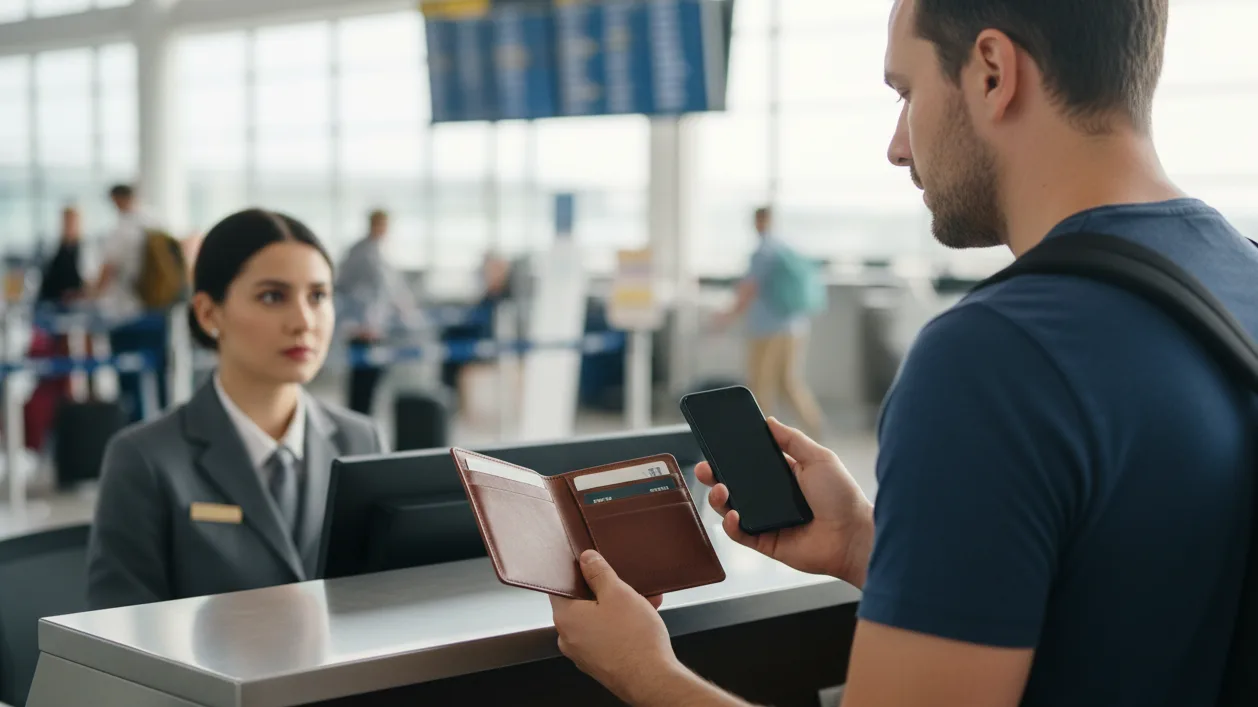
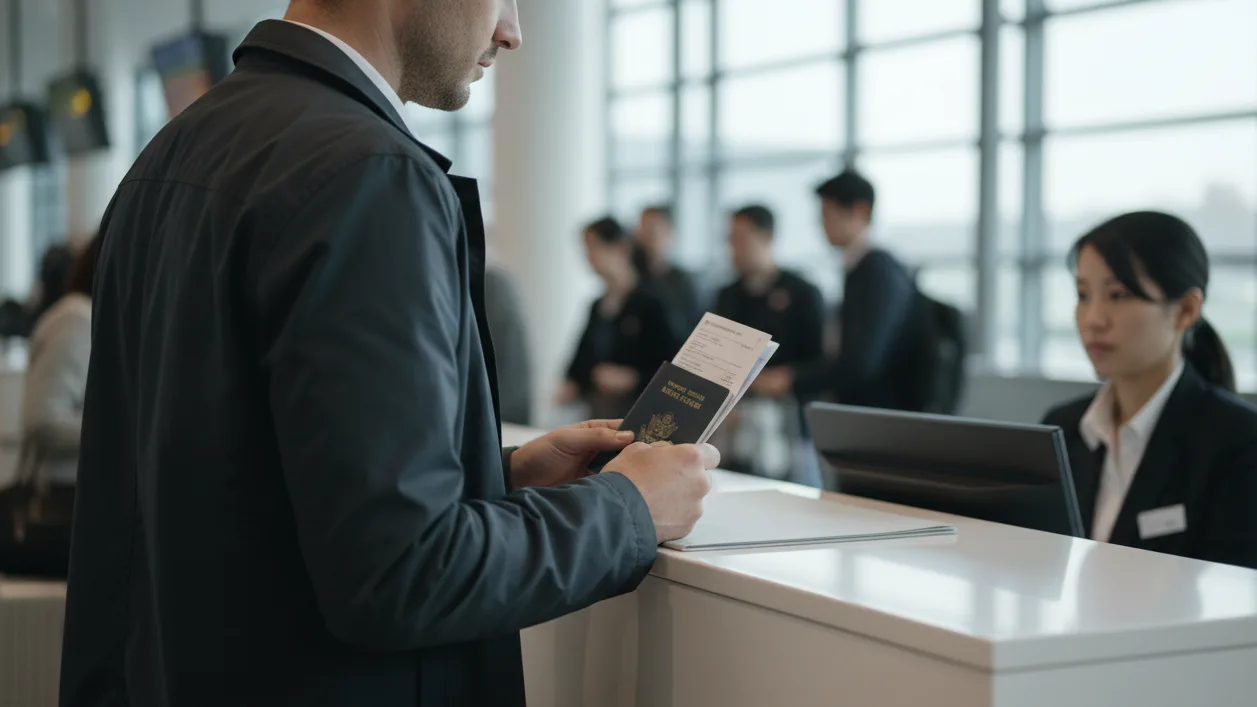
You land after a long flight, walk to the booth, and suddenly the officer says you are not entering today. Your passport may be held. Your phone may be watched. Your bags may be delayed while the airline and border team decide what happens next. It feels personal, but the process is usually procedural: immigration is testing whether your trip still matches the entry rules, your stated purpose and the proof you can show quickly.
This guide explains what normally happens if entry is cancelled or refused on arrival, why it happens, what you can say without making it worse, and how to rebuild your travel proof for the next attempt. The goal is not panic. The goal is clarity: a believable travel story, a clean exit plan, and documents that say the same thing under pressure.
Key facts before you deal with an arrival refusal:
- An approved visa, eTA, ETA or visa-free status does not always guarantee entry at the border.
- Entry cancellation, refused entry, denied admission and withdrawal of entry request can mean different things depending on the country.
- Border officers usually focus on purpose, funds, accommodation, luggage signals, prior travel history and proof that you will leave.
- A missing or weak onward ticket can turn a flexible trip into an open-ended trip in the officer’s mind.
- Your safest response is calm, short and document-led: explain the plan, then show proof that supports it.
- After a refusal, keep the paperwork because future visa and entry forms may ask whether you were ever refused or denied entry.
Need a clean exit plan before the airline counter or border booth asks? Create a fresh onward ticket with DummyFlights and keep your route, date and passenger details easy to verify.
Create Your Onward TicketIn This Guide
Official-source check: Rules vary by country, but border authorities usually retain discretion at arrival. Singapore ICA lists entry requirements such as valid travel documents, sufficient funds and return or onward tickets where applicable. U.S. CBP explains that travelers are inspected at entry and admission is determined by officers at the port of entry. European Commission Schengen guidance focuses on supporting documents that show journey purpose, accommodation, means of support and intention to leave. Sources: Singapore ICA entry requirements, U.S. CBP international visitors guidance and European Commission Schengen visa guidance.
Reviewed for: airport entry-refusal sequence, secondary inspection wording, onward and return proof risk, dummy ticket claim safety, future visa disclosure risk, calm-response guidance, official-source alignment and contextual link rotation.
“You’re Not Entering Today”: What Usually Happens Next At The Airport
The moment an officer says your entry is being cancelled, refused or held for further review, the conversation changes. At airports such as Heathrow, Frankfurt, Dubai, Toronto Pearson, Singapore Changi, JFK or Amsterdam Schiphol, the local terms and paperwork can differ, but the logic is similar. The officer is no longer doing a quick stamp-and-go check. They are deciding whether your entry story is safe, legal and supported by proof.
The two meanings of “entry cancelled”
At the counter, “cancelled” can mean two very different things. Sometimes it is informal language used by airline staff or a frontline officer to describe a deeper inspection. In that case, no final decision has been made yet. You are being moved away from the line so the team can review your documents without pressure from the queue.
In other cases, it means a formal refusal or denied admission decision is being prepared. In the Schengen area, for example, a traveler may receive a refusal-of-entry form with a stated reason. In the United States, an officer may decide that the traveler is not admissible even after the traveler was allowed to board. In some countries, a traveler may also be offered the option to withdraw the request to enter and leave voluntarily on the next flight.
The wording matters because it affects what gets recorded and how you answer future visa or entry questions. If you are given paperwork, keep it. If you are not sure whether it was a formal refusal, ask politely what the outcome is called in their system. Do not guess later from memory if a future form asks whether you have ever been refused entry, removed, denied admission or asked to leave.
Where your passport goes and what that signals
When your passport leaves your hand for an extended check, the decision is no longer casual. It does not automatically mean a ban. It usually means the officer wants a clearer explanation before admitting you. Your passport may be placed in a tray, held behind the desk, passed to a supervisor or kept while checks are run against border records and airline data.
Common signals you may notice include:
- Your passport is held longer than usual.
- You are asked to sit in a separate area.
- An officer says they need to verify something.
- Questions become specific to your flight timing, route, hotel, funds or return plan.
- A second officer repeats the same questions to test consistency.
That moment can feel intimidating, but your best move is boring clarity. Do not flood the officer with every screenshot on your phone. Do not argue about what other travelers were allowed to do. Show the document that answers the question they asked, then stop talking long enough for them to read it.
The typical timeline from primary booth to return flight
Once you are referred to secondary inspection, the clock usually moves in stages. First, you wait. Waiting is often the longest part because officers may be handling multiple cases, checking databases, speaking with supervisors or contacting the airline. Then comes the interview. The questions usually lock onto a few practical points:
- Why did you choose this destination?
- How long will you stay?
- Where exactly will you stay?
- How much money do you have for the trip?
- What do you do at home?
- When and how will you leave?
- Does your luggage match the trip length you described?
If the officer is satisfied, you may be admitted. If not, the process may move toward withdrawal, refusal or return arrangements. The airline may be informed. A return routing may be arranged on the same carrier or another available flight. You may remain in a controlled area until departure. In some places, you may not freely leave the airport terminal once the refusal process begins.
What happens to your phone, bags and companions
Your phone and bags can become part of verification, not necessarily punishment. You may be asked not to record, not to make calls freely or to open a specific email, itinerary, hotel confirmation or bank screen. Some countries have legal powers to inspect devices under border rules. Others may simply ask you to show a booking confirmation. The practical rule is simple: do not hide, delete or change anything while you are being questioned.
Checked luggage can also create a delay. If your bag has already gone to the carousel, airline staff may need to retrieve it before placing you on a return flight. If you were traveling with family, friends or colleagues, outcomes can split. One person may be admitted and another refused if their documents, answers or travel histories differ. That is why each traveler should carry their own proof, not rely on one person’s phone.
What you may be asked to prove in five minutes
Border interviews move fast because officers are testing credibility, not reading a long visa file. In a short arrival interview, you usually need to prove three things that match each other:
- Purpose: a simple reason for travel that fits the route and visa status.
- Timeline: clear arrival, stay length and departure intent.
- Exit plan: return or onward proof that is readable, date-aligned and believable.
If you arrive in Madrid for a short stay but cannot show how you leave the Schengen area, your story feels unfinished. If you arrive in Bangkok with a return date that contradicts the stay you describe, it looks like you are adjusting your answer in real time. If you arrive on a one-way ticket and say you will “decide later,” the officer may hear “open-ended stay,” even if your real intention is harmless.
Outcomes ladder: clarification, withdrawal, refusal or return
Not every negative airport outcome has the same weight. Sometimes the officer only needs clarification. A hotel address, onward booking, host number or proof of funds may be enough to complete the picture. Sometimes the officer may allow a shorter or more controlled stay than you expected. In other cases, you may be offered a chance to withdraw your request to enter and leave before a formal refusal is issued.
A formal refusal usually comes with a written reason or reference to a rule. Common reasons include doubts about purpose, insufficient funds, lack of accommodation, missing onward proof, inconsistent answers or concern that the traveler will not leave on time. In serious cases, a visa or travel authorization can be cancelled and a future ban may be considered. Many cases are more limited: the traveler is simply not admitted on that arrival and is placed on a flight out.
The quiet cost: missed connections, cancellations and who pays
Refusal triggers immediate logistics. If you were connecting onward, missed connections can create a chain of lost bookings. Hotels, tours, rental cars and internal flights may become non-refundable depending on their rules. Airlines often control return routing once refusal is confirmed, but travelers may still face change fees, fare differences or new ticket costs. Travel insurance may not cover denied entry if the policy excludes immigration refusal.
That is why a clean entry file is cheaper than an airport rescue. The cost is rarely only the return flight. It is the hotel you cannot use, the connection you miss, the next visa form you must answer carefully and the time spent rebuilding confidence for the next trip.
Why Border Officers Pull The Plug

Most refusals on arrival are not about one missing paper. They happen when your flight choices, answers and documents do not form a believable plan. Border officers are trained to spot mismatches quickly because they may have only minutes to decide whether your travel story is genuine, complete and within the rules.
Your route tells a story before you speak
Your flight pattern creates the first impression. A round trip that matches a seven-day hotel booking sends one signal. A one-way arrival, vague accommodation and no exit plan sends another. A route that enters one country, claims tourism in another and exits from a third without ground transport proof can create a long conversation before you have said much.
Flight patterns that often trigger deeper questioning include:
- One-way arrival into a major hub with no onward ticket on file.
- A return date far beyond the stay stated at the counter.
- A zig-zag route with extra stops and no clear reason.
- A return from a different country without proof connecting the route.
- An itinerary that conflicts with hotel, event, leave or invitation dates.
If you say “one week” but your flight plan says “three months,” the officer does not need to prove you are lying. They only need enough doubt to keep asking. Your job is to remove that doubt with a consistent route, not with a dramatic explanation.
The onward or return ticket test
Onward or return proof is one of the fastest credibility checks at the border. It answers a core question: how do you leave, and when? When you cannot show that, your trip can look open-ended even when your intentions are honest. For travelers who need the basic concept first, the what is a dummy ticket guide explains how temporary travel proof differs from a random screenshot or edited PDF.
Problems that commonly fail the exit-proof test include:
- The booking email does not show your passenger name clearly.
- The route is incomplete or does not show exit from the required country or zone.
- The booking cannot be checked quickly through normal reservation details.
- The onward date conflicts with what you just told the officer.
- You describe the proof as “only for formality,” which makes it sound disposable.
If your plan is to buy later, the officer may hear, “I arrived without an exit plan.” That is the opposite of what many entry checks want to see. Flexibility is fine, but it needs boundaries the officer can understand.
The consistency audit: dates, cities and small mismatches
Small mismatches become bigger at the border because they appear under pressure. An overnight flight may depart on Monday and arrive Tuesday. A traveler may say the departure date instead of the arrival date. A hotel may start the day after a late-night arrival. A return flight may leave from a different airport from the one the traveler mentions. Each detail can be explainable, but stacked together they look messy.
Other avoidable friction points include:
- You state a 10-day stay, but your return is eight days out.
- Your inbound city and outbound city do not match your stated route.
- Your onward flight departs before the connecting flight arrives.
- Your hotel dates leave a large unexplained gap.
- Your invitation letter, conference date or leave approval points to a different timeline.
The officer is not grading your travel creativity. They are checking whether the file makes sense quickly. A simple, imperfect but coherent plan is safer than a polished-looking plan that contradicts itself.
Luggage and packing signals that contradict your purpose
Your bags are part of the interview even when nobody opens them. A three-day city break with several large suitcases may invite questions. A tourist trip with work tools, uniforms, product samples or relocation-style packing can make the officer recheck your visa status. A family visit with no clear return plan and heavy luggage may look like a possible long stay.
You do not need to pack like a minimalist. You need the packing to match the story. If there is a reason for unusual luggage, be ready to explain it in one sentence and support it if needed. For example, conference materials, medical equipment, winter clothing or gifts for family are easier to understand when the rest of the trip is already consistent.
Funds, employment and home-base questions without the jargon
Officers are not asking about “ties” as an abstract concept. They are checking whether the trip has a stable base and a clear end. A clean return or onward plan can reduce how deeply they dig into funds and employment because it shows the trip has a boundary.
When questions come, clarity helps more than volume:
- Show one readable funds document instead of ten confusing screenshots.
- Explain your work or study situation in plain language.
- Match your leave dates, event dates and return date.
- Keep proof of your next destination if your exit is not back home.
What hurts is contradiction. If the bank statement, hotel booking, flight date and spoken answer all point in different directions, the officer may decide there is no reliable timeline.
Prior travel history and future visa applications
Border systems often surface patterns quickly. Multiple long stays, repeated visa-free entries, back-to-back runs, extensions close to the maximum allowed stay or previous refusals can all make a new arrival more sensitive. That does not mean you will be refused. It means your current plan needs to look especially complete.
Two patterns commonly lead to tougher questioning:
- Leaving briefly and returning quickly after a long stay.
- Arriving again with the same weak exit proof that caused questions before.
If you have a prior refusal, your next file should show what changed. A stronger route, better funds proof, clearer accommodation and cleaner exit proof are more persuasive than a long defensive explanation.
High-fragility situations where minor issues become major
Some arrivals have less tolerance for uncertainty. Late-night landings may mean fewer staff and less patience for long explanations. Language barriers can turn a small mismatch into a bigger issue. Tight onward connections can make a plan look unrealistic. Peak travel periods can make officers move faster and ask sharper questions.
High-fragility setups include:
- Arriving with a one-way ticket during a busy season.
- Landing with an itinerary you cannot explain in sequence.
- Using an onward flight to a country where you do not yet have entry permission.
- Needing to buy proof while standing at the counter with weak signal or payment issues.
- Traveling as a group when each person gives a different reason for the trip.
The solution is not more noise. It is cleaner alignment before travel: route, date, passenger name, hotel, funds and explanation pointing to the same trip.
If It’s Happening Right Now: Respond Without Making It Worse

At the counter, speed matters as much as paperwork. Your goal is to give immigration authorities a clean, verifiable story they can confirm quickly without adding new doubts. This is the moment to become calm, boring and precise.
First 60 seconds: stay in the possible-yes zone
Your first job is to remain calm. That single choice reduces security concerns and keeps the interaction practical. Stand still. Listen fully. Answer only what was asked. A border officer is watching how you handle pressure, not only what documents you carry.
If you feel rushed, use one simple sentence: “I can show the supporting documents now.” Then open the exact document that answers the question. Do not narrate your whole travel history. Do not complain about the airline. Do not compare yourself with other passengers.
What to say when they question your purpose
Say your purpose in a short line that matches your status and flight dates. Good answers are specific and contained:
- “I am here for a seven-day visit and I fly out on Sunday.”
- “I am attending the event from Monday to Wednesday, then returning on Friday.”
- “I am transiting and continuing to my next destination on this booking.”
Risky answers sound open-ended or improvised:
- “I might extend.”
- “I will figure it out after I enter.”
- “My friend will decide later.”
- “The ticket is only for formality.”
If they ask about work, study, family or business, do not improvise. Tie your answer to the status you are using to enter and the documents you can show. If your purpose changes mid-interview, the officer may treat the entire story as unstable.
The document triage: what to show first
Show items that can be verified in under a minute. Lead with what anchors your timeline, then keep supporting proof ready. The first layer usually includes:
- Passport and visa, ETA, eTA or arrival-card confirmation if required.
- Inbound boarding pass or booking record.
- Return or onward reservation with passenger name, route, date and reference.
- Accommodation proof with dates and address.
- Readable funds proof that matches the trip length.
The second layer can include a simple trip plan, invitation letter, conference registration, employment leave approval, student documents, sponsor letter or proof for a special situation. In many countries, officers are not impressed by volume. They want a coherent set that fits the entry rules.
Fixing the #1 fixable problem: missing onward or return proof
If the issue is “How do you leave?” solve that first in a way the officer can understand. A usable exit proof has three traits:
- It shows the correct passenger name.
- It gives a believable departure date inside the allowed stay.
- It uses a route that makes sense with the destination, visa status and next country.
If you need to obtain proof on short notice, focus on one clean itinerary rather than several screenshots. A fresh dummy ticket for visa or onward proof should support the existing story, not create a new one. If the officer asks for a specific departure window, align the document to that instruction instead of guessing.
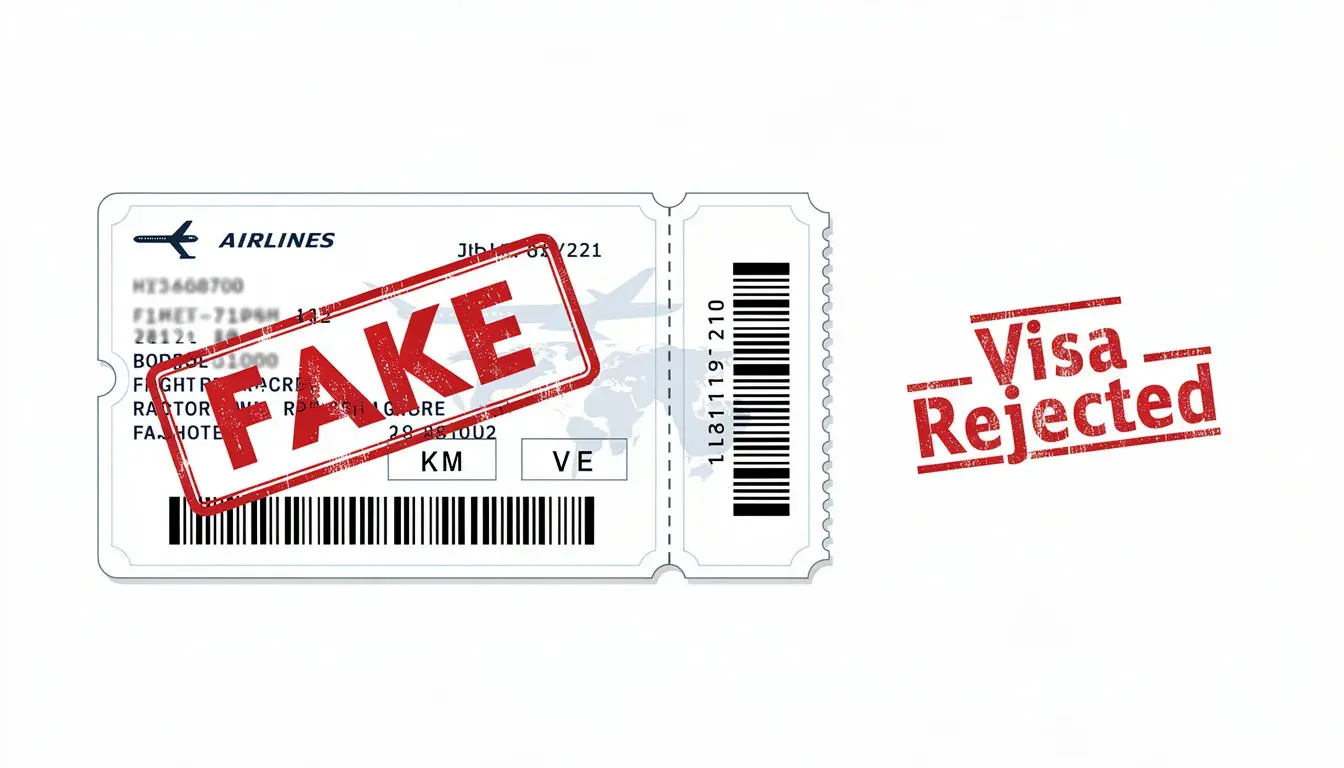
Do not edit a PDF, change a name manually or present a screenshot that cannot survive basic review. If the officer sees mismatched names, impossible dates or random airports, it can look like you are patching the plan under pressure.
A simple consistency script
When you are stressed, your words drift. Use a fixed structure so your answers stay aligned:
- “I am visiting for X days.”
- “I am staying in City A and City B.”
- “I leave on Date from Airport.”
Then let the officer check the documents against that structure. Do not add side stories about other countries you might visit later unless asked. If your plan is flexible, frame the flexibility inside the permission you already have, not as an open-ended idea.
When to ask for an interpreter or consular contact
If you do not understand what is being said, ask for an interpreter early. Misunderstandings can lock you into statements that do not reflect your real plan. It is better to pause than to agree to something you do not understand.
If you are refused entry and your passport is not returned promptly, ask how you can contact your embassy or consulate for assistance. Consular help usually does not force a country to admit you, but it can help with emergency documents, communication and basic welfare if the process becomes confusing.
What not to do
Avoid actions that look evasive or confrontational. Do not:
- Argue about rules you cannot cite.
- Delete messages, bookings or browser tabs while being questioned.
- Offer several different routes in the same conversation.
- Say you plan to work if you are entering as a tourist.
- Describe travel proof as fake, disposable or only for formality.
- Hand over a phone full of unorganized screenshots and expect the officer to find the answer.
If the future problem is a visa file rather than a border-only trip, route evidence has to be built more carefully. BookForVisa’s visa flight itinerary requirements guide is the cleaner place to handle flight-itinerary structure without turning this DummyFlights page into a flight-reservation-for-visa page.
After A Refusal: How It Affects Future Travel
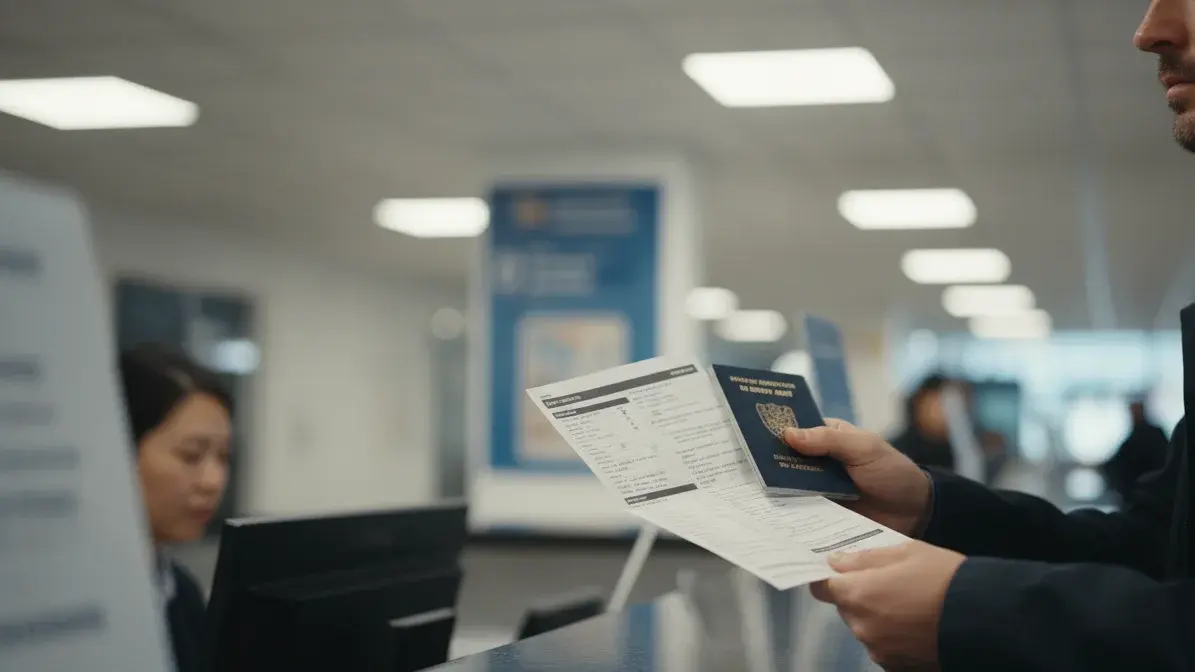
A refusal at the border is not only a bad day at the airport. It can create a record that shapes how officers read your next trip. That does not mean your travel future is over. It means the next attempt has to be cleaner than the failed one.
The paper trail after you are turned around
After a refusal, expect more than a conversation to exist. You may receive a notice with a reason or code. Your passport may receive a refusal stamp, or it may stay visually clean while the record exists in a system. Airline records may also show that you were returned, denied boarding onward or rebooked after refusal.
What can exist after the flight home:
- A refusal notice or letter.
- Border-system notes tied to your passport details.
- Airline records showing return routing.
- Cancellation or disruption records from hotels and onward travel.
- Your own messages and receipts from the incident.
Do not assume “nothing happened” because your passport pages look normal. The absence of a visible stamp does not mean the refusal is invisible. Keep every piece of documentation because future applications may require accurate disclosure.
The next form problem: “Have you ever been refused entry?”
This question appears across many visa and travel-authorization forms. If you were refused at arrival, treat it seriously unless you have clear paperwork stating it was something else. The issue is not only the refusal itself. It is whether your new answer matches what authorities can already see.
What helps you answer cleanly later:
- Keep the refusal paperwork.
- Write down the date, airport, airline and reason given.
- Save return-flight and rebooking messages.
- Record what documents were missing or questioned.
- Explain what changed before the next application or trip.
A simple truthful explanation is usually safer than an omission. If a future officer can see the refusal and your form says nothing happened, the new problem becomes credibility.
Rebooking and financial damage control
The first 24 hours are about logistics. Start with the route home, then manage missed connections, refunds and insurance. Many carriers will arrange the next flight out as part of the refusal process, but you may still need to handle costs linked to the ticket conditions.
Practical steps after refusal:
- Ask the airline for written confirmation of return routing if available.
- Cancel hotels, tours and internal transport immediately.
- Save receipts for rebooking, meals and local transport.
- Open any travel-insurance claim early and keep the claim reference.
- Check whether a new visa, ETA or permission is needed before trying again.
If your passport is lost, held by mistake or not returned through the normal process, contact your embassy or consulate. In rare cases, emergency travel documents may be needed to return home.
How To Rebuild A Border-Proof Trip Profile
For your next attempt, the goal is to remove ambiguity. You want your trip to read like one simple timeline from check-in to departure. This is not about carrying more paper. It is about carrying paper that supports one clear point: you know why you are entering, where you are staying, how you will pay and when you will leave.
A stronger profile usually includes:
- A flight timeline that shows entry and exit clearly.
- Accommodation proof that covers the stay or explains split stays.
- Funds proof that fits the trip length.
- A purpose statement you can say in one sentence.
- Support documents that match the same dates and cities.
- Past refusal paperwork with a short explanation of what changed.
If the refusal was caused by unclear intent, your next file should show a tighter schedule. If the problem was missing onward proof, your next trip should not repeat that gap. If the issue was a route that looked unrealistic, simplify the route before trying again.
Smarter onward and return planning
Flexibility is fine, but it must still look controlled. Your return or onward proof should exist, match your stated stay and look legal when checked quickly. If your plans may change, build flexibility inside a clear structure rather than arriving with no structure at all.
Practical ways to stay flexible without looking open-ended:
- Use a departure date inside the allowed stay window.
- Avoid mismatched airports that require a long explanation.
- Keep departure proof consistent with hotel, leave or event dates.
- Update every supporting item when dates change.
- Make sure the next country is realistic for your passport and visa status.
If you need a broader current-year strategy around temporary travel proof, the dummy ticket for visa complete guide explains timing, route logic, PNR visibility, hotel alignment and visa-file consistency in more detail.
When it might be better to change your plan before flying again
Sometimes the smartest move is not “try again next week.” If you reattempt entry with the same weak signals, the next officer may see the same pattern and treat the case more seriously. Pause and rebuild if:
- You cannot explain your trip in one clean sentence.
- Your funds story depends on unclear transfers or cash movements.
- Your return or onward plan is still uncertain.
- Your hotel or host arrangement is incomplete.
- Your previous refusal reason has not been fixed with proof.
One clear improvement is better than ten pages of extras. If the refusal reason was “no proof of departure,” fix proof of departure. If it was “purpose unclear,” fix purpose clarity. If it was “insufficient funds,” fix funds documentation. Do not bury the answer inside a pile of unrelated documents.
Make Your Entry Story Easy To Verify At The Border
When immigration cancels entry on arrival, the outcome often turns on whether your flight plan and answers stay consistent under quick checks. You cannot control every question from a border officer, but you can control the proof you carry and the way you explain it.
Before your next trip, rebuild your travel bundle so it reads like one timeline: entry, stay, funds, accommodation and exit. If you have past refusal paperwork, keep it ready and stay consistent across future visa applications. If you need onward proof, make it clean, fresh and aligned before the airport counter becomes the place where your flexibility is tested.
Flying with a one-way route, flexible exit plan or previous entry concern? Create a clean onward ticket with DummyFlights before the officer asks how you leave.
Create Your Onward TicketFAQ
What happens if immigration cancels your entry on arrival?
You may be moved to secondary inspection, asked for more proof, interviewed about your purpose and exit plan, then either admitted, allowed to withdraw, formally refused or placed on a return flight. The exact process depends on the country and the reason for the concern.
Is entry cancellation the same as deportation?
Not always. Many airport cases are refusals of entry or denied admission before the traveler is legally admitted. Deportation or removal can carry different legal consequences. Keep the paperwork and use the exact wording from the official notice when answering future forms.
Can a missing onward ticket cause denied entry?
Yes, it can contribute to denied entry when the destination expects proof that you will leave. A missing onward ticket does not automatically cause refusal everywhere, but it can make a flexible trip look open-ended when officers are already checking purpose, funds or stay length.
What should I show first in secondary inspection?
Show the proof that answers the exact concern first. For most travel-plan questions, that means passport or visa status, inbound boarding pass, onward or return proof, accommodation, funds and any invitation or event document that explains the purpose.
Can I buy onward proof at the airport?
Sometimes, if the officer or airline gives you a chance to fix missing exit proof. The document must match your name, route, date and allowed stay. Do not edit documents or create fake-looking screenshots under pressure.
Will refused entry affect future visas?
It can. Many visa and entry forms ask about previous refusals, denied entry or removal. A past refusal is usually easier to handle when you disclose it accurately, keep the paperwork and show that the original problem has been fixed.
Should I tell the officer my travel plans are flexible?
Only if you can define the flexibility clearly. Saying “I will decide later” can sound open-ended. A safer answer explains the fixed boundary: how long you plan to stay, where you will go next and what proof shows that exit plan.
How do I avoid entry cancellation next time?
Build a simple travel bundle before flying: clear purpose, readable funds, accommodation that matches dates, onward or return proof, and answers that match the same route. If you were refused before, carry the refusal paperwork and a short explanation of what changed.
This guide is general travel-document information, not legal advice. Immigration rules and border procedures vary by country, airport and traveler profile. Always follow the instructions of the airline, border authority, embassy or consulate handling your case.