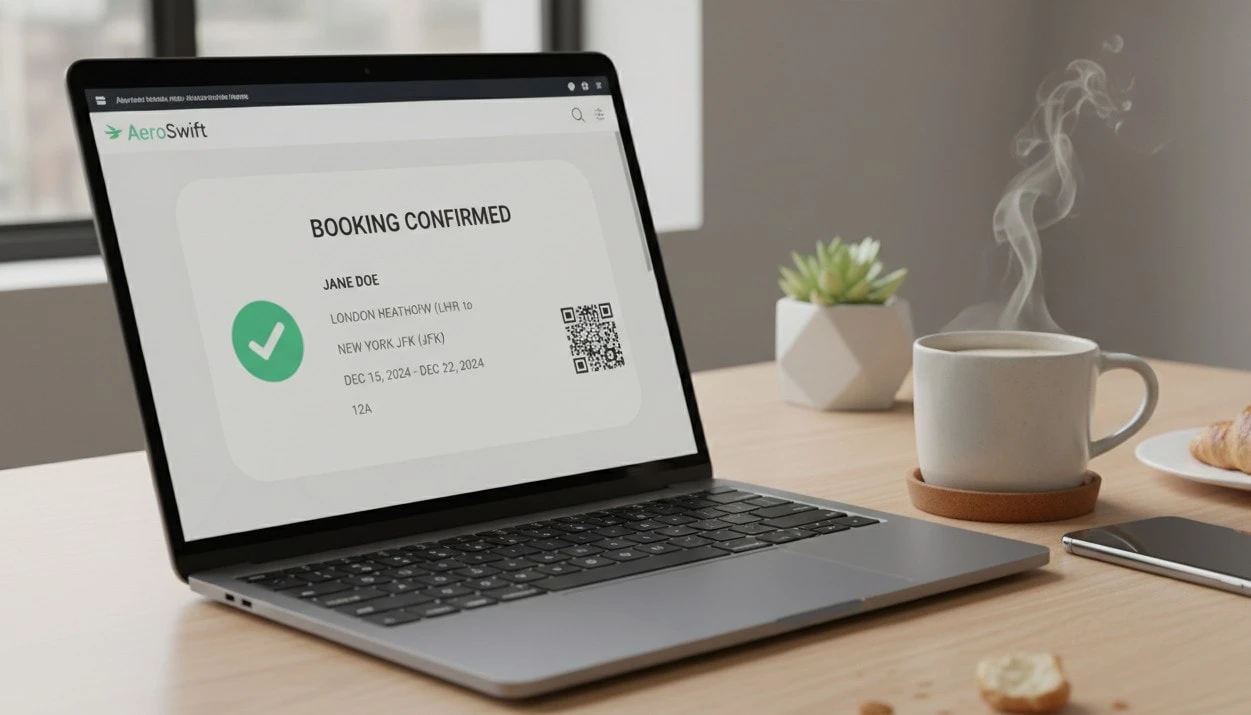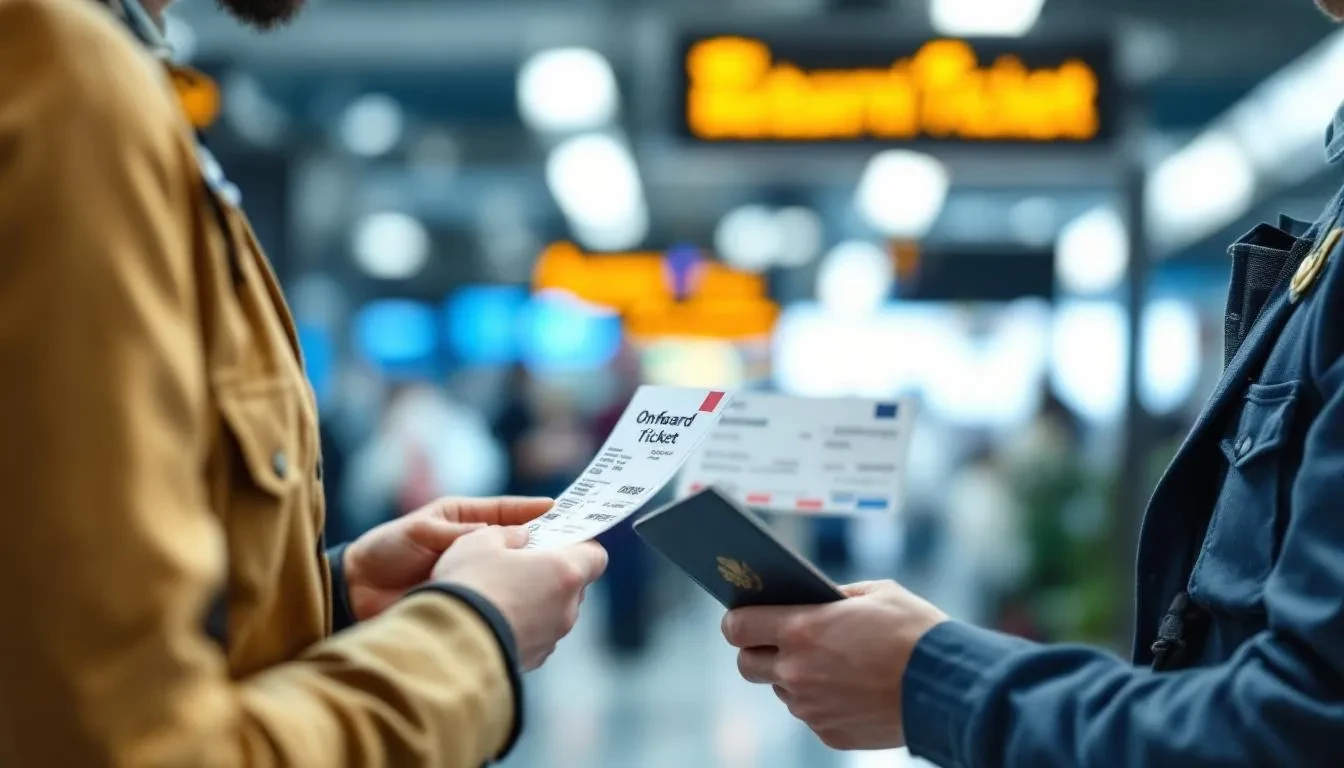

Short answer: If you are flying on a standby-style fare, prepare a truthful onward ticket that shows a clear exit date and route even if your final seat is not confirmed. Keep the standby eligibility, passenger name, destination rules and onward PNR consistent, and verify the reservation before check-in. Onward proof supports planning; it cannot guarantee boarding, approval or entry.
Key facts
- Standby status describes how you may board; an onward ticket answers when and where you plan to leave.
- Use a real, retrievable PNR and passport-matching passenger details rather than an edited screenshot.
- Leave a realistic buffer because the standby departure can move while your exit proof remains date-specific.
- Airline, immigration and visa requirements vary, so confirm the current rule before relying on any document.
Need onward proof while your standby seat is uncertain? Choose a realistic exit route, match your passport details and check the PNR before you travel.
Create your onward ticketIn This Guide
- Why Standby Flying Creates A Ticket Problem At Immigration Counters
- How Standby Actually Works Across Major Airlines (And Why It Isn't Free)
- Building A Travel Plan That Satisfies Both The Gate Agent And The Border Officer
- Practical Steps To Board Your Standby Flight And Clear Immigration Without Delay
- A Standby-Ready Approach To Onward Travel That Actually Holds Up
Official-source check: Confirm standby, transit, onward-travel and entry instructions with the destination embassy, immigration authority or visa centre, and check the airline’s own document requirements before departure. For passport, visa and entry-rule cross-checking, consult the IATA Travel Centre. Rules and reservation status can change.
Reviewed for: standby-style fare uncertainty, onward-ticket timing, airline check-in checks, PNR verification, route buffers and claim-safe travel-proof guidance.
Standby fares look tempting until you reach the immigration counter and realize your travel status is still open. A confirmed seat may not be guaranteed until boarding actually starts, yet many destinations or carriers may request clear exit proof before they let you in at all.
That gap between "you might fly today" and "prove exactly when you're leaving" is the real problem standby travelers face. Airlines treat standby as flexible travel. Immigration officers treat it as an unanswered question, and neither side is going to bend their process to fit the other.
This guide breaks down how standby flying actually works, what an onward ticket needs to show, and how to build a travel plan that satisfies both the gate agent and the border officer. For travelers who need a flexible exit date without locking into one flight, a dummy ticket can hold that place until your standby seat is confirmed.
Why Standby Flying Creates A Ticket Problem At Immigration Counters
If a visa checklist also requests a flight reservation for visa, keep its dates consistent with the standby and onward documents.

Standby flying and onward travel documentation solve two different problems, and travelers often assume one covers the other. It doesn't. The airline only cares whether a seat opens up. The immigration officer only cares whether you have a plan to leave.
What An Onward Ticket Is Actually Checking For
An onward ticket is proof of travel showing exit from the destination country. It tells the officer stamping your passport that you aren't planning to overstay, work informally, or disappear into the country without a return path. Immigration authorities require proof of an exit plan before entering a country. This requirement doesn't bend based on how you got your inbound flight.
Here's where standby travelers run into friction. Your inbound flight might have been secured through a fare class that allows flexible changes, employee travel privileges, or a same-day standby request. None of that matters to the officer reviewing your paperwork. Border control does not accommodate internal airline terminology for tickets. Saying "I'm flying standby" means nothing to someone checking exit dates. They want a ticket number, a date, and a destination.
This is why travelers who fly standby regularly still need a completely separate mental model for their onward documentation. One process gets you a seat. The other gets you across a border without a second conversation. Mixing the two, or assuming a friendly gate agent's explanation will translate into an acceptable answer at immigration, is where most of the confusion starts. The two systems don't talk to each other, and they were never designed to.
The Mismatch Between Standby Status And A Fixed Ticket
A rigid onward ticket can become invalid if standby status changes. Say you print a confirmed return flight for the 14th, but your outbound standby seat only opens up on the 16th. Now your paperwork says you'll be gone before you've even arrived, which raises more questions than it answers.
This is the exact tension this guide addresses. Standby flying, by its nature, involves:
-
Uncertain departure timing tied to seat availability
-
A backup plan instead of a locked schedule
-
Wait times that shift based on how full each flight runs
Meanwhile, immigration officers require clear onward travel proof that doesn't leave room for guesswork. Standby travel lacks guaranteed departure dates. A strict one-flight, one-date onward ticket can actively work against you if your travel plans shift by even a day.
Why This Matters More On International Routes
Domestic standby flying rarely triggers this issue since there's no passport control involved. International flights are different. The moment you cross a border, someone is going to ask how and when you plan to leave. If you're flying standby on the way in, and your onward ticket doesn't account for the possibility of a delayed or shifted arrival, you're creating a paperwork gap before your trip even starts.
This is particularly relevant for:
-
Leisure travel where flight timing is secondary to being flexible on dates
-
Travelers using employee or companion travel privileges
-
Anyone who booked based on open seat availability rather than a locked schedule
Picture a traveler flying on a companion pass, hoping to catch an earlier flight to make a connection. The standby seat doesn't clear until the second attempt, pushing arrival back by nearly a full day. If their onward ticket was booked for a fixed date assuming the first attempt worked, they now land in a new country holding paperwork that contradicts their actual arrival. That's not a paperwork technicality an officer will overlook. It's exactly the kind of inconsistency that triggers additional questioning.
The fix isn't complicated, but it does require rethinking how you approach the onward ticket step. Instead of treating it as a formality to book once and forget, standby travelers need to treat it as a moving document that has to stay accurate no matter which day they actually board. That starts with understanding exactly how standby travel works behind the scenes, and why it isn't the free-for-all many travelers assume it to be.
How Standby Actually Works Across Major Airlines (And Why It Isn't Free)
Most people assume standby means flying for free whenever a seat happens to open, with a guaranteed seat waiting the moment they request standby. That assumption causes more onward ticket problems than almost anything else, because travelers build their exit plan around a boarding method that isn't guaranteed and, in many cases, isn't free either. Understanding how flying standby work actually happens behind the scenes is the difference between a smooth swap to your next flight and a stressful scramble at the gate.
What Standby Means In Practice
Standby means being placed on a list to take an open seat on a flight you're not confirmed on, whether that's an earlier flight, a later flight, or a different flight entirely. Standby passengers wait for available seats after confirmed passengers board. This means your entire travel timeline depends on how full that specific departure runs.
Major US airlines generally offer two related but distinct options:
-
Standby: Typically free, and lets you request a seat on a different flight the same day
-
Same-day confirmed change: A paid option that locks in a seat before you even reach the gate
Standby is typically free, while confirmed changes cost $25-$75. The exact fee depends on the airline and fare class you originally booked. Confirmed changes cancel the original booking and replace it. Once you pay for the swap, your prior seat is gone and the new one is locked in. Same-day confirmed change guarantees a seat for a fee. It works that way in a manner standby simply can't match.
Standby does not guarantee a seat on the flight. This holds even when the list looks short, since confirmed passengers can still check in right up until the door closes. You could show up, get on the list, and still fly your original flight if no seat clears.
Who Gets Priority When Seats Open Up
Not everyone on the standby list has equal odds. Airlines typically rank by:
-
Elite members and top-tier loyalty status
-
Passengers who paid a fare difference to upgrade their standby priority
-
Same-day standby requests made earlier in the check-in window
-
Airline staff and airline employees traveling on non-revenue (non-rev) tickets
Non-rev travel deserves its own mention here, since it's one of the most misunderstood forms of standby flying. Airline employees, and sometimes their immediate family through buddy passes, can fly standby at little to no cost. But non-rev seats sit at the bottom of the priority list behind every paying passenger, which means flight attendant and airline staff standby seats often only clear on flights with plenty of empty seats.
Fare class plays a bigger role in this than most travelers realize. A passenger who paid full fare typically clears the standby list well before someone who booked the cheapest available seat, even if both requested the same flight at the same time. Elite members and travelers holding certain standby tickets are given higher priority for exactly this reason. This is worth knowing before you count on standby as part of your travel plan, since your original booking, not just your loyalty status, quietly shapes your odds.
Why Standby Isn't A Reliable Travel Backup Plan On Its Own
Flying standby cheaper than a confirmed change, yes, but cheaper doesn't mean dependable. Seat availability shifts constantly based on checked luggage counts, group bookings, and last-minute confirmed passengers. Standby services are subject to seat availability at departure. A route that looked wide open a week ago can fill up entirely by the time you're standing at the check-in desk.
This is exactly why an onward ticket built entirely around a standby flight is risky. If you're counting on catching an earlier flight home to make room for your next leg of travel, and that standby seat doesn't clear, your entire onward plan collapses on a technicality that had nothing to do with your actual travel intentions.
Think of standby as a bonus outcome, not the backbone of your itinerary. Plan your travel dates, and by extension your onward proof, around your original, confirmed booking. If a standby seat happens to clear and gets you home early, treat that as a welcome surprise rather than something your paperwork was depending on all along.
A Regional Example Worth Knowing
Standby policies also vary sharply by country, and assuming US-style free standby applies everywhere is a common mistake. No Indian airline offers free standby flying. Standby travel in India requires a paid same-day confirmed change. The informal, free standby list system common with major US airlines simply isn't part of the picture there.
A few specifics worth knowing if your itinerary touches India:
-
Air India's Fly Prior allows flying up to 12 hours earlier. This is a paid product, not a free courtesy.
-
IndiGo charges around Rs 1,800 for an earlier flight change.
-
DGCA rules do not guarantee free standby rights in India. There's no regulatory fallback if an airline declines your request.
This regional difference matters because travelers sometimes plan an onward ticket assuming standby works the same way everywhere. It doesn't, and building your document trail on the wrong assumption creates exactly the kind of mismatch immigration officers flag.
The lesson extends well beyond any single country. Whatever region your itinerary touches, check the airline's actual standby policies before assuming free, informal seat swaps are on the table. Some carriers publish this clearly on their website or app. Others only confirm it when you ask directly at the check-in desk. Either way, knowing the real cost and process ahead of time keeps your onward proof grounded in what's actually possible, not what you assumed based on a different airline's rules.
Building A Travel Plan That Satisfies Both The Gate Agent And The Border Officer
For broader visa-file planning, compare the standby exit plan with the dummy ticket for visa 2026 complete guide and then follow the destination’s current checklist.
Once you understand that standby is a probability, not a promise, the next step is building an onward ticket that holds up regardless of which flight you actually board.
Choosing A Flexible Reservation Over A Rigid One
A flexible onward reservation is better for standby travelers. Instead of locking in one flight number and one departure time, use a reservation type that can absorb a shift in your actual boarding day without becoming invalid.
Immigration officers require clear onward travel proof. That doesn't have to mean rigid. What it needs to show is:
-
A confirmed exit route out of the country
-
A destination that matches your stated travel plans
-
A date window that's realistic given your entry date
A refundable ticket may be safer for strict destinations. Some destinations are known for closer scrutiny of exit documentation, and if your itinerary includes one of them, err toward a reservation type that won't box you in if your standby flight runs a day later than planned.
Cost is often the deciding factor here, and understandably so. A fully refundable ticket carries a real price tag, which is why many standby travelers look for a reservation that satisfies the destination's requirements without the extra cost of a fully changeable fare. The goal isn't the most expensive option available. It's the one that matches how strictly your specific destination checks onward proof.
Carrying Two Types Of Proof, Not Just One
Standby travelers should carry both travel privilege and onward proof. Your standby eligibility (an employee ID, a companion pass, or a loyalty confirmation) proves your right to request the seat. Your onward ticket proves your intent to leave the country by a workable date. These are separate documents serving separate audiences, and conflating them is where most travelers slip up.
Having a confirmed onward ticket increases the likelihood of boarding a standby flight. Gate agents occasionally weigh a traveler's overall itinerary when clearing tight connections, and a clean onward plan works in your favor. It also removes any doubt at the immigration counter, since you're not relying on a verbal explanation of your fare type to justify your travel plans.
Keep both documents easy to produce separately. If an officer or agent asks for one, you don't want to be searching through a single folder of mixed paperwork trying to explain which document answers which question. A clean split between "how I'm getting on this flight" and "how I'm leaving this country" saves time at exactly the moments when time matters most.
Spacing Out Your Dates Realistically
Travelers should allow for extra time between arrival and onward travel dates. This matters most when standby is part of the plan. If your outbound leg depends on catching a standby seat, don't schedule your onward flight for the same afternoon. Four hours of buffer at the airport won't help if your entire international arrival is delayed by a full day because no seat cleared on your original flight.
A workable buffer usually includes:
-
At least one full day between international arrival and your next confirmed booking
-
A reservation type that allows a free or low-cost date change if your standby leg slips
-
A backup plan for lodging or transit if your arrival date shifts
Matching The Reservation To Your Actual Ticket Type
Basic economy fares typically don't allow same-day standby requests at all, which changes how you should plan your onward proof. If your original booking sits in a restrictive fare class, don't assume you'll have standby flexibility on that leg. Check your fare class before assuming standby is even an option, since airline policy on this varies by ticket type, route, and even individual flight.
International standby, in particular, tends to be far more limited than domestic standby. Many international routes don't offer same-day standby the way domestic same-day standby does, since international flights involve fixed customs and manifest requirements that domestic flights don't. If your travel plan assumes standby flexibility on an international route, verify that with the airline directly rather than assuming US-style domestic rules apply.
This is also where most airlines differ the most from each other. One carrier might allow a same-day switch to a different flight on the same international route for a modest fare difference, while another blocks the option entirely once the manifest is locked. Since airline policy shifts by carrier, route, and even the specific flight number, treat any assumption about international standby as unconfirmed until you've checked it against your actual booking.
Practical Steps To Board Your Standby Flight And Clear Immigration Without Delay
With the reservation strategy in place, the last piece is execution, both at the airport and at the border.
Before You Even Leave For The Airport
Check your eligibility for standby before arriving at the airport. Confirm through the airline's app or website whether your fare class, loyalty tier, or employee status qualifies for standby on your specific flight. Some routes block standby entirely regardless of ticket type, so this step saves you a wasted trip to the check-in desk. It also helps you plan around your check-in time with confidence instead of guessing.
Standby is worth choosing precisely because it can save money over a change fee tied to a confirmed swap, but only when the odds are actually in your favor. If the standby list is long and your original flight already gets you there on time, paying a modest change fee for certainty can be worth more than the uncertain shot at flying standby for free.
List for standby as soon as online check-in opens. Standby lists are typically ranked by request time within each priority tier, so an early request puts you ahead of others in your same category, whether that's fare class, elite members, or non-rev status.
It also helps to have a mental backup plan before you commit to standby at all. If the original flight is comfortable and the standby option only saves a few hours, weigh whether the uncertainty is worth it against simply flying your first flight as booked. Standby works best when the payoff, whether that's an earlier flight home or extra time at your destination, clearly outweighs the risk of an unclear seat.
At The Airport
Traveling with only carry-on luggage improves standby success. Checked luggage tied to your original flight has to be rerouted if you switch flights, which slows down gate agents and can knock you out of contention if the new flight is close to departure. Carry-on-only travelers are simply easier to move.
Arrive at the gate 45-60 minutes early. Standby seat assignments are typically finalized close to boarding call, once gate agents know exactly how many confirmed passengers have checked in and how many open seats remain. Showing up late means missing that window entirely, even if a seat does clear.
A few additional habits that consistently help:
-
Keep your boarding pass and standby confirmation together and easy to hand over
-
Be near the gate, not the terminal food court, once boarding call approaches
-
Ask gate agents directly about your position on the list rather than waiting passively
None of these habits guarantee a seat, since standby always depends on how many confirmed passengers show up. But they remove every avoidable delay from your side, which matters when open seats sometimes clear only minutes before the door closes.
At Immigration
Use a flexible onward reservation for standby travel. Have it ready alongside your passport. Immigration officers move through document checks quickly, and a reservation that clearly shows a destination and a workable date window rarely draws follow-up questions. Airline agents face fines if they board passengers without proper exit documentation. That's exactly why some carriers check onward proof at check-in, not just at your destination's border.
This is also where preparation pays off from earlier steps. If you've built in a buffer between arrival and your next onward leg, and you're carrying a reservation type that can flex if your standby flight lands you a day later than expected, the immigration conversation stays simple. You're not explaining a fare type. You're showing a plan that already accounts for it.
If an officer does ask a follow-up question, keep the answer focused on your travel plan, not your ticket mechanics. Mentioning that you flew standby rarely helps and can invite more questions than it answers. Stick to your destination, your dates, and your onward proof, and let the paperwork do the explaining.
A Standby-Ready Approach To Onward Travel That Actually Holds Up
Standby flying and onward ticket requirements don't have to work against each other. The friction only shows up when travelers treat a flexible boarding method like a fixed one, or expect an immigration officer to understand airline-specific terms like "same-day standby" or "non-rev."
The fix is straightforward. Build your exit proof around a date window, not a single locked flight. Carry both your standby eligibility and your onward reservation separately, and leave enough of a buffer that a delayed seat doesn't turn into a border problem. Get this part right, and standby can become less of a paperwork stressor and goes back to being what it's meant to be: a flexible, low-cost way to travel.
Whichever airline, route, or fare class you're flying under, the same principle holds. Plan your paperwork around the least certain part of your trip, not the most convenient one, and both the gate agent and the immigration officer will have exactly what they need.
Ready to make your standby exit plan easy to verify? Keep the passenger name, route, dates and PNR consistent, and leave enough buffer for the seat you actually receive.
Create your onward ticketFrequently Asked Questions
Does a standby boarding pass replace an onward ticket?
Not necessarily. A standby boarding pass shows your attempted departure, while an onward ticket or other accepted proof may show how you will leave the destination. Follow the carrier and destination rules.
Can I use a temporary onward reservation while flying standby?
A truthful temporary reservation may be suitable where the checklist or carrier permits reservation evidence. Keep the PNR active and do not use an invented or altered record.
Should the onward ticket match my standby flight?
It should describe a coherent plan. If the standby flight is flexible, use a realistic exit date and route with enough buffer, then update the reservation if your actual plan changes.
How long should an onward reservation remain valid?
Keep it retrievable through the likely check-in and entry window. The right duration depends on the reservation system and destination rules, so confirm what the provider’s validity period means.
Can an airline deny boarding when I cannot show onward proof?
A carrier may apply its own document checks and can delay or refuse boarding when required proof is missing. Check the airline and destination requirements before travelling.
What if my standby seat or departure date changes?
Recheck the PNR and update any dependent visa, hotel or cover-letter dates when permitted. Keep the documents truthful and consistent rather than relying on an outdated reservation.
Friendly reminder: DummyFlights provides temporary travel-proof documents for planning and application support. Requirements vary by destination, airline, route and applicant situation. A dummy ticket can support a file, but it does not guarantee approval, boarding or entry.