Short answer: An onward ticket for Brazil may be requested during a visitor-visa application, airline document check or border review, but there is no safe one-size-fits-all answer. Brazil’s stay rules and visa requirements vary by nationality, and official consular posts do not all request identical ticket evidence. Use the checklist issued by the Brazilian post handling your application, check the operating carrier, and carry truthful departure evidence that matches your authorized stay and next-country entry rights.
A one-way trip to São Paulo or Rio de Janeiro can be legitimate, yet it leaves an obvious operational question: when and how will the traveler leave Brazil? The answer might be a return ticket, a separate onward flight, an international bus or another route permitted by the relevant authority and carrier.
This guide preserves the practical airline, visa-file, route-planning and counter-response detail of the original while separating reservation evidence from an issued ticket. It also explains why a fixed 90-day assumption can be wrong for some passports.
Key facts
- Brazilian visa and permitted-stay rules depend on nationality, purpose and the responsible consular post.
- Some official Brazilian visitor-visa pages request a round-trip reservation; another official consulate says tickets are not mandatory at application.
- A visa exemption does not guarantee boarding or admission.
- A reservation record is not automatically an issued ticket valid for travel.
- Bus or land-exit evidence should be used only when it reflects the real route and the recipient accepts it.
- The next destination’s entry or transit rules matter as much as the departure from Brazil.
Need clearly dated flight evidence for a Brazil travel file? Match the passenger name, route and review window, then confirm whether the recipient permits a reservation or requires an issued ticket.
In This Guide
- What Brazilian border officers may assess
- How airlines review one-way travel
- Return, onward, bus and reservation evidence
- Building a Brazil visa file around realistic dates
- Choosing a departure date inside the authorized stay
- Supporting funds, accommodation and insurance
- Checking booking and ticket details
- Connecting Brazil with another destination
- Responding to airline or border questions
Official-source check: Brazil’s Foreign Ministry publishes a national visa information portal and nationality-specific regime information. Requirements can also differ by consular post: the Brazilian Consulate in Zurich’s visitor-visa checklist requests a round-trip reservation, while the Brazilian Consulate in Orlando’s visa FAQ says tickets and reservations are not mandatory for its visa application and recommends waiting for the visa before buying tickets. Use the official post responsible for your case and recheck the operating carrier before travel.
Reviewed for: Brazilian VIVIS terminology, nationality-dependent stay periods, consular-post differences, one-way airline checks, reservation-versus-ticket status, land exits and multi-country route logic.
What Brazilian Border Officers May Assess After You Land
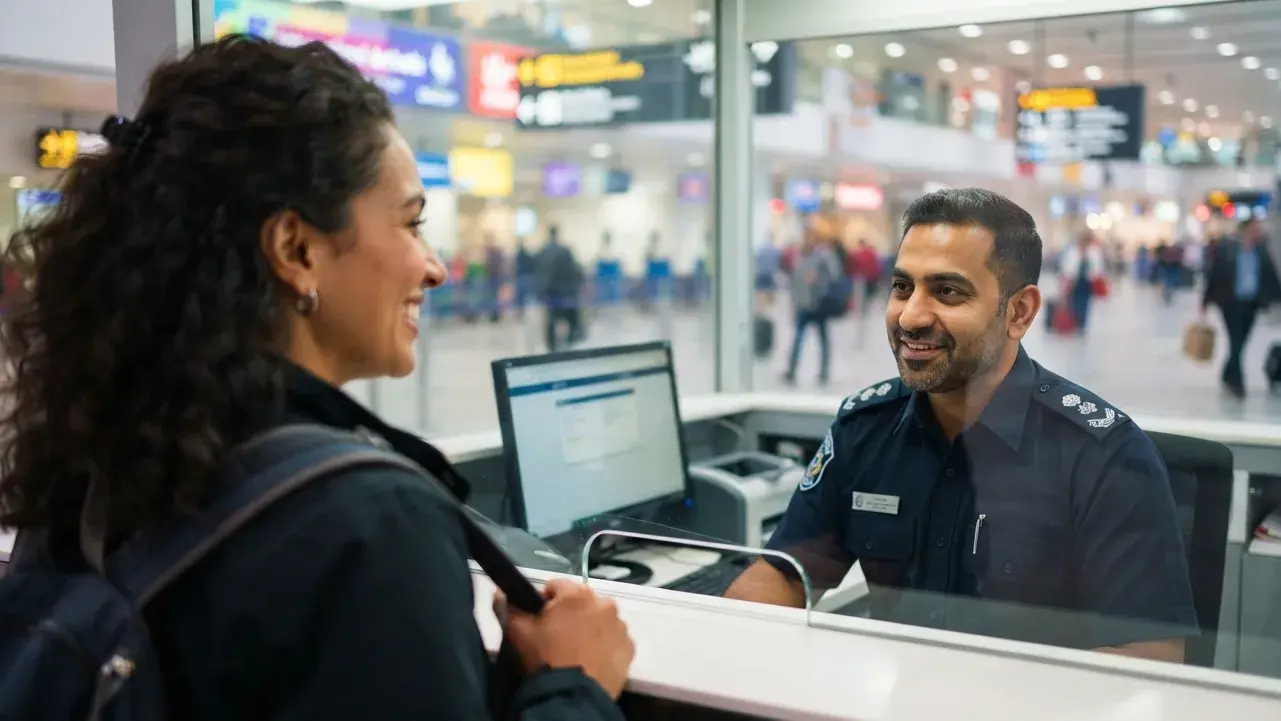
Airline clearance is not the final admission decision. At the Brazilian border, officers may assess the passport, visa status where applicable, purpose, intended stay and supporting documents relevant to the individual traveler.
How Officers Read Your Exit Plan at Passport Control
Do not reduce Brazil's entry framework to a universal sentence that every tourist must show the same onward document. A departure question can arise, but the applicable visa regime, nationality and facts of the visit matter.
An officer may ask how long you intend to stay and how the journey ends. If departure evidence is requested, present the document that truthfully represents the route.
Expect questions like these:
-
How long will you stay in Brazil?
-
Where will you go after your trip ends?
-
Can you show your departure booking?
Keep answers short, truthful and consistent with the documents. No single ticket proves the entire case, and good preparation does not guarantee entry.
A clear departure plan can support the temporary nature of a visit. It works best when accommodation, funds, purpose and dates tell the same story.
Where the Authorized Stay Fits Into the Conversation
Many Brazilian visitor-visa and visa-exemption arrangements use a stay of up to 90 days, but the exact rule can differ by nationality and agreement. Some nationalities have different cumulative limits or extension conditions.
Your departure should sit inside the period actually authorized or requested. Do not calculate from a generic headline alone.
Travelers typically need to demonstrate intent to leave the country within their permitted stay. A departure booked for day 120 contradicts the permission you were given, and an officer will notice.
Here is a simple way to think about it:
-
Arrival date: the day you clear immigration in Brazil.
-
Permitted stay: the period shown by the rule and admission applicable to your passport.
-
Exit date: a date inside that authorized period and consistent with the itinerary.
A 14-day holiday with accommodation and departure near day 14 is easier to explain than documents that describe unrelated durations. Coherence, not artificial brevity, is the goal.
For example, a photographer flying from Delhi to Rio for six weeks should use dates, accommodation and financial evidence that genuinely support that six-week plan. The example illustrates consistency; it does not predict the officer's decision.
Why Visa-Exempt Passport Holders Still Get Questioned
Some passport holders can enter Brazil without a visa. Many assume that means no questions about departure. That assumption causes trouble.
A visa exemption removes the need to obtain that visa; it does not create a guarantee of boarding or admission. The carrier and border authority can still assess the documents relevant to the journey.
Passport nationality affects the applicable visa regime and permitted stay, while the facts of the trip affect the questions asked. Check both layers.
For a one-way itinerary, carry accurate departure information if the official or carrier instructions call for it. Do not buy an unrelated route simply to create more paper.
A visa applicant follows the responsible consular checklist before travel. A visa-exempt traveler should still know the authorized stay and be ready to explain a genuine exit plan if asked.
What Counts as a Clear Exit Story at the Booth
A strong exit story has three parts. Each one supports the others.
A valid passport. Your passport should have enough validity beyond your planned departure date. Check this well before you book anything.
A departure booking. This is your ticket or reservation showing the day you leave Brazil.
A matching narrative. Your spoken answers should agree with your booking, your hotel dates, and your stated reasons for visiting.
Departure evidence may be an issued ticket or, where permitted, a reservation or other transport confirmation. The status matters: a booking reference does not automatically mean that a flight is paid, ticketed or valid for travel.
Print your booking or keep a PDF ready on your phone. Airports in Brazil are busy, and mobile signals inside terminals can be weak. Offline access saves you from fumbling at the counter.
Reading Brazil's Immigration Rules Without Guesswork
Rules on paper and rules at the booth do not always feel identical. Read both before you fly.
Brazil's immigration rules set the framework. They cover how long you can stay, which documents you need, and what officers may ask. Official government and consular pages give the current version. Check them a few weeks before departure, then again the week you leave.
Your intended stay should be stated consistently on forms and in answers. If the trip is 25 days, accommodation and departure evidence should not silently describe a different duration.
Flight reservations that show a departure inside that period support your answer directly. They turn a spoken promise into a document.
Also read the rules for your passport nationality. Two travelers on the same flight may face different visa and stay conditions, and their document sets may therefore differ.
Write a short note with three items: your stay limit, your required documents, and the date you depart. Review it before you leave home. That note keeps details straight when nerves kick in at the airport.
Small Details That Change How Officers Respond
Small details can make a file easier to understand when questions arise.
Have your documents in one folder, in the order officers usually ask for them:
-
Passport
-
Visa, if you need one
-
Departure evidence, if required for your case
-
Accommodation details for your first nights
Answer in plain, direct sentences. Avoid long stories about your plans. If you plan to visit several cities, name the first one and the last one, then stop.
Stay calm if the officer asks for the same detail twice. Ask for clarification rather than guessing.
Remember that the whole file matters. The airline's earlier decision and the border authority's admission decision are separate, which is why the first document conversation can happen at departure.
Who controls each part of the journey?
- Brazilian immigration and visa rules: determine the regime and potential stay conditions for the traveler’s nationality.
- The responsible Brazilian consular post: controls the evidence required for that visa application.
- The operating airline: makes the boarding and document-check decision before departure.
- Brazilian border authorities: make the final admission decision after arrival.
Why an Airline May Check Your Brazil Exit Plan Before Departure
A departure question may arise before Brazil, at the airline desk or gate. Prepare without assuming that every route receives the same check.
The Check-In Desk Moment Nobody Warns You About
International airlines perform travel-document checks before boarding. Depending on the passenger and route, the check may include return or onward information.
Airlines may ask for proof of onward travel during check-in or boarding. Some agents ask at the counter. Others wait until the gate, when you feel the most pressure to get on the aircraft.
An agent may inspect the main itinerary, ask for a separate departure document or escalate the case to a document desk. Public lookup is not the only way an airline can assess a record.
That is why timing matters. A booking you made at 2 a.m. and never saved will not help you at 6 a.m. at the counter.
Prepare for the desk moment with a simple routine:
-
Save the PDF of your exit booking on your phone.
-
Print a paper copy and keep it near your passport.
-
Note the booking reference on a card in your wallet.
-
Arrive at the airport early enough to fix any surprises.
A traveler flying from Mumbai to São Paulo should keep the same current file available at the desk and gate. That reduces delay if a second staff member repeats the document check.
How Airlines Know What Brazil Expects
Airlines use document-control information and their own procedures when deciding whether to transport a passenger.
The result can depend on passport, origin, transit points and status. If staff request departure evidence, ask what exact document or condition remains unresolved.
You can also read the same information yourself. Most carriers publish entry guidance on their airline website. Search for the travel requirements page, enter Brazil as your destination, and read the notes on onward travel rules.
Do this a few weeks before departure, then again a few days before. Rules change, and official sources give the most reliable answer. The Brazilian consulate or embassy in your country can confirm details as well.
Treat the airline's guidance as a companion to the government's guidance. One tells you what the desk will ask. The other tells you what the border will ask.
Why Carriers Follow Document Procedures
Carriers have compliance and operational responsibilities when transporting international passengers. Staff therefore follow a documented process rather than relying on a traveler's interpretation of a webpage.
The agent is making the carrier's boarding decision, not Brazil's final immigration decision. A supervisor or document desk may need to resolve an unclear case.
This is not personal. The agent has no interest in ruining your trip. They want to avoid a costly return journey for someone who cannot enter.
Understanding this helps you respond well. Ask for the agent's help, hand over your document politely, and let them complete their checks. A calm passenger with a clear document is the easiest passenger to process.
An airline may delay or deny boarding if its document assessment is not satisfied. Prepare for the possibility of a question without claiming that Brazil appears on one permanent universal list.
What Happens When You Show Only a One-Way Fare
A one-way ticket can prompt a request for departure information because the return or onward leg is not visible in the same booking. It does not automatically cause refusal in every case.
If the applicable check requires departure evidence and none is available, the agent may pause or deny boarding until the requirement is resolved.
Here is how the moment often unfolds:
-
You present a one-way ticket to Brazil.
-
The agent asks for your onward ticket or return booking.
-
You cannot show one.
-
The agent asks you to buy a proper ticket or stand aside.
At that point, your options shrink fast. Buying a refundable fare at the counter is expensive. Waiting for a new booking to arrive by email takes time you may not have.
Avoid the scramble by checking the rules before leaving home. If departure evidence is required, make sure its status and dates match the real route.
Why One Document Can Still Face Two Different Tests
The same departure document may be relevant at airline check-in and border review, but the two decision-makers are applying different procedures.
An airline's acceptance does not guarantee admission, and a reservation accepted in a visa file may not be an issued ticket valid for boarding. Read each request literally.
That double protection is why experienced travelers prepare early. They do not treat the exit ticket as an afterthought. They treat it as part of the travel plans, alongside the passport and the visa.
Consider what you gain:
-
A clearer check-in: staff can see the passenger, route, date and document status.
-
A coherent admission file: the departure plan agrees with purpose and requested stay.
-
Fewer last-minute costs: you avoid emergency purchases at the airport.
Keep the document simple to read. Choose a clean PDF with black text on a white background, because agents skim quickly and dark or cluttered layouts slow them down.
Connecting Flights and Transit Airports
Your first airline check may not be the only one. If you connect through another country, a second airline may ask again at your transit airport.
Each carrier follows its own procedures and may interpret route data differently. Keep the current document set accessible through the whole journey.
Also consider your transit timing. Long layovers give you time to fix problems. Tight connections leave no room for a second document check.
If your bags are checked through to Brazil, connecting staff may still review documents. Keep everything in your carry-on. The next question is which evidence accurately fits the request and route.
Which Brazil Exit Document Fits the Actual Route

A departure can be documented in more than one way, but no format is universally accepted. Choose evidence that fits the actual route, visa status and wording of the request.
Return Flights and Onward Flights to a Third Country
Onward travel refers to a passenger's continued journey beyond the current destination. In practice, it means a booking that takes you out of Brazil after your visit.
An onward ticket can be a return journey home or a ticket to a third country such as Argentina, Portugal or Costa Rica. Either can describe a real departure, provided the traveler can enter or transit the next destination.
Proof of onward travel is usually a plane ticket showing departure plans. The document should name you, list your flight details, and show a date within your permitted stay.
Check these fields before you accept any booking:
-
Your full name, spelled exactly as in your passport
-
The departure city in Brazil and the arrival city abroad
-
A departure date inside the stay authorized or requested for your case
-
A clearly labeled booking reference and, when required, an e-ticket number
Mismatched names cause real problems. A single missing letter can make an agent question the whole document. Compare it against your passport line by line.
What Checkable Really Means for a Reservation
A reservation may be acceptable when the responsible visa checklist asks for an itinerary or reservation. Another consular post may require a purchased ticket or may say no ticket is mandatory at application. Follow the exact checklist.
A booking reference, PNR and e-ticket number are not interchangeable. A PNR can describe an itinerary that is held but not ticketed, while an e-ticket number generally indicates ticket issuance.
Airlines and issuers may inspect records through internal systems. A record does not have to appear on every public manage-booking page, especially for agency, partner-airline or codeshare bookings.
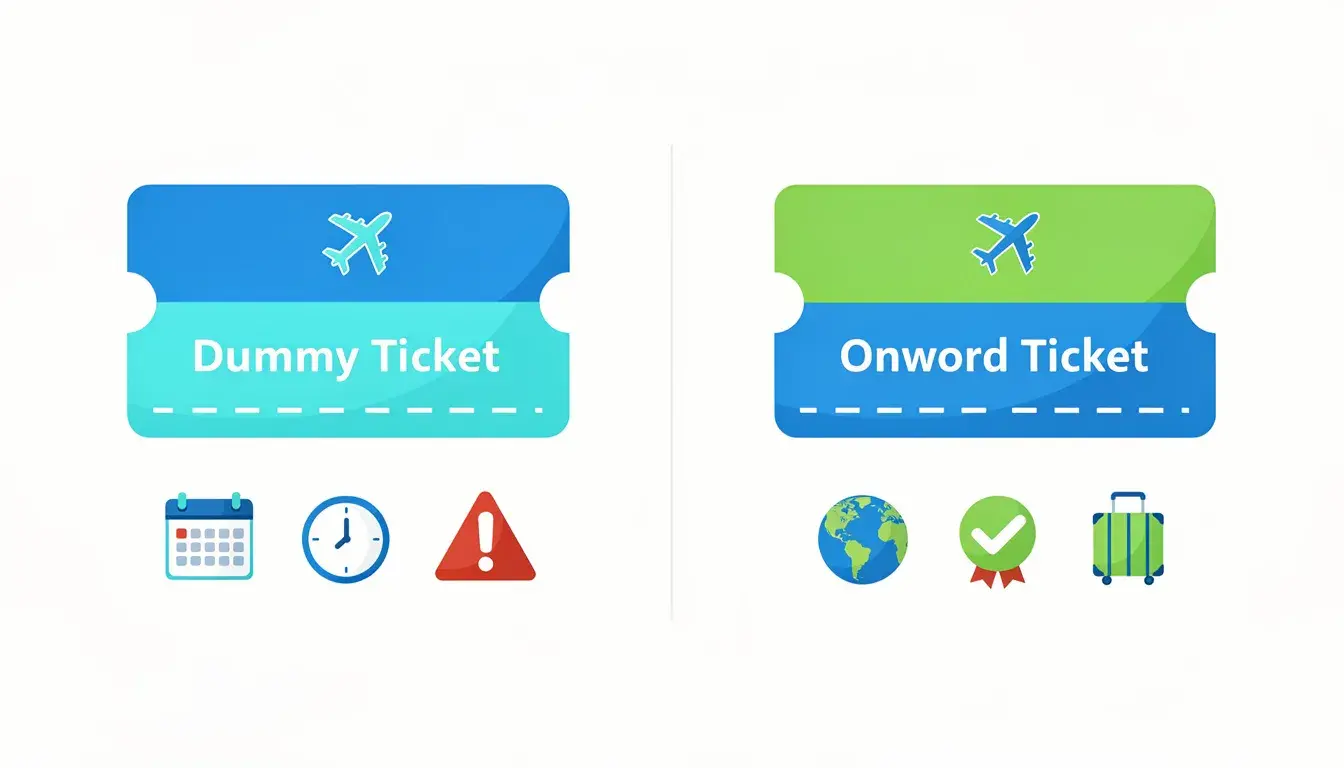
A dummy ticket used as reservation evidence can support a visa or planning file when that document type is permitted. It cannot replace an issued ticket when the recipient expressly requires one.
Look for these qualities in any reservation you intend to use:
-
A stated status: understand whether the document is held, confirmed or ticketed.
-
Readable details: the flight number, date, and route appear clearly.
-
A reference number: agents can search by it.
-
A PDF format: you can print it or open it offline.
Before relying on any provider, review delivery time, validity, correction terms and the route supplied. Do not infer acceptance from the logo or layout alone.
Bus Tickets for Land Border Departures
Not everyone leaves Brazil by air. Brazil shares borders with many neighbors, and some travelers plan to exit by road.
If you genuinely plan to leave through Uruguay, Argentina or Paraguay by road, a named international bus ticket may support that land-exit story when the relevant recipient accepts it.
Be careful, though. Airlines checking you in at your departure airport think in terms of flights. An agent at a check-in desk in your home country may not accept a bus booking as proof.
Use this rule of thumb:
-
Flying into Brazil: ask whether the carrier accepts the genuine land-exit document.
-
Arriving by land: a bus ticket or similar transport booking may work.
-
Unsure: obtain a clear answer before adding a second or conflicting exit.
A flight document is often easier for an airline to interpret, but it is not automatically accepted in every context. Use only evidence that reflects the intended journey.
Why a Screenshot Rarely Counts
Travelers often show a phone screenshot of a booking page. Sometimes it works. Often it draws questions.
A cropped screenshot may omit the passenger, status, route or reference. A complete PDF or official confirmation is easier to assess and keep offline.
A useful PDF shows the issuer, passenger, route, travel date and reference. Formatting alone does not prove that the record is active or ticketed.
Save the file in three places: your phone, your email, and a printed copy. If one fails, the others save you.
Also check that the file opens without internet access. Airport Wi-Fi can be slow or blocked. A file stored on your device opens instantly.
One-Way Fares Paired With Other Proof
Some visitors hold a one-way ticket because they plan a longer regional journey. The departure from Brazil must still fit the stay authorized for that nationality and status.
If your plans genuinely continue beyond Brazil, book the onward leg early. A ticket from Rio to Buenos Aires, for example, shows exactly where you go next.
If staff request documentary proof, a verbal intention may not resolve the check. Ask which specific document is acceptable before making an emergency purchase.
Alternatively, a return ticket from your home country to Brazil gives you a built-in exit. It also keeps your paperwork simple, since one booking covers both directions.
Choosing the Document That Fits Your Situation
Your situation decides your document. Use these examples to guide you:
-
A two-week holiday from Delhi: a return flight from Rio to Delhi.
-
A three-month trip through South America: an onward flight from Brazil to another country.
-
A short visit before a European stop: a reservation from São Paulo to a European city.
Each example shows a departure date, a departure city, and a clear route. Those three elements make an officer's job easy.
Match your document to the story you tell at the border. If you say you are flying home to Mumbai, your ticket should show Mumbai. If you say you are heading to Lisbon, the ticket should show Lisbon.
Consistency between your words and your paper is the strongest signal you can send. Once your document is ready, the next step is fitting it into your visa application, where timing and budgeting matter just as much.
Building a Brazil Visa Application Around Realistic Dates
Your exit booking and your visa file must tell the same story. When the dates disagree, consular staff notice, and delays follow.
Working Backward From the Processing Window
Brazil visitor-visa processing time varies by consular post, season and case. Use the estimate published by the post handling your application rather than a universal five-to-ten-day promise.
Start with the intended travel date and work backward from that official estimate, adding weekends, public holidays and time for supplementary documents.
Here is a sample timeline for a trip departing on 1 June:
-
Early May: confirm your passport is valid and gather documents.
-
Mid May: prepare the itinerary only if the responsible checklist requests it, then submit the application.
-
Late May: allow a decision window rather than assuming approval by a fixed date.
-
1 June: fly to Brazil.
Follow the exact checklist: some official Brazilian posts request a round-trip reservation, while another says tickets and reservations are not mandatory for its visa application. For the distinction between booking evidence and issued travel, review this flight reservation for visa guide, then let the responsible Brazilian post control the submission.
Avoid buying a non-refundable fare merely to strengthen a visa file unless the post explicitly requires a purchased ticket. A reservation can reduce financial exposure where the checklist permits it, but it does not guarantee approval.
Matching Your Flight Itinerary to Your Application Story
Your application describes your trip. Your flight itinerary should support every line of that description.
If the form says you will stay 21 days, your exit booking should show departure on day 21 or shortly before. If you plan to visit Rio and Salvador, your hotel dates should fit that timeline too.
Check these points before you submit:
-
Arrival date matches your application form.
-
Departure date fits within the stay requested and permitted for this nationality.
-
Accommodation dates cover the nights between arrival and departure.
-
Your name appears identically on every document.
Consular staff may compare documents side by side. Any accommodation gap should have a truthful explanation; even a short unexplained gap can matter depending on the checklist.
Supporting documents work best when they reinforce each other. A hotel booking, a flight itinerary, and a bank statement each answer a different question. Together they show a trip that makes sense.
For example, a teacher from Mumbai listing a 30-day visit should use accommodation and departure dates that support that duration. This illustrates internal consistency, not a predicted visa outcome.
Planning for the Current Visa Fee and Related Costs
Visa fees vary by nationality, application channel and consular post, and they can change. Use only the current fee table and payment instructions issued for your application.
Fees are usually paid at submission or during the appointment. Confirm the accepted payment methods on the consulate's site. Some offices take cards, while others prefer bank transfers or specific receipts.
Keep the payment receipt safely. Officers may ask for it during your appointment, and you will want proof if something goes wrong.
Budget for costs beyond the fee:
-
Passport photographs in the required format
-
Printing and document copies
-
Courier fees for returning your passport
-
Your exit reservation
-
Travel insurance for the trip
Compare the live cost and terms of a reservation service with the cash tied up in a refundable fare. Confirm delivery, validity, corrections and whether an e-ticket is included rather than relying on old fixed-price or unlimited-change claims.
Do not buy a ticket you never intend to use simply for appearance. Choose the least expensive truthful document type permitted by the checklist.
Which Tourist Visas Fit a Short Holiday
Not every traveler needs a visa, and not every visa fits a short holiday. Check which category applies to your passport before you pay anything.
Tourist visas cover leisure travel, family visits, and short sightseeing trips. They do not cover work or study. Choosing the wrong category creates delays that no exit booking can fix.
Read the consulate's guidance carefully. It will list the documents for your category and the fee for your nationality. Official sources always outrank forums and social media posts.
If you are unsure, contact the consulate directly. A brief email can save you weeks. Keep a copy of every reply, because it may help you later at the border.
Also note the difference between visa validity and permitted stay. The visa may be valid for a longer period than you can spend in Brazil per visit. Your exit booking should follow the stay limit, not the validity dates.
When the Consulate Asks for More
Sometimes a consulate requests extra documents after you submit. Do not panic. This is common and usually easy to resolve.
Typical requests include clearer bank statements, a hotel confirmation, or a fresh copy of your exit booking. Respond within the deadline they give.
Keep digital copies of everything you submitted. If they ask for a document again, you can send it within minutes.
If your original exit booking used dates that no longer work, update it. Reservations with flexible date changes make this simple. You can adjust the departure date, download the new PDF, and send it the same day.
Keep the new booking consistent with everything else in your file. When one date changes, check whether other documents need to change with it.
Avoiding Mistakes That Cost You Days
A few small errors cause most of the delays. You can avoid all of them.
-
Wrong spelling of your name: double-check against your passport.
-
Departure date beyond the requested or permitted stay: correct the dates.
-
Expired or short-validity passport: check the expiry date early.
-
Blurry scans: use a flat surface and good lighting.
Build a checklist and tick each item as you go. It takes ten minutes and saves you from a rejected file.
Ask someone you trust to review your file before you submit. A fresh pair of eyes catches typos you have stopped seeing. With your visa file in order, the next question is a practical one: exactly which dates should appear on your exit booking.
Choosing Departure Dates Inside Your Authorized Brazil Stay
The departure date is a central itinerary field. It must fit the period authorized or requested for your case, not an assumed universal 90-day rule.
Counting Days From the Moment You Clear Immigration
Your stay begins on the day you enter Brazil. Count from that date, not from the day your flight leaves your home country.
Overnight flights complicate things. If you leave Delhi on 10 April and land in São Paulo on 11 April after a long connection, your first day in Brazil is 11 April. Use that date as day one.
Use a simple calendar method. Write the Brazilian arrival date, identify the authorized or requested stay for the passport, and choose an exit date inside that period.
Visa validity and permitted stay are different concepts. Check the number of entries, validity window and per-visit stay, then follow the condition that actually limits the trip.
Add a mental margin. If your calculation says day 88 is legal, do not book day 88. Weather, strikes, and airline changes can shift flights by a day or two.
Picking an Exit City That Makes Sense on a Map of Your Trip
Your exit city should fit your route. An officer who sees a trip through Rio, Salvador, and Recife will expect to see one of those cities on your departure booking.
Departing from a city far from your route raises questions. A traveler who spends a month in the north and then books a departure from the far south needs a good explanation.
Choose airports that match your itinerary:
-
São Paulo (Guarulhos): a major international hub with many long-haul routes.
-
Rio de Janeiro (Galeão): convenient for travelers spending most time on the coast.
-
Brasília: useful for those visiting the capital or the interior.
Your booking does not need to match your final plan perfectly. It needs to look credible. A departure from the city where you arrive is the simplest choice.
A route that agrees with the stated purpose and accommodation is easier to explain. That consistency supports a clear review but does not determine the outcome.
Building In Buffer Days Without Crossing the Limit
A buffer protects you against delays. It gives you space if a flight is canceled or rescheduled.
For a trip of 30 days, a five-day buffer costs nothing and helps a lot. If you need a change, you still have time to rebook before your permitted stay ends.
For a trip near the authorized limit, leave a reasonable disruption buffer. The correct margin depends on the actual permission and journey rather than a fixed day-80 formula.
Consider this comparison:
|
Trip Length |
Example Matched Exit |
Example Mismatched Exit |
|---|---|---|
|
2 weeks |
Day 14 |
Day 60 |
|
6 weeks |
Day 42 |
Day 85 |
|
3 months |
Day 80 |
Day 90 |
The table illustrates the value of matching the exit to the real plan and leaving a buffer. Replace its example days with the period that actually applies to you.
Also check public holidays and festival periods. Carnival and year-end holidays fill flights and raise prices. Avoid them for your exit date if you can.
What to Do If Your Real Plans Change
Plans change. Friends invite you to stay longer, work opens up, or weather disrupts your route. Your exit booking should allow for this.
Flexible reservations help here. If you can change the departure date without paying a heavy penalty, you can adjust your paperwork with little effort.
Do not overstay the period granted. If plans require more time, check eligibility and apply through the current official channel before that authorized period ends.
Keep records of any changes:
-
Emails from airlines or providers
-
Updated PDFs with the new date
-
Receipts for any change fees
If an officer asks about a changed booking, you can show the trail. Documented changes look responsible, not suspicious.
Reading Arrival and Departure Times Correctly
Times matter as much as dates. A flight scheduled at 00:30 on 5 June legally departs on 5 June even if the traveler reaches the airport late on 4 June.
Read the ticket carefully. An exit at 00:30 on day 91 is a day-91 departure, even if you plan to spend the evening of day 90 at the airport. Officers count the calendar date shown on the document.
Also check time zones. Brazil spans several time zones, and your departure city may differ from your arrival city. Use local times on the booking, and confirm them against your own notes.
If you arrive late at night, note the date on your entry stamp. That stamp is the official start of your stay. Photograph it as soon as you receive it.
Choosing Between a Direct Exit and a Stopover Route
A direct flight out of Brazil is the cleanest document. A route with stopovers adds legs, and each leg adds a possible check.
Stopovers make sense when they reduce cost or match your interests. A stop in Panama or Lisbon can save money and add a second destination.
For proof purposes, focus on the first leg out of Brazil. That leg is what the officer reads. The later legs matter less, though they should still make sense.
Keep the total journey realistic. A 40-hour itinerary with three stopovers may need an explanation, but route simplicity does not determine approval.
Once your dates are locked, you can turn to the papers that support them. Your bank statements, funds, and insurance all sit beside your ticket and shape the officer's impression of your trip.
The Paperwork That Should Sit Beside Your Brazil Itinerary
A ticket alone rarely tells the full story. When a visa checklist or border review calls for supporting evidence, finances, insurance and lodging may be assessed together with the exit plan.
Bank Statements and What They Prove
The responsible visa checklist determines the financial-evidence period. Some official Brazilian posts request three months, while another case may request a different period or document type.
The statements show whether you can afford your trip. A steady balance suggests a stable financial life. Sudden large deposits can prompt questions, so be ready to explain them.
Follow these guidelines when you prepare the statements:
-
Request them directly from your bank, with the official stamp if possible.
-
Cover the full period stated by the responsible consular post.
-
Make sure your name and account number are clearly visible.
-
Print in color if your bank uses colored security features.
Do not alter or edit anything. Consular offices verify documents, and altered statements can lead to refusal.
If you have more than one account, choose the one that best reflects your regular income. Adding a savings account statement can strengthen your file when your main account shows low balances.
An engineer from Delhi might include the salary account and a fixed deposit when both are relevant and permitted. This shows how regular income and savings can be documented; it does not predict approval.
How Much Money Counts as Sufficient Funds
Officers want to believe you can support yourself during your visit. Sufficient funds reassure them that you will not overstay because of money trouble.
Brazil does not always publish a fixed daily figure, so check official sources before you travel. The consulate may give guidance on the amount they expect. Your trip length and style affect what looks reasonable.
A simple approach helps. Estimate daily costs for lodging, food, transport, and activities. Multiply by your number of days. Add a cushion for emergencies.
Keep evidence ready in more than one form:
-
A recent bank statement
-
A credit card with an available limit
-
Some cash in a widely accepted currency
If an authorized reviewer asks for proof of funds, present the relevant current documents and explain the budget briefly.
Also think about how your money supports your exit story. A traveler with a clear budget, a hotel booking, and a departure ticket looks like a tourist. That impression is exactly what you want.
Travel Insurance as a Quiet Supporting Document
Travel insurance is not universal, but it can document planning for medical costs and emergencies when the responsible checklist requests or recommends it.
Brazil has excellent private hospitals in major cities, but treatment can be costly for visitors without coverage. Insurance protects your budget and reassures officers.
Look for a policy that covers the full length of your stay. Check that it includes medical treatment, emergency transport, and trip interruption.
Keep the policy document with your other papers. Include the policy number, the coverage dates, and the emergency contact line.
Make sure the dates match your exit booking. A policy that ends on day 20 while your ticket shows day 30 creates a gap that an officer may notice.
Insurance also helps if your travel plans change. If a medical issue forces you to delay your departure, your policy can help cover the costs of rebooking.
Accommodation Proof That Agrees With Your Exit Date
Accommodation evidence shows where you will stay. It works best when it covers your whole trip from arrival to departure.
Some travelers book the whole stay, while others book the first city and explain the remaining route. The acceptable approach depends on the checklist; consistency does not override a requirement for full-stay accommodation or an invitation.
Check that the reservation shows:
-
Your full name
-
The hotel address and contact details
-
The check-in and check-out dates
-
A booking reference
Free cancellation options are useful here. They let you keep flexibility while still holding a reservation for your paperwork. Read the cancellation terms before you confirm.
If you plan to stay with friends or family, bring an invitation letter. Include their address, phone number, and a copy of their identification. Officers may want to call them.
Explaining Income Sources That Look Unusual
Not every traveler earns a regular salary. Freelancers, business owners, and students often worry that their statements look different. Different does not mean weak.
If your income arrives in irregular payments, add a short letter that explains it. Name your work, list your main clients, and describe how payments reach your account.
Business owners can add a trade license or registration document. Students can add a letter from a parent or sponsor, together with that person's own statements.
Keep the explanation brief and factual. One page is enough. Officers read hundreds of files, and short letters get read carefully.
Do not manipulate the account before applying. If a recent large deposit is legitimate, document and explain its source for the statement period requested.
If a relative pays for the trip, disclose that support and provide the evidence requested by the responsible post. Sponsor-document rules are not identical everywhere.
Organizing Your Complete Document Folder
A tidy folder helps you retrieve the requested document without delay.
Use a simple order:
-
Passport and visa
-
Exit booking
-
Accommodation reservation
-
Bank statements
-
Travel insurance policy
-
Invitation letter, if relevant
Keep one paper set in your carry-on and one digital set in cloud storage. If your phone dies, the paper copy saves you. If your bag is lost, the digital copy saves you.
Label each file clearly. Names like "Exit Booking" and "Hotel Rio" are easier to find than "IMG_2041." Speed matters when a queue is behind you.
Check the folder the night before you fly. Confirm every document is present, readable, and consistent with the others.
Keeping Your Paperwork Honest and Consistent
Consistency is your best protection. Every document should agree on names, dates, and routes.
Read each page once more before you travel. Look for typos, mismatched dates, and missing details. Fix problems before you leave home, not at the airport.
Never present false information. Authorities may verify claims, and misrepresentation can create serious immigration or legal consequences. Use genuine, well-organized evidence rather than an altered document.
If something is missing, explain it truthfully and follow the official correction process. With supporting documents in place, the next step is checking the reservation's fields and status.
How to Check a Brazil Reservation Before Relying on It
If the document is intended for a visa file rather than immediate travel, compare it with the dummy ticket for visa framework before relying on it. A current reservation can support an allowed document request, but its status and the recipient’s acceptance remain separate questions.
Not every booking document performs the same way under pressure. The ones that work make the officer's job easy, and you can judge quality before you travel.
What a Useful PDF and Booking Reference Should Show
A useful reservation PDF identifies the passenger, issuer, route, dates and booking reference. When an issued ticket is required, also check for the e-ticket number and active ticket status.
Open the file and read it slowly. You should see your name, the flight number, the route, and the departure date. The airline reference should appear in a clear, separate field.
Check for these signs of quality:
-
Correct passenger name: it matches your passport exactly.
-
Full route details: departure airport, arrival airport, and times.
-
A visible reference: easy for an agent to type and search.
-
Clean formatting: black text on a white background, with nothing cut off.
Poor formatting slows agents down. A cropped image or a blurry scan invites doubt, even when the booking is real.
A clear record can make assessment easier, but no provider can guarantee how quickly a third party will validate it or whether that document type will be accepted.
Using the Issuer's Stated Lookup Method
If the issuer says public lookup is supported, use the exact airline or agency channel it specifies and enter the required surname and reference.
If the record appears, save the result as supporting information. Public display does not by itself prove ticket issuance or guarantee acceptance.
Run this check twice: once when you receive the document, and again a day or two before travel. Airlines occasionally change schedules, and you want to catch any change early.
If a record that should be publicly retrievable does not appear, contact the issuer before the review date. Agency, codeshare and partner-airline records may use a different locator or channel.
This check confirms only the field and channel tested. It does not turn a reservation into an issued ticket.
Why Date Flexibility Matters for Brazil Trips
Brazil trips can shift because of visa timing, schedule changes or revised plans. A correction option can help keep the itinerary aligned.
Read how many changes are included, the deadline and any fee. Do not assume unlimited changes.
Compare that with a rigid booking. A fixed date that no longer matches your plans forces you to start over, and that costs time and money.
Think about the sequence of a typical application:
-
You book a reservation before your appointment.
-
The consulate processes the case according to its published estimate.
-
Your travel dates shift slightly.
-
You update the reservation and print the new copy.
Flexibility keeps your paperwork accurate. Accurate paperwork keeps you calm.
Reading the Fine Print on Change Rules and Validity
A reservation is only as useful as its terms. Read them before you rely on the document.
Start with the date-change policy. Ask how many changes are included, how quickly a corrected PDF is delivered and whether any fee applies.
Next, check how long the reservation stays active. Some reservations remain valid for a limited window. Make sure yours covers the days between your visa appointment and your arrival in Brazil.
Also confirm the support hours. If an agent questions your document at 5 a.m., you want a provider who answers messages quickly.
Finally, look at the total price. Transparent pricing means you know the full amount before you pay. A flat fee with no hidden extras keeps your budget clear and your paperwork simple.
Save the terms page as a PDF. If a question comes up later, you can point to exactly what you agreed.
Presenting Your Document at the Desk and the Booth
How you present your reservation matters. A neat, ready document signals that you know what you are doing.
Keep the paper copy on top of your folder. When the agent asks for proof, hand it over without searching. Say something short, such as "Here is my exit booking for 15 June."
Do not over-explain. Long explanations can sound rehearsed. Simple, direct answers sound honest.
Have a digital backup available in case the officer prefers to scan a screen. Turn your screen brightness up, and disable any lock screen that might interrupt you.
If an officer asks to keep a copy, agree politely. Bring a spare printout for this reason.
Timing Your Booking Around Your Departure
The best time depends on the checklist, appointment and issuer's validity window. Work backward from the exact moment the record must be reviewed.
Leave enough time to inspect names and dates, but do not generate a temporary record so early that it expires before review.
Avoid booking on the day you fly unless you have no choice. Last-minute bookings leave no room for correction, and errors are hard to fix at an airport.
If your plans are still uncertain, choose a date in the middle of your likely range. You can adjust later if needed, and your paperwork stays consistent.
What to Avoid When Choosing a Reservation Provider
Choose providers carefully. Quality varies, and a weak document can undermine an otherwise strong file.
Avoid documents without a real reference number. Avoid providers who hide their pricing or add surprise charges at checkout. Transparent pricing is a good sign of a reliable service.
Also avoid documents with cluttered designs or missing details. Officers and agents notice these problems fast.
A provider should explain what it supplies, how long the record remains active and how errors are corrected. Ask about those terms before paying.
Finally, keep your own copy of everything. Store the confirmation email, the PDF, and any payment receipt in one place. That record supports you if a question arises later, whether at the consulate or the border.
Adding Costa Rica, Europe, or Another Stop After Brazil
Few travelers fly to Brazil and then straight home. Many add a second country, and each extra stop brings its own exit expectations.
Why Your Second Country Asks the Same Question
Each country applies its own entry rules. A Brazil departure document may also be the arrival document for the next destination, but the next country can request different evidence.
Think of the route as a chain of separate decisions. Check the visa, transit, stay and onward conditions for every link.
Do not assume the next country will ask the same question or accept the same format. Use its current official source.
Plan the chain from start to finish. Write down each country, your arrival date, your exit date, and your exit route. Then check that each date sits inside that country's stay limit.
Ignoring the second link is a common mistake. A traveler with a solid Brazil exit plan may forget that Panama or Colombia asks for its own proof, and trouble follows at the next airline desk.
Flying From Brazil to Costa Rica
Costa Rica is a popular add-on for travelers leaving Brazil. Flights connect through regional hubs, and the route suits travelers who want beaches, rainforest, and volcanoes.
For Costa Rica, check the current official rule for the traveler's passport and mode of entry. The airline carrying you from Brazil may also perform its own document check.
Prepare two separate documents:
-
Brazil exit proof: a flight from Brazil to Costa Rica, showing you leave Brazil on time.
-
Costa Rica exit proof: a flight from Costa Rica to your next destination or home country.
Check the current entry rules for Costa Rica on official sources before booking. Requirements can change, and your passport nationality affects the details.
Also confirm that your flight from Brazil lands on a date that fits both trips. A delay of even one day can push you close to a limit.
Keep both bookings in the same folder. Agents will ask for the right one at the right time, and you should not need to search.
Building a Route Through Europe
Some travelers use Brazil as a stepping stone to Europe. Lisbon is the natural link, given the strong ties and frequent flights between the two countries.
European entry rules differ from Brazil's. Border agents may ask for a return ticket, proof of accommodation, and evidence of sufficient funds.
A flight from São Paulo to Lisbon documents departure from Brazil and arrival in Europe, but it does not by itself satisfy every European entry condition.
Then think about your European exit. You will need a departure from Europe to your home country or another destination.
Check the length of stay allowed for your passport in the region. Some visitors can stay for up to 90 days within a rolling period, but rules vary. Read official sources carefully.
Plan the whole route before you buy anything. A well-designed trip has clear exits from every stop.
Handling Land Crossings Into Neighboring Countries
Brazil borders most South American countries. Some visitors cross by road into Argentina, Uruguay, Paraguay, or Bolivia.
Border crossings work differently from airports. Officers may check your passport, your visa status, and your onward plans. Bus tickets can support your story in these cases.
If the next country requests onward evidence, use the format its official guidance permits. A flight reservation is not universally accepted merely because it is easy to read.
Use an authorized crossing during its published operating hours and allow time for both countries' controls.
Also carry your Brazilian entry stamp evidence. Officers on the other side may want to see how long you stayed and whether you followed the rules.
Checking Each Destination Country Before You Commit
Every stop on your route deserves its own research. Do not assume that one country's rules mirror another's.
Start with the destination country's official immigration page. Look for visa requirements, stay limits, and any mention of onward or return tickets. Note the date you checked, since rules can change.
Then check your airline's guidance for that route. The carrier may ask for documents that the government page does not list. Agents follow the airline's system, so their rules matter at the desk.
Write a one-line summary for each country:
-
Entry rule for your passport
-
Maximum stay
-
Exit proof required
-
Fees or forms due before arrival
Keep the summaries in your travel folder. When an agent asks about your next stop, you can answer quickly and accurately.
If guidance appears conflicting, contact the authority responsible for the specific border or application. Keep any written clarification with the file.
Coordinating Dates Across Several Countries
Multi-country trips need a master schedule. Use a simple table to keep everything visible.
|
Country |
Arrival |
Exit |
Exit Document |
|---|---|---|---|
|
Brazil |
1 May |
21 May |
Flight to next stop |
|
Costa Rica |
21 May |
4 June |
Flight home |
Check for gaps and overlaps. A missing night or a double-booked day signals an error in your plan.
Airlines and officers only see part of your route. Each one wants to see the part that concerns them. Your schedule helps you present the right document at the right moment.
Update the schedule whenever a booking changes. One change can cascade through the whole trip.
Keeping Your Documents Organized Across Borders
Multiple countries mean multiple sets of papers. Organization becomes essential.
Create one folder per country, with the entry document, exit booking, and accommodation inside. Label each folder clearly.
Keep your passport accessible at all times, and keep photocopies of the main pages in a separate place. If your passport is lost, copies speed up the replacement process at your embassy.
Store everything in the cloud too. A single tap should reveal your Brazil exit booking, your next country's exit booking, and your hotel details.
This organization reduces searching and makes each segment easier to explain.
Prepare well, and the same skills that get you into Brazil will carry you around the world. Even so, problems can still appear at the desk or the booth, and knowing how to respond matters just as much as preparing.
What to Say and Show When Someone Questions Your Exit Plan
Even prepared travelers face questions. The way you respond in the first thirty seconds often decides how the rest of the encounter goes.
Responding at the Check-In Counter
If an agent questions your exit plan, stay calm. Smile, hand over your document, and let them read it.
Agents usually ask because the system prompts them, not because they doubt you. A polite response helps them complete the check quickly.
Use short answers:
-
"Yes, I have my exit booking. Here it is."
-
"I leave Brazil on 20 May from São Paulo."
-
"I can show the issuer's stated lookup method if that helps."
If the agent cannot find the record, offer the reference and ask which field or status is missing. Do not claim a public lookup that the issuer does not support.
If a problem persists, ask politely for a supervisor. Supervisors have more authority and more experience with unusual cases.
Never argue or raise your voice. The airline controls the boarding decision, so ask calmly what field, status or document remains unresolved and request a supervisor when appropriate.
Answering at the Immigration Booth
At the booth, the officer controls the conversation. Answer only what they ask, in simple sentences.
Typical questions include the purpose of your visit, the length of your stay, and your accommodation. Give specific answers. "Tourism for two weeks in Rio" works better than "I am just traveling."
Hand over documents when asked, not before. Offering everything at once can overwhelm the officer and slow the process.
If the officer asks about your exit plan, show your booking and state the date. Keep eye contact and speak clearly.
If you do not understand a question, say so politely. Ask them to repeat or slow down. Guessing at answers creates inconsistencies that officers notice.
Immigration officials value calm, honest, and consistent replies. They do not expect perfection, only credibility.
When the Officer Wants a Second Look
Sometimes an officer sends you for further questioning. This is called secondary inspection, and it is often routine.
Stay patient. You may wait for a while, and the room may feel intimidating. Remember that many visitors pass through it each day.
Bring your complete folder with you. Officers in this room usually ask more detailed questions, and having documents ready speeds things along.
Expect topics like your job, your finances, your hotel, and your reasons for visiting. Answer truthfully and consistently.
If the officer asks to check your phone or bags, cooperate within the law. You can ask politely what the officer needs and why.
Additional review does not by itself predict the outcome. Current, truthful documents help the traveler answer questions but cannot guarantee entry.
If You Are Denied Entry or Boarding
If boarding or entry is denied, stay calm and follow the instructions given.
First, stay calm and ask for the reason in writing if possible. Records of the decision help you appeal or reapply later.
Contact your embassy or consulate for assistance. Many offer emergency support to citizens facing problems abroad.
If an airline denies boarding, ask about your options. You may be able to rebook, provide additional documents, or receive a refund. Ask for written confirmation of any decision.
Keep receipts for any costs you incur. Insurance may cover some of them, and the paperwork helps with claims.
Do not attempt to bypass rules or use false documents. Misrepresentation can create serious immigration, airline and legal consequences.
Fixing Problems in Real Time
Some problems can be fixed on the spot. A typo in a name, an unreadable PDF, or a date issue may be solved in minutes.
If your document has a small error, contact your reservation provider immediately. Many can issue corrections quickly, especially when they offer date change flexibility.
Ask airport staff if a nearby help desk or Wi-Fi zone is available. A quiet corner helps you download and print a corrected file.
Keep a backup phone battery. A dead phone during a document crisis makes everything harder.
If time is short, prioritize the most important fix. The exit booking and the passport matter more than any other page.
Keeping a Short Script for the Most Common Questions
Most questions repeat from traveler to traveler. A short script helps you answer without hesitation.
Write your answers to five questions in plain language:
-
Why are you visiting Brazil?
-
How long will you stay?
-
Where will you stay?
-
How will you pay for your trip?
-
When and how do you leave?
Keep each answer to one or two sentences. Include the specific dates and city names that appear in your documents.
For example: "I am visiting Rio for two weeks as a tourist. I stay at a hotel in Copacabana, and I fly to Delhi on 20 May. Here is my booking."
Read the script until it feels natural, but do not memorize it word for word. Officers can tell when answers sound recited.
Update the script whenever your plans change. An outdated answer creates the very mismatch you have worked to avoid.
Preparing Yourself Mentally Before You Travel
Confidence shapes how officers see you. Prepare mentally as well as on paper.
Practice your key answers aloud. Say them to a friend or family member. A rehearsed, natural reply sounds calm.
Sleep well before your flight when you can. Tired travelers stumble over simple questions.
Remind yourself that preparation is useful even though it cannot determine the outcome.
Arrive with time, keep the requested documents within reach and answer each question truthfully.
Prepare Brazil Exit Evidence That Matches the Real Trip
Brazil's visa and stay conditions vary by nationality and consular post, while an airline makes a separate boarding assessment. The strongest file uses the correct passport name, a departure inside the authorized stay, a legally accessible next destination and the document type actually requested.
Carry an offline copy, understand whether the record is reserved or ticketed, and keep accommodation, funds, purpose and travel dates consistent.
Need a flight reservation for a Brazil visa or travel-document review? Build it around the real passenger, route and intended dates, then confirm that a reservation is acceptable for the specific review.
Frequently Asked Questions
Do I need an onward ticket to enter Brazil?
Not every traveler is subject to one identical document rule. The answer depends on nationality, visa status, route and the current checks applied by the airline and Brazilian authorities. If departure evidence is requested, it should show a truthful exit inside the authorized stay and a next destination you can legally enter or transit.
Does a Brazil visitor visa application require a flight ticket?
Follow the checklist of the Brazilian consular post handling the application. Some official posts request a round-trip reservation, while another official Brazilian consulate states that tickets and reservations are not mandatory for its visa application. Do not buy a non-refundable fare unless the responsible instructions require it.
Is every Brazil tourist allowed to stay 90 days?
No. Many visitor arrangements use a stay of up to 90 days, but nationality, bilateral rules, visa terms, cumulative limits and extension conditions can change the applicable period. Plan the departure around the permission that applies to the individual passport and admission, not a universal 90-day assumption.
Can a bus ticket count as onward proof from Brazil?
A real international bus booking may support an overland exit when it matches the route and the reviewing airline or authority accepts that evidence. Confirm the border crossing, schedule and entry rights for the next country. Do not assume that every airline will treat a bus confirmation like an issued flight ticket.
Is a temporary flight reservation the same as an issued ticket?
No. A reservation can show a passenger, route, dates and booking reference, but it may not have an issued e-ticket number or remain active until travel. Use it only where reservation evidence is permitted, and obtain an issued ticket when the airline or authority expressly requires one.
What should Brazil departure evidence show?
It should clearly show the passenger name, route, departure date, carrier or transport provider and a usable reference or document status. Those details should agree with the passport, authorized stay, accommodation, purpose and next-country entry plan. Keep an offline copy and recheck the record before the relevant review.
Friendly reminder: DummyFlights provides temporary travel-proof documents for planning and application support. Requirements vary by destination, airline, route and applicant situation. A dummy ticket can support a file, but it does not guarantee approval, boarding or entry.