Short answer: It depends on your nationality’s group. Bolivia’s Ministry of Foreign Affairs classifies countries into three groups: Group I needs no tourist visa, while Groups II and III need one and must present requirements that include a travel itinerary or return tickets and an accommodation reservation or registered invitation. Group III also needs prior DIGEMIG authorisation. Tourist visas allow 30 days, extendable to 90 days a year. If you need exit proof, carry an issued return or onward ticket or a verifiable onward reservation that matches your itinerary, and ask your airline what it accepts.
Overland travellers in South America often pass through Bolivia between Peru, Chile, Argentina and Brazil. Whether you need to show onward travel depends first on your nationality’s visa group, and then on how you arrive.
This guide explains the three groups, the documents Groups II and III must present, how long a tourist visa lasts, how bus and overland exits fit in and what airlines may ask. Check the consulate that serves your country, because each applies the national list.
Key facts
- Group I nationals do not need a tourist visa for Bolivia (Ministry of Foreign Affairs).
- Group II nationals need a tourist visa; Group III nationals need a tourist visa after consultation with DIGEMIG.
- Requirements for Groups II and III include a travel itinerary or return tickets and an accommodation reservation or a DIGEMIG-registered invitation.
- Other listed requirements: passport valid six months, sworn application form, yellow fever certificate for high-risk areas, proof of funds and a 4x4 photo with red background.
- The tourist visa grants 30 calendar days, extendable twice, up to 90 days a year (Supreme Decree 1923, Art. 9).
- Bolivia’s consular visa page lists a student visa valid up to 60 days, a multiple-entry business visa valid 1 year with stays of no more than 90 uninterrupted days, and a humanitarian visa for stays of up to 30 days.
- Bolivia’s Foreign Ministry said on 1 December 2025 that the visa exemption for the eight countries moved to Group I would be implemented gradually.
- The U.S. Department of State says US citizens do not need a visa to visit Bolivia for tourism or business if they stay less than 90 days in a year, that passports need 6 months validity beyond arrival, and that currency limits are USD 50,000 on entry and USD 20,000 on exit.
- Bolivia’s consular visa page says a transit visa is valid up to 15 days and requires tickets showing the final destination is a third country.
In This Guide
- Which Bolivian Visa Group Are You In?
- What Must Group II and III Applicants Present?
- How Long Can You Stay?
- How Do Overland Exits Fit In?
- Which Exit Records Work Best?
- What Do Airlines Check?
- What Does an Example Bolivia Record Set Look Like?
- What Changed for Eight Countries in December 2025?
- How Should You Prepare Each Group II and III Item?
- Which Other Bolivian Visas Might Apply?
- What Do Three Bolivia Exit Plans Look Like?
- What Is the Pre-Flight Checklist for Bolivia?
- What Do US Travellers Need Now?
- Which Regions Trigger the Yellow Fever Requirement?
- How Should You Plan an Overland Exit Around Roadblocks?
- What Do You Need if You Are Only Passing Through?
- What Should You Carry During Your Stay?
- How Should You Show and Carry Funds for Bolivia?
- What Changes for Group III Applicants?
- Which Official Sources Does This Guide Use?
- Your Bolivia Visa Group and Your Exit
Official-source check: Bolivia’s Ministry of Foreign Affairs consular visa page lists the three groups and the tourist-visa requirements, including itinerary or return tickets and lodging reservations. Supreme Decree 2339 in the Gaceta Oficial, citing Article 9 of Supreme Decree 1923, gives the 30-day grant and 90-day annual limit. Group lists change by supreme decree, so check the current list with your consulate.
Reviewed for: Bolivia visa groups I to III, itinerary or return-ticket requirement, accommodation reservation, DIGEMIG authorisation, 30-day and 90-day limits, overland exits and airline checks.
The Spanish text of the requirement is "Itinerario de viaje o pasajes de retorno", a travel itinerary or return tickets. That wording leaves room for an itinerary that shows how you leave, not only a return to your home country.
Which Bolivian Visa Group Are You In?
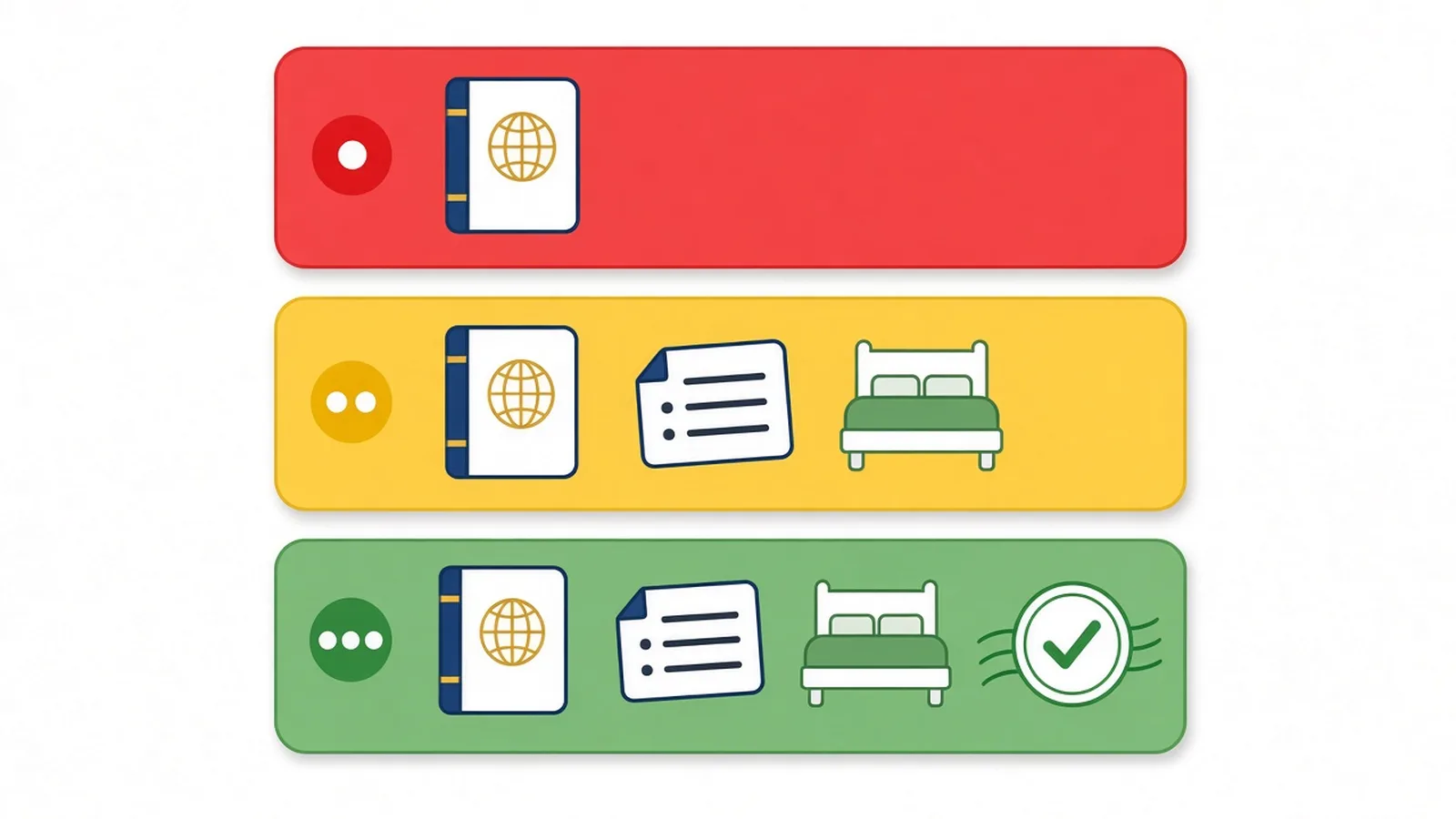
The Ministry of Foreign Affairs classifies nationalities into three groups for tourist entry. Group I nationals do not need a tourist visa. Group II nationals need one. Group III nationals need one after the consulate consults Bolivia’s Directorate General of Migration (DIGEMIG). The requirements apply only to Groups II and III.
The lists change by supreme decree. On 1 December 2025 the Ministry of Foreign Affairs announced that South Korea, South Africa, Bulgaria, Malta, Romania, the United Arab Emirates, Israel and the United States had moved into Group I, and Supreme Decree 5497 in the official gazette records the transfer: the first six from Group II and Israel and the United States from Group III. The ministry said implementation would be gradual, so check the current list for your passport with the consulate before you travel.
|
Group |
Visa |
Exit proof as a visa requirement |
|---|---|---|
|
Group I |
Not required |
Not a visa requirement; airlines may still ask |
|
Group II |
Required |
Travel itinerary or return tickets |
|
Group III |
Required with DIGEMIG authorisation |
Travel itinerary or return tickets |
What Must Group II and III Applicants Present?
-
Passport valid for at least six months.
-
Sworn visa application form.
-
Yellow fever vaccination certificate if visiting high-risk endemic areas.
-
Travel itinerary or return tickets.
-
An invitation from a person legally domiciled in Bolivia and registered with DIGEMIG, or a lodging reservation.
-
Proof of funds through a bank statement or credit card.
-
A recent 4x4 photo with a red background.
-
For Group III, the DIGEMIG resolution authorising entry.
Exit proof: The itinerary or return tickets item is where onward travel fits. An onward flight from La Paz or Santa Cruz to a third country, or a dated overland itinerary, can show how you leave.
How Long Can You Stay?
Article 9 of Supreme Decree 1923, as quoted in Supreme Decree 2339, says the tourist visa is granted for 30 calendar days and allows two extensions of the same length, with a maximum of 90 calendar days per year for tourists. Your exit record should fall inside the 30 days unless you plan to extend.
How Do Overland Exits Fit In?
Many visitors leave Bolivia by bus to Peru, Chile or Argentina. An itinerary that shows the route and dates, with a bus booking if you have one, documents the exit. Airlines flying you into Bolivia may still prefer a flight out, because they can verify it more easily. Carry both if you can. Our guide on which ticket types satisfy proof of exit covers open-jaw routes.
Which Exit Records Work Best?
|
Exit record |
For the visa file |
At check-in |
|---|---|---|
|
Issued return ticket |
Meets "return tickets" |
Strong |
|
Issued onward flight |
Fits the itinerary item |
Strong |
|
Verifiable onward reservation |
Fits a travel itinerary |
Ask your airline |
|
Bus itinerary with dates |
Fits a travel itinerary |
Airline may want a flight |
A DummyFlights reservation costs $15 per person, carries a PNR valid for 48-72 hours and includes free date changes within the same day of booking. Because the PNR window is short, time it for your consulate appointment, then buy the ticket you will use.
What Do Airlines Check?
Airlines check the visa requirement for your nationality and may ask how you will leave, especially on one-way tickets. See our guides on when airlines refuse boarding without an onward ticket and who checks onward tickets and when.
What Does an Example Bolivia Record Set Look Like?
Ravi, an Indian national, plans 12 days in Bolivia, arriving by air in La Paz and leaving by bus to Puno in Peru. His consulate confirms that his nationality needs a tourist visa, so he presents his passport, the sworn form, a red-background photo, bank statements, hotel reservations for each night, and an itinerary showing the flight in and the bus out with dates. He carries the bus booking and his Peru entry documents when he travels.
What Changed for Eight Countries in December 2025?
On 1 December 2025 Bolivia’s Foreign Ministry announced that citizens of eight countries previously subject to visa requirements would move to Group I, which does not need a tourist visa. The ministry said the implementation would be gradual and follow established procedures.
|
Country |
Group before the announcement |
Group announced |
|---|---|---|
|
South Korea |
II |
I |
|
South Africa |
II |
I |
|
Bulgaria |
II |
I |
|
Malta |
II |
I |
|
Romania |
II |
I |
|
United Arab Emirates |
II |
I |
|
Israel |
III |
I |
|
United States |
III |
I |
Note: Because the ministry described a gradual implementation, check the consulate page and your airline before you travel if you hold one of these passports. Do not rely on an older blog that still lists the United States as Group III.
How Should You Prepare Each Group II and III Item?
The consular list is short, but each item has a detail that trips applicants up. Prepare them in this order, so the dates in the later items match your flights.
|
Item on the consular list |
Detail to get right |
Tip |
|---|---|---|
|
Passport valid at least six months |
Counted from your travel dates |
Renew before applying if close |
|
Sworn visa application form (Declaración Jurada) |
Same dates as the itinerary |
Fill in after booking the exit record |
|
Yellow fever certificate |
Only if you will visit high-risk endemic zones |
Check your route inside Bolivia |
|
Travel itinerary or return tickets |
Shows how and when you leave Bolivia |
Include overland legs if any |
|
Invitation from a legal resident registered and authorised by DIGEMIG, or accommodation booking |
The invitation must come from someone registered with DIGEMIG |
Otherwise book accommodation for each night |
|
Bank statement and/or credit card |
Proof of economic solvency |
Recent statement in your name |
|
Recent 4 x 4 photo with red background |
Red background, not white |
Get it taken locally to spec |
|
DIGEMIG entry authorisation resolution |
Group III only |
Ask the consulate early, as it involves prior consultation |
Group III applicants need the consulate to consult DIGEMIG first, so start well ahead. Our onward ticket guide explains why the itinerary item matters.
Which Other Bolivian Visas Might Apply?
The consular page lists visas beyond tourism. If your purpose is not tourism, the tourist exemption does not cover you, even if you are in Group I.
|
Visa |
Purpose (consular page) |
Validity stated |
Notable requirements |
|---|---|---|---|
|
Objeto Determinado |
Work, temporary work, volunteering, academic exchange, religious, health, family and other non-tourism purposes |
Varies with purpose |
Document showing the activity; invitation from the entity in most cases; police certificate for over-16s; solvency except religious and family cases |
|
Estudiante |
Primary, secondary and higher education |
Up to 60 days, then 1-year temporary stay through DIGEMIG |
Legalised study documents; police certificate for over-16s |
|
Múltiple |
Investment and business, entering and leaving regularly |
1 year, stays no longer than 90 uninterrupted days |
Legalised company incorporation documents; tax ID; police or INTERPOL certificate |
|
Humanitaria |
International protection, trafficking victims, accompanying a sick person |
Up to 30 days |
Documentary proof of the situation |
|
Cortesía |
Senior officials, international organisations, cultural and religious figures |
Not stated |
Invitation from a Bolivian public institution via the Foreign Ministry |
|
Tránsito |
Passing through Bolivia |
See consulate |
See consulate |
For a multiple-entry business visa, each stay must end within 90 uninterrupted days, so every visit needs its own exit record.
What Do Three Bolivia Exit Plans Look Like?
A Group II traveller flying in and out of La Paz
She books her accommodation and a return flight, then fills the sworn form with the same dates. She adds a bank statement and a red-background 4 x 4 photo. Her route avoids high-risk yellow fever zones, so she does not need the certificate.
A Group II traveller crossing to Peru by bus
His itinerary shows the bus from Copacabana to Puno and his flight home from Lima. The itinerary item on the consular list is met by the full chain, not the bus ticket alone.
A business visitor on a multiple-entry visa
He visits three times in the year. Each visit has a return flight dated well inside 90 uninterrupted days, and he keeps the company documents legalised for the visa with him.
What Is the Pre-Flight Checklist for Bolivia?
|
Check |
Pass |
|---|---|
|
Group confirmed on the consular page, including the December 2025 changes |
Group I, II or III known |
|
Visa type matches purpose |
Tourism or the correct other visa |
|
Passport valid six months |
Yes |
|
Exit record |
Return ticket or full itinerary out of Bolivia |
|
Accommodation or DIGEMIG-registered invitation |
Every night covered |
|
Solvency |
Bank statement or credit card |
|
Photo |
4 x 4, red background |
|
Yellow fever |
Certificate if visiting high-risk zones |
If you need a verifiable itinerary before your dates are firm, a DummyFlights reservation costs $15 per person, carries a PNR valid for 48-72 hours and includes free date changes within the same day of booking. Buy the actual ticket you will fly.
What Do US Travellers Need Now?
The U.S. Department of State’s Bolivia page now says a visa is not required for US citizens visiting for tourism or business if they stay less than 90 days in a year. That reflects Bolivia’s December 2025 decision to move the United States to Group I. The State Department adds that other purposes of travel may require a Bolivian visa.
|
Point |
State Department guidance for US citizens |
|---|---|
|
Tourist visa |
Not required |
|
Stay |
Less than 90 days in a year for tourism or business |
|
Passport |
6 months validity beyond the arrival date |
|
Yellow fever |
Certificate required by the Bolivian government, especially for places below 2,300 metres east of the Andes |
|
Currency |
Entry maximum USD 50,000; exit maximum USD 20,000 |
|
Dual nationals |
May be asked for a Bolivian birth certificate or passport on entry or exit |
Because the limit is 90 days in a year, a US traveller making two trips should count both. An exit record dated inside the limit, and the entry stamp from the earlier trip, make the count easy to show.
Which Regions Trigger the Yellow Fever Requirement?
The State Department says the Bolivian government requires an International Certificate of Yellow Fever Vaccination, especially for travel to places lower than 2,300 metres (7,550 feet) east of the Andes. It says this includes all of Beni, Pando and Santa Cruz, and certain parts of Chuquisaca, Cochabamba, La Paz and Tarija. The consular page lists the certificate for visits to high-risk endemic zones.
|
Itinerary |
Yellow fever certificate |
|---|---|
|
La Paz, Lake Titicaca, Uyuni and Potosí only |
Check with your doctor; the high-altitude west is outside the zones the State Department names |
|
Santa Cruz city or department |
Required: the State Department names all of Santa Cruz |
|
Amazon trips via Rurrenabaque (Beni) |
Required: all of Beni is named |
|
Pando |
Required |
|
Parts of Cochabamba, Chuquisaca, La Paz or Tarija lowlands |
Likely required; check the exact location |
If your route includes these areas, the certificate belongs in the same folder as your exit record. An airline or officer who sees a Santa Cruz arrival may ask for it.
How Should You Plan an Overland Exit Around Roadblocks?
Many visitors leave Bolivia by road to Peru, Chile or Argentina. The State Department warns that roadblocks are a common form of protest throughout the country and can severely affect travel plans, and that the rainy season, from November to March, can make many roads impossible to use. For the Copacabana to La Paz route, it advises travelling only on a direct bus, during the day, with tickets bought at the terminal.
-
Build a buffer day between your planned border crossing and any onward flight from the next country.
-
Keep your exit record dated with that buffer, so a one-day delay does not push you past your permitted stay.
-
Buy bus tickets directly at the terminal, as the State Department advises.
-
Check local news for roadblocks before travel days.
-
Keep proof of the onward flight from the next country, so the itinerary item on the consular list is complete.
Note: If a roadblock forces a change, a DummyFlights reservation carries a PNR valid for 48-72 hours and includes free date changes within the same day of booking, at $15 per person. Rebook the actual ticket you will fly with the airline.
What Do You Need if You Are Only Passing Through?
Bolivia’s consular visa page lists a transit visa for foreign citizens in transit through Bolivian territory, valid up to 15 days. Requirements are the sworn application form, a passport valid at least 6 months and tickets proving that the final destination is a third country. Captains, pilots and crew of ships or aircraft are treated as transit travellers.
|
Transit plan |
What to show |
|---|---|
|
Overland from Peru to Chile through Bolivia |
Bus tickets in and out, and the ticket to the final destination |
|
Flight connection in Santa Cruz |
Onward flight to a third country |
|
Group I national in transit |
Usually no visa; carry the onward ticket anyway for the airline |
For a transit visa the onward ticket is the core document, so it must show a third-country destination, not a return to the country you came from.
What Should You Carry During Your Stay?
The State Department says Bolivian police and immigration officers can stop people and ask for ID and proof of legal status at any time. It advises carrying copies of the passport photo page and the Bolivian entry stamp, and keeping the passport itself secure. It notes that people who cannot show legal status may be detained until it is confirmed, although this is rarely enforced.
-
Copy of the passport photo page
-
Copy of the Bolivian entry stamp
-
Copy of your visa, if you needed one
-
Your exit ticket or itinerary, as a record of when you will leave
Travelling with children
The State Department says children who are dual US-Bolivian citizens, or who have been in Bolivia for more than 90 days, need special permission from Bolivian authorities to travel without both parents or a legal guardian. Children who are not Bolivian citizens and stay less than 90 days do not have to follow these rules. Bring a copy of each child’s birth certificate.
How Should You Show and Carry Funds for Bolivia?
For Group II and III applicants, the consular list asks for proof of economic solvency by bank statement and/or credit card. Once in the country, the money you actually carry matters as well. The State Department advises bringing US dollars to exchange, warns that Bolivian banks and exchange offices often reject folded, marked or slightly worn notes, and says many payments are cash only, especially at small businesses and in rural areas. It adds that Bolivian ATMs accept US-issued cards but are frequently out of order.
|
Stage |
What to have |
Source |
|---|---|---|
|
Visa application (Groups II and III) |
Recent bank statement and/or credit card |
Consular visa page |
|
Arrival |
Card plus clean, unfolded US dollar notes |
State Department |
|
During the stay |
Cash for rural areas; do not rely on one ATM |
State Department |
|
Entry and exit limits |
Under USD 50,000 in, under USD 20,000 out |
State Department |
A statement showing enough money for the nights in your itinerary, plus the exit ticket, answers the solvency question. Keeping the statement period recent and in your own name avoids follow-up questions.
What Changes for Group III Applicants?
Group III nationals need a tourist visa issued only after the consulate consults Bolivia’s General Directorate of Migration (DIGEMIG). The consular list adds one item for them: a DIGEMIG resolution authorising entry into Bolivian territory. Since the December 2025 changes moved Israel and the United States out of Group III, check the consulate page for the current Group III list before you apply.
-
Confirm your nationality’s group on the consulate page.
-
Contact the consulate early, because the visa depends on DIGEMIG’s prior consultation.
-
Prepare the standard Group II list: passport, sworn form, itinerary or return tickets, accommodation or DIGEMIG-registered invitation, solvency, photo and yellow fever certificate if needed.
-
Wait for the DIGEMIG entry authorisation resolution, then finalise travel dates.
-
Buy the actual ticket once the visa is issued, inside the validity it shows.
A reservation used for the application should be live when the consulate reviews it. With a PNR valid for 48-72 hours, time it for the day you submit, and keep your dates consistent across the form, the itinerary and the accommodation.
Which Official Sources Does This Guide Use?
-
Visas, Bolivian Ministry of Foreign Affairs consular base.
-
Decreto Supremo N° 2339, Gaceta Oficial de Bolivia (quoting DS 1923, Art. 9).
-
Supreme Decree 5497 (group reclassification), Gaceta Oficial de Bolivia.
-
Announcement of 1 December 2025 on visa exemptions, Ministry of Foreign Affairs of Bolivia.
-
The current group list, available from your Bolivian consulate.
-
U.S. Department of State: Bolivia international travel information
Your Bolivia Visa Group and Your Exit
For Bolivia, exit proof is a formal visa requirement for Group II and III nationals, as a travel itinerary or return tickets. Group I nationals have no visa step but may still be asked by airlines. Fit your exit inside the 30-day grant, show accommodation or a registered invitation, and carry a usable ticket for the journey you take.
For the basics, see what an onward ticket is and why it is required.
Check your group, then show your exit. Match your itinerary or return tickets to the 30-day grant and your accommodation.
Review onward reservation optionsFrequently Asked Questions
Does Bolivia require an onward ticket?
For Group II and III nationals, the visa requirements include a travel itinerary or return tickets. Group I nationals have no visa requirement but airlines may ask.
Which countries are in Bolivia’s Group I?
The list changes by supreme decree. Supreme Decree 5497, announced on 1 December 2025, moved the United States, Israel and six other countries into Group I. Check the current list with a Bolivian consulate.
How long does a Bolivian tourist visa last?
30 calendar days, extendable twice, with a maximum of 90 days a year for tourists, according to Supreme Decree 1923.
Do I need a hotel booking for a Bolivia visa?
Groups II and III need a lodging reservation or an invitation from a DIGEMIG-registered host in Bolivia.
Can a bus itinerary count as exit proof?
The requirement says travel itinerary or return tickets, so a dated overland itinerary can fit. Airlines may still prefer a flight out.
What extra step does Group III have?
Group III applicants need prior authorisation from DIGEMIG, issued as a resolution, before the consulate grants the visa.
Do US citizens still need a visa for Bolivia?
No, for tourism or business stays of less than 90 days in a year, according to the U.S. Department of State, following Bolivia’s December 2025 move of the United States to Group I. Other purposes may need a visa.
What photo does a Bolivian visa need?
The consular page asks for a recent 4 x 4 photo with a red background.
How long is a Bolivian multiple-entry business visa valid?
The consular page says 1 year, with stays of no more than 90 uninterrupted days.
How much cash can I bring into Bolivia?
The State Department lists an entry maximum of USD 50,000 and an exit maximum of USD 20,000.
Do I need a yellow fever certificate for Santa Cruz?
Yes. The State Department says Bolivia requires it especially below 2,300 metres east of the Andes, including all of Santa Cruz, Beni and Pando.
How long is a Bolivian transit visa valid?
The consular page says up to 15 days, with tickets showing your final destination is a third country.
Friendly reminder: Airline, visa and border rules can change. A Bolivian visa or a temporary reservation does not guarantee boarding or admission. Follow Bolivia’s Ministry of Foreign Affairs, DIGEMIG and your airline’s current instructions for your nationality and route.