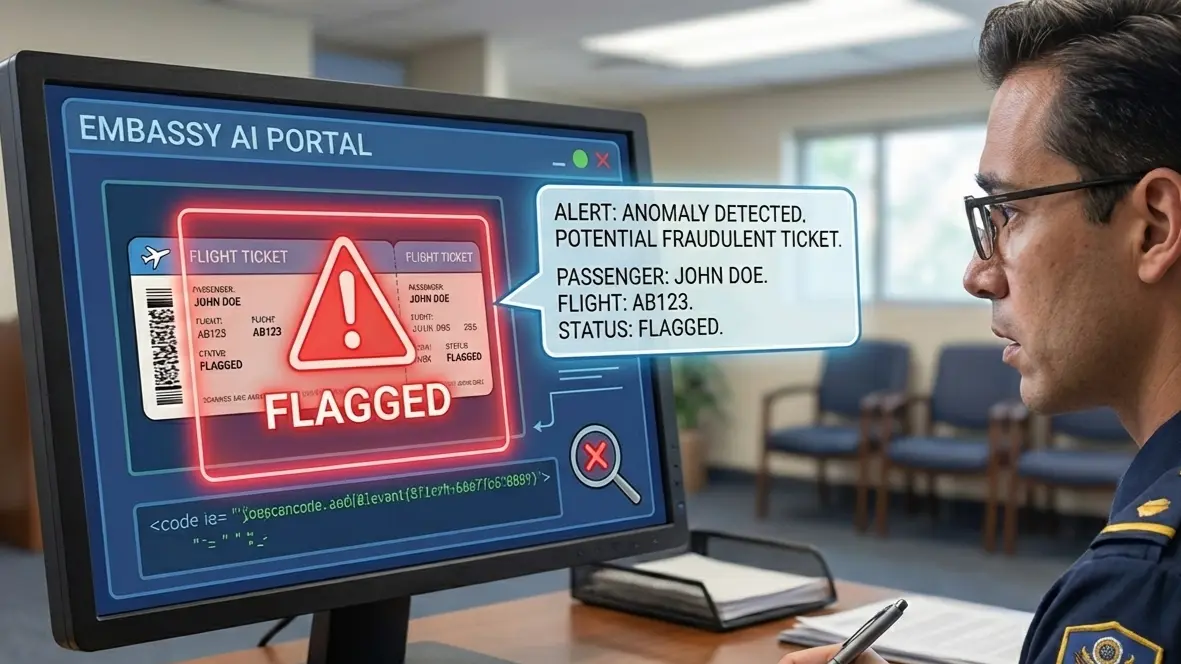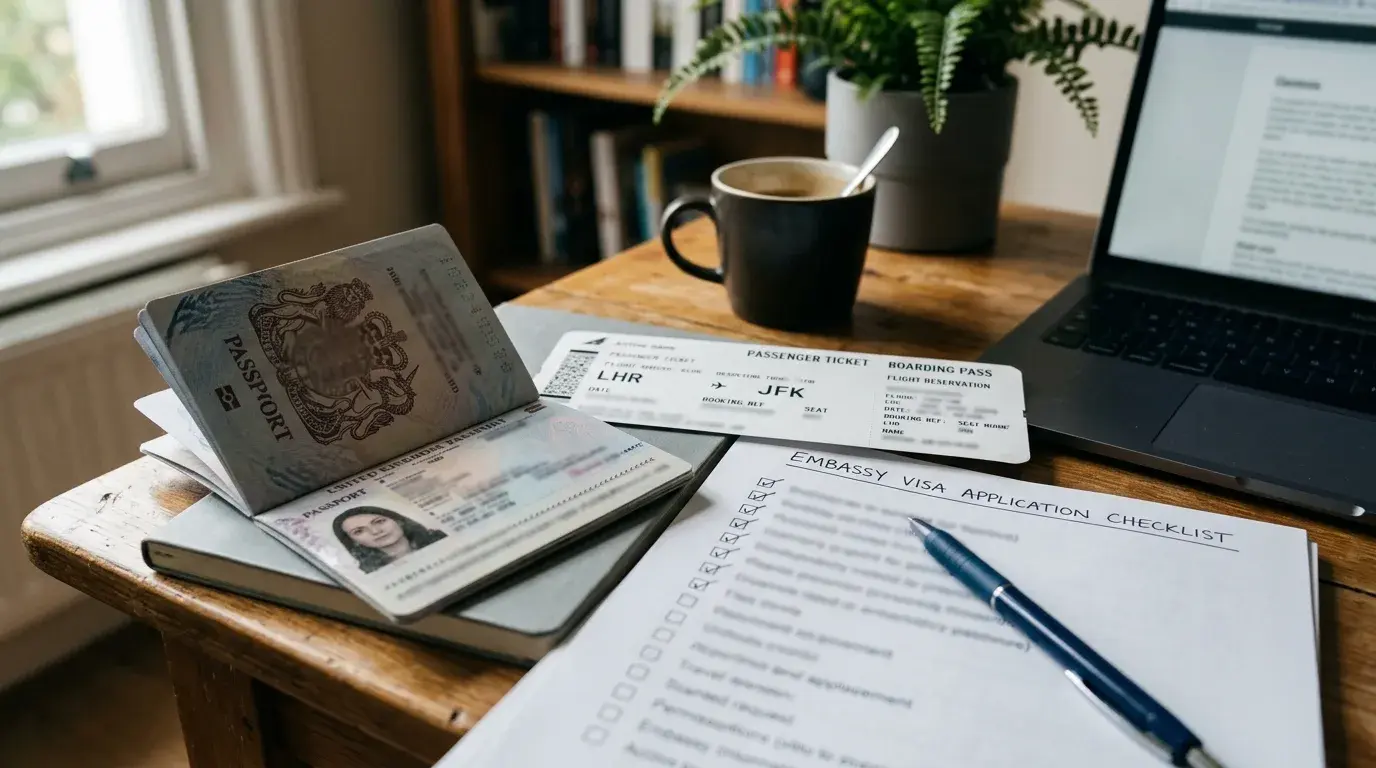
An onward ticket is usually not the main proof for a Singapore work visa traveler who has a valid In-Principle Approval or work-pass pathway, because immigration and airlines first look at your work-pass approval, passport, employer details and entry purpose. It can still help as a practical backup when you fly one-way from India, your airline asks for exit proof, or your work-pass stage is not obvious at check-in.
You have a Singapore job offer, your In-Principle Approval is in your inbox, and your family WhatsApp group has one burning question: can you really fly on a one-way ticket, or will someone ask for onward proof? It is a fair worry because tourist rules, airline risk checks and work-pass entry logic often get mixed together.
This guide separates those ideas for India-based travelers. You will see how Singapore work passes shape the travel conversation, where an onward ticket may still be useful, how an IPA letter changes the risk, and how to prepare a clean document stack without blocking money in unnecessary refundable fares.
Key facts before creating Singapore work-visa onward proof:
- A Singapore IPA letter or approved work pass usually matters more than a return ticket.
- Airlines can still ask for onward proof when a one-way route looks unclear at check-in.
- A dummy ticket is useful as temporary backup proof, not as a replacement for work-pass approval.
- Your onward ticket should match your passport, flight date, employment timeline and entry purpose.
- Do not present a temporary reservation as a final paid ticket if it is only planning proof.
Flying India to Singapore for work and need backup onward proof? Create an onward ticket with DummyFlights after your IPA, passport details and travel date are stable.
Create Your Onward TicketIn This Guide
Official-source check: Singapore’s Ministry of Manpower says an In-Principle Approval letter is issued after a work pass is approved and can allow the candidate to enter Singapore while the pass is being issued, depending on the pass and letter conditions. MOM also says pass details must match passport details before entry. ICA’s entry guidance focuses on valid travel documents and states that eligibility to enter is assessed at the point of entry; short-term visitors may need an onward or return ticket, but work-pass travelers should follow their pass/IPA conditions. Sources: MOM Employment Pass application process, MOM S Pass application process and ICA entering Singapore guidance.
Reviewed for: Singapore work-pass and IPA wording, India airline check-in practicality, onward-ticket positioning, one-way work travel logic, MOM/ICA source alignment, PNR terminology and dummy-ticket claim safety.
How Singapore Immigration Sees Your One-Way Work Trip

If you listen to airport gossip, you will hear every version of the Singapore story. Someone will swear that officers demand a printed return ticket from every Indian traveler. Someone else will say they walked in with only a one-way ticket and an IPA, and nobody even blinked.
The reality for work visa holders sits quietly between these extremes. Relocating for a new job abroad gets easier when you create an onward ticket that matches your travel dates.
Why Work Visas And Tourist Rules Get Mixed Up
Singapore publishes clear expectations for short-term visitors. If you enter on a tourist-style visit pass, you are expected to have a plan to leave, usually a confirmed return or onward ticket. That rule is simple, so people remember it and repeat it for every situation, even when you are moving for a job.
Your case is different once you hold an Employment Pass, S Pass, or Work Permit approval. You are not flying for a quick holiday. You are relocating to live and work. Immigration officers know this. They see many Indian professionals and workers arrive on one-way tickets backed by genuine jobs.
So the confusion happens because people mix two groups in their heads. Tourists, where onward proof is central. Approved workers, where the focus is somewhere else.
What Officers Actually Look For When You Arrive
When you walk up to the immigration counter with a work approval, the officer is usually thinking about three questions:
- Is your approval genuine and still valid
- Does your story match the approval and your documents
- Are you likely to follow Singapore's rules once you enter
To answer those questions, they normally look at:
- Your passport with enough validity
- Your In-Principle Approval (IPA) letter or other approval notice
- Your employer details and, sometimes, your job contract
- Where will you stay for the first few days or weeks
In many smooth entries, the officer never asks about an onward or return ticket. For them, the fact that you have a valid IPA and a clear job plan already answers the main question. They can see why you are coming in and how you will support yourself.
When Onward Tickets Can Still Come Up At Immigration
That does not mean onward travel is never mentioned. It can still appear if something in your profile triggers more questions.
An officer might dig deeper if:
- Your answers do not match the job title or salary shown in the IPA
- Your accommodation details sound vague
- You have a history of overstaying in Singapore or another country
- You entered on a visit pass earlier and stayed very close to the maximum period
In those extra checks, an officer may ask how long you plan to stay, what you will do if the job falls through, or how you will leave if your pass is cancelled. Here, having a realistic plan matters more than waving a random return ticket.
If you can clearly explain that you are starting work with a named employer, that the company will guide your next steps if anything changes, and that you will exit if your pass is not issued, you are usually in a strong position.
The India Lens: Why Families Worry About Return Tickets
For families in India, the idea of flying abroad without a return ticket feels risky. Parents imagine you standing at the counter while an officer says, “No onward ticket, no entry.” It feels like tempting fate, especially when friends and relatives repeat dramatic stories.
What actually matters is more practical. Immigration wants to see that:
- Your work pass approval is real
- Your job offer and salary make sense for your profile
- You have somewhere reasonable to stay on arrival
- You understand that if the job ends, you must leave or change status
A return ticket can be one way to show that final point, but it is not the only way, and it is rarely the main evidence for a genuine worker. For most Indian professionals and workers, strong documents and clear answers at the counter carry far more weight than a printed round-trip itinerary.
Singapore Work Passes And How They Shape Your Travel Plans
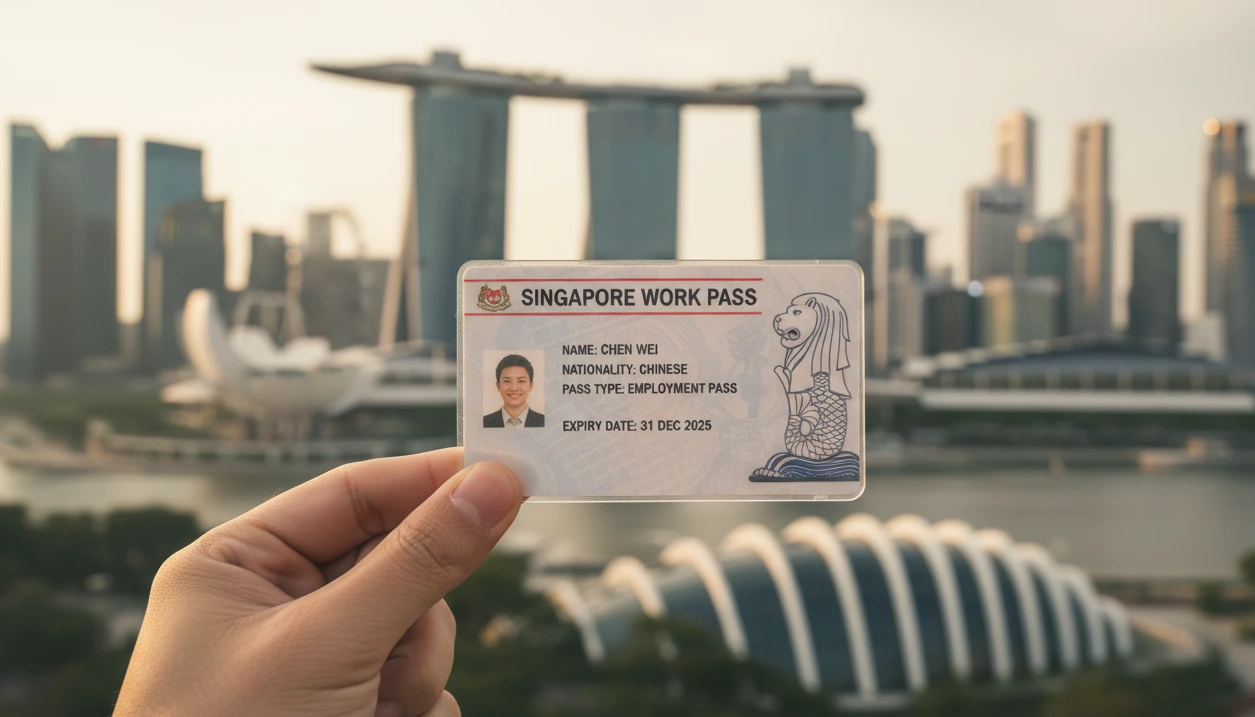
Once your Singapore job is confirmed, you stop thinking like a tourist. You are planning a move, not a holiday. That is exactly why understanding your work pass helps you decide whether a one-way ticket makes sense and how immigration reads your profile at the border.
Let us walk through the main passes Indians use and what each one quietly tells both immigration and airlines about your plans. If your airline asks for onward proof, simply show them your confirmed onward ticket proof.
Meet The Main Work Passes Indians Actually Use
From India, most people heading to Singapore for work fall into three broad buckets. Each bucket has its own pass, and it affects how your trip looks on paper.
You will usually see:
- Employment Pass (EP)
For managers, professionals, and specialists. Think IT leads, finance managers, consultants, and senior engineers. These roles typically come with higher salaries, degree-level education, and white collar office jobs. - S Pass
For mid-level skilled roles. Maybe you are a network engineer, lab technician, supervisor, or experienced associate. Salary is lower than EP but still skilled, and the employer must meet quota rules. - Work Permit
For semi-skilled roles in sectors like construction, shipyards, manufacturing, cleaning, or domestic work. Employers handle most of the paperwork and compliance.
Why does this matter for tickets? The pass type signals whether you are likely to treat Singapore as a short assignment or a longer-term assignment. EP and S Pass holders commonly arrive with one-way tickets because everyone knows they are relocating. Work Permit holders often do the same, but with more company control around travel.
Why Eligibility Rules Matter From The Moment You Book
Every pass has its own eligibility checklist. You mostly think about this when applying, but it also influences how credible you look when you face an officer or an airline agent.
For an EP, the story usually looks like this:
- You hold a relevant degree or a strong professional track record
- Your salary meets the minimum for your age and sector
- The role is clearly professional and matches your CV
For an S Pass, it is more about:
- Technical or diploma-level skills
- Salary that crosses S Pass thresholds
- Employer staying within quota and levy limits
Work Permit holders typically rely on:
- Sector-specific criteria
- Employer sponsorship
- Clear evidence that the job is genuine and compliant
When these pieces line up, your documents tell a clean story. Passport, IPA letter, job title, salary, employer name, and your answers at the counter all point in the same direction.
In that situation, an officer does not need a return ticket to understand you. Your work pass approval already proves you are not casually entering to “see what happens.” You are coming to start a specific job with a specific company.
How Long You Stay: Validity, Renewals, And Real Life
Another quiet factor is your expected length of stay. Tourists come for days or weeks. You are planning for years, or at least a solid contract period.
Typically:
- EP and S Pass are often issued for one to two years at a time, sometimes longer.
- Work Permits are tied more tightly to employer and sector rules
- All passes can be renewed if both the company and MOM agree
In practical terms, nobody expects an EP holder to turn up with a return ticket dated six months later. The whole system is built on the idea that you will live in Singapore, pay local taxes, possibly move family later, and leave when your job ends or your pass is cancelled.
So when an officer looks at an EP or S Pass IPA, they see a long-term plan. That is another reason why one-way tickets are very common for Indian workers entering on a fresh approval.
Medical Checks, Insurance, And Other Fine Print
You might not think medical checks or insurance matter for your flight, but they help define you as a long-term worker rather than a casual visitor.
Depending on your pass and sector, your employer may arrange:
- Pre-arrival medical tests in India or post-arrival checks in Singapore
- Medical insurance that meets local requirements
- Security bonds and other guarantees for certain Work Permit roles
All of this shows that your employer has committed money and effort to bring you in. Immigration officers know these processes well. When they see a valid IPA in your hand, they know these obligations are either already in place or shortly will be. That is a very different risk profile compared to a visitor arriving with a vague story and a backpack.
What Your Specific Pass Signals To Immigration And Airlines
The moment you show your IPA at check-in or immigration, you are sending a signal.
For EP and S Pass:
- You look like a relocating professional
- Your stay is expected to be long-term
- One-way travel appears normal and is often employer-approved
For Work Permit:
- You are entering into a tightly regulated sector
- Your employer usually manages much of your logistics
- One-way travel is again common at the start of a contract
Airlines do not know every detail of the MOM rules, but they see these documents every day. When your paperwork is clear and your answers are calm, many check-in staff accept that a one-way ticket is logical for a work move.
Immigration officers take an even broader view. With a valid IPA, proper accommodation details, and a clean history, you fit the profile of someone who will follow the rules and leave when your time in Singapore ends, with or without a pre-booked return ticket.
From an IPA Letter In India To Getting Your Work Pass In Singapore

Once your offer is in place, the move to Singapore stops being a dream and becomes a project. You are no longer just booking flights. You are managing a sequence of approvals, documents, and checkpoints that all need to line up so you can enter Singapore calmly with your new job waiting.
Think of it as a clear roadmap. If you know what happens at each stage, you can decide smartly about tickets, bookings, and what to keep in your hand luggage on the way from India to Changi. Keep your travel plans flexible and your documents solid with a verified onward ticket proof.
Stage 1: Employer Kicks Off The Work Pass Paperwork From Singapore
Everything starts with your Singapore company, not with you standing in a queue at VFS. For most work passes, your prospective employer begins the visa application process with the Ministry of Manpower.
For Employment Passes, S Passes, and Work Permits, the core application process is usually submitted online through the MOM portal. Your HR team collects your details, fills the relevant form, and uploads the required documents. They will ask for your passport number, education history, and work experience, and they may also ask for scans of your degree certificates and Indian employment letters.
At this point, you are the applicant, but the company owns the interaction with manpower authorities. They pay the official fees, respond to any MOM request for additional information, and ensure their business is allowed to hire foreign workers in that role.
For you, the smart move is to share clear scans, answer HR emails quickly, and check that your worker's passport has at least six months' validity. A valid passport with clean pages sounds basic, but we have seen it delay otherwise strong applications.
Stage 2: Waiting For Approval And Reading Your IPA Correctly
After submission, you hit the quiet part that makes everyone nervous: the waiting. MOM reviews your case to see if you are eligible for that specific pass category. They look at whether your salary, role, and profile fit their rules for foreign professionals or semi-skilled workers, depending on your pass type.
The processing time can vary by season and sector, so keep some flexibility in your travel planning. Do not fix non-refundable flights at this stage. Instead, watch for official updates from your company. When the pass is approved, your employer receives an in-principle approval or notification letter that you should read line by line.
In that letter, you will see:
- The pass type and validity
- Validity of the IPA itself
- Any medical checks or other conditions
- Reference numbers you may need later
Refer to the dates carefully. Your plan to work in Singapore must fit inside the IPA validity window. If you hope for permanent residence later, starting with a clean, timely entry sets a good foundation.
Stage 3: Getting Your Documents And Travel Plan Ready In India
Once your IPA lands in your inbox, the move becomes real. Before you touch airline websites, you should collect and organise the following documents that you usually travel with:
- A passport that is valid for at least six months beyond your intended date of entry
- Printed IPA or notification letter
- Your job offer or appointment letter
- Educational certificates, especially if they supported your visa application
- Singapore address details, even if it is a temporary hotel or company-provided housing
The following documents cover most scenarios for foreign professionals, semi-skilled workers, and even some foreign entrepreneurs under special schemes. Some roles in the services sector or marine shipyard may also involve extra conditions, so follow any specific guidance from HR.
Here is where ticket decisions come in. Many Indian candidates now check if a Singapore visa label is required in the passport or if the IPA itself is enough to enter Singapore. Rules change, so your employer is the best source here. If an entry visa is applicable for your nationality, the employer usually helps you obtain it or explains the steps.
You can now decide whether to book a one-way ticket or a round trip. Because this is a relocation, most companies are comfortable with one-way bookings, but some still prefer a return as a safety net. Align with your employer before you commit money.
Stage 4: Flying Out And Clearing Singapore Immigration Smoothly
On the travel day, you will carry your carefully packed folder. At the Indian check-in, staff may ask what you intend to do in Singapore. Show your IPA and say clearly that you are relocating to work in Singapore with your named employer.
If they need more comfort, they might request to see your job offer or to confirm some required documents, but usually the IPA does the heavy lifting. Airline staff care that you are allowed to enter Singapore and that they are not stuck flying you back at their own cost.
On arrival, you will have already completed the SG Arrival Card form online. There, you confirm your personal details, passport number, address in Singapore, and basic trip details. At the immigration counter, the officer scans your worker's passport, looks at the IPA, and may ask a few quick questions:
- What kind of role will you play
- Where will you stay
- Who is your company contact
If your answers match the paperwork, they stamp you in for a short period linked to your pass issuance. At this point, no one expects you to show a full folder of onward tickets. Your job and IPA are the main story.
Stage 5: Collecting Your Card And Settling Your Legal Status
The last piece is local. After entry, your employer arranges the appointment where the work permit issued or the Employment Pass card is finalised. You may attend medical checks, submit biometrics, or carry extra academic documents if requested.
This is where you truly switch status from visitor to long-term pass holder. From here, you can legally operate in your new role, open local bank accounts, and join colleagues who have walked the same path from India.
Note how the journey had several steps, but the onward ticket was never the main character. As long as your documents line up, you obtain the right approvals, and follow the instructions given in each letter, your move flows more like a controlled project than a risky gamble at the border.
Airlines At The Gate, Immigration At The Border: Who Really Checks Your Ticket?
By the time your Singapore paperwork is in place, one question still hangs in the air. What actually matters more for your one-way ticket - immigration rules in Singapore or airline rules at the Indian airport?
In real life, it is the person at the check-in counter who is most likely to ask about onward travel, not the officer at Changi. Once you understand that difference, you can prepare with a lot less stress. Before your visa interview, create an onward ticket so you never scramble for flight proof at the last moment.
Why Airlines Worry More Than Immigration
Airlines are not thinking about your career, your new salary, or your big move. They are thinking about risk. If they fly someone who is refused entry, they may have to fly that person straight back at their own cost.
Because of this, many airlines use simple internal rules. If the country often expects tourists to have a return ticket, staff assume that applies to everyone. They do not always separate a visitor from a work pass holder in their mind.
For Singapore, immigration clearly understands that work visa holders often arrive on one-way tickets. The whole system is built around people relocating for jobs. Airlines, however, prefer clear proof that the person at the counter will not become their problem at the destination.
That is why you sometimes hear stories where immigration did not care about onward travel, but the airline almost refused boarding at the Indian airport.
How Check-In Conversations Usually Play Out For Indians
At check-in, your experience depends a lot on how confident and prepared you look. Staff see thousands of passengers every week. When your documents are in order, the conversation usually stays short.
A typical pattern looks like this:
The agent scans your passport, sees a one-way sector to Singapore, and asks something like:
- "Is this for work or tourism?"
- "Do you have a return ticket?"
If you simply say, "I am moving for work," without showing anything, they may look unsure. Their screen does not show your IPA details. They only see a one-way booking to a country that often expects tourists to hold return flights.
You can change that atmosphere in seconds by calmly placing your printed IPA letter, job offer, and maybe a short employer letter on the counter. When they see official Singapore documents and a clear company name, many agents relax. It becomes obvious that you are not a short-stay visitor who might overstay; you are a worker with a pre-approved status.
If the staff still seem unsure, you can politely ask them to check their system notes for work pass holders to Singapore. Staying patient and respectful helps more than raising your voice.
Different Ways People Handle The Onward Ticket Question
Every traveler from India handles risk differently. There is no single correct method. What matters is that you know your options and pick the one that fits your budget and stress level.
You will see people choose from options like these:
- A fully refundable round-trip ticket
You book a return leg several months away, then cancel it after you settle in Singapore. This locks a larger amount of money for a while, and refunds into Indian accounts can take time, but it offers a clear document if anyone asks. - A cheap onward segment from Singapore to a nearby country
For example, a low-cost ticket to Kuala Lumpur or Bangkok later in the year. Some travelers never use it. The goal is simply to show that you have a theoretical exit route. - Employer-arranged travel
Some companies handle everything. They book the ticket from India to Singapore and issue a letter if they expect you to stay long-term. Check your offer letter or HR emails to see what is included. - Relying only on work pass approvals
Confident travelers sometimes carry only their IPA, job contract, and accommodation details. This can work if the airline is used to working pass routes and the staff are well trained, but it does leave you exposed if a cautious agent insists on seeing onward proof.
None of these choices is perfect. Each has a different mix of cost, effort, and peace of mind. The key is to decide how much security you want before you reach the airport.
Using A Temporary Reservation As A Safety Net
There is also a middle ground between blocking a large amount on a refundable ticket and taking the risk of having nothing. Some travelers prefer to carry a time-limited, verifiable reservation that can be checked in airline systems.
That is where services like DummyFlights.com come in. We create genuine, checkable reservations with a readable booking reference or PNR that are made specifically for visa and travel-document checks. You receive the booking quickly as a PDF, which you can print or show on your phone. The service is simple: for about 15 US dollars, you get a reservation that aligns with your route and dates without locking a big amount on your card.
Used sensibly, this kind of document acts as a safety net. If an airline agent wants proof that you can leave Singapore, you can show a real reservation, answer questions confidently about your job and IPA, and move on.
Your Departure Checklist From India
By now, the pattern is clear. Singapore immigration focuses on your work status. Airlines focus on their risk. You stand in the middle and need to keep both sides comfortable.
Before you leave India, it helps to have a simple checklist:
- Core work documents
Passport, IPA printout, job offer, employer contact details, and your Singapore address. This is non-negotiable. - Supporting proof of your move
Any relocation emails, joining letters, or HR confirmations that mention your start date. These help if staff are not familiar with work passes. - Plan for onward questions
Decide in advance whether you will rely on your IPA alone, carry a refundable return, book a cheap onward sector, or use a verifiable reservation. Do not make this decision at the counter. - Digital backups
Save everything in your email, a cloud drive, and your phone. Airport printers fail, and connectivity can be patchy at the wrong moment.
When you walk into the airport with this preparation, you change the whole dynamic. You stop reacting to every question as a surprise. You already know who cares about what, and you have the right document at your fingertips. That calm confidence does as much for your journey as any ticket ever will.
Enter Singapore Ready, Not Worried
By now, the pattern is clear. Singapore immigration cares far more about your work pass approval, job, and accommodation than a printed return ticket. The onward ticket question shows up more at Indian check-in counters than at the immigration desk in Changi. When your IPA, documents, and story line up, a one-way ticket for a genuine work move makes sense.
Your job is to stay one step ahead. Keep your paperwork tight, know your timeline from IPA to pass card, and choose a sensible plan for onward proof that fits your budget and risk comfort. Do that, and you do not walk into the airport hoping for luck. You walk in like someone who belongs on that flight. Secure your onward proof in minutes with onward ticket proof for your next work trip to Singapore.
Need Singapore work-trip onward proof without buying a return fare too early? Create a clean onward ticket after your IPA, passport details and flight date are ready.
Create Your Onward TicketFrequently Asked Questions
Do I need an onward ticket for a Singapore work visa?
Not usually as the main proof if you hold a valid IPA or approved work-pass pathway. But airline staff can still ask for onward proof when your one-way route or documents are unclear.
Can I fly one-way to Singapore with an IPA letter?
Many work-pass travelers do. The key is carrying the correct IPA letter, passport, employer details and any documents the letter asks you to bring.
When does an onward ticket help for Singapore work travel?
It helps when the airline wants proof you can leave if entry or work-pass issuance has a problem, or when your work-pass stage is not obvious at check-in.
Is a dummy ticket useful for a Singapore work visa?
It can be useful as temporary backup onward proof, but it does not replace the IPA letter, work-pass approval, employer documents or Singapore entry conditions.
What should my onward proof match?
It should match your passport name, travel date, entry purpose, work-pass timeline and the explanation you give at check-in.
Should I buy a refundable return ticket?
Only if your route, airline or risk level makes it worth the cost. A dummy ticket can be a lighter backup when you do not want to lock money into a full return fare.
Will Singapore immigration ask for a return ticket?
For work-pass travelers, officers usually focus on valid entry documents and pass conditions. They can still ask practical questions, so keep your IPA and travel documents easy to show.
Can airline staff ask even if immigration may not?
Yes. Airlines manage boarding risk before you reach Singapore, so their check-in questions may be more cautious than the immigration conversation.
When should I create the onward ticket?
Create it after your IPA, passport details and travel date are stable. Refresh it if your flight or work-pass timeline changes.
Does an onward ticket guarantee boarding or entry?
No. It supports the travel-proof part of the journey only. Boarding and entry depend on airline checks, Singapore rules, valid documents and your personal situation.
Friendly reminder: DummyFlights provides temporary travel-proof documents for planning and application support. Requirements vary by destination, airline, route and applicant situation. A dummy ticket can support a file, but it does not guarantee approval, boarding or entry.