
An onward ticket for a UAE spouse visa is not always required when you already hold the right entry permit or residence pathway, but it can be the practical document that keeps airline check-in calm. For India-to-UAE spouse-route travelers, the safest approach is to carry spouse sponsorship proof, entry-permit or status-change documents, passport details, accommodation and a clean onward or return plan if your route, airline or visa stage may raise questions.
Your bags are packed, your spouse is waiting in the UAE, and then the check-in agent asks the question that can slow everything down: do you have proof of onward travel? Some spouse-route travelers board one-way without a question. Others get stopped because the airline sees an incomplete residence path, unclear entry status or a route that looks risky at the counter.
This guide keeps the decision practical for India-based travelers. You will see when onward proof is useful, when it is optional, how airline staff think, and how to prepare a clean folder without burning money on a full return fare too early. The goal is simple: make boarding boring, keep your spouse-route evidence clear, and avoid last-minute counter pressure.
Key facts before creating UAE spouse-visa onward proof:
- Airlines may ask for onward proof even when UAE residence processing is your real plan.
- An approved entry permit, sponsor details and marriage proof usually carry more weight than a ticket alone.
- A dummy ticket is useful as temporary onward proof when your exit or status-change plan needs backup.
- Your onward ticket should match your route, permit stage, spouse documents and realistic UAE timeline.
- Do not present a temporary reservation as a final paid ticket if it is only planning proof.
Flying India to UAE on a spouse route and need clean onward proof? Create an onward ticket with DummyFlights after your passport details, entry path and spouse timeline are stable.
Create Your Onward TicketIn This Guide
Official-source check: UAE family residence sources focus on valid residence sponsorship, passport validity, proof of kinship, housing and sponsor financial eligibility. ICP states that a foreign resident may sponsor family members when requirements are met, including financial solvency such as AED 3,000 with housing or AED 4,000 without housing, and the residence process must be completed within the allowed entry period. GDRFA Dubai also lists family residence permit requirements such as passport copy, photo and medical examination for adults. Sources: ICP residence permit service, GDRFA family residence permit service and UAE Government family residence visa page.
Reviewed for: UAE spouse-route accuracy, India airline check-in practicality, onward-ticket wording, entry-permit versus status-change distinction, sponsor-document alignment, PNR terminology and document-risk clarity.
Why Onward Tickets Feel Optional One Day and Essential the Next
If you talk to ten travelers, you hear ten versions of the same story. One flew one-way to Dubai without a question. Another had to buy a return at the counter. The truth sits in the space between. It depends on the airline, the station, the staff on duty, and where you are in the spouse visa journey.
Let’s break the noise into patterns you can actually use. We’ll focus on what happens when you depart from India and why certain documents calm the onward-ticket conversation before it even starts. When check-in asks for exit plans, just create an onward ticket and fly stress-free.
What Airlines Are Really Protecting Themselves From
Airlines in India carry the risk if a passenger is refused entry. That risk translates to real cost. Think re-routing, fines, and reputational issues. A one-way ticket with no residence yet looks risky to a check-in agent. It suggests you may be entering on a short permission and might overstay.
You lower that perceived risk with proof that you are on a residence path. The most persuasive signals are simple:
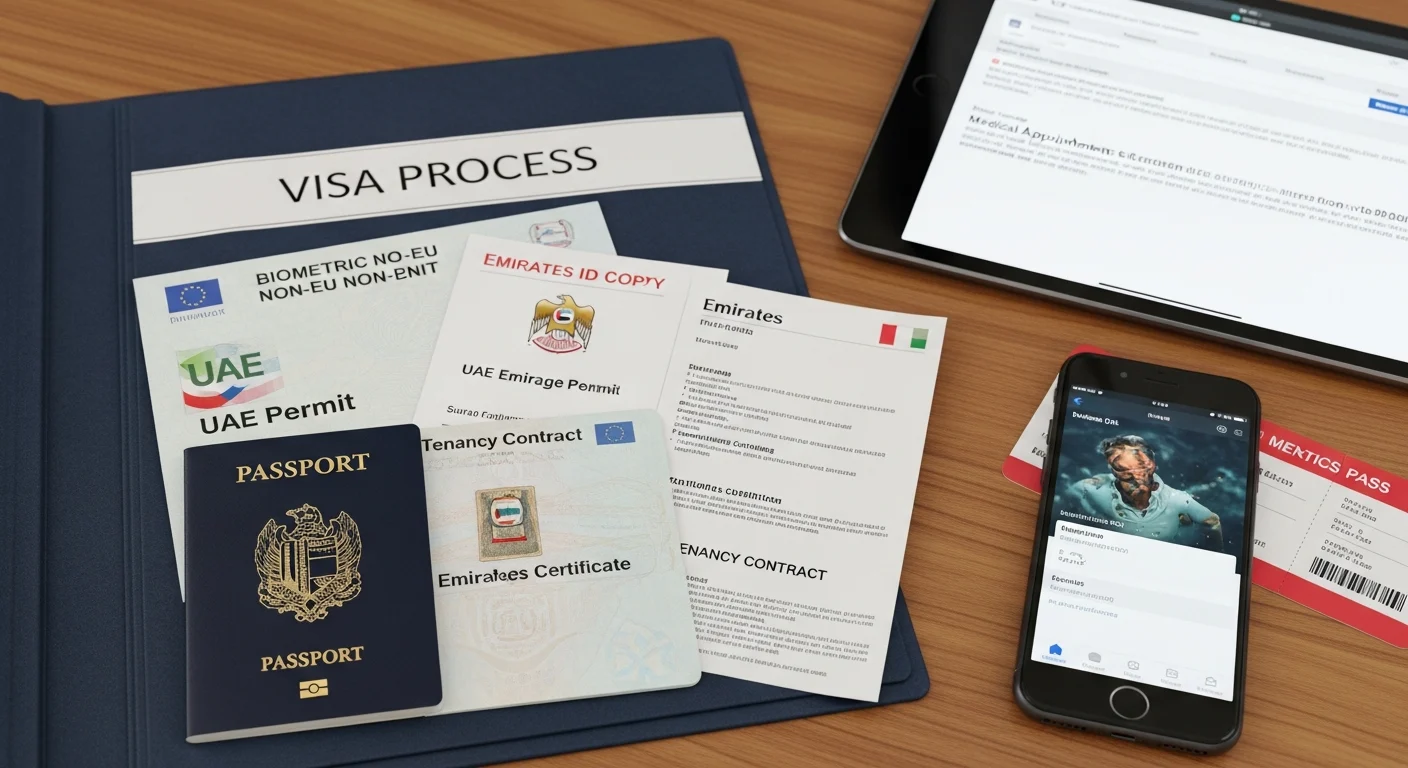
- Approved entry permit with your details clearly visible.
- Sponsor’s Emirates ID and a clear relationship link.
- Attested marriage certificate pages that tie the names together.
- Accommodation proof like EJARI or a tenancy contract in the sponsor’s name.
- Sponsor income evidence that meets UAE thresholds.
These do not guarantee a green light. They shift the conversation in your favor.
How Your Departure City Shapes The Conversation
Not all Indian airports feel the same. Large hubs like Delhi and Mumbai often have dedicated Gulf counters with experienced staff. Smaller stations may lean on conservative interpretations because they see fewer spouse-route cases.
Patterns we see from Indian gateways:
- Delhi and Mumbai. Busy, process-driven counters. If documents are aligned, agents move fast.
- Bengaluru and Hyderabad. Tech and family traffic mix. Staff usually know spouse routes.
- Chennai and Kochi. Heavy Gulf movement. Agents understand resident-family travel and may still ask targeted questions.
- Tier 2 cities. More conservative checks at times. An entry permit printout helps here more than anywhere.
If you are departing from a station that sees fewer resident-bound travelers, bring a cleaner file. Do not rely on a verbal explanation.
Pathway Signals That Change The Agent’s Mind
Your pathway matters more than you think. Agents pick up cues in seconds.
- You hold an approved entry permit. This is the strongest green flag. It shows the residence process is already in motion.
- You plan to convert from tourist status inside the UAE. This is legitimate, but it looks riskier. You may be asked for onward proof because the tourist entry is time-bound.
- You are rejoining a spouse who is already resident, but your entry permit is still being processed. This creates a perception gap. Agents may ask for onward plans as a buffer.
You do not need to give a speech. You only need to match the pathway with the right piece of paper.
Seasonal Swings And Shift Changes You Cannot See
Timing influences outcomes. Holiday peaks, student rushes, and weekend loads push counters to move fast and stick to checklists. Morning shifts with senior supervisors may feel smoother. Late-night departures sometimes trigger more questions if a junior agent wants a second opinion.
Prepare for these invisible variables:
- Travel off-peak when possible if your documents are still coming together.
- Arrive early so a supervisor can review without pressure.
- Keep printed copies. Phones die, apps lag, and lines grow. Paper quiets the room.
Why Stories From Friends Can Mislead You
You hear it at tea breaks and WhatsApp groups. “No one asked me.” Or “They refused me without return.” Both can be true. They are snapshots, not policy.
What changes case to case:
- Carrier policy. A full-service airline with UAE hubs may recognize spouse paths faster.
- Code-share quirks. Your first carrier checks eligibility even if another airline flies the final leg.
- Agent discretion. Two agents on the same shift can read the same situation differently.
- Document quality. A crisp entry permit reads better than a cropped screenshot.
Use stories as signals, not rules.
Myth And Reality For India-Based Travelers
Let’s separate noise from usable truth.
- Myth. UAE immigration always demands an onward ticket.
Reality. Checks at arrival for spouse-route travelers are uncommon when you carry an entry permit and consistent paperwork. - Myth. If a friend boarded one-way, you will too.
Reality. Boarding decisions are made by airline staff at your departure counter. Your route, timing, and documents matter. - Myth. Any reservation screenshot will do.
Reality. Agents prefer something verifiable. A readable booking reference or PNR or a fare with clear rules reads stronger than a vague hold.
The Paper Trail That Lowers Eyebrows At The Counter
A tidy folder tells the story before you speak. Keep it short and logical.
- Front sheet. Passport, visa entry permit approval, and marriage attestation page.
- Sponsor proof. Emirates ID copy, salary certificate or labor contract summary, tenancy or EJARI.
- Process confirmations. Medical booking, biometrics or Emirates ID appointment, or a status-change service receipt if you plan to convert inside the UAE.
- Contingency. A verifiable onward reservation if your pathway is tourist-to-resident or if the entry permit is pending.
Order matters. Lead with the strongest signal. Do not bury the entry permit behind photos and chat screenshots.
Red Flags That Invite The Onward Question
You can anticipate friction if any of these apply:
- Entry permit pending, and you are flying one-way on a tourist visa.
- Frequent short stays without a clear reason.
- Prior overstays or late exits were recorded previously.
- Name mismatches between the passport, marriage certificate, and entry permit request.
- No accommodation link to the sponsor.
- Traveling with children while the main sponsor is not on the same itinerary, and you lack school or consent letters.
If any red flag fits, carry onward proof. It prevents a last-minute scramble.
Low-Cost Carriers Versus Full-Service Carriers From India
Both will board you if the documents fit. The tone at the counter can differ.
- Full-service carriers. Staff often see more residence-bound traffic and understand sponsor documentation well.
- Low-cost carriers. Teams rotate across routes. If the agent is unsure, they may fall back on onward proof to reduce risk.
Neither is “better.” Your preparation fills the knowledge gaps.
Code-Shares And Transits That Complicate Things
If your first leg is on Airline A from India and the onward sector is on Airline B, the check-in agent for Airline A still validates your eligibility. This is where clear evidence of your spouse's route helps. A mismatch in names, PNRs, or dates can trigger the onward conversation even when you hold an entry permit.
Keep all references consistent:
- Same name format across documents.
- Matching arrival dates with medical or ID appointment windows.
- Sponsor details that appear the same on every page.
Why A One-Way Works Smoothly When Your Timing Aligns
A one-way makes sense when your entry permit has cleared and your appointments line up within the first days. You can show purpose and plan. The agent sees the logic:
- You enter on the basis of family sponsorship.
- You finish medicals and biometrics quickly.
- You complete the status change and visa stamping within the validity.
If your timeline is tight or unclear, expect more questions.
When An Onward Proof Is Simply Practical
There are trips where an onward document just buys peace of mind. You are converting inside UAE. Your permit is a day or two away. You are departing from a conservative station. In those cases, carry a verifiable reservation as a contingency. You do not have to use it. You only need it if the agent asks.
Think of it as a seatbelt. Most days, you do not need it. On the day you do, it saves the trip.
The Mindset That Gets You Boarded
Approach the counter like a resident-in-progress, not a tourist hoping to improvise. Be concise. Lead with the right page. Answer what is asked.
A simple sequence works:
- Greet and place the passport and entry permit approval together.
- Keep the sponsor ID and marriage attestation on top of the stack.
- If asked about return, explain the residence process and show appointments.
- If the agent insists, present the onward reservation calmly and let the PNR be verified.
This tone keeps the conversation short and confident.
Onward tickets are not a universal rule for spouse-route travelers. They are a control used at specific choke points when risk feels higher. If you hold an approved entry permit and your documents are clean, most Indian counters board you without onward proof. If your permit is pending or you plan to convert from tourist status, carry a verifiable reservation. It protects your schedule and your budget.
Use the station you depart from, the carrier you choose, and your place in the visa timeline to decide how much proof to carry. That simple, context-driven approach is how we help travelers board smoothly, without surprises at the counter.
Where the Onward Question Appears and How to Handle It Calmly
You will not face the onward ticket question at every desk. It appears at a few predictable choke points. When you know who asks and why, you can set the tone before anyone raises an eyebrow and keep your spouse route aligned with the broader eligibility criteria that govern a UAE residence visa.
Let’s walk through each checkpoint from an India departure, then zoom in on special cases like code-shares, transits, and family groups. We will also flag where officers look for required documents, even when the onward discussion is the headline. Keep a low-cost safety net ready with instant onward ticket proof.
Airline Check-In In India: The Real Decision Point
Airline counters in India do the heaviest lifting. Staff decide whether you board. Their responsibility is clear. If a traveler is refused entry, the carrier pays to fly them out. That risk makes one-way tickets a natural target and is separate from your visa in the UAE plan.
You reduce that risk with strong spouse-route signals. Present items in a clean order and speak about the purpose of the travel. Keep it short. This is not your visa application; it is a boarding decision built on confidence.
What typically reassures agents:
- Approved entry permit. The most persuasive item for family sponsorship entries and helpful when staff glance at family members traveling together.
- Sponsor evidence. Emirates ID copy and a quick view of the marriage link, so your residence permit pathway is obvious.
- Accommodation link. EJARI or tenancy in the sponsor’s name to support a valid residence visa later.
- Process bookings. Medical appointment, biometrics, or service center confirmation that shows you are moving forward with documents required soon after arrival.
One smooth way to start is to place the passport and permit together. Then add the sponsor ID on top of the stack. You are telling a clear story in five seconds. Staff members like that, and it mirrors how a company contract salary certificate might sit near the top of a spouse visa application file, even though the check-in is not assessing it.
Common follow-up questions at Indian counters:
- Is your permit already approved or still in process, with a valid visa expected on arrival?
- Are you converting status inside the UAE or arriving under a valid marriage certificate for a dependent visa?
- Do you have accommodation with your sponsoring family member, and can you show the tenancy?
- When is your medical or ID appointment, and will you be free to collect a medical clearance certificate?
If you plan to convert from tourist status or your permit is pending, expect the onward ticket question. Carry a verifiable reservation as a safety valve. You may not need to show it. Have it ready anyway, just as an expatriate resident would keep a copy of the sponsor's visa during early steps.
Indian Emigration On Departure: Purpose Of Travel, Not Ticket Policing
The Bureau of Immigration officer checks your intent and eligibility to leave. Onward proof is not their primary focus for spouse-route travelers. You could still encounter clarifying questions if your paperwork looks disjointed or your answers do not match your documents.
Stay simple and consistent:
- State that you are joining your spouse for residence procedures within a residency visa pathway.
- Show the entry permit if approved, which supports a family visa later.
- If converting later, say you will complete medicals and status change within validity as part of a new residence visa or new residence permit timeline.
Short answers signal confidence. Long stories create doubt. Let the documents do most of the talking, and remember that minimum salary threshold checks sit with immigration systems later, not at this desk.
UAE Arrival Immigration: When The Question Still Appears
Most spouse-route travelers with an approved permit pass smoothly. Arrival officers can still ask about onward plans if they see gaps. The most common triggers are a pending permit, inconsistent details, or frequent prior short visits, which can raise a visa category query.
Here is how to keep the arrival conversation brief:
- Place the passport and permit printout together as you would in a step-by-step guide.
- Keep the sponsor’s Emirates ID ready, backed by sponsor income evidence, such as AED 3,000 with housing or AED 4,000 without housing where the current UAE rule applies if ever asked in the background.
- Mention your next steps. Medicals, biometrics, status change, or stamping, supported by an employment contract of the sponsor if relevant.
You do not need to predict the exact stamping date. You only need to show that you know the process and have the first steps scheduled. That is enough to show intent to reside rather than linger, even when you carry a foreign passport.
Entry Permit, Visa-On-Arrival, Or Status Change Inside UAE
Your entry route shapes the onward proof conversation. Agents and officers make different assumptions depending on the path, and some checks belong to the UAE government after you land.
- Entry permit holder. This is the easiest path. The system already reflects a residence intent. Onward proof is rarely asked when documents line up. Still carry a clean set, especially from tier 2 Indian airports, in case uae authorities want supporting documents later.
- Visa-on-arrival visitor planning to convert. This is legitimate but time-bound. Airlines may ask for onward evidence because the initial entry is short. If you choose this route, align your arrival with service appointments and carry a verifiable reservation as backup, just as legally married couples do when tracking a sponsor’s paperwork.
- Tourist entry with status change. Similar to visa-on-arrival in risk profile. Your check-in desk may want onward proof, especially on routes with higher inadmissible risk. Bring status-change confirmations or a service receipt if booked; some Emirates link these to sponsor wife filings or a sponsor's visa record.
Use the path that matches your paperwork readiness. If your permit is approved, fly on that basis. If your permit is close but not ready, carry onward proof and travel when appointments are secured so you can pay visa fees smoothly during the application process.
Code-Shares And Interline Itineraries: The First Carrier Sets The Tone
If you fly from India to Dubai or Abu Dhabi on Airline A and then continue on Airline B, the first carrier still checks your entry eligibility. This is where travelers get surprised. You might think the onward sector handles it. In practice, the origin counter owns the boarding decision, even if your eventual residency visa is processed in other emirates.
Minimize confusion:
- Keep names identical across every document and booking so a family visa file later has no friction.
- Bring the permit printout, even if you uploaded it to an airline app, and keep your original passport handy.
- If asked for onward plans, show your process milestones or the reservation. Let staff verify the PNR if needed, and note that online application updates can follow.
Do not assume the brand on the second leg will soften the check. The agent in India wants one clean story at the start, regardless of processing time downstream.
Transit Stops En Route To The UAE: Rare But Not Impossible Checks
Most onward-proof checks occur at the origin counter. You may still face a quick look at a transit station if staff notice a mismatch between your one-way booking and your stated residence purpose. Keep your documents handy. Repeating the same short explanation works. Avoid adding new details mid-journey that conflict with your first answers, including any mention of a no-objection certificate unless specifically requested.
Low-Cost Carriers Versus Full-Service Airlines: Style, Not Substance
Both categories follow the same admissibility rule. The difference is how counters run. Full-service carriers tend to see more family-residence travelers and often recognize the permit at a glance. Low-cost carriers rotate teams across routes and may rely more on checklists. If an agent is unsure, they may default to asking for onward proof.
Your response stays the same:
- Lead with the permit, if approved, a pattern even a UAE citizen sponsor would expect for their dependents.
- Show sponsor and accommodation links that match income requirements in later stages.
- Have a verifiable reservation if your case falls in a higher-risk pattern, mindful of any grace period after entry.
You are not trying to out-argue policy. You are trying to make the decision easy so the file can be renewed annually without drama later.
Traveling With Children Or Dependent Parents: Extra Signals Help
Family groups draw attention for valid reasons. Officers and airline staff want to confirm guardianship, accommodation, and care plans. You can neutralize concerns with a few targeted documents that mirror what Amer centers like to see later.
Carry for children:
- A birth certificate copy that matches parental names, especially when sponsoring stepchildren with specific documents from the home country.
- School transfer or admission note, if available, so job titles and schedules align.
- Consent letters, if one parent travels ahead, are signed by the biological parent.
Carry for dependent parents:
- Relationship proof that can be shown to the general directorate if requested later.
- Sponsor coverage evidence for insurance and accommodation, which may vary depending emirate policy.
- Any prior UAE visit history to show compliant travel and a valid visa record.
These small items prevent a long counter conversation and reduce the chance of an onward ticket request used as a cautionary measure, whether you fly to the UAE in Dubai or other emirates.
Departure City Differences Across India: What We Keep Seeing
The same airline can behave differently across stations. Training, traffic mix, and local oversight shape outcomes.
Typical patterns:
- Delhi and Mumbai see heavy Gulf flows and handle residence entries often. Clean files move fast, and human resources style checklists move in order.
- Bengaluru and Hyderabad have strong process discipline. Agents respond well to appointments that match arrival dates and a clear work permit context for the sponsor.
- Chennai and Kochi see many family reunions. Staff are familiar with spouse documents but may probe for accommodation linkage where sponsor income and housing requirements are referenced in internal notes.
- Tier 2 airports sometimes request onward proof earlier in the conversation. It is not a stricter policy. It is risk control through documentation and awareness that amer centers and other emirates sometimes differ.
If you start from a smaller station, print more and explain less. The paper speaks for you and keeps additional documents in reserve.
What Triggers A Hard Ask For Onward Proof
A firm request does not mean you are in trouble. It means the agent needs something verifiable to cover the airline’s risk. You will usually see it when:
- Your permit is pending, and you hold a one-way tourist or visa-on-arrival plan that will convert to a new residence visa.
- Your document set has mismatched spellings or missing pages that could affect a new residence permit record.
- Your travel history shows recent overstays or repeated short entries, which can intersect with uae authorities’ view on illegal residents.
- Your story and dates do not line up with appointments or accommodation, or the sponsor’s employment contract is unclear.
Answer with structure. First, show the entry pathway and next steps. If the agent insists, present the onward reservation. Invite verification. Keep your voice calm. The tone matters and shows you can manage additional documents later.
Handling The Conversation Without Losing Time
A prepared script keeps you in control. We recommend a simple rhythm.
- Start by handing over the passport and permit. Wait for the scan, as any amer centers would in sequence.
- Add sponsor ID and marriage attestation. State that you are entering to complete medicals and biometrics.
- If asked about return, say you will complete residence formalities within the validity and stay with your spouse at the listed address under the sponsor's visa.
- If a firm requests onward proof, provide the reservation and say the PNR is live for verification, like an online application check.
You are not arguing. You are helping the agent tick boxes quickly so the processing time that follows is smooth.
Where The Ask Appears Most
For India-based spouse-route travelers, the onward ticket question surfaces most often at airline check-in. Indian emigration focuses on purpose and eligibility to depart. UAE arrival officers rarely request onward proof when you have an approved permit and consistent documents. This remains true for a muslim resident sponsor or a sponsor wife case, and it applies whether you depart with an original passport only or bring additional documents.
Plan for the counter that matters. Build a tidy file. Align your arrival with the early residence steps. If your case includes a predictable risk trigger, carry an onward reservation you can show and verify in seconds. This approach protects your timeline, avoids last-minute ticket purchases, and keeps the entire journey calm from the first desk to the final stamp.
Different Eligibility Scenarios: What Happens and What Works
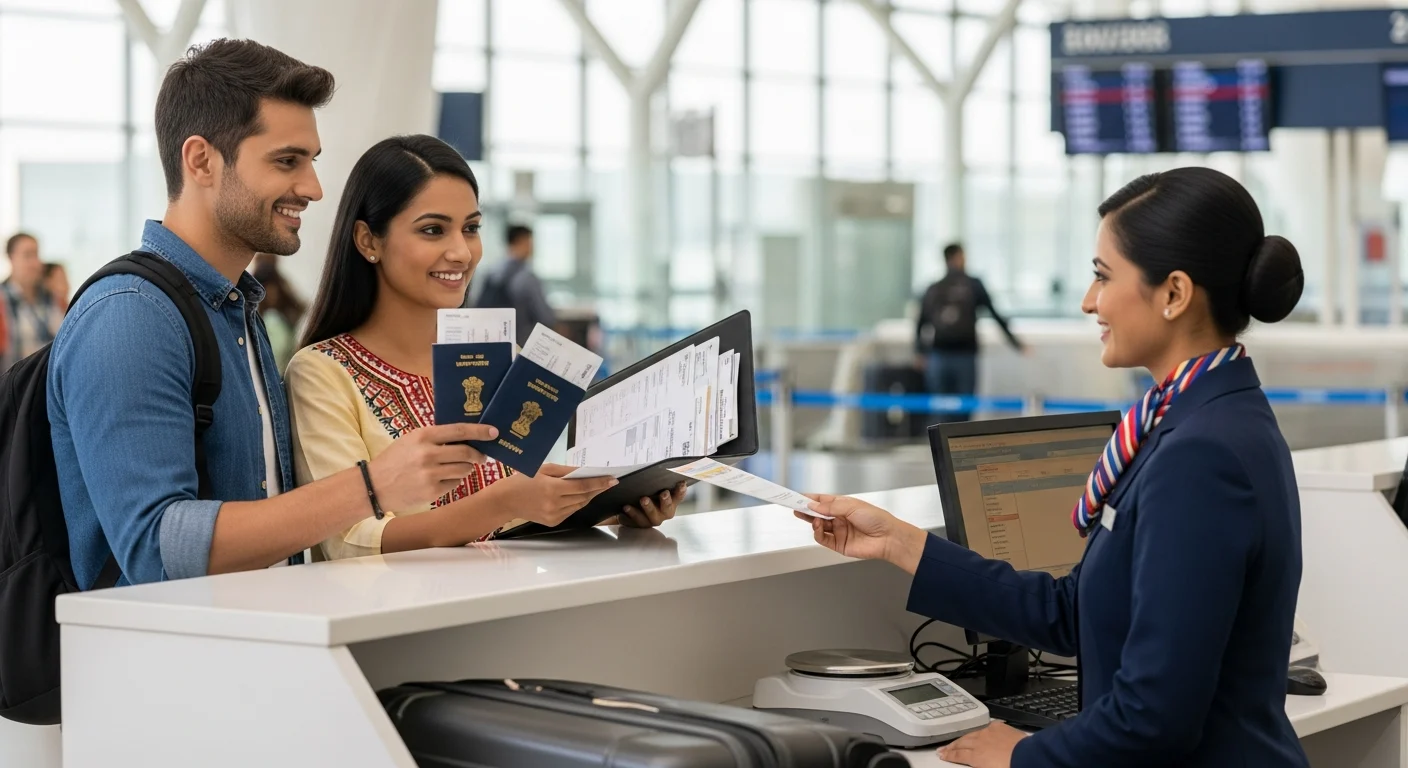
Every case looks similar on paper, yet the counter conversation changes with small details. Your documents, timing, and departure city shape the outcome more than any generic rule. Let’s walk through the situations we keep seeing from India and the moves that keep you moving.
You will notice a pattern. Clear spouse-route signals calm the onward-ticket question. Gaps invite it. Use these playbooks to remove the gaps before anyone asks. Beat last-minute counter surprises and create an onward ticket before you leave.
Scenario A: You Hold An Approved Entry Permit For Family Sponsorship
This is the smooth path when you handle the basics well. You arrive at check-in with your passport and the permit printout together. Then you show the sponsor’s Emirates ID and the attested marriage page.
What usually happens:
- The agent scans your passport and sees the permit details align with your name.
- You confirm you will complete medicals and biometrics on arrival.
- The counter prints your boarding pass without asking for onward proof.
Where it can wobble:
- Name mismatches between the permit and the passport. Fix spellings in advance or carry a supporting attestation.
- Out-of-order documents make the agent fish for the right page. Keep your stack tidy.
- Old screenshots that do not match the latest permit. Print the final file.
Helpful extras:
- A short medical booking email or service center SMS.
- Accommodation proof in the sponsor’s name.
- A one-page summary sheet that lists your UAE address and contact.
You do not need every page ever issued. You need the right pages in the right order.
Scenario B: You Plan To Convert From Tourist Status Inside The UAE
You will enter on a tourist visa and then switch to spouse residence. This is legitimate. It is also time-bound, so agents see more risk.
Expect a polite check:
- When will you convert the status?
- Do you have a service booking?
- Where will you stay with your spouse?
How to answer and proceed:
- Keep your answer short. “We will complete medicals and status change within validity. We stay at the address on this tenancy.”
- Show a service booking or receipt if you have one.
- Carry a verifiable onward reservation as a contingency if your departure station is conservative.
This path works best when your timing is tight and visible. Land midweek. Have a plan for medicals and biometrics in the first days. Keep names and dates aligned across every document.
Scenario C: You Are Joining A Resident Spouse, But Your Entry Permit Is Still Processing
This is the gray zone that triggers the most onward questions. You have the marriage link. Your spouse is already in the UAE. The permit is a few days away.
What agents want to know:
- Are you entering only to wait, or is your permit actually imminent?
- Do you have accommodation with your spouse?
- Are you prepared to exit if the permit delays?
How to reduce friction:
- Show the permit application acknowledgment and the sponsor’s Emirates ID.
- Carry the tenancy or EJARI page. If it is a new lease, show the acknowledgment.
- Keep a verifiable onward reservation ready to present if asked.
Think of this as a bridging move. Your story is strong, yet the system does not show the final approval. Give staff enough confidence to board you without forcing a last-minute return purchase.
Scenario D: Your Entry Permit Is Approved, But You Have No Exit Plan At All
This is common and acceptable. You plan to arrive, finish formalities, and stay. Some stations and carriers do not ask for anything more once they see the permit.
If the agent still asks about onward plans:
- Explain your schedule. “We will finish medicals and biometrics next week.”
- Point to appointment emails or a service center confirmation.
- If insistence continues, show the onward reservation and invite verification.
You do not need an exit plan to live with your spouse. You need to show two things. Intent to complete residence steps. Capacity to leave if something unexpected occurs.
Scenario E: You Depart From A Tier 2 City Or Use A Low-Cost Carrier
The rules remain the same. Execution changes. Smaller stations sometimes rely more on conservative checks. Low-cost counters often use strict checklists.
How to prepare:
- Print more. Do not rely only on apps.
- Put the permit, sponsor ID, marriage page, and tenancy on top.
- Add a short cover sheet with your spouse’s name, UAE phone, and address.
- If your case involves a status change or a pending permit, bring the onward reservation.
What to avoid:
- Long explanations that wander.
- Photo collages and chat screenshots. Show official documents first.
- Loose pages that slide across the counter.
When the desk is busy, a crisp stack wins the minute you need.
Scenario F: You Have Prior Overstay Or Multiple Short Entries
You can still travel. You must expect a firmer conversation. Airline staff and officers look for signs that this trip is different and compliant.
What to show:
- The entry permit or the active sponsorship path.
- The marriage link and accommodation in the sponsor’s name.
- A timeline for medicals, biometrics, and status change.
What to add:
- A verifiable onward reservation in case the agent wants an extra layer of comfort.
- Any clearance or fine payment receipts from prior visits if relevant.
Speak calmly. Own the past facts without excuses. Show that your status will regularize through the spouse route now. Confidence matters here as much as paperwork.
Scenario G: You Travel With Children Before Your Spouse
One parent traveling with kids draws attention. Staff want to protect minors and confirm guardianship. This is normal and easy to resolve.
Carry:
- Birth certificates that match the parents.
- A consent letter from the spouse if not traveling together.
- School letters for transfer or admission, if available.
- The entry permit for each dependent if already been issued.
This set often ends the conversation before it starts. If the permit is pending and you are on a tourist entry, keep an onward reservation handy, too.
Scenario H: Your Documents Are Fine, Yet The Agent Still Hesitates
This happens. The station is busy. New staff rotate in. A supervisor wants a simple tick box. The best response is structure, not debate.
Use a two-step response:
- Restate the basis. “Family sponsorship entry. Permit approved. Medicals scheduled.”
- Offer verification. “Would you like me to show the PNR for the onward option as well?”
By inviting verification, you signal that you planned for this exact question. That often ends the hesitation.
Scenario I: You Are Entering On a Visa-On-Arrival And Converting Later
Indian nationals with the eligibility criteria can use a visa-on-arrival in certain cases. Airlines still see it as a short entry. Expect a higher chance of the onward question at the origin.
How to handle:
- Attach your spouse's documents to the top of the stack.
- Show a conversion plan with service appointments.
- Carry a verifiable onward reservation. It may remain in your folder. If asked, you have it.
Time your arrival to match early-week appointments. This keeps your stay aligned with action, not waiting.
Scenario J: You Are On A Mixed Itinerary With A Code-Share
Your first carrier in India decides whether you board. Do not assume the brand on the connection will influence the origin counter. Keep documents ready and treat the first desk as the real decision point.
Checklist for mixed tickets:
- Identical name format on passport, permit, and both bookings.
- Printed permit even if uploaded in apps.
- Sponsor and tenancy pages on top.
- Onward reservation if you are not entering on a permit.
One consistent story wins across both carriers.
Quick Playbooks You Can Use At The Counter
Use these short patterns to keep the line moving.
For approved permit entries:
- Openers. “Family sponsorship entry. Permit approved. Here are the pages.”
- Stack. Passport and permit, then sponsor ID, marriage attestation, tenancy, and appointments.
- If asked about return. “We complete medicals and biometrics next week.”
For tourist-to-resident conversions:
- Openers. “Entering as a visitor and converting to spouse residence within validity.”
- Stack. Passport, spouse ID, marriage page, tenancy, service booking.
- If asked about return. “Here is a verifiable reservation if needed.”
For pending permits:
- Openers. “Joining spouse while permit finalizes. Here is the application reference and sponsor documents.”
- Stack. Application acknowledgment, sponsor ID, tenancy, and marriage page.
- If asked about return. “Reservation is ready and can be verified.”
If you hold the entry permit and your documents match, you rarely need onward proof. If you will convert inside the UAE or your permit is still in the pipeline, carry a verifiable reservation. Use it only if asked.
Treat the Indian check-in counter as the primary decision desk. Keep your stack tight. Lead with the right pages. Align your arrival to service appointments so your purpose looks obvious. With that approach, you avoid last-minute purchases, you save money, and you walk to the gate with time to spare.
Smart Ways to Show Onward Travel Without Burning Cash
You want boarding to be boring and predictable. The trick is choosing onward proof that fits your pathway, budget, and departure city. We will keep it practical and India-focused, so you can act fast at the counter without wasting money.
Let’s start with options you can actually use, then compare acceptance, cost, and risk. Get a verifiable PNR on demand through fast onward ticket proof.
When Paying More Actually Reduces Stress: Flexible Return Fares
Flexible returns feel expensive at first glance. On India–UAE routes, they sometimes cost less than a last-minute walk-up fare if the counter blocks you. The value is control. You hold a real return on the same PNR, you change or push the date after arrival, and you avoid refund fights.
What works:
- Same carrier, same PNR. Staff see a clean round-trip.
- Changeable return. Pay only the fare difference or a modest fee.
- Return timed after medicals. Set it two to three weeks out if you plan to finish residence steps quickly.
What to watch in India:
- Fare rules. Some “flexi” labels still carry penalties or fare differences that add up.
- Channel choice. Airline direct tends to process changes faster than third-party sites.
- Card limits. Large blocks on Indian cards can take days to release if refunded. Plan your credit headroom.
Use this if you depart from a conservative station, or if your permit is pending and you want zero debate at the counter.
Fully Refundable Tickets: Safe, But Cash Heavy
Refundables are the cleanest story. You show a true return, then cancel after arrival. Simple on paper, heavy on cash in India. Refunds can take seven to fourteen business days, sometimes longer for domestic cards. Forex swings add noise.
Pros:
- High acceptance. Staff rarely question a fully refundable fare.
- No verification delays. It is live in the system.
Cons:
- Cash lock. Big temporary charge on your card.
- Refund timelines. Your credit cycle may close before the refund posts.
- Availability. Refundable inventory can be limited during peaks.
Use this when your risk is high and you have credit capacity. Otherwise, look for a lighter option.
Airline Holds And Fare Locks: Handy, But Not Always Accepted
Many carriers serving India let you hold a fare for 24 to 72 hours with a small fee. Good for shoppers. Mixed for check-in. Some agents accept a hold with a locator number. Others want a ticketed return or a verifiable PNR.
If you try this:
- Print the hold confirmation with the locator and expiry timestamp.
- Travel within the hold window. Do not let the clock run out.
- Have a backup in case the agent insists on ticketed proof.
Treat holds as a supplement, not your main plan.
Verifiable Reservations: The Middle Path That Often Works
A live, checkable reservation gives agents what they need, without you paying for a full return. For spouse-route travelers, this is the sweet spot when you plan to convert status or your permit is close.
How to use it well:
- Keep dates plausible. Two to three weeks after arrival, fits medicals and biometrics.
- Carry a PDF and the PNR. Invite the agent to verify in the GDS.
- Update quickly. If your flight shifts, refresh the reservation so it is not stale.
A reliable option if you want a ready-to-verify document at low cost: DummyFlights.com provides an instantly delivered reservation with a readable booking reference or PNR for $15 (≈₹1,300), along with free date changes within the same day of booking. Use it as a contingency for check-in in India when you do not want to lock funds in a full return.
Validity Windows And PNR Lifecycles: What Staff Actually See
Not all reservations live equally long. Some systems auto-cancel if unticketed after a short period. Others remain visible longer with specific booking classes.
Keep these points in mind:
- Freshness matters. A same-week or same-fortnight return looks credible.
- Auto-cancels exist. If a PNR is past its ticketing limit, the agent may see a dead record.
- Name consistency. Your PNR name must match your passport and entry permit spelling exactly.
- Segment logic. Do not show a return from a different UAE city unless your story supports it.
If you renew a reservation, delete older PDFs so you do not present conflicting pages.
What Usually Gets Accepted At Indian Counters: A Practical Ranking
Acceptance varies by station. If we generalize for India–UAE spouse-route travel, the pattern often looks like this:
- Approved entry permit, no onward proof. Highest acceptance when documents are crisp.
- Flexible return on the same PNR. Near-universal acceptance.
- Fully refundable ticket. Near-universal, with the cost caveat.
- Verifiable reservation with readable booking reference or PNR. Often useful as a safety valve when the document is clean and current.
- Airline hold/fare lock. Mixed. Accepted at some counters, queried at others.
- Screenshot of an unverified itinerary. Weak. Often rejected.
Use the lightest option your case allows. If your permit is approved and your stack is clean, you likely need nothing more. If your case is gray, carry a verifiable reservation.
Cost And Risk Snapshot For India–UAE Routes
Think in three columns: cost today, refund or change exposure, and acceptance confidence.
- Flexible return. Medium cost upfront, medium exposure to fare differences, high acceptance.
- Refundable return. High cost upfront, low exposure after refund, very high acceptance.
- Verifiable reservation. Low cost upfront, no refund cycle, high acceptance at check-in.
- Hold/lock. Very low cost, but low acceptance in some stations.
Pick the column that matches your budget and your pathway. A low-cost safety net often beats a last-minute airport purchase.
Timing Tricks That Keep Proof Fresh And Logical
Onward proof is not just about the document. It is about timing that looks real.
- Align to weekday arrivals. Land Monday to Wednesday if possible. Your onward date is two to three weeks out, then it looks natural.
- Match appointments. If you have already booked medicals or biometrics, keep the onward date after those slots.
- Buffer for delays. Give yourself a few extra days in case a retest or reprint is needed.
- Avoid obvious fiction. A return the next day looks odd for a spouse pathway. A return six months out looks like a placeholder.
You want the agent to think, “Yes, this timeline makes sense.”
How To Present Proof So It Lands In Seconds
The counter is busy. You win by making reviews easy.
- Put the passport and entry permit on top. Let the agent scan first.
- Add the sponsor ID and the marriage page next. That ties the story.
- Keep accommodation and appointments behind. Show only if asked.
- If onward proof is requested, present one sheet. State, “This has a readable booking reference or PNR. You can verify.”
Do not hand a thick folder at once. Stack smart. Answer short. Silence works when your papers speak.
Common Pitfalls And Simple Fixes
A few small mistakes trigger big detours. Avoid them.
- Expired or auto-canceled PNR. Refresh it the day before travel.
- Name mismatches. Match the exact order and spelling across every page.
- Multiple conflicting reservations. Carry only the latest one.
- Unclear purpose language. Say “family sponsorship entry, residence procedures” instead of vague lines about moving.
If something goes wrong at the counter, reset. Show the entry permit or sponsorship link first. Then present the onward option as a backup, not as your main story.
Quick Decision Grid You Can Use Tonight
Use this simple flow to choose your proof without overthinking.
- Permit approved, documents tidy, major Indian hub. Travel one-way with no onward proof. Carry appointments for comfort.
- Permit approved, tier 2 station or low-cost carrier. Consider a verifiable reservation as backup.
- Permit pending, strong sponsorship papers, conservative station. Carry a verifiable reservation. Keep dates two to three weeks out.
- Tourist or visa-on-arrival conversion planned. Bring a verifiable reservation or a flexible return. Choose based on card limit and comfort.
- History of overstays or repeated short entries. Use a flexible or refundable return to lower questions.
- Family group with minors, sponsor not on the same flight. Keep guardianship papers on top and a verifiable reservation ready.
You are not trying to game the system. You are trying to make the decision easy for the person across the counter.
Onward proof is a tool, not a tax. Use the lightest option that matches your case. If your entry permit is approved and your documents are consistent, you usually do not need it. If you plan a status change or your permit is close, carry a verifiable reservation you can refresh in minutes. If your risk is higher, buy flexibility with a return that you can change or refund.
Keep timing logical, papers tidy, and answers short. That is how you turn a sensitive question into a quick scan and a printed boarding pass.
Plan Like a Pro: India-to-UAE Spouse Route Without Surprises
Good planning turns a tense check-in into a quick scan. You do not need a giant binder or a complex script. You need the right flight choice, a tidy document stack, and timing that supports your story.
Use this section as a working plan you can follow from tonight until boarding day. If your permit is still processing, create an onward ticket as your backup plan.
Choose Flights That Make Your Story Obvious
Your route and carrier influence how fast a counter understands your case. Pick flights that align with residence steps and reduce questions.
What usually works well from India:
- Nonstops to Dubai or Abu Dhabi. Fewer touchpoints. Fewer chances for a second check.
- Flag carriers with UAE hubs. Agents see spouse-route traffic often and read permits quickly.
- Arrival windows that support errands. Land before noon if possible. You can complete medical registration the same day.
Trade-offs you should consider:
- Low-cost vs full-service. Low cost is fine when your file is perfect. Full-service can be smoother if your permit is pending or you plan to convert status.
- Tier 2 departure vs metro hub. Smaller stations are efficient but may lean on checklists. Metro hubs move fast if your papers are tidy.
- Transit via third countries. Adds time and one more desk that could ask questions. Use only if the fare difference is large or the schedules demand it.
A simple rule helps. If your case has any gray area, simplify the itinerary. One carrier. One sector. A morning arrival.
Build The Required Documents Agents Actually Appreciate
Agents have seconds to decide if your one-way entry makes sense. Give them a compact set that answers the top questions without digging.
Suggested order:
- Passport and Entry Permit on one sheet protector or clipped together.
- Sponsor’s Emirates ID and marriage attestation page.
- Accommodation link, such as EJARI or tenancy in the sponsor’s name.
- Process confirmations like medical or biometrics booking.
- Contingency proof if needed, such as a verifiable onward reservation.
- Extras for special cases. Birth certificates for children. Consent letters. Prior fine clearances.
Presentation matters:
- Keep everything printed and legible. Screenshots should be avoided when a PDF exists.
- Use paper clips or sleeves to avoid scattering pages.
- Put a one-page cover sheet on top listing the UAE address, the sponsor contact, and your arrival flight.
You are not trying to impress with volume. You are trying to speed up comprehension.
Time Your Flight Around Key Milestones
Your travel day should match the first actions of your residence process. When your timing looks logical, counters relax.
Helpful timing patterns:
- Land Monday to Wednesday. Government counters and medical centers run full swing, and you avoid weekend slowdowns.
- Plan medical within 24 to 72 hours. Carry the booking if scheduled or at least a center shortlist.
- Book biometrics and Emirates ID soon after medical. If your center allows walk-ins, note the operating window.
- Leave a buffer for status change. Two to three weeks from arrival usually covers medical, results, biometrics, and stamping in many cases.
If you plan to convert from a visitor entry, align your arrival so you do not waste days waiting for appointments. Idle time invites questions.
Budget: The Real Costs From India
Most families plan the flights and rent. Then the admin costs arrive. Map them early to avoid card surprises.
Typical spending to plan for:
- Medical fitness tests. Price varies by category and speed. Add a cushion for express processing if you want faster results.
- Emirates ID biometrics and issuance. Fees change by validity and emirate.
- Status change or entry permit issuance fees. If converting inside the UAE, keep that budget aside.
- Health insurance. Required for residence issuance in many emirates. Factor initial premiums by age band.
- Attestation costs in India for marriage and birth certificates if still pending.
- Transport and printing. Small but real. Keep cash or a card with tap enabled.
Payment tips for India-based travelers:
- Prefer cards that do not add steep forex markups.
- Keep one backup card in case a terminal declines.
- Track refund timelines for any refundable airfares so you do not hit your billing cycle with a large hold.
Fix Name Variations Before They Become Problems
Name mismatches slow down counters and can derail e-services after landing. Close the gaps now.
Focus on these:
- Exact spelling across the passport, entry permit request, Emirates ID of your spouse, marriage certificate, and airline booking.
- Order of names if your passport uses given name plus surname, while marriage certificates show expanded versions.
- Hyphens and spaces that disappear on some forms but not others.
What to carry if you cannot fix everything in time:
- A notarized name consistency note if your marriage certificate shows a variation.
- The attestation trail for the marriage certificate, so the link looks official.
- A clear cover sheet that lists both versions and states they refer to the same person.
Small mismatches are common. Your goal is to show that they are recognized and documented.
Travel With Children & Family Members Without Triggering Extra Questions
Family travel is normal on this route. The desk only wants to see guardianship, accommodation, and school continuity.
Pack these for minors:
- Birth certificates showing both parents and matching names.
- Consent letters if the sponsoring parent is not on the same flight. Keep them signed with passport copies attached.
- School transfer or admission notes, if available.
- Entry permits for dependents if already been issued.
At the counter, keep the child-related documents in a separate sleeve so you can produce them quickly without scrambling the main file.
Prepare For Tier 2 Departures And Low-Cost Desks
Smaller stations and no-frills counters run tight playbooks. There is no issue if you adapt to their rhythm.
Practical tips:
- Arrive earlier than you would at a metro hub. Give room for a supervisor review if needed.
- Lead with prints even if you uploaded everything to an app.
- Answer in headlines. “Family sponsorship. Permit approved. Medicals booked.”
- Carry a ready-to-verify onward reservation if your permit is pending or you plan to convert status.
The calmer your presentation, the faster the desk moves.
Write A One-Page Action Plan For Your First Week
A written plan signals intent and saves you time after landing. Keep it simple and dated.
A sample flow:
- Day 1. Arrive, settle, and register for medical if not already booked.
- Day 2. Medical test and X-ray.
- Day 3–4. Results and biometrics appointment for the Emirates ID.
- Day 5–7. Status change submission if converting inside the UAE.
- The following week. Visa issuance or stamping steps, and insurance finalization if pending.
Adjust to your emirate and service center. The structure is what matters.
Troubleshoot The Counter Without Raising Temperature
You may meet an agent who hesitates. Use a calm, two-step script to resolve it.
- Step 1: Restate the basis. “Family sponsorship entry. Here is the permit and sponsor ID. Medical booked.”
- Step 2: Offer the safety valve. “If you need onward proof, we have a reservation with a readable booking reference or PNR you can verify.”
Common snags and quick fixes:
- “The system is not showing the permit.” Hand over the printed approval and ask if a supervisor can view it.
- “Do you have a return?” Explain the residence steps and present your verifiable reservation if the question becomes firm.
- “Your names look different.” Show the attested marriage page and any name consistency note.
You are not there to argue policy. You are there to give an easy yes.
Pack For Paperwork Speed, Not Just Comfort
Small items keep your day smooth:
- Two black pens for forms.
- Spare passport photos in UAE size for clinics and centers.
- Charged phone with offline copies and a slim power bank.
- Hard copies of everything essential in case devices fail.
Put the file at the top of your cabin bag. Do not bury it under snacks and chargers.
Final 48-Hour Preflight Checklist
Run this quick list so you do not wake up to surprises.
- Reprint the entry permit or download the latest PDF.
- Confirm medical and biometrics slots or note walk-in hours.
- Refresh any onward reservation so the PNR is live if you plan to carry one.
- Verify name alignment across the booking, passport, permit, and marriage page.
- Photocopy the sponsor ID and accommodation page in clear, high contrast.
- Check payment methods with available credit for health checks and fees.
When your flight choice supports your timeline and your documents tell one clear story, boarding becomes routine. You stop spending energy at the counter and start it where it matters. Medicals. Biometrics. Status change. Stamping. That is how you move from aircraft door to residence card with less stress and fewer surprises.
From Entry to Residence: Your Roadmap and Clear Yes/No Decisions
You reached the gate. Now make the rest look simple. The spouse route has a rhythm that works when each step follows quickly after the previous one.
Use this roadmap to move from arrival to stamping without guesswork. We will pair the steps with a decision guide so you know when onward proof helps and when it does not.
The Journey At A Glance: What Happens In Order
You do not need a hundred forms on day one. You need a clean sequence that keeps momentum.
- Arrive And Settle
Clear immigration, reach your accommodation, and scan your documents into one folder. Keep originals together in a sleeve. - Medical Fitness Registration
Book online or walk in at an approved center. Carry passport, entry permit, or status change file number, and photos. Choose standard or express. Express costs more but shortens the wait. - Medical Tests
Blood test and chest x-ray. Keep the receipt safe. Results move directly to the system in most emirates. - Emirates ID Application And Biometrics
If not pre-applied, submit the application. Then attend biometrics. Bring a passport and the application form. Keep the acknowledgment. - Insurance And Sponsor Submissions
Complete any required health insurance. Ensure sponsor income and tenancy proofs are ready for the residence file. - Status Change (If Inside UAE On Visitor Entry)
Submit the in-country status change after medical registration. This anchors your move from visitor to residence track. - Residence Issuance Or Stamping
Once approvals flow, the residence visa is issued digitally or stamped as per your emirate’s process. Check the validity dates on the final document.
That is the spine. Everything else attaches to it.
Do You Need Onward Proof At This Stage: A Quick Yes/No Grid
Two lines of thought help you choose in seconds. Read down and match your situation.
- Entry Permit Approved, Documents Consistent, Major Indian Hub
Decision: No onward proof required. Carry appointments as comfort. - Permit Approved, Tier 2 Station Or Low-Cost Carrier
Decision: Optional. Carry a verifiable reservation as a backup only. - Permit Pending, Joining Spouse, One-Way Ticket
Decision: Recommended. Present only if asked at check-in. - Visa-On-Arrival Or Tourist Entry With Planned Conversion
Decision: Recommended. Pick dates two to three weeks after arrival. - Prior Overstay Or Frequent Short Entries
Decision: Strongly recommended. Flexible or refundable return also works. - Family Group With Minors, Sponsor Not On Same Flight
Decision: Optional. Guardianship papers first. Onward proof only if requested.
Keep the lightest tool that fits your case. Do not over-document if your permit is already active.
Paperwork That Keeps Each Step Moving
A small set carries you through counters and service desks. Organize it once and reuse.
- Identity And Entry
Passport, visa entry permit, arrival stamp, or e-gate record. - Family Link
Attested marriage certificate copies, sponsor Emirates ID, and name consistency note if needed. - Accommodation And Income
EJARI or tenancy, sponsor salary certificate, or contract summary. - Process Receipts
Medical registration, biometrics appointment, status change submission, and insurance confirmation.
Make two sets of prints. One for carrying. One as backup at home. Store scans in a cloud folder that works offline.
Timing That Feels Natural To Officers And Counters
Your calendar should look like you planned to finish quickly, not coast for weeks.
- Arrival Day
Register for medical if slots exist. If not, map the nearest center and hours. - Days 1–3
Complete medical and X-ray. Keep the receipts and any tracking numbers. - Days 3–5
Biometrics for Emirates ID. If walking, go early morning. If booked, arrive fifteen minutes before the time. - Days 5–10
Status change submission if converting inside the UAE. Insurance purchase if still pending. - Following Week
Monitor approvals. Prepare for residence issuance or stamping.
If a result delayed, you do not panic. You use the buffer built into your two-to-three-week window.
Sample Counter Lines That Work In India
Short lines ease pressure at busy desks. Use these if the onward question appears.
- Approved Permit
“Family sponsorship entry. Permit approved. Medical and biometrics are scheduled next week.” - Tourist To Residence Conversion
“Entering as a visitor. We will complete medicals and status change within validity. Here are the bookings.” - Permit Pending
“Joining spouse. Permit in final processing. Here are the sponsor documents and tenancy. If needed, a reservation with a readable booking reference or PNR is ready.”
Deliver the line, then hand the page that matches it. Do not keep talking after the agent begins to scan.
If You Plan To Convert Inside The UAE: Do This In Order
You can convert smoothly if you keep documents aligned and fees ready.
- Medical Registration And Test
Start here so your result starts processing. - Status Change Submission
File once you have medical underway. This anchors you in the residence pipeline. - Emirates ID Biometrics
Knock this out as soon as the application is ready. Biometrics drive card issuance. - Insurance Activation
Ensure the policy is live before final issuance if your emirate requires it. - Residence Issuance Or Stamping
Review details on the final approval. Check the validity and personal data.
If you must travel during the process, check exit rules with your sponsor’s PRO or service center. Do not assume re-entry without proper permits.
Troubleshoot Without Losing Time Or Money
Small hitches happen. Solve them with simple moves.
- Name Spelling Clashes
Carry the attested marriage page and a short note explaining both formats. Use the same spelling on new forms. - System Cannot See Your Permit
Present the PDF approval and ask for supervisor review. Keep a fresh print with visible barcodes. - Medical Delays
Upgrade to express if offered. Recheck x-ray or blood requests promptly. - Status Change Timing
If a public holiday interrupts, add a day to your onward reservation window if you carry one.
Each fix keeps you moving without adding friction at the next desk.
Make Sure You Meet the Minimum Salary And Budget Requirements
Costs arrive in bursts. Plan the flow so you do not stall at a payment screen.
- Keep Two Cards Ready
If a terminal rejects one, you do not leave the queue. - Track Refund Clocks
If you used a refundable return, note the airline’s timeline so your billing cycle is safe. - Use Accounts With Low Forex Fees
It matters across multiple payments. - Set A Cash Buffer
Some centers prefer cards, but taxis, photos, and prints move faster with small cash.
Small financial planning prevents large delays.
Final Checks Before Residence Issuance
You are almost done. Confirm details so you do not repeat steps.
- Names And Dates
Verify spelling, date of birth, and passport number on every issued document. - Address And Mobile
Ensure they match the tenancy and sponsor contact. ID delivery depends on this. - Validity
Confirm the residence duration requested is the one issued. - Copies
Scan the final visa or e-sticker and the Emirates ID acknowledgment. Share copies with your sponsor in a secure folder.
Finish with a brief checklist. If everything matches, you are set.
The Calm Answer To “Do You Have A Return Ticket?”
You now know when onward proof matters and when it does not. Use this standard reply at Indian counters if asked.
“Family sponsorship entry. We will complete medicals and biometrics in the first week. Residence procedures follow immediately. If you need onward proof, we have a reservation with a readable booking reference or PNR you can verify.”
The agent hears a plan, sees the documents, and has a safety valve if policy requires it. Most counters print your boarding pass at this point.
UAE Spouse Visa: Momentum Beats Arguments
The spouse route rewards order. Arrive with papers that tell one story. Sequence medical, biometrics, insurance, and status change so each step unlocks the next. Use onward proof only where your case benefits from it.
That is how you move from an aircraft seat to a residence approval without drama. Clear steps. Short answers. Clean prints. The result is the same at every desk you meet. A quick scan. A nod. Then the stamp that matters.
Make Boarding Boring, Then Cruise to Stamping
You do not need an onward ticket every time. You need a clear story that matches your spouse's route, your documents, and your timing. If your entry permit is approved and your stack is tidy, most Indian counters wave you through. If you plan a status change or your permit is still in motion, carry a verifiable reservation as backup and keep your answers short.
Plan your arrival around medicals, biometrics, and status change. Put the right pages on top. Match names and dates. If a desk asks for onward proof, present it calmly and invite verification. That is how you avoid last-minute purchases, protect your budget, and reach residence stamping with less stress and more certainty. For clean documents that agents trust, choose quick onward ticket proof.
Need UAE spouse-route onward proof without buying a full return fare? Create a clean onward ticket once your airline, passport details, entry path and travel date are ready.
Create Your Onward TicketFrequently Asked Questions
Do I need an onward ticket for a UAE spouse visa?
Not always. If you hold the correct UAE entry permit or spouse-route documents, onward proof may not be the core requirement. But airlines can still ask for it when your route, status-change plan or one-way ticket looks unclear.
Can I fly one-way to the UAE to join my spouse?
Many travelers do, especially with an approved entry permit or clear family sponsorship documents. The risk is usually at airline check-in, where staff may want proof that you can leave or complete residence steps properly.
When does a dummy ticket help for a UAE spouse route?
It helps when you need temporary onward proof for check-in, while your residence permit, status change or family sponsorship process is still being completed.
What should I carry with my onward ticket?
Carry your passport, spouse documents, entry permit or visa approval, sponsor Emirates ID if available, marriage proof, accommodation details and any status-change or residence-processing evidence.
Is onward proof more important if my entry permit is still processing?
Yes. If your permit is not approved yet or you plan to enter and convert status inside the UAE, airline staff may ask more questions. A clean onward ticket can reduce friction.
Should I buy a fully paid return ticket?
Only if your case, airline or route makes it worth the cost. For many applicants, a temporary reservation or dummy ticket is a lower-risk way to show onward capacity without locking money into a fare.
How fresh should the onward ticket be?
Fresh is better. Create or refresh the document close enough to travel that the date, route and booking reference still look current and consistent.
What is the biggest mistake at the airline counter?
The biggest mistake is arguing policy instead of presenting a clean file. Show your spouse-route evidence first, then onward proof if asked, and keep the explanation short.
Can children or dependents increase onward-ticket questions?
Sometimes. Group travel, children or dependent parents can make airline staff look more closely at accommodation, sponsor support and the onward or residence plan.
Does an onward ticket guarantee boarding or UAE entry?
No. It supports the travel-proof part of the journey. Boarding and entry still depend on airline checks, UAE entry rules, documents, permits and your personal situation.
Friendly reminder: DummyFlights provides temporary travel-proof documents for planning and application support. Requirements vary by destination, airline, route and applicant situation. A dummy ticket can support a file, but it does not guarantee approval, boarding or entry.