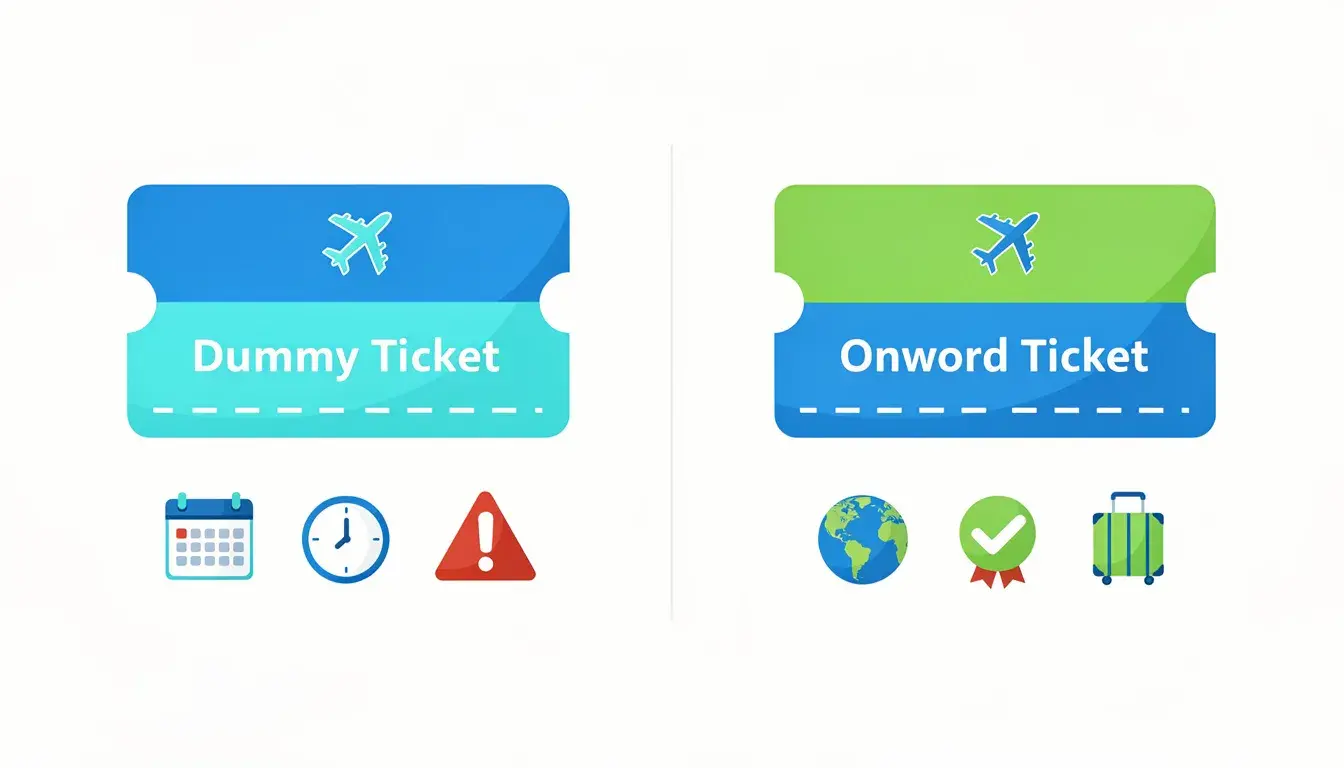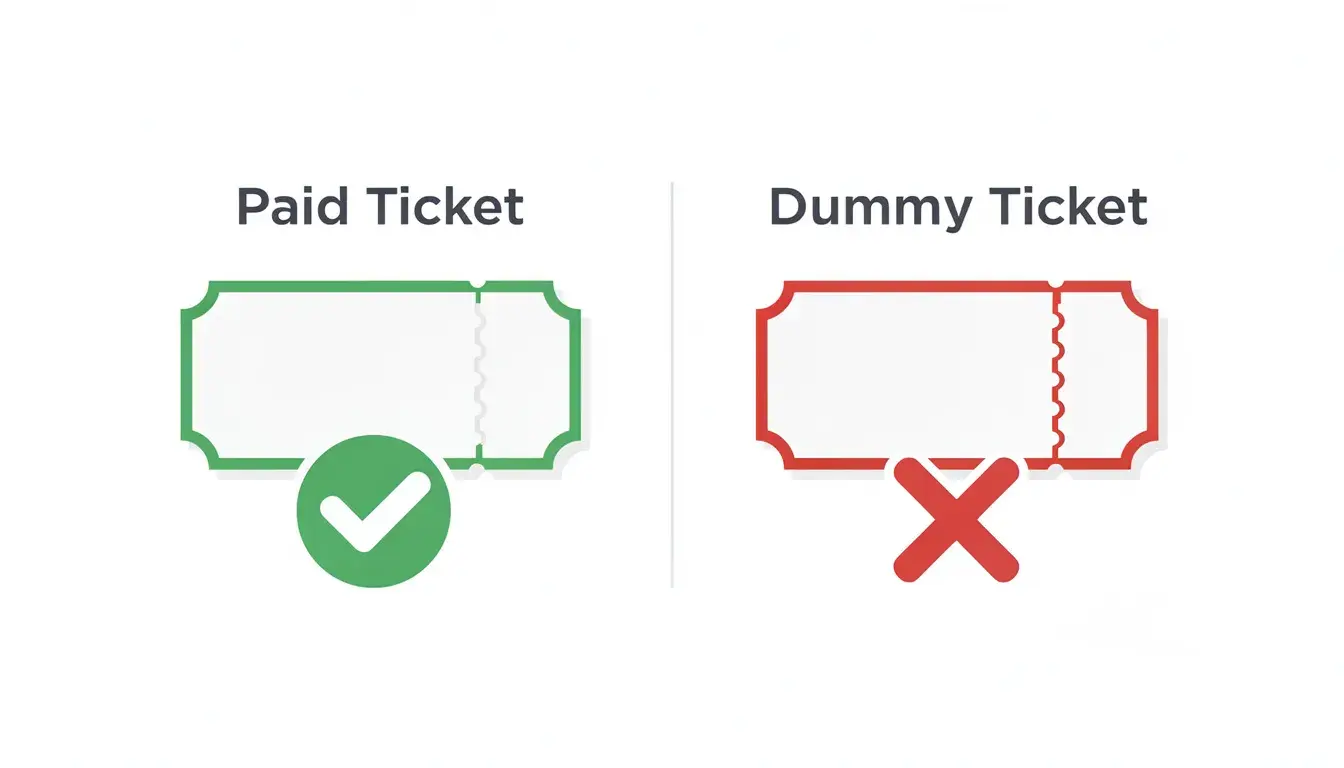

Short answer: When your next flight is on a different airline, carry a current onward record that shows the passenger name, route, date, flight details and booking reference or PNR for the separate segment. A dummy onward ticket can support a travel-proof request when the route and destination rules permit it, but it is not a boarding pass, paid ticket, transit authorization or guarantee of entry. Allow time for baggage, immigration, re-check-in and any self-transfer between carriers.
Picture this: your cheapest route toward Mexico City lands you on one airline, but the connecting flight onward runs on a completely different carrier. Great for your budget. Trickier for your onward proof.
Immigration officials and check-in agents don't treat this as a single trip. They see separate tickets, each with its own baggage rules and its own read on what counts as valid proof of onward travel. Miss that distinction, and you risk denied boarding before you even reach your final destination.
This guide walks through what changes when your next flight isn't on the same airline, how to book connecting flights that actually hold up at the check-in desk, and how to choose the right onward ticket for a two-airline itinerary. Ready to cover this exact scenario? Book a dummy ticket built for split-airline connections.
Key facts
- Each airline may check the onward segment under its own process before boarding the first flight.
- Separate tickets can mean separate baggage, check-in, transit and missed-connection risks.
- The onward record should match the passport name, dates, route and permitted stay.
- A document that cannot be searched or is expired cannot be made valid by printing it.
Need onward proof for a split-airline itinerary? Prepare a current record that matches the passenger, exit route and date you can truthfully support, then verify it before departure.
Prepare your dummy ticketIn This Guide
Official-source check
- IATA Travel Centre shows why passport, visa and health requirements depend on nationality and route and may affect airline checks.
- GOV.UK transit guidance illustrates why transit permission and onward evidence depend on the route and permission held.
- Check each carrier’s current baggage, check-in and self-transfer rules before relying on separate tickets.
These references support route checking but do not create a universal onward-ticket rule for every airline or destination.
Reviewed for: separate-ticket and self-transfer logic, airline-versus-border checks, onward-proof fields, PNR language, transit timing and the distinction between a reservation and a paid boarding ticket.
Why Airlines Ask For Proof Before You Even Board The First Flight
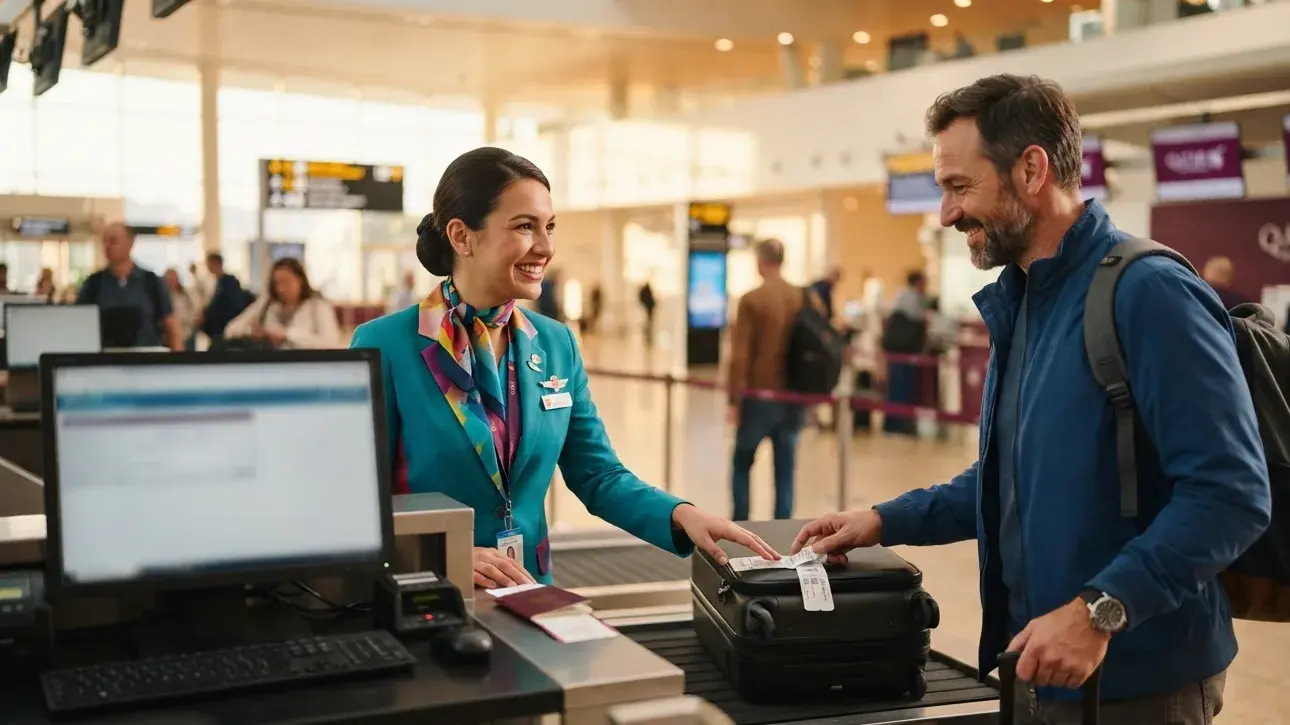
Before you ever reach passport control, the first airline you fly with has already made a judgment call about your trip. That call starts with whether you're holding a one-way ticket or something that proves an exit plan.
The Liability Airlines Are Trying To Avoid
Airlines face liability if passengers are denied entry on one-way tickets. Some destinations impose carrier-liability consequences when a traveller is refused entry, which is why an airline may request onward proof before boarding.
The first airline checks onward proof due to potential penalties from border entry issues. The carrier that flew you in is often the one responsible for flying you back out if border control refuses entry once you land.
Airlines check onward tickets to avoid liability for denied entry rather than leaving that judgment entirely to immigration officers downstream. It costs an airline far less to ask a question at the check-in desk than to fly someone home for free later.
Passenger-protection rules are separate from onward-travel checks. The practical request is driven by the destination, route and carrier process, so it can shift depending on where you are headed.
This is worth remembering if you've flown before without ever being asked for onward proof. Enforcement varies by route, by airline, and even by the individual agent working the counter that day, so a smooth experience once doesn't guarantee the same result on your next trip through a different connecting airport.
How A One-Way Ticket Raises Flags At The Check-In Desk
Airlines may require proof of onward travel for one-way tickets, especially on international routes where entry rules run strict. A check-in agent scanning your booking confirmation will notice immediately if there's no return or onward flight attached to your file.
One-way tickets can trigger secondary checks at check-in counters, which can mean extra questions, extra waiting, and sometimes a request to show proof on the spot before you're allowed to board. A one-way ticket has no return leg or exit plan, and that gap is exactly what airline staff are trained to catch.
A flight ticket alone won't always satisfy the onward-travel check if it's a one-way fare with nothing beyond it. A one-way ticket may trigger a request for onward proof at check-in, and boarding your first flight without issue is no guarantee either way. A one-way ticket does not guarantee entry into a country.
Choosing a one-way flight instead of a round trip is what triggers this whole conversation in the first place. Some Southeast Asian routes are known for closer onward-proof checks, but the exact request still depends on the destination, nationality, visa status and carrier.
A round-trip booking is the simplest way to avoid onward-ticket questions entirely, but it isn't always the cheapest or most flexible option for travelers piecing together a longer trip.
None of this means a one-way itinerary is a bad idea. It simply means you should expect the question and have an answer ready before you reach the check-in counter, rather than scrambling for one while a line forms behind you.
What Counts As Valid Proof When Your Airlines Don't Match
An onward ticket is evidence of intended onward movement by a stated date, but the destination may apply additional entry and documentation checks. It doesn't need to be on the same airline as your inbound flight to satisfy that requirement.
Onward tickets can be temporary reservations for proof of exit, which means a fully paid, non-refundable flight isn't always necessary just to satisfy this check. Onward tickets can be bus, train, or ferry confirmations too, if you're planning a road trip onward through a neighboring or third country instead of flying again.
A bus ticket across the border can work just as well as a flight for some overland onward routes, especially in regions with strong cross-border rail or coach networks. What matters is that the document is real and shows a specific departure date and destination.
A return ticket includes a return to the original country, which is different from an onward ticket that simply shows you're moving toward your next destination. Both can work as valid proof, but they answer slightly different questions depending on what the immigration officer at your arrival point actually asks.
The airline you fly on for that onward leg rarely factors into whether the document is accepted. What gets checked is the departure date, the destination on the booking, and whether the reservation itself looks like a genuine, verifiable record rather than something thrown together at the last minute.
Once you've settled how to prove you're leaving, the next challenge is making sure your two airlines can actually get you there without tripping over each other.
Booking Connecting Flights On Two Different Airlines
For a plain-language explanation of temporary reservations, see our what a dummy ticket is guide before deciding which proof fits the route.
Booking two separate flights on two separate airlines can save money, but it changes how your journey is handled from the moment you check in for the first flight.
Separate Tickets vs A Single Ticket: What Actually Changes
Connecting flights require switching planes at one or more airports, whether you book them as one ticket or two. The difference shows up in how each leg is treated once something doesn't go as planned.
When both flights are on the same airline, that airline manages your entire connection, including rebooking if your first flight runs late. Separate tickets are treated as independent events by airlines and immigration authorities, so neither carrier owes the other anything if a delay happens upstream.
Here's the good news. Booking an onward ticket with a different airline is accepted by immigration officials in almost every destination country. What matters to them is that a valid, verified flight reservation exists, not which airline system issued it or how many carriers are involved in your trip.
Because separate tickets aren't linked, this step matters. Travelers should verify the PNR on separate bookings to ensure validity with the operating airline before departure day. A quick check confirms your seat is actually held and hasn't quietly been dropped somewhere along the way.
There's no single best onward ticket for every itinerary. The right choice depends on how your two airlines interact, how much time sits between your flights, and how comfortable you are managing the connection yourself.
It's also worth checking whether either carrier has an informal interline agreement with the other, even without a shared alliance. Some airlines will still transfer bags or share delay information on a case-by-case basis, though you should never assume this without confirming it directly with both carriers first.
Why Baggage Doesn't Just Follow You Between Airlines
Baggage transfer depends on whether flights are booked on a single ticket. Book two separate tickets instead, and you should plan on handling your checked luggage entirely on your own.
Checked luggage does not automatically transfer between separate airlines, even if both flights depart from the same connecting airport within a couple of hours of each other. You must collect checked baggage and re-check it with the second airline at their own counter before continuing your onward journey.
This recheck step often surprises travelers who assumed their bag would just follow them automatically the way it does on a single-ticket itinerary. Self-transfers require collecting and rechecking luggage at each stop, and you'll need to collect baggage yourself at the carousel before heading to your next check-in desk to hand it off again.
Airlines may have different baggage rules between themselves for separate tickets too, so a bag that flew free on your first flight might cost extra on your onward flight with a second carrier. It's worth checking each airline's policy separately rather than assuming they match.
Weigh your bag before you leave home and check both carriers' size and weight limits ahead of time, since a bag that passed inspection on your first flight can still get flagged as oversized by your second airline. Doing this homework in advance saves you an awkward, expensive surprise at the second check-in desk.
Building In Enough Time Between Two Independent Flights
Traveling carry-on only can simplify transit when using separate tickets, since it removes the baggage claim step entirely from your connection. If your itinerary is tight, this alone can be the difference between making your next flight and missing it.
If checked luggage is unavoidable, build real buffer into your travel plans rather than cutting it close. A single-ticket itinerary might survive a short layover because the airline is watching both legs. Two separate tickets rarely survive the same gap, because no one airline is coordinating the connection on your behalf.
Some travelers prefer one ticket for the entire journey specifically to avoid this juggling act, even if it costs a bit more upfront to save money on stress later. Others are happy to manage two bookings themselves in exchange for a lower fare.
Neither approach is wrong. What matters is deciding on purpose, before you book, rather than discovering the trade-off for the first time while you're standing at a baggage carousel with a connection ticking down.
That buffer becomes even more important once you're actually standing in the connecting airport with a bag in hand and a clock running.
What Happens At The Connecting Airport When The Ticket Splits

Your connecting airport is where the theory of separate tickets meets the reality of limited time. Knowing what to expect there keeps a tight connection from turning into a missed one.
Passport Control, Baggage Claim, And Re-Checking In
Some connecting airports keep international-to-international transfers inside a secure zone, letting you move from one gate to another without ever touching passport control. Others require you to exit through passport control just to collect your baggage, even if you're not staying in that country at all.
Visa and entry requirements may apply if exiting the secure area for baggage collection, so it's worth checking ahead whether your connecting airport treats your transfer this way. Transit visa requirements can catch travelers off guard on multi-airline routes where this step isn't obvious in advance.
Extra time for transit is necessary due to customs and immigration requirements at these kinds of connecting airports, on top of the basic walk between terminals. Minimum connection time varies by airport and can be as low as 30 minutes at some hubs, but that number rarely holds once you're clearing immigration and rechecking a bag with a second carrier.
Before you fly, look up whether your specific connecting airport lists a recommended minimum connection time for transfers between two different airlines. Many airports publish this figure directly, and it's usually more realistic than the general 1.5 to 3 hour guideline used for planning purposes.
Handling Delays When No One Airline Is Responsible For The Other
A one-hour layover is often the minimum for international flights, but that's a bare floor, not a safe target for a two-airline itinerary. Airports vary in layout; some require more time for connections because of terminal distance, transit trains, or long security lines.
Leave at least 1.5 to 3 hours for international connections when your flights are on different airlines. Airlines typically require ample connection time for separate tickets precisely because they won't cover you if the timing goes wrong.
Airlines typically do not hold connecting flights for delayed arrivals, especially when the two flights belong to entirely different companies with no agreement between them. A missed flight on the first leg can cascade into a missed connection you have no protection against, since your second airline has no idea your first flight ran late.
Using separate tickets increases the risk of missed connections without rebooking protection, which is the trade-off you're accepting in exchange for a lower fare or a better schedule. Speak to an agent immediately if delayed to catch your next flight, since being proactive gives you more options than waiting to see what happens.
A check-in agent at the connecting airport may still be able to move you to a later flight on the same carrier, but only if you ask before your original departure time has already passed you by.
If rebooking isn't possible on the spot, ask the agent for a written note or a delay confirmation before you leave the counter. That small piece of paper can matter later if you need to file an insurance claim for a missed connection you had no way to prevent.
Real-Time Tools That Keep You Ahead Of Gate Changes
Use airline apps for real-time updates on gate changes rather than relying on departure boards alone once you're inside the terminal. Many travelers download both airlines' apps before departure so they can track each leg of their trip independently.
This matters more on international connecting flights than on domestic flights, where gate assignments tend to shift less often, distances between gates are usually shorter, and the stakes of a missed window are generally lower. A partner airline, or one within the same alliance as your first carrier, may share more information automatically. Two entirely unrelated carriers usually will not.
It also helps to save the customer service number for your second airline before you land, not after. If your first flight is delayed and you can already see the connection is tight, a quick call while you're still in the air or taxiing can save precious minutes once you're on the ground.
Once you've made it through the connecting airport, the final piece is picking an onward ticket that actually matches this kind of itinerary from the start.
Choosing The Right Onward Proof For This Kind Of Itinerary
flight reservation for visa guide explains reservation status for an application file. For travel on another airline, check that carrier’s ticketing and onward-evidence requirements separately.
With the airport logistics sorted, the last decision is which onward ticket actually fits a two-airline trip without costing more than it needs to.
When A Temporary Reservation Makes More Sense Than A Full Fare
A temporary reservation can serve as an onward ticket in most cases, since border control usually just needs to see a valid, verified booking with a departure date attached to it. You don't always need a fully paid ticket locked in months in advance just to clear this check.
This approach can save money compared to buying a full-fare, refundable ticket you might not end up using if your travel plans change along the way. It also avoids tying your exit plan to one specific airline system when your actual route involves two separate carriers.
Whether you're applying for a tourist visa, arriving somewhere on a visa-on-arrival basis, or routing through a third country like Mexico City before your final destination, the same logic applies. Airlines and border agents want proof, not necessarily a paid-in-full commitment sitting on your credit card.
This matters even more on a multi-airline trip, since you'd otherwise be locking in two separate full-fare tickets just to satisfy a check that a temporary reservation can handle for a fraction of the price.
Matching Your Onward Ticket To What Immigration Actually Checks
Not every immigration officer looks for the same details. Some glance at your exit ticket and move on without another question. Others want your full travel itinerary, including how you plan to leave the destination country entirely once your visit ends.
If you already hold a residence permit or a strong bank statement showing you can support your trip, an onward ticket may draw less scrutiny than it would for a traveler carrying neither. It's still worth having valid proof ready, since denied boarding at your first check-in counter is far more disruptive than a refused entry conversation you can usually resolve on the spot.
Booking a major carrier like Air Canada for one leg and a smaller regional airline for the next is common on multi-airline routes, and immigration officials generally don't mind that the two flights aren't from the same country's carrier. Whether you're flying direct on each leg or connecting through a hub, direct flights and connections work equally well as long as your onward flight lands somewhere logical, not necessarily within the same alliance.
If you'd rather simplify things, you can still book connecting flights within the same airline for at least one direction of your trip. Understanding how connecting flights work across carriers helps you decide when splitting airlines is worth the savings and when a single ticket is worth the added convenience.
Keep a printed or downloaded copy of every booking confirmation for both legs of your trip. A clear, current reservation is easier to review, although the exact documents requested vary, but having it ready in one place removes any hesitation from the conversation.
Protecting Yourself With Insurance When Connections Aren't Protected
Travel insurance should cover missed connections on separate tickets for added protection, since neither airline will rebook you for free when the fault sits between two unrelated bookings. Look for a policy that names missed connections specifically, not just outright flight cancellations.
This is especially worth arranging if your itinerary depends on protected connections that don't actually exist, because your tickets were booked separately from the start. A small insurance cost upfront is a lot cheaper than an unplanned overnight stay or a same-day rebooking fee on your onward journey.
Read the policy wording closely before you buy. Some plans only pay out once you've missed a connection on a single ticket, so confirm that separate, multi-airline bookings are explicitly covered before you rely on it.
Get the proof right, build in enough time and review any insurance exclusions; flying two airlines is then easier to manage as a planned self-transfer.
Two Airlines, One Confident Itinerary
For broader route planning, use the complete dummy-ticket-for-visa guide alongside the carrier and destination requirements.
Flying into a connecting airport on one airline and out on another isn't a problem, as long as you treat each leg like its own trip. Build in extra time, plan for baggage claim, and carry proof that satisfies immigration officials regardless of which airline issued it.
Whether your route runs through Mexico City, Southeast Asia, or anywhere in between, the same rule holds. A verified onward ticket and a realistic connection window matter more than which carrier flies which leg. Get those two things right, and switching airlines becomes a smart way to save money, not a risk to your entry. Book your onward ticket from DummyFlights.com before your next multi-airline trip.
Ready to check your split-airline route? Confirm the onward reference, baggage plan, transit permission and connection time before you travel.
Create your dummy ticketFAQ
Does my onward flight have to be on the same airline?
Usually not, if the destination and carrier accept the separate record. The onward segment should be current, verifiable and logically connected to your route and permitted stay.
What changes when I book two airlines on separate tickets?
You may need to collect and re-check baggage, clear immigration or transit control, meet each airline’s check-in deadline and manage missed-connection risk yourself.
Can a bus or train ticket replace an onward flight?
It may, where the route and destination rules accept overland proof. The document should be genuine, dated, and consistent with the border crossing and next destination.
Will the first airline check the second airline’s booking?
It may ask for evidence of onward movement and may try to review the separate record. Carry the reference, route, date and a readable offline copy.
Is a self-transfer the same as a protected connection?
No. A protected connection is usually covered by one itinerary or a carrier arrangement. A self-transfer on separate tickets leaves timing, baggage and missed-connection responsibility with you.
What if the onward PNR cannot be verified?
Do not describe it as active. Check the airline or provider record, ask what current proof is required and arrange a truthful replacement or paid ticket if necessary.
Friendly reminder: DummyFlights provides temporary travel-proof documents for planning and application support. Requirements vary by destination, airline, route and applicant situation. A dummy ticket can support a file, but it does not guarantee approval, boarding or entry.