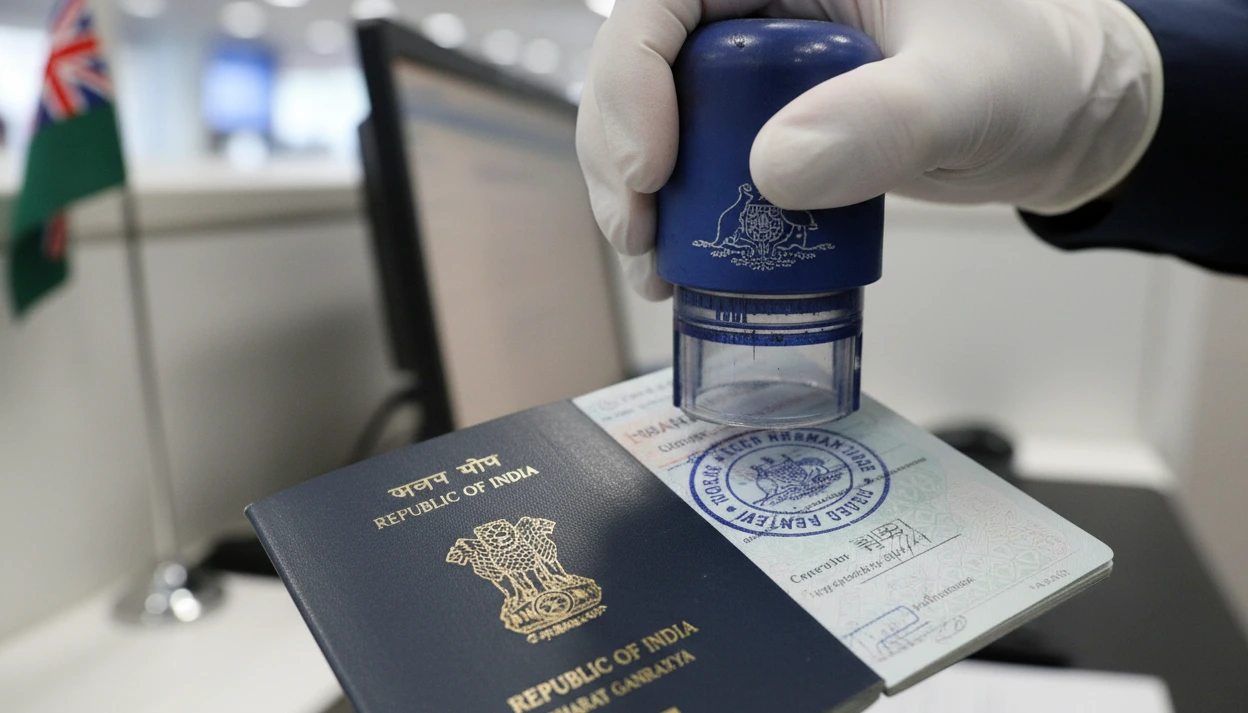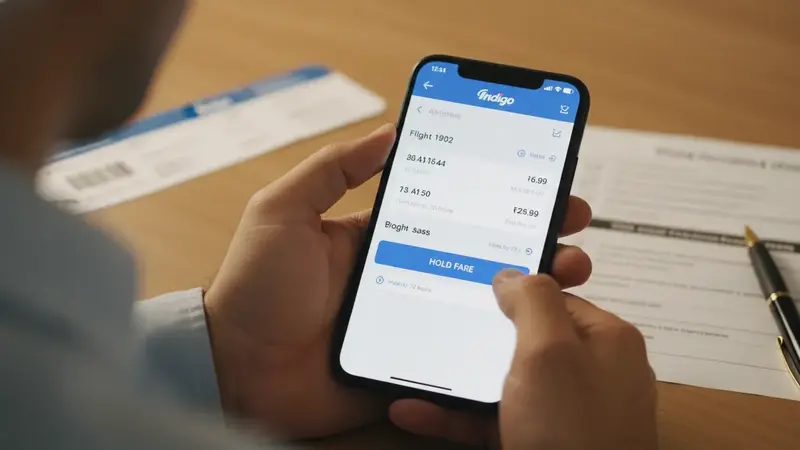
An onward ticket works best at a border or airport counter when the printed exit date matches the answer you give out loud. If an officer asks “when exactly are you leaving?”, your date should sit inside the permitted stay, match your route and accommodation plan, and sound like a real travel decision rather than a guess made under pressure.
You hand over your onward ticket. The officer scans it, then looks up and asks when exactly you are leaving. Not whether you have a return plan. Not whether you can show a document. The exact day, on the spot, with no time to search your phone or rebuild your itinerary in your head.
That question catches even careful travelers off guard because they prepared a document, not an answer. A printed date proves paperwork exists. A spoken date proves you understand the plan. Land crossings, airline check-in desks and arrival immigration counters test this differently, but the same rule applies everywhere: your ticket, your spoken answer, your permitted stay and your travel story should all point to the same exit date.
Key facts before you choose an exit date:
- An exact exit date is stronger than “around then” or “maybe next month.”
- The date should sit inside the legal stay window for that destination.
- Your onward ticket should match your accommodation, funds and route logic.
- A hesitant answer can create more questions even when the document looks clean.
- If plans change before travel, update the booking instead of improvising at the counter.
Need onward proof with a clear exit date? Create a clean onward ticket with DummyFlights before check-in or border control turns a simple date question into a longer conversation.
Create Your Onward TicketIn This Guide
Official-source check: Canada’s visitor-entry guidance says a border services officer must be convinced that a traveler is eligible and will leave Canada at the end of the approved stay. Immigration New Zealand says visitors must be able to show a ticket to leave New Zealand or enough money to buy one unless the visa says return or onward travel is not required. U.S. Customs and Border Protection also states that approved ESTA travel authorization does not guarantee admission; a CBP officer makes the admission decision at the port of entry. Sources: Canada visitor arrival guidance, Immigration New Zealand visitor visa guidance and CBP ESTA guidance.
Reviewed for: onward-travel proof wording, exact exit-date logic, airport and land-border scenarios, permitted-stay consistency, spoken-answer clarity, claim safety and contextual-link accuracy.
Why “When Exactly?” Is a Different Question Than “Do You Have a Ticket?”

Most travelers prepare for the checkpoint. Fewer prepare for the conversation. The conversation is where this specific question appears. By the time an officer asks for the exact exit date, they may already have seen your onward ticket. The document is not the only thing being checked anymore. Your answer is being compared with the document.
What the officer is actually cross-checking when they ask
The question is not always “do you have proof?” Sometimes it is “does this person understand the proof?” A traveler who has a clean onward ticket but cannot say the exit date clearly may look less prepared than a traveler who answers calmly and shows the matching document immediately.
The officer may be checking several things at once:
- Whether the exit date is inside the permitted stay.
- Whether the route leaves the country or travel zone clearly.
- Whether the destination after exit makes sense.
- Whether the traveler has enough funds for the stay length.
- Whether accommodation dates support the same timeline.
- Whether the answer sounds consistent with the stated purpose of travel.
An onward ticket can answer the document part of the question. Your spoken answer answers the confidence part. Both matter because border and airline checks often happen fast, under pressure and with limited patience for vague explanations.
Why this question comes after they have already seen your ticket
Travelers sometimes assume the conversation is finished once the ticket is visible. In practice, the ticket can trigger the next question. If the officer sees a departure date, they may ask you to repeat it. If the date looks near the end of the stay, they may ask why you chose that date. If the route goes to a third country, they may ask whether you can enter that country.
That does not mean the onward ticket is weak. It means the ticket has become part of the review. A dummy ticket or onward reservation should therefore be built around a date you can explain, not a random date chosen just to satisfy a form field.
The strongest answer is short and boring: “I leave on the 18th for Kuala Lumpur,” or “My onward flight is on 12 September, before my 30 days end.” That kind of answer gives the officer the same information they see on the document and leaves less room for a longer exchange.
The silent red flag: hesitation vs. a wrong answer
A wrong answer is obvious. Hesitation is quieter, but it can still damage the interaction. If you pause too long, open several apps, or give a vague answer like “maybe in two weeks,” the officer may wonder whether the ticket was prepared separately from the actual plan.
Hesitation becomes more sensitive when the traveler is entering on a visa waiver, tourist visa, visitor route, digital nomad trip, working holiday route, long backpacking route or one-way travel plan. In those cases, the officer may already be thinking about overstay risk, funds and exit capacity. The exact exit date helps reduce that uncertainty.
The answer does not need to sound rehearsed. It needs to sound known. The best preparation is to choose a date that has a reason behind it, then make sure every document supports the same date.
Calculating a Defensible Exit Date Before You Ever Reach the Counter
An exit date should be calculated before the airport, ferry terminal, land border or arrival hall. Do not choose it while standing in front of the officer. The pressure of the moment is exactly when small mistakes happen.
Counting backward from your permitted stay, not your wish list
The safest starting point is the permitted stay. If the destination allows 30 days, your onward ticket should not casually sit on day 31. If the stay is 90 days, the exit date should be inside that 90-day window and supported by passport validity, accommodation, funds and the onward route.
Use this order:
- Confirm the maximum stay for your visa, eVisa, visa waiver or entry permission.
- Check whether arrival day counts as day one.
- Check passport validity and any admitted-until rule.
- Choose an exit date with a small buffer before the final allowed day.
- Match the onward ticket date to the accommodation and route plan.
- Save the date somewhere easy to recall without opening five documents.
Choosing the last possible day can work when the route is clear, but it leaves less room for flight delays, illness, rescheduling or officer discretion. A date with a small buffer often feels more practical and less defensive.
Building a one-line exit logic you can say naturally
The one-line answer is the part most travelers forget to prepare. It should be simple enough to say calmly while holding your passport, boarding pass and phone.
Strong examples sound like this:
- “I leave on 18 September, five days before my allowed stay ends.”
- “My onward ticket is to Singapore on the 12th because my next hotel starts that night.”
- “I exit by bus on the 25th, then fly home from Bangkok two days later.”
- “I am staying 14 nights, and my ticket out matches my final hotel checkout.”
Weak examples sound like this:
- “I am not sure yet.”
- “The agency made the ticket.”
- “I will decide after I enter.”
- “It is only for the counter.”
- “I might cancel it later.”
The document should speak for the plan, not expose that there is no plan. If the itinerary is genuinely flexible, the answer can still be honest and firm: “My current onward ticket is for the 18th, and I will stay within the permitted period.” That is better than pretending the date does not matter.
What to do when your actual plans are genuinely undecided
Flexible travel is normal. Backpackers, digital nomads, remote workers and long-trip travelers often do not know every city they will visit. But border officers do not need your entire future. They need to know you have a credible way to leave within the allowed stay.
If your plans are still open, build the onward ticket around the minimum firm facts:
- The latest date you can legally stay.
- The country or city you can realistically go next.
- The funds you have for the stay and exit.
- The first accommodation block.
- The regional route you are likely to follow.
For visa-file pages, this is where a broader dummy ticket for visa strategy helps: the ticket, hotel, cover note and timeline should reduce uncertainty together. For pure border or airline checks, the focus is narrower: prove the next exit date is real enough to rely on.
When Your Onward Ticket Date and Your Spoken Answer Do Not Match

The most dangerous mismatch is not always a fake-looking document. Sometimes it is a clean ticket paired with a different answer. The traveler says they are leaving in two weeks, but the onward ticket shows a flight in six days. Or they say they will stay one month, but the ticket exits after 34 days. That gap invites questions.
Fixing the mismatch before you fly, not at the counter
Before departure, compare the ticket date with the words you would actually say if asked. If those do not match, fix the document or fix the plan. Do not wait until check-in or immigration to decide which version is true.
Run this quick mismatch check:
- What exact date will I say if asked?
- Does the onward ticket show that same date?
- Does my hotel checkout support that date?
- Does my return, onward or regional route explain where I go next?
- Does the date fit my visa, eVisa or visa-free stay limit?
- Can I enter the onward destination shown on the ticket?
If the answer fails any of these checks, update the booking before travel. A small correction made early is cleaner than a nervous explanation made at the counter.
How easy date changes turn a weak answer into a non-issue
Plans change. That is why flexible travel proof matters. If the flight date, hotel date or appointment timeline changes before departure, the onward ticket should change with it. The best version of the document is the one that matches the plan you are actually presenting that day.
This is where speed matters. If your exit plan shifts from the 18th to the 21st, the old ticket becomes a risk even if it was valid when you created it. Updating the document keeps the spoken answer and printed date aligned.
Do not treat the onward ticket as a one-time object. Treat it as part of a live travel file. If the plan changes, the proof should change too.
If you are already at the counter and notice the gap yourself
If you notice the mismatch at the counter, stay calm. Do not invent a new story. Do not say the ticket is fake or only for formality. Do not blame the agent, website or travel desk. The safest response is to clarify the current plan honestly and show supporting documents if you have them.
If the airline agent or officer needs a corrected onward ticket before allowing boarding or entry, you may need to create updated proof quickly. But this is a recovery move, not the ideal strategy. The stronger play is to catch the mismatch before you leave home.
How This Question Shows Up Differently Depending on Where You Are Standing
The same exit-date question feels different depending on who asks it. Airline staff, airport immigration officers, land-border officers and visa-on-arrival counters all care about onward proof for slightly different reasons.
Land border crossings vs. airport immigration
At an airport, the document check often begins before departure. Airline staff may ask for onward proof because carriers can face penalties or operational problems if passengers are refused entry after arrival. The question is practical: can this traveler enter the destination and leave when required?
At a land border, the pressure can feel more direct. The officer may ask where you came from, where you are sleeping, when you leave and what route you take next. A bus, ferry, train or flight can all support onward travel, depending on the destination’s rules. The important part is that the exit route is visible and plausible.
For mixed routes, where you fly in and leave by land or ferry, keep the travel proof easy to understand. If the official checklist is specifically about route documentation rather than DummyFlights’ onward-ticket service, keep the authority clean by checking visa flight itinerary requirements separately.
Visa-on-arrival and eVisa counters
Visa-on-arrival and eVisa counters often ask exit questions before a full conversation begins. The officer may want to see the departure date, onward destination and stay length immediately. If the destination grants 30 days on arrival, an exit date on day 45 will not be treated as a small mistake.
Keep the answer short:
- “I leave on this date.”
- “This is my onward destination.”
- “My stay is within the allowed period.”
- “My hotel and onward ticket match that timeline.”
Long explanations can make a simple check feel complicated. A clean onward ticket plus a clean one-line answer usually works better than a speech.
When the follow-up question signals a deeper check
Sometimes the exact-date question is only the first layer. If the officer keeps asking, they may be looking at funds, accommodation, passport validity, prior overstays, one-way travel patterns or unclear employment ties. In that situation, the onward ticket still matters, but it will not carry the whole conversation alone.
Be ready to show:
- Where you will stay.
- How long you will stay.
- How you will pay for the trip.
- Where you go after exit.
- Why the route matches your purpose.
- Why you are likely to leave on time.
The onward ticket is strongest when it is part of that wider consistency. It should not feel like a loose PDF attached to a vague trip. It should feel like the natural next step in the route.
Getting Your Exit Date Right, Every Time You Are Asked
The question is not designed to trip you up. It is a consistency check, and consistency can be prepared long before passport control. Calculate the date from the permitted stay, attach it to a reason you will remember, and make sure the onward ticket matches the answer exactly.
Final exit-date checklist:
- Your onward ticket leaves before the permitted stay expires.
- Your spoken answer matches the date printed on the ticket.
- Your onward destination is realistic and legally enterable for you.
- Your accommodation dates do not contradict the exit date.
- Your funds support the stay length you are claiming.
- Your phone has the ticket saved offline.
- Your printed copy is readable if manual checks are likely.
- Your answer is short, calm and date-specific.
Never rely on a document you cannot explain. Never say the ticket is only for formality. Never present one date on paper and another date in conversation. If your plans shift before departure, update the proof so your answer stays accurate.
A clean onward ticket is not just a PDF. It is a date, route and exit plan that can survive a fast question from someone who has heard vague answers all day. When the document and answer match, the conversation becomes much easier.
Need an onward ticket with a date you can answer confidently? Create clean onward proof with DummyFlights before the airline desk or border officer asks for your exact exit date.
Create Your Onward TicketFrequently Asked Questions
Why would a border officer ask for my exact exit date?
They may be checking whether your onward ticket, permitted stay, accommodation and spoken answer all match. The exact date helps them assess whether you are likely to leave on time.
Is an onward ticket enough by itself?
Not always. It can support your exit plan, but officers may also consider funds, accommodation, purpose of travel, passport validity and whether your route makes sense.
Should my spoken answer match my onward ticket date?
Yes. If your answer and ticket show different dates, the officer may ask more questions or treat the travel plan as unclear.
Can I use an onward ticket if my trip is flexible?
Yes, but the ticket should still show a realistic exit date within the allowed stay. Flexible travel does not mean the exit plan should sound vague at the counter.
What if my onward ticket date changes before I travel?
Update the booking before departure so the document matches the date you will actually give if asked by airline staff or border officers.
Do airline staff ask the same questions as border officers?
Sometimes. Airline staff may check onward proof before boarding because they need to know you can meet the destination’s entry requirements.
Does an onward ticket need to be a flight?
Not always. Some routes may use ferry, bus, train or other exit proof, depending on the destination’s rules. The exit route must still be clear and believable.
What is a bad answer when asked when I leave?
Weak answers include “I am not sure,” “I will decide later,” or “the ticket is only for formality.” A clear date that matches the document is safer.
Can an onward ticket guarantee entry?
No. It can support your travel file, but border officers still decide entry based on eligibility, rules, documents and the overall situation.
What should I check before reaching the airport?
Check that your onward ticket date, visa or permitted stay, accommodation, funds, route and spoken answer all support the same exit plan.
Friendly reminder: DummyFlights provides temporary travel-proof documents for planning and application support. Requirements vary by destination, airline, route and applicant situation. A dummy ticket can support a file, but it does not guarantee approval, boarding or entry.