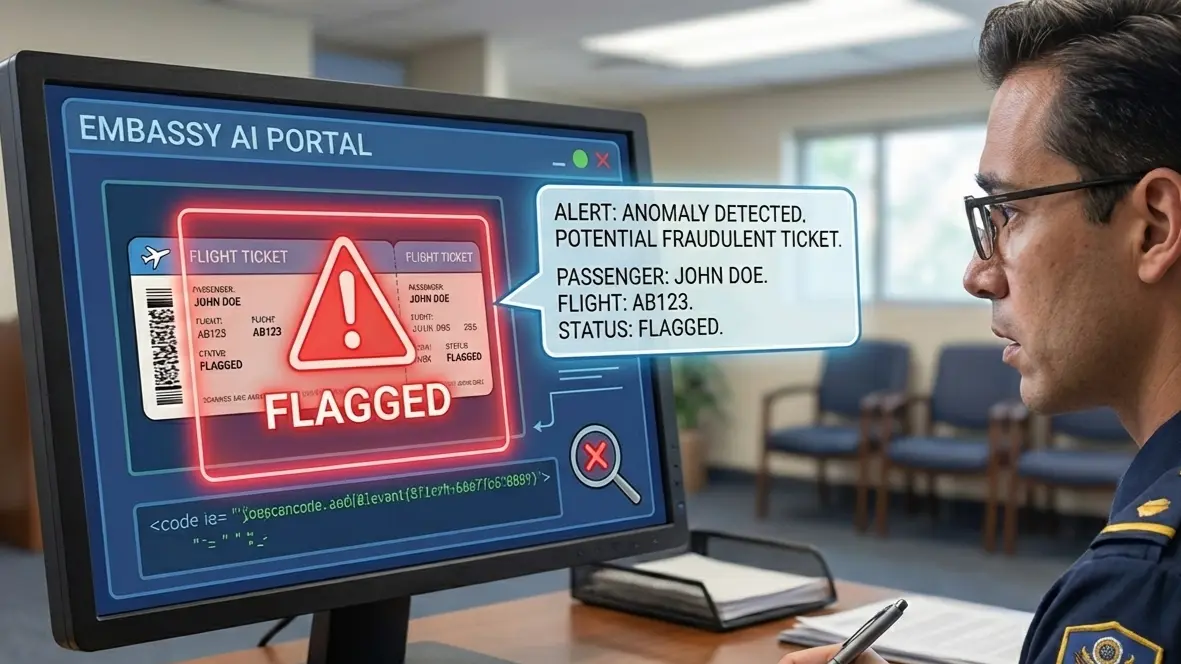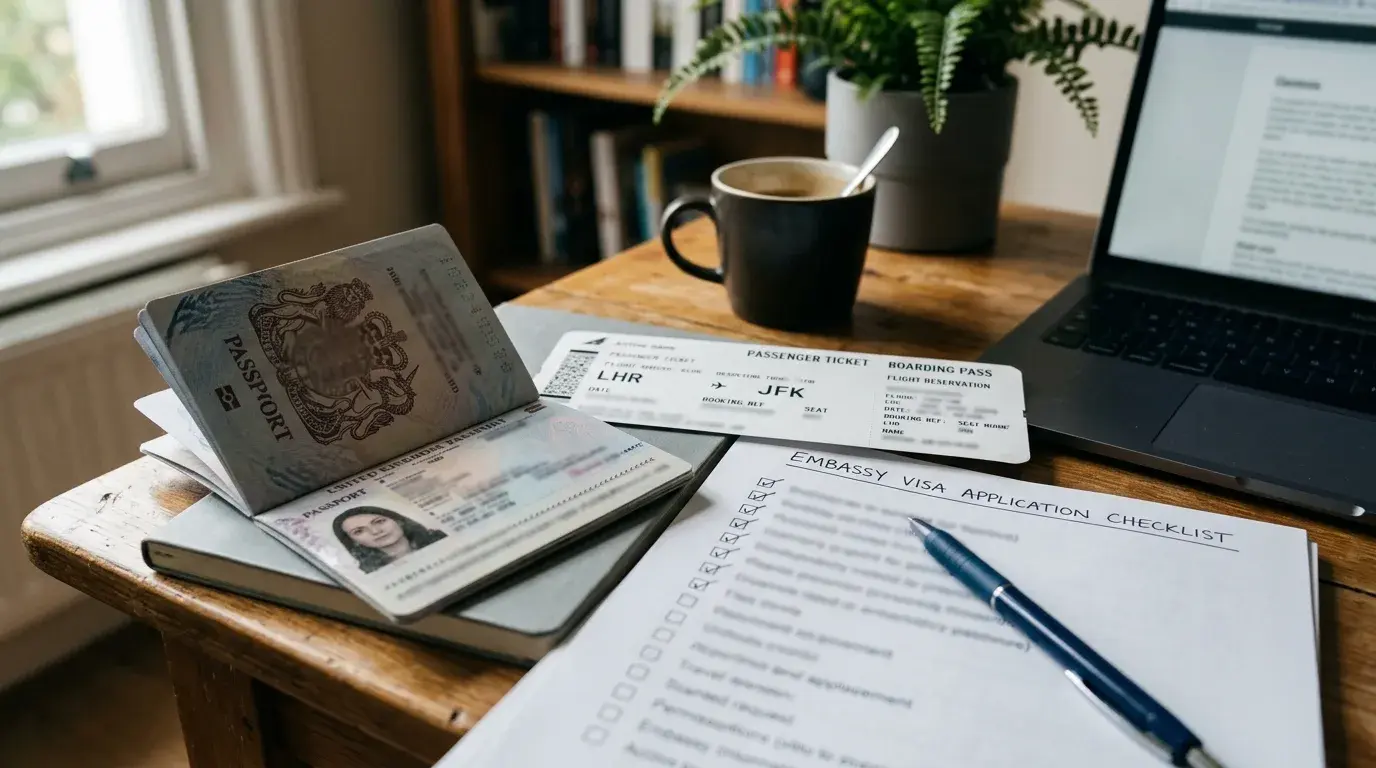
Short answer: An onward ticket from India is proof that your trip has a clear departure plan, usually for a visa file, airline check-in, or destination immigration check. Indian applicants most often use a verifiable dummy ticket reservation when applying for short-stay visas, flying on one-way tickets, using visa-on-arrival routes, transiting through strict hubs, or visiting destinations that ask for return/onward proof. The document should show the same passport name, route, dates and next-destination logic used across your visa form, hotels, insurance and travel itinerary.
Key facts
- Indian passport holders are frequently asked for onward or return proof at VFS/embassy submission and at Indian departure airport check-in counters.
- An onward ticket shows departure from the destination country to a next stop or back to India within the permitted stay limit.
- The route must avoid unapproved self-transfers or transit hubs where Indian citizens require a separate transit visa.
- DummyFlights issues verifiable onward and return reservations for $15 (~₹1,300) per person with instant PDF delivery and 48–72 hour PNR validity.
- Free date changes are available within the same day of booking, and reissues are free only when a reservation is not valid.
The mistake is treating an onward ticket as a magic document. It is really part of a consistency test: can the officer or airline staff quickly understand when you leave, whether that date fits your permission to stay, and whether your next destination will let you enter?
This guide explains how Indian travellers should use onward proof for visa applications and departure-day checks without buying expensive flights too early or submitting a weak reservation that creates more questions.
If your onward proof is being prepared for a visa application, start with the dummy ticket for visa 2026 complete guide. It shows how temporary flight reservations should match visa forms, cover letters, hotel dates, travel insurance and supporting documents.
For a broader country-by-country visa view, the dummy ticket for visa guide explains where flight reservations help and where they should stay secondary to financial proof, relationship evidence, invitation letters or official checklists.
If you are new to the concept, read what is a dummy ticket before choosing a provider. A reviewable temporary reservation is different from a fake or edited PDF, and that distinction matters when your file is checked.
India Onward Ticket Use-Case Matrix
| Use case | Why onward proof matters | Best document logic |
|---|---|---|
| Visa application from India | Shows intended travel window without buying final flights too early | Reservation dates matching form, hotel, insurance and cover letter |
| Airline check-in from India | Carrier may screen destination entry rules before boarding | Clear onward/return route, booking reference and next-country eligibility |
| Visa-on-arrival trip | Destination may ask for exit proof at arrival | Exit date inside allowed stay, plus funds and accommodation |
| Flexible backpacking route | One-way plans can look incomplete | Simple first-exit proof and a realistic route sequence |
Onward Ticket India — Fast Proof of Departure for Visas
Applying for a visa from India can feel like a game of patience. You’ve gathered your documents, filled endless forms, and now the checklist says you must show proof of onward travel. That’s where most people pause. Should you buy a return ticket right now? What if your visa dates change? We’ve all been there—students, first-time travelers, families visiting relatives abroad, even remote workers chasing the next destination. The good news is, there’s a smarter way to handle it. In this guide, we’ll break down everything you need to know about onward tickets from India, how to get legitimate proof fast, and how to avoid the usual traps that waste money and time. Let’s make this process simple and lower-stress.
What Exactly Is An Onward Ticket For Indian Travelers?

If you’ve ever been asked for “proof of onward travel†while applying for a visa or boarding a flight, you know how confusing it sounds at first. You might think it means a return ticket, but that’s not always true. Let’s unpack this together so you know exactly what’s expected — and how to handle it confidently.
How Consulates And Airlines Define “Onward†(Without The Jargon)
When a consulate or airline says “onward ticket,†what they really want to see is proof that you plan to leave the destination country within your permitted stay. That could mean returning to India, flying onward to another country, or even taking a land route out — as long as there’s a documented exit plan.
Here’s how it breaks down:
- Return ticket: a round-trip booking showing you’ll fly back to India.
- Onward flight ticket: a one-way booking that takes you to another country after your first destination.
- Multi-city itinerary: a trip that connects several countries, where your exit from each stop is clearly shown.
The whole point is risk management. Immigration departments and airlines want to be sure you won’t overstay or try to settle illegally. Onward dummy ticket booking bridges this trust gap. If your visa allows a 30-day stay, your onward or return date should fall within that period. That’s it — nothing mysterious about it.
Remember, “onward†doesn’t always mean “back to India.†If you’re flying from Delhi to Bangkok and then heading on to Vietnam, your onward ticket to Vietnam is enough. The rule is about leaving the destination country, not necessarily coming home.
Dummy Flight Ticket Vs. Fully Paid Ticket: What’s The Difference For Indians?
This is where things often get tricky for Indian applicants. Many people assume they must buy a confirmed return ticket before applying for a visa, but that’s not required in most cases. A dummy ticket booking—sometimes called a temporary flight reservation—is a real flight booking that exists in the airline’s system for a short period (usually 24 to 72 hours). It has a valid PNR you can check online, but it automatically expires if not paid in full.
Here’s what sets it apart:
- Dummy ticket: Real reservation, short validity, low or no upfront cost.
- Fully paid ticket: Purchased ticket with confirmed payment and longer validity.
For most Indian travelers, a dummy ticket booking makes more sense during the visa application stage because:
- Visa approval isn’t supported yet.
- Flight dates might change after the embassy decides.
- Airline prices can jump overnight.
- Students often wait for final admission letters or semester dates.
- Families applying together may not know everyone’s exact schedule.
A dummy ticket gives you proof of onward travel without locking in thousands of rupees too early.
When Indian Applicants Are Asked For Onward Travel Proof
You’ll notice this requirement pop up at several points in your travel or visa journey. Here’s where you can expect it:
- Tourist visas: Schengen, UK, Canada, Thailand, Malaysia, and Japan almost always ask for return or onward proof.
- Business and conference visas: To confirm your stay matches the event dates.
- Student or dependent visas: When you need to show you’ll exit before your course or dependent validity ends.
- Family visits: Common for Europe and Middle East family sponsorships.
By region, the rules vary slightly:
- Schengen Zone: Nearly every consulate asks for confirmed onward or return proof.
- Southeast Asia: Thailand, Malaysia, and Indonesia often check at immigration even if your visa is already issued.
- Middle East: UAE and Qatar frequently verify return tickets at check-in in India.
- East Asia: Japan and South Korea expect clear travel dates that match your itinerary.
- The Americas: US and Canada mainly check this at the airline counter or port of entry.
And it doesn’t stop at the visa office. You might be asked for proof at these moments too:
- VFS or embassy appointment day
- Airline check-in at Indian airports
- Transit-country immigration during layovers
What Actually Gets Checked—And By Whom—On The Day You Fly
Let’s clear up who actually checks your valid onward ticket and what they do with it.
At Indian airport check-in, airline staff pull up your reservation system to verify that your PNR exists and is valid. They don’t usually care if it’s paid in full — they just need to see that your onward journey is traceable and makes sense.
In transit countries, officers may ask for onward proof if you’re transiting without a visa or staying airside for long hours. For instance, Singapore or Kuala Lumpur might check if you have an exit flight if your layover stretches overnight.
At arrival immigration, some officers quickly scan your itinerary to confirm your intent to leave. As long as the exit date aligns with your visa validity, you’re fine.
Paper Printouts, PDFs, Or Mobile Screenshots—What Is Easiest To Review From India?
This part might sound small, but presentation matters.
- VFS centers often prefer printed copies, neatly attached with your visa application.
- Embassies accept PDFs if you’re applying online.
- Airlines at Indian airports are fine with mobile screenshots — but always keep a printout as a backup.
Keep an eye on validity. If your dummy ticket expires in 24 or 48 hours, make sure your appointment or flight check-in happens within that window. It should be live and verifiable when they check.
Pro tip: Always time your onward ticket to stay valid through your visa appointment or flight date. If you’re unsure, request a longer 72-hour validity.
The “Refundable Ticket†Tradeoff For Indian Cards And Banks
A lot of travelers in India still think refundable tickets are safer. In theory, yes — but in practice, they can tie up your money for weeks.
Here’s why:
- Refunds to Indian bank accounts can take 1 to 2 weeks, especially on international carriers.
- FX markups eat into refunds on credit cards.
- Airlines often keep “service charges†that are non-refundable.
- If you booked through an OTA, refund requests can get messy.
For students or families working with a limited budget, that blocked amount can easily mess with your visa or tuition timeline. That’s why most experienced travelers now rely on reviewable dummy tickets instead of chasing uncertain refunds.
Bus, Train, And Ferry Onward Tickets—Are They Reviewable?
Yes, sometimes — but only if they make sense geographically.
If you’re applying for a Schengen visa and planning to exit by train from France to Germany, that’s fine. The same goes for Southeast Asia, where land crossings are common between Thailand, Cambodia, and Vietnam. So, a train or bus ticket may work.
However, some embassies and airlines still prefer a flight itinerary because it’s easier to verify online. If you do show a land or sea exit, present it with context — for example, include your connecting flight or hotel bookings that align with the route.
A Simple Timeline For Indian Applicants (From Planning To Boarding)
Here’s a simple way to plan your onward ticket process:
3–4 weeks before your visa appointment:
Start gathering documents and check visa requirements for proof of departure.
1 week before your appointment:
Order your onward reservation so it’s fresh and valid for submission.
On VFS day:
Carry both printed and digital copies. Check that your name matches your passport exactly.
After visa approval:
If your dates shift, order an updated onward reservation that matches your final ticket.
How Indian Applicants Can Secure Proof Of Departure The Clean Way

Now that you understand what an onward ticket really is, let’s talk about how to actually get one. There are several ways Indian travelers can secure a verified flight reservation without wasting money or stressing over last-minute changes. The method you choose depends on your visa type, timeline, and budget — but the goal is always the same: to present clear, logical travel plans that make sense to the consulate and airline.
Let’s go over the four smartest options, plus a few practical tips that help you stay organized, save cash, and avoid mistakes.
Method #1: Airline Holds And OTAs
Many major airlines and Indian online travel agencies (OTAs) let you hold an airline ticket for a short time before paying. You’ll find this option on platforms like MakeMyTrip, Cleartrip, or directly on certain carrier sites like Emirates, Qatar Airways, or Lufthansa. These temporary holds usually last 24 to 48 hours.
The upside is clear — you get a real flight reservation instantly, tied to your PNR code, and can print or download it for your visa file. The downside? The hold can expire before your desired date of VFS submission or embassy interview. Once that happens, your reservation disappears from the system, and you have to start over.
Timing is everything here. If your VFS slot is three days away, book the hold the night before so the reservation is still live when officers check. Keep in mind that many countries don’t care if you’ve paid for the ticket yet; they just want to see proof you’ll exit on time.
A few Indian travelers also get caught by “region-locked†holds. Some airlines’ website options are limited to specific countries or fare classes. That’s why reading the fine print before paying a small fee for a hold is smart — it saves you from confusion later.
Method #2: Refundable Fares—When They Truly Make Sense
Refundable tickets sound like a clean safety net, but they’re not for everyone. They only make sense for specific cases — like when your company covers costs under a corporate travel policy or when you’re applying for an urgent visa with supported approval.
For most people, refundable fares are a headache. They block your funds for weeks, and Indian banks don’t always process refunds quickly. There’s also the issue of card details being charged in foreign currencies. Even if you cancel early, FX markups, convenience fees, and partial refunds eat into your balance. If you paid through a third-party platform, it can take several follow-ups before the money lands back in your account.
Refundable fares can work if your visa outcome is supported within days and you need a full ticket immediately. Otherwise, it’s smarter to avoid tying up large amounts and use verifiable reservations that cost less and stay valid long enough for your application.
Method #3: Real, Reviewable Temporary Reservations
This method has quietly become the go-to for most smart Indian travelers. A reviewable dummy ticket from a reliable provider like BookForVisa.com or DummyTicket.io gives you a verifiable reservation that looks exactly like a real airline ticket. With a working PNR, you can check on the airline’s website. These aren’t fake PDFs or Photoshopped documents — they’re legitimate verifiable reservations created by agents with access to airline systems.
What makes them practical is how precisely you can control them. You choose your desired date, route, and traveler details, and receive the itinerary within minutes. The reservation is valid for a set time window, usually 48–72 hours, which cleanly fits most visa submission schedules. You can then print it for VFS or show it at check-in.
This option is especially useful for:
- Students waiting for final university letters
- First-time applicants nervous about date changes
- Digital nomads with flexible plans
- Families coordinating multi-city trips
The biggest advantage? No need to risk large payments or refund delays. For a small fee, you get a clean, airline-verifiable booking without the financial commitment. It’s the sweet spot between a real and a temporary reservation — and most immigration officers or VFS staff accept it without question.
Method #4: Travel Agents In India—Old-School
Despite the rise of online tools, local travel agents in India still have their place. If you’re short on time or not confident using online systems, an agent can quickly issue a reservation for your return flight or onward segment. This is especially handy for group trips or senior travelers who prefer in-person help.
When working with an agent, ask these key questions:
- Can you verify the PNR code on the airline’s website?
- How long will the reservation stay valid?
- Can it be changed or canceled easily?
- Will you provide a GST invoice if needed?
Agents often have direct access to airline systems, so they can create verifiable reservations instantly. This can be a lifesaver for last-minute VFS appointments or for travelers flying from smaller Indian cities where fewer online options exist.
Tailor The Strategy To Your Visa Type
Each visa category demands a slightly different approach.
For tourist or family visit visas, focus on logical, round-trip routes that make sense. Avoid showing complicated stopovers that may look suspicious. During busy travel periods like Diwali or summer holidays, it’s smarter to use a verified flight reservation instead of booking actual tickets, since fares spike unpredictably.
For business or conference visas, ensure your onward reservation aligns with the event invitation. The exit date should match your meeting schedule.
Students and dependents should match their exit booking with the academic calendar or housing lease. Even if your stay is long-term, you can show an onward plan for renewal or compliance.
Some countries require proof even for visa-free entries. Japan, Singapore, and Thailand are prime examples. Having a real flight reservation avoids confusion at borders and helps you avoid problems like being questioned or, worse, denied entry.
Money-Saving Moves For Indian Travelers
A few smart habits can save you a lot:
- Avoid booking during peak Indian holidays.
- Use multi-city routes to make your proof of exit look realistic and cost-effective.
- Set price alerts for flights from your arrival airport — you can act fast once your visa is issued.
- Always compare refundable vs. reservation-based options before paying.
Small planning tweaks give you more flexibility and protect you from fare shocks later.
Document Hygiene: Name Order, Passport Fields, And Indian Address Nuances
Your name on the booking must match your passport exactly. Indian names can get tricky, especially when your given name and surname appear in reverse order. Before submitting, check your PNR code to confirm spelling. Also, use the same contact email and number across all documents — visa forms, flight holds, and insurance. Mismatches can cause unnecessary questions at the counter.
Digital Convenience For Indians
Keep everything accessible. Save your onward proof as both a PDF and a printed copy. Store all your visa-related documents in one folder in Google Drive or on your phone, labeled clearly by date and appointment. This simple organization habit saves time when you’re standing in line or reprinting something last-minute.
And don’t rely on just Wi-Fi. Always email yourself a copy, so even if your phone battery dies, your documents are safe in your inbox.
Airline, Embassy, And Airport Realities You’ll Face Leaving India
You can plan cleanly on paper and still hit surprises at the airport. Knowing what actually happens at check-in, in transit, and at arrival saves time and stress.
Read this section like a rehearsal. You will thank yourself at the counter.
What Check-In Agents In India Actually Look For
Agents want two things. They want a traceable plan. They want a sensible route.
They will:
- Pull up your dummy ticket booking and verify the PNR.
- Check that names match your passport exactly.
- Ask simple follow-ups like your return window and purpose of travel.
- Look for glaringly odd routes that do not make sense.
Typical follow-up questions you should rehearse:
- When do you plan to return?
- What is the purpose of this trip?
- Why are your connections routed this way?
If your route looks illogical they will pause. For example, Mumbai to Paris to Dubai to Delhi over three days looks like a red flag. It signals patchwork bookings. Agents then probe deeper.
Timelines And Validity Windows That Won’t Get You Stuck
Make sure your reservation is verifiable at check-in time. That is the priority.
Simple timing rules:
- Ensure the reservation is live on the day you submit documents.
- Match validity to your VFS slot or interview.
- Add a buffer for traffic, long queues, or a delayed biometrics appointment.
A 24-hour reservation may be fine for an immediate appointment. For anything longer, aim for 48 to 72 hours. If you risk delays, get a slightly longer window.
Transit Country Pitfalls Indian Travelers Often Miss
Transit checks are common. Different countries have different rules.
Watch out for:
- Short connections on separate tickets. You may lose protection if one leg is canceled.
- Transit visas that are required even if you do not leave the airport.
- Immigration officers asking for proof of onward travel during long layovers.
Cover both needs by carrying documents for your entire route and confirming transfers are allowed on separate tickets.
Land And Sea Exits: When Your “Onward†Isn’t Another Flight
An onward exit can be by bus, train, or ferry. It is reviewable in many cases.
Do this right:
- Present a clear land or ferry booking alongside your flight itinerary.
- Add contextual documents like hotel bookings or maps.
- Show timing gaps so officials see the logical flow.
Do not mix vague plans with a single one-way flight. Clarity beats improvisation.
Red Flags That Trigger Extra Questions
Immigration and airline staff look for patterns that suggest risk.
Common red flags:
- One-way fares into countries known to ask for returns.
- Long intended stays that do not match your stated purpose.
- Hotel, flight, and visa dates that do not align.
- Name mismatches across documents.
Fix these before you leave. It is one simple check that avoids trouble.
Seasonal India-Specific Hurdles
Indian travel peaks at certain times. Expect chaos then.
Plan for:
- Monsoon delays that disrupt regional flights.
- Festival surges around Diwali, Holi, and school holidays.
- University intake waves in July and January that overload counters.
Add extra time and book holds close to your appointment date when demand is high.
Privacy And Practicality
Airline staff only need to see the booking details. They do not need unnecessary personal files.
Carry:
- A printout and a digital copy of your itinerary.
- Minimal extras such as contact info and visa pages.
- Only share sensitive payment details when absolutely required.
If Plans Change After Visa Approval
Changes happen. Handle them calmly.
If dates shift:
- Keep the exit logic intact. Do not create wildly different return dates.
- Order a fresh reservation that mirrors your new itinerary.
- Bring both the old and new documents to the airport for clarity.
If you want speed, verifiability, and India-specific support, here is how a reviewable dummy ticket service streamlines the entire process.
Onward Ticket India: A Cleaner Way To Show Proof of Departure
When you apply for a visa, timing and proof always matter. You need documents that look professional, meet embassy standards, and show clear travel intent — but without risking thousands on real tickets. That’s where DummyFlights.com steps in. Our dummy ticket booking service helps Indian travelers get legitimate, verifiable flight and hotel reservations instantly, made specifically for visa use.
Here’s how it works in simple terms:
You enter your travel details — name, dates, and destination — exactly as on your passport. We generate a real airline or hotel reservation instantly. You receive a downloadable PDF with a valid PNR that you can print or email directly to the embassy. No waiting, no follow-ups, and no financial risk.
Our goal is to make your visa preparation lower-stress. Everything about our process is built for Indian applicants who deal with fast deadlines, changing interview dates, and embassies that demand precision. Whether you’re applying for Schengen, UK, UAE, or US visas, our documents match what consulates expect.
What makes DummyFlights.com stand out:
- Instant delivery — your reservation is ready within minutes
- Free same-day date changes
- Reviewed globally for visa applications
- Option for both flight and hotel bookings
- Multi-city reservations available for complex itineraries
- No hidden fees or cancellation charges
- Indian payment options and GST invoices for business travelers
- Real customer support during Indian hours
Our service fits cleanly for students waiting on admission letters, families planning group trips, and freelancers or digital nomads with flexible plans. You get valid proof that’s safe to show anywhere — and you only pay once you’re satisfied.
A visa application should be about your journey, not your stress. DummyFlights.com helps you stay compliant, organized, and calm — because travel should start easy, even before takeoff.
Need onward proof from India without buying final flights too early?
Create a reviewable dummy ticket with passenger details, route, travel dates and a booking reference aligned to your visa or airline-check timeline.
Essential PNR Verification & Cost Guides:
FAQ
What is an onward ticket for Indian travellers?
It is proof that you plan to leave the destination country or region within the allowed stay. It can be a return ticket, onward flight, or another reviewable travel reservation depending on the route and official rules.
Do Indian visa applicants need an onward ticket?
Many short-stay visa files ask for flight reservations or travel itineraries, but the exact requirement depends on the destination and visa type. The safest approach is to follow the official checklist and keep all dates consistent.
Can I use a dummy ticket as onward proof from India?
A reviewable temporary reservation can support a truthful travel plan when final flights are not booked. It should not be fake, edited or inconsistent with your passport, visa form or hotel dates.
Will Indian airline staff check onward tickets?
They can, especially for one-way tickets, visa-on-arrival destinations, visa-free routes and countries that publish onward/return proof rules. Airlines often screen destination requirements before boarding.
Is a refundable ticket better than a dummy ticket?
Not always. Refundable tickets can create cash-flow and refund-timing issues. A temporary reservation can be more practical if your dates are not final, as long as it is reviewable and consistent.
What details should an onward ticket show?
It should show your passport name, route, airline or transport details, departure date, booking reference if available, and a date that fits your allowed stay.
Can bus, train or ferry proof work as onward travel?
Sometimes. It depends on the destination and route. For airline check-in from India, flight proof is often easier for staff to understand quickly than an overland plan.
When should I create onward proof before a visa appointment?
Create it close enough to submission that it remains current, but early enough to fix name, date or route mistakes before your appointment or upload deadline.
What if my travel dates change after visa approval?
Update the final travel plan only if the visa validity and destination rules allow it. Keep the new flight, hotel and insurance dates aligned so your airport story remains clean.
What is the biggest onward-ticket mistake Indian applicants make?
The biggest mistake is using one date on the visa form, another date on the flight reservation, and a third date in hotel or insurance proof. Consistency matters more than fancy formatting.
Friendly reminder: DummyFlights provides temporary travel-proof documents for planning and application support. Visa requirements, booking visibility, airline reservation rules, boarding decisions and final immigration outcomes are controlled by the relevant embassy, consulate, visa center, airline and immigration authority. A dummy ticket can support a file, but it does not guarantee approval, boarding or entry.