
Short answer: An onward ticket for Chile may be requested during a visa application, airline document check or border review, but the exact evidence depends on the traveler’s nationality, permission and route. Chile’s temporary-stay framework can authorize up to 90 days; that is a maximum, not an automatic stay promised to every visitor. Use truthful exit evidence that fits the period actually granted, confirm the responsible Chilean consular guidance and check the operating airline before departure.
A one-way flight to Santiago can be perfectly consistent with a longer South America trip. It can also create an immediate question at the first airline counter: where is the traveler going after Chile, and can that person enter or transit the next country?
The practical answer is not to buy a random route for appearances. Build one coherent exit plan around the real passenger, intended stay, next destination and document status. A return ticket, separate onward flight or genuine international bus booking may fit different journeys, but the recipient decides what it will accept.
Key facts
- Chile’s Permanencia Transitoria can authorize a stay of up to 90 days, subject to the permission actually granted and passport validity.
- Visa requirements and prior authorization depend on nationality.
- An airline’s boarding assessment is separate from Chile’s admission decision.
- A booking reference does not automatically mean a reservation is paid, ticketed or valid for travel.
- Land-exit evidence should identify a real route and a border crossing the traveler can lawfully use.
- The next country’s entry and transit rules matter as much as the departure from Chile.
Need clearly dated Chile flight evidence? Match the passport name, exit route and intended stay, then verify whether the recipient permits a reservation or requires an issued ticket.
In This Guide
Official-source check: Chile’s Servicio Nacional de Migraciones guidance on Permanencia Transitoria explains the up-to-90-day framework and sufficient-means requirement. The Chilean consular visa information page lets travelers check whether nationality triggers prior authorization, while the Chilean Consulate in San Francisco’s tourist-visa checklist is an example of a post that asks applicants for a copy of a round-trip ticket. Use the authority responsible for the individual traveler rather than treating one post’s checklist as a universal border rule.
Reviewed for: Chilean Permanencia Transitoria wording, nationality-dependent visa checks, airline-versus-border decision separation, South America exit routes, reservation status and safe onward-proof claims.
Does Chile Require an Onward Ticket at the Border?

There is no safe reason to reduce Chile’s framework to one sentence saying that every visitor must show the same onward ticket. The official temporary-stay rules establish who may enter under Permanencia Transitoria, the potential length of stay and financial-support requirements. A visa or consular checklist can add nationality-specific evidence. The airline then applies its own boarding controls.
What “Up to 90 Days” Actually Means
Chile’s migration service describes Permanencia Transitoria as permission for tourism, business and similar limited purposes. It can authorize a stay of up to 90 days, and the period cannot outlast the passport or travel document. The words up to matter: they describe a ceiling, not a promise that every traveler receives exactly 90 days.
Plan the departure inside the period actually authorized. Keep the entry record or Tarjeta Única Migratoria available and check the date rather than relying on a mental calculation from a generic travel blog.
A traveler planning three weeks in Santiago, Valparaíso and the Atacama Desert should normally use accommodation and exit dates that describe those three weeks. A departure close to day 90 can be lawful when the permission covers it, but it may look disconnected from a stated two-week holiday unless the traveler can explain the difference truthfully.
What Chilean Authorities May Assess
The control authority can assess the passport or accepted travel document, visa or prior authorization where applicable, purpose, intended duration and lawful means of support. Additional questions or evidence can depend on the person and circumstances.
If an officer asks how the visit ends, show the document that represents the real plan. State the departure city, date and next destination in one sentence. Do not claim that a temporary reservation is an issued ticket, and do not say that a bus is a flight.
Financial evidence is another layer. Chile’s official temporary-stay guidance says visitors must demonstrate sufficient lawful means for the stay. That does not mean every traveler is asked for the same bank document at every booth. It means funds should be accurate and accessible if requested.
Visa-Free Entry and Prior Authorization Are Different
Some nationalities can seek temporary admission without first obtaining a consular visa; others need prior authorization. This distinction can change which documents are examined before travel and at the border.
Visa-free does not mean document-free, and a visa does not guarantee boarding or admission. Check the current nationality table or consular tool, the passport’s validity and any transit-country requirements.
For Indian-origin routes, the traveler may face document review at the first departure airport and again at a transit hub. For a US-origin route, the itinerary may be more direct but the same principle applies: nationality and permission, not the airport of departure alone, determine Chilean visa treatment.
Keep the decision-makers separate
- Chilean consular post: decides visa or prior-authorization evidence for an applicant.
- Operating airline: decides whether its document check is satisfied before boarding.
- Transit authority or carrier: may assess documents during a connection.
- Chilean border authority: makes the final admission decision after arrival.
Why an Airline May Check Chile Exit Proof Before Departure
The first detailed conversation can happen thousands of miles from Santiago. International carriers perform document checks before boarding and may ask how a one-way passenger will leave the destination.
A One-Way Fare Creates an Unanswered Field
A round-trip booking displays both arrival and departure. A one-way itinerary displays only the arrival, so the agent may need another document or explanation before issuing a boarding pass.
Do not assume that every counter or airline follows an identical script. The check can vary with passport, visa status, transit points, destination guidance and the carrier’s procedures. Named-airline anecdotes from another traveler do not prove what will happen on the next departure.
Consider a traveler flying Mumbai–Doha–Santiago. The first agent may review the complete route before accepting baggage, and a transit desk could revisit the same issue after a schedule change. Keep the relevant file offline and in hand luggage.
Why Airlines Perform Their Own Assessment
Carriers have operational and compliance responsibilities when transporting international passengers. Staff can escalate uncertain cases to a document desk or supervisor, and they do not need to reproduce the border officer’s later process exactly.
An airline can accept the documents for boarding while Chile retains authority over admission. The reverse distinction also matters: believing that a border officer might accept an explanation does not force the airline to board the traveler.
If staff request onward evidence, ask what is missing: passenger identity, exit date, destination eligibility, reservation status or ticket issuance. A specific question is easier to resolve than arguing about whether “Chile requires it.”
Prepare Before the Airport Queue
Save the current PDF on the phone, print one copy and note the booking reference. Recheck the departure date after any schedule change. If the issuer offers a lookup method, understand exactly what it proves and what it does not.
A public airline website may show a booking, show only part of it or show nothing because the record belongs to another reservation system. Non-display does not automatically prove that the document is false, and display does not prove that an e-ticket has been issued.
Arrive with enough time for a manual review. Airport Wi-Fi, dead batteries and last-minute purchases turn a solvable question into a missed-flight risk.
What a Usable Chile Onward Document Should Show
A document can look professional and still be wrong for the traveler. Start with identity and route logic, then check reservation status.
Match the Passport Name and Journey
Compare the passenger name with the passport’s machine-readable and biographical details. Pay attention to compound surnames, hyphens, multiple given names and the way the reservation system handles spacing.
A minor display difference is not automatically fatal, but it should be explainable. Do not edit a PDF to make the name look closer. Contact the issuer when correction is possible.
The route should show departure from Chile to a country the traveler can enter or transit. A cheap flight to a destination that requires an unavailable visa does not create a credible exit plan.
Know Whether It Is Reserved or Ticketed
A booking reference or PNR identifies a reservation record. An e-ticket number generally indicates ticket issuance. These are related but not interchangeable concepts.
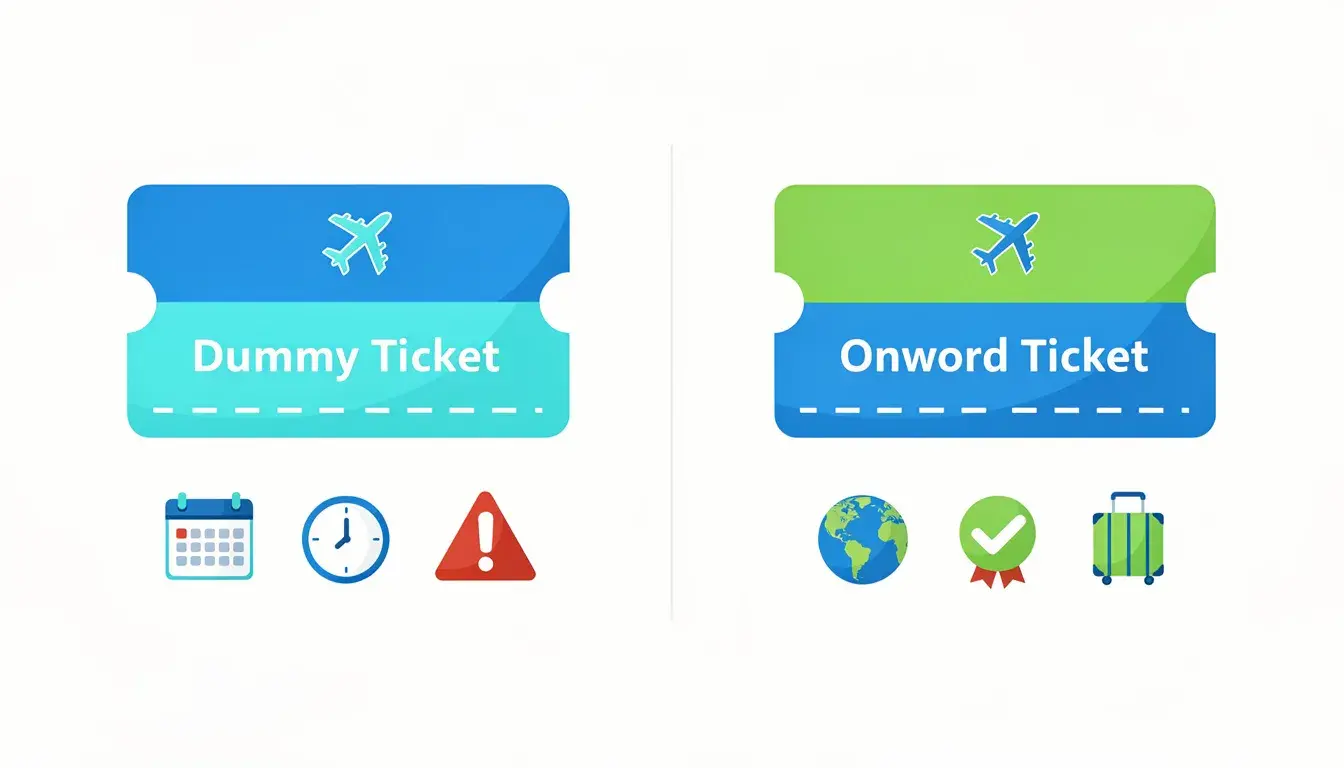
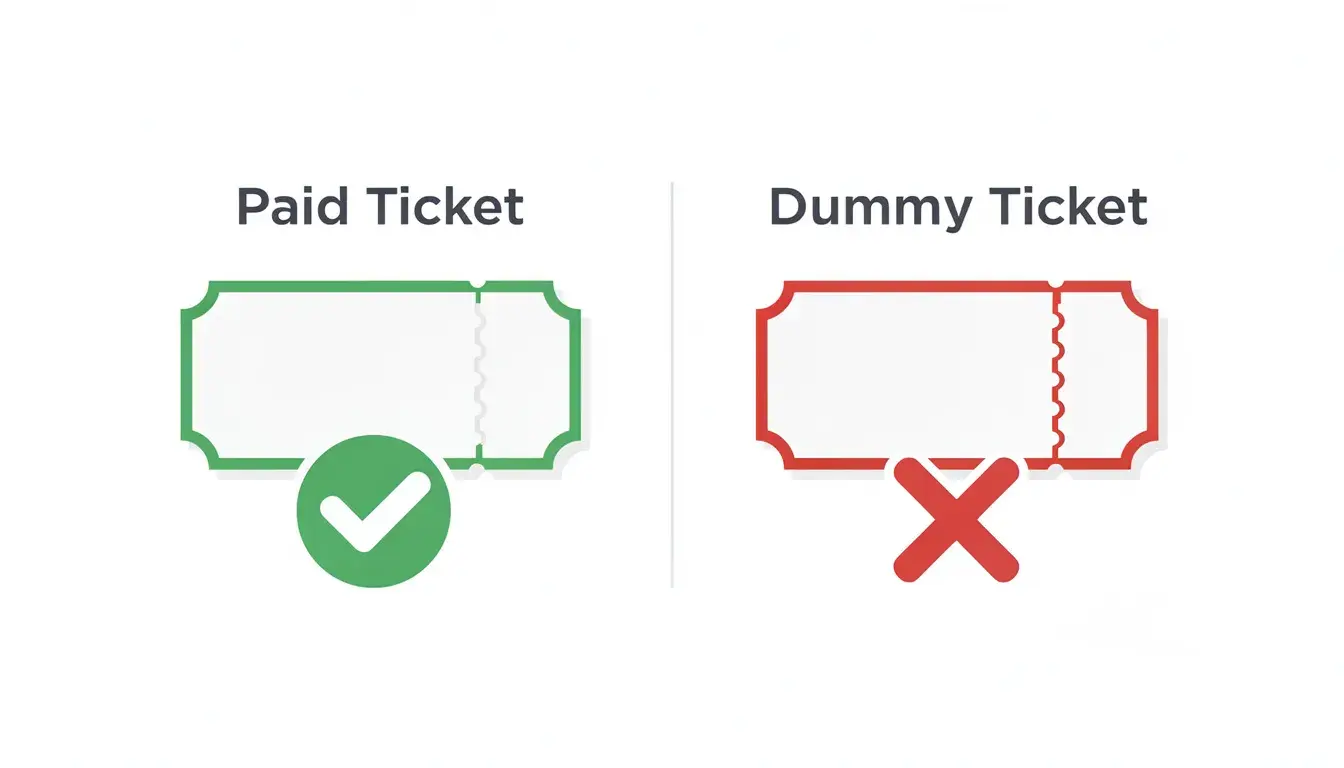
A dummy ticket used as temporary reservation evidence can support planning or an application when that document type is permitted. It cannot replace an issued ticket when an airline, authority or checklist specifically requires paid travel.
Useful fields include:
- Passenger name matching the passport-level identity.
- Departure city and airport in Chile.
- Next destination and complete flight segments.
- Local departure date and time.
- Carrier and flight number.
- Booking reference and clear reservation or ticket status.
What the Document Proves and Does Not Prove
| Evidence | What It Can Show | What It Does Not Guarantee |
|---|---|---|
| Temporary flight reservation | Named passenger, route, dates and a reservation record while active | Ticket issuance, continued validity, boarding or entry |
| Issued return or onward ticket | Ticketed air travel on the listed segments, subject to fare and carrier conditions | Admission to Chile or the next country |
| International bus booking | A planned land departure on the stated route | Acceptance by every airline or an open border crossing |
Use the evidence that answers the actual request. More paper is not automatically stronger; accurate status and a coherent route are stronger.
Choosing a Realistic Exit Route From Chile

Chile’s geography creates several plausible exits: a regional flight, a long-haul return, or an overland border crossing. Pick the route that matches the journey rather than the cheapest line on a search screen.
Regional Flight to a Neighboring Country
Flights from Santiago to Buenos Aires, Lima or another regional hub can fit a longer South America itinerary. The key questions are whether the traveler genuinely intends to take the route and can enter or transit the destination.
A multi-country plan should connect logically. For example, Delhi–Santiago, Santiago–Lima and Lima–Delhi describes a complete sequence. Keep the confirmation for each stage rather than expecting the first onward reservation to explain the whole trip.
Weather and seasonal demand can affect availability. The final itinerary should leave enough time to recover from ordinary disruptions without crossing the authorized-stay limit.
Return Ticket for a Short Visit
A return ticket can be the clearest option when the end date is known. It puts arrival and departure in one itinerary and avoids a separate explanation of the next destination.
The return airport can differ from the arrival airport if the route makes sense. A traveler may land in Santiago, travel north and depart from another city. Keep the internal transport or route explanation available when it helps connect those points.
Do not buy a non-refundable long-haul fare only to make a file look stronger unless the responsible instructions call for paid travel and the risk is acceptable.
International Bus or Land Exit
Chile shares land borders with Argentina, Peru and Bolivia. A genuine bus booking may document an overland plan, but it requires more route checks than a simple flight.
Confirm the named border crossing, operating schedule, seasonal conditions and entry rights for the neighboring country. Mountain passes can close, and transport can be rescheduled. Leave a practical buffer rather than choosing the final authorized day.
Ask the operating airline whether it will accept land-exit evidence for its boarding assessment. Do not assume that every counter can validate a bus document through the same tools used for flights.
When the Exit Route Supports a Visa File
A Chilean consular post may ask a visa applicant for a round-trip ticket copy or other travel evidence. The responsible checklist controls. A requirement published by one post for its applicants should not be projected onto every nationality or every arrival.
Use visa flight itinerary requirements guide to compare the proposed route, dates and document status. Check Chile’s entry instructions for your passport and journey before relying on the exit evidence.
How to Choose a Chile Exit Date Without Creating a Mismatch
The safest date is not simply “before day 90.” It is a truthful date inside the period expected and authorized for the actual trip, with enough margin for realistic disruptions.
Count From the Chilean Arrival Date
Use the date the traveler enters Chile, not the date the origin flight departed. An overnight flight from India may leave on 3 March and reach Santiago on 4 March; the Chilean arrival date is the relevant reference point.
Check the admission record after entry. The passport’s nationality, visa or prior authorization and passport expiry can affect the permission. Do not treat a blog’s date calculator as the legal record.
A late-night departure belongs to the calendar date printed on the itinerary. A flight at 00:30 on Tuesday is a Tuesday departure even if the traveler reaches the airport on Monday evening.
Match the Exit to the Stated Trip
A 20-day tourism plan usually reads more clearly with accommodation and departure evidence around that period than with an unexplained three-month gap. Longer trips can be legitimate; they simply need enough funds, lodging logic and purpose to support the duration where those points are examined.
| Trip Pattern | Lower-Friction Evidence | Potential Question |
|---|---|---|
| Two-week Santiago and Valparaíso visit | Return or onward date near the stated two weeks | Why does the exit occur much later than the accommodation? |
| Six-week Chile and Peru itinerary | Santiago-to-Lima segment followed by later homeward travel | Can the traveler enter Peru and explain the remaining route? |
| Overland exit to Argentina | Named bus, date and operating border crossing | Will the airline accept land evidence, and is the pass operating? |
Update Every Dependent Document
If the arrival date changes, review the exit, accommodation and insurance dates together. If the destination changes, confirm entry permission for the replacement country. A corrected flight document alone does not repair contradictions elsewhere.
For visa-file use, the dummy ticket for visa framework can help distinguish temporary evidence from final paid travel. Never reuse an expired or unrelated reservation simply because the PDF still looks complete.
What to Do When an Agent Questions the Chile Exit Plan
Even a well-prepared traveler can meet a manual review. The goal is to identify the unresolved point quickly, not to overwhelm the agent with every document in the folder.
Keep the Core Evidence Ready
Store the following together:
- Passport and visa or prior authorization where applicable.
- Inbound itinerary to Chile.
- Current return, onward-flight or land-exit document.
- First accommodation details.
- Funds or supporting evidence relevant to the trip.
Keep an offline PDF and a printed copy. A paper backup is especially useful when roaming has not activated or the airline app displays only the inbound segment.
Ask Which Detail Needs Resolution
Use short answers: “I leave Santiago for Lima on 20 May; here is the current confirmation.” If staff remain uncertain, ask whether the issue is the route, date, next-country permission, reservation status or e-ticket number.
Offer the issuer’s stated verification method without claiming that every airline website will display the record. A supervisor or document desk may have access to information the public interface does not show.
Stay calm and truthful. Do not invent a hotel, change the stated purpose or edit the file at the counter. If the required evidence is unavailable, ask about lawful options and request any refusal or rebooking decision in writing where possible.
When the Plan Changes After Arrival
Travelers can change plans, but they must still comply with the authorized stay and the next destination’s rules. Replace stale evidence with the current route and keep notices explaining airline schedule changes.
If more time in Chile is needed, consult the current SERMIG extension process before the existing permission expires. Eligibility, timing, fees and required evidence belong to that official process, not to the original onward reservation.
A new booking does not extend immigration status by itself. Likewise, an approved extension does not automatically change an airline ticket. Treat immigration permission and transport arrangements as separate tasks.
Chile Onward-Ticket Checklist Before Departure
Run this check after every route or schedule change:
- The passport name and document number are accurate where shown.
- The traveler has the correct Chilean visa or prior authorization, if required.
- The departure date fits the intended and authorized stay.
- The exit city follows the real Chile itinerary.
- The next destination is legally accessible to the traveler.
- The reservation or ticket status is described honestly.
- The booking reference, carrier and flight details are readable.
- Land-exit evidence identifies the operator and border route.
- Offline and printed copies are available.
- The operating airline’s current document guidance has been rechecked.
Chile’s up-to-90-day framework is only one part of the analysis. Nationality, visa status, passport validity, airline controls, transit points and the next country all affect what the traveler should carry.
The strongest onward evidence is not the document with the most decoration. It is the one that truthfully connects the traveler, authorized period, route and next destination.
Need temporary Chile flight-reservation evidence? Build it around the real passenger, intended dates and onward route, then confirm that a reservation is suitable for the specific review.
Frequently Asked Questions
Do I need an onward ticket to enter Chile?
Not every traveler is asked for one identical document. The answer depends on nationality, visa or prior-authorization status, route and the checks applied by the airline and Chilean authority. If departure evidence is requested, it should show a truthful exit inside the permitted stay and a next destination the traveler can legally enter or transit.
Can every tourist stay in Chile for 90 days?
No automatic 90-day stay should be assumed. Chile’s Permanencia Transitoria framework can authorize up to 90 days, but the actual period can depend on the permission granted, passport validity and the traveler’s circumstances. Use the official admission record and applicable nationality guidance.
Does a Chile visa application require a return ticket?
Follow the checklist issued by the Chilean consular post responsible for the application. Some official post-specific guidance asks for a copy of a round-trip ticket, but that does not establish one universal requirement for every nationality or every Chilean border arrival.
Can a bus ticket count as onward proof from Chile?
A genuine international bus booking may support an overland exit when it matches the route and the reviewing airline or authority accepts it. Confirm the operator, border crossing, schedule and next-country entry rights. Do not assume that every airline will assess bus evidence like an issued flight ticket.
Is a temporary reservation the same as an issued ticket?
No. A temporary reservation can show the passenger, route, dates and booking reference while active, but it may not have an issued e-ticket number or remain valid until travel. Use it only where reservation evidence is permitted and obtain an issued ticket when specifically required.
What should Chile onward proof show?
It should clearly show the passenger name, departure city, next destination, local departure date and time, carrier or transport provider, and a usable reference or status. The details should agree with the passport, intended stay, accommodation, purpose and next-country plan.
Friendly reminder: DummyFlights provides temporary travel-proof documents for planning and application support. Requirements vary by destination, airline, route and applicant situation. A dummy ticket can support a file, but it does not guarantee approval, boarding or entry.