
Short answer: If entry approval controls when you can travel, prepare a truthful onward ticket that shows where and when you will leave, then keep it consistent with your visa, permitted stay and actual route. Verify the PNR while active and check the destination’s current rules before check-in. An onward reservation supports travel planning; it cannot guarantee approval, boarding or entry.
Key facts
- An onward ticket answers the exit-plan question; it is not a substitute for entry approval, a visa or proof of funds.
- Airline and border checks may occur before immigration, so keep the route, dates and passenger name retrievable.
- Visa-free, visa-on-arrival and visa-required trips can have different proof requirements.
- Bus, rail or cruise plans may be accepted only when the relevant authority or carrier permits that form of proof.
Need an onward ticket before entry approval? Use a realistic exit route and passport-matching details, then confirm the reservation can be checked during your travel window.
Create your onward ticketIn This Guide
- Why Immigration Officers Ask For An Onward Ticket Before They Ask For Anything Else
- Which Countries Actually Enforce Proof Of Onward Travel In 2026
- How Visa Waiver Programs And Visa On Arrival Rules Change What You Need
- Choosing Between A Real Airline Ticket And A Temporary Flight Reservation
- What Happens At The Airline Check-In Counter Before You Ever Reach Immigration
- Matching Your Onward Ticket To Your Actual Travel Plans
- Multi-Country Trips And The Onward Ticket Confusion They Create
- What To Do If You Are Questioned Or Refused Entry Over Your Exit Plan
- Getting Your Onward Ticket Right Before You Ever Reach The Airport
- Your Exit Plan Is The Easiest Part Of This Trip To Get Right
Official-source check: Confirm the current onward-travel, transit and entry instructions with the destination’s embassy, immigration authority or visa centre, and check the airline’s own document requirements before departure. For passport, visa and entry-rule cross-checking, consult the IATA Travel Centre. Rules and reservation status can change.
Reviewed for: onward-ticket timing, entry-approval dependencies, airline counter checks, PNR verification, multi-country routes and claim-safe travel-proof guidance.
Border agents rarely ask why you are visiting. They ask when you are leaving. That single question decides whether your visa application clears the counter or gets sent back for more paperwork.
An onward ticket proves you do not intend to overstay a country's welcome. It shows an officer that your visit has a start and an end, matching your visa's permitted stay and the travel dates you declared.
This guide breaks down which countries actually check onward tickets, how visa waiver and visa on arrival rules change what counts as proof, and what an airline agent looks for before you ever reach immigration. When you need a compliant dummy ticket booking fast, a verifiable reservation can be in your inbox before your next check-in deadline.
Why Immigration Officers Ask For An Onward Ticket Before They Ask For Anything Else
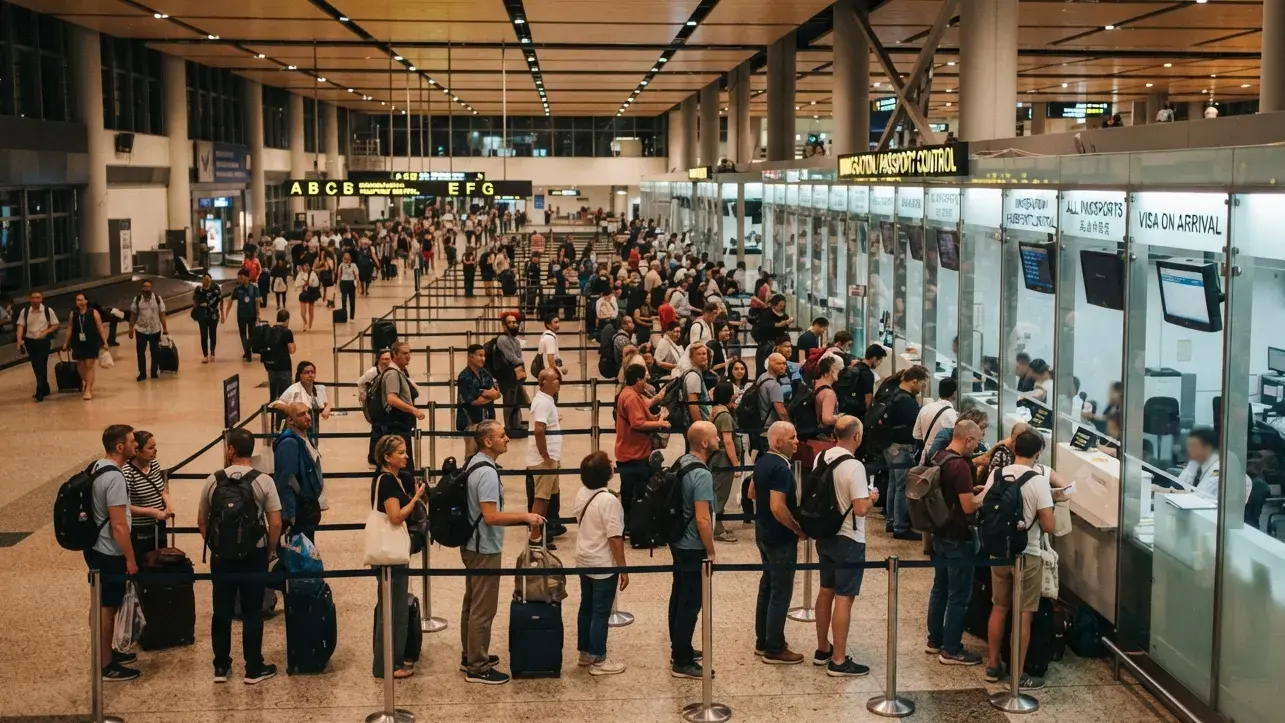
Ask any frequent traveler what trips up first-timers at the border, and they will mention the same moment. An officer scans your passport, looks up, and asks where you are flying next. Your answer, and the paperwork behind it, matters more than almost anything else in that conversation.
What Officers Are Really Checking When They Ask Where You Are Flying Next
Immigration officers are not curious about your itinerary for small talk. They are verifying that you have an exit plan tied to an actual departure date. Proof of onward travel is a legal requirement for entry in many countries, and officers treat it as a checkbox they cannot skip.
The logic is simple. A visa or visa-free entry grants a temporary, permitted stay. Without a ticket showing when you leave, an officer has no way to confirm you plan to respect that window. Immigration officers may refuse entry if you do not have an onward ticket, even when every other document in your file looks perfect.
This is why border entry checks often happen fast when your paperwork is clean. An officer glances at your onward ticket, confirms the passenger details match your passport, and moves you along. The traveler standing behind you without one may spend twenty extra minutes explaining their plans.
The Difference Between A Suspicious Traveler And A Prepared One
Two travelers can enter the same destination country with identical intentions, yet get very different receptions. The difference usually comes down to one document.
A traveler with a valid onward ticket signals a few things at once:
-
A confirmed exit date that fits the permitted stay
-
A travel plan that matches the visa category used
-
Enough intent and preparation to avoid raising red flags
A traveler without one raises questions the officer has to resolve manually. Are they planning to work illegally? Do they intend to overstay? Will they need to be tracked down later? None of these questions are personal. They are procedural, and an onward ticket answers all three before they are even asked.
Entry approval is not only about your visa stamp or your visa-free entry eligibility. It is about presenting a complete, verifiable travel plan at the exact moment someone is deciding whether to let you in.
More than 50 countries require proof of onward travel in 2026, and that number has only grown as border systems get stricter about tracking exits.
Some travelers assume a return ticket automatically satisfies this requirement. It usually does, but a return ticket is not the only accepted format. A one-way ticket paired with a separate onward flight to a third country can work just as well, provided the dates and destination rules line up.
What matters most is that the ticket is verifiable. An officer or airline agent can look up a real reservation, confirm it exists, and see that it corresponds to you. This is where many travelers get tripped up.
They assume any printed itinerary counts as an onward ticket, when in fact only a live booking with a checkable code satisfies the requirement.
Airlines check onward travel proof at check-in and boarding, which means the pressure to have this ready starts well before you reach immigration. If your outbound flight's airline agent will not let you board without seeing a return or onward ticket, the immigration officer at your destination becomes almost a secondary hurdle.
You have already cleared the first one at your departure airport.
Understanding this two-step gauntlet, airline check-in first, immigration second, is the foundation for everything else in this guide. Once you know what each checkpoint is actually verifying, you can prepare a single document that satisfies both instead of scrambling at the last minute.
How This Requirement Connects To Your Broader Visa Applications
If your checklist asks for a formal flight reservation for visa, treat that as a separate document requirement and keep its dates aligned with the onward plan.
Many travelers treat their onward ticket as a separate, later step, something to sort out only once their visa applications are approved. In practice, the two are often linked from the very beginning.
Visa applications frequently list proof of onward travel as one of several supporting documents required alongside your passport, photos, and financial statements. Consular officers reviewing these applications want to see the same exit plan an immigration officer will check later at the border.
Presenting a valid onward ticket at the application stage tends to speed up visa approval, since it removes one more area where the officer might otherwise ask for clarification.
This matters most for destinations where visa approval hinges on demonstrating limited intent to stay. An application missing onward ticket details can be delayed or sent back for additional documentation, adding weeks to a process that otherwise might have been straightforward.
Passport validity plays a related role here. Most destination countries require your passport to remain valid for a set period beyond your onward ticket's departure date, often six months. An onward ticket dated close to your passport's expiration can trigger extra scrutiny even when the ticket itself is otherwise perfectly valid.
Entry permission, in many systems, is really a chain of smaller approvals: a valid passport, a completed visa application, and a verifiable onward ticket, reviewed together rather than in isolation.
Travelers who prepare all three at once, rather than treating the onward ticket as an afterthought, tend to move through both the visa application process and the eventual border crossing with far fewer complications.
Some embassies explicitly request an onward ticket as a PDF upload during the online visa application, rather than asking you to bring it to an in-person interview later. In these cases, a temporary flight reservation booked days before your application deadline can satisfy the requirement without forcing you to commit to travel dates you have not finalized yet.
Keep a simple sequence in mind. Confirm your passport validity first. Gather the supporting documents your specific visa applications require. Then attach or present a verifiable onward ticket that matches the travel dates on every other form in your file.
Skipping this order, especially rushing the onward ticket step, is one of the more common reasons applications get sent back for revision.
Which Countries Actually Enforce Proof Of Onward Travel In 2026
Not every destination treats this requirement the same way. Some border agents barely glance at your ticket. Others will not let you through the gate without one.
Tourism-Heavy Nations That Rarely Skip This Check
Countries that depend heavily on tourism revenue tend to enforce onward travel rules with unusual consistency. It protects their immigration system from long-term overstays while still welcoming short-term visitors in large numbers.
Travelers heading to popular Southeast Asia destinations often report the strictest scrutiny at check-in counters rather than at the immigration desk itself. Airlines flying into these countries know they face fines if a passenger is denied entry on arrival, so they screen documentation before departure rather than leaving it to chance.
This pattern shows up across a wide range of destinations, not just one region. The common thread is tourism dependency paired with limited capacity to manage undocumented long-term stays.
Why The Philippines Has Earned A Reputation For Strict Enforcement
Among countries that require proof of onward travel, the Philippines is frequently mentioned as one of the strictest. Immigration officers there routinely ask to see a confirmed onward or return ticket, and airline check-in counters reinforce the same requirement before boarding.
Travelers arriving without a real airline ticket showing their exit date have reported being questioned extensively, sometimes to the point of missing connecting flights while the situation gets resolved. This is not meant to discourage travel there. It simply means arriving prepared avoids a stressful and avoidable delay.
The lesson generalizes well beyond one destination. Any country known for strict enforcement rewards travelers who show up with a real airline ticket or a verifiable temporary flight reservation instead of a screenshot or a placeholder itinerary.
Costa Rica And Colombia's Consistent Onward Travel Checks
Latin America offers another useful case study. Costa Rica and Colombia enforce onward travel checks consistently, and both countries have built this requirement into their standard immigration process rather than treating it as an occasional spot check.
In Costa Rica specifically, immigration officers commonly ask departing travelers to show either a confirmed flight ticket, a bus ticket, or another form of exit proof, particularly for those entering under a tourist visa or visa waiver arrangement. Overland travel plans are sometimes accepted here, which is worth knowing if you are planning a multi-country trip through Central America.
Colombia applies a similar standard, especially for travelers arriving on a one-way ticket without a clearly documented return flight. Immigration officers may ask directly about your onward journey, and a vague answer without paperwork to back it up can slow down your arrival significantly.
Both examples reinforce a broader pattern. Countries with high seasonal tourist volume, active immigration enforcement, and a stated interest in preventing undocumented long-term stays are the ones most likely to check your onward ticket carefully.
If your travel plans include any of these destinations, treat proof of onward travel as a non-negotiable part of your packing list, not an afterthought.
Different countries and visa types have varied requirements for onward tickets, which is exactly why blanket assumptions get travelers into trouble. What worked on your last trip to one destination country may not satisfy the entry rules of the next one on your itinerary.
How Schengen Countries Compare To Tourism Heavy Destinations
Europe's Schengen area operates under its own visa framework, and it is worth understanding how its onward ticket expectations differ from the tourism-heavy destinations already covered.
A Schengen visa application typically requires proof of onward travel as part of the initial paperwork, well before you ever board a flight. Consulates processing a Schengen visa often ask for a round-trip ticket or a clearly dated onward flight showing you will leave the Schengen area before your visa expires.
This differs from countries like the Philippines or Costa Rica, where the check happens primarily at the airport rather than during a visa application months in advance.
Travelers holding a valid Schengen visa may still be asked to show their original travel plans again at the border, particularly if their onward ticket has changed since the application was approved.
Schengen countries share this requirement across the entire zone, so a mismatch discovered in one member country can affect your ability to continue through others on the same trip.
This is one reason temporary reservations with flexible date changes work particularly well for Schengen travel. If your visa application used one onward date and your actual plans shift slightly, updating your reservation keeps your documentation consistent without needing to alter your approved visa itself.
Compare this to a purely tourism-dependent destination outside Europe, where the onward ticket requirement often exists specifically to prevent overstays in a country with fewer resources to track down travelers who never leave. The Schengen area's requirement serves a similar purpose but is embedded earlier in the process, at the visa application stage, rather than concentrated at arrival.
Understanding this distinction helps you know when to prepare your onward ticket. For Schengen and similar visa-required destinations, have it ready before you even submit your application. For visa-free or visa-on-arrival destinations, the ticket becomes most critical right at check-in and arrival instead.
Regardless of which category your destination falls into, the underlying expectation stays the same. An officer, whether reviewing a Schengen visa application from behind a desk or checking your documents at an arrival gate, wants confirmation that your stay has a defined end date matching what you declared.
Travelers combining a Schengen trip with stops in other regions sometimes assume their approved visa alone is enough to satisfy every subsequent border check. It rarely is.
Each new entry point, including a stop outside the Schengen area on the same overall trip, may still ask for its own current, verifiable onward ticket, independent of the visa that got you into Europe in the first place.
How Visa Waiver Programs And Visa On Arrival Rules Change What You Need

Visa-free entry feels like a green light to travel without extra paperwork. In reality, it often shifts the burden from visa applications to onward ticket verification instead.
Entering Visa-Free Doesn't Mean Entering Ticket-Free
A visa waiver program removes the need to apply for a visa in advance, but it rarely removes the onward ticket requirement. Entering a country visa-free still typically requires proof that you plan to leave before your permitted stay expires.
This distinction confuses a lot of travelers. They assume visa-free entry means fewer questions overall. Instead, immigration officers often ask more pointed questions specifically because there is no prior visa application on file to reference. Your onward ticket becomes one of the only documents confirming your intended exit date.
Travelers using a visa waiver program should treat their onward ticket with the same seriousness as a full visa application. The absence of a formal visa does not mean the absence of scrutiny.
What Visa On Arrival Countries Expect At The Counter
Entering a country with a visa-on-arrival may require proof of onward travel, and this is one of the most commonly overlooked requirements among first-time travelers. The visa on arrival process already involves a counter, a form, and sometimes a fee, so travelers assume the onward ticket step gets absorbed into that process automatically.
It does not. Immigration officers processing visa on arrival applications frequently ask for the same onward ticket documentation as travelers using a pre-approved visa. Skipping this step can mean standing at the counter longer than expected, or in stricter destinations, being asked to purchase a ticket on the spot before entry is granted.
Border agents may request proof of sufficient funds alongside an onward ticket in visa-on-arrival situations specifically, since the officer is making an on-the-spot judgment call without the benefit of a prior visa review. Having both documents ready removes any ambiguity from that decision.
Transit Visas And The Onward Proof They Still Demand
Travelers passing through a transit country often assume the rules are lighter since they are not staying long. This assumption causes more missed connections than almost any other misunderstanding covered in this guide.
A transit visa frequently requires the same onward route documentation as a full entry visa. Immigration officers in the transit country want to see that you have a confirmed onward journey to your final destination, not just a vague plan to keep moving.
This matters most when your itinerary includes a layover long enough to require leaving the airport, or when you are connecting between separate tickets rather than one continuous booking. In both cases, the transit country's immigration desk may ask for your onward flight details before allowing you into the terminal at all.
Some travelers try to save money by booking budget routes through a third country with a longer layover. This can work well, but only if every leg of that journey, including the onward route out of the transit country, is documented and verifiable. A gap in that chain is exactly what triggers extra questioning.
What Tourist Visas Expect During The Application Itself
For a broader visa-file framework, compare your exit-proof plan with the dummy ticket for visa 2026 complete guide and then confirm the destination’s current checklist.
Tourist visas, whether applied for online or through an embassy appointment, frequently require the same onward ticket documentation covered throughout this guide, just requested at a different stage of the process.
Many tourist visas ask applicants to submit a flight itinerary alongside their application, showing both an entry and an eventual departure date. This is different from a booking confirmation for a hotel or a real airline ticket you have already paid for.
Consulates generally accept a temporary or provisional flight itinerary at this stage, since the goal is to confirm your intended travel window, not to lock you into a specific paid fare months in advance.
Visa approval for tourist visas often depends on this itinerary lining up with the rest of your application, including your stated purpose of travel and your financial documentation. A flight itinerary showing a stay far longer than what your tourist visa category allows can raise questions, even if every other part of your application looks complete.
Booking confirmation for accommodation sometimes needs to be submitted alongside your flight itinerary as well, particularly for tourist visas requiring a detailed day-by-day travel plan. While this guide focuses on flight-related onward proof, it is worth remembering that some tourist visas ask for both pieces of documentation together, reviewed as a single, coherent travel plan.
One-way travelers applying for a tourist visa sometimes face additional questions, since a one-way flight alone does not show an exit plan the way a round trip or separate onward ticket does.
Pairing a one-way ticket with a verifiable onward flight to your next destination, or a return ticket if your trip loops back home, keeps your tourist visa application consistent from start to finish.
Embassies rarely explain exactly why an application was delayed, which makes getting this documentation right the first time especially valuable.
A tourist visa application with a complete, consistent flight itinerary and matching travel plans tends to move through review noticeably faster than one missing this detail, and it also gives you one less thing to worry about once travel day actually arrives.
It also helps to remember that a tourist visa approval is not the final checkpoint.
The same flight itinerary submitted during your application may be checked again, whether at your departure airport or on arrival, so keeping that document consistent from the application stage all the way through your actual trip avoids any confusion between what you declared and what you eventually present.
Choosing Between A Real Airline Ticket And A Temporary Flight Reservation
Once you understand which destinations enforce onward travel checks, the next decision is practical. Do you book a real airline ticket, or use a temporary flight reservation designed specifically for this purpose?
What A Verifiable PNR Actually Proves To An Airline
A real reservation with a verifiable PNR is required for most border checks, and this single detail explains why screenshots and mockups never hold up under scrutiny. A PNR, or passenger name record, is the code an airline or immigration officer can look up to confirm a booking genuinely exists.
Airlines require a live booking code for proof of onward travel, which means the ticket has to be checkable in real time, not just printed to look convincing. This is the core difference between a legitimate onward ticket and something that will not survive a five-second verification at the counter.
Temporary reservation services provide legal transport documentation built around exactly this requirement. Some travelers use temporary flight reservation services for onward tickets specifically because these services generate a real, verifiable PNR without requiring the traveler to pay for a full fare they will never use.
A dummy ticket is a temporary flight reservation that costs around $14 and is valid for 48 hours, which is typically enough time to clear both the airline check-in counter and the destination country's immigration desk. This window matters. It gives you enough coverage for the actual moments your documentation gets checked, without paying for a ticket meant to last months.
When A Confirmed Flight Reservation Makes More Sense Than A Round Trip Ticket
A confirmed flight reservation is the most accepted proof type across the widest range of destinations, and it often makes more sense than committing to a full round-trip ticket, especially for travelers with flexible or undecided return plans.
Both round-trip and onward flight tickets can meet proof of onward travel requirements, so the choice usually comes down to your actual travel plans rather than any strict rule favoring one format. If you already know your exact return date, a round-trip ticket may be simpler.
If your plans are still developing, a temporary onward ticket avoids locking you into a date you might need to change later.
Free date changes within the same day of booking on a temporary reservation solve a real problem here. Plans shift. Visa processing times run long. A flight gets delayed and reshuffles your itinerary. Being able to adjust your onward ticket's date without penalty keeps your documentation accurate without forcing you to rebook from scratch every time something changes.
The Financial Risk Of Booking A Ticket You Will Never Use
Using cheap throwaway tickets can pose risks depending on destination policies, and this is one of the more expensive mistakes travelers make when trying to satisfy an onward ticket requirement on a budget.
A throwaway ticket, one you book with no intention of using, might get flagged if an airline or immigration system cross-references your travel history and notices a pattern of no-shows. Beyond that risk, you are simply paying full fare for something you will discard, which defeats the purpose of finding an efficient solution.
Travelers can avoid large expenses by purchasing refundable onward tickets when necessary, but refundable fares carry their own premium and administrative friction if you need to cancel.
For most short term needs, whether it is a single visa application or a quick border crossing, a temporary reservation built specifically for this purpose avoids both the throwaway risk and the refundable ticket markup.
Transparent pricing matters here too. A dummy ticket booking that costs around $15 (roughly ₹1,300) with a PNR and PDF delivered instantly gives you a checkable, disposable, and inexpensive way to meet the requirement without the financial exposure of a real fare.
Why Real Flight Reservations Still Matter for One-Way Travelers
One-way travelers, meaning those who buy a single-leg flight without a return booked, face a particular version of the onward ticket challenge. Airlines and immigration officers alike tend to view a one-way ticket as incomplete evidence of an exit plan unless it is paired with a separate, verifiable onward flight reservation.
A real flight reservation showing your next leg, whether that is a flight home or a flight into a third country, closes this gap. It does not need to be part of the same booking as your one-way ticket. What matters is that it exists, is checkable, and shows a departure date consistent with your permitted stay.
This distinction matters most for travelers building longer, more flexible itineraries rather than a simple round trip. A traveler moving through several countries over a few months, for example, may buy each flight separately as their plans firm up.
Each one-way leg on that journey benefits from being paired with proof of the next one, satisfying the onward ticket requirement at every border crossing along the way.
Flight itinerary consistency across these separate bookings also matters. If your travel plans change and you update one leg of your trip, it is worth checking whether that change affects the onward ticket you presented at your most recent border crossing, particularly if you have not yet left that country.
A temporary flight reservation fits naturally into this pattern. Rather than committing to a full fare for a flight they may never take, one-way travelers can generate a verifiable onward ticket for each leg of their trip, adjusting the date if plans shift, without paying for a ticket that is only ever meant to satisfy a documentation requirement.
Frequent travelers who move through several destinations in a single trip often settle into this same rhythm without thinking much about it. Book the next leg's onward proof shortly before it is needed, confirm it matches the destination's rules, and move on to planning the parts of the trip that are actually enjoyable.
What Happens At The Airline Check-In Counter Before You Ever Reach Immigration
Long before an immigration officer ever looks at your passport, an airline check-in agent is already deciding whether to let you board in the first place.
Why Airline Check-In Staff Are The First Line Of Document Screening
Airlines check onward travel proof at check-in and boarding because the financial liability for letting an undocumented passenger fly falls on them, not on the destination country. This makes the airline check-in counter, not the immigration desk, the first real test of your paperwork.
Airline agents are trained to check destination rules for the country you are flying into. If that country requires proof of onward travel and you cannot produce it, the agent has the authority to deny boarding entirely, regardless of how valid your visa or visa-free entry status might otherwise be.
This surprises a lot of travelers who assume the onward ticket requirement only applies once they land. In practice, the airline check-in counter enforces it just as strictly, sometimes more so, since the airline has every incentive to avoid a costly mistake.
The $5,000 Reason Airlines Don't Take Chances On Undocumented Passengers
Airlines can face fines up to $5,000 for transporting undocumented passengers, and this single financial detail explains almost every strict check-in policy you will encounter. When a destination country denies entry to a passenger who arrived without proper documentation, the airline that flew them there is frequently the one who pays the penalty and covers the return flight.
Given this exposure, airline agents have every reason to be cautious rather than lenient. A confirmed flight reservation showing your onward journey removes any ambiguity from their decision. Without it, the agent is left weighing a judgment call against a real financial risk to their employer.
This is also why airline check-in agents rarely make exceptions based on your explanation alone. Telling an agent you plan to book your onward flight later, or that you will sort it out on arrival, does not remove their liability. Only a verifiable reservation does.
Some agents may offer to sell you a one-way ticket to a nearby destination on the spot if you arrive without one, purely to clear their own liability.
This tends to cost considerably more than arranging a temporary reservation in advance, and it leaves you scrambling to book something under time pressure rather than reviewing your options calmly and on your own terms.
Boarding Pass Issues That Trace Back To A Missing Onward Ticket
Some of the most stressful travel stories shared by frequent travelers involve being denied a boarding pass entirely, not because of a visa issue, but because of a missing onward ticket. This tends to happen most often on one-way ticket bookings into destinations with strict entry rules.
Once an airline agent flags a missing onward ticket, resolving it at the departure airport counter is far harder than resolving it in advance. You are working against a clock, often without reliable internet access, and sometimes without a clear sense of which destination-specific rule you are even trying to satisfy.
Preparing your onward ticket well before you arrive at the departure city avoids this entirely. A verifiable flight reservation booked and confirmed days in advance means your check-in experience becomes routine rather than a last-minute negotiation with an agent who has little flexibility to offer.
It also helps to know that agents rarely have discretion to override this rule, even when they sympathize with your situation. The policy exists at the airline level, tied directly to the fines they risk, so an agent's hands are often more tied than travelers expect.
Arriving with a confirmed onward ticket removes the need for that conversation entirely, letting your departure city check-in go exactly as smoothly as it should.
How Airline Check-In Systems Verify Your Actual Flights
Airline check-in systems today are more sophisticated than many travelers assume. Rather than relying on an agent's visual inspection alone, airlines increasingly cross-reference onward ticket documentation directly through systems tied to destination country requirements.
This means a printed itinerary that looks convincing but does not correspond to actual flights in an airline's reservation system will often fail this check before an agent even reviews it manually. Onward travel documentation needs to exist as a real, bookable reservation, not a document formatted to resemble one.
Departure airport staff handling international check-in are trained to recognize the difference between a confirmed reservation and something that will not hold up if verified. This is part of why a legitimate temporary flight reservation, generated through an established booking channel, tends to clear check-in smoothly, while a fabricated document does not.
Boarding pass issuance typically happens only after this documentation check clears, which is why problems at this stage can cascade quickly. A flagged onward ticket can delay your boarding pass long enough to risk missing your flight entirely, even if the underlying issue is resolved just a few minutes later.
Airline check counters at busier international departure airports handle a high volume of these checks daily, particularly on routes into destinations known for strict enforcement.
Agents at these counters have seen every version of an improvised onward ticket, which is exactly why a genuine, verifiable reservation remains the most reliable way through, and why arriving with one already sorted tends to make the entire check-in process feel almost routine.
A quiet benefit of this preparation is speed. Travelers who present a clean, verifiable onward ticket at check-in are typically processed just as fast as those with no special requirements at all, since the agent has nothing left to question.
Matching Your Onward Ticket To Your Actual Travel Plans
Having any onward ticket is not enough. It needs to actually match the trip you are taking, down to the details that officers and airline agents check most closely.
Why Passenger Details And Names Must Line Up Exactly
Onward tickets must match the traveler's name and itinerary, and this is one of the simplest requirements to satisfy yet one of the most common places travelers make careless mistakes. A misspelled name, a missing middle name matching your passport, or a mismatched departure date can turn an otherwise perfect onward ticket into a rejected one.
Passenger details on your onward ticket should mirror your passport exactly. This includes the spelling of your name, your date of birth if requested, and the departure city and arrival city that match your actual travel plans. Immigration officers and airline agents cross-reference these details quickly, and any discrepancy raises unnecessary questions.
If you are booking a temporary flight reservation through a service, double-check the final PDF before your trip. Small errors are easy to catch at this stage and far harder to fix once you are standing at a check-in counter.
This is also worth checking against your visa or entry stamp if you already have one. A traveler whose visa lists a slightly different spelling of their name than their onward ticket can end up explaining a discrepancy that a five-minute review would have caught earlier.
Setting A Departure Date That Fits Your Permitted Stay
Your onward ticket's departure date needs to fall within your permitted stay, not after it. This sounds obvious, yet it is a frequent source of confusion for travelers juggling multiple visa types or entry rules across a multi-country trip.
If your visa or visa-free entry allows a 30-day stay, your onward ticket should show a departure date within that window, not on day 31. Immigration officers specifically check this alignment, since an onward ticket dated after your permitted stay expires does not actually prove you will leave on time.
This is another area where a temporary reservation with flexible date changes has an advantage. If your travel dates shift and your original onward ticket no longer fits your permitted stay, adjusting it before you travel is far simpler than trying to explain a mismatch at the border.
When A Bus Ticket Or Overland Route Counts As Onward Proof
Some countries accept overland travel tickets as proof of onward travel, others require flights, and knowing which category your destination falls into can save you money and hassle. A bus ticket crossing into a neighboring country is sometimes perfectly acceptable proof of onward travel, particularly in regions with well-established overland travel corridors.
This is common across parts of Central America, where Costa Rica and similar destinations often accept a bus ticket into a neighboring country as valid exit proof, especially for travelers on a tourist visa. It is far less common in island nations or destinations without practical overland exit options, where a flight ticket is typically the only accepted format.
Before assuming a bus ticket will work, it is worth confirming your specific destination's stance. The IATA Travel Centre provides information on specific onward travel rules by country, and checking this resource before booking anything can prevent you from purchasing a document that ultimately does not satisfy your destination's actual requirement.
This confirmation step takes only a few minutes but saves considerably more time than sorting out a rejected document at the border. If your destination rules only accept a flight ticket, booking a bus ticket instead simply postpones the problem rather than solving it, and you may end up purchasing a flight reservation anyway once you reach the counter.
Why Your Arrival City And Exit Ticket Details Need To Match
Your onward ticket's arrival city, at least in terms of documentation, refers to where you are headed next, not just where you initially arrived. Immigration officers reviewing your onward ticket sometimes check whether this destination makes logical sense given your stated travel plans.
An exit ticket showing an arrival city that does not obviously connect to your original entry point can occasionally prompt additional questions, particularly if your trip involves an unconventional route. This is rarely a serious problem, but having a simple explanation ready, along with documentation that supports it, keeps the conversation brief.
Your next destination, as shown on your onward ticket, should also make sense given your permitted stay and any transit requirements along the way.
A single onward ticket used to satisfy two different countries' requirements at once can work in some cases, particularly for connecting flights through a shared hub, but should never be assumed without checking each destination's specific rules first.
Keeping a simple written note of your intended route, even just for your own reference, helps you answer questions about your arrival city or next destination confidently if asked.
This is a small habit, but it removes hesitation from a conversation that should otherwise take under a minute, and it gives you something concrete to point to if an officer wants more detail than your ticket alone provides.
This becomes especially useful when your onward ticket's arrival city differs from where you eventually plan to end your trip. A layover-heavy route, for example, might show an arrival city that is really just a connection point rather than your true final destination.
Being ready to clarify that distinction, calmly and briefly, keeps a routine question from becoming a longer conversation than it needs to be.
Multi-Country Trips And The Onward Ticket Confusion They Create
A single destination trip is straightforward. Add a second or third country to your itinerary, and onward ticket logic gets considerably more complicated.
Booking An Onward Route Through A Third Country
Many travelers plan trips that pass through a third country before reaching their final destination. This might be a scheduled layover, a deliberate stopover, or a separate leg of a longer journey. Each of these situations can trigger its own onward ticket requirement, independent of your overall trip plan.
If your travel plans include a stopover long enough to exit the airport in a third country, that country's immigration desk may ask for proof of your onward route out, exactly as if it were your only destination. Travelers sometimes overlook this, assuming their final destination is the only place they need documentation for.
The safest approach treats every country on your itinerary, including brief transit stops, as a separate checkpoint requiring its own onward proof. This is more work upfront, but it removes the risk of being stopped mid-trip over a requirement you did not realize applied to a stopover.
Why Southeast Asia Itineraries Trip Up First-Time Travelers
Southeast Asia is a popular region for multi-country trips, often involving several border crossings within a single visit. Travelers heading through multiple Southeast Asia destinations in sequence frequently discover that each country enforces its own onward ticket rule independently, rather than accepting a single onward ticket covering the entire regional trip.
This means a traveler moving through three or four countries in the region may need to show a different onward ticket at each border crossing, corresponding to their next destination rather than their final one.
First-time travelers to the region often assume one ticket covering their entire loop will suffice, only to be asked for updated proof at each new entry point.
Planning ahead for this pattern, rather than discovering it at the border, makes a multi-country Southeast Asia trip significantly smoother. Booking a series of temporary onward tickets, each matching your next leg, tends to work better than trying to stretch a single ticket across an entire regional itinerary.
Travelers heading through this region on a loose, open-ended itinerary sometimes find it easiest to confirm the next leg's onward ticket a few days before each border crossing, once their plans for that specific stretch of the trip are settled. This keeps the process light without requiring an entire regional route to be locked in from day one.
Keeping Separate Tickets Straight Across A Long Itinerary
Complex trips often involve separate tickets purchased from different airlines or booked at different times. While this is common and often necessary for cost or scheduling reasons, it does create extra responsibility for keeping your documentation organized.
Immigration officers and airline agents evaluating your onward ticket generally do not care whether it is part of one continuous booking or a separate ticket entirely. What matters is that the specific document presented at each checkpoint clearly shows your next onward journey, with passenger details, dates, and destinations that match your actual plans.
A simple habit helps here. Before each leg of a multi-country trip, confirm you are carrying the correct onward ticket for that specific border crossing, not an outdated one from an earlier leg of your journey. This small check prevents a mismatched document from causing an unnecessary delay.
Travelers juggling separate tickets from different airlines sometimes find it useful to keep a short list mapping each leg to its onward proof, especially on trips with more than three or four crossings. A quick reference like this takes minutes to build and removes any guesswork about which document belongs where.
Booking An Onward Route That Still Makes Sense On Paper
An onward route that satisfies the letter of the requirement but looks illogical on paper can still draw extra attention, even in countries that rarely enforce onward ticket rules strictly.
Flying into one city and departing days later from an airport hundreds of miles away, without an obvious reason, is the kind of detail that occasionally prompts a follow-up question.
This does not mean your travel plans need to be conventional. Multi-country trips often involve exactly this kind of movement, entering through one city and exiting through another as part of a longer overland or regional journey. The key is being able to explain the logic clearly if asked, and having documentation for each leg that supports that explanation.
Exit proof for a multi-country trip works best when it forms a clear, connected chain. Enter country one, exit toward country two. Enter country two, exit toward country three. Each leg's onward ticket should point toward the next logical stop in that chain, rather than jumping unpredictably between unrelated destinations.
Travelers planning a longer regional trip sometimes find it easier to book each onward ticket only a few weeks ahead of that specific leg, rather than trying to lock in an entire multi-country route at once.
This keeps each ticket accurate to your actual plans as they solidify, rather than committing early to dates and routes that may shift later on.
Airlines flying regional routes between neighboring countries are generally used to seeing exactly this kind of staggered booking pattern, so there is nothing unusual about presenting a fresh onward ticket for each leg rather than one continuous itinerary booked months in advance.
A useful habit for any multi-country trip is sketching the full route on paper before booking a single ticket. Once the overall shape of the journey is clear, even loosely, it becomes much easier to see which legs need a dedicated onward ticket and which ones are simply connections within a single, already documented booking.
What To Do If You Are Questioned Or Refused Entry Over Your Exit Plan
Even well-prepared travelers occasionally get questioned about their onward ticket. Knowing how to respond calmly and with the right supporting documents makes a real difference in how quickly the situation resolves.
Common Reasons Border Agents Push Back On An Onward Ticket
Refused entry over an onward ticket rarely happens without warning signs the officer noticed first. Common triggers include a departure date that falls outside your permitted stay, passenger details that do not match your passport, or a ticket that does not return a valid result when the officer checks it electronically.
Border agents may also push back when your stated travel plans seem inconsistent with your ticket. For example, telling an officer you plan to stay three months while holding an onward ticket dated two weeks out can prompt further questioning, even if the ticket itself is technically valid.
Understanding these common triggers ahead of time lets you prepare a consistent story, and a consistent set of documents, that avoid raising these specific flags in the first place.
None of this means every question signals a serious problem. Most border agents ask these questions routinely, and a clear, confident answer backed by matching documents usually resolves things within a minute or two.
How Proof Of Funds And Hotel Bookings Support Your Onward Ticket
Your onward ticket rarely stands alone. Border agents may request proof of sufficient funds alongside an onward ticket, particularly in visa on arrival or visa waiver situations where the officer is making a real-time judgment call without a prior visa application to reference.
A hotel booking for your stay can further support your onward ticket by demonstrating that your travel plans are coherent from arrival to departure. While a hotel booking alone rarely satisfies an onward ticket requirement, having one ready alongside your flight documentation paints a fuller picture of a well-organized, low-risk traveler.
What should you carry alongside your onward ticket? Proof of sufficient funds, a hotel booking or accommodation confirmation, and a general sense of your day-to-day plans if asked. None of these replace the onward ticket itself, but together they reduce the odds of extended questioning.
Keeping these documents in one place, whether on your phone or in a small folder, means you are not searching through emails or apps while an officer waits.
A calm, organized traveler with a hotel booking and an onward ticket ready to show tends to move through this kind of questioning far faster than one scrambling to locate the same information under pressure.
Fixing A Rejected Reservation Before Your Flight Boards
If an airline agent or immigration officer flags an issue with your onward ticket, the fastest fix is usually a new, verifiable reservation rather than trying to argue the existing one is valid. Explaining a technical issue rarely works as well as simply producing a corrected document on the spot.
This is where a temporary flight reservation service with fast turnaround becomes genuinely useful. A verifiable reservation delivered as a PNR with a PDF can be generated and shared within minutes, which matters enormously if you are standing at a check-in counter with a boarding time approaching.
Keeping a backup plan in mind, rather than assuming your first onward ticket will never be questioned, is simply practical travel planning. Most travelers never need it. The ones who do are glad they had an easy way to fix the problem quickly.
Questions Worth Preparing Answers For In Advance
What if my onward ticket's departure date is close to my visa's expiration? Officers may view this favorably, since it shows you plan to leave near the end of your permitted stay rather than significantly overstaying it. Just make sure the date falls within, not after, your permitted window.
What if I genuinely do not know my exact departure date yet? This is common for travelers with flexible plans. A temporary reservation lets you commit to a reasonable date now, and if it moves later, ordering a new one takes only minutes.
What if an officer asks why my onward ticket goes to an unfamiliar destination? Have a short, honest explanation ready, whether that is visiting family, continuing a regional trip, or simply finding better fares through a particular route. Most questions at this stage are procedural, not adversarial.
What if my onward ticket is rejected at check-in? Ask the agent specifically what triggered the rejection. A mismatched name, an expired date, or an unverifiable PNR are the most common causes, and each has a fast, straightforward fix.
Preparing calm, direct answers to questions like these in advance does more than reduce your own stress. It also signals to the officer or agent reviewing your documents that you understand your travel plans clearly, which tends to shorten rather than lengthen the conversation.
Refused entry over an onward ticket issue occasionally intersects with financial risk as well, particularly if you are asked to purchase a ticket on the spot to satisfy an officer's requirement. This underscores why sorting out a verifiable onward ticket before you travel, rather than at the counter under pressure, remains the more comfortable and often cheaper path.
Getting Your Onward Ticket Right Before You Ever Reach The Airport
The best time to solve an onward ticket problem is days before your trip, not at the check-in counter. A little preparation removes almost all the uncertainty covered so far in this guide.
What A Temporary Reservation Service Actually Delivers
Temporary proof of onward travel is not a real airline ticket, and understanding this distinction upfront helps set the right expectations. A temporary reservation is a genuine, verifiable booking with a real PNR, generated specifically to satisfy an onward travel requirement without the cost of a fare you will never use.
Dummy tickets are often used for visa applications, since many visa applications require proof of a return or onward flight as part of the paperwork, well before the actual travel dates are finalized.
Reliable dummy ticket providers book you with major airlines like Lufthansa or Emirates, generating a reservation that appears in the airline's own system and can be verified independently.
Dummy tickets are not real airline reservations in the sense that they are not paid fares intended for actual travel, but they are fully legitimate as documentation. A dummy flight ticket, legal for embassy use, exists precisely to solve the gap between needing proof of onward travel and not wanting to commit to a specific paid flight months in advance.
This makes them particularly useful for visa applications submitted well ahead of an actual trip, when your real travel dates are still likely to shift. Updating a temporary reservation later, once your plans are firmer, is far simpler than amending a paid ticket already on file with a consulate.
Checking Your Reservation Against IATA And Airline Rules
Before relying on any onward ticket, whether a real airline booking or a temporary reservation, it is worth confirming it meets your destination's actual documented requirements. The IATA Travel Centre provides information on specific onward travel rules by country, and a quick check here before your trip removes any guesswork about what your specific destination expects.
Certain tourism-heavy nations enforce strict onward ticket policies that go beyond a simple flight requirement, sometimes specifying acceptable formats or requiring the ticket to be dated within a certain window before your permitted stay ends. Reviewing these specifics in advance, rather than assuming a standard onward ticket will satisfy every destination equally, avoids a last-minute scramble.
This is especially important if your trip involves a transit country or a stopover, since each leg of your journey may fall under different destination rules with different documentation expectations.
Booking confirmation from a temporary reservation service typically arrives as both a PNR you can check independently and a PDF you can print or store offline, giving you two ways to prove the same reservation if one method is unavailable at the counter.
Cross-checking this confirmation against your destination's published rules, rather than assuming any onward ticket format works everywhere, is a small step that prevents most last-minute surprises.
A Simple Pre-Departure Check For Every Onward Travel Document
A short checklist before you leave for the airport can catch most onward ticket problems before they become a real issue:
-
Confirm your onward ticket's passenger details match your passport exactly
-
Confirm the departure date fits within your permitted stay for the destination country
-
Confirm the ticket includes a verifiable PNR that returns a result if checked
-
Confirm you have any supporting documents, such as proof of funds or a hotel booking, ready alongside it
-
Confirm you are carrying the correct ticket for each leg of a multi-country trip, not an outdated one
Running through this list the night before your flight takes a few minutes and resolves the vast majority of onward ticket issues before they ever reach an airline check-in counter or an immigration desk.
For travelers who need a fast, verifiable onward ticket booking with free date changes within the same day of booking and transparent pricing, DummyFlights.com generates a confirmed reservation with a real PNR and PDF in minutes.
What Frequent Travelers Do Differently
Frequent travelers rarely treat their onward ticket as a last-minute task. Most have developed a simple, repeatable process: confirm the destination country's specific rule, book a real or temporary reservation well ahead of departure, and keep a copy accessible both digitally and on paper.
This habit matters most on trips with tight connections or early morning check-in times, when there is little room to resolve a documentation issue on the spot. Frequent travelers heading to destinations with known strict enforcement, such as those covered earlier in this guide, often build in this preparation step as automatically as checking their passport validity.
Actual flights booked for a genuine trip still benefit from this same discipline. Even travelers with a confirmed return ticket sometimes find their plans change mid-trip, requiring an updated onward ticket for a new next destination they had not originally planned.
Keeping the process simple, rather than treating each change as a fresh problem, is what separates a smooth trip from a stressful one.
A short pre-departure routine works for nearly any traveler, not just those flying frequently. Confirm your destination's rules using a resource like the IATA Travel Centre, generate or confirm your reservation, and store it somewhere accessible offline in case you lose signal at the airport.
This single habit resolves the vast majority of onward ticket issues before they ever become a real problem, and it is the same habit experienced travelers rely on trip after trip.
None of this requires extra travel expertise to get right. It simply requires treating the onward ticket as part of your core travel documents, alongside your passport and visa, rather than as an afterthought sorted out the night before a flight.
Travelers who make this small shift tend to stop thinking about onward tickets as a source of stress at all.
Your Exit Plan Is The Easiest Part Of This Trip To Get Right
An onward ticket is not a bureaucratic hurdle designed to slow you down. It is the simplest way to answer the one question every border agent eventually asks, and answering it clearly gets you through the airline check-in counter and the immigration desk without unnecessary delay.
Once you know which destinations enforce this rule strictly, how visa waiver and visa on arrival requirements shift the paperwork, and how to match your ticket to your actual travel plans, the rest of your trip planning gets noticeably easier.
Treat your onward ticket the same way you treat your passport and visa, as a document that needs to be right the first time, and you will rarely think about it again once you are through the gate.
Ready to make the exit plan easy to verify? Match the passenger name, route and departure date to your documents, and check the PNR before you travel.
Create your onward ticketFrequently Asked Questions
What is an onward ticket?
It is proof of a planned departure from the destination, such as a return or onward flight, when the authority or carrier asks for it. The route and dates should fit your permitted stay and stated travel plan.
Can I travel before my entry approval is final?
Only if you hold the required approval or are otherwise eligible to travel under the current rules. An onward ticket supports the exit plan but does not create a visa, waiver or entry entitlement.
Can a temporary onward reservation be used?
A truthful temporary reservation may be suitable where the destination checklist or carrier permits reservation evidence. Verify the PNR while active and do not submit an invented or edited record.
How long should an onward ticket remain valid?
Keep it retrievable through the likely check-in and entry window. The right duration depends on the reservation system, appointment timing and destination rules; ask the provider what the validity window means.
Can a bus, rail or cruise booking count as onward proof?
Sometimes, but only when the relevant airline, immigration authority or visa checklist accepts that form. Confirm the rule before relying on non-flight proof and show a clear date and destination.
What if my entry is refused or my exit plan changes?
Do not claim that an old reservation is still active. Follow the carrier or border authority’s instructions, update the route or reservation if permitted, and keep every supporting document consistent with the new plan.
Friendly reminder: DummyFlights provides temporary travel-proof documents for planning and application support. Requirements vary by destination, airline, route and applicant situation. A dummy ticket can support a file, but it does not guarantee approval, boarding or entry.