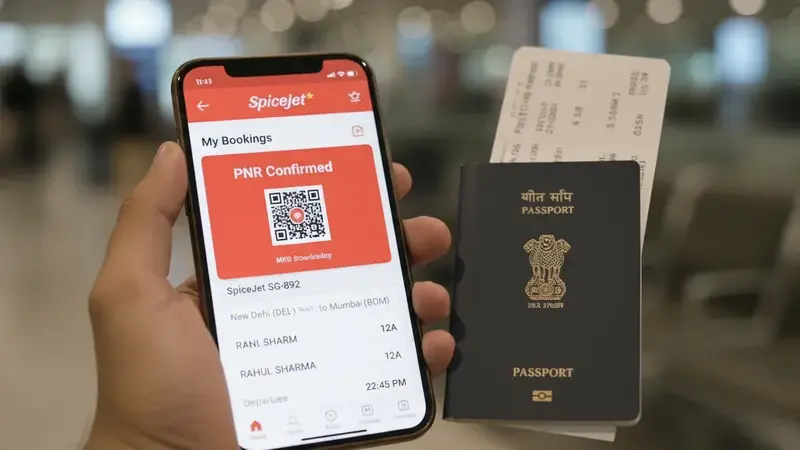

Omani tourist visa files rarely fail because one document is missing in isolation. They weaken when the dates do not agree. Your dummy itinerary shows one timeline, your intended stay length suggests another, your hotel proof covers fewer nights, and your exit plan looks optional. Add a sponsor name without clean supporting details, and the whole file starts to feel inconsistent.
This guide locks your travel story into one clear line: entry date, stay duration, sponsor information when it applies, and exit proof that matches what you submit. For a wider grounding in how temporary itinerary proof works, read the dummy ticket for visa 2026 complete guide before you build the Oman-specific version.
Key takeaways:
-
Oman’s 14-day visa-exemption route has document guardrails: passport validity, return ticket, hotel booking, health insurance and funds.
-
ROP manages visitor visa options through its eVisa system, including unsponsored tourist visa, sponsored tourist visa, GCC resident tourist visa and express visa categories.
-
A sponsored Oman tourist visa can involve a licensed tourism company and has different sponsor-proof expectations from a normal unsponsored tourist trip.
-
Your dummy itinerary should show one clear entry into Oman and one clear exit before the allowed stay ends.
-
Do not attach multiple alternate routes, edited PDFs or sponsor details that do not match the flight dates.
Need clean Oman exit proof before you upload or fly?
Create one readable dummy ticket with passenger details, Muscat routing, travel dates and booking-reference support.
Create Your Dummy TicketOfficial-source check: Oman’s Ministry of Foreign Affairs says visitors from more than 100 countries and regions are exempt from entry visas for stays up to 14 days, and lists controls including a passport valid for at least six months, a return ticket, confirmed hotel reservation, health insurance and sufficient funds. The same page says the Royal Oman Police manages the process for visitor visas and that tourist visitors usually use the Tourist Visit Visa (Unsponsored) when they are not covered by an exemption. ROP’s eVisa FAQ lists unsponsored tourist visa, sponsored tourist visa, tourist visa for GCC residents and express visa as eVisa system categories, and says tourist eVisa applicants are advised to apply at least four days in advance because processing times can vary. Gov.om also describes a sponsored tourist visa as a 30-day tourism visa sponsored by licensed tourism companies and extendable for a similar period. Sources: Oman Ministry of Foreign Affairs entry visas, Royal Oman Police online visa service, ROP eVisa FAQ and Gov.om sponsored tourist visa.
Reviewed for: Oman visa-exemption wording, ROP eVisa category accuracy, sponsored tourist-visa logic, return-ticket proof, hotel-proof alignment, Muscat route-date consistency, PNR terminology, date-change handling and safe dummy-itinerary claims.
In This Guide
Start With Your Oman Entry Route, Because It Controls Your Dates

Before you touch your itinerary PDF, lock the one thing that decides everything else: how you are actually entering Oman. Once the route is clear, your stay duration and exit proof become simple to align. If you start with a pretty itinerary and only check the entry route afterward, you can accidentally build a document that contradicts the visa path you qualify for.
Use Oman’s Official Visa Tools Before You Generate A Single PDF
Start by setting hard date boundaries. The official Oman sources decide the box your itinerary has to fit inside, not the other way around.
Confirm three facts first:
-
Whether you are visa-exempt for a short stay or need an eVisa.
-
What stay length your route allows.
-
Whether the process expects a sponsor or lets you apply as an ordinary tourist.
Then capture the date guardrails in one place before generating anything:
-
Maximum stay allowed for your route.
-
Single-entry or multiple-entry logic, especially if you plan a side trip.
-
Entry window after approval if you are applying online.
-
Any extension rules you might rely on if plans could shift.
Now convert those guardrails into a flight plan that cannot contradict itself. Pick one intended arrival day and one intended departure day. Keep the trip comfortably inside the allowed stay, not right on the edge. Decide your exit method early, whether you fly out, leave by land or continue to another country, because that changes what “exit proof” should look like.
A common avoidable mistake is building a perfect itinerary first, then discovering the route you qualify for allows a shorter stay than your dates. That is the kind of mismatch a cleaner workflow prevents.
If You Qualify For The 14-Day Visa-Exemption Route, Your Documents Still Get Checked
Even when you do not submit an eVisa application in advance, you still need to look ready to enter at the moments that matter: airline check-in and arrival screening. The Oman FM page lists the 14-day exemption controls, including a return ticket, confirmed hotel booking, health insurance and funds. Treat those as practical document anchors.
For a smooth file set, treat the 14-day route like a strict date box:
-
Your itinerary should show entry and exit within the 14-day story.
-
Your stay duration should look obvious from the dates, not like you rounded down.
-
Your exit plan should feel non-optional, with a clear onward or return segment.
-
Your hotel reservation should cover the stay you actually show.
Build dates with breathing room. Avoid landing late at night and departing just after midnight on the final day, because it creates confusion when someone counts calendar days differently. Avoid “14 days exactly” unless the timing is clean and the plan looks stable. If you are planning a short trip, do not inflate the stay length just because the route permits it.
A clean example reads simply: arrive in Muscat on March 10, depart Muscat on March 16, and describe the trip as a six-night stay. A risky example lands March 10 at 11:55 pm and leaves March 24 at 12:10 am. You may see it as “inside 14 days,” but a reviewer or airline desk can see a traveller squeezing the limit and hoping nobody pauses.
Before finalizing dates, run a fast self-check: exit flight date is clearly inside the allowed stay; the itinerary shows one coherent route, not multiple alternatives; and the stated stay duration matches what a human sees without needing a calculator.
If You’re Applying For An eVisa, Your Stay Duration Must Match Your Itinerary Like A Locked Pair
With an eVisa, consistency is not a nice-to-have. It is the backbone of the application file. ROP’s eVisa system asks applicants to select visa type and provide passport, applicant and sponsor details where relevant. That makes mismatched itinerary data more visible than applicants expect.
Use a repeatable method to keep duration aligned:
-
Choose your arrival date first. That becomes Day 1 in most travel narratives.
-
Choose your departure date next. That is the endpoint the file must support.
-
Count the nights between them.
-
Decide whether you will describe the stay in days or nights.
-
Use the same format everywhere you mention duration.
Stay consistent in the small details. If you claim seven days, the itinerary should not visually look like eight calendar days because of overnight flight timing. If you claim ten nights, the departure date should not make it look like nine. Do not mix “about two weeks” wording with exact travel dates. If the application form asks for duration, do not round. Match the itinerary.
If your plans might change, keep one main itinerary for submission and store any backup privately. Do not upload backup versions or mix them into the same file set.
A Route-First Choice Map For Dates, Duration, And Exit Proof
Use this order of decisions so every Oman tourist visa document supports the same story:
-
If you are visa-exempt for a short stay, choose dates that clearly fit inside that stay, then add a direct exit segment that leaves Oman on time.
-
If you need an eVisa, select dates that match the intended duration exactly, then keep the exit proof aligned with the same departure day.
-
If you might exit by land, decide that now, then prepare onward proof that still shows you leaving Oman within your allowed stay.
-
If the routing includes a connection, keep it simple. For example, an applicant departing from Delhi should pick one clean connection pattern, not several alternates that make the plan look like a placeholder.
A route-first workflow is not glamorous, but it saves the file from avoidable friction. It also makes the later dummy itinerary much easier to read.
Build A Dummy Itinerary Oman Checkpoints Can Read In 15 Seconds

Once your Oman route and dates are locked, the next job is presentation. You want an itinerary PDF that reads cleanly at airline check-in and still looks coherent if someone reviews it during processing. The goal is not decoration. The goal is instant comprehension.
The 4 Non-Negotiables Your Itinerary PDF Should Visually Communicate
Your itinerary should make four things obvious without anyone hunting through pages.
-
A perfect name match: the passenger name should mirror the passport spelling and order. If the itinerary uses initials but the passport shows full given names, fix it before submission.
-
A clear entry into Oman and exit out of Oman: “into Muscat” is not enough. The exit segment should show you leaving Oman on a specific date, not “pending” or “to be decided.”
-
A stable booking reference or PNR where available: airline staff often treat a reference as the difference between a structured plan and a loose draft. If the reference appears, keep it consistent across pages.
-
Dates that make stay duration obvious: arrival and departure dates should support the intended length without time-zone guessing.
A useful self-test is simple: hand the PDF to someone and ask, “How long are we staying in Oman, and when are we leaving?” If they cannot answer in seconds, simplify the itinerary.
Route Design That Looks Like A Real Oman Trip (Not A Visa Placeholder)
Most clean Oman tourist itineraries fit one of these shapes:
-
Simple return: fly into Muscat and fly out of Muscat.
-
Single connection each way: one transit point is common and easy to read.
-
Open-jaw with a clear story: fly into Muscat and fly out of Salalah only if the internal travel story appears consistently in the rest of the file.
Routes that create avoidable friction include one-way entry with no outbound segment, an Oman entry followed by departure from Dubai or Abu Dhabi without a bridge, and overbuilt itineraries for a short holiday. A four-day Oman trip with several transits, alternate flights and mixed dates signals editable draft, not travel plan.
If you want a safe structure, keep the main itinerary limited to what you need to prove: a believable entry, a believable exit and a route that is easy to understand.
Stay-Duration Logic That Holds Up Under Scrutiny
The biggest date problem is not always the number of days. It is the way flights cross midnight and display local times.
Watch for these traps:
-
Late-night arrivals: if you land in Muscat just before midnight, Day 1 can look unclear to someone scanning quickly.
-
After-midnight departures: a 12:30 am outbound can make the stay look longer than you think, especially if the text says seven days but the visible dates span eight calendar dates.
-
Transit date changes: a long connection can flip the date on one segment. If the inbound shows Tuesday but the narrative says Monday, you have created a mismatch.
Count nights first. Nights are harder to argue with. Then translate nights into the wording you will use in the file, such as six nights or seven days. If the stay is short, choose flight times that reduce confusion. Daytime arrival and daytime departure often read cleaner than a schedule packed with overnight timing.
Generate → Verify → Freeze → Store
Use a build process that prevents version chaos, because version chaos is one of the fastest ways Oman files become inconsistent.
-
Generate one primary itinerary only. Choose one route and date set. Do not generate alternates “just in case” and then merge them.
-
Verify the Oman story with a three-point scan. The entry flight lands in Oman on the date you claim; the exit flight leaves Oman on the date you claim; and the full timeline matches your intended stay length without stretching.
-
Check for human-reading friction. Remove repeated segments, search-result blocks and extra fare options that make the outbound look unfinished.
-
Freeze the file you will use. Save it once with a clear name, such as Oman-Itinerary-Submit-YYYY-MM-DD.pdf.
-
Store a change-ready copy separately. If dates might shift, keep a working version for later changes, but never upload mixed versions in one application set.
For applicants comparing temporary proof with final airfare, the dummy ticket for visa guide gives a useful framework for when a reservation is safer than buying too early.
Oman-Focused Mistake Checklist (The “Fast Rejection Fuel”)
These itinerary issues tend to trigger quick doubt in Oman tourist visa contexts and at airline check-in:
-
Outbound segment missing or not clearly leaving Oman.
-
Multiple alternate flights in one PDF.
-
Entry and exit airports that do not match your written plan.
-
Booking reference changing between pages.
-
Passenger-name formatting that does not mirror the passport.
-
Overnight timing that makes the stay length look off.
-
Open-jaw routing with no coherent internal travel story.
-
Connection times that look impossible or too tight.
-
A PDF that looks like a search-results screenshot instead of a booking summary.
Once the itinerary reads cleanly and the stay duration looks obvious, the next decision is whether sponsor information strengthens the file or creates a new set of questions.
Sponsor Info Without Chaos: When Oman Asks for a Sponsor, and What to Collect

Sponsor details can strengthen a tourist file, or they can trigger extra verification that slows things down. The aim is sponsor proof that supports your flights and stay window without creating inconsistencies. If sponsor details are optional for your path, do not add them casually just to make the file look heavier.
What “Sponsor” Usually Means in Oman’s System (and Why It Can’t Be Improvised)
In the Oman eVisa context, sponsor data is identity data. ROP’s online form includes sponsor-detail fields for relevant application modes, and Gov.om describes the sponsored tourist visa as tied to tourism companies licensed to practice tourism activities. That means sponsor information should be exact, not improvised.
Use sponsor information like a controlled record:
-
One exact name spelling.
-
One phone number and one address in Oman.
-
One visit window that matches your travel itinerary.
-
One sponsor type that matches the visa route you selected.
Keep your passport details aligned too. A sponsor does not rescue sloppy itinerary records.
Quick Split: Unsponsored Trip Vs Sponsored Trip (Document Behavior Changes)
If you are unsponsored, the core test is internal logic. Your travel date range fits the maximum duration you request, your visa options match eligibility and purpose, and your required documents stay consistent.
If you add a sponsor, the test becomes relational. Your entry and exit flights should fit the sponsor’s stated window. Your purpose should remain tourism, not business, study, work or transit if the selected route does not fit those categories. Wrong route selection can also change fees, sponsor fields and how the file is read.
That is why “more documents” is not automatically better. More documents create more surfaces for mismatch. Use sponsor details only when they belong to the route.
If You’re Staying With a Friend/Family Host, Request a Complete Sponsor Mini-Pack
If a friend or family host appears in the file, keep the sponsor pack small but complete. Ask for one bundle:
-
A short invitation letter with your exact dates.
-
Sponsor address and contact number.
-
Sponsor ID or residence reference where appropriate.
-
A clear passport copy or resident ID reference if requested by the relevant route.
-
One line confirming the purpose and accommodation arrangement.
Then run a mismatch check. Sponsor dates should match flights. Your personal details should match what the sponsor wrote. The address in the form should match the sponsor address. If several family members travel together, keep each traveller’s details clear rather than relying on one vague combined paragraph.
If the “Sponsor” Is a Licensed Tourism Entity, Keep Your Proof Minimal and Aligned
When the sponsor is a licensed tourism entity, the best proof is lean and verifiable. Upload only what connects the entity to your dates, such as a confirmation showing your name, travel window and any reference number the visa application form requests.
Do not add extra pages from unrelated countries or old bookings. If you need a corrected confirmation, replace that specific file only. The point is to make the sponsor relationship clear, not to drown it in attachments.
Sponsor + Itinerary Alignment Rules (Hidden Friction Point)
Sponsor mismatches often surface in practical review rather than formal rejection language. Use these rules:
-
Sponsor dates match inbound and outbound flights, or the letter explains the gap in one sentence.
-
Sponsor contact details are reachable and written consistently.
-
If you connect through a third country, the sponsor letter stays focused on the Oman dates.
-
Health insurance and proof of funds support the file where required, but you do not claim the sponsor covers everything unless that claim is documented.
Clean sponsor setups are usually boring in the best way. A nine-night tourism stay has one sponsor address and exact flight dates. A licensed operator sponsor shows your name and dates only. A Gulf multi-country trip limits sponsor proof to the Oman window, so it stays compatible with the wider route.
Oman Tourist Visa Documents Required: Cases That Break “Perfect” Documents
Even with a clean itinerary, Oman tourist visa files can wobble when the exit plan is unusual or dates shift after submission. These are the situations that trigger extra questions and the fixes that keep flight evidence consistent.
Exit Proof When You’re Not Flying Out The Way You Flew In
If your plan is not “fly in, fly out,” your dummy flight ticket should be supported by an exit story that looks deliberate, not improvised. This matters because airlines may check entry and onward logic before boarding, and your Oman visa route should still match your real movement.
Use the right exit proof for the scenario:
-
Leaving Oman by road to the UAE: show a dated onward plan that places you outside Oman within your allowed stay, and make sure any UAE entry permission fits the same dates.
-
Flying out from a different airport or hub: if you arrive in Muscat but depart from another point, the outbound proof should still connect naturally to the Oman stay.
-
Continuing to another destination: check whether the next stop requires a visa or pre-approval, because missing onward-country eligibility can make the exit plan look uncertain at check-in.
One inbound segment plus one clearly timed exit is stronger than three possible exits competing with each other.
Date Changes After You Apply: What Must Be Regenerated Vs What Can Stay
Oman timelines can move fast, and small date edits can create large inconsistencies. Treat date changes as a file-wide review, not a single ticket tweak.
Regenerate these items when dates move:
-
The itinerary PDF showing entry and exit segments.
-
Any uploaded travel itinerary pages that reference old dates.
-
Any sponsor invitation or host note that lists exact dates.
-
Any hotel proof that no longer covers the visible stay.
It is usually safe to keep the same passport copy and identity pages if the personal data did not change. If you reissued a passport, update anything that references the old passport number. Keep one submission folder and one working folder so the wrong version does not slip into the application process.
Compare the route, dates and booking status using flight reservation for visa 2026 guide. The document must still meet the Oman instructions that apply to your application.
The “Looks Fake Because It’s Too Perfect” Problem
Some files raise doubt because they look engineered rather than planned. Exact maximum stays with tight midnight timing, overly symmetrical routing, strange seat-class lines and risky short connections can all make a document feel synthetic.
A safer approach is to build a normal-human plan. Use realistic flight times, leave breathing room, and keep the itinerary consistent with the rest of the file. This matters more than a perfect-looking PDF.
Myth-Busting
Myth: If I have a confirmed exit, nothing else matters. Reality: Oman tourist visa documents can include more than flights, especially hotel proof, insurance, funds and eligibility logic.
Myth: The visa-required rule is the same for every traveller. Reality: some travellers are visa-exempt for short stays, some qualify conditionally, and others need an eVisa or sponsored route.
Myth: Processing is instant once we submit. Reality: ROP’s FAQ advises applying at least four days in advance because processing time can vary.
Myth: Any government page is optional reading. Reality: if Oman policy wording changes, official Oman and ROP sources are the pages to check before building your file.
A Clean Oman File That Stays Consistent Under Review
Oman tourist visa success usually comes down to one thing: your dates and story match across the itinerary, stay duration, sponsor details, hotel proof and exit plan. When everything aligns, the file reads clearly at check-in and during processing, and the risk of avoidable questions drops fast.
The final set should be simple: passport valid for the route, hotel proof that covers the stay, health insurance and funds where required, sponsor proof only when the route calls for it, and one clean return or onward itinerary. If you are using a temporary reservation, make sure it looks like a coherent travel record rather than a placeholder.
Now tighten the final folder, verify every date line once, and keep one upload-ready version. With that done, you can visit Oman with confidence because your travel evidence supports the plan instead of fighting it.
Keep your Oman itinerary clean from first upload to check-in.
Use one verifiable dummy ticket that shows your entry, exit date, passenger details and route logic without forcing a final fare purchase too early.
Get Your Dummy TicketFAQ
What Oman tourist visa documents are usually required?
Documents depend on the route, but Oman’s official 14-day exemption controls mention passport validity, return ticket, confirmed hotel reservation, health insurance and funds. eVisa or sponsored routes may add application and sponsor details.
Can I use a dummy ticket for Oman tourist visa proof?
Yes, a dummy ticket can support Oman travel-proof documents when it is current, coherent and aligned with your passport, hotel proof, stay duration and exit plan. It should not be a fake or edited ticket.
Does Oman require a return ticket for the 14-day visa exemption?
Oman’s Ministry of Foreign Affairs lists a return ticket among the controls for the 14-day visa-exemption facility, along with passport validity, hotel booking, health insurance and funds.
How long should my passport be valid for Oman entry?
The Oman Ministry of Foreign Affairs lists at least six months of passport validity for the visa-exemption facility, and ROP’s FAQ says a normal passport should be at least six months valid before entering Oman.
Do I need hotel proof for Oman?
For the 14-day visa-exemption facility, Oman’s official controls mention a confirmed hotel reservation. If you are using another route, check the exact eVisa or sponsor requirements before upload.
What is the difference between unsponsored and sponsored Oman tourist visa?
An unsponsored tourist route is usually for ordinary tourist entry through the visitor visa system. A sponsored tourist visa involves sponsor information, and Gov.om describes the sponsored tourist visa as sponsored by licensed tourism companies.
Should my Oman itinerary show Muscat entry and exit?
If Muscat is your entry and exit point, yes. If you enter or leave through another city or country, the route should still explain clearly how and when you leave Oman.
What if my Oman travel dates change after applying?
Regenerate the itinerary and any date-specific hotel or sponsor proof that changed. Do not update only one document while leaving old dates elsewhere in the file.
Can I submit several Oman itineraries to show flexibility?
It is usually safer to submit one coherent itinerary. Several alternate routes can make the application look uncertain or assembled from placeholders.
Can a dummy ticket guarantee Oman visa approval or entry?
No. A dummy ticket can support travel-proof requirements, but approval, boarding and entry depend on your route, nationality, documents, airline policy and officer review.
Friendly reminder: DummyFlights provides temporary travel-proof documents for planning and application support. Requirements vary by destination, airline, route and applicant situation. A dummy ticket can support a file, but it does not guarantee approval, boarding or entry.