
Short answer: International airlines and border authorities coordinate through three different steps: carrier document checks, legally required passenger-data transfer, and case-specific human review. A real dummy ticket can document a planned route for a visa file, but a PNR or PDF is not travel authorization. Before flying, confirm the live ticket, passport and visa details, every transit rule, and any government permission tied to the actual itinerary.
Key facts
- Airlines check destination and transit-document rules because inadequate documentation can create carrier liability.
- API usually contains identity and travel-document fields; PNR is booking-record data. They serve different purposes.
- Data transmission or a document-rule lookup does not mean every visa officer sees every booking.
- A destination visa does not automatically cover a landside transfer in another country.
- The carrier decides whether it can transport you; immigration decides admission.
In this guide
- The Coordination Starts Before You Reach The Airport
- What Airlines Actually Check Against Immigration Rules At Check-In
- The Airline–Border Handoff: Data, Document Checks and Exceptions
- How Visa Applicants Can Use This Knowledge To Build Smarter Flight Plans
- Build An International Flight Plan That Holds Up Beyond The Visa File
Official-source check: IATA explains Timatic document-rule checks; the UK describes API identity and passport fields; the UK separately explains PNR provision; and UK carrier guidance explains document checks and possible charges. The rules vary by country and can change.
Reviewed for: travelers comparing a visa-stage reservation with the documents and airline checks needed to fly. This guide focuses on the operational airline–border handoff; our separate API/PNR guide explains the data-sharing question in depth.
Where to take a problem
| Problem | First contact | What to ask |
|---|---|---|
| Wrong passport field in booking | Operating airline or issuing agent | Correct the live passenger record and recheck the itinerary. |
| Unclear transit right | Official transit-country guidance and airline document desk | Does this connection require landside entry or a transit visa for my passport? |
| Visa/eVisa status not matching | Issuing authority and airline | Which passport and identity data are linked to the permission? |
| Temporary reservation expired | Reservation issuer | Is the PNR active, and do I now need a paid ticket? |
Your trip can unravel before boarding, even with a visa in hand, because airlines do not treat immigration checks as someone else’s job. They screen routes, transit points, document chains, and passenger data long before you reach the border. That matters when you choose an itinerary for a visa file or make changes after approval.
In this guide, we focus on the moments when airlines and immigration authorities intersect and what you should take from that coordination. You will see why some bookings look acceptable on paper but fail at check-in, why transit logic matters more than most applicants expect, and how to build a flight plan that stays credible from application review to boarding gate without inviting avoidable scrutiny or last-minute disruption for you. When route scrutiny matters, use a dummy ticket booking you can adjust without disrupting your visa file.
The Coordination Starts Before You Reach The Airport

Many travelers think document review begins only at the arrival counter. In practice, an operating carrier may check destination and transit requirements at online check-in, the airport counter or the gate. The exact check depends on the country, the route and the airline; a reservation alone is not a government clearance.
How Your Booking Data Quietly Enters The Immigration Conversation
Your reservation is not just a travel record. On routes to the Schengen Area, the UK, Canada, Australia, or the United States, it becomes part of a compliance workflow that airlines take seriously because they are carrying you into a regulated border environment.
That starts with the basics you already know matter, but for a different reason. Your name format, passport nationality, travel dates, connection points, and ticket structure all shape how your journey is viewed before you ever stand at a counter. A Paris itinerary via London is not assessed the same way as a direct Paris itinerary. A Toronto trip booked as two separate tickets through Mexico City is not treated the same way as a single protected booking.
Airlines use booking data to prepare for document checks later. They look at whether the routing itself creates immigration exposure. A traveler headed to Madrid on one record with a clean return date usually presents a single case type. A traveler flying from Lagos to Istanbul to Frankfurt with a long transit and separate onward segments presents another challenge.
For visa applicants, the lesson is simple. Your flight plan is part of the credibility story. It should not only fit your embassy file. It should also make operational sense to the airline that must carry you.
Why Airlines Treat Some Routes Like Immigration-Sensitive Corridors
Some routes attract more scrutiny because the margin for error is smaller. Think of journeys involving strict transit rules, high rates of refused boarding, or airports where changing terminals can force you into a visa problem you did not plan for.
A common example is a Schengen destination reached through the UK. Many travelers focus on the Schengen visa and forget that a UK airport connection may trigger separate transit conditions depending on nationality, terminal movement, and whether the itinerary is on one ticket. The same risk shows up in routes through Canada, the United States, and some Gulf hubs when the transit pattern is more complicated than it first appears.
Airlines notice risky corridor patterns early, especially when they involve:
-
Separate tickets that leave the onward segment unprotected
-
Overnight layovers that may require landside entry
-
Airport changes inside the same city
-
One-way booking logic on routes where return proof is routinely examined
-
Last-minute rerouting through countries with stricter transit controls
This matters even if your destination visa is strong. A visa for Italy does not solve a transit issue created by the way you reach Italy. When airlines see a route that depends on assumptions instead of clear travel rights, they start treating the case more cautiously.
What Carrier Liability Means For Your Travel Plan, Even If Your Visa Looks Fine
Airlines do not assess your documents out of curiosity. They do it because the cost of getting it wrong can fall on them. If immigration authorities refuse you on arrival, the airline may face fines, return-carriage obligations, and operational problems at the station.
A valid destination visa is only one part of a boardable journey. Staff may also need to check passport validity, transit permission and whether a separate-ticket transfer requires entry to the connection country. A reservation useful for a visa application is not a substitute for the paid travel ticket and valid documents required on departure day.
This is where many applicants misread the situation. You may see your case as legally arguable. The airline sees a possible liability event. That difference explains why borderline cases often get conservative decisions at the airport.
It also affects how you should choose an itinerary for a visa application. Cleaner routes reduce doubt. A direct booking or a simple connection usually serves you better than a cheaper but messy path that creates extra immigration questions later.
Why A “Valid Reservation” And A “Boardable Journey” Are Not The Same Thing
A reservation can be real, verifiable, and perfectly suitable for a visa file while still failing the live travel test later. That gap matters because airlines are not checking whether your booking exists. They are checking whether the entire journey can be boarded without exposing them to an immigration problem.
You see this most often in four situations:
-
Transit rights do not match the route
-
Return timing conflicts with the stated travel purpose
-
Passport validity margins are tighter than the route allows
-
Post-visa itinerary changes create a different legal travel picture
Take a traveler with a valid visa for France who later swaps to a route through a country with stricter transit rules for their nationality. The visa may still be fine. The journey may no longer be. Or consider a short business trip itinerary that turns into a long, open-ended return pattern after issuance.
That may not void the visa, but it can make the airline question whether the booking still matches the traveler’s actual entry conditions.
What Airlines Actually Check Against Immigration Rules At Check-In
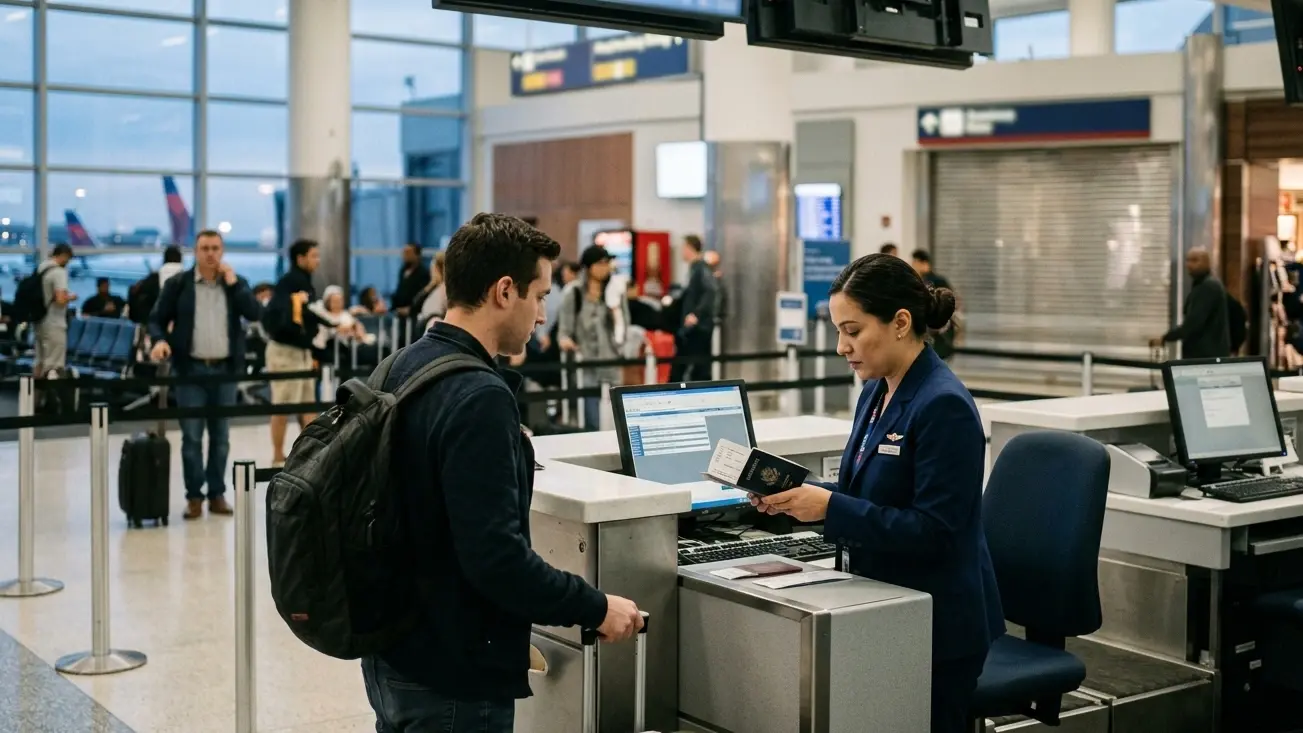
The airport is where theory turns into action. A flight plan that looked tidy in your visa file now has to survive live airline scrutiny against the rules for your nationality, route, transit points, and final destination.
The Check-In Desk At International Airports Is Often Your First Real Immigration Gate
At check-in, the airline is not just confirming your seat. It is deciding whether it can lawfully and safely carry you to the next border.
That is why the agent’s screen matters more than many travelers realize. The airline is usually working from destination-entry guidance, transit rules, passport-validity standards, and route-specific restrictions that apply to your exact journey. A traveler flying from Delhi to Rome on a direct service faces one review. A traveler flying from Karachi to Rome through London or Toronto faces an challengeother.
This is also why staff may seem stricter than you expected your visa approval to be. Your visa confirms one part of the journey. The airline still has to confirm the entire chain. That includes the departure point, each connection, the airport transit setup, and whether your documents still fit the trip you are actually taking.
For visa applicants, there is an important lesson here. The itinerary you submit should not only satisfy an embassy. It should also remain strong if airline staff later compare it against the live route and current travel rules at the airport.
Why Transit Rules For International Travel Cause More Trouble Than Destination Rules
Transit can create a separate boarding question even when the final-destination visa is valid. A connection may require an airside transit visa, a landside entry permission or another document if the traveler changes airports, collects baggage or uses separate tickets. Do not assume that transit causes most boarding problems; check the actual route and nationality-specific rules.
This catches applicants who focus only on the country issuing the visa. The airline does not have that luxury. It has to check every jurisdiction your route touches.
Some common trouble spots include:
-
UK airport transits where nationality, terminal change, and onward ticket structure all matter
-
US and Canadian connections, where many travelers assume they can stay airside when the route does not actually allow that
-
Schengen to non-Schengen transfers that change the document logic inside Europe
-
Overnight layovers that quietly turn an airport stop into an entry issue
-
Separate-ticket journeys where the second segment does not protect the first if anything goes wrong
This is where applicants often create avoidable risk by choosing the cheapest or most available routing for a visa file without testing whether the transit chain is actually clean. A direct flight to Paris may support your case better than a lower-cost option through a country that imposes stricter transit checks on your passport.
The embassy may focus on purpose and travel dates. The airline will care whether you can legally complete the journey you booked.
How Airlines Decide Whether To Escalate Your Case Or Deny Boarding
When a case is not straightforward, airline staff do not guess. They escalate.
That escalation can start with very ordinary questions. Why is your return date now different from the original pattern? Why are you connecting through a country that treats your nationality more restrictively? Why does your onward sector sit on a separate booking with a long gap? These questions are not small talk. There are signs that the airline is testing whether your documents and itinerary still align.
A case is more likely to be escalated when staff see:
-
A route that depends on an uncertain transit interpretation
-
A mismatch between visa conditions and actual travel dates
-
A new itinerary that differs sharply from the one that made sense in the visa file
-
An incomplete picture of a one-way or open-ended pattern
-
Name, passport, or nationality details that do not line up cleanly across records
Once escalated, the focus usually shifts from isolated documents to overall coherence. A strong case looks joined up. Your booking logic, purpose of travel, visa dates, and connection pattern all support each other. A weak case may still have valid documents, but the travel story stops making operational sense.
That is why some passengers feel blindsided at check-in. They are answering from the perspective of personal intent. The airline is assessing from the perspective of transport liability and immigration exposure.
What Visa Applicants Should Learn From Airline Document Checks Before They Submit Any Itinerary
The best visa-use itinerary is not the one that only looks official. It is the one least likely to trigger doubt later at check-in.
That starts with route choice. If you can avoid a transit country with tighter rules for your nationality, do it. If one itinerary requires an airport change, a long overnight stop, or a separate onward ticket, ask whether the savings are worth the compliance risk. In many cases, they are not.
You should also build your dates with real processing and travel logic in mind. A rushed departure soon after expected visa issuance can force last-minute changes. That is how tidy application itineraries turn into messy airport explanations. The stronger move is to choose a timing that can absorb visa delays without breaking the route logic.
Before you submit any reservation, pressure-test these points:
-
Does the full routing work for your nationality, including transit?
-
Do your outbound and return dates match your stated purpose?
-
Would the same itinerary still look coherent if checked months later at the airport?
-
Have you avoided unnecessary self-transfers and legally sensitive stopovers?
-
Can the reservation be adjusted cleanly if appointment or visa timelines shift?
If you need a temporary reservation while preparing a visa application, choose a route and date you can genuinely explain, then ask the issuer about its current status, expiration and change terms. A booking reference or PDF is not a ticket number and does not guarantee boarding, visa approval or admission. DummyFlights can help you compare a flight-reservation option, but verify product terms at the point of purchase rather than relying on a fixed price or unlimited-change claim in an older article.
The Airline–Border Handoff: Data, Document Checks and Exceptions

What happens at the desk is only the visible part of the process. Long before you reach an international airport, airlines and border systems may already be comparing your route, identity details, and document profile against the rules that apply to your trip.
What the System Sends—and What Still Needs a Human Decision
On routes with legal data-transfer requirements, carriers may transmit Advance Passenger Information (API) and, where required, Passenger Name Record (PNR) data to a government before travel. API generally concerns identity and travel-document details; PNR concerns information held in the booking record. Neither is the same as an airline’s document-rule lookup, and neither means every consular officer has instant access to every reservation.
Automated data transfer is not an immigration decision. A border authority may run its own screening and, in some systems, return a response to the carrier; the airline must still follow the applicable document-check process. A clear system response does not replace a human review when a passport, visa, transit route or reservation detail remains uncertain.
A manual review can be needed when an automated response, document scan or staff check leaves an unresolved issue. Examples include a mistyped passport number, unclear visa validity, a separate-ticket transfer or a rule that depends on whether the traveler remains airside. The carrier’s support desk may consult the relevant authority or its own compliance team; the exact escalation path varies.
Two passengers on a similar route may receive different checks because nationality, passport, visa or residence status, connection pattern and document accuracy differ. A longer review is not proof of an adverse government finding. Ask which specific document or rule needs clarification and provide an authentic supporting record.
Where Advance Passenger Information Fits in the Handoff
Advance Passenger Information can give the destination or transit government passenger identity and document details before arrival, and sometimes before departure. The timing and required fields are jurisdiction-specific. For example, the UK describes API as including name, nationality, date of birth and travel-document details; it should not be confused with every item held in an airline booking.
For a traveler, the practical risk is a mismatch between the passport and the information used at check-in. Correct a wrong document number, nationality or name with the carrier before travel. A later route change can also create a new transit-document issue, but API by itself is not proof that an authority has reviewed your entire visa file.
That early visibility affects international travel in practical ways:
-
Your document details may be screened before the check-in counter conversation is finished
-
An altered itinerary may trigger a fresh review even if your visa itself has not changed
-
A route from India to Schengen through the UK can become more sensitive if the transit logic is no longer clear
-
A one-way booking with weak onward proof can look different once authorities receive the full passenger data set
API data transfer does not replace inspection of a physical or electronic travel document. The carrier still needs to follow the applicable entry and transit rules, and the border authority makes its own admission decision. A correct API record cannot cure an invalid visa, an expired passport or an unworkable transfer.
After a visa is issued, compare the live booking with the passport and visa, then recheck each transit point if the route changes. Correcting a booking can change the passenger record that is transmitted, so ask the operating carrier to confirm the updated details rather than assuming the old PDF or prior check remains enough.
How Immigration Liaison Officers And Airline Compliance Teams Shape Boarding Decisions
When a case is not routine, airlines often rely on specialist staff rather than front-line guesswork. Major hubs and high-risk routes may involve liaison teams, station compliance support, or airline staff trained to interpret border instructions under international law.
Carrier document-support staff and immigration liaison officers do not issue a new visa or guarantee entry. Their role may include interpreting published entry rules, resolving an unclear document check and helping the carrier decide whether it can board a passenger. The decision path depends on the airline and government program; request the specific rule or document issue if your case is escalated.
That review can reach beyond passport validity. It may include:
-
Whether your visa is still applicable to the revised routing
-
Whether customs procedures at a transit point force landside entry
-
Whether customs checks or security checks become relevant, because you must reclaim baggage on a separate ticket
-
Whether restricted items, unusual luggage patterns, or route anomalies increase scrutiny
-
Whether the booking record and your supporting documents tell the same story
This is why some travelers are surprised when the question is not “Do you have a visa?” but “How are you connecting after this sector?” or “Where will your baggage be registered?” Those questions are not random. They help the airline assess whether your whole trip can move from departure to landing without a legal problem.
Even details like aircraft type or terminal layout can matter if they affect how you move through the airport. A simple domestic-style transfer assumption can fail on an international route where you must clear a formal control point before boarding the next aircraft.
How Carrier Liability Shapes a Document Decision
If a passenger is refused entry because documents are inadequate, a carrier may face return-transport duties or charges under the destination’s rules. The UK publishes such carrier-liability guidance. Other jurisdictions differ, so do not assume a single global penalty or boarding standard.
A carrier may face a charge or return-transport obligation when it carries an inadequately documented traveler, as the UK’s published carrier guidance illustrates. That explains why staff may seek clarification before boarding. It does not mean every refusal is lawful or that a passenger with a genuine, acceptable document should invent a different route.
You can see that caution in cases where the paperwork is technically present, but the travel story is weak. A valid visa plus a confusing route is not the same as a boardable journey. Staff may note that the passenger has the right permit on paper, yet still hesitate if the trip looks likely to fail at the next control point.
The practical distinction is between the airline’s decision to carry a passenger and the government’s later decision to admit the person. Customs, security, immigration and carrier document checks have different purposes. Ask which step is in question instead of treating all checkpoints as one interchangeable “immigration clearance.”
How Visa Applicants Can Use This Knowledge To Build Smarter Flight Plans
Once you understand how airlines think, your itinerary stops being a formality and becomes part of your visa strategy. The goal is not just to show travel intent. It is to choose a flight plan that still makes sense when an airline checks the full route against live border rules.
Choose An Itinerary That Survives Both Embassy Review And Airline Scrutiny
A strong visa itinerary does two jobs at once. It supports your application file, and it remains operationally clean on travel day.
That usually means choosing the simplest workable routing, not the most creative one. If you can take a direct flight or a single protected connection, that is usually better than a split-ticket chain with unclear transit rights. Embassies often look at credibility and timing. Airlines then test whether the same journey can actually be boarded without creating document risk.
You should favor an itinerary that makes sense at first glance:
-
One booking record, where possible
-
No airport changes unless they are clearly manageable
-
No overnight transit unless you know the stop does not trigger entry rules
-
No fragile connection that depends on a border exception
-
No route becomes impossible if one segment shifts by a few hours
A reservation can look polished in a visa file but still invite hard questions later if the path is legally awkward. The cleanest itinerary is often the one that needs the fewest explanations. That is especially true when your passport already faces tighter transit review, or when your trip purpose depends on fixed dates such as tourism, business meetings, or family visits.
Think of your reservation like a compliance test. If an airline has only a minute to review it, the journey should still look straightforward.
Build Date Logic That Matches Your Stated Purpose Of Travel
Dates matter for more than appearance. They shape whether your trip reads as believable when your visa, purpose, and route are viewed together.
If you say you are attending a short event, but your return is open-ended or unusually late, that can weaken the travel story. If you say you are taking a brief holiday, but your itinerary shows an exhausting long-haul pattern with almost no time on the ground, that can also look off. Airlines may not judge purpose the way a consulate does, but mismatched timing still raises friction when the case is already document-sensitive.
Good date logic should answer silent questions before they are asked:
-
Does the length of stay fit the reason for travel?
-
Do the travel dates leave room for visa processing delays?
-
Does the return plan look realistic for the stated schedule?
-
If the visa is issued late, can the booking still be adjusted without breaking the route?
You should also leave a buffer between expected visa issuance and departure. Last-minute moves often create the very inconsistencies that cause airport review. A rushed change can affect fare conditions, transit points, or even the passenger registration details inside the reservation if edits are handled badly.
Another detail many applicants miss is the relationship between arrival time and onward obligations. If your trip begins with a late-night arrival, ask whether that still fits the reason you gave for travel. Small timing details can make a booking feel either coherent or improvised.
Avoid Reservation Choices That Create Unforced Immigration Questions
Some booking choices attract scrutiny even when the traveler has done nothing wrong. The problem is not that the reservation is invalid. The problem is that the route forces the airline to ask extra questions it would rather not ask.
Common examples include:
-
Separate tickets that require you to collect and recheck baggage
-
Self-transfers, where a missed first segment can collapse the whole plan
-
Long transit gaps make airside movement unclear
-
One-way patterns without visible onward logic
-
Route changes after visa approval that introduce a new transit country
-
Flights that arrive in one airport and depart from another in the same city
Each of these can turn a simple check-in into a document review. What looked like a smart fare online can become a weak point later because the airline now has to verify more than your visa.
You should also be careful with assumptions about who can solve a problem at the airport. Cabin crew is there for safety and onboard operations. They do not fix entry issues created at the counter. By the time you reach the gate, most meaningful document decisions have already been made.
Passengers need the correct permission for each jurisdiction and transfer pattern. A fare change that introduces a new airport or requires baggage collection can turn a previously workable connection into a landside entry question. Recheck the complete route before buying or changing the ticket.
What To Recheck Before Airline Check-In After Visa Approval
Visa approval is not the final checkpoint. Before you travel, review the live journey you are actually taking, not the version you originally planned.
Check these points carefully:
-
Your passport details match the reservation exactly
-
Your visa dates still cover the outbound and return plan
-
Every transit point still works for your nationality
-
Any airport or terminal change is still manageable
-
The name sequence on the booking matches your travel documents
-
Any entry form, preclearance, or carrier data requirement is complete
-
Any mandatory permit linked to transit or onward travel is still valid
Also, review what changed after approval. Did you swap a direct route for a connection? Did you move the return to a much later date? Did you add a stop that changes the legal path of the journey? These are the edits that often matter more than travelers expect.
Build An International Flight Plan That Holds Up Beyond The Visa File
The real test of a visa itinerary is not whether it looks complete on paper. It is whether the same route still makes sense when an airline checks your documents, transit path, and return logic against immigration rules. Once you see how closely airlines coordinate with border authorities, you can plan with fewer assumptions and fewer last-minute surprises.
That puts you in a stronger position from the start. We are not just trying to show travel intent. We are choosing a flight plan you can defend at the application stage, at check-in, and at the boarding gate. Use that standard, and your next reservation decision becomes much clearer.
Need a route-consistent visa reservation? Check the operating flight, transfer rules, live booking status and expiration before you rely on any document. If you have changed route after approval, use the new real itinerary for travel-day checks.
Review flight reservation optionsFrequently asked questions
Do airlines send every booking to immigration?
No single global rule sends every booking to every authority. Some routes require API and/or PNR data transfer. The fields, timing and receiving agency depend on the jurisdiction and the operating carrier.
Is API the same as a PNR?
No. API generally contains passenger identity and travel-document information. PNR is booking-record information that may include itinerary and ticket indicators.
Can a valid visa still leave me unable to board?
Yes. Passport validity, transit permission, eVisa matching, entry requirements and actual ticket status can still matter. The carrier checks the whole journey under the applicable rules.
Who decides whether I can enter the country?
The destination’s immigration authority decides admission. An airline’s decision to carry you, or a successful data transmission, does not guarantee entry.
What should I do if the airline flags a document mismatch?
Ask which field or rule is unresolved. Have the operating carrier or issuer correct a live booking field; contact the issuing authority about a visa/eVisa mismatch. Do not edit the PDF yourself.
Can a dummy ticket be used to board?
A temporary reservation may be useful for a visa application, but it is not automatically an issued ticket or accepted boarding proof. Check its live status and buy the actual travel ticket when required.
This article explains general carrier and border-document workflows, not legal advice or a boarding guarantee. Check current official requirements for each passport, transit point, operating airline and destination.