
Short answer: For Cambodia, carry an exit plan that matches your permitted stay and your next destination's entry rules. The official Cambodia e-Visa portal lists visa documents and eligible entry ports, but it does not establish a universal onward-air-ticket rule. Your airline can still ask for evidence before boarding, and immigration may question your plans. Check the carrier's current document guidance, keep a genuine, active booking if you use one, and complete the separate free e-Arrival declaration when applicable.
This guide separates three decisions often conflated in Cambodia advice: your visa or visa-exemption eligibility, the airline's pre-boarding check, and the immigration officer's entry decision. It also updates the old Phnom Penh airport references to Techo International Airport (KTI), and explains why a land-border ticket is not automatically equivalent to an onward flight at an airline desk.
Key facts
- Cambodia's official e-Visa portal identifies Techo (KTI), Siem Reap Angkor (SAI) and Sihanoukville (KOS) as eligible airports for e-Visa entry; some land ports are not eligible.
- An e-Visa approval and an e-Arrival declaration are different documents; Cambodia's e-Arrival service is free and can be submitted within seven days before arrival.
- Check your visa's entry-validity window separately from the permitted stay after entry; place any proposed exit within the actual stay authorized.
- A bus or boat reservation may explain an overland plan, but a carrier may apply its own document check; confirm acceptance before relying on non-air proof.
- A booking reference is useful only if the itinerary is genuine, current and independently verifiable. A reservation is not the same thing as an issued ticket.
Need a checkable flight itinerary? First ask your airline what it accepts for this exact route. If it accepts an active flight reservation, compare its validity and verification method before ordering; buy an issued ticket if the carrier requires one.
Review reservation optionsIn This Guide
- Who Actually Asks for Your Onward Ticket When You Land in Cambodia
- What Your Airline May Check Before a Cambodia Flight
- Techo and Siem Reap Angkor: Current Airport and Onward-Proof Checks
- How Cambodia's e-Visa and e-Arrival Relate to Your Exit Plan
- Cambodia Exit Options: Flights, Buses and Verifiable Border Routes
- Real Ticket, Refundable Fare, or Temporary Reservation for Your Cambodia Entry
- Matching Your Exit Date to Your Visa Length
- The Arrival and Check-In Folder Every Cambodia Traveler Should Carry
- What to Do When an Officer or Agent Challenges Your Onward Proof
- Ready for Techo, Siem Reap Angkor or an Eligible Land Entry
- Frequently asked questions
Official-source check: Cambodia's official e-Visa portal for visa types and currently eligible ports; the General Department of Immigration for the separate e-Arrival process. Recheck both, your airline and the next country's official entry rules before travel.
Reviewed for: Cambodia tourist e-Visa and e-Arrival information, airport names and e-Visa-eligible ports as shown by official Cambodian sources on 17 October 2026. Individual passport, carrier and border decisions vary.
Who Actually Asks for Your Onward Ticket When You Land in Cambodia
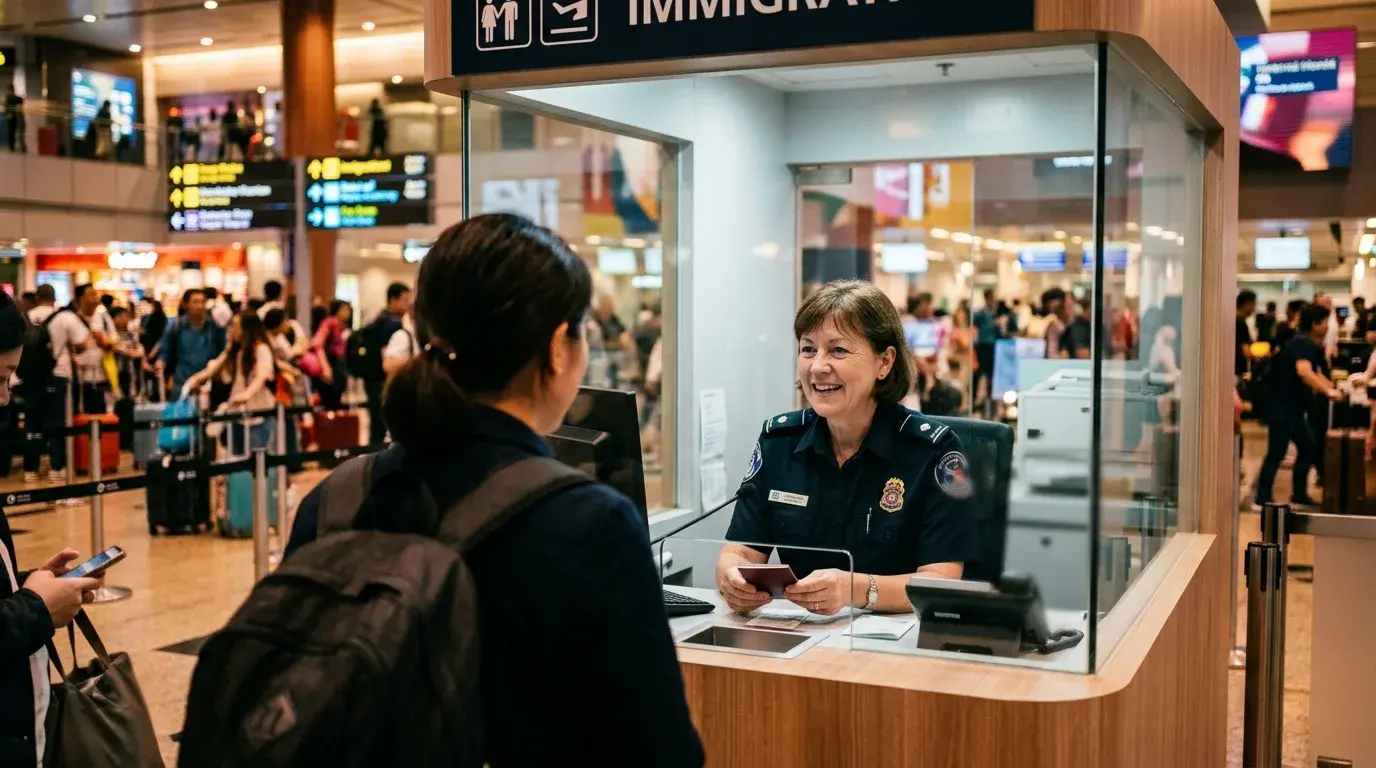
Two different parties care about your exit plans, and they care for different reasons. One is the state that stamps your passport. The other is the carrier that flies you there. Sorting out who asks, and how hard, saves you from preparing the wrong document.
What Cambodia's Official Pages Establish—and What They Do Not
Start with the official Cambodia e-Visa portal. It lists visa types, required application documents and eligible entry points. The published tourist e-Visa checklist reviewed for this article does not state a universal return-flight requirement. That is narrower than saying no traveler can ever be asked for an exit plan.
That surprises many travelers. They assume a return ticket is the standard fix for every onward question. In practice, a return ticket is only one way to show you plan to leave.
Do not treat a travel site's claim of a blanket onward-ticket mandate as an official rule unless it links to a current Cambodian source. An individual officer can still ask how and when you will leave, and a carrier can apply a separate boarding check.
Read the three checkpoints separately: an e-Visa application, airline check-in, and immigration on arrival. Approval at one does not settle every question at the next.
How Cambodian Immigration Uses the Rule at the Counter
An immigration officer may ask about your itinerary and may request evidence. The answer depends on the traveler, visa category, documents and current operating practice; there is no reliable promise that a short stay will avoid a question.
Several details tend to raise the odds of a question:
A one-way flight into the country
A passport with many recent entries
No hotel address on the arrival form
A stay that looks close to the maximum length for your visa type
Nervous or inconsistent answers about your plans
If asked about departure, show the actual route and date you intend to use. Keep the relevant confirmation ready rather than relying on a verbal assurance.
For illustration, compare two truthful plans: one visitor holds a confirmed exit within the permitted stay; another has not decided how to leave. The first can answer with a document, while the second may need to explain an open itinerary. These are examples, not reported immigration outcomes.
Neither plan guarantees a particular outcome. The point is to carry accurate documents and be able to explain the real route.
Why Cambodia Cares About Exit Proof at All
An exit plan can help an officer assess whether the proposed stay fits the permission requested. It is one part of the trip, not a substitute for a valid passport, visa when required, or other entry conditions.
Cambodian authorities have a real interest here. A tourist visa allows a short stay. People who stay beyond it can face fines and removal. An exit booking gives the state some comfort before it admits you.
Do not infer an officer's intention from one question. Answer accurately, show the document requested, and ask for clarification if the concern is unclear.
Prepare a truthful plan that can be explained quickly. Avoid trying to satisfy a checklist with a booking you know is cancelled or with a route you cannot lawfully take.
Which Travelers Draw the Most Attention
No public checklist reliably predicts which visitor will receive extra questions. A one-way journey, long proposed stay or inconsistent paperwork may invite clarification, so organize your documents rather than assuming an outcome.
Several profiles tend to draw extra attention:
Visitors on a one-way fare with no stated exit
People who arrive repeatedly on short stays
Travelers whose visa type does not match their stated plans
Visitors with no clear accommodation or contact details
These are reasons to prepare, not grounds for automatic refusal. The officer's actual decision is individual and cannot be guaranteed by a template answer.
Example: a ten-day visitor from Delhi can show the passport, the appropriate entry permission, a real accommodation address, and an exit dated inside the stay. The example illustrates document consistency; it does not predict what an officer will ask.
A traveler whose exit is genuinely undecided should not invent a booked flight. Check the airline's policy early, consider an option that fits the real plan, and explain any uncertainty honestly.
Immigration authorities across the region share a common worry. They want visitors who leave when their stay ends. That shared concern explains why neighboring countries ask similar questions.
Passport Validity and Basic Entry Requirements
Cambodia's official tourist e-Visa page currently lists a passport with more than six months' validity, a recent photo and payment card among application requirements. Other visa categories and passport holders may face different conditions; check the official portal before applying.
Your valid visa must match your purpose and dates. Check the spelling of your name, the passport number, and the entry window. A mismatch on any of these can stop you at the airline desk, long before Cambodia sees you.
Treat the exit ticket as one item in a bundle. The bundle includes your passport, your visa, your accommodation details, and your onward proof. Missing one piece weakens the others.
Why Online Advice Often Disagrees
Travel forums give mixed answers. One traveler says nobody asked. Another says an agent blocked them. Both are telling the truth, because the experience depends on the route, the airline, and the officer.
Treat forum posts as stories, not rules. Check what the Cambodian government and your airline publish. When they disagree with a forum, trust the official page.
Check the publication date of travel advice and the passport and route it covers. A reservation is not cost-free if it expires before inspection or misrepresents your trip.
The Gap Between Being Asked and Being Required
Not being asked on one arrival does not establish what will happen on the next. Keep your documents accessible without presenting the absence of a question as a rule.
A usable, current exit document can prevent an avoidable delay if asked. Whether it is necessary or sufficient for a specific route must be confirmed with the carrier and relevant authorities.
So treat the officer's possible question as a real one. Prepare a document that shows a clear exit date, a clear route, and your name spelled exactly as in your passport.
For a flight into Cambodia, the airline's pre-boarding document check is a separate checkpoint from arrival immigration. Its exact requirements depend on the carrier, departure country and passenger's documents.
What Your Airline May Check Before a Cambodia Flight
The airline can review your entry eligibility before carrying you to Cambodia. Some agents ask about an onward journey, but there is no basis for claiming the airline desk is always the strictest checkpoint.
How Airlines Enforce the Rule Before You Board
An airline may ask for onward or return evidence during online check-in, document verification or at the airport. Check the carrier's current instructions for your nationality and routing; a general travel article cannot replace that decision.
The carrier's check and Cambodian immigration's check have different purposes. Passing one does not bind the other, and an e-Visa approval is not a guarantee of boarding or entry.
Do not assume every airline is stricter than every Cambodian officer. Resolve any document question with the carrier before departure and retain the answer where possible.
If a carrier concludes that required travel documents are missing, it may refuse boarding under its conditions. The right remedy is to identify the specific missing requirement and obtain an acceptable document, not to argue that another traveler was admitted without it.
The Deportation Cost Problem Airlines Want to Avoid
Carriers may face obligations when a passenger lacks required travel documents or is refused entry, which is one reason they check before boarding. The exact legal and financial responsibility varies; it should not be reduced to a promise that the airline always pays for a return flight.
A document check is a normal part of a carrier's risk and compliance process. Ask which rule applies instead of assuming the agent's motive.
Consider what the carrier sees when it looks at your booking:
A one-way fare to a country that screens arrivals
No visible exit date
A passenger who might be refused entry
A return flight the airline would have to fund
From that angle, a request for proof is just risk management. Give the agent a clean answer, and the conversation ends quickly.
Flying Vietnam Airlines or Connecting Through Kuala Lumpur
Cambodia routes can involve a regional transfer or an operating carrier different from the one selling the ticket. Check each operating airline's instructions, especially if you change tickets or collect bags during the connection.
A document check may happen at your first airport, at a transfer point or both. Keep the same current itinerary accessible throughout the journey.
That means you may face the question twice. Keep your proof ready on your phone and in print. Do not assume that passing one desk means you are cleared for the rest of the journey.
Ask the operating carrier whether it wants an issued onward flight, accepts a live reservation, or accepts proof of overland travel. Record the answer for this itinerary; labels such as 'return ticket' are not interchangeable in every policy.
Timing Your Departure Check-In With Care
Check-in opening and closing times vary by carrier and airport. Consult your booking and allow enough time for any document review rather than relying on a universal three-hour window.
Use that window wisely. Arrive early enough to fix a problem, not just to drop a bag. A traveler who reaches the desk with ninety minutes to spare has little room to correct a missing document.
Online check-in may still leave an in-person document check. Follow the carrier's instructions and do not infer final document clearance from a boarding pass generated online.
If the carrier offers document pre-clearance, upload only the documents it requests and retain the confirmation. A pre-check can reduce uncertainty but is not an admission guarantee.
Questions Airline Staff Commonly Ask
Airline staff tend to ask a short, predictable set of questions. Most sound routine. Each one tests something specific.
How long will you stay in Cambodia?
Do you hold an onward or return ticket?
Is your visa ready?
Where will you stay on arrival?
Answer each in a single sentence. If you say you have a booking, be ready to show it. If you say you hold a visa, hand over the approval. Vague answers slow the line and invite more questions.
Agents also watch for travel arrangements that look half finished. A traveler with a flight in, a hotel for one night, and nothing after may look underprepared. Fill those gaps before you fly. Even a simple plan with dates beats an open schedule.
What Airline Staff Look for on Your Screen
Airline staff do not read your booking like a lawyer. They scan for a few things. They check your name, a date, a route, and a booking reference.
A reference helps only if the reservation is live and can be checked through the issuing carrier or supplier. Not every booking appears in every airline tool, and a code alone does not prove that a ticket was issued.
Look at your document the way the agent will:
Is your name identical to your passport?
Does the date fall inside your permitted stay?
Does the route leave Cambodia, not just move within it?
Is there a reference code the agent can verify?
Those checks make the itinerary easier to assess, but they cannot promise a one-minute clearance. Leave time for a manual review.
One more habit helps. Arrive early enough that a question does not become a crisis. Agents handle a calm passenger with a clear document far better than a rushed one searching through email at the counter.
With the airline desk handled, the next stop is the arrival hall itself, where the setting changes the experience a lot.
Techo and Siem Reap Angkor: Current Airport and Onward-Proof Checks

Cambodia's official e-Visa portal now lists Techo International Airport (KTI), Siem Reap Angkor International Airport (SAI) and Sihanoukville International Airport (KOS) as eligible air entry points. The former Phnom Penh airport references in older guides are outdated. Arrival procedures and individual questions can change; check the immigration service before travel.
Arriving at Techo International Airport (KTI)
Techo International Airport (KTI) now serves the capital's international flights. Confirm the IATA code on your ticket and the e-Visa portal's eligible-port list; do not use a legacy Phnom Penh airport code as a proxy for your actual arrival point.
At arrival, follow the posted document and identity-check process. Have your passport, relevant visa or exemption evidence, e-Arrival declaration and itinerary ready. The procedures used for an individual traveler can vary.
Queue times and flight banks vary by day. Keep essential documents accessible in hand luggage, but do not assume that arrival speed or the number of questions depends on a particular hour.
Here is a simple way to prepare for the counter:
Keep your passport and visa on top
Keep your onward proof one tap away on your phone
Keep a printed copy in your day bag, not your checked suitcase
Know your hotel name and address by heart
If the officer asks, hand over the document and answer in one sentence. Say where you are going next and on which date.
Arriving at Siem Reap Angkor (SAI)
Siem Reap Angkor International Airport (SAI) is also listed for e-Visa entry. A temple-tour itinerary can be straightforward, but no airport provides an automatic exemption from document questions.
Even so, do not treat Siem Reap as a free pass. Officers still use judgment. A traveler on a one-way fare with no accommodation details can be asked the same questions as anywhere else.
Example: a four-day Siem Reap visit with a booked onward flight on day five forms a clear timeline. It remains only an example; the traveler must still satisfy current passport, visa and carrier conditions.
Compare that with a traveler who says they will "see how it goes." That phrase invites more questions. Officers prefer a plan with dates over a mood.
Entering by Land Border Instead of Air
Many visitors to Southeast Asia enter Cambodia overland. Crossings from Thailand, Vietnam, and Laos handle a steady stream of backpackers and tour groups.
If entering overland, the airline pre-boarding checkpoint may not apply to that land crossing, but the border official still assesses entry. If a flight later departs Cambodia, that carrier will have its own checks.
Land border officers often work in busy, open buildings. Queues can be long, and the process feels less formal. Yet the same logic applies. Cambodian authorities want to know you will leave on time.
A bus confirmation can describe a real overland exit plan. It is not an automatic substitute for a flight where a carrier specifically requires air travel proof.
Check the exact border post against the Cambodian e-Visa portal before booking. The currently published list accepts e-Visa entry at Bavet and Tropaeng Kreal, while some other land ports show temporary e-Visa entry restrictions. Border operating status can change.
Peak Hours and Seasonal Patterns
Popular travel periods can lengthen queues, but queue length does not establish how closely documents will be checked. Check your airport or border opening information close to travel.
Do not assume that a busy arrival hall means fewer questions. Keep the same truthful documents available regardless of season.
Likewise, an off-season question does not necessarily signal suspicion. Answer the actual question and allow time for a normal review.
Holiday periods matter too. During national festivals, border posts see heavy traffic from regional visitors. Allow extra time, and check opening hours before you cross by road.
Group Tours and Independent Travel
A tour organizer may provide useful confirmations, but each traveler is responsible for their own passport and entry permission. Group travel does not exempt anyone from an individual check.
Independent travelers face the questions alone. That is manageable with preparation. Carry the complete bundle, speak simply, and keep your answers consistent with your documents.
Families should check each member's passport and visa details separately. A small error on a child's document can delay the entire group.
Reading the Officer's Questions Correctly
An officer may ask how long you will stay, where you will sleep or where you go next. These are examples of possible questions, not a fixed script.
Each question tests a different part of your plan. The first checks your visa length. The second checks your accommodation details. The third checks your exit.
Answer all three with short, specific replies. "Six days, a hotel near the riverfront in Phnom Penh, then a flight to Ho Chi Minh City on the twentieth." That answer takes five seconds and leaves little room for doubt.
Avoid long explanations. A rambling answer sounds like an excuse, even when the facts are fine.
Timing, Queues, and Calm Behavior
Cambodia's e-Arrival declaration is separate from the e-Visa. The General Department of Immigration describes it as free and available within seven days before or on arrival. Check the current process for your entry point before travel rather than relying on an old paper-arrival-card instruction.
Focus on accurate documents and respectful answers. Clothing or a rehearsed 'relaxed' manner is not a substitute for meeting entry requirements.
The arrival hall tests your preparation. The next question is what document your visa type actually calls for, which brings us to the application stage.
How Cambodia's e-Visa and e-Arrival Relate to Your Exit Plan
Eligible travelers may use Cambodia's official e-Visa service; other travelers may have a visa exemption or need a different visa path. Eligibility is nationality- and purpose-specific. The e-Visa application, the e-Arrival declaration and any onward-proof question are different steps.
What the Online Application Asks and Does Not Ask
The official tourist e-Visa information lists passport, photo and payment requirements, but it does not list an onward flight upload in the standard application checklist reviewed here. Recheck the form and your visa category; a consulate may ask for different documents.
Do not buy a flight solely because a third-party article says the e-Visa form requires it. Make an honest exit plan early enough to satisfy any carrier check and your actual trip.
An e-Visa approval confirms an application outcome, not that an airline will board you or immigration will admit you. Keep your route and entry-point information consistent.
Embassy-handled applications may use a different checklist. Follow the specific consulate's published instructions if applying there, rather than importing a universal onward-ticket rule from the online form.
Tourist Visa Versus Ordinary Visa Expectations
The tourist e-Visa is designed for eligible short visits. Confirm that it matches your nationality and purpose; do not assume it is the correct visa for every traveler.
An ordinary (E-class) visa has a different purpose and extension pathway from a tourist (T-class) visa. Do not infer work rights or a long-term residence entitlement from the label alone; check the current official conditions.
Check the visa category that applies to your real purpose. Do not assume a tourist or ordinary visa changes the airline's document rule; confirm the carrier's requirements separately.
If you are unsure which category fits your plan, ask the Cambodian authorities or check official sources before you book. Do not guess, and do not rely on forums that mix up old and new rules.
Understanding the Visa Validity Period
The tourist e-Visa portal lists an entry-validity window of three months and a one-month stay for the T-class visa. The entry window and authorized stay are different measures, and your actual permission may differ by visa type or decision at entry.
Check the dates on your approval and the authorized stay recorded on entry. Do not assume that 'one month' always means exactly thirty days or calculate the last lawful day from the e-Visa issue date alone.
Place the truthful proposed exit inside the authorized stay, allowing margin. Reconfirm the date if permission or travel plans change.
An exit date beyond your permitted stay looks careless. Officers may read it as a sign you plan to overstay. It can also trigger a question at the airline desk.
What Happens When the Visa Expires
Overstaying can carry fines and other consequences. Consult current Cambodian immigration guidance for the amount and procedure; do not rely on an undated flat rate quoted by a travel site.
An onward booking does not itself protect legal status. Only an authorized stay or approved extension does that; the itinerary should match it.
Set a phone reminder a week before your visa expires. Check that your exit booking still matches your plans. If you need more time, look into an extension early instead of waiting for the last day.
Common Mistakes on the E Visa Application
Small errors cause big delays. The most common mistake is a passport number typed wrong. The second is a photo that fails the size or background rules. The third is a wrong arrival date.
Check each field twice before you pay. Compare the number on the form against the number on your passport page. Use a recent photo with a plain background and a neutral face.
If the e-visa arrives with a mistake, contact the visa office quickly. Some errors can be corrected. Others require a new application. Do not wait until the day before your flight.
Save the e-Visa approval in the format the official portal supplies and follow its current presentation instructions. A printed backup can help if your device fails; do not assume that a particular QR scan is used in every case.
How Long the E Visa Takes and When to Apply
The official tourist e-Visa portal currently states three business days for processing. Apply with additional time for errors or delays, while ensuring your planned entry remains within the visa's validity window.
Do not apply too early. Entry must fall within the approved window, and an early approval may expire before you travel. Count the days and choose a sensible date.
Rules about who qualifies for the e-visa also change. Some nationalities must apply through an embassy. Others may enter without a visa for a short stay. Check the immigration requirements for your passport before you decide.
Using Official Sources Before You Book
Visa rules change. A blog post from two years ago, or a comment under a travel video, may describe an old system. Always cross-check with official sources.
Start with the Cambodian government's e-visa portal. Then check the website of the Cambodian embassy nearest to you. Your airline's own travel requirements page also helps, because it reflects what its staff actually enforce.
Keep the official links or a saved copy of the rules relevant to your passport and route. A screenshot may help explain your research but does not override a carrier's current system or a border decision.
With the visa picture clear, the next question is what kind of document can actually serve as your exit proof.
Cambodia Exit Options: Flights, Buses and Verifiable Border Routes
Not every exit has to be a plane. Cambodia sits in the middle of a busy overland network, and several types of tickets can show that you plan to leave. The right choice depends on who is asking.
Using a Bus Booking as Evidence of an Overland Plan
A genuine bus booking can show a proposed exit by land, but acceptance depends on who asks and why. Do not assume every airline or officer accepts it as equivalent to an issued onward flight.
A useful bus confirmation identifies the operator, date, route and foreign destination. Check that the border post is open and accepts your passport and visa or exemption.
For example, Oliver plans a week in Phnom Penh before taking a coach to Ho Chi Minh City. He buys a bus ticket online and saves the confirmation. At the border, he shows it and answers a single question.
Keep in mind that a bus ticket is a document from a smaller operator. Some do not issue formal email receipts. Ask for a receipt with your name, route, and date, and photograph the ticket in case you lose the paper copy.
Boat Routes Need a Real International Crossing
Water travel can be part of a Cambodia itinerary, but do not assume a scenic local cruise crosses an international border. Verify the operator, international checkpoint and next-country entry conditions before treating a boat booking as exit evidence.
A confirmed international sailing can make the planned departure clear. Its frequency and admissibility depend on the route; obtain the operator's current schedule and documentation.
Check that the boat operator is licensed and that the route exits Cambodia. A boat that only moves between two Cambodian towns does not count as an exit. The officer needs a route that crosses the border.
Also confirm that your visa and the boat's border crossing work together. Some water routes use specific checkpoints. A mismatch can leave you stuck at a jetty with no way forward.
One Way Ticket Out Versus a Return Ticket
Do not assume a return to your home country is required in every case. A real onward journey to a third country may fit your plans, but your airline and the next country can impose their own requirements.
A return ticket to your home country is simply the most obvious form of proof. It shows both a departure and a destination. Agents recognize it instantly.
However, a one-way ticket out works equally well in many cases. Imagine a traveler who plans to continue from Cambodia to Vietnam, then to Thailand. A one-way booking to Hanoi shows the next step without forcing a flight home.
The key is that the destination must admit you. A one-way ticket to a country that needs its own visa can raise a new question. Check that your onward leg has its own entry rules covered.
When Airlines Refuse Ground Transport as Proof
Some airlines may accept a genuine overland exit, while others may ask for an onward flight or an issued ticket. Obtain the carrier's route-specific answer before relying on a bus or boat reservation.
If an agent questions ground proof, ask which policy or document condition applies and whether a supervisor can review it. Do not falsely describe a bus ticket as a flight.
So match the document to the checkpoint:
- At airline check-in, use the document the operating carrier confirms it accepts for your passport and route.
- At a land border, present the real overland ticket and permission for the destination country if asked.
- At airport immigration, show the actual exit plan and any supporting booking requested.
An issued onward flight is often easier for a carrier to check, but it is not a universal answer to every entry condition. Check the rule before spending money.
Your next destination must also admit you. A convincing Cambodia exit document does not help if the onward journey itself is impossible on your passport or route.
An exit ticket only helps if the next country will let you in. Your destination country has its own entry rules, and airlines check them. A one-way flight to a country that demands a visa you do not hold will not satisfy an agent.
Look up the rules for your next stop before you book. Check visa needs, passport validity, and any onward proof that country asks for. Some neighbors ask for the same kind of exit plan that Cambodia does.
Example: someone leaving Cambodia for Vietnam should check Vietnam's official visa or exemption rules for their passport and selected airport or border. The onward document should match a route they can actually take.
Also check land crossings. Some borders limit foreign visitors to certain posts. A bus ticket to a crossing that does not admit your nationality will fail.
Return Travel to Your Home Country
Return travel is the simplest answer if you plan to go home from Cambodia. A flight to your home city shows a clear end to the trip, and agents recognize it at once.
It also suits travelers whose onward plans are unsure. They may prefer a flexible booking that returns them home, with the actual exit decided later. A reservation with a date change option fits this situation well.
Keep return travel dates inside your visa length. A flight home after your permitted stay ends reads as an overstay plan.
Combining Ground and Air Legs
A trip may arrive at Siem Reap Angkor (SAI), continue by bus to the capital, and depart from Techo (KTI). The internal bus leg does not show departure from Cambodia; the final international leg does.
Do not confuse internal moves with exit proof. A bus from Siem Reap to Phnom Penh does not leave the country. Officers want to see the leg that crosses a border.
Write your full itinerary in order, and highlight the line where you leave Cambodia. That single line is what the agent or officer needs.
Once you know which document types are accepted, the next step is choosing how to get one.
Real Ticket, Refundable Fare, or Temporary Reservation for Your Cambodia Entry
Travelers who need exit proof usually pick from three routes. Each carries a different cost, a different level of flexibility, and a different feel at the desk.
Buying a Real Ticket You Plan to Use
An issued ticket you intend to use is generally the clearest evidence of a flight exit. It still needs the correct passenger, date and route, and it cannot guarantee admission or boarding by itself.
This route suits travelers whose plans are firm. If you know you will fly from Phnom Penh to Bangkok on the fifteenth, there is no reason to complicate matters. Buy the seat, save the receipt, and keep going.
The downside is cost and rigidity. A paid ticket ties up money and often carries change fees. If your plans shift, you may pay again to adjust the date.
Budget carriers add another wrinkle. Even a low-cost airline may charge a fee for changes or cancellations. A cheap fare can end up expensive once you add the rebooking charge.
So a real ticket works best when you are sure about the date, the route, and the carrier.
Fully Refundable Fares and How They Work
A fare described as refundable can provide a genuine issued ticket, but read its rules before purchase. Refundability may have deadlines, fees, conditions or partial-credit terms; cancelling can invalidate the proof you planned to show.
Refund timelines depend on the carrier, payment method and fare rules. Do not promise yourself a fixed refund window or assume an immediate card reversal.
Read the fare rules before you buy. A refundable fare is sometimes labeled differently from a standard economy fare. Look for wording about a full refund, and confirm the conditions in writing.
Some products return money to the original payment method; others provide a credit or deduct fees. Verify the specific fare's written terms before paying.
Treat this option as a loan to the airline. It works, but it needs patience and careful reading of the terms.
Temporary Flight Reservations and Their Window
A temporary reservation's hold period varies by issuer, carrier, fare and route. Do not repeat a universal 24–48-hour lifespan. A held itinerary is not necessarily an issued flight ticket or a guaranteed seat.
Only use a reservation that is genuine and active at the moment it is presented, and check whether the party reviewing it accepts a hold rather than an issued ticket. A PDF is not proof of live status by itself.
This option can fit a traveler whose plans are still being finalized only if the reservation accurately reflects an intended route and remains active for the relevant check. If a carrier requires an issued ticket, purchase one instead.
Check the actual expiry terms before ordering. Reconfirm validity shortly before airline check-in and arrival; renew or replace an expired document rather than presenting it as current.
DummyFlights offers flight-reservation options with itinerary documents. Confirm the exact verification and validity terms for the selected product; do not assume every carrier accepts a reservation in place of an issued ticket.
Cost, Risk, and Convenience Compared
Each route has a trade-off. Think in three dimensions: cost, risk, and convenience.
- An issued ticket ties up the fare and may be less flexible unless its rules allow changes.
- A refundable fare still requires payment and its written cancellation terms must be checked.
- A temporary reservation may cost less up front but has an expiry and may not satisfy a carrier that requires a ticket.
Compare total cost, not just the initial price. A lapsed hold or rejected document can be more expensive than a suitable issued fare.
Risk depends on what the checker requires and whether the document remains valid. No product category automatically eliminates refusal risk.
Online delivery times, booking confirmation times and refund times vary. Leave enough time to verify the document before departure.
Choosing by Trip Type
For a short holiday with a firm exit date, compare an issued fare with a reservation only if the checker accepts a hold. The length of the trip does not automatically make a temporary reservation suitable.
Long trips suit real tickets. You will probably fly out anyway, so buying early may even save money.
Open-ended trips suit refundable fares or reservations with date changes. Flexibility matters more than price.
Business visits sit in between. Employers often prefer real tickets with change options, because the company wants clear records.
Match the document to the actual check and its timing
The airline, immigration officer and any visa office may require different evidence. Ask the relevant party what it accepts and ensure the document remains live for that checkpoint.
No document type automatically satisfies all three checkpoints. An issued ticket, refundable fare or reservation must be genuine, match the passenger and route, and meet the reviewer's current conditions.
A booking PDF is not the same as an issued ticket. If the carrier requires a ticket number, a reservation reference alone may be insufficient.
Verifiable PNR Details Officers and Agents Can Check
A booking reference helps verify a reservation only when its issuing system still shows the same active itinerary. Ask the provider how to check status; keep any ticket number separate from the PNR.
A PNR is a reservation record reference whose format varies by system. Some are six characters, but a six-character string alone does not establish that a ticket is issued or that another airline can retrieve the record.
Make sure your document includes:
Your full name as it appears on your passport
The airline and flight number
The departure and arrival cities
The date and time of the exit flight
The booking reference
If a document lacks a promised verification method, ask the issuer to correct or explain it before traveling. Never hand-edit a PDF or present a cancelled booking as current.
Pick the route that suits your plan, then match the date to your visa. That timing question needs its own careful look.
Matching Your Exit Date to Your Visa Length
The date on your onward proof is not a detail. Officers and agents read it closely, because it tells them whether your plan fits the rules. A good document with the wrong date can fail faster than no document at all.
Counting Days From Your Arrival Date
Begin with the permitted stay granted for your visa category and recorded at entry, not a generic day count from a travel blog. The entry-validity window for an e-Visa is not the same as the authorized time in Cambodia.
Most tourist stays run for a fixed number of days from entry. Do not count from the day you apply. Do not count from the day your visa was approved. Count from arrival.
Then place your exit date at least a day or two before that final day. A buffer protects you from flight delays, strikes, or sudden weather.
Example: if an officer authorizes a one-month visit starting early in a month, do not automatically call the thirtieth the last lawful day. Check the actual entry endorsement and official calculation; choose an earlier truthful exit date with margin.
Write the entry date, authorized stay and intended exit together. If the exact last lawful day is unclear, obtain guidance from immigration before scheduling close to it.
Why a Date Outside the Permitted Length Backfires
An onward date beyond the authorized stay creates an apparent mismatch. Correct the itinerary or obtain a lawful extension before relying on a later exit plan.
A carrier may question a date that appears outside the stay permitted by your documents. Ask what evidence resolves the issue rather than assuming refusal is automatic.
This mistake happens when travelers order a booking that shows a random date. They pick one far in the future "to be safe." That choice does the opposite.
Match the date to your real plan. If you will stay twenty days, show an exit on day twenty or earlier. If you are unsure, pick a conservative date inside your stay.
Planning for Extensions and Changed Plans
Plans change. You may fall in love with Kampot and want another week. You may get sick and need to leave early. Your exit proof must be able to follow.
Flexibility depends on the product's terms. A held reservation may not allow free date changes; a refundable fare may still have a deadline or fee. Check before choosing it.
If you seek an extension, follow the official process and do not assume it is approved until confirmed. Keep the exit plan consistent with the permission actually granted.
Also tell your hotel and any tour operators about the change. Consistent records across all your documents make your story easier to trust.
Staying Consistent Across Every Document
Your passport, permission to stay, arrival details and onward plan should be factually consistent. Accommodation need not cover every night if the trip is genuinely flexible; explain any unbooked segment honestly.
A hotel confirmation ending before your exit may simply mean you will move hotels. If asked, explain the next genuine step; do not manufacture reservations just to fill a timeline.
Build a simple timeline before you fly:
Arrival date and airport
Hotel nights and locations
Internal travel such as a bus or domestic flight
Exit date, route, and booking reference
Visa expiry date
A coherent timeline reduces avoidable confusion but does not guarantee that no follow-up question will be asked.
Time Zones, Late Flights, and Border Cutoffs
A few hours can change your legal position. Flights that leave late at night may cross midnight, and the date on your ticket may differ from the date you actually depart. Check the local departure time, not just the date.
Border posts also close at fixed hours. If you plan an overland exit on your last allowed day, arrive early. A closed gate at six in the evening can turn a planned exit into an overstay.
Do not plan your exit for the last possible hour. Leave margin for traffic, delays, and queues.
When Your Visa Type Changes the Math
Different visa type options mean different stay lengths. A tourist stay may run for a short period. An ordinary visa may allow longer periods, with its own extension rules.
Never apply tourist rules to a different visa. Read your approval document and write down the permitted length. Match your onward date to that figure, not to what a friend told you.
Do not assume every multiple-entry visa starts a fresh stay allowance or that a quick border trip resets permission. Check the exact visa category, entry endorsement and current immigration rules.
Sample Timelines for Common Stay Lengths
A week in Cambodia is easy to plan. Arrive on day one, spend three nights in Siem Reap, three in Phnom Penh, and show an exit on day seven. The proof sits comfortably inside any tourist stay.
A three-week trip needs more care. Add a buffer of two days at the end, and show the exit on day nineteen or twenty. Update your hotel nights to match.
A month-long stay sits near the edge of a standard tourist visa. Plan the exit several days early. If you want to stay longer, start the extension process early and update your proof afterward.
Whatever the length, write the exit date on your calendar the day you book. Add a reminder two days before it. That small habit keeps your proof, your hotel nights, and your visa in step, and it prevents the quiet mistakes that cause real trouble later in the trip.
Handling Open-Ended Trips
Some travelers do not know when they will leave Cambodia. They are traveling for months across Southeast Asia and move based on weather, friends, or mood.
If your plans are open, select an exit arrangement only when it represents a genuine intended route and meets the carrier's document rule. Do not buy a placeholder solely to create a false impression of fixed travel.
Answer honestly about the plan you have. A confident false date is worse than a clear explanation of uncertainty; if an onward document is required, arrange a valid one before check-in.
Once your dates line up, it is time to gather everything into one place that you can reach in seconds.
The Arrival and Check-In Folder Every Cambodia Traveler Should Carry
Good documents lose their value if you cannot find them. At a busy desk, the traveler who produces the right page in five seconds earns the agent's trust. The one who digs through email loses it.
What Belongs in Your Digital Folder
Create one folder on your phone. Name it clearly, such as "Cambodia Trip." Put every document there and set the folder to open offline, in case airport Wi-Fi fails.
Here is what to include:
- Passport and the relevant visa or exemption evidence.
- Free e-Arrival submission confirmation where applicable.
- Current onward booking and its actual verification details, if you have one.
- Accommodation and itinerary confirmations that reflect the real trip.
- Entry documents for the next country and any land-crossing information.
Save each file as a PDF when possible. PDFs open reliably on any device and keep their format. Screenshots can blur or crop important details.
Also email the folder to yourself. If your phone dies, you can open the files on a borrowed device.
Your e-Visa and e-Arrival are Different
The e-Visa is an entry-permission document for eligible travelers. Cambodia's free e-Arrival is a separate declaration, described by the immigration service as available within seven days before arrival or on arrival. Keep both confirmations if both apply.
Save official confirmations offline and carry a printed backup where helpful. Follow the current instructions shown by the issuing authority; do not assume that every document relies on a QR scan.
Check the details on the visa before you travel. Names, passport numbers, and dates must match your passport exactly. A small spelling error can cause a long delay at the counter.
If you spot an error, contact the visa office immediately. Fixing a mistake before you fly is much easier than fixing it at the border.
Printing and Carrying Proof the Right Way
Carry proof in two forms: paper and digital. Paper does not need power. Digital is easy to search and share.
Keep the printed set in your day bag, not your checked luggage. If your bag is delayed, you still have what you need at the counter.
Organize the documents in the order that makes sense for your trip. Do not assume every officer asks for the same sequence of papers.
You should carry proof of your onward booking even if you also trust your phone. Redundancy is cheap, and the cost of failing is high.
Accommodation Details That Support Your Story
Carry the genuine first-night address and accommodation confirmation if you have one. An address can clarify the trip, but it is not a substitute for entry permission or exit arrangements.
Use your actual first address on any form that asks for it. If the trip includes multiple stays, retain the bookings you have rather than inventing later ones.
For a flexible itinerary, keep the genuine initial booking and explain what is undecided. A first-night booking does not itself guarantee that immigration will accept an open-ended stay.
Accommodation ending before the proposed exit may be normal on a multi-stop trip. Be prepared to explain the real intervening plan rather than forcing artificial date equality.
Keeping Files Safe and Organized
Store your folder in two places. A cloud drive works well, and so does an email to yourself. If one fails, the other still opens.
Name each file clearly. "Onward booking Delhi to Phnom Penh" is easier to find than "scan 0012." Agents notice organized travelers, and your stress drops when you can find files quickly.
Back up your phone before a long trip. Update the operating system a few days early, not on the morning of your flight.
Protect sensitive files. Avoid public Wi-Fi when you download documents. Use a secure connection or your mobile data. A passport photo in the wrong hands can cause real harm.
Documents for Overland Entries
For overland entry, check the exact post, hours and e-Visa eligibility before setting out. Offline or printed copies can help where connectivity is unreliable.
Retain a genuine ground-transport confirmation and next-country entry documents if relevant. Check current official fee and payment guidance; do not assume cash is required at every post.
Follow the current official application instructions for photos and forms. Carrying a spare photo can be useful, but do not state that every land post requires two paper photos.
A Short Pre-Flight Checklist
Run through this list the night before you fly:
- Passport satisfies the current rule for your visa category.
- e-Visa and free e-Arrival confirmations are saved where applicable.
- Actual arrival airport or border is eligible for that visa.
- Any onward booking is live, correctly named and timed within the stay.
- The next country admits you on your passport and route.
- Your operating carrier confirms which exit evidence it accepts.
Ten minutes of checking saves hours of trouble. If any item fails, fix it now.
Using Email Confirmations Wisely
Many bookings arrive by email. Keep those messages, but do not rely on opening your inbox at the desk. Mobile data may be slow, and apps may log you out.
Save the key attachments to your folder. Also take a screenshot of the main details, as a backup to the PDF.
Search your inbox the night before you fly. Confirm that every booking arrived, that names match your passport, and that dates are correct. A problem found at home takes minutes to fix. The same problem found at the airport can cost you the flight.
With your folder ready, the last piece is knowing how to respond when someone questions what you show.
What to Do When an Officer or Agent Challenges Your Onward Proof
Even prepared travelers face pushback. A tired agent may not like the format. An officer may ask a surprise question. How you respond shapes the outcome.
Staying Calm When Someone Questions Your Document
Stay polite and steady. Agents and officers deal with many travelers a day, and some of them try to bluff. Your calm tone signals that you have nothing to hide.
Start by listening to the exact concern. Is the date wrong? Is the route unclear? Is the code unreadable? Fixing a specific problem is easier than defending a general one.
Offer the booking's actual verification details. A PNR may help but will not resolve every concern, especially if an issued ticket is required or the record is no longer active.
Avoid arguing about another traveler's experience. Ask for the specific requirement and provide a document that genuinely satisfies it, if available.
What a Denied Entry or Refused Entry Looks Like
If entry is refused, procedures and obligations depend on the reason, carrier and law. Ask the authorities and carrier for written instructions; do not assume a standard sequence or a guaranteed return service.
Costs and onward arrangements after refusal vary. This article cannot predict who pays or when the traveler will move; preserve records and seek consular help where appropriate.
Being refused entry can also affect future trips. Some countries ask on visa forms whether you were ever refused entry elsewhere. A record can follow you.
That is why prevention matters so much. A few minutes of preparation protect you from a long, expensive night.
Backup Plans When Your First Proof Fails
A second genuine document may help if it addresses the specific issue, but carrying two inconsistent itineraries can create more confusion. Do not substitute volume for accuracy.
Keep your phone charged and consider a power bank. A dead phone leaves you with only paper, and paper may not carry your PNR.
If a record cannot be found, ask the issuer to verify its status through the correct system. Do not assume delayed synchronization is the explanation or insist an expired booking remains usable.
If the requirement remains disputed, ask politely for a supervisor or written policy. A supervisor may clarify it, but cannot guarantee a different outcome.
Last Minute Fixes at the Departure Airport
A last-minute replacement may be possible, but availability, delivery and document acceptance are uncertain. Leave enough time for checks and do not rely on a purchase at the gate as the primary plan.
If ordering a reservation, verify the passenger, route, date, live status and expiry before presenting it. If the carrier requires an issued ticket, a temporary hold may not solve the problem.
An airline ticket purchased at the counter is another option, though prices there tend to be high. Compare it with an online fare before you commit.
Whichever route you choose, keep the receipt. If the agent later questions the booking, you can show proof of purchase.
Talking to a Supervisor or Duty Manager
Some cases need a higher authority. Ask politely for a supervisor if an agent refuses a document that meets the rules. Explain calmly what you hold and what it shows.
A supervisor can review an agent's interpretation, but may uphold the original decision. Ask what exact rule applies and what document would resolve it.
Record names and times if the problem continues. A written note helps if you later need to dispute a charge or file a complaint.
Rebooking After a Missed Flight
If you miss a flight, contact the airline promptly about rebooking and any fees. Waivers depend on the fare, carrier policy and circumstances; do not count on one.
Update your exit date and your hotel nights to match. Notify your hotel and any tour operators.
If you hold a temporary reservation, check that it is still valid on the new date. A lapsed booking leaves you with nothing at the desk. Order a fresh one if needed.
Travel insurance cover depends on the policy and reason for delay. A document-check problem may be excluded; read the specific policy before relying on reimbursement.
Learning From Common Rejection Reasons
Common document problems include mismatched names, an exit date outside the allowed stay, a record that cannot be verified, or a booking that has expired. The reviewer may raise other concerns too.
Each cause has a simple fix. Match names exactly, including middle names. Choose dates inside your stay. Ask your provider to confirm the code works. Order the booking close to departure so it remains active.
Review your documents against this list before you leave home. Small mistakes are far easier to fix on your couch than at a counter.
Questions to Resolve Before You Fly
Does Cambodia require a return ticket? The official e-Visa checklist reviewed here does not establish a universal return-flight rule. Confirm your carrier's requirements and prepare a genuine exit plan.
Will immigration always ask? No fixed questioning pattern can be guaranteed. Officers may ask about your itinerary and make an individual decision.
Which exit document should I carry? Use one that matches your real route and the checker’s current requirements. A bus booking is not automatically enough for an airline; an air ticket is not an entry guarantee.
How long does a hold last? There is no universal 24–48-hour period. Confirm the issuer's exact expiry and live status before relying on it.
Now you can walk into the airport knowing what to carry and what to say.
Ready for Techo, Siem Reap Angkor or an Eligible Land Entry
Before departure, confirm your actual airport or border, visa type, e-Arrival status, carrier's document rule and permitted stay. A coherent, genuine exit itinerary can answer a question, but it cannot guarantee boarding or admission.
Match any proof to your passport, authorized stay and intended route. Recheck its live status at the time you may need it.
Review your documents the night before travel and keep them accessible. If asked about your next step, answer with the real plan and the evidence you actually hold.
Keep the document matched to the checkpoint. Use a ticket you intend to fly when plans are fixed; compare an active reservation only if your carrier and travel purpose allow it. Verify the name, route, date, status and reference before check-in.
Review onward reservation optionsFrequently Asked Questions
Does Cambodia always require an onward flight ticket?
The official e-Visa checklist reviewed for this article does not establish a universal onward-air-ticket rule. An airline or immigration officer may nevertheless ask about your exit plan. Check your passport-specific conditions and carrier before flying.
Is Cambodia e-Arrival the same as an e-Visa?
No. The e-Visa is an entry-permission application for eligible travelers. The e-Arrival is a separate, free arrival declaration; the Cambodian immigration service says it can be submitted within seven days before or on arrival.
Can I enter through the former Phnom Penh International Airport?
Techo International Airport (KTI) is the current international airport serving the capital. Confirm the airport code on your flight and the e-Visa portal's currently eligible entry-point list.
Will a bus ticket out of Cambodia satisfy the airline?
Not necessarily. Ground transport can document a genuine exit plan, but the airline may apply its own check and may ask for a flight. Obtain the carrier's answer for your exact itinerary before departure.
How long does a temporary reservation remain valid?
There is no universal 24- or 48-hour validity. Holds vary by provider, fare and route, and may expire or change. Confirm the live status immediately before a checkpoint and do not present an expired hold as active.
What date should my Cambodia exit proof show?
Choose a truthful date inside the stay actually authorized for your visa or visa exemption, with a sensible delay buffer. Do not confuse the e-Visa's entry-validity period with the number of days you may remain after entry.
Friendly reminder: DummyFlights provides temporary travel-proof documents for planning and application support. Requirements vary by destination, airline, route and applicant situation. A dummy ticket can support a file, but it does not guarantee approval, boarding or entry.