

Key facts
- Separate PNRs are separate airline records, not automatically separate journeys; the family must make the shared route easy to verify.
- Compare names, flight numbers, dates, transit points, return sectors and booking references across every traveler.
- Children, elderly parents and dependent travelers need an obvious adult pairing and an operationally sensible route.
- Visa-file review and airport check-in are different checkpoints; a document that supports one does not guarantee the other.
Official-source check: IATA’s Travel Centre and Timatic documentation explain that current passport, visa and health requirements are used for travel-document checks. The GOV.UK supporting-documents guide describes the evidence used to assess a genuine visit, funds and intention to leave. The EU Visa Code likewise treats supporting documents and intention to leave as part of visa assessment. Families applying from the United States or India should use the same consistency checklist, but verify nationality-specific and transit rules for the actual route before travel.
Reviewed for: separate-PNR family coordination, adult-child pairing, return-leg logic, check-in versus visa-review boundaries, PNR verification, route consistency and safe travel-proof claims.
For families applying from the United States or India, the practical workflow is the same: use each traveler’s actual passport and route, then confirm the live destination and transit rules. Country examples are examples only, not universal guarantees.
The trouble often starts at the check-in desk, not at the embassy. Your family is traveling together, but the reservations sit on separate PNRs, and that small detail can turn a simple document review into extra questions, seat issues, baggage confusion, or a delayed check-in. Staff see booking records first. They do not see your intentions.
We need to think about the trip the way an airline agent will. You need an itinerary that looks consistent across every family member, especially when names, flight timings, return plans, or transit points could invite manual attention. In this guide, we focus on where separate PNRs create friction and how you can reduce it before submission, before online check-in, and before anyone reaches the airport counter. For families on separate PNRs, a clear dummy ticket booking can make the whole itinerary easier to present.
When A Family “Traveling Together” Stops Looking Together In The Airline System
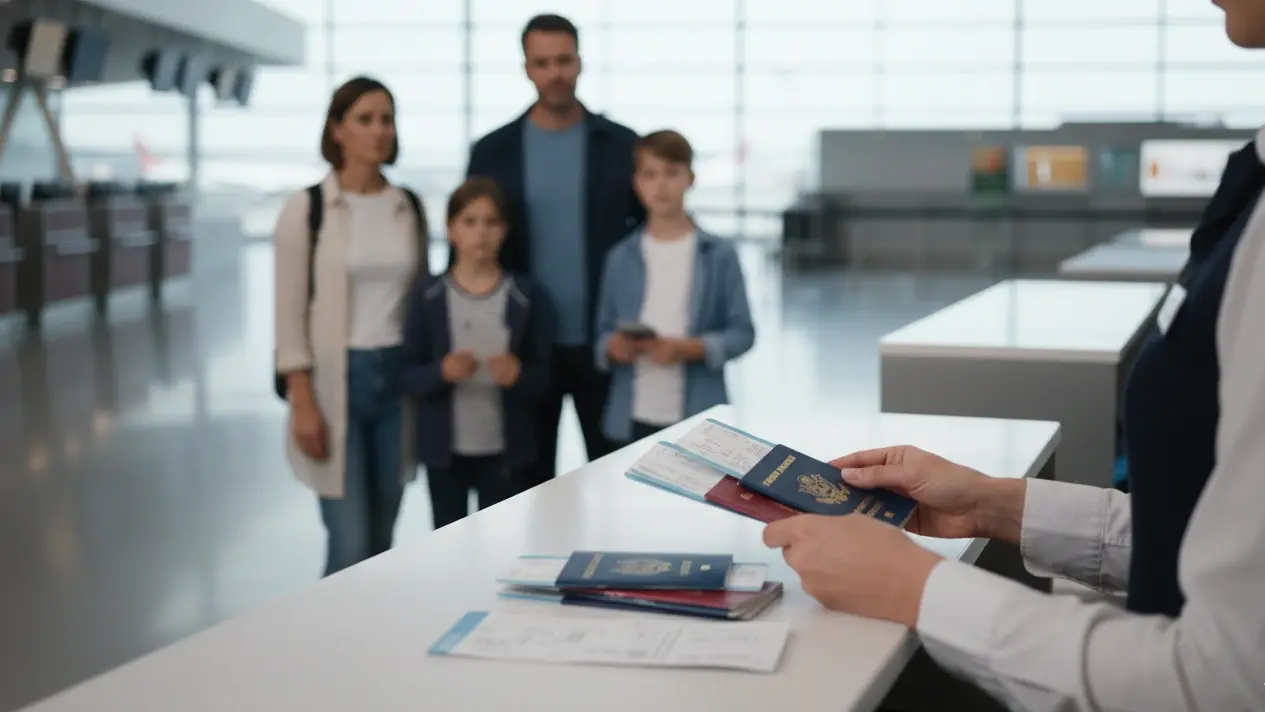
A family trip can look neat in your folder and still look fragmented on the airline side. That gap matters most when your visa-facing dummy ticket setup places parents, children, or relatives on separate PNRs for the same journey.
Why Separate PNRs Change How Staff See Your Family At The First Touchpoint
At the airport, the first person reviewing your trip usually does not start with your family story. They start with the booking record in front of them.
If your spouse is on one PNR, your child is on another, and your parent is on a third, the system does not automatically read that as one traveling unit. It reads it as separate passengers with separate records, separate booking histories, and sometimes separate servicing limits.
That changes the tone of the interaction right away.
A check-in agent may need to open each record one by one. That takes longer. It also makes small differences more visible. A return date that does not match, a middle name that appears on one record but not another, or a transit segment that differs by even a few hours can make your family look less coordinated than it really is.
This is where many travelers misjudge the situation. You know you are traveling together. The airline system only knows what each PNR shows.
The Exact Moments Separate PNRs Create Friction Before You Even Reach Security
The first friction point often appears before you reach the desk. One family member may check in online without trouble, while another gets blocked and told to see an agent. Now the family arrives half cleared, half pending.
That creates pressure immediately.
Then the desk process begins, and separate PNRs can slow down several routine steps:
-
Document verification may need to be done record by record instead of once for the group
-
Seat handling becomes harder if the family is not linked operationally
-
Baggage questions can get awkward when the booking records do not present the travelers as one unit
-
Boarding pass issuance may move at different speeds if one record triggers extra review
-
Transit review can take longer if each person is routed differently, even slightly
None of this means separate PNRs are wrong. It means the margin for mismatch gets smaller.
Even a simple statement like "we are all together" does not solve much if one record shows a morning departure, another shows a different fare bucket, and a third has a return leg that does not line up cleanly. The friction comes from the system view, not from your intention.
Why Check-In Staff Care Less About Your Story And More About Record Consistency
Check-in staff are trained to process what is verifiable, not what is verbally reassuring. That is why consistency matters more than explanation.
When staff review separate PNRs, they notice patterns fast. The details that draw attention are usually practical, not dramatic:
-
Matching or mismatching flight numbers
-
Same-day or split-day departures
-
Aligned return sectors
-
Similar routing through the same transit point
-
Clean passenger name formatting across all records
-
Logical family grouping for adults and children
If your family presents a dummy ticket arrangement for the same trip, the records should still tell one clear travel story. If one parent appears to depart on a different connection, the child is tied to another record, and the return looks scattered, the agent may pause because the trip no longer looks simple.
We should think about this the way the desk staff will. They are asking themselves one silent question: do these bookings behave like one family trip, or do they behave like unrelated passengers claiming to be together?
How Minor Passengers, Elderly Parents, Or Dependent Travelers Raise The Stakes
Separate PNRs become more sensitive when not every traveler is fully independent.
Children change the check-in dynamic first. If a minor is not clearly paired, timed, and seated with the accompanying adult, staff may need extra review before moving forward. Even if the names and relationships are obvious to you, the booking structure may still create hesitation.
The same applies to elderly parents who need assistance or travelers who rely on the rest of the family for navigation through transit and boarding.
In these cases, separate PNRs create more than paperwork friction. They can affect how smoothly the airport handles:
-
Seating the family together
-
Keeping dependent travelers close to the right adult
-
Explaining who is accompanying whom
-
Managing irregular situations if one record changes or fails to check in
That is why families should be especially careful when one traveler cannot reasonably be treated as a standalone passenger, even if the reservation technically allows it.
Visa Documentation Comfort Vs Airport Process Comfort
A dummy ticket can feel perfectly fine when you review it for visa submission. The route looks right. The dates work. The family trip appears covered.
Airport process comfort is a different test.
Visa documentation asks whether the itinerary supports the application. Check-in asks whether the bookings function cleanly in real time for actual passenger handling. Those are not the same question.
For the wider planning context, compare the family’s records with the dummy ticket for visa 2026 complete guide. Then bring the discussion back to the narrower problem here: keeping several PNRs readable as one family movement plan.
The Risk Is Not The Dummy Ticket Alone - It Is The Mismatch Pattern Around It
Separate PNRs do not create trouble on their own. The real problem starts when the flight records around them stop telling one clean family travel story.
Why Separate PNRs Become Suspicious Only When Other Details Start Drifting Too
A family on different PNRs can still look organized if the flight pattern is tight. Trouble starts when the separate records begin to drift in ways that make the trip look pieced together instead of planned together.
That drift usually shows up in small places first.
One parent has a slightly different outbound time. A child’s booking shows a different spelling style for the surname. The return date for one traveler moves by a day. One record uses a direct route, while another uses a connection through a different transit point.
Any one of those details may be manageable alone. Combined, they create a mismatch pattern.
For visa-sensitive travel, that pattern matters because both document reviewers and airline staff look for logic. Families do not need identical records across separate PNRs, but they do need records that still behave like one trip.
The safest question to ask is simple: if someone sees all family bookings side by side, do they look like one shared journey or four separate travel plans?
The Family Itinerary Patterns That Usually Feel Manageable
Some separate-PNR setups still look orderly because the family’s overall routing stays easy to follow.
The lower-friction patterns usually include:
-
The same outbound flight for all travelers
-
The same return flight for all travelers
-
Matching travel dates across the family
-
The same transit point, if there is a connection
-
Names formatted consistently across each reservation
-
A clear adult-minor pairing that makes sense operationally
These patterns work better because they reduce interpretation. Staff do not need to guess what is happening. The family appears split in booking records, but not in movement.
A good sign is when each PNR answers the same basic questions the same way:
-
When is the family leaving?
-
Where are they transiting?
-
When are they coming back?
-
Who is traveling with whom?
If separate records still produce consistent answers, the setup usually feels more controlled.
The Family Itinerary Patterns Most Likely To Trigger Manual Attention
The higher-risk setups are not always dramatic. Often, they simply look too uneven for a family that claims to be moving together.
The patterns that attract more scrutiny usually include:
-
Parents on one route and children on another
-
One spouse departing earlier or later without a clear travel reason
-
An outbound flight together, but return flights scattered across dates
-
Different transit airports for family members on the same supposed trip
-
One traveler showed a weaker onward pattern than the rest of the group
-
Mixed cabin, timing, or routing logic that makes the family look uncoordinated
These setups raise questions because they create avoidable complexity.
For example, if both parents and two children are visiting the same destination for the same period, but one child appears on a different connection with a different return day, staff may start asking whether the records reflect the real travel plan at all.
That does not mean the family has done anything wrong. It means the trip no longer explains itself quickly.
Why Transit Countries And Connection Complexity Can Magnify Separate-PNR Issues
Connections make separate PNRs more sensitive because they add more moving parts to compare.
A direct outbound and return is easier to understand. A two-segment routing through a transit hub brings in timing, terminal flow, connection windows, and the possibility of one traveler falling out of sync with the rest.
This gets more serious when separate PNRs create different connection structures inside one family.
For example:
-
One traveler has a short layover
-
Another has a longer layover on the same day
-
A child is booked through a different connecting airport
-
One record protects a connection, while another looks like a self-managed break in the journey
Even when the destination is the same, transit complexity can make the family look less unified. That matters for check-in review because airline staff need to assess whether the bookings are practical, not just whether the names match.
If your family must stay on separate PNRs, connection logic should be as close as possible across all reservations.
How Return-Leg Logic Can Quietly Undermine The Credibility Of The Whole Family Plan
Many travelers focus heavily on the outbound because that is the part they first think about for visa submission. For a family on separate PNRs, the return can be the part that makes the full pattern fall apart.
A clean return shows intent and coordination. A messy return suggests improvisation.
The most common return-leg problems are:
-
One family member is returning on a different date without a reason that fits the trip
-
One parent booked back through another route while the rest stayed aligned
-
A child’s return is separated from the adult they appear to be traveling with
-
One record is missing the same level of round-trip clarity shown in the others
When staff review separate PNRs, the return side often reveals whether the family records were built with one shared plan in mind. If the outbound says “we travel together” but the return says “everyone moves differently,” the booking story starts losing strength.
DummyFlights.com offers an instantly verifiable reservation with a PNR and PDF, unlimited date changes, transparent pricing of $15 or about ₹1,300, credit card payment, and broad worldwide visa use support.
The useful point here is knowing what kind of reservation setup helps keep a family itinerary clear when separate PNRs already make the structure more delicate.
Once the family structure is clear, the evergreen dummy ticket for visa guidance helps separate what temporary travel proof can show from what the airline, consulate or border authority must decide independently.
What Families Should Verify Before Submission And Again Before Travel Day
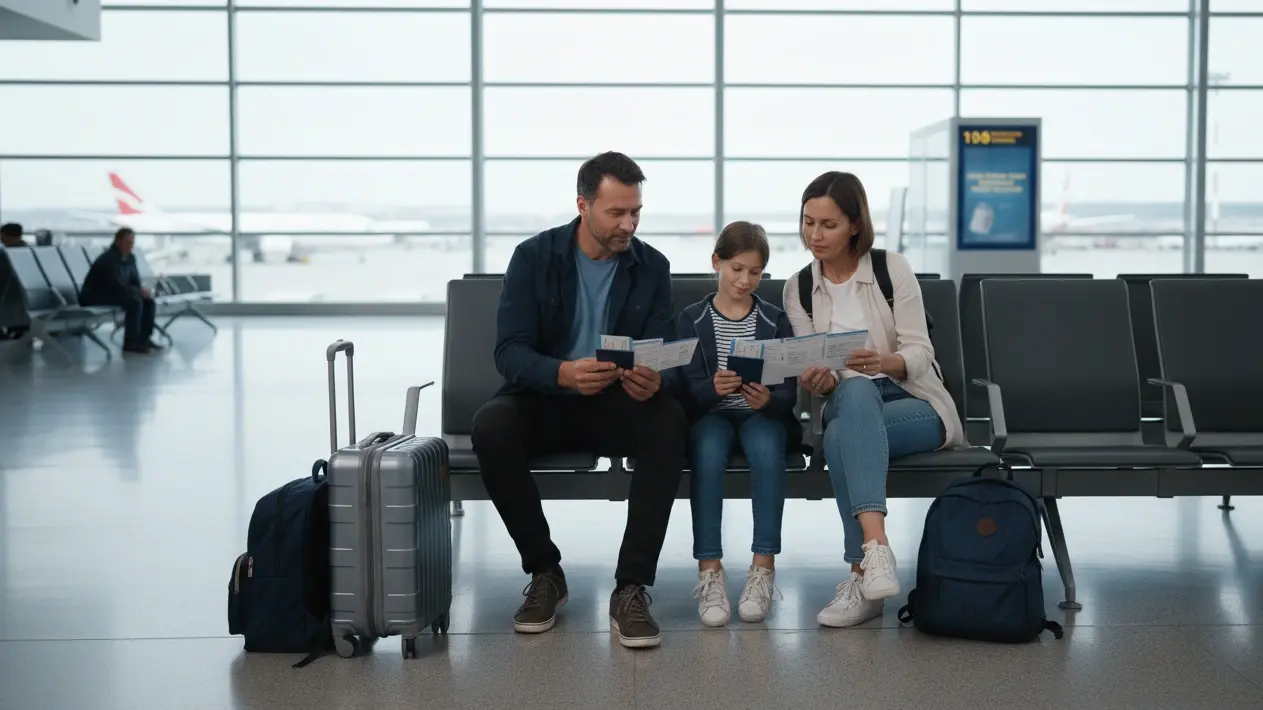
Before you submit anything, you need to review the family’s records as one moving group, not as separate files. A dummy flight ticket can support the visa process well, but only if every linked record still makes sense when an airline desk reads it under time pressure.
How To Audit Each Family Member’s Verified Flight Reservation Like An Airline Agent Would
Start with the booking exactly as the staff will see it. Open each flight reservation and compare the core flight details line by line.
Check these points first:
-
Passenger name spelling
-
Departure date
-
Route and transit point
-
Return timing
-
Passport number, if shown
-
PNR code or booking code
-
Whether the passenger name record looks clean and complete
Then check how the family appears as a unit. Your flight itinerary should show one believable movement pattern. If one record looks like onward travel while another looks like an open-ended stay, the file stops reading like a shared trip to the destination country.
Do not rely on memory. Pull the PDF, the booking form, and any e-ticket number listed in the record. A verified flight reservation is useful only when the details still match across all travelers.
The Questions To Ask When Your Family Must Stay On Separate PNRs
Separate records can work, but you need to test the logic before your visa application goes anywhere near visa officers.
Ask these questions in plain language:
-
Do all family members show the same intended travel dates?
-
Does each adult clearly line up with the child traveling beside them?
-
Does one record look like a temporary flight reservation while another looks like an actual flight reservation for a different plan?
-
If one person is asked to explain the trip at a visa appointment, will the answer match every other record?
-
Would the same set of records still make sense at check-in for actual travel?
This is where many visa applicants get too comfortable with isolated documents. One dummy airline ticket may look fine on its own. Four records reviewed together may tell a different story. If one person has an onward ticket, another has a round-trip ticket, and a third appears to stop in a different city, the family setup starts to look improvised.
Why The Timing Of Reservation Creation Matters More Than You Expect
The date and sequence of dummy ticket booking can affect how coherent the family’s trip looks. A family plan built in one clean step usually reads better than records created in scattered stages.
If one parent gets a dummy flight reservation two weeks earlier, one child receives a dummy air ticket the night before the embassy appointment, and another traveler updates only the return sector later, the family file can look stitched together. That can complicate the visa application process even when the route itself remains unchanged.
Timing also affects verifiability. If you arranged a dummy flight ticket online, confirm that the temporary reservation still reflects the same travel details when you review it again. A verifiable flight reservation should not leave you guessing which version is current.
This matters even more when the family is trying to avoid a full ticket purchase too early. You may not want a paid ticket, a non-refundable ticket, or a real ticket before the case is decided. That is reasonable. But the records still need enough internal order to look deliberate, not rushed.
What To Double-Check When One Family Member Has A Stronger Travel History Than The Others
A stronger traveler can create false confidence inside the group. One parent may have a past Schengen visa, a long record of actual travel, or a smoother prior border history. That does not fix weak coordination in the rest of the family file.
We should review the least convincing record first, not the strongest one.
Look closely at the person whose booking may attract more questions:
-
The first-time applicant
-
The child on a separate record
-
The spouse with lighter travel documents
-
The traveler whose confirmed ticket looks least aligned with the rest
If that person’s file is messy, the family’s overall story gets weaker. A confirmed flight ticket for one traveler does not rescue a second record that still looks like a placeholder with mismatched onward travel proof. In practice, the cleanest family files are the ones where the weakest record still looks controlled.
How To Prepare For Check-In Conversations Without Sounding Defensive
At the airport, keep the explanation short and operational. You are not trying to win an argument. You are helping staff connect separate records quickly inside the booking system.
Useful language is simple:
-
We are traveling together as one family
-
These are our linked travel documents
-
Our records are separate, but the route and return match
-
This child is traveling with this parent
Do not add extra story unless asked. Let the record do the work first. If staff need help, show the valid PNR, the verifiable dummy ticket, and the matching flight seats or route details without overexplaining why you did not purchase air tickets yet.
You also need to know what not to say. Do not blur the line between a confirmed ticket and a real flight ticket if your family has not made a final ticket purchase. Clear wording matters. So does calm delivery.
The “Second Look” Review To Do 24–48 Hours Before Departure
Your final review should happen close to departure, not just on submission day. A genuine dummy ticket or a valid ticket can still cause friction if one family record drifts after the original check.
Use one last review window to confirm:
-
The airline's website still shows the same route
-
The airline's official confirmation, if available, matches the PDF in hand
-
Each passenger still has the same flight ticket structure
-
No record has changed from a secure planning tool into something that now conflicts with a real flight path
-
No one has switched from onward travel proof to a separate onward ticket that breaks family timing
If you need a last-minute correction, make it before the airport sees the family as four separate problems instead of one shared movement plan.
How To Reduce Friction Even When You Cannot Merge All Into One Booking
Sometimes the family cannot be moved onto one record, and that is where planning matters most. You do not need perfect symmetry, but you do need a setup that reads clearly at the desk, on the airline's official site, and during the final check before departure.
When Separate PNRs Are Unavoidable, Make The Travel Story Simpler Everywhere Else
If the PNRs stay separate, reduce every other source of complexity. Keep the same departure date, the same routing, and the same return pattern wherever possible.
That means stripping away avoidable variation. Do not let one traveler show a direct flight while another shows a different connection unless there is a real operational reason. Do not add a last-minute transit city just because it was easier to find a flight reservation on paper.
A dummy flight ticket legal for embassy submission still works best when it mirrors a believable family movement plan. That is what supports both visa requirements and smoother airline handling later.
If you need to book dummy flight ticket support for a family close to an embassy filing date, keep the records aligned around one simple trip story. The cleaner the route, the less explaining you will need.
Why One Weak Reservation Can Slow Down The Strongest Family Visa Application
Families often assume the strongest traveler will carry the group. In practice, the weakest record usually controls the pace of the interaction.
If one parent has a solid travel history, a stable itinerary, and secure flight reservations, that helps. But it does not cancel out a child on a separate booking with mismatched timings or a spouse whose return looks loosely attached.
The risk grows when one file looks polished, and another looks rushed. A reliable dummy ticket or an actual confirmed segment for one traveler does not protect a second record that still feels incomplete.
This is why a reliable dummy ticket provider matters more in family cases than in solo cases. You need consistency across records, not just a usable PDF for one person. Airline verifiable itineraries help because they reduce the gap between what you submit and what can be checked later.
The goal is not to impress staff. The goal is to make the whole family readable in one pass.
The Practical Role Of Seating, Baggage, And Airport Flow In Keeping The Family Believable
Families on separate PNRs should think beyond the document stage and plan the airport sequence itself.
Start with the arrival flow. Reach the counter together. Present passports together. Make it easy for staff to understand who belongs in the same travel group before they start opening separate files.
Then think through the friction points that appear on the day:
-
Who stands with the child if the bookings are split?
-
Who speaks first if one record needs manual review?
-
Which adult is shown as the accompanying traveler?
-
Will the family ask about flight seats at the same time, or only after boarding passes start printing?
-
Will baggage be presented as one family movement or as disconnected travelers?
Even full-service carriers such as Singapore Airlines still process the booking record first. Separate files do not become easier just because the family is polite or well prepared. They become easier when your airport flow matches the booking logic.
This is also where families should avoid treating dummy ticket airlines as a category that solves the real problem. The issue is not the label. The issue is whether the family presents one operationally coherent trip at the counter.
How To Think About Disruption: Delays, Reroutes, And Partial Booking Failures
Separate PNRs are most exposed when the day stops going to plan.
One booking may hold. Another may change. A route may be delayed. A transit point may tighten. If one family member gets moved and the rest stay put, the records stop behaving like one trip in real time.
That matters even more when a connection involves a transit visa question or a narrow transfer window. A family that looked fine on static documents can become hard to manage once the schedules shift.
This is why you should test the setup before travel day. Ask one blunt question: if one record fails, how quickly can the family still move as a unit?
Also, think about money. A paid ticket can bring cancellation fees. A non-final setup can bring timing risk. Neither option is automatically wrong. The point is to know which type of exposure you are accepting instead of discovering it at the airport.
When It Is Smarter To Rebuild The Family’s Itinerary Logic Instead Of Defending It
Some setups can be explained. Others should be rebuilt before they reach the airport.
Rework the arrangement if you see any of these signs:
-
The child is not clearly tied to the accompanying adult
-
One return segment no longer matches the rest of the family
-
The route depends on different transit rules across separate records
-
One booking cannot be checked cleanly after you receive dummy ticket files
-
The records look acceptable for visa approval, but weak for actual travel
This is the point where a real ticket is not always the answer, but a cleaner structure usually is. A family should not have to defend why four records appear to describe four different trips.
The safest family setup is not the one with the most paperwork. It is the one that explains itself quickly. When separate records are unavoidable, build them so the route, timing, and traveler pairing all point in the same direction.
If the family file also needs a broader flight-reservation framework, use BookForVisa’s flight reservation for visa 2026 guide for that separate intent. Keeping the reservation layer distinct from the dummy-ticket layer helps prevent keyword overlap and makes the file easier to review.
Make The Family Trip Easy To Read At Every Check-In Desk
When your family is spread across separate PNRs, the smartest move is to make every flight detail point to one clear trip. That is what supports a smoother visa process, a cleaner visa application, and fewer questions at check-in. Your next step is simple: review every record together, not one by one, and fix anything that makes the family look split in timing, routing, or return plans.
This issue is not solved by hotel bookings or a dummy hotel booking. It is solved when your family’s flight reservation, travel details, and actual travel plan all tell the same story. If the bookings make sense in seconds, you can move forward with much more confidence.
Need family travel proof that stays consistent across separate PNRs? DummyFlights helps you prepare temporary reservations for the intended route and dates so passenger names, return sectors and supporting documents are easier to compare.
Create your dummy ticketFAQ
Can a family use separate PNRs for a visa application?
Often, yes, but separate records should still show one coherent family itinerary. Match names, route, dates, return logic and accompanying-adult details wherever possible.
Do separate PNRs mean the family will be refused boarding?
No. Separate PNRs are not automatically a refusal reason. They can, however, cause extra handling when the records contain mismatched flights, dates, names, transit points or traveler pairings.
Should children be on the same PNR as their parents?
A single PNR may simplify servicing, but the key requirement is that the child’s route, dates and accompanying adult are clear and operationally workable. Follow the airline’s own child-travel rules.
Can a dummy ticket merge separate PNRs?
No. A dummy ticket can show planned travel proof, but it cannot combine airline records, create linked servicing rights or guarantee seats together.
Should every family member have the same return flight?
Matching return flights usually make the shared plan easier to understand, but a different return can be legitimate when the reason is real and clearly documented. Avoid unexplained date or route drift.
Does a family dummy ticket guarantee visa approval or boarding?
No. A reservation is supporting evidence only. A consulate, airline and border authority may apply different checks, and none is guaranteed by a dummy ticket.
Friendly reminder: DummyFlights provides temporary travel-proof documents for planning and application support. Requirements vary by destination, airline, route and applicant situation. A dummy ticket can support a file, but it does not guarantee approval, boarding or entry.