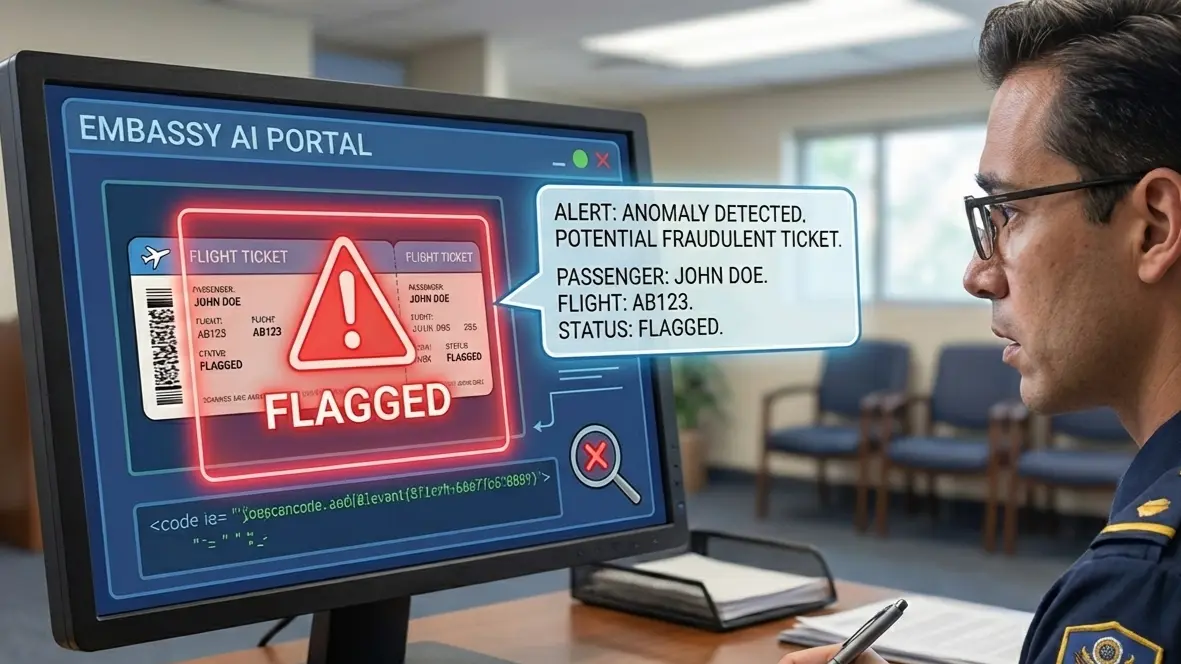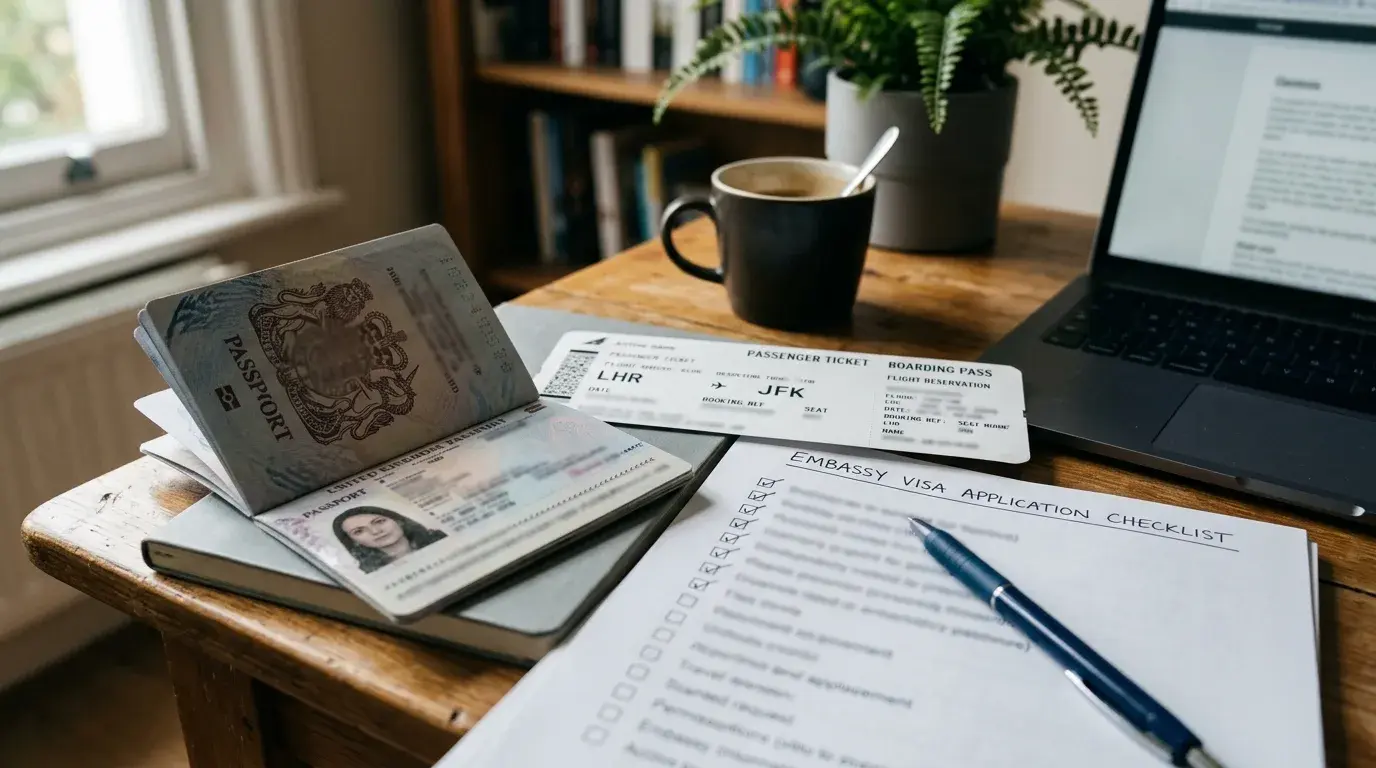

Bangkok travel proof is usually judged before the traveler reaches Bangkok. The first serious question often comes at check-in, where airline staff need to decide whether your documents are strong enough for boarding. If the route looks vague, the exit date is missing, or the passenger details do not match, a cheap-looking PDF can create stress at the worst moment.
This guide keeps the focus where it belongs: using a dummy ticket for Bangkok as clean temporary travel proof, not as a fake story. The goal is a realistic exit plan that supports your Thailand trip, matches your passport, and makes sense whether you land at Suvarnabhumi Airport or Don Mueang Airport.
Key facts before preparing Bangkok travel proof:
- Thailand official guidance references proof that the traveler will leave Thailand after the stay.
- Tourism Thailand says foreign visitors should hold proof of onward travel on arrival.
- Thailand visa and exemption rules can change, so check your current nationality route before flying.
- A Bangkok dummy ticket should show a realistic exit date inside the permitted stay window.
- Airline staff may ask for onward proof before Thai immigration ever sees the traveler.
Flying to Bangkok and need exit proof ready? Create a clean dummy ticket with DummyFlights after your route, passport name, Thailand arrival date and onward plan are stable.
Create Your Dummy TicketIn This Guide
Start With the Checkpoint That Will Actually Ask
A Bangkok dummy ticket can serve different moments. It may support a visa file, satisfy an airline counter question, or help explain onward travel at immigration. The same PDF can be useful in all three places, but each checkpoint looks at it differently.
Three checkpoints, three definitions of acceptable proof
The visa file checks whether your documents support the purpose and timing of the trip. The airline counter checks whether boarding you could create a return-transport problem. Thai immigration checks whether you qualify to enter and whether the trip matches the permitted stay. A strong dummy ticket gives each checkpoint a simple answer.
| Checkpoint | What they usually want to understand | What your dummy ticket should show |
|---|---|---|
| Visa or pre-travel document review | Your dates, route and travel story are consistent. | Clean passenger details and dates matching the file. |
| Airline check-in | You have proof of leaving Thailand if asked. | Visible onward or return plan with readable booking details. |
| Bangkok immigration | Your stay fits the entry route and permitted period. | Exit date, onward destination and realistic travel logic. |
The airline counter is often the strictest practical checkpoint because staff have limited time and no interest in decoding a complicated travel story. If the document is hard to read, mismatched, expired-looking or route-confusing, the conversation becomes longer.
Your exit-date window is the whole game
For Bangkok, the exit date matters more than decorative details. A dummy ticket should show that the traveler plans to leave Thailand inside the allowed stay window. If your route is visa-exempt, visa-on-arrival, e-visa or tourist visa based, the exit proof should match that route. A beautiful document with the wrong date is still weak proof.
Do not build the ticket around the cheapest possible route if that route creates questions. Build it around a believable next step. If the traveler enters Bangkok for seven nights, the onward date should sit naturally after those seven nights, not weeks later without explanation.
Two-minute Bangkok proof decision:
- Confirm the traveler’s current Thailand entry route.
- Confirm the permitted stay window.
- Choose a return or onward destination that matches the real plan.
- Match the passenger name to the passport.
- Make the exit date visible on the PDF.
- Keep a phone copy and a printable copy ready.
The plausibility test for your onward destination
Your onward destination does not need to be fancy. It needs to make sense. Bangkok to Kuala Lumpur, Singapore, Ho Chi Minh City, Bali or back home can be easy to understand when the traveler’s route supports it. A random city chosen only because it was cheap can look strange if it has no connection to the stated trip.
If you plan to leave Thailand by land after flying into Bangkok, the proof needs extra clarity. Airline staff may not treat a verbal land-exit plan as enough. If you have bus, train, hotel or onward regional proof, keep it together. If you use an onward ticket instead, make sure it supports the same timeline rather than contradicting it.

BKK vs DMK Arrival Logic
Bangkok has two major airport pathways: Suvarnabhumi Airport (BKK) and Don Mueang Airport (DMK). The immigration principle is the same, but the traveler profile can feel different. BKK often handles long-haul and full-service routes. DMK often handles low-cost and regional routes. The proof should fit the airline, route and next destination.
What changes
The airline counter may change. The route pattern may change. The traveler’s onward destination may look more regional at DMK and more international at BKK. Low-cost carriers may be more direct about onward proof because denied boarding creates immediate operational problems.
What does not change
The passenger name must match. The exit date must fit the stay. The onward or return plan must be believable. A dummy ticket for Bangkok should not depend on the airport to make it credible. It should be clear even when reviewed quickly by someone who only has thirty seconds.
Bangkok airport proof check:
- BKK arrival: make long-haul return or onward plan easy to read.
- DMK arrival: make regional onward logic practical and believable.
- One-way arrival: keep exit proof ready before check-in.
- Land-exit plan: carry supporting proof instead of relying on explanation alone.
- Repeat entry: keep the travel story especially clean.
Fast Ways to Get Bangkok-Ready Travel Proof
Speed matters when the trip is close, but speed cannot replace consistency. A Bangkok dummy ticket is useful because it can be prepared quickly, but the fast option still has to look clean, readable and realistic.
Option 1: airline holds and fare locks
Airline holds can be clean when available. They are tied to a real airline system and can look straightforward. The problem is that they are not universal, may expire quickly, and may not exist on the route you need. If the hold expires before check-in or document review, it may stop being useful.
Option 2: refundable ticket strategy
A refundable ticket can be strong proof, but it requires cashflow and discipline. Travelers sometimes assume “refundable” means risk-free, then discover cancellation windows, fees, currency conversion losses or slow refunds. For a simple Bangkok proof need, tying up full airfare may be unnecessary if temporary travel proof solves the document gap.
Option 3: clean dummy ticket workflow
A dummy ticket works best when it is prepared as a serious travel-proof document, not a throwaway screenshot. The passenger name should match the passport, the route should make sense, the exit date should sit inside the allowed stay, and the PDF should be readable on mobile and desktop.
This is where DummyFlights fits the intent. Travelers who need fast Bangkok proof can create a dummy ticket after the real route logic is clear, without buying final airfare too early or relying on a fake-looking edit.
Option 4: points or award booking
Points bookings can be useful if the traveler already has miles and the booking is easy to manage. They can also be confusing if the ticket rules, cancellation terms or airline record are not obvious. The proof should still answer the same basic question: where does the traveler go after Thailand?
What check-in staff can verify in thirty seconds
Most check-in checks are practical, not philosophical. Staff look for a passenger name, destination, date, onward or return route and a booking reference if available. They may not deeply investigate every field. But if one of those fields is missing or inconsistent, the file can quickly become a problem.
Self-verify before leaving home:
- Open the PDF on your phone without logging in.
- Zoom once and confirm the passenger name is readable.
- Check the exit date against your allowed stay.
- Confirm the onward city matches your stated plan.
- Save a backup copy offline.
- Print one copy if the airport or airline is likely to be strict.

Where Dummy Tickets Fail
A dummy ticket fails when it creates more doubt than clarity. The document may look polished, but if the route is illogical, the name is wrong, the date is outside the stay window or the PDF looks edited, the traveler has to explain instead of simply presenting proof.
Visa applicant mistake checklist
- The passenger name does not match the passport.
- The exit date sits outside the expected stay period.
- The onward destination has no relationship to the trip.
- The route changes between documents.
- The PDF is blurry, cropped or hard to read.
- The traveler carries an old draft instead of the final version.
- The booking reference is missing when the document claims to be verifiable.
- The hotel dates end before the exit plan without explanation.
- The traveler says the ticket is “just for formality.”
- The document looks manually edited.
Myth: any onward proof is enough
Not always. Onward proof is strongest when it fits the traveler’s entry route, stay length and next destination. A cheap ticket to a random country may satisfy one field but create a bigger question. For Bangkok, the proof should look like a natural continuation of the trip.
The best test is simple: if a tired check-in agent asks “Where do you go after Thailand?” the document should answer without a long story. A clean exit to a nearby country, a realistic return home, or a regional route that matches the hotel dates is easier to accept than a random route chosen only because it was available fast.
Myth: Bangkok immigration never asks
Many travelers are not asked. That does not mean nobody is asked. Airline staff can ask before departure, and immigration officers can ask when the travel pattern looks uncertain. The point of a dummy ticket is not to predict who will ask. The point is to be ready if someone does.
Some travelers confuse “I was not asked last time” with “proof does not matter.” That is risky logic. Entry patterns, nationality routes, airline policies, ticket type, one-way travel and recent Thailand history can all change the level of attention. A Bangkok dummy ticket is not there because every traveler will be questioned. It is there because the cost of being unprepared is high.
Timing traps
Travelers often create proof too early, then change the stay dates, hotel plan or onward destination. The dummy ticket becomes outdated while the rest of the file moves forward. If your Bangkok arrival date changes, check every supporting document, not just the flight proof.
Separate tickets and multi-leg routes
Separate tickets can be valid, but they create explanation risk. If the airline sees only the first leg into Bangkok, they may ask how you leave Thailand. Keep the next leg easy to show. If your domestic feeder flight and international route are on different records, make sure the dates do not overlap or leave a gap that looks careless.
Repeat entry and visa-run optics
Repeat Thailand entries can attract more attention than a first tourist trip. A dummy ticket will not fix a weak entry pattern by itself. It can only support a clean travel story. If the traveler has several recent entries, the onward route, stay plan and funds should be especially consistent.
For repeat entries, avoid a route that looks like it was built only to reset the clock. If the stay is genuinely tourism, regional travel or remote-work-adjacent movement within permitted rules, the documents should make that pattern understandable. The onward ticket, hotel plan and traveler explanation should all point in the same direction.
If check-in refuses the proof, do this calmly:
- Ask which detail is missing or unacceptable.
- Show the clearer copy if you have one.
- Confirm the exact onward date and destination.
- Do not argue that rules never apply.
- If needed, create cleaner proof that solves the specific issue.

How to Present Your Proof Smoothly
Presentation matters because travelers often create problems with language. A clean dummy ticket should speak through its details. You do not need to over-explain it, apologize for it or describe it as temporary unless asked a direct question.
The ten-minute consistency audit
Before leaving for the airport, compare the dummy ticket against the passport, hotel plan, travel dates and onward route. The purpose is not perfection. The purpose is removing obvious contradictions.
- Passport name matches the passenger line.
- Bangkok arrival date matches the actual trip.
- Exit date is inside the permitted stay.
- Onward destination is believable.
- PDF opens offline.
- Booking reference is readable if shown.
- Hotel dates do not contradict the exit plan.
What to say if asked about your stay
Keep the answer plain. “I’m staying in Bangkok for seven nights, then flying onward to Kuala Lumpur” is stronger than a nervous explanation about why you bought or did not buy final airfare. The traveler’s answer should match the document. If the proof says one thing and the traveler says another, the document loses power.
Good airport answer pattern:
- State the stay length clearly.
- Name the next destination or return route.
- Show the dummy ticket only when asked.
- Keep the hotel dates consistent with the answer.
- Do not describe the document as disposable or “only for formality.”
Phone vs paper
A phone copy is convenient. A paper copy is often calmer. Some airport counters are busy, Wi-Fi can be weak, and a cracked screen does not help. For Bangkok trips where the route is one-way, regional or repeat-entry sensitive, carry both. The document should be easy to read without scrolling through a cluttered gallery.
Hotel and dummy booking alignment
If you use dummy hotel proof or temporary accommodation support, keep the dates aligned with the ticket. The hotel does not always need to cover every night in Thailand, especially for flexible travelers, but any gap should make sense. A three-night hotel plan beside a thirty-day stay and no onward plan can invite questions.
For Bangkok-first trips, hotel proof should usually cover the first stay clearly. If the traveler plans to move to Chiang Mai, Phuket, Pattaya or another country after Bangkok, the onward proof should explain the movement better than a vague answer. The stronger the trip logic, the less the traveler has to defend the document.
Scenario drills for Bangkok travelers
Different travelers need different proof strength. A short round trip to Bangkok with a return home is straightforward. A one-way arrival with a plan to continue through Southeast Asia needs stronger onward logic. A backpacker who wants flexibility should still show a believable next step. A family group should keep every passenger name and date aligned. A business traveler should avoid leisure-looking routes that conflict with the meeting schedule.
The document should match the traveler type. For a simple tourist, simple is strongest. For a regional traveler, the next country should make sense. For a repeat visitor, the route should look intentional. For a last-minute traveler, the PDF should be fresh, readable and easy to open offline.
Get Your Bangkok Onward Proof Ready Before Anyone Asks
The strongest Bangkok dummy ticket is simple. It shows the same traveler as the passport, the same arrival date as the trip, and a believable exit from Thailand. It does not need to overperform. It needs to remove uncertainty.
Final Bangkok dummy ticket checklist:
- Passenger name matches the passport.
- Thailand entry route is current for the traveler’s nationality.
- Bangkok arrival airport and date are correct.
- Exit date fits the permitted stay.
- Onward or return destination is realistic.
- PDF is readable and not overdesigned.
- Phone and paper copies are ready.
- Old drafts are deleted or clearly separated.
The aggressive move is preparation. A clean dummy ticket for Bangkok gives airline staff and immigration officers a visible answer before the conversation turns stressful. It supports the trip by making the exit plan obvious, realistic and consistent.
Need Bangkok travel proof now? Create a clean dummy ticket with DummyFlights before check-in turns one-way travel into a document problem.
Create Your Dummy TicketFrequently Asked Questions
Do I need a dummy ticket for Bangkok?
You may need onward or return proof depending on your nationality, entry route, airline and travel pattern. A dummy ticket can help when it shows a realistic exit from Thailand and matches your passport details.
Can airline staff ask for onward proof before Bangkok?
Yes. Airline staff may check whether you have proof of leaving Thailand before boarding you. That is why your Bangkok dummy ticket should be ready before you reach the counter.
Is a dummy ticket the same as a paid e-ticket?
No. A dummy ticket is temporary travel proof used for planning, visa support or onward-travel evidence. It should not be presented as a paid final ticket unless it is actually ticketed and paid.
What details matter most on a Bangkok dummy ticket?
The most important details are passport-matched passenger name, Bangkok arrival date, exit date, onward or return destination, readable route details and a clean PDF format.
Can I use an onward ticket instead of a return ticket?
Often yes, when the onward destination is realistic and fits the allowed stay. The proof should show where you go after Thailand and should not contradict your hotel dates or travel story.
What if I plan to leave Thailand by land?
A land-exit plan can work, but it may need stronger supporting proof. If you fly one-way into Bangkok, carry clear evidence of the land route or create onward proof that matches the same timeline.
Should I print my Bangkok dummy ticket?
Yes, if your route is one-way, regional, repeat-entry sensitive or likely to face manual review. A phone copy is useful, but a printed copy is calmer at busy airport counters.
Does a dummy ticket promise entry into Thailand?
No. A dummy ticket can support the travel-proof part of the file, but entry decisions depend on current rules, the traveler’s documents and the officer’s assessment.
Friendly reminder: DummyFlights provides temporary travel-proof documents for planning and application support. Requirements vary by destination, airline, route and applicant situation. A dummy ticket can support a file, but it does not promise approval, boarding or entry.