
Short answer: A dummy flight booking for visa is a temporary travel-proof document used to show planned flight dates, route, passenger details and booking reference before buying final airfare. It is strongest when it is verifiable, current, matched with hotels, insurance, funds and cover letter dates, and never presented as a fully paid ticket unless it has actually been ticketed.
Key facts (DummyFlights):
- Price: $15 USD per person.
- PNR validity: 48–72 hours.
- Free date changes within the same day of booking.
- Free reissue only when the ticket is not valid.
If you have ever applied for a visa from India, you know the process can feel like juggling glass balls. One wrong move can mean rescheduled appointments, mismatched documents or money trapped in an airline ticket you may never use. A dummy flight booking solves one specific problem: it helps you show intended travel without paying for final airfare too early.
The strong version is simple. A dummy ticket should look like a real travel plan because it reflects a real intended route. It should not look like a fake PDF, a random screenshot or a recycled itinerary. Visa officers and visa application centers do not need drama. They need dates, names, route logic and supporting documents that tell the same story.
Need visa-ready travel proof without buying final airfare? Create a clean dummy flight booking with DummyFlights after your route, hotel dates and visa appointment window are stable.
Create Your Dummy Flight BookingThis guide explains what a dummy flight booking really is, how embassies and visa centers read it, when to create one, how long it can remain useful, and how to avoid the risky shortcuts that make a visa file look weaker instead of stronger.
In This Guide
- Official-source check
- What dummy flight booking means
- What embassies and visa centers check
- Rules, regions and hidden traps
- When to create or refresh the booking
- How to make the itinerary verifiable
- Risks, scams and fake-ticket red flags
- Hotels, insurance, funds and cover letter alignment
- How DummyFlights fits
- FAQ
Official-source check: Official guidance often supports the same practical principle: applicants should show a believable travel plan without necessarily buying final airfare too early. GOV.UK says visitors should be able to pay for return or onward travel and warns that documents do not guarantee success. Singapore ICA says visa applicants are not required to buy a flight ticket before applying. The Embassy of Japan says a flight itinerary may be required but ticket purchase is not required. Sources: GOV.UK visitor supporting documents, Singapore ICA flight ticket guidance and Embassy of Japan short-term visa checklist.
Reviewed for: dummy flight booking terminology, visa-ready claim safety, PNR and reservation wording, India applicant context, fake-ticket risk, hotel-insurance-funds alignment, timing logic and DummyFlights conversion clarity.
What Dummy Flight Booking Means for Visa Applicants
Most confusion starts with wording. Embassies and consulates often use terms such as flight itinerary, travel itinerary, booking confirmation, travel plan or proof of onward journey. Travel agents and online sellers often call the same idea a dummy ticket or dummy flight booking. The words sound different, but the practical purpose is the same: show the intended route before committing to the final paid ticket.

A strong dummy flight booking explains the planned route without forcing the traveler to buy final airfare too early.
What embassies mean versus what travelers think
Many travelers hear “confirmed itinerary” and assume they must buy a final non-refundable ticket. That is not always the case. In many visa situations, the officer wants evidence of planning: where you intend to enter, when you intend to leave, how long you will stay, and whether the route matches your purpose.
A dummy flight booking is not supposed to be a forged ticket. Done correctly, it is a temporary reservation or itinerary document showing your proposed travel. It may include a booking reference or PNR. It may expire if not ticketed. Its job is to support the visa file while the final ticket purchase waits until the visa decision, appointment timing or route becomes stable.
Dummy booking, issued ticket and refundable ticket
These three are often mixed up, and that is where people get into trouble.
- Dummy flight booking: temporary reservation-style proof for a planned route.
- Issued ticket: paid final ticket with an e-ticket number and confirmed ticketing status.
- Refundable ticket: real purchase that can be canceled under fare rules, often with restrictions or fees.
- Edited fake ticket: risky PDF or screenshot that does not reflect a real booking record.
The safest position is to tell the truth through the document. If it is a reservation, treat it as a reservation. If it is paid and ticketed, treat it as a paid ticket. Do not use paid-ticket language for a temporary hold.
Why embassies ask for a flight plan
A flight plan helps the officer quickly understand the proposed trip. It is not only about the airplane. It is about intent, timing and consistency.
- Does the stay duration match the visa type?
- Do entry and exit cities match the destination plan?
- Does the route make sense geographically and financially?
- Do hotel, insurance and funds support the same dates?
- Does the cover letter describe the same movement pattern?
For example, a 10-day Schengen trip with a 45-day flight plan creates a mismatch. A cover letter saying Paris while the itinerary lands in Rome first can create a main-destination question. A hotel booking that starts two days after arrival can make the file look unfinished.
Why “embassy-ready” wording is stronger
Many competitors use loud certainty language that sounds powerful but can overpromise. A better long-term position is stronger and cleaner: embassy-ready, visa-ready, verifiable, realistic and aligned. That language sells the real benefit without pretending a document can control the visa decision.
A dummy flight booking can be widely used in visa files because many authorities understand applicants should not always buy final airfare before approval. But no provider can honestly guarantee that every embassy, officer or airline will accept every document in every situation. The file still needs to be consistent.
What Embassies and Visa Centers Actually Check
Visa officers do not always verify every flight. They read the file for plausibility first. If the route, dates, documents and story line up, the booking has done its job. If something looks strange, the flight proof may become a place where questions start.
Behind the counter: how the document is read
At a visa application center, staff may check that the document is present, readable and attached to the right application. They may not decide the visa outcome. The embassy or consulate makes the decision. That means the booking should be easy for both layers to understand.
The reader usually checks the simple things first: name, passport match, travel dates, destination, return or onward route, and whether the document supports the stated purpose. A clean booking reduces friction. A messy one creates work.
Understanding PNRs like a pro
A PNR, or Passenger Name Record, is a booking reference used in airline systems. It can be useful because it makes the itinerary look more like a real reservation record. But a PNR is not magic. It can expire, be canceled, be airline-specific, or fail to show the way a traveler expects depending on how the booking was created.
Use the PNR as supporting detail, not as a fake guarantee. If the document includes a PNR, it should match the passenger name and route. If the route involves partner airlines or separate bookings, make sure the document is understandable without needing a detective.
The difference between dummy booking and airline hold
An airline hold is usually created directly through an airline or booking channel and may allow payment later. A dummy booking service creates travel-proof documentation designed for application support. Both can be useful, but both have limits. Holds can expire quickly. Some airlines no longer offer long holds. Some booking channels cancel unpaid reservations automatically.
The key is not the label. The key is whether the document is current, readable, believable and aligned with the rest of the visa file.
When dummy bookings backfire
A dummy booking backfires when it makes the file look less credible. Common causes include impossible connections, wrong name order, dates that contradict the appointment, hotel dates that do not match flights, suspiciously cheap fake PDFs, or a route that has nothing to do with the stated purpose.
The mistake is usually not “using a dummy ticket.” The mistake is using a weak or dishonest travel-proof document and expecting it to carry the whole application.
What makes a booking visa-ready
A visa-ready dummy flight booking is not judged by one feature alone. It is judged by how well it fits the whole file. The route should match the destination. The stay length should fit the visa type. The arrival city should make sense beside the hotel. The return or onward leg should make the applicant’s exit believable.
For Indian applicants, the booking also needs to survive practical upload and submission issues. Some visa centers compress PDFs. Some applicants print documents in black and white. Some families carry multiple files. That means the document should remain readable even after printing, scanning or portal upload. Tiny text, low-contrast screenshots and crowded layouts are not premium; they are fragile.
Why “plan, not purchase” is the winning frame
The strongest way to understand a dummy booking is this: the embassy wants to see the plan, not necessarily your financial commitment to the final ticket. A paid ticket can show commitment, but it can also create unnecessary financial risk before the visa is decided. A clean reservation-style document shows the same intended movement without forcing the traveler to lock money into final airfare too early.
This is why the wording matters. Do not say “I bought the ticket” if you did not. Say the document shows your intended route for the visa file, and that you will finalize the paid ticket after approval or when the travel date is fixed. That is honest, practical and easy to understand.
Embassy Rules, Regional Nuances and Hidden Traps
There is no single global rule that applies identically to every embassy. Schengen, UK, Canada, Japan, Singapore, UAE and other destinations can use different document wording. Even within the same destination, the checklist may differ by applicant location, visa type and application center.
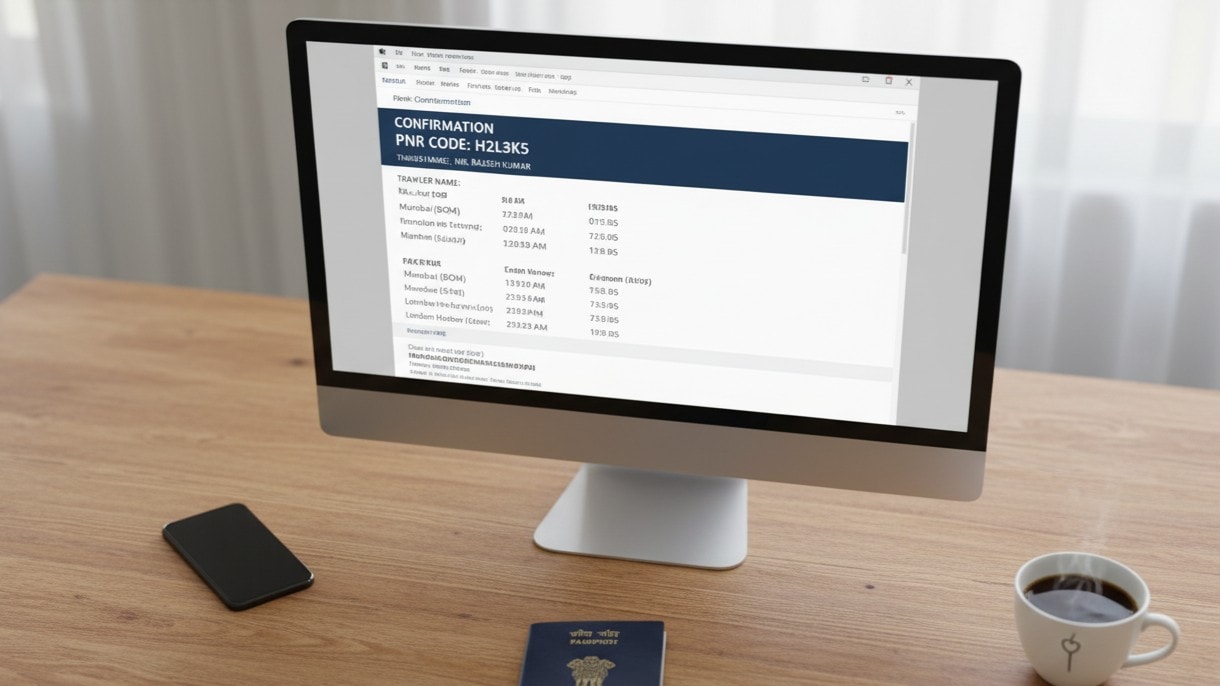
Different destinations use different checklist language, but consistency is always the central rule.
One size does not fit all
Some checklists ask for a flight itinerary. Some ask for return or onward proof. Some mention booking confirmation. Some warn not to buy tickets before the visa decision. Others stay quiet but still expect a coherent travel plan. The smart move is to read the destination checklist and then prepare the booking to match the language used there.
If the checklist says flight itinerary, avoid presenting the document as a fully paid ticket unless it is actually ticketed. If it says proof of onward travel, make sure the exit route is visible. If it says travel plan, the booking should connect with the cover letter and accommodation.
Round-trip versus one-way
A round-trip booking is often easiest for tourist and short-stay visa files because it clearly shows the planned exit. One-way travel can still make sense for students, long-stay applicants, relocation, onward regional travel, family reunification, digital nomad plans or multi-country trips. But one-way files need stronger explanation.
- Use round-trip proof when the trip is a short visit with a clear return.
- Use onward proof when the traveler continues to another country.
- Use one-way proof only when the visa type or route explains it.
- Never let the flight proof contradict the cover letter.
The plausibility test
Every visa file faces a practical plausibility test. Would a real traveler take this route? Are the dates reasonable? Is the budget believable? Does the hotel location fit the itinerary? Does the insurance period cover the trip? Is the route too complicated for the stated purpose?
A good dummy flight booking should pass this test before it reaches the embassy. If the route looks like it was chosen randomly, fix the route. Do not rely on formatting to hide weak logic.
Routes that raise eyebrows
Some routes need more care: entering Schengen through one country while claiming another as the main stay, adding an unnecessary third country, showing a very long layover, booking a first-night hotel far from the arrival city, or using a return date that clashes with work, school or family documents.
If the route has a reason, make the reason visible. If it has no reason, simplify it. Simple files usually survive better than clever files.
India-specific timing pressure
Applicants in India often deal with appointment scarcity, public holidays, courier timelines, VAC slots and seasonal rush. This matters because a dummy booking created too early may expire before the appointment, while a booking created too late may leave no time to fix mistakes.
Do not wait until midnight before biometrics if the file depends on multiple people, complex names, family groups, minors or multi-city travel. Give yourself enough time to review the document calmly.
The hidden geography of visa jurisdictions
India-based applicants also need to think about where the file is submitted. Delhi, Mumbai, Bengaluru, Chennai, Hyderabad, Kolkata, Kochi and other visa-processing locations can have different appointment pressure, courier timelines and supporting-document expectations. The flight booking should match the consulate or visa route you are actually using, not a generic route copied from another city.
This matters most for Schengen-style files. If the main destination, first entry and stay duration point in different directions, the flight booking can accidentally create a jurisdiction problem. A traveler applying through one consulate while the route clearly favors another country may invite avoidable questions.
Visa regions treat travel proof differently
Different regions look at travel proof through different lenses. Schengen files often care about country order, duration and insurance dates. UK files often focus on whether the visitor can support the trip and leave. Canada files may look closely at purpose, ties and financial ability. Japan, Singapore and other Asian destinations often prefer simple, clean date logic. Gulf and UAE-style files may emphasize sponsor, hotel or entry-route details.
The dummy booking should adapt to the destination’s style. Do not use one generic route format for every visa. A ten-day Europe route, a two-week UK visit, a Japan tourist plan and a UAE business trip should not all read the same.
When to Create, Hold or Refresh a Dummy Booking
Timing is strategy. A dummy flight booking should be fresh enough to describe the current trip and early enough to correct errors before the appointment. The right timing depends on visa type, destination, appointment date and how stable the route is.

The strongest travel proof is created close enough to the appointment to stay current, but not so late that mistakes cannot be fixed.
Work backward from the appointment
Start with the visa appointment or submission date, then work backward. The reservation should support the documents you submit, not float separately from them. If your appointment moves, your flight proof may need to move too.
- Check the destination checklist first.
- Finalize the intended travel window.
- Align hotel, insurance and cover letter dates.
- Create the dummy booking when the dates are stable.
- Review the document before submission.
- Refresh only when the route or appointment changes.
Ideal lead times by visa type
For short-stay tourist visas, create the booking close to the document-submission window after the itinerary is settled. For student or long-stay visas, the booking should support the arrival window and program start date. For business travel, the booking should match meetings, conference dates or invitation letters. For family visits, align the booking with host letters and accommodation.
There is no magic number. A booking made weeks too early can become stale. A booking made minutes before submission can contain mistakes. The sweet spot is fresh, stable and reviewed.
How long a dummy flight booking stays useful
Many temporary reservations are short-lived. Some can expire within 24 to 72 hours. Some documents remain useful as an itinerary record but may no longer show an active unpaid hold. That is why you should not promise a reservation will remain live forever unless the provider actually supports that.
The safer claim is that the document is created for travel-proof support and should be used while current. If the appointment moves, update the document. If the route changes, regenerate it. If the visa decision takes longer than expected, wait before buying final airfare unless you can absorb the risk.
Refresh without making the file messy
Refreshing is normal when travel dates move, but do not create a folder full of conflicting versions. Keep the latest aligned booking and remove old versions unless there is a specific reason to explain the change.
If asked why the reservation changed, answer simply: the appointment moved, the hotel dates changed, the airline schedule changed, or the final travel window was updated. Do not over-explain.
Peak seasons and holiday chaos
During summer travel, Christmas, Diwali, Eid, school holidays and major conference seasons, appointment slots and airfares can move quickly. The dummy booking should help you stay flexible, not trap you. If prices are volatile, do not rush into final paid tickets before the visa path is clear.
Syncing with real-life schedules in India
Visa documents often fail because the flight dates ignore real life. Students have semester start dates. Employees have approved leave. Business travelers have meeting calendars. Families have school holidays. Honeymooners have wedding dates. Parents visiting children abroad may have invitation dates. Your dummy flight booking should respect those anchors.
If your employer letter approves leave from 10 to 20 May, but your itinerary leaves on 5 May and returns on 30 May, the file creates a question. If the university start date is 1 September, but the flight arrives six weeks earlier with no reason, the file creates a question. Fix those mismatches before submission.
Refresh timing by traveler type
- First-time tourist: refresh close to submission so the dates look current.
- Family group: review earlier because names and birth dates need more checking.
- Student: align with program, orientation or accommodation start dates.
- Business traveler: align with invitation, meeting and conference dates.
- Schengen multi-city traveler: confirm main destination and hotel-night logic first.
- Flexible traveler: keep onward proof believable and avoid open-ended wording.
Timing is not just about the PNR. It is about keeping every moving part synchronized when the file is finally read.
How to Make the Itinerary Verifiable and Embassy-Friendly
Real strength comes from clean details. A visa-ready dummy flight booking should be easy to read, easy to compare and hard to misunderstand. It should support the story instead of asking the officer to trust your explanation.
Can the itinerary survive basic review?
Before submitting, look at the document like a skeptical reader. Can you find the passenger name in three seconds? Are the cities correct? Do arrival and departure dates match the rest of the file? Is the route realistic? Is the booking reference visible? Does the document look professional without looking over-edited?
If the answer is no, fix it before submission. A small mismatch can become a large question when the rest of the file is already under review.
Who made the booking matters
A booking created through a reliable provider, airline-style system or professional travel process is easier to trust than a cheap template sold anonymously. The provider should collect accurate details, protect your data, and deliver a document that clearly shows what it is.
Do not use a service that asks for unnecessary sensitive documents, refuses to correct errors, hides contact details or promises impossible guarantees. The cheapest option can become the most expensive if it weakens the visa file.
How officers read a reservation
Officers usually do not admire design. They read logic. The document should answer these questions:
- Who is traveling?
- Where are they going?
- When do they enter and leave?
- Does the route match the visa purpose?
- Does the stay length make sense?
- Does the rest of the file support the same story?
Multi-city and Schengen logic
Multi-city itineraries can be strong when they follow a clear route. They become weak when country order, hotel nights and main destination do not match. For Schengen-style travel, main destination, duration and first entry can matter. If the flight lands in France but most nights are in Italy, the file should explain that clearly.
Do not let the dummy booking create a country-competence problem. The route should support the visa you are applying for, not pull the file toward another consulate.
When one-way proof is reasonable
One-way travel is not automatically weak. It can be reasonable for students, long-term visa applicants, relocation, family reunification, digital nomads, onward regional trips or travelers who will buy the next leg later. But the file must explain why the return is not fixed.
If the visa category is short-stay tourism and the applicant has no onward or return proof, one-way travel becomes harder to defend. In that case, a dummy flight booking with a return or onward leg often makes the file cleaner.
Making it easy for parents and first-time travelers
Parents and first-time travelers often need documents that are simple to explain at the counter. A clean PDF with clear route, date and passenger details is better than a complicated multi-page itinerary. If a parent is visiting a child abroad, the route should match the invitation address and stay duration. If the traveler is elderly, avoid unrealistic layovers and airport changes unless necessary.
Good travel proof should reduce anxiety. If the applicant cannot explain the itinerary in one sentence, simplify it.
Details that make a big difference
- Use passport spelling exactly.
- Keep date formats clear and consistent.
- Use realistic arrival and departure times.
- Avoid impossible same-day transfers.
- Make return or onward proof easy to find.
- Keep the PDF clean and readable after upload compression.
Real proof is verifiable proof. It does not need to be loud. It needs to be coherent.
Risks, Scams and Fake-Ticket Red Flags
There is a clean side and a dirty side to this industry. Clean means aggressive, useful and conversion-focused while staying truthful. Dirty in the bad sense means fake PDFs, recycled passenger data, false guarantees and documents that collapse under basic review.
Fake tickets versus legitimate reservations
A legitimate dummy booking supports a real intended route. A fake ticket pretends to be something it is not. If a seller edits an old ticket, invents a ticket number, changes airline branding or recycles another person’s booking, the risk shifts to you.
Visa officers may not catch every fake document, but building your strategy on “maybe they will not check” is weak. A better strategy is to submit a clean reservation that does not need lies to work.
Too cheap to be true
Ultra-cheap offers often cut corners: no customer support, no corrections, bad formatting, wrong date logic, recycled PNRs, poor privacy and no accountability. A dummy ticket is not valuable because it is cheap. It is valuable because it prevents a bigger cost: buying final airfare too early or submitting a weak travel file.
PNR recycling and identity risk
Recycled records are dangerous because they may expose someone else’s data or connect your name to a booking that does not belong to you. If a provider cannot explain how your document is generated, be careful. Your passport name, route and date details deserve better than a reused template.
Manipulated PDFs
A manipulated PDF can fail on small details: font mismatch, wrong airline code, impossible airport pair, inconsistent taxes, broken time zones or a ticket number format that does not match the airline. Even if no one verifies it deeply, it can still look cheap and reduce confidence.
Refundable tickets: smart or wasteful?
Refundable tickets can work for some travelers, but they are not always simple. Refund rules vary, payment can be held for days or weeks, currency conversion can cost money, and some fares are only partially refundable. If you can afford the temporary cash lock and understand the fare rules, it may be an option. If not, a dummy flight booking is usually cleaner for planning proof.
Privacy and data handling
A dummy booking provider should not treat passport details carelessly. You are sharing names, dates, route preferences and sometimes travel context. Avoid sellers who operate only through anonymous chats, refuse to correct mistakes, or ask for documents they do not need. The provider should need enough information to create the travel proof, not your whole identity life.
For family groups, privacy matters even more because children’s details, parent names and travel dates may appear together. Use a provider that keeps the process clean and correction-friendly.
Already submitted a bad itinerary?
Do not panic. If the visa center allows updated documents, submit a corrected version with a short note. If the embassy contacts you, answer the exact concern. If the route truly changed, update flights, hotel, insurance and cover letter together. Do not submit multiple conflicting versions unless you are clearly explaining the update.
Common sense beats shortcuts
The safest dummy booking is usually boring in the best way. It shows a normal route, normal dates, normal passenger details and normal document formatting. Visa files do not need tricks. They need confidence. If something feels too clever, too cheap or too difficult to explain, it is probably not the best document for a serious application.
Align Flights With Hotels, Insurance and Funds
A dummy flight booking is only one part of the file. It becomes stronger when every supporting document points to the same story.
Hotels first or flights first?
Neither should be random. Start with the real trip logic: destination, purpose, duration and budget. Then align flights and hotels around that. If the flight arrives in Milan but the hotel starts in Venice two days later, explain the transfer or adjust the booking. If the hotel ends before the flight leaves, explain the final night or fix the date.
Travel insurance that matches dates
Insurance should cover the travel period required by the destination. For Schengen-style applications, insurance coverage dates are often checked carefully. If flight dates move, insurance may need to move too. A mismatch here can make the file look rushed.
Funds and bank statements
The route should fit the money shown. A luxury multi-country Europe trip with weak funds creates tension. A simple route with realistic hotels and a clear return can look more credible. Indian bank statements, salary proof, sponsor letters or business income documents should support the trip scale.
Family files and group logic
Families need extra consistency. Names, ages, surnames, school holidays, leave letters, hotel room capacity and route dates should line up. If children travel with one parent, carry consent or relationship documents when required. Group files should not show one traveler leaving on a date that breaks the story for the rest.
Cover letter route logic
Your cover letter should not repeat every flight number. It should explain the route in human language. “We enter Rome, stay three nights, continue to Florence and return from Milan” is useful. “Please approve my visa because I love travel” is not route logic.
The flight proof, hotel proof and cover letter should feel like three views of the same trip.
Funds proof and trip scale
The flight booking should also make sense beside the budget. A traveler showing modest funds should avoid a route that looks unnecessarily expensive unless a sponsor explains it. A sponsored applicant should make sure the sponsor letter, bank documents and travel dates support the same plan. If parents are funding a student or family member, the relationship and funding trail should be easy to follow.
For Indian applicants, salary accounts, savings accounts, ITR documents, business proof and sponsor letters often carry more weight when they match the trip scale. Flight proof cannot compensate for a budget that does not support the journey.
Hotel proof and city order
Hotel bookings are powerful because they anchor the itinerary. If your dummy flight booking lands in Amsterdam and your first hotel is in Paris, the file needs a train or transfer explanation. If the hotel checkout is before the flight departure, explain the final night or adjust the stay. If a host letter covers part of the trip and hotel proof covers the rest, the dates should not overlap in a confusing way.
The best visa files feel boringly consistent: arrive, sleep somewhere believable, move logically, leave on time.
How DummyFlights Fits the Visa File
DummyFlights is useful when you need fast, clean travel proof but do not want to buy final airfare before the visa path is clear. The product should support the file, not overtake it. You still need accurate dates, correct passenger names and a believable route.
What you should expect
- A clean dummy flight booking for your intended route.
- Passenger details that match the passport.
- Travel dates aligned with your visa plan.
- Readable PDF formatting for upload or printing.
- Support for corrections when details need fixing.
What no provider should promise
No provider should promise visa approval, border entry, certain embassy acceptance or magical immunity from document review. A dummy ticket can support a good file. It cannot turn a weak purpose, impossible route or inconsistent document set into an automatic approval.
How to order safely
- Confirm your visa appointment or submission window.
- Finalize intended travel dates and destination order.
- Check hotel, insurance and cover letter dates.
- Enter passenger details exactly as shown on the passport.
- Review the delivered document before uploading or printing.
The best order is not the fastest order. The best order is the one that arrives fast and matches the whole file.
A solution for different traveler types
Tourists need clean return or onward proof. Students need arrival timing that matches program dates. Business travelers need routes aligned with invitations and meetings. Families need consistent passenger details across every member. Honeymooners need dates that match marriage, leave and hotel plans. Freelancers and remote workers need a route that does not look like disguised relocation.
The same dummy booking format can support many traveler types, but the route logic should not be generic. A good document fits the applicant.
Our promise to every applicant
The promise is not visa approval. The promise is cleaner travel proof: readable details, realistic route logic, fast delivery, and a document that helps the rest of the file make sense. That is the kind of aggressive-but-clean SEO and conversion position that can win without relying on false guarantees.
Ready to complete your visa travel proof? Create a dummy flight booking with route, date and passenger details aligned before you submit your file.
Create Your Dummy Flight BookingEssential PNR Verification & Cost Guides:
Frequently Asked Questions
What is a dummy flight booking for visa?
It is temporary travel-proof documentation showing your intended flight route, dates, passenger details and booking information before buying final airfare. It supports the visa file when it matches the rest of your documents.
Is a dummy flight booking fake?
No, not when done correctly. A legitimate dummy booking is a reservation-style travel proof. A fake ticket is an edited or invented document that pretends to be a paid ticket or real airline record when it is not.
Do embassies accept dummy flight bookings?
Many visa files use flight itineraries or reservations because applicants often should not buy final airfare too early. Acceptance depends on the destination, officer, visa type and consistency of the full application.
Should I buy a full ticket before visa approval?
Usually, avoid buying non-refundable final airfare before the visa path is clear unless the destination specifically requires it or you accept the financial risk. Several official sources warn applicants about booking too early.
How long is a dummy flight booking valid?
Temporary reservations can expire quickly, often within a short window depending on how they are created. Use the document while current and refresh it if the appointment, route or dates change.
What details should the booking include?
It should include passport-matching passenger name, route, travel dates, flight details and booking reference when available. The document should be readable and match hotel, insurance and cover letter dates.
Can I use one-way dummy flight proof?
Yes, when the visa type or travel story explains it. For short tourist files, return or onward proof is usually clearer. One-way plans need stronger supporting logic.
Does a dummy flight booking guarantee visa approval?
No. It can support the travel-plan part of the file, but approval depends on the full application, including purpose, funds, ties, documents and officer assessment.