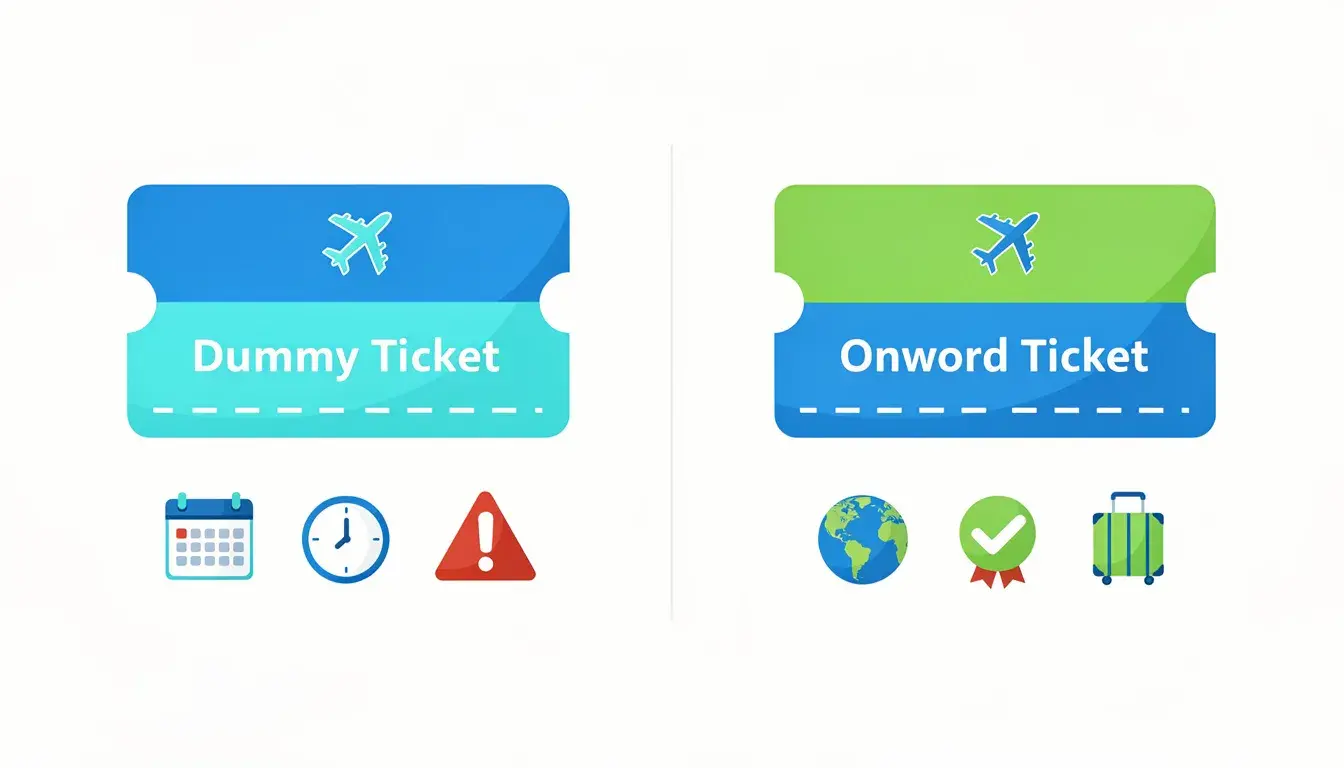

A dummy ticket for visa can help a sponsor-funded application when the sponsor plans to buy the real ticket only after approval. The document should show realistic intended travel dates, a route that matches the sponsor letter, passport-name accuracy, and no promise that the temporary reservation is the final paid ticket.
Your sponsor has promised to book the real flight once the visa comes through. That may be sensible financially, but the application still needs a travel plan on the day you submit it. A sponsor’s promise explains who may pay later; it does not automatically show when you intend to travel, how long you plan to stay, or which route supports the purpose of the trip.
This is where many sponsor-funded files wobble. The applicant has a sponsor letter, the sponsor is genuinely willing to pay, and nobody wants to risk a non-refundable ticket before the decision. But the file still needs clean travel proof. The safer path is to use a dummy ticket that matches the sponsor’s likely timeline, then let the sponsor buy the real ticket after the visa result is clear.
Key facts before using a dummy ticket with sponsor-funded travel:
- A sponsor letter proves support; it does not replace a clear travel timeline unless the embassy says so.
- The dummy ticket should match the sponsor’s planned dates, destination and purpose of travel.
- The passport name should be locked before the sponsor books the real ticket later.
- The final paid ticket can differ slightly after approval, but major date or route changes should still make sense.
- Never edit or fabricate a ticket screenshot; use a clean temporary reservation built for documentation.
Waiting for your sponsor to buy the real ticket after approval? Create a clean dummy ticket with dates and route logic that match your sponsor letter before you submit.
Create Your Dummy TicketIn This Guide
Official-source check: GOV.UK says a visitor can rely on someone else for travel, maintenance or accommodation, but should show what support is provided, how it is provided, the sponsor relationship and the sponsor’s ability to support the trip. The EU Visa Code also requires documents about journey purpose, accommodation, subsistence and intention to leave. Sources: GOV.UK visitor supporting documents and EU Visa Code Article 14.
Reviewed for: sponsor-funded trip logic, dummy ticket claim safety, sponsor-letter alignment, passport-name consistency, post-approval real-ticket timing, third-party funding risk and DummyFlights keyword fit.
Why “My Sponsor Will Buy It Later” Is Not Enough Today

A sponsor’s promise feels solid when you know the person and trust that they will buy the ticket. To a reviewer reading the file, it is still only a sentence unless the rest of the documents show a coherent trip.
The gap between a promise and a document
Your sponsor’s letter explains who is supporting the trip and what they plan to cover. It may mention flight cost, accommodation, food, local expenses or the full visit. But it usually does not show an actual travel route, intended entry date, exit date or length of stay.
Those details matter because the travel plan helps the file answer practical questions: when will you enter, when will you leave, where are you going, and does the trip length fit the stated purpose? A sponsor letter and a dummy ticket do different jobs. One proves support. The other gives the application a travel timeline.
This is why a dummy ticket exists as a useful document category. It lets the applicant show intended travel without forcing the sponsor to buy a final ticket before approval. Used truthfully, it is not a fake trip. It is a temporary reservation that supports the intended plan while the real purchase waits for the outcome.
The important distinction is this: a dummy ticket should not pretend to be a guaranteed final paid ticket. It should show a realistic intended route that fits the sponsor letter, visa form and planned visit. That is enough to remove the “I have no travel plan yet” weakness without exposing the sponsor to unnecessary financial risk.
When sponsors assume the invitation letter is enough
If this is your sponsor’s first time supporting a visa application, expect some confusion. Many sponsors genuinely believe their invitation letter or support letter covers everything because it explains who you are, why you are visiting, and who is paying.
When you tell them you also need a dummy ticket, the first question may be: “Why, if I am buying the real ticket later?” The clean answer is that the application is reviewed as a document set. The letter proves relationship and funding. The dummy ticket shows travel dates and route. They work together.
Frame the dummy ticket as a placeholder for the file, not a workaround. You are not asking your sponsor to pay twice or gamble on a non-refundable fare. You are giving the application a planned travel window so the reviewer can understand the trip before the sponsor buys the final ticket.
Be direct about safety too. Do not create or alter a ticket manually. Do not type up a fake airline confirmation. Do not edit a screenshot. The whole point is to keep the file clean. A document that looks clever but cannot survive basic checks creates far more risk than a truthful temporary reservation.
When a dummy ticket may not be needed
Before creating any travel proof, check the instructions for your visa category. Some embassies or routes may not want flight documents at all at the first stage. Some may prefer a broad travel plan. Some may ask for evidence of return or onward journey. Others may warn applicants not to buy a final ticket until the visa is issued.
There are also sponsor-funded cases where the invitation letter, funding proof and accommodation details may carry most of the weight. If the official checklist does not ask for travel proof, adding a dummy ticket may not improve the file. It becomes one more document that must stay consistent.
The best rule is practical: use a dummy ticket when the file needs intended travel dates or route proof, but do not add it blindly when the instructions clearly point elsewhere.
Keep the Dummy Ticket and Sponsor’s Future Booking Aligned
Once you confirm a dummy ticket belongs in the file, the next job is alignment. The temporary reservation should not quietly contradict the ticket your sponsor eventually buys.
Lock the passport name before anyone books
Start with the passenger name. The dummy ticket should carry the full legal name exactly as it appears on the passport. Not a nickname, not a shortened version, not a spelling your sponsor usually uses casually in messages.
Send your sponsor the same name format before they buy the real ticket later. If your passport says “Mohammed Ali Khan,” the sponsor should not book “M. A. Khan” because it feels shorter. If your surname has a hyphen, the sponsor should know that before entering anything into a booking site.
This is a five-minute step that prevents a real problem. A name mismatch between the dummy ticket, visa form, passport and final paid ticket can create friction later at check-in or during follow-up travel.
Use a simple sponsor note:
- “Please book my final ticket using this exact passport name.”
- “Please keep the same destination and approximate dates unless we discuss a change.”
- “Please do not use a nickname or shortened spelling.”
Match dates to what the sponsor has actually promised
Dates are where sponsor-funded applicants often get careless because the dummy ticket feels temporary. It is temporary, but it still represents the intended travel window in the file.
If your sponsor has already mentioned a likely timeframe, build the dummy ticket inside that timeframe. If your cousin in Toronto says they will buy your ticket for a family event in late April, do not create a dummy ticket for June just because it is easy. The file should reflect the real intended visit.
Ask the sponsor for a rough window before creating the reservation:
- Which month are you expecting me to travel?
- How many days should the visit realistically last?
- Is there a fixed event date, graduation, wedding, meeting or family occasion?
- Will you buy a return ticket, onward ticket or one-way ticket after approval?
Even if the sponsor cannot give exact dates, a realistic window is better than a random one. The dummy ticket should show the application what the sponsor-funded trip is supposed to look like.
If the real ticket later uses different dates
Some drift between the dummy ticket dates and the sponsor’s final paid ticket is normal after approval. Airfares change. Sponsor schedules change. Visa decisions take longer than expected. The real booking may move by a few days.
For many visitor and tourist-style trips, this is usually manageable because the visa gives an entry window rather than locking the traveler to one exact flight. But this depends on the visa type. Event-based travel, short conference visits, fixed medical appointments or program dates are less flexible.
Before assuming date drift is harmless, ask one question: is the visa tied to a fixed event or a general visit?
| Trip type | How strict the final ticket should be |
|---|---|
| Family visit or tourism | Small date changes after approval are often easier to explain if the trip remains inside the visa validity. |
| Wedding, graduation or family event | The final ticket should stay close to the event timeline shown in the application. |
| Conference, training or medical appointment | Dates should match the fixed purpose closely unless updated proof explains the change. |
The stronger habit is to keep the sponsor updated before the final booking. Do not let them buy a ticket that changes the trip logic without checking whether the new date still fits the visa decision, invitation letter and application purpose.
Where the Dummy Ticket Fits in a Sponsor-Funded Timeline

Most applicants get the order backward. They wait for the sponsor to buy the real ticket, then panic when they realize the application needs a travel plan earlier. The cleaner process is to build the file first, submit a realistic temporary reservation if appropriate, then let the sponsor buy the final ticket after approval.
The order most applicants should follow
A sponsor-funded file usually works best in this order:
- Confirm the visa type and document checklist.
- Confirm what the sponsor will pay for.
- Collect the sponsor letter and funding evidence.
- Agree on realistic travel dates and destination.
- Create the dummy ticket for the intended route.
- Submit the application with a consistent file.
- Let the sponsor buy the real ticket after approval.
This order protects both sides. The applicant has a file that makes sense. The sponsor avoids buying too early. The reviewer sees dates, route and support evidence instead of a vague promise.
How long the temporary reservation needs to help
A dummy ticket does not need to remain active for the full visa-processing timeline unless the specific process requires that. Its usual role is to support the file at submission or appointment time, not to act as a paid ticket for the whole waiting period.
That said, the document should still be created close enough to submission that it looks fresh and relevant. A stale reservation created weeks before the appointment can become weaker, especially if the appointment was moved or the sponsor changed the intended travel window.
If the appointment is rescheduled, refresh the dummy ticket rather than relying on an old version with dates that no longer match the file. The sponsor’s real ticket should come later, after the decision, but the temporary document should still reflect the latest version of the plan.
When the sponsor should book early instead
There are rare cases where waiting may not be the best approach. If the visa category or official checklist explicitly requires a paid ticket, a dummy ticket may not satisfy the requirement. If the trip is tied to a fixed program where the ticket itself is part of the evidence, the sponsor may need to book earlier or use a refundable option.
Another case is urgent travel where airline capacity is limited and the sponsor accepts the financial risk. Even then, the applicant should avoid hiding the risk from the sponsor. The sponsor should understand whether the ticket is refundable, changeable or potentially lost if the visa is delayed.
For most sponsor-funded visitor files, though, buying the final ticket after approval is the cleaner financial decision. The dummy ticket fills the documentation gap until that point.
Handling Questions Around Third-Party-Funded Travel
When someone else pays for your travel, the file has to prove more than route and dates. It also has to explain why the sponsor is supporting you and why the trip remains believable.
Prove the sponsor relationship, not only the route
A dummy ticket cannot carry the whole sponsor-funded file. It supports the travel plan. The sponsor relationship still needs its own proof.
Depending on the visa type and country, that proof may include:
- Sponsor letter explaining the relationship and support offered.
- Sponsor identification or residence proof where relevant.
- Financial evidence showing the sponsor can cover the promised costs.
- Proof of relationship, such as family documents, employer documents or invitation context.
- Applicant’s own ties and reason to return.
The dummy ticket should not try to solve a weak sponsor relationship. It should make the travel plan clear once the relationship and funding story are already credible.
Where sponsor-funded trips get a second look
Some sponsor-funded trips naturally attract more scrutiny. A distant sponsor, vague relationship, first international trip, long stay, weak home ties or unclear purpose can all create questions. In those situations, the travel proof needs to be especially calm and consistent.
A dummy ticket helps when it reinforces the sponsor story. For example, a two-week family visit with dates around a wedding, a route to the sponsor’s city, and a return date that fits work or study ties reads much stronger than an open-ended stay with random dates.
The file should answer the quiet question behind the review: why is this sponsor paying, why is the applicant traveling now, and why will the applicant leave after the visit?
Build a return-intent story for a trip you did not pay for
When the sponsor pays, the applicant still needs a reason to return. The fact that someone else can afford the ticket does not prove the trip is temporary.
Return intent can be supported by employment, study, business ownership, family responsibilities, property, ongoing commitments, or a clearly limited event. The dummy ticket should match that story by showing a return or onward plan that fits the length of stay.
Do not make the dummy ticket longer than the purpose supports. If the sponsor letter says a two-week family visit, a two-month route may feel inflated. If the applicant has limited leave from work, the travel dates should respect that leave window.
Sponsor Coordination Checklist
The safest sponsor-funded file is built before anyone buys the real ticket. Use the checklist below to keep the temporary reservation and future booking aligned.
Before creating the dummy ticket
- Confirm whether the visa checklist asks for intended travel proof.
- Ask the sponsor what they will pay for: flight, stay, daily expenses or all costs.
- Confirm the sponsor’s legal name, address and relationship to the applicant.
- Agree on realistic travel dates before generating the reservation.
- Use the passport name exactly as shown on the applicant’s passport.
Before submission
- Check that the dummy ticket dates match the sponsor letter and visa form.
- Check that the destination city matches the sponsor’s location or trip purpose.
- Check that the stay length is believable for the stated reason.
- Check that no document promises a paid ticket if only a temporary reservation is attached.
- Refresh the dummy ticket if the appointment or travel window changes.
After approval, before the sponsor buys
- Send the sponsor the exact passport name again.
- Confirm the visa validity and permitted entry window.
- Keep the route close to the plan submitted unless there is a good reason to adjust.
- Avoid sudden major route changes that contradict the application purpose.
- Keep a copy of the final ticket and sponsor payment record if useful for travel.
This process keeps the dummy ticket in its correct role. It supports the application before approval, while the sponsor’s real ticket comes later and remains consistent with the file.
Need a sponsor-safe dummy ticket before the real booking is purchased? Create a clean temporary reservation that matches your sponsor letter, passport name and intended travel dates.
Create Your Dummy TicketFrequently Asked Questions
Can I use a dummy ticket if my sponsor will buy the real ticket later?
Yes, if the visa process accepts intended travel proof and does not require a paid ticket at submission. The dummy ticket should match the sponsor letter, travel dates and route logic.
Does a sponsor letter replace a dummy ticket?
Not always. A sponsor letter proves support, but it may not show a route or travel dates. If the checklist asks for travel proof, a dummy ticket can fill that separate role.
Should the sponsor buy the real ticket before visa approval?
Usually not unless the official instructions require it or the sponsor accepts the risk. Many applicants use a temporary reservation first so the sponsor does not pay for a final ticket too early.
What if the sponsor buys different dates after approval?
Small changes are often manageable for general visitor trips, but the final ticket should still make sense within the visa validity, sponsor letter and purpose of travel. Fixed-event trips need closer date matching.
What should I tell my sponsor before they book the final ticket?
Send the exact passport name, visa validity, intended destination, approximate travel dates and any route constraints. Do not let the sponsor guess your name format or trip dates.
Is a dummy ticket fake?
A proper dummy ticket is a temporary travel reservation used for documentation. It should not be a manually edited screenshot, fake airline email or fabricated ticket number.
Does a dummy ticket guarantee visa approval?
No. It supports the travel-plan part of the file. Approval depends on the full application, including sponsor credibility, funds, purpose, ties and destination rules.
When should I create the dummy ticket?
Create it after your sponsor confirms the likely travel window and before submission or appointment. Refresh it if your appointment, sponsor plan or intended dates change.
Friendly reminder: DummyFlights provides temporary travel-proof documents for planning and application support. Requirements vary by destination, airline, route and applicant situation. A dummy ticket can support a file, but it does not guarantee approval, boarding or entry.