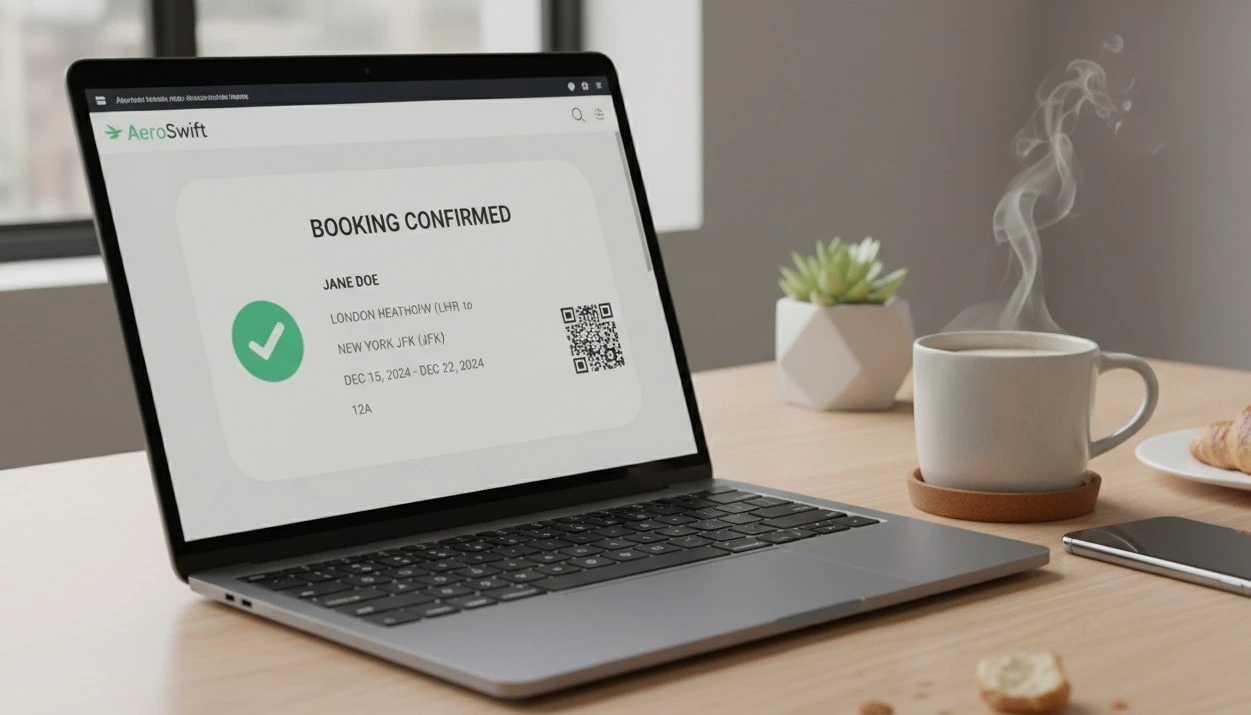
Short answer: OPEN (O), USED or FLOWN (F), and VOID (V) describe the status of issued e-ticket coupons. An unticketed dummy ticket reservation has no such coupon, though a product sold under that name may be ticketed. Check the actual issuer record: OPEN does not guarantee boarding or refundability, USED means the system records travel, and VOID means the issued ticket was voided.
Key facts
- A PNR is a booking record; an e-ticket coupon belongs to an issued ticket.
- O, F and V are not the only codes: exchanged, refunded and airport-control states also occur.
- Ticket numbers and PDFs can outlive usable ticket status. Ask the issuer for the current status of each leg.
- Visa and airline evidence requirements are separate from ticketing-system labels.
Need a planned itinerary rather than a paid fare? Check first that the recipient permits a reservation, and confirm its live reference and expiry.
Explore a dummy ticket reservationIn This Guide
- What Do OPEN, USED, and VOID Mean on a Ticket Coupon?
- Why Does an Unticketed Reservation Sit Outside These Labels?
- How Do an Issued Ticket and a Reservation Compare Field by Field?
- What Does a Fictional Coupon Record Look Like?
- When Does a Coupon Become VOID, and Why Does Timing Matter?
- How Do You Check a Coupon Label on the Airline's Own Page?
- What Should You Expect From a Reservation, and What Not?
- Four Checks Before You Rely on a Coupon or Reservation
- Official Ticketing Sources
- Which Record Should You Rely on?
Reviewed for: the difference between a PNR and an issued coupon, OPEN/FLOWN/VOID meanings, the worked two-leg record, issuer checks and visa-document limits.
A reservation and an issued ticket can describe the same route, but only an issued ticket has e-ticket coupons. This guide separates the booking reference from the coupon record, explains OPEN, USED and VOID, works through a fictional two-leg journey, and shows which questions to ask the issuer before relying on either document.
What Do OPEN, USED, and VOID Mean on a Ticket Coupon?
An issued e-ticket has a coupon for each flight segment. The coupon status can differ from the PNR's reservation status, and can change after airport control, travel, exchange, refund or void. In Amadeus documentation, O means open for use, F means flown/used, and V means void. Other codes also exist; these three are not a complete lifecycle.
These are ticketing records, not a promise that a passenger may board. A current ticket, valid itinerary, fare conditions, check-in and travel documents still matter.
OPEN: The Segment Is Unused, Not Unconditionally Flyable
OPEN or O identifies an issued coupon that has not been used. It is useful evidence that a ticket exists, but it does not alone guarantee a confirmed seat, a right to board, a refund or a free change. Airline and fare rules, flight status, check-in, no-show conditions and document checks still apply. A coupon may move into airport-control status before departure.
USED: The System Records Completed Travel
USED, FLWN or F generally marks a flown coupon. Other coupons on the same ticket can remain OPEN, so inspect each leg separately. If the airline marks a segment flown but you did not travel, ask the issuer or operating carrier to investigate rather than treating the code as infallible.
Flight-coupon sequence and later-leg availability can be affected by a missed or changed segment. Ask the carrier how your exact ticket is affected; do not infer a universal result from a code alone.
VOID: The Issued Ticket Was Voided
VOID or V means the relevant issued ticket/coupon has been voided. It is not usable for travel merely because an older PDF or PNR still displays the route. Amadeus states that a voided e-ticket cannot be reinstated; the issuer must advise whether a new ticket is needed. A refund or exchange has a different status and workflow.
Void eligibility and time limits depend on airline, agency, market and settlement rules. There is no single BSP or ARC deadline that applies to every ticket in this guide.
Why Does an Unticketed Reservation Sit Outside These Labels?

An unticketed temporary reservation can have a live booking reference but no issued e-ticket coupons, so OPEN, USED and VOID do not describe its ticket status. Some products marketed as “dummy tickets” may instead involve an issued ticket; check what was actually delivered rather than trusting the product name.
A PNR is a booking record; it is not by itself proof of ticket issuance, payment, acceptance or an active coupon. A reservation may expire or be cancelled without ever becoming a ticket. See our PNR deep dive for the record-versus-document distinction.
What a Flight Reservation Is Used For
Visa and onward-travel checklists differ. Some ask for an itinerary or reservation; others require a ticket or do not ask for flight evidence. Use the exact checklist and, where travel is imminent, the airline's boarding requirements. A reservation can document a proposed route without buying the full fare, but an unticketed booking does not grant a right to fly.
An onward route, return leg and round trip can each be reserved or ticketed. Their shape says where you intend to go; ticket issuance and live status say something different.
Names, Lookalikes, and Lapse
“Dummy air ticket,” “flight reservation” and “onward ticket” are used inconsistently by sellers. Inspect the actual booking reference, issuer, ticket number if any, segment dates and current status. A fabricated or altered document is different from a genuine reservation and must not be used as evidence.
No universal 48–72-hour validity applies. A reservation can lapse on an airline- or issuer-specific timetable; confirm that it remains live when the recipient checks it. A lapsed unticketed booking has no VOID coupon because no ticket was issued.
How Do an Issued Ticket and a Reservation Compare Field by Field?
The two states can describe the same intended trip but answer different questions. This table is a document-reading aid, not a substitute for an airline's live record.
| Check | Issued e-ticket | Unticketed reservation |
|---|---|---|
| Reference | Usually has a ticket number and PNR | Has a booking reference; no issued ticket number |
| Coupon codes | Each segment has a status such as O, F or V | No issued coupon exists |
| OPEN / O | Unused coupon; other conditions still govern travel and changes | Not applicable |
| USED / F | System records coupon as flown | Not applicable |
| VOID / V | Issued ticket/coupon was voided; ask issuer about replacement | Cancellation or expiry is a booking-state issue, not coupon void |
| Change/refund/void | Depends on status, fare and issuer's rules | Depends on reservation conditions; there is no issued coupon to refund |
| Expiry | Check live coupon and fare conditions | Check live booking and its ticketing deadline |
A booking reference can remain in a PNR after a ticket is voided or refunded. Conversely, a PDF showing a ticket number can be out of date. Verify the current state with the issuer or airline, and describe the document honestly to the visa office or boarding agent.
What Does a Fictional Coupon Record Look Like?

The records below are invented for illustration. The traveler, the carrier, and the numbers are fictional, and no real PNR, ticket number, or airline lookup result appears. The route is Mumbai to Frankfurt and back, with the outbound flown and the return still ahead.
Fictional record for Daniel Whitfield | Reference | Coupon 1: BOM to FRA | Coupon 2: FRA to BOM | What it shows |
|---|---|---|---|---|
A. Issued ticket, mid-trip | Ticket 000-0000000000 | USED | OPEN | Outbound marked flown; return coupon open, subject to current ticket/flight conditions |
B. Issued ticket, cancelled in the void window | Ticket 000-0000000001 | VOID | VOID | Voided ticket; do not use for travel |
C. Temporary reservation | Booking reference withheld | No status | No status | Planned route only; no issued coupon in this example |
The route is simple on purpose. A two-segment journey on one ticket number keeps the two coupons easy to read. Multi-city journeys can span several tickets, and each ticket carries its own labels.
Record A is the only one that describes flown travel. Coupon one reads USED, which indicates Daniel completed the Mumbai to Frankfurt segment on its departure date of 12 November 2026. Coupon two reads OPEN, so the return is still unused; confirm its current flight and fare conditions for 26 November 2026. Both labels share one ticket number.
Record B shows a ticket cancelled in the void window. Both example coupons read VOID because the issuer voided this unflown ticket under its applicable rules. The record has no travel value, and no refund is involved.
Record C has the same route and the same travel plans, yet it carries no ticket number and no coupon statuses. It is a reservation. Describing it as OPEN would borrow a ticketing word for a record that has no ticket.
Now apply a reading order. First, look for an issued ticket number and verify its current status with the issuer. If one exists, ask for the status on each coupon. If none exists, check the booking reference, route, dates and whether the reservation remains active. Do not mix the two orders.
Two cautions follow. A USED coupon on a ticket you never flew is a data problem to raise with the issuing airline, not a result to accept. And a VOID label on a ticket you meant to keep means the sale is gone, so ask the issuer what new ticket or reservation is needed.
The zeros are deliberate. A real record shows real digits, and no number from an example belongs in your own file.
When Does a Coupon Become VOID, and Why Does Timing Matter?
Voiding is an issuer-controlled reversal of a ticketing transaction, subject to the applicable airline, agency, settlement-plan and market rules. The window and prerequisites differ. Do not rely on a blanket “day of issue” or “next business day” formula for a real ticket. If a coupon is under airport control, exchanged or partly flown, a normal void may be unavailable and the issuer must advise the next permitted action.
Amadeus guidance treats V as a voided e-ticket status and says a voided ticket cannot simply be reinstated. If a document you planned to present shows VOID, stop using the old PDF as current travel evidence and request a live replacement or explanation from its issuer.
What a VOID Label Means for Evidence
An old itinerary can continue to show the original route even after a ticket is voided. The live ticket status takes priority. Refund, exchange, suspension and closed status are separate outcomes and require their own issuer instructions.
An unticketed reservation has no coupon-void window, but it may expire under its own ticketing deadline. Recheck it close to any document review; a screenshot or PDF is only a snapshot.
How Do You Check a Coupon Label on the Airline's Own Page?
Use the issuing airline's official Manage Booking or ticket-receipt channel if it exposes ticket details. Enter the requested surname and booking reference or ticket number; availability of coupon-level status varies by carrier and user access. If the passenger page does not show it, ask the issuing airline or agent for the current e-ticket coupon status.
- Match passenger, route, flight numbers and dates to the document.
- Check whether a ticket number exists and which issuer owns it.
- Ask for the status of each coupon, not just the PNR.
- If one says VOID, REFUNDED or EXCHANGED, ask what current ticket—if any—replaced it.
- Save the issuer's response and the check time; status can change.
A thirteen-digit ticket number is not proof that the ticket remains usable. A voided, refunded or flown ticket can still have a number.
What the Same Page Shows for a Reservation
An airline's passenger lookup may show a live unticketed itinerary, may redirect you to the agent, or may not expose third-party bookings. A PNR search does not automatically establish ticket issuance. If the recipient requires an issued ticket, obtain one; do not relabel an unticketed reservation as OPEN.
Dummy Ticket for Visa: What a Lookup Cannot Tell You
Even a successful live lookup does not tell you whether a visa officer or airline will accept that document type. It also does not validate your passport, immigration permission, hotel or insurance. Match the record to the current checklist and route, and disclose whether it is reserved or ticketed.
What Should You Expect From a Reservation, and What Not?
Before buying a reservation service, ask which airline or issuer can verify it, what reference you receive, when it expires, what changes cost, and whether it is ticketed. Delivery speed, price and a polished PDF are not proof of active status. Book close enough to the intended review to keep the record current, while allowing time to correct errors.
A verifiable PNR is helpful, but its presence does not guarantee visa approval or boarding. If the requirement calls for a paid, confirmed or issued ticket, a temporary unticketed reservation may be insufficient.
What Do Prices Say About Status?
Service prices change and cannot establish whether a ticket was issued. A low- or high-priced PDF may still be an unticketed reservation. Ask for the actual booking and ticketing state; do not infer it from marketing labels such as “instant” or “premium.”
Where Do Visa Rules Come In?
The destination authority's current visa checklist governs what flight evidence is requested. Some permit an itinerary; others ask for a paid ticket or no flight document. The coupon code is a technical airline record, not a visa decision. No reservation, ticket number or “embassy-ready” label guarantees approval.
What About Hotel Proof?
Hotel confirmation is a separate record without airline e-ticket coupons. Match its dates and locations to the real route, and check the accommodation requirement on the relevant visa checklist.
Four Checks Before You Rely on a Coupon or Reservation
1. Identify the Record, Not the Marketing Name
Start with the document you actually received. Does it show an issuer, a ticket number and flight coupons, or only a booking reference and itinerary? The words “dummy ticket” on an order page cannot settle that question: one supplier may arrange an unticketed reservation while another may issue and later refund an actual ticket. Ask for the issuer's description in writing if the PDF is ambiguous. Do not add OPEN to a reservation yourself or remove VOID from a ticket screenshot; both would misstate the live record.
For a visa appointment, compare the document type with the precise checklist. “Flight itinerary,” “reservation,” “confirmed booking” and “paid return ticket” are not interchangeable terms. If the checklist is unclear, ask the visa centre or consulate which document type it accepts for your category. A record can be genuine yet insufficient for a particular requirement.
2. Follow Every Leg Separately
Consider the fictional Mumbai–Frankfurt–Mumbai journey. After the outbound flight, the first coupon may be F while the return remains O. A single headline saying “ticket used” would hide the still-unused return; one saying “ticket open” would hide the completed outbound. Ask the issuer to list the flight number, departure date and current code of each coupon. If a connection or return is on a different ticket, repeat the check for that ticket number. This matters for multi-city travel, where one PDF may combine several bookings and different issuing airlines.
Dates, passenger names and itinerary sequence need their own check. A technically open coupon attached to a flight you cannot take, or a ticket whose next leg was affected by a missed earlier segment, is not reliable onward proof. The airline—not a generic status table—can tell you whether the remaining segment can be flown or changed.
3. Resolve a Status That Contradicts Your Plan
If you expected to fly but see V, stop relying on the old PDF. Ask the issuing airline or agent whether the transaction was voided, whether a replacement ticket exists, and which reference now points to the usable record. If you see E, ask for the new ticket number. If you see R, confirm whether the coupon was refunded. If you see F but did not travel, ask the issuer to investigate with the operating carrier. Avoid paying for another document until you know whether the existing booking can be corrected.
A screenshot taken before an exchange or void can continue to circulate after the underlying record changes. Record the time of your check and obtain a current issuer response. For a visa file, replace stale evidence with the document that accurately reflects the present reservation or ticket. For travel, reconfirm shortly before check-in, because airline control and schedule changes can affect what the passenger portal shows.
4. Keep the Visa File and Travel File Distinct
An unticketed reservation may be useful at an application stage if the authority explicitly accepts an itinerary. Actual boarding may require an issued ticket, destination documents and proof of onward or return travel. Do not treat acceptance of an application attachment as a promise that the same temporary reservation will work at the airport weeks later. Conversely, buying a paid ticket early does not guarantee visa approval. Choose the least risky document type that satisfies the actual rule, and explain accurately what it proves.
Store your itinerary, current booking reference, issuer contact and any ticket number separately. Keep hotel and insurance dates aligned, but do not imply that a hotel confirmation validates an airline coupon. If a third-party provider supplied the reservation, ask which carrier or agent can verify it and how long it is expected to remain active. If a record disappears from a public airline portal, ask the issuer before assuming fraud: some third-party bookings are not exposed in every passenger-facing tool.
Official Ticketing Sources
Checked 26 October 2026. Amadeus: coupon status and reissue identifies O as open, F as flown, V as void, E as exchanged and R as refunded, and explains that reissue eligibility depends on status. Amadeus: invalid ticket/coupon status states that a voided e-ticket cannot be reinstated. Amadeus: revalidation conditions discusses O and airport-control A states. These technical pages do not set every airline's fare rules, a universal void deadline or a visa office's document policy.
Which Record Should You Rely on?
On any route, begin with the recipient’s actual requirement. If an issued ticket is required, verify the live ticket and each coupon with the issuer. If a reservation is permitted, verify the current booking reference and expiry, then describe it as a reservation. An old PDF, a PNR or an e-ticket number by itself is not proof of current travel entitlement. If you need an unticketed plan while an application is pending, explore a dummy ticket reservation that matches your real route and dates.
Frequently Asked Questions
Can a dummy ticket show OPEN?
An unticketed reservation has no e-ticket coupon, so OPEN does not apply. A product marketed as a dummy ticket may instead be an issued ticket; ask the issuer which record you actually have.
Does USED Always Mean You Flew?
USED means the airline's record marks the segment as completed. If the status is wrong, write to the issuing airline with the ticket number, the PNR, and any proof that you were not on board, and ask for a correction before claiming a refund.
Is a VOID ticket the same as a cancelled reservation?
No. VOID is an issued-ticket coupon state. An unticketed reservation may lapse or be cancelled without ever having a coupon.
Does an e-ticket number prove a booking is active?
No. A ticket number can remain visible after a ticket is flown, voided, exchanged or refunded. Verify the current coupon status with the issuer.
Which label should an unused, issued flight coupon show?
OPEN or O is the usual unused-coupon state, but it does not guarantee boarding, refundability or a free change. Confirm the flight and fare conditions.
Friendly reminder: Ticket status and void/refund options vary by issuer, airline, fare and market. This guide cannot replace the live airline record or the current visa or boarding checklist. Never present an unticketed reservation as an issued ticket.