

- Separate the temporary assignment purpose from ordinary tourism, seasonal work and corporate booking workflows.
- Match arrival, assignment window, accommodation, exit date and any transit points across the file.
- Keep a current reservation and label superseded documents after any date or route change.
- Airline, immigration and consular checks are separate; a temporary reservation does not guarantee any of them.
- Aligning Your Flight Reservation With A Temporary Assignment File Before The Embassy Sees It
- Embassy Review Risks That Are Specific to Short-Term Overseas Work Travel
- Airport and Transit Checks That Can Turn a Dummy Ticket Into a Problem
- Decision Rules for Assignment Travelers: Use, Replace, or Retire the Dummy Ticket
- Make Your Temporary Assignment Travel Story Easy To Verify
- FAQ
Temporary overseas assignments create a tighter paper trail than ordinary trips. Your flight reservation must fit the assignment letter, visa dates, employer instructions, and the questions airline staff may ask before boarding. A return date that looks casual on paper can look confusing when your file says project work, training, or client deployment.
We’ll focus on the practical choices that protect your application and your airport experience. You’ll see how to set travel dates around the assignment window, when to update a reservation after processing delays, what to carry at check-in, and when a dummy ticket should be replaced with a confirmed ticket. For shifting assignment dates, keep your dummy ticket aligned before embassy or airport checks.
A temporary overseas assignment is not the same as a tourist holiday, a seasonal-worker contract or a corporate travel-desk booking. The flight evidence should show a credible entry, assignment window and exit plan without overstating what a temporary reservation proves. For the reservation foundation, see the Dummy Ticket for Visa 2026 complete guide.
Aligning Your Flight Reservation With A Temporary Assignment File Before The Embassy Sees It
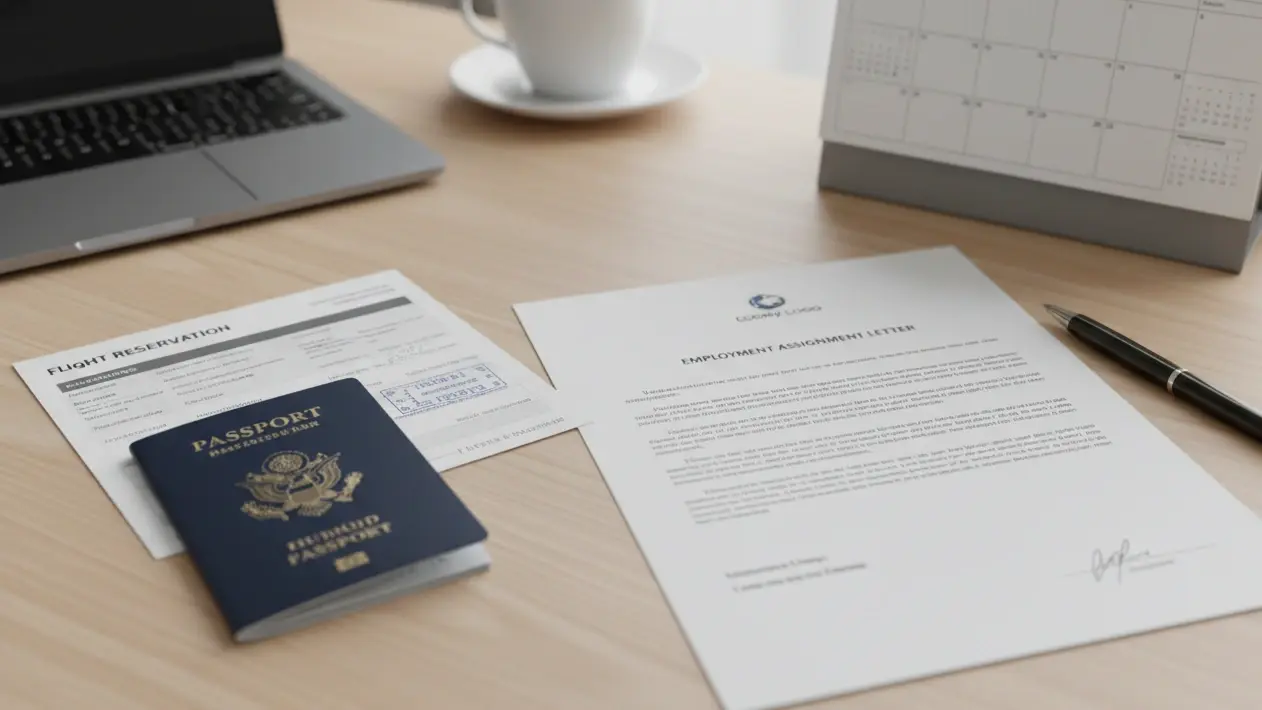
A temporary overseas assignment has more moving parts than a regular visit. Your flight reservation needs to match the assignment story before an embassy officer, visa center, airline desk, or border officer starts comparing dates.
Make The Flight Dates Follow The Assignment Letter, Not Your Personal Travel Plans
Your assignment letter should include the flight dates. Not the other way around.
If your employer says you are being sent to Singapore for a four-week client deployment, your flight reservation should show a stay that makes sense for that deployment. A return date two months later can raise questions, even if you plan to take leave afterward.
For a Schengen short-stay business file, UK business visitor route, Canada business visitor file, or Gulf assignment visit, officers often look at whether the travel window fits the stated activity. A technical installation, audit, product training, or handover visit should have a clear start and end pattern.
Give yourself a practical buffer. Arriving one or two days before onboarding is normal. Leaving a few days after final reporting can also make sense. But a large unexplained gap before or after the assignment may weaken the temporary purpose of the trip.
Before attaching the reservation, compare it against:
-
The employer assignment letter
-
The host company's invitation
-
The project or training schedule
-
The visa appointment date
-
The expected processing time
-
The maximum stay allowed by the visa route
If one document says six weeks and the flight reservation suggests three months, fix the mismatch before submission.
Use Return Dates That Show Temporary Intent Without Locking The Traveler Into A Bad Ticket
A return date is not just a travel detail in a temporary assignment file. It tells the embassy how your trip ends.
For project work, the return should sit close to the project completion date. For training, it should follow the last training day. For a client visit, it should match the meeting or delivery schedule. This is especially important when you are applying under a short-stay or visitor-based category rather than a long-term work route.
The goal is to show temporary intent without forcing yourself into an expensive confirmed ticket too early. That is where a flight reservation can help during the application stage. It gives the file a clear travel window while your visa, employer approval, and client schedule are still being finalized.
Use a return date that you can explain in one sentence.
For example:
-
“The assignment ends on 18 June, and you return on 21 June after handover.”
-
“Training finishes on Friday, and you fly back on Sunday.”
-
“The client visit is scheduled for five working days, with return travel the next day.”
Avoid return dates that need a long explanation. If you need extra personal time after the assignment, make sure it is allowed by the visa type and does not make the main purpose look unclear.
Keep Employer, Host Company, And Flight Route Details In One Logical Chain
The route should support the assignment location. It should not make the officer guess why you are landing somewhere else.
If your host company is in Frankfurt, a reservation in Frankfurt or a nearby airport makes sense. If you land in Paris first, your documents should explain why. Maybe the regional office is there. Maybe the first meeting is in France before the German project site. Without that link, the route can look disconnected from the assignment.
This matters even more for multi-office companies. Your employer may mention one city, the client's invitation may mention another, and your flight may land in a third. That can still be acceptable, but the chain must be clear.
Check these details carefully:
-
Does the arrival country match the visa you are applying for?
-
Does the entry city match the first work-related activity?
-
Does the return flight leave from a city connected to the assignment?
-
Does the route avoid unnecessary tourist-looking detours?
-
Does the passenger's name match the passport exactly?
For temporary assignments, simple routes are usually stronger. A direct or logical connecting route looks cleaner than a route built around unrelated stopovers.
Handle Multi-Country Assignments Without Making The Ticket Look Evasive
Some assignments are regional. You may attend training in Dubai, visit a client in Riyadh, and return home from Doha. You may enter the Schengen Area through Amsterdam and then continue to a project site in Belgium.
That can work if your file explains the movement.
The flight reservation should show the primary assignment path. It should not look like you are using one country only as a convenient entry point while your real activity is elsewhere. For visa zones and regional business trips, the first entry, mainstay, and exit should make sense together.
If you have multiple assignment countries, organize the documents in the same order as the trip:
-
Entry flight
-
First host invitation
-
Intercity or regional movement
-
Second host or client document
-
Return flight
Keep leisure stops out of the main reservation unless they are permitted and easy to explain. A temporary assignment file should look purposeful, not improvised.
Know When A Reservation Is Acceptable And When A Paid Ticket Becomes Safer
A flight reservation is often useful before approval, especially when the embassy wants travel evidence but your employer has not released the final travel budget. At that stage, flexibility matters.
After the visa is granted, the decision changes. If your assignment dates are confirmed, a paid ticket is usually safer for airline check-in and arrival questioning. Airline staff may focus less on your visa file and more on whether your travel document is current, verifiable, and consistent with entry rules.
For employer-paid trips, wait for the final travel instruction before buying. Then make sure the confirmed ticket still matches the assignment letter and visa validity.
Embassy Review Risks That Are Specific to Short-Term Overseas Work Travel

Embassy officers do not read a temporary assignment file the same way they read a holiday file. Your flight reservation has to support a work-related purpose without making the trip look longer, broader, or less temporary than the visa category allows.
Why Consular Officers May Read Assignment Itineraries More Closely Than Tourist Itineraries
A short-term assignment creates extra questions for the embassy because your travel purpose is tied to a company, project, client, or training schedule.
For a Schengen business visa, UK business visitor application, Canada business visitor file, UAE mission-related visit, or Singapore short-term assignment, the officer may look beyond your flight dates. They may compare your reservation with who invited you, what activity you will perform, how long the host expects you to stay, and who pays for the trip.
Your flight reservation should help answer those questions quietly.
A clean assignment itinerary usually shows:
-
Arrival close to the first work-related activity
-
Return soon after the assignment ends
-
A route that matches the host city or project location
-
Stay length that fits the visa category
-
No unexplained side trips that distract from the assignment's purpose
The embassy is not only checking whether you have a flight plan. They are checking whether the flight plan makes your temporary assignment look credible.
Avoid the “Tourist Itinerary, Work File” Conflict
One of the easiest ways to weaken an assignment file is to attach a flight reservation that looks like a leisure trip.
This happens when the documents say “client deployment in Munich,” but the flight reservation shows a long stay with entry through Rome and return from Barcelona. It can also happen when a training letter shows five business days, but the reservation shows a three-week stay with no employer explanation.
That does not mean every route must be direct. It means every route should have a reason.
If you are entering through a different city because your employer scheduled a regional briefing there, the invitation letter or cover note should say so. If you are returning from another city because the assignment ends at a branch office, the host document should support that.
Be careful with these flight patterns in a temporary assignment file:
-
Arrival more than a week before the stated assignment
-
Return long after the employer’s end date
-
Multi-city routes with no link to the project
-
Weekend-heavy routing that looks unrelated to the assignment
-
Exit from a country not mentioned anywhere in the file
A tourist-looking itinerary can make the officer question whether the assignment is the real purpose of travel.
Match the Dummy Ticket to the Visa Category’s Time Logic
Each visa category has its own travel rhythm. Your dummy ticket should follow that rhythm.
A business visitor file usually works best with a tight schedule. Meetings, audits, contract discussions, product demos, and short technical consultations should not look open-ended.
A training visa file should follow the course or workshop dates. If the program runs from 4 March to 15 March, the flight reservation should not casually extend deep into April unless the training provider or employer explains why.
A short-term work authorization should follow the authorization period. If the permit or approval letter allows work activity for 30 days, the reservation should not suggest a stay that pushes beyond that window.
A visitor route used for assignment-related meetings needs extra care. The flight reservation should not make the trip look like full employment abroad if the visa category only allows meetings, briefings, or business discussions.
Before submitting, ask one practical question:
Would this stay length look normal for this exact visa route?
If the answer needs too much explaining, adjust the reservation or improve the supporting documents before the embassy reviews the file.
Keep the PNR Verifiable During the Period It Actually Matters
A PNR is most useful when it can be checked during the review window. If your appointment is today, but your file may be reviewed next week, the reservation should still make sense when the officer looks at it.
This matters for embassies and visa centers that request flight reservations as part of the document set. It also matters when they ask for updated documents after an interview, biometric appointment, or administrative delay.
Do not rely on an old flight PDF if the dates have passed or the booking reference is no longer active. A stale reservation can make the file look careless, especially when the assignment itself is time-sensitive.
Use clean document control:
-
Generate the reservation close to submission
-
Keep the passenger's name exactly as shown in the passport
-
Make sure the route matches the assignment city
-
Avoid manual edits to airline-style PDFs
-
Update the reservation if the embassy asks for fresh travel dates
For assignment travel, the strongest reservation is not the fanciest one. It is the one that can be checked, understood, and matched to the rest of the file.
Update Dates Cleanly When Processing Delays Push the Assignment Back
Temporary assignments often move because visa processing takes longer than expected. A client may delay onboarding. A training session may shift. An internal approval may come late.
When that happens, your flight reservation should not be the only document with new dates.
If the assignment moves from May to June, ask your employer or host company to revise the assignment letter first. Then update the flight reservation to match the new window. If you only change the ticket dates while the invitation still shows the old schedule, the file can look inconsistent.
Keep the explanation short and factual if the embassy allows updated documents:
“Due to visa processing timelines, the assignment travel window has been revised from 6 May to 18 June.”
That kind of wording works because it connects the date change to the visa process, not to a vague personal preference.
If the assignment file needs a general explanation of temporary travel proof rather than an employment-specific checklist, use the dummy ticket for visa guide as the broader reference.
Airport and Transit Checks That Can Turn a Dummy Ticket Into a Problem
The embassy stage is only one checkpoint for a temporary overseas assignment. At departure, your flight documents may be reviewed by airline staff, transit agents, and immigration officers who want quick, consistent answers.
What Airline Check-In Staff May Look For Before Letting An Assignment Traveler Board
Airline staff usually check whether your documents meet the destination’s entry rules before they issue a boarding pass. For assignment travel, they may look at your visa, return plan, passport validity, and proof of onward travel together.
They may not read your full employer letter in detail. They may simply compare your flight itinerary with your visa validity and expected stay. If your assignment in Germany is for 28 days, but your return appears far outside that period, the desk agent may ask why.
Carry a clean set of flight details that matches your purpose. Your name and travel details should match the passport exactly. Your entry and exit dates should also make sense beside the assignment letter and host company invitation.
At check-in, these items matter most:
-
Valid visa or entry clearance
-
Current airline ticket or temporary flight reservation, if accepted for that stage
-
Booking reference number or a valid PNR code
-
Return or onward travel proof
-
Assignment letter with matching dates
-
Host company contact details
A verified flight reservation can help when the airline only needs airline checkable proof, but you should know the destination’s boarding requirements before relying on any temporary reservation.
How Immigration Officers May Read A Return Ticket During Arrival Questions
Arrival questioning is different from embassy review. Visa officers assess your file before travel. Immigration officers assess your intent at the border.
For temporary assignment travelers, they may ask what you are doing, who invited you, who pays for the trip, and when you will leave. Your return flight ticket should support the same answers.
If you are entering on a Schengen visa for client training, your return date should sit close to the training end date. If you are entering through a UK consulate's approval for a short business visit, your onward travel should not suggest a longer stay than your documents support.
Keep your answer short and steady:
-
“You are attending a two-week product training.”
-
“The host company is listed in the invitation letter.”
-
“Your return is booked after the final handover meeting.”
Do not offer unrelated travel plans unless asked. A verifiable flight itinerary should make the conversation easier, not longer. The more your travel itinerary matches your assignment file, the less room there is for confusion.
Do Not Arrive With A Reservation That Has Already Expired Or Cannot Be Verified.
A dummy flight ticket used for a visa application may not be the right document for departure weeks later. Before travel, check whether the reservation is still active and whether the PNR code can be reviewed through the airline's website or the airline's official site.
If a booking no longer appears in the airline's system, do not treat it as current travel proof. An expired temporary airline reservation can create delays at check-in, especially when the airline needs proof of travel before boarding you.
This does not mean you must buy a non-refundable ticket too early. It means each document should fit the stage you are in. During the visa application process, a temporary reservation may be practical. At departure, a full airline ticket may be safer when your assignment dates are confirmed.
Avoid manual edits. Do not change dates, passenger names, or route lines on a PDF. Accurate passenger details and a valid PNR are more important than making the document look convenient.
Build A Small Travel Document Chain For Temporary Assignment Questions
For assignment travel, your flight booking should sit inside a simple document chain. You should be able to show why you are entering, where you are going, and when you leave without searching through a messy folder.
Carry these documents in one place:
-
Passport and visa approval
-
Employer assignment letter
-
Host company invitation
-
Project or training schedule
-
Verifiable dummy ticket or confirmed airline ticket, depending on travel stage
-
Insurance or local address, if required
-
Transit documents, if your route requires them
This is especially useful when transiting through a strict hub before reaching the assignment country. A transit agent may not care about the full project, but they may care about onward ticket reservations or a confirmed exit from the destination.
No flight document can guarantee visa approval or border entry. But a genuine dummy ticket, used at the right time, can support your visa proof when it matches the rest of your visa documents.
A provider is useful when you need a verifiable flight reservation before buying full-price tickets, especially before an embassy appointment or while your employer finalizes dates. The key is using the reservation for the right purpose, with current flight details and a checkable booking form.
DummyFlights.com offers you instantly verifiable reservations, a PNR with PDF, unlimited date changes, transparent pricing at $15, about ₹1,300, worldwide trust for visa use, and credit card payment. Use it where a dummy ticket for visa fits the document request, then replace it when a confirmed ticket becomes the better airport-stage choice.
Decision Rules for Assignment Travelers: Use, Replace, or Retire the Dummy Ticket
A temporary overseas assignment moves in stages. The flight document that works before submission may not be the right document once the visa is issued, the employer confirms travel, or the airline asks for checkable proof at departure.
Before Visa Submission: Use the Dummy Ticket to Support a Credible Assignment Window
Before submission, your flight reservation should make the assignment look planned, temporary, and easy to understand. It should not force you into buying a full ticket before the visa result is known.
A dummy ticket suitable for this stage should show a travel window that follows the assignment documents. If your employer's letter states a three-week training visit, the reservation should not show a stay that looks like relocation. If your host letter gives a project start date, your arrival should sit close to that date.
Use the reservation to support:
-
The assignment start date
-
The expected end date
-
The return to your home or work base
-
The route connected to the host location
-
The stay length allowed by the visa type
Some applicants use a dummy airline ticket generator without checking whether the output is verifiable. That can weaken the file under embassy scrutiny. Use only verified dummy tickets that show accurate details and can be checked where required.
A flight reservation does not replace employer proof. Visa authorities still want the trip purpose to make sense. For assignment files, the ticket supports the story, but the employer and host documents carry the explanation.
During Visa Processing: Update the Reservation When the Assignment Timeline Moves
Assignment dates can shift while the visa is pending. A client may delay access. A training seat may move to the next batch. Internal approval may take longer than expected.
When that happens, update the flight reservation only when the new assignment window is clear. Do not change the reservation every time there is a small delay. Too many versions can make your file harder to follow.
Check a few more reasons before updating:
-
The original travel date has already passed
-
The embassy requests fresh travel proof
-
The employer issues a revised assignment letter
-
The host company changes the project dates
-
The visa center asks for current flight information
Recent embassy guidelines in many places are more careful about document consistency. They may not require a paid ticket, but they do expect the travel plan to match the purpose.
Do not use hotel bookings or hotel reservations to justify flight dates that no longer fit the assignment. Accommodation proof may support where you stay, but it does not fix an outdated return route.
After Visa Approval: Replace the Reservation When the Real Travel Plan Is Confirmed
Once visa approval arrives and your employer confirms the travel dates, your flight decision should become more practical. At that point, the risk shifts from embassy review to boarding, transit, and arrival.
A temporary reservation may have helped you avoid financial risk before approval. After approval, keeping the same document too long can create avoidable questions. If your assignment is locked, a confirmed airline ticket usually gives you cleaner proof at the airport.
This is especially important when your company books travel through an internal team. Make sure the final ticket reflects the same assignment window used in the visa file. Check the route, return date, and passenger name before the ticket is issued.
Watch for cancellation fees if the assignment remains uncertain. Even a low-cost airline may charge a cancellation fee, and a non-flexible fare can create the exact problem you tried to avoid: losing money before the trip is stable.
If your final ticket includes an e-ticket number, keep it with your visa approval and assignment letter. That makes check-in smoother because the airline can see you now hold a confirmed booking, not only a pre-approval reservation.
At Departure: Run a Final Consistency Check Before Check-In
Before you leave for the airport, remove outdated flight documents from the front of your file. Old reservations can confuse you if you accidentally show the wrong version.
Your departure folder should be simple:
-
Passport
-
Visa or entry approval
-
Confirmed ticket or current accepted reservation
-
Employer assignment letter
-
Host company invitation
-
Project or training schedule
-
Transit documents, if needed
Check whether the dummy ticket's valid period still covers the moment you plan to use it. If not, do not rely on it at check-in.
Also, check whether the destination expects onward or return evidence at boarding. Embassies worldwide may accept reservations at the application stage, but airlines may apply their own document checks before travel.
This is where timing matters. A real dummy ticket used correctly before approval can support the visa file. A confirmed ticket used after approval can support the journey.
If the Assignment Is Extended: Do Not Stretch the Old Ticket Story Beyond Its Usefulness
Assignment extensions need fresh document logic. Do not keep pointing to an old return reservation if the project has clearly changed.
First, confirm whether your visa or entry permission allows a longer stay. Then ask your employer or host company for updated assignment proof. Only after that should you adjust the return flight plan.
This rule also applies to repeated assignment travel and student visa applications that include short work placements, internships, or training visits. Each trip needs its own clean travel window.
Dummy ticket services can help before final booking when dates are still moving, but the reservation should always match the lawful stay and current assignment plan.
When the assignment requires a more detailed route document for a visa file, compare the revised evidence with the visa flight itinerary requirements guide rather than adding unrelated booking formats.
Make Your Temporary Assignment Travel Story Easy To Verify
A dummy ticket works best when it supports the exact stage of your temporary overseas assignment. Before submission, it should match your employer letter, assignment dates, visa category, route, and return plan. During delays, it should be updated only when the assignment window truly changes.
Once the visa is approved and travel is confirmed, your documents should stay clean and current for airline and immigration checks. Keep one consistent travel story from embassy review to arrival. That gives you a stronger file, fewer avoidable questions, and more confidence when you travel for the assignment.
Need assignment travel proof that matches your route and dates? DummyFlights helps you prepare temporary, document-ready flight proof for a clearly documented overseas assignment.
Create your dummy ticketFAQ
Can a temporary assignment traveler use a dummy ticket for a visa file?
A truthful temporary reservation can support the travel-proof layer when it matches the assignment purpose, dates, route and exit plan. It does not replace the required visa or assignment authorization.
How should assignment dates match the flight reservation?
The entry and exit dates should fit the assignment window, permitted stay, accommodation and any employer or host documentation. Explain a genuine buffer instead of leaving unexplained gaps.
Is a temporary overseas assignment the same as a business visa trip?
Not necessarily. The correct visa and evidence depend on the activity, destination and applicant circumstances. Do not label an assignment as business travel unless that is accurate.
What if the assignment route changes after submission?
Update the flight proof and any affected accommodation, insurance or invitation documents together. Label old records as superseded.
Will an airline check the assignment letter at the airport?
The airline primarily checks current travel-document requirements and eligibility to travel; officers may ask for additional proof depending on the route and destination.
Does a dummy ticket guarantee approval, boarding or entry?
No. Consulates, airlines and border authorities make separate decisions based on the full documents and current rules.
Friendly reminder: DummyFlights provides temporary travel-proof documents for planning and application support. Requirements vary by destination, airline, route and applicant situation. A dummy ticket can support a file, but it does not guarantee approval, boarding or entry.