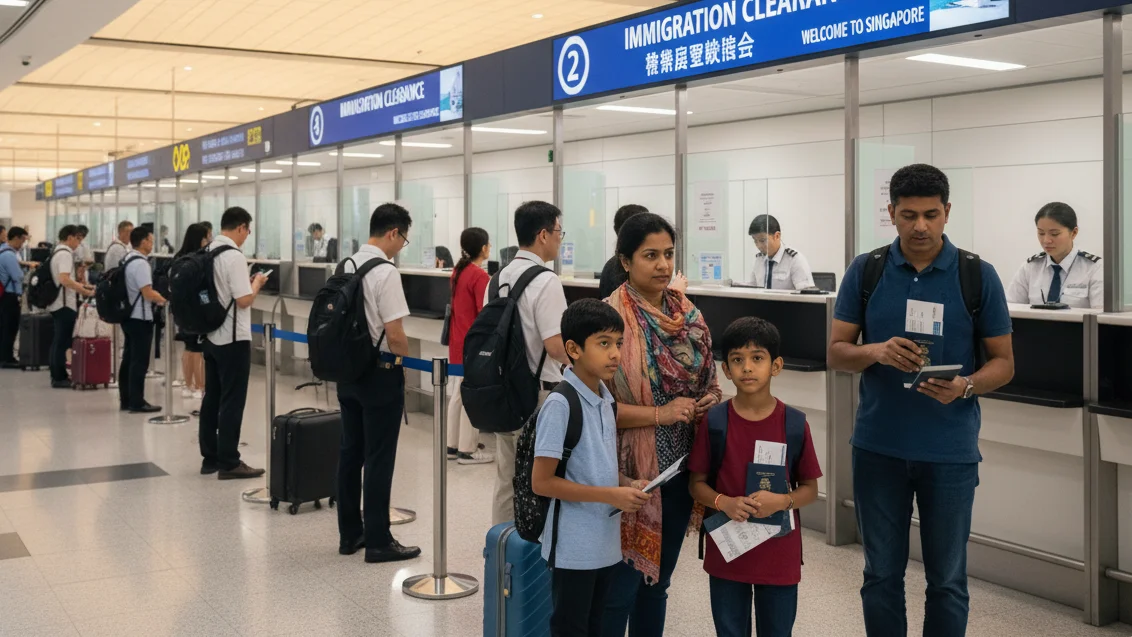
Short answer: Aruba lists a valid return or onward ticket and an approved ED Card among its entry requirements. The card does not replace onward ticket proof. A temporary flight reservation may document a planned exit while current, but it is not an issued ticket; confirm that your airline and the Aruba authorities accept the evidence you intend to show. Your departure should fall within the stay you are permitted, and the immigration officer makes the final admission decision.
For an Aruba-bound traveler, the ED Card, the onward booking and the later boarding pass answer three different questions: pre-arrival registration, intended exit and actual departure. Keep those evidence states separate.
Key facts
- Every traveler, including an infant, needs an approved ED Card before entry.
- Aruba publishes a valid return or onward ticket as an entry condition.
- The next destination must be one the traveler is entitled to enter.
- A live reservation is not the same as an issued e-ticket or a later boarding pass.
- Accommodation and funds evidence may be requested at the border.
Need an onward reservation for an Aruba route? Check the rule and your carrier first, then match the passenger name, route and date to your actual plan.
Explore a dummy ticketIn This Guide
- What Does Aruba Ask a Tourist to Hold on Arrival?
- What Is the Aruba ED Card, and What Does It Leave Out?
- Which Evidence Do You Hold: Reservation, Issued Ticket, or Boarding Pass?
- How Do the Portal, the Airline Desk, and the Immigration Counter Differ?
- What Does a Fictional Route Look Like With Every Record Side by Side?
- How Should Your Departure Date Sit Inside Your Permitted Stay?
- What Happens When a Document Is Missing or Does Not Match?
- When Is a Dummy Ticket the Right Tool, and When Is It Not?
- What Should You Check Before You Rely on Any of This?
- Carry the Qualifier, the Ticket, and a Short Answer
Official-source check: Aruba’s immigration regulations list the ED Card and return/onward ticket; the Aruba Tourism Authority’s ED Card guide states the seven-day filing window; the official ED Card portal says submission is not an entry guarantee. Check these again close to travel.
Reviewed for: ED Card versus ticket, visa exemptions, admitted stay, destination-entry rights, reservation status and post-trip departure proof.
Aruba lists an approved Online ED Card and a valid return or onward ticket among tourist entry requirements. The card is a pre-arrival step; it is neither a ticket nor a guarantee of airline boarding or admission. An immigration officer makes the final entry decision.
This guide covers three things people blur together: finishing the ED Card, meeting the actual entry conditions, and keeping departure evidence you can produce later. It explains what a reservation proves, what an issued ticket proves, and where each stops helping with onward travel requirements.
Rules can change without notice, so check the current wording before you rely on any of it. Get a dummy ticket booking with a verifiable PNR for the onward leg.
What Does Aruba Ask a Tourist to Hold on Arrival?

Aruba defines a tourist broadly. Vacation and relaxation, sport, health reasons, family matters, study, religious purposes, and a business visit all sit in the same category, so a two-day meeting and a two-week beach holiday meet the same conditions at the door.
Those conditions fall into two groups. Some documents are expected every time. Others are produced only if the officer asks. Keeping the groups apart stops you from over-preparing in one direction and being caught short in the other.
The Documents Expected From Every Tourist
A tourist who wants to enter Aruba is expected to hold:
A passport that is valid on entry and for the whole stay, and not more than 10 years old.
A visa, if your nationality requires one.
A complete and approved Embarkation and Disembarkation card, the Online ED Card.
A valid return or onward ticket.
The documents needed to return to your home country or to a country you have the right to enter, such as a residence permit, a re-entry permit, or an entry visa.
The last two items are easy to merge in your head, and they are different. The ticket shows when you leave Aruba. The residence permit or visa shows where you are allowed to land next. An onward flight to a country that would not admit you satisfies the first condition and fails the second.
Put plainly, Aruba requires proof of onward travel for entry, and the right-to-return documents sit beside it.
Most travelers hold both without thinking about it, because the return ticket points to the place where they live. The gap appears on one-way arrivals and multi-country trips, where the onward leg heads somewhere that has its own entry rules.
The Documents Requested Only If the Officer Asks
Two conditions are worded as requests. If the officer asks, you must provide proof, to the officer's satisfaction, of a valid reservation for accommodation in Aruba, such as a hotel or apartment, or of property you own there.
Property means a residence, condominium, apartment, timeshare apartment, or a pleasure yacht of at least 14 meters (46 feet) moored on the island.
If the officer asks, you must also show adequate financial means for hotel expenses, where they apply, and for living costs during the stay. A declaration of guarantee from a legal resident of Aruba can stand in for that.
Both belong to the entry conditions. Evidence of sufficient financial means is required, and so is proof of accommodation, in the sense that you must be able to produce each one when asked. A hotel reservation saved offline and a recent bank record on your phone cost nothing to carry and remove a whole line of questioning.
A working benchmark for enough money is between 150 and 200 US dollars per person per day when staying in a hotel, and 100 US dollars per person per day when staying with family. With proof of sponsorship, the sponsor carries the financial responsibility instead.
Why the Short List Is Longer in Practice
The two request-only items look optional on paper. They are not optional at the counter. An officer who asks for a hotel address and receives a shrug has a reason to ask more questions, and each new question lengthens the interview.
There is also a sequencing effect. Airlines look at your documents before the officer ever does, and an agent who sees a one-way booking and no accommodation may stop the conversation early. Carrying all five core items plus the two on-request items costs nothing and removes that risk.
Keep them together, in the same folder, in the same order each time. A pile of separate screenshots invites errors under pressure, and a single organized set reads as a traveler who knows what is expected.
One Health Rule Tied to the Route You Flew
Aruba applies a yellow fever vaccination requirement, in force since March 1, 2018, to passengers entering from endemic areas. It is mandatory for passengers arriving from Central American, Latin American, and African countries classed as high risk.
Travelers arriving from Costa Rica or elsewhere in Latin America should check the current country list and the certificate format before departure. The rule follows where you flew from, not the passport you hold, so a short connection through an affected country can bring it into play even when your journey started somewhere else.
Who Decides, and Why a Visa Does Not Settle It
The final authorization for admission remains with the migration officer at the border crossing. That officer has the authority to grant or refuse admission. Admission can be refused if not all admission requirements are fulfilled when you arrive, or if the tourist is on a blacklist.
Holding a valid visa for Aruba does not guarantee entry. The visa gets you to the counter. The conditions above, checked on the day, get you through it.
Aruba keeps its own list of nationalities that need a visa, published through the Government of the Netherlands pages for the Caribbean parts of the Kingdom. The visa waiver program that applies to travel into the United States has no bearing on that list, so an exemption you hold elsewhere does not carry over by default.
Some visa-required travelers are exempt for reasons other than nationality. Holders of a valid residence permit from another part of the Kingdom, the United States, Canada, the Schengen area, the United Kingdom, or Ireland are among them.
So are people continuing to a third country within 24 hours or the same day, provided they hold tickets with reserved seats and the documents needed for the onward trip.
Your visa type, or the exemption that replaces it, decides which of these conditions you must prove before you travel. It does not remove the ED Card or the ticket. Applying for a visa is a separate task that this guide leaves to its own dedicated treatment.
What Is the Aruba ED Card, and What Does It Leave Out?
The Online ED Card is a mandatory digital entry form. It replaced the paper card that used to be handed out on arrival, and it is completed on the official Aruba portal before you fly. Every person entering Aruba needs their own, including infants and children.
That "own" matters more than it sounds. Each traveler needs their own passport to complete the form, so a baby cannot be added to a parent's passport for this purpose. A family of four files four cards and ends up with four separate qualifiers.
Who Completes It, and When
Visitors, returning residents, and anyone who disembarks on the island complete the card. Pure transit without entering Aruba does not require one. Most cruise passengers are also outside the requirement, and only passengers on vessels that go through Aruban immigration need to file. If you are unsure, ask the cruise line.
The window is seven days. You can submit within the 7 days before your arrival date, and an earlier attempt produces invalid dates that you then have to redo. The same one-week window applied when Inmigracion Aruba launched the redesigned portal on October 30, 2024, and it covers entry by air and by sea.
Filing very late is the opposite mistake. Many airlines and cruise lines look for the qualifier at airline check-in, so the card belongs to your preparation days, not to the morning of the flight. A sensible slot is one to three days before departure, which leaves room to correct a typo without panic.
What the Form Asks For
The steps as laid out ask for your full name exactly as it appears in the passport, nationality, passport number, and date of birth. They then ask for your travel details: airline name, flight number, departure city, and arrival date in Aruba.
Next comes the name and address of your hotel, resort, or rental, followed by a short health and customs declaration.
Those fields are your passenger details and your inbound flight. They describe how you are arriving. The steps as laid out do not include a field for an onward or return ticket, so completing the form does not put a departure document on file for you.
A nickname instead of the passport name is a common slip. If your flight or other details change after submission, use the official portal’s current correction or resubmission process and check that the qualifier reflects the trip you will take.
The Qualifier, and What It Actually Covers
When the form is approved, you receive a qualifier by email. It is a document with a QR code, and it replaced the old "ok to board" green checkmark on October 30, 2024. Airlines look at it at departure, and border control scans it on arrival.
Keep the approved qualifier available for airline check-in and Aruba immigration. It documents completion of a mandatory pre-arrival step, but it does not by itself confer boarding rights or admission; the carrier and officer still check the other requirements.
Save it in at least two places, such as a phone screenshot and a printed page. If you lose it, you can log back in with your passport number and retrieve it. Keep it with the rest of your documents, because the officer may ask for it again besides the passport.
The Fee That Rides Along
Use the official ED Card portal for the form and check the current sustainability fee and exemptions there before submitting. Aruba Tourism Authority currently lists a US$20 fee for visitors arriving by air, but payment and exemption details can change.
Children under 8, registered Aruba residents, visitors arriving and leaving on the same day, and a few other groups are exempt, and a visitor who returns within the same calendar year should not be charged twice.
If your submitted travel details change, follow the current portal instructions for updating or resubmitting the card. Do not assume a new submission is free or that an old qualifier will remain valid; check the portal and keep your payment confirmation.
Third-party websites sometimes offer to file the card for far more than 20 dollars. Some services do charge for assistance, yet the form can be completed independently within a few minutes, and the portal itself is the official route.
Three Questions the ED Card Does Not Answer
The card is one of three separate pieces of evidence, and each answers a different question.
Finished ED Card: have you completed the pre-arrival step that airlines and border control look for?
Entry conditions: do you hold the ticket, the right to go back or on, the accommodation, and the funds that the officer can ask to see?
Departure evidence: can you show, after the fact, that you left within the days you were granted?
A qualifier answers the first question only. It says nothing about whether your onward ticket is sound, whether your hotel booking is real, or whether you left on time. Travelers who file the card early and then relax are the ones who get surprised at the counter, because the officer's questions come from the second list, not the first.
The rest of this guide stays on the second and third questions, since the first is complete once the qualifier arrives.
Which Evidence Do You Hold: Reservation, Issued Ticket, or Boarding Pass?

Aruba’s published wording calls for a valid return or onward ticket. A flight reservation may show a planned exit, but a reservation is not necessarily an issued ticket. Whether a particular record meets the requirement is for the airline and immigration authority to decide; buy a ticket if they require ticketed travel.
People also show an itinerary. The words differ, but the officer is reading the same thing: a named passenger, a date, and a way off the island.
What you can show depends on what stage your booking has reached. Four stages are worth telling apart, because each proves something slightly different.
The Evidence States Side by Side
Evidence | What it shows | What it does not show | Who looks at it | Source |
|---|---|---|---|---|
Online ED Card qualifier | The pre-arrival form is approved, and you may board | That you will be admitted, or that you hold a departure ticket | Airline at departure; border control on arrival | Aruba Tourism Authority; Government of Aruba |
Flight reservation with a PNR (return or onward leg) | A named booking with route and departure date | That a ticket is issued or paid for, or that you will fly it | Airline desk; immigration officer | Aruba Tourism Authority; VisitAruba.com (entry requirements) |
Issued e-ticket (return or onward leg) | Ticketed travel for that passenger | That the date suits your permitted stay, or that the next country will admit you | Airline desk; immigration officer | Aruba Tourism Authority; VisitAruba.com (entry requirements) |
Boarding pass for the departing flight | You checked in for that flight on that day | Anything about entry, because it only exists at departure | You, later, if your time in Aruba is ever questioned | VisitAruba.com (overstay wording) |
Hotel or rental reservation | A place to stay, if the officer asks | Funds, or the right to enter | Immigration officer | Aruba Tourism Authority; VisitAruba.com (entry requirements) |
Funds record or guarantee declaration | Adequate means for the stay, if the officer asks | Anything about the ticket | Immigration officer | Aruba Tourism Authority; VisitAruba.com (entry requirements) |
Days granted at admission | The length of stay the officer allowed | Your onward date, which you must keep inside it | Immigration officer; extension office | VisitAruba.com (entry requirements) |
Reservation Versus Issued Ticket
A flight reservation is a booking record. It carries a reference code, your name, a route, and dates. An issued ticket goes a step further: money or points have been committed, and the airline has ticketed the booking. The two look similar on a phone screen and behave differently when plans change.
A verifiable flight reservation can be looked up through the airline's own booking tools using the reference and surname. That is what makes it more than a typed document. It is still a reservation, not an issued ticket, and the party that holds it sets how long it lasts and what happens when it lapses.
A real flight reservation also has limits that an issued ticket does not. It may be time-limited, it may be unpaid, and it may not be refundable in any meaningful sense because nothing was paid. Do not describe a reservation as a ticket in conversation with an officer. If asked, say what it is.
Return, Onward, One-Way, and Round-Trip
A round-trip ticket on a single booking is the simplest case. Both legs sit on one record, the return flight leaves Aruba inside your stay, and the officer sees a closed loop. Most travelers on a holiday itinerary never need to think further.
A one-way ticket into Aruba removes that loop. The officer then looks for the departure evidence somewhere else, so an onward flight booked separately has to carry the whole job. It needs your name spelled as in the passport, a departure date that fits the days you expect to be granted, and a destination you are allowed to enter.
Return travel points to the place you live. Onward travel points to a different country. A return ticket proves you can go home. An onward travel ticket proves you can go somewhere else, and only if that somewhere else will admit you.
A plane ticket to a third country raises one more question. Whether you need a visa or a transit allowance for that country is its own problem, governed by that country's rules. A refusal at the next border can still break the plan you described on arrival.
Why a Bus Ticket Does Not Count Here
Aruba is an island, so there is no overland exit. A bus ticket may get you to the airport, and it says nothing about leaving the island. The test for any exit is the same: a named passenger, a date, and a route out.
Overland logic from other countries does not transfer. If you have heard that a bus or train booking works at some land border, put that aside for Aruba and plan around a flight or a documented departure by sea.
Making Each Record Agree With the Others
Evidence is strongest when the records line up. The name on the booking matches the passport. The departure date sits after the hotel check-in and no later than the end of the stay you expect. The inbound flight on the ED Card matches the flight you actually take.
Disagreement between records, rather than absence of one, is what draws questions. An officer who sees a hotel reservation ending on the 27th and a departure on the 3rd will ask about the gap. Build the set once, compare the dates line by line, and carry only the versions that agree.
Cost, Refunds, and the Proof You Can Actually Hold
Full-fare tickets can be expensive, and a flight ticket bought months early may not match the plans you have by the time you fly. Refundable tickets allow cancellation within a specified time frame, which gives you room to adjust. Read the cancellation window before you rely on it, and note the deadline.
The cost-effective choice depends on how firm your dates are. Fixed dates favor an issued return. Dates that may move favor a reservation or a refundable fare. What you should not do is hold nothing at all and plan to buy proof at the counter.
A document is valid proof for the officer when it shows your name, a date inside your permitted stay, and a route out of Aruba that makes sense. Anything beyond that is detail for the airline desk.
How Do the Portal, the Airline Desk, and the Immigration Counter Differ?
Three separate parties look at your documents, and each has its own reason for caring. Confusing them leads to the classic mistake of preparing for the one you fear and ignoring the one that actually stops you.
Think of them in the order you meet them: the portal, the airline, and the officer. Each one can hold you back, and none of them can speak for the others.
Checkpoint One: The Portal
The portal is the Online ED Card, and its question is narrow: has this passenger completed the pre-arrival form? The answer is a qualifier, and it does not involve a human judging your plans.
Nothing about your onward ticket is tested here. You can have a perfect qualifier and no ticket, or the reverse. The qualifier opens the way to the second checkpoint and matters again at the third, where the scan confirms the form was done.
Checkpoint Two: The Airline Desk
Airlines have their own reasons for checking documents, and those reasons are financial. If a passenger is refused entry on arrival, the carrier can be left to carry that passenger back and absorb the cost. Airlines incur costs if they allow boarding without proper documentation, so they ask before boarding, not after landing.
For Aruba, the airline looks for the ED Card qualifier at the desk and again at the gate.
Many airlines also look at the booking itself, especially when it is one-way. Airlines often check for onward travel proof before boarding, and airlines can deny boarding without an onward ticket, even when the passenger would have satisfied the officer.
The result is that the airline desk is often the strictest checkpoint, because it decides first and has the least room for judgment.
Counter staff work from a rules screen and a short document check. They do not conduct an interview, and they are rarely persuaded by an explanation. What moves them is a document that matches the screen: a name that matches the passport, a departure date inside the expected stay, and a route that clearly leaves Aruba.
Checkpoint Three: The Counter in Aruba
At the immigration counter, the officer decides on admission, acting for the immigration authorities at the port of entry. Immigration officers may request proof of onward travel on arrival, and immigration may refuse entry if no onward ticket is shown.
The officer also holds the power to ask for accommodation and funds, and to set the number of days you are granted.
The officer has discretion where the airline did not. A border officer can weigh your story, your answers, and the whole file together. A clear, short answer helps. A long story with several alternative plans does not, because each alternative gives the officer another thing to check.
Say where you are staying, when you leave, and which document shows it. If the officer asks for the ticket, produce it. If a plan has changed since you booked, say so plainly and show the current version.
Where Nationality Changes the Odds
Enforcement of ticket requirements varies by nationality. Travelers with weaker passports tend to face stricter checks for onward tickets, and more scrutiny of their tickets at both the airline desk and the counter. Not holding an onward ticket also raises concerns about overstaying, which is the exact thing the requirement exists to prevent.
That is a pattern, not a rule published by Aruba. The written conditions are the same for everyone who is a tourist. What differs is how closely they are checked and how quickly a missing document turns into denied entry.
Frequent travelers sometimes assume a long travel history lets them skip the paperwork at border entry. It does not change the written conditions. A clean record may make the conversation shorter, and it does not remove the officer's authority to ask.
What the Officer Reads When You Show the Ticket
The officer is not checking the ticket in isolation. The document is read beside everything else in front of them: your purpose of travel, your hotel, your funds, your passport, and the days you are asking for.
Four things on the ticket matter most. The name matches the passport. The departure date falls inside the days the officer is about to grant. The route clearly leaves Aruba. The destination is somewhere you hold the right to enter.
When those four agree with the rest of the file, the ticket does its job in seconds. When one of them disagrees, the officer pauses, and the pause is where a short, calm answer earns its value.
How the Timing Fits Together
The checkpoints sit on a short timeline, and knowing it prevents the common slips.
Seven days before arrival: the ED Card window opens. Earlier filing produces invalid dates.
One to three days before departure: a sensible slot to file, with time to correct errors.
Check-in day: the airline reads the qualifier and, often, the onward document.
Arrival: the scan, the questions, and the days granted.
Departure: the boarding pass, plus any extra security or customs step for your next country.
Each step depends on the one before it. A late card holds up check-in, and a missing ticket holds up the same desk. Neither problem can be solved at the counter in Aruba, because you will not have reached it.
What Each Checkpoint Needs From You
Portal: passport details exactly as printed, inbound flight details, and the Aruban address where you will stay.
Airline desk: the qualifier, your passport, and a return or onward booking that shows your name and a date.
Counter: the same documents, plus accommodation and funds evidence ready if asked, and a short answer about your plans.
If you hold all three, the order does not matter. If you hold only two, the missing one tends to show up at the checkpoint that is least forgiving about it.
The Departure Side
Leaving has its own checks. Travelers heading to the United States clear U.S. Customs and Border Protection passport control in Aruba before boarding, after checking in and collecting bags, and they arrive home as domestic passengers. That adds a step inside the airport, so allow time for it.
Departure is also when your boarding pass becomes evidence. Staying longer than the days granted without asking for an extension can have negative consequences for future admission to Aruba. A dated boarding pass and an airline trip record show you left within your stay, and they are cheap to keep.
What Does a Fictional Route Look Like With Every Record Side by Side?
The example below is invented from start to finish. The traveler, the carrier, the flight numbers, and the hotel are fictional, and no reference code is shown, because a real one would not belong in a worked example. What is real is the order in which the checkpoints appear and the document each one asks for.
The Setup
Emily Carter is a Canadian citizen who lives in Mumbai. She is taking a 12-night holiday in Aruba, and she wants her papers sorted a week ahead. Canadian citizens do not need a visa for Aruba, so her visa line is empty and the other conditions carry the weight.
Her route, on a fictional carrier, runs Mumbai to a European hub to Aruba on FICT 101, leaving Saturday, November 14, 2026, and landing Sunday, November 15. The return, FICT 102, leaves Aruba on Friday, November 27. She holds a round-trip booking and a hotel reservation at a fictional guesthouse for all 12 nights.
The Record Trail, Date by Date
Date | What happens | Record in hand | What it proves |
|---|---|---|---|
Weeks before | Booking and hotel reservation are made | Booking record for FICT 101 and FICT 102; hotel reservation for 12 nights | A named passenger, two dates, and a place to stay |
Sun, Nov 8 | The ED Card window opens seven days before arrival | None yet | Nothing; filing earlier would produce invalid dates |
Mon, Nov 9 | Emily files the ED Card and pays the fee | Qualifier, saved as a screenshot and a printed page | The pre-arrival step is complete |
Sat, Nov 14 | Airline check-in in Mumbai | Passport, qualifier, return booking on her phone | She may board; the airline sees a way out of Aruba |
Sun, Nov 15 | Immigration counter in Aruba | Same documents, plus hotel reservation and a funds record if asked | The officer sets her days and decides admission |
Fri, Nov 27 | Departure from Aruba | Boarding pass for FICT 102 | She left inside her stay |
Read down the last column. No single record covers a whole row of the journey. The qualifier gets her aboard. The return booking answers the ticket condition. The hotel reservation and funds record answer the two conditions that depend on a request.
The boarding pass is the only item that proves departure, and it does not exist until the day she leaves.
Where the Same Trip Can Go Wrong
The trail looks tidy because nothing changes. Real trips rarely hold still, so here are four common disruptions and how the evidence responds.
She rebooks the inbound flight. If FICT 101 moves by a day, the flight number and arrival date on her filed card are out of date. She files a new ED Card with the revised details. The sustainability fee is not charged again because the system recognizes her passport number. She keeps the first receipt.
Her name differs between documents. The booking shows her first and middle names, and the passport shows the same names in a different order. The airline desk may question it, and the officer may as well.
The fix is to match the passport exactly and, if the booking cannot be changed, to carry a note of the discrepancy ready to explain in one sentence.
She decides to leave one day earlier. An earlier departure sits comfortably inside her stay, but the booking now shows the wrong date. She changes the booking before she travels and carries the current version. A stale reservation with the wrong date is worse than a plain one with the right date.
She wants to extend. Emily's days are set at the counter, and a standard admission is at most 30 days. If she decided mid-trip to stay longer, she would apply at the immigration office for an extension, with a copy of her ED Card, a copy of a valid return ticket, and travel insurance covering medical and liability.
A new booking dated within the extended period would be needed first.
The Same Route With a One-Way Arrival
Now change one thing. Emily books FICT 101 as a one-way ticket because she has not decided how long to stay, and she plans to book the way out later.
The ED Card is unaffected. The qualifier arrives as before, and the airline desk in Mumbai is where the difference appears. Without an outbound document, the agent has no way to confirm she will leave, and airlines can deny boarding when the departure document is missing.
She needs an onward booking in hand before check-in. A reservation with her name and a departure date inside her expected stay may be enough for the desk, and an issued ticket is stronger. Neither guarantees how the officer in Aruba will react.
A sensible date is early enough to sit well inside the 30-day maximum and late enough to match her hotel nights.
A Ten-Second Test Before You Fly
Common sense is a good filter here. Imagine a stranger looking at your phone for ten seconds. They should be able to find your name, the departure date from Aruba, and the destination. They should also be able to see that the date fits your accommodation and your permitted stay.
If the stranger has to ask a question, the officer probably will too. Rebuild the document until the answer is on the page, and keep that version offline.
How Should Your Departure Date Sit Inside Your Permitted Stay?
The ticket condition exists for one reason: to show you will leave before your days run out. Countries require onward tickets to make sure visitors do not overstay their tourist limits, and Aruba's condition follows that logic.
So the date on the document matters as much as the document itself. A ticket that departs after your permitted stay ends is a ticket that argues against you.
The Numbers You Are Working Against
The maximum period a person can be admitted to Aruba as a tourist is 30 days. The officer sets the number of days at the counter, and the total a tourist can stay, extensions included, cannot exceed 180 days per year. US nationals may stay up to 90 days with no additional governmental documentation.
Anyone who wants to stay longer than 180 days needs a residence permit and is no longer treated as a tourist. That is a different immigration route and not one a tourist ticket can bridge.
For most travelers, the working number is 30. Plan your departure date well inside it, and treat anything longer as a decision you make with the officer or the immigration office, not one you assume.
Choosing a Departure Date You Can Defend
The best date is the one your other documents already support. Your hotel nights, your event dates, and your leave from work all point to a natural end. A departure date that matches them looks planned, and a date chosen only because it is inside the maximum looks like filler.
Leave a small buffer. If the limit is 30 days and your real plan is 12 nights, there is no reason to book day 29. A date a few days inside the limit avoids arguments about how arrival day and departure day are counted, and it survives a delayed flight.
Match your travel dates across everything you carry. If the hotel booking ends on the 27th and the flight leaves on the 3rd of the following month, the officer sees a gap and may ask what you plan to do in it. One clear answer, supported by a document, closes the question. A long explanation opens it.
When Your Plans Are Not Fixed
Flexible travelers have the hardest version of this problem. You may not know how long you will stay, and the ticket condition still wants a date. The answer is to anchor the current entry, not to predict the whole future.
Pick the latest departure date you could comfortably accept within the 30-day maximum.
Book or reserve a return or onward leg for that date, or a little earlier.
Keep it changeable so you can move it as plans firm up.
A few weeks is a common length for flexible trips, and it is safe to plan inside it. If you later decide to stay longer, the extension process starts within the first 30 days and has its own requirements. Fixed plans are simpler. The ticket, the hotel, and the date all agree, and the conversation is short.
Digital Nomads and Remote Work
Remote work is allowed under conditions. You must be employed by a company, or self-employed, in your home country. You may not render services to, or receive income from, a local Aruban company or individual. For that, a work or business permit is required.
Digital nomads sometimes read the tourist category as a license for a long stay. It is not. The ticket condition applies the same way, and a nomad who arrives on a one-way booking with no exit date is the traveler most likely to face questions.
Anyone planning to live and work on the island needs a valid residence permit from the immigration directorate, DIMAS. That route sits outside the tourist conditions in this guide.
Moving On to a Third Country
If your onward journey leads to a third country, two checks matter. The first is Aruba's: the date must sit inside your stay, and the destination must be somewhere you hold the right to enter. The second belongs to the next country, whose rules you read separately.
Some visa-required travelers are exempt from the Aruban visa when they continue to a third country within 24 hours or on the same day by aircraft, holding tickets with reserved seats and all documents needed for the onward trip. The exemption is for short transits, not for a stay that happens to end in another country.
Keep the next destination's requirements in the same folder as your Aruba papers. A refusal at the next border breaks the plan you described at the Aruba counter.
Extending Beyond the First Days
The route to a longer stay depends on who you are. Nationals of the Kingdom of the Netherlands can request up to 180 consecutive days. Nationals of listed countries can do the same if they own property in Aruba or hold a declaration of guarantee from a resident.
Within the first 30 days, a visitor can request a total stay of up to 90 days, subject to restrictions.
After admission, a tourist who wants more days than the officer granted applies at the immigration office, IASA, in Oranjestad.
The application includes a copy of the passport profile page and stamped pages, valid for at least another three months, a copy of the ED Card, a copy of a valid return ticket, and a copy of travel insurance covering medical and liability for the extended stay.
If you are not staying at your own residence or a hotel, a declaration of guarantee from a resident is also needed. Staying longer than the days granted without asking for an extension can have negative consequences for future admission, which makes the date on your departing ticket a document worth keeping accurate.
International travel rules differ widely from one destination to the next, and Aruba's extension paperwork is built on the same ticket you carried in. Treat that ticket as a live document for the whole stay, not a formality that expires at the counter.
What Happens When a Document Is Missing or Does Not Match?
Gaps show up at predictable points. Each checkpoint has its own failure and its own repair, and the repair is cheapest at the earliest checkpoint. Here is the order in which problems usually appear, with the fix that fits each.
No Qualifier at Check-In
An airline that cannot see your ED Card qualifier will not let you board, because the qualifier is how the carrier confirms the pre-arrival step was taken. The portal is online, so the fix is immediate: complete the card, pay the fee where it applies, and show the qualifier on your phone.
The only real obstacle is the window. If you are within the seven days before arrival, you can file at once. If you are not, wait until the window opens. Keep your passport open while you fill it in, since a typo means starting again.
No Ticket at the Airline Desk
This is the most common surprise for travelers who arrive on a one-way booking. The agent asks how you will leave Aruba, and you have nothing that shows a departure date. Airlines can deny boarding if proof of onward travel is missing, and the agent has little room to bend.
Your options, from strongest to quickest, are an issued return or onward ticket, a refundable fare you can cancel within its window, or a reservation with a verifiable reference.
The right choice depends on cash, time, and how firm your plans are. The wrong choice is to argue the rule, since the agent is following a script and cannot change it.
Buy the document with the smallest commitment that still shows a date inside your stay. Whatever you pick, make sure the name matches the passport before you pay or save anything.
A Date That Falls Outside the Stay
An onward date beyond your permitted days is a fixable error, and the agent will usually point to it. Move the departure inside the maximum, and leave a buffer. Do not assume an extension will rescue you. Extensions are requested separately, with their own documents, and they are not granted at the airline desk.
A Name That Does Not Match
Mismatched names are the quiet cause of many refusals. A missing middle name, a reversed order, or a spelling variant can make an otherwise good booking look like it belongs to someone else.
Correct the booking if it can be changed. If it cannot, carry a clear copy of the passport page and be ready to say in one sentence that both names are yours. Do not edit a document yourself. A visibly altered record does more damage than a mismatch ever would.
Questions at the Counter About Where You Are Staying
If the officer asks for accommodation and you have none, you can show a valid reservation for a hotel or apartment, or proof that you own property on the island. A declaration of guarantee from a legal resident of Aruba is the alternative if you are staying with someone.
Do not invent an address. The officer is asked to be satisfied, and an address that cannot be traced is worse than a plain admission that you have not yet booked.
Questions About Money
If you are asked about funds, a recent bank record or card statement answers the question. A benchmark of 150 to 200 US dollars per person per day for hotels, or 100 for family stays, gives you a figure to check your own balance against. With a sponsor, a declaration of guarantee carries the responsibility.
When Admission Is Refused
The officer holds the authority to refuse admission when requirements are not met on arrival. A visa does not change that. If it happens, stay calm and ask which condition was not met, because the answer tells you whether the problem is a missing document or a doubt about the plan.
Arguments rarely help. Documents sometimes do, when the gap was a missing record that you can produce. If you are returned to your point of departure, keep every document and any record of what was said, since those are the facts you will need next time.
A refusal is also a reason to be more careful the next time, not a reason to change the story. An entry history that shows a refusal is easier to explain when your records are consistent.
Overstaying and Its Cost
Overstaying is the outcome the ticket condition exists to prevent. Staying longer than the days granted without asking for an extension can have negative consequences for future admission to Aruba. If your plans change, apply for the extension at IASA before your days run out, with the documents listed earlier in this guide.
The practical habit is simple. Note the day your granted stay ends, put it in your calendar, and keep your departure booking pointed at a date that comes before it.
When Is a Dummy Ticket the Right Tool, and When Is It Not?
A dummy ticket is a flight reservation made to show an onward or return leg. It is a reservation, not an issued ticket, and that single fact decides where it helps and where it does not.
Travelers use dummy tickets as proof of onward travel, and acceptance is never guaranteed, because the airline agent and the immigration officer each make their own call.
What a Reservation Can and Cannot Do for Aruba
Aruba’s wording asks for a valid return or onward ticket. A current flight reservation can document a proposed departure with a named passenger, date and route, but it is not an issued ticket. Confirm with the airline and immigration authority whether the specific record meets their requirement; obtain a ticket if ticketing is required.
What it cannot supply is a paid ticket. It does not show that you bought passage, and it may lapse on its own terms. If the officer asks you to prove that a booking is live, the answer depends on who holds the record and how long it lasts. State what it is. Do not call it an issued ticket.
A reservation does nothing for the other conditions. It does not replace the ED Card qualifier, the accommodation evidence, or the funds record. It also cannot fix a departure date that sits outside your permitted stay.
When a Dummy Ticket Fits
It fits when your plans have not settled, and you need a document that shows a way out before you commit money to a fare. It also fits when a one-way arrival is part of a longer route, and the airline wants a date it can read.
It fits less well when your dates are fixed, and a refundable fare is easy to get. A refundable ticket can be cancelled within its stated window, and it leaves you holding an issued ticket, which is a stronger document.
If you are already sure of your return date, the best bet may simply be a return ticket booked in the normal way.
It does not fit if you plan to use it as a substitute for a genuine plan. An officer who asks about your next destination and gets a vague answer will not be helped by a document that does not match what you say.
DummyFlights currently advertises temporary flight-reservation documents from $15 per person, with an immediate PDF download and eligible date revisions without a service fee. Check your order’s actual validity and revision terms before relying on it; this is not an issued airline ticket.
How to Present Any Reservation Well
Whatever document you carry, a few details decide how it reads at a glance.
Your name exactly as in the passport, in the same order.
A departure date inside your expected stay, with a buffer.
A route that clearly leaves Aruba, with a flight number.
A reference code the airline can look up.
Save it offline as a PDF. Airport connections fail at the wrong moment, and a document that needs a login to open is a document you may not have when asked.
If the officer asks about the booking, answer in one sentence: "This is the onward reservation, and the departure is on the 27th." Do not apologize for it, do not call it a formality, and do not offer a second plan. A calm, short answer reads as a settled one.
The Limits Worth Remembering
Three limits apply to any reservation, ours included.
First, acceptance sits with the people who read it, and their preferences differ. You can reduce friction by making the document clear. You cannot remove the decision from them.
Second, a reservation proves nothing about departure. Only your boarding pass and the airline's record do that, after the fact.
Third, a reservation that no longer matches your plans is a liability. When your dates change, change the document first, whatever kind of booking you hold.
Adjacent Tasks, Kept Separate
This guide stays with Aruba's ticket condition and the evidence around it. Several neighbouring tasks have their own treatment and are not repeated here.
A general explanation of dummy tickets and PNR checks belongs in its own dedicated guide. The border-control question, covering when officers and airlines ask for exit proof across many destinations, sits in a wider piece of its own. A visa application checklist for Aruba, covering what a consulate asks for, is a different task again and is not attempted here.
The point of keeping them apart is practical. The Aruba counter asks for a ticket, a card, and two documents on request. A visa file asks for something else, at a different time, from a different office.
What Should You Check Before You Rely on Any of This?
Entry rules for Aruba are published on pages that carry their own warning: requirements and procedures may be adjusted without prior notice. That is not boilerplate to skim past. A date window, a fee, or a document list can move between the day you read a guide and the day you fly.
Use the checklist below in order. Each item names what to confirm and where the answer lives, so you finish with current facts from official sources rather than a remembered version.
The Current-Source Checklist
Your visa position. Confirm whether your nationality needs a visa, using the Government of the Netherlands pages for the Caribbean parts of the Kingdom. Visa applications are handled through Netherlands embassies and consulates, and they are a separate task from the one covered here.
The ticket wording. Read the Aruba Tourism Authority's immigration regulations page and the entry requirements page for the current wording on the return or onward ticket. Look for any change to who must hold one.
Stay length for your passport. Confirm the standard 30 days, and whether your nationality gets a longer period without extra paperwork.
The ED Card window and fee. The official portal sets the seven-day window and the sustainability fee. Check both close to your departure date.
Insurance wording. The official pages do not word the insurance point identically for a standard stay, so confirm it with DIMAS or the Aruba Tourism Authority before relying on it. Extensions are clear: travel insurance covering medical and liability is required.
Health rules for your route. If you fly in from Central America, Latin America, or Africa, check the yellow fever country list and the certificate format.
Your airline's own document rules. Airlines apply their own checks, and they may ask for onward evidence that Aruba itself would not demand. Ask the carrier before you travel.
Your booking details. Names, dates, and the route out of Aruba all match the passport and your plans.
Do these once when you book and again about a week before you fly. The second pass is short, and it is the one that catches a change.
Who to Ask When the Pages Disagree
Two offices answer entry questions. The Aruba Tourism Authority handles general questions by email at support@aruba.com. The Directorate of Alien Integration, Policy and Admission, known as DIMAS, deals with entry and visa requirements for your particular situation, and it is based at Wilhelminastraat 31-33 in Oranjestad.
For tourist stay extensions and guarantee declarations, the immigration office is IASA, at Vondellaan 25 in Oranjestad. Address your question to the right office, and keep the reply in writing if you can. A saved email from the relevant office is stronger than a half-remembered phone call.
When two official pages word the same point differently, do not pick the one that suits your plan. Ask, and then follow the stricter reading until you get an answer.
Checking a Reservation Before You Carry It
If you hold a reservation as your onward travel document, check three things before you rely on it.
The reference and surname. The booking should be retrievable on the airline's own site using the reference code and your surname.
The names. Passenger details on the booking match the passport, including middle names and order.
The dates. The departure date sits inside your expected stay, and it still matches your hotel nights.
This is the practical meaning of verifiable. If an airline lookup fails, first check the surname, reference type, carrier and booking channel with the issuer. A failed public lookup does not alone prove fabrication, but an expired or unconfirmed record should not be presented as a current booking.
What to Carry, and Where
Carry the documents in two forms: offline on your phone, and printed for the ones an officer might ask to hold.
Passport, with plenty of validity.
ED Card qualifier.
Return or onward booking.
Hotel or rental reservation.
A funds record or guarantee declaration.
Any health certificate your route calls for.
For wider planning, many countries require proof of onward travel in some form, and a list of destinations with onward-travel checks helps when your trip continues beyond Aruba. Other countries set their own rules, so build a separate folder for each border you will cross.
A Reasonable Standard for Preparation
You do not need a binder. You need the five or six items above, current, readable, and in agreement with each other. Most problems come from items that disagree: a hotel night count that does not match the departure date, a name that differs between documents, or a card filed for a flight that has since changed.
If everything agrees and you can state your plans in one sentence, you are better prepared than most travelers who rely on remembering what they read months ago.
Carry the Qualifier, the Ticket, and a Short Answer
For Aruba, three things travel together: an approved ED Card qualifier, a valid return or onward ticket with a departure date inside your stay, and the hotel and funds records an officer may ask for. Finishing the card does not meet the ticket condition, and neither document guarantees entry.
Check the current wording before you fly, keep each record in agreement with the others, and save the boarding pass for the day you leave. If an onward reservation fills a gap in your plans, a dummy ticket booking can supply the document, and the officer still makes the call.
Preparing a consular application rather than Aruba arrival? A flight reservation for visa is a separate document question. Use the checklist of the actual visa office instead of treating the ED Card as a substitute.
Keep the right exit document with your Aruba travel file. If a temporary reservation is suitable for your route, verify it while active; if an issued ticket is required, buy one.
Check a dummy ticket optionFrequently Asked Questions
Does a Finished ED Card Replace the Ticket?
No. The card and the ticket are separate conditions. The qualifier lets you board and passes the scan on arrival, while the return or onward ticket is checked by the airline and the officer. Hold both.
Can a Traveler Enter Aruba on a One-Way Ticket?
You can arrive on a one-way booking only if you also hold a valid onward or return ticket, because that is the written condition. In practice, the document that shows your departure date has to be in hand at check-in. Without it, the airline may refuse boarding.
How Early Can the ED Card Be Filed?
Within the seven days before your arrival date. Earlier attempts produce invalid dates, so you start again. Filing one to three days before departure leaves time to fix errors without cutting it close.
Do Children and Infants Need Their Own Papers?
Yes. Every traveler, including infants, files an individual ED Card and needs an individual passport to do it. The ticket condition applies to each person, so each traveler has their own booking record.
What If the Flight Changes After Filing?
Follow the official ED Card portal’s current correction or resubmission process for the changed flight. Check whether any fee carries over, retain the receipt and carry the qualifier associated with your actual journey.
Will the Airline Actually Check the Onward Ticket?
Often, yes. Airlines check for onward proof before boarding because they bear the cost if a passenger is refused. Whether a given airline asks on your route depends on its own rules, so ask the carrier before you fly.
Does a Reservation Count as a Ticket?
Aruba's wording asks for a valid return or onward ticket. A reservation is a booking record, not an issued ticket, and whether it satisfies the agent or the officer is their decision. Many travelers use reservations for this purpose, and acceptance is never guaranteed.
What Counts as Proof of Accommodation?
A valid reservation for a hotel or apartment, or ownership of property in Aruba such as a residence, condominium, apartment, timeshare, or a pleasure yacht of at least 14 meters moored there. A guarantee declaration from a resident is the route when staying with someone.
How Much Money Should a Traveler Be Able to Show?
A working guide is between 150 and 200 US dollars per person per day in a hotel and 100 US dollars per person per day with family. Bring a recent record that makes the figure easy to see.
How Many Days Does a Tourist Get?
Aruba’s standard tourist admission is up to 30 days. Extensions and nationality-specific rules can differ, and the officer determines the period granted on arrival. Check the official immigration page and any extension conditions before planning a longer stay.
Does the Airline Check Anything on Departure?
On departure, carriers apply their usual document checks for the next country. If you fly to the United States, passport control by U.S. Customs and Border Protection happens in Aruba before you board. Keep your boarding pass as a record of leaving on time.
Can a Bus Ticket or Ferry Booking Serve as an Exit?
Aruba is an island, and a bus ticket does not leave it. Plan the exit around a flight, or around a documented departure by sea, with your name, a date, and the route out.
Does a Residence Permit Elsewhere Replace the ED Card?
No. A qualifying residence permit may exempt some visa-required travelers from the Caribbean visa, depending on the exact permit and nationality. It does not replace the Aruba ED Card, the onward or return ticket, or the other entry conditions. Verify the applicable exemption on the official immigration page.
Which Office Answers When Pages Disagree?
Send general questions to the Aruba Tourism Authority at support@aruba.com, and send questions about your own situation to DIMAS in Oranjestad. Extensions go to IASA. Keep replies in writing.
Is Insurance Required?
Official pages do not word this point identically for a standard stay, so confirm it with DIMAS. For an extension beyond 30 days, travel insurance covering medical and liability is required for the whole extended period.
Friendly reminder: DummyFlights provides temporary travel-proof documents for planning and application support. Requirements vary by destination, airline, route and traveler. A reservation does not guarantee boarding, visa approval or entry.