Short answer: Curaçao’s onward ticket question is separate from its free Digital Immigration Card. The DI Card is required before arrival for visitors clearing immigration; Curaçao says an officer may also request proof of onward or return travel. A genuine flight reservation can document a planned departure while it is active, but an airline may require a different document and the officer decides admission. Check your passport’s stay allowance and the actual airline policy.
This guide focuses on a practical three-record workflow for Curaçao: the DI Card, the border decision and the onward plan. It avoids treating an older stay-limit FAQ as a universal rule where newer official guidance differs.
Key facts
- The DI Card is free and completed on the official portal before arrival.
- Each visitor needs an individual form; a transit passenger who checks in again with another carrier may need one too.
- Immigration authorities may ask for onward or return proof; an airline can apply its own document policy.
- A record locator is not an e-ticket number or a promise of admission.
- Official pages differ on some visa-free stay durations; confirm the rule for your nationality.
In This Guide
- What Does Curaçao Ask of a Visitor Before the Flight?
- Is the Digital Immigration Card the Same as Permission to Enter?
- What Counts as Exit Evidence, and What Does Each Record Prove?
- Who Checks Onward Travel Evidence for Curaçao, the Airline or the Officer?
- How Should Dates, Names, and Routes Line Up?
- How Does One Fictional Trip Look, Record by Record?
- What Changes When Curaçao Is One Stop in a Longer Journey?
- Reservation, Issued Ticket, or Neither: What Would We Do?
- Which Current Pages Should You Check Before You Fly?
- Carry Three Clear Records Into Curaçao
Official-source check: Curaçao’s August 2026 entry overview says onward or return proof may be requested and confirms the DI Card is free. Its DI Card FAQ explains individual cards, timing and admission; the transit FAQ covers separate check-in. An older visa FAQ gives different stay limits, so resolve a borderline case with the relevant authority.
Reviewed for: DI Card timing and cost, nationality-specific stays, onward-evidence wording, transit and honest reservation status.
The onward travel requirements for Curaçao involve three separate records, and mixing them up is where trips go wrong. The Digital Immigration Card registers your arrival and costs nothing. An immigration officer decides entry permission at the airport. Exit evidence shows how you leave again.
Curaçao’s current tourism guidance says immigration authorities may request proof of onward or return travel. An airline may also ask what evidence it accepts before boarding. A DI Card does not replace that travel plan, and none of these records guarantees admission. Check the current rule for your passport, route and carrier.
This guide separates the three records, walks one fictional trip through them, and ends with a checklist for current official pages. Need exit evidence while your plans settle? A dummy ticket can fill the gap.
What Does Curaçao Ask of a Visitor Before the Flight?

Curaçao treats most short trips as visitor entries. A visitor stays at least one night and at most 90 nights for leisure, business, or family matters, and does no paid work for a local resident or a company established on the island. The total across a calendar year cannot exceed 180 days.
A destination country writes its own entry rules and applies them at its own border, so start with the category you fall into. Most tourists whose passports come from a listed country enter on visa-free terms. The list includes the United States, the United Kingdom, Canada, Australia, Japan, Brazil, Singapore, and most of Europe.
Passports outside that list need a visa before departure. Some holders are exempt anyway if they have a multiple-entry short-stay Schengen visa or a residence permit from the United States or Canada. Getting a visa belongs to the visa application stage, which this guide does not cover. Visa applications go through Dutch representations, not through the card portal.
Who Does This Guide Cover?
This guide follows an adult visitor who holds a passport from a visa-exempt country, flies to Curaçao for a short stay, and flies out again. It leaves out residence permits, work, and long stays, which have their own authorities and their own paperwork.
If you are unsure which group you belong to, the Tourist Board's visa page and the Immigration Department are the places to ask, and both are in the checklist near the end.
How Long Can a Visitor Stay?
Stay allowances depend on nationality, visa status and the applicable official rule. Curaçao’s newer entry overview describes many visa-exempt visits as up to 90 days, while an older tourism FAQ states 30 consecutive days for the general group with exceptions. Because these official summaries differ, confirm the controlling allowance with Curaçao immigration or Netherlands Worldwide for your specific passport before choosing an exit date.
The Immigration Department gives Dutch and American tourists six months, and EU, Canadian, Australian, New Zealand, and Japanese tourists three months. Plan to the shortest figure that could apply to you, because your exit evidence has to fit inside it.
Do not infer a universal 30-day visa-free ceiling from an older FAQ. The current official entry overview and nationality-specific rules may differ. If your plan approaches a stated limit, obtain confirmation from the relevant authority before relying on an extension or booking an exit.
Which Documents Does a Visitor Carry?
Travelers must have a valid passport for the whole stay in Curaçao, and the passport must not be more than 10 years old. Check the expiry date against the day you plan to leave, not the day you arrive.
Carry proof of accommodation details, such as a hotel reservation or an invitation from family or friends, to show the reason for your stay. These are supporting documents. They back up your purpose, but they do not show that you will leave.
Travelers are recommended to show confirmation of sufficient financial means upon entry. Guideline figures are about 150 US dollars per person per day in a hotel and about 100 when staying with family or friends, and no rights can be derived from those amounts.
The Immigration Department asks tourists to be able to show 1,000 dollars a week by credit or debit card. Because the figures differ, plan for the higher one.
Where Does Border Entry Happen?
The border happens at Curaçao International Airport, the island's only official airport, or at a seaport. On behalf of the Minister of Justice, officers strictly check whether foreigners meet the admission requirements, so the papers above are examined rather than assumed.
One more requirement sits outside the passport and the funds. The Digital Immigration Card is mandatory for all non-resident foreign travelers before they clear immigration, and residents registered on the island are exempt.
What Does a Visa-Exempt Arrival Not Include?
It is not permission to work for a local employer, since the visitor category excludes paid work for a resident or a local company. It is not a right to stay past the allowance, and it is not an exemption from the card, the passport rules, or the officer's decision.
It also does not turn a short trip into a settled plan. Exempt travelers carry no visa with dates printed on it, so the stay is defined by the allowance and by whatever your exit evidence says. That is part of why the evidence gets looked at.
Does Your Category Change the Exit Question?
The DI Card is separate from visa status. A visa holder and a visa-exempt traveler can both be asked to explain the stay and onward plan, but what they must show and how long they may remain can differ. Use the current rule for the particular traveler.
Either way, the exit evidence has to fit inside whatever the stay is.
Where Does Proof of Leaving Fit?
Proof that you can leave is the item travelers misread most. The entry list words it as evidence that you can return to your country of departure or travel on to another country, and it names a passport, a residence permit, or a visa as examples of that proof.
Airlines and travel advice for visitors usually talk about a return or onward ticket instead. How those two wordings play out at check-in and at the immigration desk is covered below, along with what each record can and cannot prove.
Is the Digital Immigration Card the Same as Permission to Enter?
No. The card registers who is arriving, on which flight, and on which passport. Permission to enter is a separate decision, made at the border crossing by an officer. The card does not guarantee admission. Final authorization rests with immigration officers, who have the authority to grant or refuse it.
What Is the Card, and Who Files It?
The Digital Immigration Card is a form that can only be filled out online. It replaced the paper embarkation and disembarkation card that used to be handed out during the flight. All international travelers who are not residents of Curaçao must fill it out to clear immigration.
Completing it costs nothing. A site that asks for payment is not the official portal, so stop there and go back to the Tourist Board's entry pages. You need a valid email address and your passport.
The steps run in a fixed order:
Enter your travel information. Typing the flight number brings up the active carriers, and you pick yours together with its port of embarkation.
Enter your passport information. Uploading the passport is optional, and nicknames are not allowed, so copy the spelling exactly.
Enter your contact information and personal details.
Accept the disclaimer, review everything, and submit.
Save the confirmation, either as a download or from the email that follows.
Whose Card Is It?
Each traveler files from their own passport, and the card cannot be completed for a group or a family in one go. Children need their own. A traveler who holds more than one passport must file with the one they will travel on, because the passport on the card has to match the passport presented.
Someone born in Curaçao who lives abroad still files. A resident is a person registered in Curaçao with a valid registration of residency. A long-term residence permit for another country does not make you a resident for this purpose.
What Should You Have Ready Before You File?
Keep the passport open beside you. Have the carrier and the flight details from your booking, an email address you can read on the day, and the length of your stay. For a child, use the child's passport.
File on a phone or computer you will use again, so the confirmation lands where you expect to find it.
When Do You File, and What Happens Next?
The official DI Card FAQ says registration may be completed up to one hour before arrival; it does not establish the seven-day opening limit asserted here. Complete it well before travel at the official portal so errors can be corrected and the confirmation is ready for check-in and arrival.
If the email does not arrive, check the spam folder. The portal's edit button also lets you retrieve and re-save the card. Use the same details you entered the first time.
Keep the DI Card confirmation accessible for the airline if asked and for immigration on arrival, digitally or printed. The official tourism page requires it before arrival, but do not assume every carrier performs the same check at the same stage.
How Long Does the Card Stay Valid?
The card is valid from the moment you complete it until the flight named on it has landed and you have been granted permission to enter. A missed or cancelled flight does not mean a new card.
The card remains active for at least one day beyond your initial arrival date, and officers update the travel date and flight code on the day you actually arrive.
Extending your stay later needs no edit to the card. Frequent travelers file once per person per trip. For the next trip, retrieve the existing card with the edit button and change the travel details rather than starting again.
What Do the eGates and the Express Pass Add?
Both are optional speed-ups, and neither is a decision. Visitors aged 18 and older with Canadian, European, or United States passports that carry a chip can use the eGates after filing the card. Families traveling with children under 18 are sent to the officer queue.
The Express Pass is a mobile service that shares a verified passport with immigration before you land. It requires the card first, so it cannot stand in for it.
Where Does the Card Stop?
The confirmation counts as proof that you completed the travel requirement for boarding. It does not show that you will be admitted, and it does not show that you will leave. A visa grant, where a visa is needed, works the same way: it is one admission requirement and not an entitlement to enter.
Record | Question it answers | Who looks at it | Does it permit entry? |
|---|---|---|---|
Digital Immigration Card confirmation | Are you registered to arrive on this flight? | Airline at check-in, then officers at arrival | No |
Officer's decision | May you enter, and for how long? | The immigration officer | Yes, this is the decision |
Exit evidence | Will you leave within the stay? | Airline staff, and officers if they ask | No |
What Counts as Exit Evidence, and What Does Each Record Prove?

Exit evidence comes in grades, and each grade answers a different question. People say they have a ticket when they hold a booking record, and an agent may read those two differently. Naming the grade you hold is the first habit worth building.
From Spoken Plan to Completed Departure
Think in five states, from weakest to strongest.
A spoken plan. "I fly home on the 26th" is a statement, not a document. Officers hear it often, and it carries weight only when the papers behind it agree.
A reservation. A verifiable flight reservation is a booking record with a reference that staff can look up. It shows a passenger name, a route, and a day. It is a reservation, not an issued ticket, so payment has not necessarily been taken, and the record can be changed or can lapse.
An issued ticket. An e-ticket exists once the fare is paid and ticketed. It is a contract to carry you on named flights, and its change and refund rules sit in the fare conditions. Free cancellation tickets can serve as temporary onward proof, provided you read the fare rules for the cancellation deadline and keep the refund route open.
A boarding pass. This shows an airline accepted you onto a specific flight on a specific day. For the inbound flight, it records that you traveled. For the flight out, it records only that you were cleared to go.
A completed departure. Only passing departure control and flying proves you left. Keep the pass from that last flight, because it is the nearest thing to a receipt.
The first three states record plans. Only the last two record events. A plan can be strong or weak, but it cannot prove what happened afterward.
What Must an Onward Ticket Show?
If onward evidence is requested, show a genuine document for travel out of Curaçao with the traveler, route and date clearly visible. A booking departing from another country needs its connecting route explained. A temporary reservation is not an issued ticket, and acceptance depends on the checker’s rules.
Clear name, route and date make an onward document easier to assess. Whether a temporary reservation is enough depends on the airline and immigration authority; a public PNR lookup alone does not decide acceptance.
Set the actual exit date inside the stay you are permitted, using the current nationality-specific rule. A mismatched or late date can raise questions, but no universal ticket shape or exact departure day is prescribed for all travelers.
Exit evidence shows your exit plan within the permitted stay, and that is all it shows. It does not show that you will be admitted, that you will board the exit flight, or that your next stop will let you in.
How Do You Read What You Actually Hold?
Read your booking the way an agent would. Look for a record reference. Look for a ticket number, which only an issued ticket carries. Look for status wording, and for any ticketing deadline if the booking is a reservation. On a paid fare, look for the conditions that govern changes and refunds.
If you find no ticket number, you hold a reservation. That is a workable exit record, provided you describe it that way.
If you find a ticket number but no conditions, ask the seller for them before you plan around the fare. A paid ticket you cannot change without cost is exit evidence and also a commitment.
Comparing the Records Side by Side
Record | Created when | What it shows | What it does not show |
|---|---|---|---|
Digital Immigration Card confirmation | You file online | You are registered to arrive on a named flight | Admission, or any plan to leave |
Reservation with a PNR | The booking is made | A planned route, day, and passenger | Payment, an issued ticket, or that you will board |
Issued e-ticket | The fare is paid and ticketed | A paid contract to fly on named flights | Admission, or flexibility beyond the fare rules |
Pass issued at check-in | You complete check-in | You were accepted onto a flight on a day | Permission to enter on arrival |
Completed departure | You pass departure control and fly | You left, and on which day | The next country's decision |
How Far Can a Lookup Take You?
A reference that staff can look up proves the booking exists in a reservation system. It does not prove the airline will accept it as exit evidence, and it does not prove an officer will admit you. Acceptance stays with the airline at check-in and the officer at the desk.
Records also change. A booking viewed on the day you print it can show a different status on the day you fly, so open your copy again a day or two before departure and again at the airport.
A free-cancellation fare and a reservation can look alike on a phone screen. The fare is an issued ticket with generous rules. The reservation is a booking record without ticketing. Say which you hold if an agent asks.
Which Grade Fits Which Moment?
Online, a carrier may want a document confirmed during check-in. At the staffed desk, a reservation or a ticket carries the load, with the card confirmation beside it. At the immigration desk, your spoken plan does the talking and the record backs it. Later, the pass from the last flight shows that you left.
At check-in, an airline may review the passport, DI Card and onward plan under its document policy. Curaçao immigration may request onward or return proof on arrival. Do not describe every check as automatic or identical across carriers.
The order matters because the airline decision comes first. A traveler who cannot satisfy the airline never reaches the officer, so build the exit evidence for the airline's view: clear, dated, named, and quick to read.
Who Checks Onward Travel Evidence for Curaçao, the Airline or the Officer?
Both, at different moments, and for different reasons. The airline wants to avoid carrying someone who will be sent back. The officer wants to decide whether to admit the person in front of them. Knowing which one you face tells you what to have ready.
Why Does the Airline Check First?
Airlines have their own document-compliance procedures and may refuse carriage when a traveler cannot satisfy them. The exact financial consequence to an airline varies by route and law; avoid assuming a fine applies to every refusal.
That is why airlines often require exit evidence before boarding. Airlines may deny boarding without proof of onward travel, and a carrier's habit can be stricter than the destination's own wording.
A passenger who holds nothing that shows a way out can be turned away at the check-in desk, even with a perfectly good card confirmation and a passport well within its dates.
Checks are also moving earlier. Automated checks increasingly flag passengers without onward proof, and a flag can surface during online check-in rather than at the desk. A traveler flagged online is usually sent to a staffed desk to resolve it, so the first sign of trouble can arrive on a phone the night before.
Which Trips Draw the Closest Look?
A one-way ticket often triggers stricter checks at boarding. The ticket shows how you arrive and says nothing about how you leave, so the agent looks for the missing half.
A paired outbound-and-return booking usually satisfies onward travel requirements, because the way out is already printed on it. A return ticket to the country you started from does the same job, provided the return date sits inside the stay you are allowed.
Travelers who arrive unprepared may need to purchase a ticket at check-in. That is an expensive moment to make a decision. Prices at a counter are not set for your convenience, and the departure clock is running.
What Does Curaçao's Own Wording Ask For?
Curaçao’s August 2026 entry overview says immigration authorities may request proof of onward or return travel. An older document page describes proof that a visitor can return or transit onward. Carry genuine evidence of the real plan, but do not claim every visitor must show an issued flight ticket.
The official entry list for visitors is worded a little differently. It asks for proof that you can return to your country of departure or travel on to another country, and it gives a passport, a residence permit, or a visa as examples.
If the official requirements do not call for a flight booking in your particular case, the wording above is why. Some travelers can show their right to return another way. Airlines still tend to look for a ticket, because a ticket is what their screens and their staff are built to read.
Our practical advice is to resolve the onward-evidence question before flying. Carry a genuine ticket or reservation when it fits the real plan and the airline accepts that document type. Do not buy or present a fictitious flight merely to paper over a different actual route.
What Might an Officer Ask on Arrival?
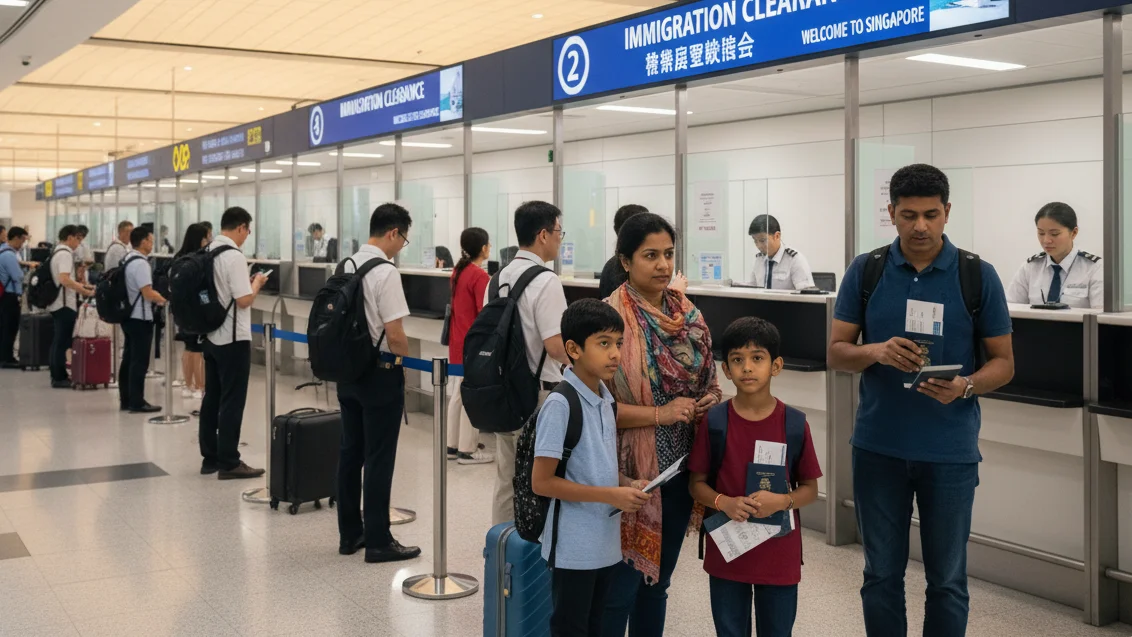
Immigration authorities may check onward ticket evidence upon arrival in Curaçao. The question is rarely long: how long are you staying, and how do you leave? Have the exit evidence open on your phone before you reach the desk.
Travelers may be asked to confirm where they go next if needed. Name the place you are going next, the date, and the way you are going. A short, consistent answer that matches the document is the whole task.
If the exit evidence is a booking rather than an issued ticket, say so plainly when asked. Officers deal with both, and a clear label beats a vague "I have a ticket" that falls apart when they ask to see it.
How Do Airline Rules Differ From One Carrier to Another?
Carriers write their own document rules, and two airlines flying the same route can ask for different things. One may scan for onward evidence at online check-in, another only at the desk, and a third may leave the decision to the agent on duty.
Their help pages rarely agree on wording, so the page for the carrier on your ticket is the one that counts.
Read it for three things: whether it names the destination, whether it says a reservation is acceptable, and whether it describes what happens to a passenger who cannot show a way out. If the page is silent, write to the carrier and keep the reply. A written answer from the airline is worth more than a forum post.
Codeshare flights add a wrinkle. The airline that sells the seat and the airline that operates the plane may apply different rules, so check the operating carrier as well. When the two disagree, follow the stricter one.
What Does a Refusal Cost?
A refused boarding costs the fare, the hotel night you will not use, and any connection that sits behind it. A refusal at the island's border adds a flight home at short notice, paid by you or by the carrier who then seeks the money back.
Neither outcome is likely for a prepared traveler, and both are avoidable with a record that takes a minute to produce.
What Does a Calm Arrival Look Like?
It looks dull, which is the goal. The traveler has the passport open to the photo page, the card confirmation one swipe away, and the exit record in a second window. The officer asks two questions and gets two short answers. Nothing is explained twice, because nothing needs defending.
That calm comes from preparation done days earlier, not from confidence on the day. Build the folder first, check the dates twice, and the desk takes care of itself.
Who Decides What?
Question | Who decides | Their lever |
|---|---|---|
May you board in Mumbai or any other departure city? | The airline | Check-in screen, staff judgment, and the boarding gate if a recheck happens |
May you enter Curaçao? | The immigration officer | Admission requirements, applied one traveler at a time |
May you stay longer than the default? | The Admission Office | An extension request before the term ends |
May you enter the next country? | That country | Its own rules, applied at its own border |
What Does a Check-In Exchange Sound Like?
It is usually brief. The agent asks for the passport, then for the card confirmation, then asks where you go after Curaçao or when you come back. A traveler with a booking open on the phone answers in one sentence and turns the screen. A traveler without one starts explaining, and the line behind them grows.
Say the route and the day, show the record, and name its type. "A reservation, leaving on the 26th" is a complete answer. If the agent asks for more, ask what the carrier will accept and listen to the answer before you offer anything else.
What If the Agent Says No?
Stay calm and ask what exactly is missing. Sometimes it is a date that falls outside the stay, sometimes a name that differs from the passport, and sometimes a rule that belongs to the carrier alone. Ask whether a supervisor can review it, and ask whether the carrier lists an accepted alternative.
If the answer is a purchase, compare the price against a flexible fare, a refundable one, or a reservation you can obtain on the spot from your phone. Do not sign anything you have not read. A missed flight is expensive, but a rushed fare you cannot change is expensive too.
Keep a note of what the agent said and the time. If the matter later turns on what was asked, a note helps more than memory.
How Should Dates, Names, and Routes Line Up?
Most exit-evidence problems are mismatches, not absences. The document exists, but the date sits outside the stay, the name differs from the passport, or the route does not leave the island. Three checks catch nearly all of it, and each takes a minute.
Does the Exit Fall After Entry and Inside the Stay?
An exit document should fit the real arrival and the traveler’s permitted stay. It normally shows travel after arrival and before the authorized period ends. Overnight flights and time zones can shift the calendar day, so compare the local dates on all records.
Curaçao's rules may require that your departure ticket falls inside the stay you are permitted. The stay differs by passport, as the stay figures earlier showed, so work from the shortest allowance that could apply to you and leave a margin.
Count the day you arrive as day one. A 12-night trip uses well under half of a 30-day ceiling, so it has room for a delayed flight or a late exit. A departure set on the last permitted day has none.
Three dates should agree before you travel:
The length of stay on the card.
The date on your exit evidence.
The last night of your accommodation.
If one moves, move the others. An extension later does not require an edit to the card, but it does mean your exit evidence needs a new date.
Why Do Overnight Flights Muddy the Calendar?
Flight times are printed in local time. A flight leaving Mumbai late on 13 November can land in Curaçao on 14 November, and the card's day of landing is the day you land, not the day you leave. Read the exit leg the same way, with the day taken from Curaçao's clock.
This matters most near the edge of a stay. A flight leaving just after midnight belongs to the next calendar day, and an agent counting days will count it that way. Put a comfortable day between the day you leave and any limit.
Does the Name Match the Passport?
A useful onward document identifies the passenger, route and travel date. If the document is a reservation rather than a ticket, label it accurately; if an authority asks for an issued ticket, obtain that instead.
Passenger details should follow the passport's data page exactly: the same surname, the same given names in the same order, and no nickname. The card is stricter still, since it forbids nicknames outright.
A traveler known as Dan who files as Dan on the card and books as Dan on the reservation has made three records that disagree with one passport.
Check the name the day the booking arrives. When you buy through an online booking channel, the confirmation email is the document to proofread, because a typo caught that day is a free fix and a typo caught at the counter is not.
Do the Cities and the Booking Details Agree?
The arrival city on the card is the island, and the origin city on your exit booking should be the island too. Details such as the record reference, the carrier, and the flight times should be identical on every copy you carry, whether it sits in an email, a PDF, or a printed page.
If you rebook, delete the old copies. Two versions of the same trip, one with a stale day, are how a careful traveler ends up showing the wrong page at the desk.
How Do You Work Out the Margin?
A short worksheet settles it. Count the arrival day as day one. The latest permitted day is the arrival day plus the allowance, minus one. For an arrival on 14 November and a 30-day ceiling, the latest day is 13 December. A 26 November exit sits 17 days inside that limit.
Then check the other direction. The exit must come after the arrival, and your accommodation must cover the nights in between. Write the three numbers on one line, and if any of them changes, redo the line.
Does the Route Leave Curaçao?
The exit leg has to start on the island. Curaçao International Airport is the only official airport, so the departure airport on a genuine exit booking is not in doubt. What can go wrong is a booking that starts elsewhere, for example, a flight from a neighboring island with no explanation of how you get there.
A return flight ticket to the place you started is the simplest shape, since it shows the journey closing. A leg to a different country adds a second question: whether you may enter there, which matters most on longer journeys.
Keep the same name, the same route, and the same date everywhere you show them. An onward travel document is only as useful as those three things, so an agent should find them in one glance, with no scrolling and no second screenshot.
What Happens When the Evidence Does Not Line Up?
Small mismatches are fixable and large ones are costly, so look for them early. A date outside the stay is fixed by moving the date. A misspelled name is fixed by correcting the booking, and a rebooked record may need its own fresh copy on your phone.
A route that starts off the island is fixed by replacing it.
None of these fixes belongs at the airport. By then the options are narrow, and the clock is running.
Our judgment is to run the three checks twice. Run them when the exit evidence is created, and again when the card window opens, because that is when you file and the details are fresh in your mind.
How Does One Fictional Trip Look, Record by Record?
Daniel Foster is invented, and so are Example Air and its flight codes. He holds a passport from a visa-exempt country, lives in Mumbai, and plans 12 nights in Curaçao. Nothing below is a real booking, and no reference numbers are reproduced. The aim is to show which record answers which question.
What Does Daniel Carry?
The right-hand column names the authority behind each row, or says "Our judgment" where the row rests on practice rather than a published rule.
Record | Fictional values | Question it answers | Basis |
|---|---|---|---|
Passport | In date beyond 26 November 2026; name as printed on the data page | May he travel on this document? | Curaçao Tourist Board |
Digital Immigration Card | Filed Saturday, 7 November 2026 for one traveler; arrival flight Example Air EA 101 via a European hub; length of stay 12 nights | Is he registered to arrive? | Curaçao Tourist Board (card portal) |
Exit reservation | Example Air EA 412, Curaçao to the same hub, Thursday 26 November 2026; status: reservation, not ticketed; reference appears on the live record only | How does he leave? | Curaçao Tourist Board; U.S. Department of State |
Accommodation | Apartment booking in his name, 14 to 26 November | Where does he sleep, and why is he here? | Curaçao Tourist Board |
Funds | Card and bank balance above 1,800 US dollars, which is 12 nights at the higher 150-dollar guideline | Can he pay his way? | Curaçao Tourist Board; Immigratiedienst Curaçao |
Entry decision | Made by an officer on Saturday 14 November | May he enter, and for how long? | Curaçao Tourist Board |
Final pass | Collected Thursday 26 November | Did he leave? | Our judgment |
Twelve nights is a short illustrative stay, but the fictional traveler’s actual permission would still depend on nationality and status. The example does not establish a universal allowance.
How Do the Days Unfold?
Thursday 5 November. The card window is not open yet. Daniel checks the passport dates, collects his apartment confirmation, and saves the exit reservation on his phone. All three carry the same spelling of his name.
Before the Friday 13 November departure, Daniel uses the official portal to submit the DI Card early enough to review it. He enters his actual flight details, saves the confirmation as a PDF and carries an offline copy. His recorded stay matches the planned 26 November exit; the example does not assume a seven-day opening window.
Friday 13 November, Mumbai. At check-in, he shows the passport and the card confirmation. The agent asks about leaving, so he opens the reservation. His flight itinerary shows Mumbai to Curaçao via the hub, landing on Saturday 14 November local time.
Saturday 14 November, Curaçao. At the desk, the officer checks the passport against the card and asks how long he is staying and when he leaves. Daniel answers in one sentence and shows the reservation. Admission is the officer's decision. In this example, it is granted.
Thursday 26 November. Daniel leaves on EA 412. The pass from that flight is the only record in the file that shows he left.
What If Something Slips?
The leaving day is too late. Suppose the reservation read 28 December. That is 44 days after arrival, past the 30-day ceiling for the general group. The fix is a date inside the stay, made before check-in, or a tourist extension if he truly means to stay longer.
The name drifts. If the reservation says Dan Foster and the card says Daniel Foster, one of them is wrong, and the passport decides which. Correct the booking, use the card's edit button if the card is at fault, and carry only the corrected copies.
The inbound flight is cancelled. If EA 101 is cancelled and he flies the next day, he does not file a second card. The card stays active for at least one day beyond the initial day of landing, and officers update his travel date and flight code on arrival. He then checks the leaving day against the new arrival.
He wants more time. An extension needs no new card and no card edit. It does need a leaving day that fits the longer stay, and the Admission Office application must be filed before the original term ends.
The confirmation email never arrives. He checks the spam folder, then uses the edit button with the same details he entered the first time. If that fails, he writes to the portal's support team with the details it asks for.
What Does the Example Show?
Seven records, and only one decision. The card, the exit reservation, and the passes never stand in for one another. The officer's decision is the only record of permission, and the departure is the only record of leaving.
The example also shows where mistakes hide. They hide in the gaps between records, such as a date that differs by a day, a name with a nickname, or a length of stay that no longer matches the exit.
What Separates a Strong Set from a Weak One?
Two travelers can hold the same five documents and still look very different at the desk. The difference is agreement, not volume.
Feature | Strong set | Weak set |
|---|---|---|
Names | Identical on passport, card, and booking | Nickname on one, full name on another |
Dates | Arrival, exit, and last night line up | Exit falls after the stay or before arrival |
Route | Exit leg starts on the island | Exit leg starts elsewhere with no explanation |
Label | Reservation or ticket, stated plainly | Reservation described as a ticket |
Access | Opens offline, printed copy on hand | Lives only in an inbox with no signal |
Daniel's set is strong because nothing in it needs defending. Each record answers one question, and none contradicts another.
What Changes When Curaçao Is One Stop in a Longer Journey?
Many trips use Curaçao as one stop among several. That changes what you file, what you show, and where your exit evidence has to lead. The first question is whether you are entering at all.
Does a Connection Need the Card?
If you travel on separate tickets and must check in again with a different carrier, you file the card. The same applies to anyone whose connection ends with a fresh check-in on the island.
A single booking that carries you through without a new check-in is a different case, and the airline can tell you whether it asks for the card.
An overnight connection that puts you through immigration is an entry in practice. Treat it as a short visit: card, passport, and exit evidence for the next leg. Our judgment is to decide before you book whether you want the night in Curaçao, because leaving the airport changes which records you need.
What Does an Onward Journey Add?
A next leg to a third country gives the officer a second question. Documents showing the legal right to enter a further destination may be inspected, and the entry list names a passport, a residence permit, or a visa as examples. Hold any visa or advance authorization that your next stop needs before you reach the desk.
Name the place you go after Curaçao plainly and have the onward itinerary on one readable page. A single page with the passenger name, the route, and the date answers most questions before they are asked.
A one-way flight out of Curaçao to another nation is the case that draws the closest look from both the airline and the officer. Neither can see a return to your origin, so the exit evidence has to carry the whole load.
Why Do Other Countries' Rules Matter Here?
Many countries require exit evidence for entry, and they apply that rule at their own borders. Curaçao's rules do not travel with you. Each stop brings its own list, and an outbound flight that satisfies Curaçao may fail the next country's check.
Countries across Southeast Asia often require onward travel proof, and countries like Thailand require exit evidence for entry. A traveler who continues from Curaçao to Central America, for example to Costa Rica, meets that country's rules separately and should read them separately.
For the wider list of destinations where airlines ask for exit evidence, see the global list of countries that ask for onward proof. This guide stays with Curaçao.
How Do Multi-Country Trips Stay Consistent?
On trips across several nations, each border is a fresh check with its own paperwork. Build the exit evidence for each stop in order, starting from the one you reach first.
A simple worksheet for each stop keeps the trip straight:
The entry rule that applies to your passport.
The registration or card the stop asks for, and its filing window.
The exit evidence you will show, with its date.
The latest day you can leave without breaking the stay allowance.
Dates tend to drift across several legs. When one leg moves, re-read every later date, because a flight that slips by two days can push an exit past a stay limit three countries later.
What About Leaving Without a Flight?
Curaçao is an island, so an overland exit is not available there. An onward flight is the normal way out, and the sea is the alternative. A non-flight exit means going by sea.
A ferry booking or any other transport booking belongs to a different class of record from an airline booking, and the airline that carries you in may not treat it as exit evidence.
Ask the carrier before you rely on it.
If the trip also includes mainland legs, leaving one of those countries by land is a separate question under their own rules. Do not let a bus or boat plan for a later border stand in for the exit evidence the airline wants for this one.
Which Records Does a Layover Need?
A short layover that stays airside on one booking may need little more than the passport, but the carrier is the one to confirm that. A landside layover needs the card, the passport, exit evidence for the next leg, and proof of any visa the next stop requires.
When in doubt, hold the fuller set. The extra papers cost nothing, and a missing one costs the connection.
What If the Next Leg Is Booked Separately?
Separate bookings mean separate contracts. If the first flight is late, the second carrier owes you nothing, and each carrier checks its own documents. Give yourself a longer connection, hold a copy of each booking, and make sure the second booking names you exactly as the first does.
Check-in is the other trap. Because no single carrier sees the whole trip, each check-in desk asks for proof that the next leg exists. Have it ready for the desk before the one you are standing at.
If a separate booking is for a flight out of Curaçao, treat it like any other exit evidence: name, route, and day on one page, inside the stay.
Reservation, Issued Ticket, or Neither: What Would We Do?
Choosing exit evidence is a trade-off between cost, flexibility, and risk. Here is how we would decide, and why.
When Is a Round Trip Ticket the Simplest Answer?
When your dates are fixed and the fare suits your budget, buy the round trip on one booking. The way out is built into the way in, so there is no second document whose date has to be kept in line with the first.
Airline staff read it faster, and an officer who asks about leaving sees a single record.
The cost is commitment. A paid fare moves only as far as its rules allow, so read the change and refund terms before you pay. A fare with free cancellation can double as temporary exit evidence, provided you know the deadline and your plans are stable enough to meet it.
When Does a Reservation Make Sense?
If your travel plans are still moving, a reservation can hold the exit slot while you decide. It shows a route, a name, and a date that fit inside the stay, and it costs far less than a paid fare that you might change.
A real flight reservation sits in an airline's reservation system and can be looked up by its reference. That makes it verifiable. It does not make it a ticket, and it does not make it an acceptance. Say "reservation" when asked, and say it first.
A reservation from DummyFlights.com comes with a verifiable PNR, unlimited changes, and an instant PDF download for $15. It is a reservation, not an issued ticket.
A genuine temporary reservation can document intended travel while it remains active, but acceptance varies by airline and immigration authority. Do not call it an issued ticket or a guarantee of boarding.
How Do the Options Compare?
Option | Cost | Flexibility | Reads as | Main risk |
|---|---|---|---|---|
Round trip on one booking | Full fare | Set by fare rules | Strongest exit record | Change fees |
Free-cancellation ticket | Full fare, refundable | High until the deadline | Issued ticket | Missing the deadline |
Verifiable reservation | Low flat fee | High, with unlimited changes where offered | Booking record | Not accepted by every carrier |
Nothing | None | Not applicable | No record | Denied boarding |
How Does an Onward Booking Behave Over Time?
An exit booking has a life of its own. It can be created today, viewed in three weeks, and checked again at the airport, and each of those moments can show a different status. A real reservation can lapse, change, or be re-dated, so look at it again before you travel.
If your plans shift, change the booking rather than leaving a stale date in your phone. The stay on the card, the date on the booking, and the last night of your accommodation should still agree after the change.
What Do We Avoid?
Some habits cause trouble out of proportion to their convenience:
Calling a reservation a ticket. If an agent looks it up and sees no ticket number, the conversation gets harder.
Editing a document, or inventing a reference. Anything that cannot be traced to a booking record does not help and can harm.
Treating the card confirmation as exit evidence. It shows you registered, not that you will leave.
Saving the decision for the check-in queue, where fares are priced for people with no time.
How Do You Keep the Evidence Ready While You Travel?
Digital or printed proof of ticket reservation should be readily available during travel, and both forms are worth having. Keep your exit evidence accessible on your phone, saved so it opens without a signal, and carry a printed copy in the same folder as the passport.
Open the file on the plane, before landing, so the desk does not become the first time you look at it. Battery and signal fail at the worst moments, and a printed page does not.
When Is Flight Evidence Not the Answer?
Not every traveler needs to buy anything. A traveler who already holds a paid return has exit evidence, and adding a second record only creates a second set of dates to keep aligned.
Residents registered in Curaçao do not file the card, and travelers who can show their right to return or move on by other means, such as a residence permit, may find the entry list satisfied without a flight booking. Airlines can still ask for a ticket, so check with your carrier before you decide to carry none.
In short: if you hold a paid return, carry it and stop there. If you do not, carry a ticket or a reservation, whichever fits your budget and your certainty.
Which Questions Settle the Choice?
Ask four things in order. Are your dates fixed? Does your carrier accept a reservation on this route? Can you afford to lose the fare if plans change? Will anyone ask for proof before you can fix a problem?
Fixed dates and a yes on affordability point to the round trip. Moving dates and a carrier that accepts reservations point to the reservation. A no on the carrier question sends you back to a refundable fare. Whichever path you take, write down the type of record you hold.
Which Current Pages Should You Check Before You Fly?
Rules move and pages age. The Tourist Board's entry requirements page shows an update date of 8 January 2024, and stay figures differ between pages, so treat any summary, this guide included, as a pointer to the official pages and not a replacement for them. Before any trip, run the checks below.
What Should the Checklist Cover?
Check | Where to look | When | What to record |
|---|---|---|---|
Card filing window and status | The official DI Card portal, dicardcuracao.com, is the place to complete the free entry form. The Curaçao Tourist Board’s current entry overview and DI Card FAQ answer different questions; check both before travel. | At booking, then the day the window opens | The window rule, the date you filed, and your saved confirmation |
Entry requirements for visitors | The Tourist Board's entry requirements page | At booking, then a week before | Passport rule, wording on proof of leaving, accommodation, funds guideline, and the page's update date |
Visa status for your nationality | The Tourist Board's visa page, then a Dutch representation if you are not exempt | At booking | Whether you are exempt, and the stay allowance for your passport |
Stay allowance and extensions | The Immigration Department's tourist FAQ | At booking | The figure for your passport, and the shorter one if two pages differ |
Airline document rules | Your carrier's travel-document and check-in pages | At booking, then before online check-in | What the carrier asks on this route, and what it says about reservations |
Your own government's advice | Your foreign ministry's Curaçao page | A week before | Anything extra, and any wording that differs from the card portal |
The next destination | Its official immigration page | Before you buy the exit leg | Entry rule, any authorization, and exit evidence it expects |
Which Source Answers Which Question?
Match the question to the owner. The card portal answers questions about the card. The Tourist Board's pages answer what visitors should carry. The Immigration Department answers stay, extension, and admission questions. Your carrier answers what it will accept at check-in. Your own government's advice adds a view from home, but it does not overrule any of these.
When two sources answer the same question differently, you are looking at a conflict to note, not a tie to settle by picking the nicer answer.
How Do You Read a Page Date?
A date at the top may mean the page was written, reviewed, or merely touched. An update date from 2024 on a page you read in 2026 tells you the wording survived, or that nobody revised it. It does not tell you which.
Write down the date and the day you read it. If the point matters to a decision, find a second page and keep the stricter reading.
What Do You Do When Pages Disagree?
National travel advice sometimes words the card window, or the name of the form, differently from the card portal. When pages disagree, follow the portal for the card. Follow the stricter page for everything else, and write down the page, the date, and what it said.
Ask the carrier about anything the carrier decides. Ask the Immigration Department about stay and extension rules. Ask the card's support team about the card. Each authority answers for its own part, so sending a card question to an airline wastes the day you have.
A page with no date is a page to cross-check. Find a second official page that covers the same point and keep the stricter reading.
What Is a Sensible Timetable?
At booking. Check the visa position, the stay allowance, and the carrier's document rules. Set the departure day within the shortest stay that could apply and decide whether you want a ticket or a reservation.
Several days before departure, check the official portal and submit the DI Card while there is time to correct errors. Save the confirmation and review the current entry requirements again.
One or two days before. Open every record and compare the three dates: the card's length of stay, the leaving day, and the last night of accommodation. Print what you can.
At check-in. Show the passport and the card confirmation. Offer the exit evidence if the route calls for it, or if the agent asks.
On landing. Keep the records open on your phone and answer the officer briefly. Admission is the officer's decision, so a calm, consistent answer is the only contribution you can make.
How Should You Store What You Find?
Keep one folder on your phone with the passport copy, the card confirmation, the exit evidence, the accommodation proof, and a note of the pages you checked with their dates. A second copy in an email to yourself covers a lost or dead phone.
Screenshots of official pages are for your own reference. They are not a document to present, and they will not settle an argument. What settles it is a clean record that agrees with the current rule.
Carry Three Clear Records Into Curaçao
Keep three decisions apart: the free DI Card for the arrival process, immigration’s permission to enter, and evidence of the actual onward or return plan if requested. Complete the card before travel, confirm the permitted stay for your passport, and keep the exit evidence truthful and current.
Then read the current official pages once more before departure, and treat every summary as a pointer. Anyone who keeps one tidy folder and one set of matching dates meets the airline desk and the immigration desk the same way each time.
For a consular application, BookForVisa’s visa-document guides address that separate checklist; this Curaçao entry guide does not imply every applicant must buy an issued ticket.
Need a real onward plan on paper? Choose a reservation only when it matches the journey and the receiving airline or authority accepts it.
Review onward-reservation optionsFrequently Asked Questions
Is the Digital Immigration Card the Same as an Onward Ticket?
No. The card registers your arrival and is free. An onward ticket or reservation shows how you leave. You need the card, and you need exit evidence if your carrier or the officer asks for it.
Can You File the Card at the Airport?
The official FAQ says filing is possible up to one hour before arrival, but complete it before departure where possible. A last-minute form leaves little room to correct errors or satisfy an airline request.
Does the Exit Have to Fall on the Last Day of the Stay?
No, and it should not. A departure set on the final permitted day leaves no room for a delay. Leave a margin of a day or more, and keep the accommodation and the card's length of stay in line with it.
What If Plans Change After You Show a Reservation?
Change the booking, then check that the card, the departure day, and the accommodation still agree. If the stay grows, an extension is a separate request and needs no card edit, but the departure day has to move with it.
Does a Visa Approval Mean You Can Enter?
No. A visa is one admission requirement. The officer decides entry on arrival, whatever documents you hold.
Do Children Need Their Own Card and Exit Evidence?
Yes to the card, since each traveler files with their passport. Exit evidence should name each child as well, so that the booking matches every passport.
What If You Hold Two Passports?
File and travel on the same one. The passport on the card, the booking, and the one you hand over should all be the same document.
What If You Miss the Flight Out?
Contact the carrier right away to rebook. Check the new day against your stay, and if it passes the allowance, ask the Immigration Department before the term ends.
Is a Reservation the Same as a Ticket?
No. A reservation holds a seat plan in a booking record. A ticket is issued once payment is taken. Name the one you hold when asked.
Do You Need Exit Evidence If You Are Only Connecting?
It depends on the booking and the carrier. If you pass through without a new check-in, ask the carrier. If you leave the airport, treat it as an entry.
Friendly reminder: DummyFlights provides temporary travel-proof documents for planning and application support. Requirements vary by destination, airline, route and applicant. A reservation does not guarantee boarding, visa approval or entry.