
Why Some Embassies Reject Dummy Tickets — Hidden Red Flags (2026)
Hidden Reasons Embassies Reject Dummy Tickets (And How to Avoid Them in 2026)
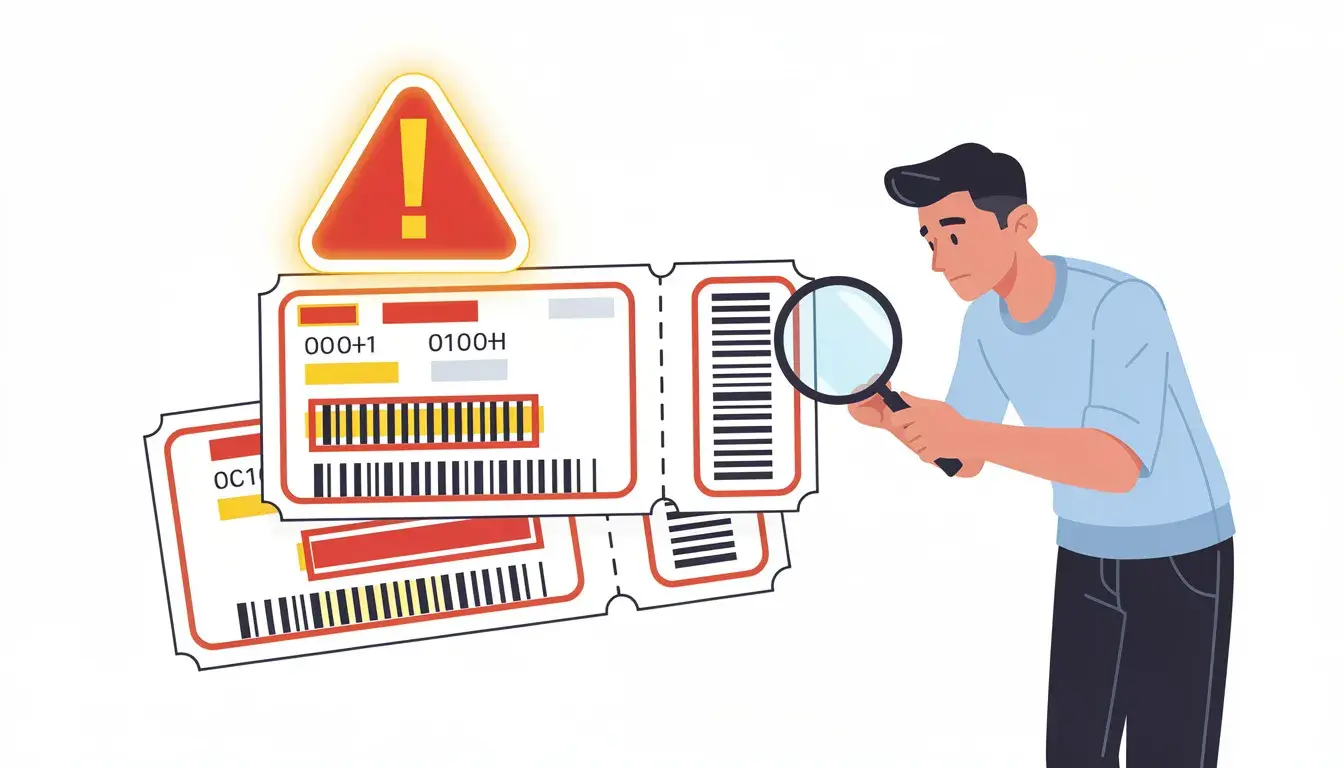
Your appointment went fine. Then the embassy asks for “updated travel proof,” and your dummy ticket is the first thing they probe in a quick spot check. A reservation that cannot be verified, changes overnight, or clashes with your leave dates does not look flexible. It looks manufactured. In 2026, posts are faster at spotting that pattern, even when the PDF looks flawless.
In this guide, we’ll map the hidden red flags that trigger checks, from odd routings to timeline mismatches across your documents. We’ll walk through a verification-first workflow to build an itinerary that makes sense on its own. You’ll also learn when a hold is enough, when a refundable fare is safer, and how to handle last-minute changes without creating contradictions. Need a stable PNR for your Schengen file? Use an instantly verifiable flight reservation that stays consistent through review.
why some embassies reject dummy tickets 2026 is a critical issue travelers must understand—many rejections occur not because dummy tickets are disallowed, but because the document submitted contains red flags. 🌍 Fake PNRs, non-standard formats, instantly cancelled bookings, or mismatched details can trigger embassy suspicion instantly.
Protect your application by using a PNR-verified why some embassies reject dummy tickets 2026 compliant reservation. Embassy officers can verify tickets within seconds, so accuracy, formatting, and authenticity matter. Pro Tip: Always ensure your dummy ticket is verifiable on the airline’s website. 👉 Order a trusted dummy ticket and avoid hidden red flags that lead to rejection.
Last updated: February 2026 — Based on updated Schengen, UK, US, and Asia-Pacific visa screening procedures.
Table of Contents
- What Consulates Actually Verify in 2026 When Your Flight Looks “On Hold”
- Hidden Red Flags That Make a Dummy Ticket Look Manufactured

- A Verification-First Workflow to Build a Flight Itinerary That Survives Spot-Checks
- When Dummy Tickets Backfire: High-Scrutiny Cases, Embassy Patterns, and 2026 Risk Triggers
- Make Your Schengen Dummy Ticket For Visa Verifiable
When embarking on your visa application journey, effective early-stage visa planning is crucial for a smooth process. One of the smartest strategies involves generating temporary flight itineraries that serve as solid visa application proof without requiring you to purchase actual tickets. A powerful dummy airline ticket generator with PNR allows you to create realistic reservations quickly, complete with all the details embassies look for in your documentation. These tools simplify the entire preparation phase by letting you adjust dates, routes, and passenger information effortlessly, ensuring everything aligns with your personal circumstances and supporting documents. The beauty lies in the absence of financial risk—you receive a professional risk-free PDF instantly that looks and functions like a genuine booking. This approach is particularly helpful for first-time applicants or those with uncertain travel dates, as it provides flexibility to refine your plans as the application progresses. By incorporating such dummy ticket for visa solutions early, you build a cohesive narrative that strengthens your overall case. Travelers who use these resources often report feeling more prepared and less anxious about the verification steps ahead.
What Consulates Actually Verify in 2026 When Your Flight Looks “On Hold”

Now we get into what officers actually do with your flight proof once it lands in the file. If you understand their verification habits, you can choose and format your reservation with far less guesswork.
The Two Checks That Matter: “Can This Be Verified?” and “Does This Make Sense?”
When your itinerary looks like a hold, most posts run two mental checks before anything else.
First: can it be verified in a way that is consistent with the document you submitted? Think of a Schengen short-stay file where the officer tries to confirm your PNR and sees a different date, a missing segment, or a status that has flipped since you generated the PDF. That is not “wrong.” It is unstable. Instability invites scrutiny.
Second: Does the trip logic make sense for the visa you want? A Japan temporary visitor itinerary that shows a 36-hour outbound layover for a five-day trip can feel like a constructed routing. Officers do not need airline expertise to notice when the travel story looks impractical.
Your job is to pass both checks at the same time. Verifiable alone is not enough. Plausible alone is not enough.
The PNR Problem: When a Reservation Exists but Won’t Behave Like a Real Booking
A common failure point is a PNR that exists but behaves strangely across systems.
One example: a UK Standard Visitor application where the outbound flight is visible under the PNR, but the return segment disappears because the hold changed or the booking timed out. The PDF you uploaded still shows both segments. The record the officer sees shows one. That mismatch is what hurts.
Another example: a Canadian TRV file where the passenger's name is truncated differently across pages, or a middle name drops off entirely. Many real tickets still work that way, so this alone is not fatal. The problem appears when your bank statement, cover letter, and passport bio page clearly show a full name format, and your flight proof shows a shortened version plus a different title or date of birth field. It starts to look like it was produced by a tool, not by a traveler.
What you can control is the “behavior” of the reservation at the moment it matters. Generate the final PDF close to submission. Keep the hold valid through the window when the file is likely to be reviewed. If you must refresh dates, regenerate every copy of the itinerary so you do not leave two competing versions in your own upload set.
Airline Logic Officers Quietly Use
Officers use simple travel logic, not fare nerd logic.
They look at trip length and routing. For a US B1/B2 business visit, a routing with two long connections on each leg can conflict with the story you told about meetings, jetlag, and limited time. For a France-bound Schengen itinerary, landing in one country and immediately taking a convoluted departure from a different region without a clear reason can read as “paper travel.”
They also look at airports. If your application says you are attending an event in Berlin, but your itinerary lands in Frankfurt at midnight and your connection to Berlin is a separate, unshown flight, the officer may treat your plan as incomplete. That can trigger a request for clarification, or it can simply reduce confidence in the planning.
A quick self-check helps. Read your itinerary as a tired officer would. Ask one question per leg: “Would a normal traveler choose this route for this purpose and timeline?” If the honest answer is “only if it was the cheapest,” consider a more defensible routing that still fits your budget story.
Data Cross-Matching: How One Inconsistent Detail Spreads Doubt Across Your File
In 2026, flight-proof rarely sits alone. It gets cross-read against other dates in your file.
If your employer's letter states leave from March 3 to March 12, but your itinerary returns on March 13, you just created an internal conflict. If your invitation letter says the conference starts on April 20, but your flight arrives on April 21, the officer may infer you are not attending what you claim.
Cross-matching is also about sequence. A Schengen application with travel insurance covering April 1 to April 10, but flights showing April 2 to April 9, can look like a rushed assembly. Those are small differences, but they add up when an officer is deciding whether your planning feels genuine.
We recommend a simple alignment pass before you upload: put your flight dates next to every document that contains any date, even indirectly. That includes leave approvals, event agendas, sponsorship letters, and any cover letter timeline you wrote.
Why “Too Perfect” Starts Looking Fake
Some dummy tickets fail because they look engineered.
A classic example is a “mirror itinerary” for a short tourist visa. You depart at 10:00, arrive at 10:00 local, and return at 10:00 one week later with the same connection length both ways. It looks neat. It also looks like you built it to look neat.
Another pattern is over-optimization. For a Spain tourist visa, an itinerary that threads multiple airports with minimal buffers and no rationale can seem like it was assembled to match an imagined rule, not your real priorities.
Real trips have tradeoffs. A slightly earlier flight to avoid a risky connection is normal. A one-stop instead of a two-stop when you claim you want a restful trip is normal. Your itinerary should show the kind of imperfect logic real travelers use, while still staying verifiable and consistent with your documents.
Next, we’ll get specific about the red-flag patterns that make a dummy ticket look manufactured even when the PNR can be found.
Hidden Red Flags That Make a Dummy Ticket Look Manufactured

Routing Choices Real Travelers Rarely Make
Some routes look odd on their face, and you do not want to be the file that makes an officer pause.
A common trigger is a detour that adds hours without adding value. Think of a tourist visa for Italy where you route through two hubs, arrive late, and still claim you chose it for comfort. That inconsistency reads louder than the itinerary itself.
Another trigger is a “wrong airport for the story” choice. If your cover letter says you will spend most of your time in Vancouver, but your flight arrives in Seattle with no onward leg shown, the itinerary feels incomplete. For a Schengen trip centered in Amsterdam, landing in a distant airport and then departing from a different region with no clear reason can look like you picked random city pairs that exist on a flight map.
What to do instead:
Choose the simplest routing that still fits your budget and timing.
If you need to enter one city and leave another, make that logic obvious in your trip narrative and dates.
Avoid hidden ground legs. If you plan to connect by rail or bus, your flight plan should not imply you are “teleporting” across borders overnight.
Connection Timing That Looks Like You Never Actually Shopped Flights
Officers notice connection timing because it reveals whether the itinerary looks lived-in or fabricated.
Two extremes cause problems.
The first is the ultra-tight connection. A 45-minute international transfer through a busy hub can exist in schedule data, but it does not match how most visa applicants plan when a missed connection could ruin a whole trip. For a UK visit tied to a wedding date, a tight inbound connection can look careless, which then conflicts with the careful tone of your application.
The second is the “strange overnight” connection. An overnight layover can be normal, but it needs to fit your purpose. If your application says you are attending a two-day conference in Singapore, yet your routing includes a 14-hour overnight layover in a third country with no explanation, the travel story starts to wobble.
Quick decision rules we use:
If the trip is time-sensitive, pick buffers that look like you care about arriving on time.
If the trip is leisure, do not build a routing that makes you arrive exhausted for no savings or benefit.
If an overnight layover is real, align it with a reasonable arrival time and return time. Avoid the “arrive at 1:00 a.m., depart at 6:00 a.m.” pattern that looks like a placeholder.
Fare Behavior Mismatches
This is the red flag many applicants miss because the itinerary looks fine.
Your flight proof implies a certain kind of purchase behavior. When that implied behavior clashes with your financial and narrative signals, it raises questions.
Example: you submit a high-flexibility, premium-looking itinerary for a short-stay Schengen visit, but your bank statements show tight margins and your cover letter emphasizes saving costs. Officers do not need your fare receipt to sense the mismatch. They just need to see that your choices feel out of character for the profile you presented.
Another example: you apply for a US B1/B2 with an employer letter that says the company will cover travel, but your itinerary appears to be a bare-bones routing that looks like personal bargain-hunting. That disconnect can prompt “who is really paying?” questions.
How to keep fair behavior consistent without overthinking it:
Match your routing and cabin logic to the financial story your documents already tell.
If you are sponsored, your itinerary should look like a sponsor-backed choice, not like a last-minute personal hack.
If you are self-funded, avoid signals that imply a spend level your statements cannot support.
Date Logic Errors People Don’t Notice Until Refusal
Some red flags are not about flights at all. It's about time.
One is the “return date conflict.” Your employer's letter says you must be back at work on Monday, but your return flight lands on Tuesday. Or your university schedule suggests you need to be present for exams, but your itinerary overlaps.
Another is the “arrival after the reason” problem. Your invitation says the event begins on the 12th, but your itinerary arrives on the 13th. Even if you plan to join late, your file needs to make that late arrival feel intentional, not accidental.
A third is the “trip length drift.” Your cover letter says seven days. Your flight dates show nine. Your travel insurance is issued for eight. None of these differences is huge. Together, they look like a copy-paste assembly.
A practical fix is to set one “master timeline” before you generate your final flight proof. Use it to lock:
Departure date and time window
Arrival date and buffer
Exit date that matches obligations
Then make every document match that same timeline.
The Advice That Creates More Refusals Than It Prevents
“Pick the most complicated multi-city route, so it looks like a real tour.”
Complexity does not equal authenticity. If the purpose is a short Paris visit, a four-country loop can look like an itinerary theater.
“Any onward flight is fine as long as there’s a PNR.”
A PNR that leads to an implausible trip can be worse than a simple, defensible plan.
“Make it look perfect.”
Perfect symmetry can look synthetic. Real trips look intentional, not optimized to impress.
Visa Applicant Mistake Checklist: Quick Audit Before You Upload Anything
Run this audit like an officer would, using your own file.
Does your routing minimize unnecessary transits for the stated trip purpose?
Do your connection times look survivable for a normal traveler with luggage?
Do your flight dates match every document that mentions work, school, events, or sponsorship?
Does your arrival timing make sense for what you claim you will do the next day?
Does your departure airport match the city you say you are leaving from, without hidden legs?
Does the itinerary imply a spending level that matches your financial documents?
Is there any place where your story depends on “we will figure it out later”?
If you spot a “no,” adjust the routing or the timeline before you generate the final copy.
As you delve deeper into preparing your documents, the convenience of online booking for dummy tickets becomes a game-changer for many applicants. With just a few clicks, you can secure a professional dummy ticket PDF that meets strict embassy requirements without the hassle of traditional booking processes. These services prioritize security by using encrypted platforms and deliver your documents instantly, allowing you to review and adjust them on the spot to ensure perfect alignment with your visa application. The instant delivery means no waiting periods that could delay your submission, and the compliance-focused designs help your dummy ticket for visa stand out as legitimate proof of onward travel. Travelers value the peace of mind knowing their documents include accurate PNR details and realistic flight paths that officers can easily verify. This modern approach not only saves time but also reduces errors common in manual preparations. Whether you're applying for business or leisure visas, having access to secure and compliant dummy ticket options streamlines the entire process. Take advantage of these reliable online tools to enhance the quality of your travel proof and proceed with greater assurance. Explore how easy it is to download dummy ticket PDF for visa today.
A Verification-First Workflow to Build a Flight Itinerary That Survives Spot-Checks
You now know which patterns make officers pause. The next move is to build your itinerary so it holds up even if someone checks it on a busy review day.
Start From Your Non-Negotiables
Start with the dates you cannot bend, then design the trip around them for your visa file.
If you are filing an Australia Visitor visa (subclass 600), set a travel window that begins after a realistic grant timeline, not your earliest hope.
If you are applying for a UAE visit visa tied to a fixed check-in date or a family event, lock that anchor date first. Then build an arrival buffer that a real traveler would choose.
Also, lock your “must be back by” constraint in writing. A South Korea short-stay file paired with an employer letter that ends on Friday should not quietly return on Sunday night.
Keep one master line that you can copy into every document: departure date, return date, and the purpose date. That single line prevents you from creating a flight itinerary that drifts away from your story.
Pick a Routing Strategy That Matches Your Profile
Pick the simplest routing that still fits your reason for travel, then defend it with logic a consular officer would accept.
For a New Zealand Visitor Visa, a direct or one-stop route that lands in daylight often looks more intentional than a two-stop route with an overnight transit that adds fatigue for no clear benefit.
For a Mexico tourist visa, avoid routings that imply transit through countries that require extra permissions unless you are prepared for questions. A route that touches the United States can raise ESTA or transit visa implications, even if you never plan to leave the airport.
If your trip purpose is business in Dubai, do not select a leisure-style route that arrives at 2:30 a.m. and claims a 9:00 a.m. meeting the same day. That mismatch invites a closer read of your timing.
When you select flights, think like an officer scanning fast. They see flight seats, layovers, and arrival hours. Make the route look like something you would actually tolerate.
Align Your Itinerary With Your Supporting Documents
Before you generate anything, do an alignment pass that is specific to your destination and visa type.
For a Germany-bound Schengen visa file with an invitation letter, match the arrival date to the first scheduled activity, not the day after. If you need to arrive later, write that intent clearly so it reads deliberate.
For a South Africa visitor visa, ensure your return date matches your employer’s “resume duties” wording. Officers notice when employment letters and travel dates disagree by even one day.
Create a one-page “date authority” sheet. Put these on one line each: depart, arrive, event start, event end, planned exit, and first work or school day back. Then force every uploaded document to match it.
If your consulate also expects lodging proof, keep that secondary proof consistent too. Some applicants attach hotel bookings that do not match the entry city or the first night, and that can make the overall file feel loosely assembled. If you include a hotel ticket confirmation, keep its dates and city aligned with your entry plan. If you are using a dummy hotel option, treat it as supportive context, not the main spine of your travel story.
Choose Your Proof Type Using This Decision Tree
Use this decision tree to pick proof that matches your risk level, not your anxiety level.
If your dates are stable and your trip is straightforward, a hold-style itinerary can be enough for a simple Bangkok holiday or a one-city Dubai visit, especially when your documents align cleanly.
If your itinerary has multiple moving parts, consider stronger proof. A Brazilian visitor visa file with internal flights planned later can still keep the international legs stable so the officer sees a coherent spine.
If your profile is more likely to be checked, choose the option that reduces ambiguity. That might mean a verified flight reservation that stays accessible for review, or it might mean a purchase you can later reverse under the airline’s rules, depending on timing and cost.
Be honest with yourself about cancellation risk. If you buy a non refundable ticket too early, you may feel forced to keep dates that no longer match your appointment or approval window. If you use a genuine dummy ticket booking instead, make sure you understand what the reservation represents and how long it will remain checkable. In practical terms, it often means reserving flight seats without locking yourself into final travel.
Two flags push you toward more durable proof for many posts: first-time international travel with limited documentation, or a story that depends on precise timing such as a cruise departure or a fixed tour start.
Stress-Test Your Itinerary Like an Officer Would
Run a five-question stress test that matches how posts review files under time pressure.
For a Thailand e-visa, ask: do your inbound and outbound dates match your declared length of stay, and do the entry and exit airports fit your stated city plan?
For a Turkey e-visa, ask: would a normal traveler pick these layovers if they cared about arriving rested, and do the local arrival times make your first day realistic?
For a Qatar transit plan, ask: does your routing accidentally look like you are trying to “enter on transit” when your file says you are only connecting?
Now do a verification test. If you are submitting a booking reference number, confirm it pulls up consistently when checked the way a third party would check it. If the record shows a different date or a missing segment, regenerate the proof before you upload it.
If you are uploading both flight and lodging proofs, avoid messy file pairing. A combined ticket dummy hotel bundle with mismatched dates is harder to read and easier to question, even when each document is real on its own.
If You’re Using a Flight Reservation Service
If you need proof that is built for verification, DummyFlights.com can provide flight reservations that are instantly verifiable, include a PNR with a PDF, allow unlimited date changes, and keep pricing transparent at $15 (about ₹1,300), with credit card acceptance.
More broadly, reliable dummy ticket airlines and services that provide dummy tickets should give you a record that stays stable through review. That stability is one of the practical dummy flight ticket benefits in 2026, especially when posts validate quickly.
If you also need lodging support for a particular embassy checklist, some services provide dummy hotel bookings as well. Keep that separate and aligned, and do not let it distort the flight-first logic of your file.
Pay attention to your payment trail, too. If you used a card or bank transfer for any travel proof, keep the receipt accessible in case a post asks how your booking was created.
Once you build your proof using this workflow, you can also spot the cases where even clean proof triggers deeper scrutiny, which is exactly where we go next.
When Dummy Tickets Backfire: High-Scrutiny Cases, Embassy Patterns, and 2026 Risk Triggers
Once you build an itinerary that looks coherent, the next question is whether your case is the kind that gets extra scrutiny. Some applications are reviewed faster, but checked harder.
The High-Risk Profiles Where Officers “Lean In” and Verify More
Some files invite deeper checking because the officer needs more certainty, not because your flight proof is “wrong.”
If your timeline is tight, expect verification. A UAE visit visa filed with travel dates starting next week often triggers a closer look at your travel details and how realistic your plan is.
If your finances or sponsorship story is complex, officers tend to validate the travel spine. A Canada TRV application with mixed funding sources and a short trip window can lead to a quick check of passenger details and whether the itinerary behaves consistently.
If your travel history is thin and the route is complex, the route becomes the test. A first-time Schengen visa applicant submitting a multi-stop inbound and a different multi-stop outbound can get flagged simply because the plan is hard to read and easy to doubt.
What we do in these cases is remove “optional complexity.” Keep the routing boring. Keep the dates aligned. Keep the proof stable long enough for review.
Visa Types Where a Dummy Ticket Can Hurt More Than Help
Certain visa categories make flight planning part of the credibility decision.
Long-stay visas often involve flexible start dates. For a national D visa in Europe, locking a very specific departure time months ahead can look like you are forcing certainty where the visa timeline cannot guarantee it. In that situation, a temporary reservation that matches a realistic window can be easier to defend than an overly precise plan.
Employment-linked travel can trigger cross-checking with employer documentation. For a UK work-related visit visa where your letter states exact meeting days, the officer may compare your arrival time to the first meeting and your return ticket to your stated work resumption date. Small mismatches get noticed because the trip is supposed to be structured.
If you are in a category where one refusal creates bigger consequences, be conservative with proof choices. Your goal is not to “look booked.” Your goal is to look internally consistent through the visa application process.
Multi-Country Itineraries: The Fastest Way to Trigger Consistency Checks
Multi-country plans are common, but they create easy points of failure.
In the Schengen zone, entry and exit order matters because it must match your declared main destination. If you claim your core stay is in Spain but your flight details show first entry into Germany with no onward segment, you force the officer to guess what you really intend to do.
Open-jaw travel is fine when the logic is visible. Example: arrive in Paris, depart from Rome, and your cover letter clearly says you will travel by rail between cities on specific days. What creates doubt is the hidden gap, like landing in one region and departing from another far away with no stated movement plan.
If you have onward travel outside the region, keep it simple. A Southeast Asia trip that includes Thailand and Vietnam can look clean when you show an inbound to the first country and an outbound from the last country, plus one clear connector flight. It looks messy when you add extra “maybe” hops that are not tied to your dates or purpose.
Last-Minute Changes:
Date shifts happen. Appointment backlogs happen. Airlines retime flights. The risk is not the change itself. The risk is leaving conflicting versions in your file.
If your consular appointment moves, update in one direction only. Regenerate your itinerary, then update any cover letter sentence that mentions dates, and make sure your supporting documents do not refer to the old schedule.
Avoid “split truth.” Do not upload an updated itinerary while leaving an older PDF in a different upload slot. Officers sometimes read both. That can look like you are trying to keep options open.
If you must change routing, keep the new plan closer to the old plan, not farther. A small shift in departure date is easier to accept than a sudden switch to a different hub and different flight numbers unless you explain why.
One clean method is a simple change log for yourself. Track the booking code you submitted, the new version date, and which files you replaced, so you never accidentally submit mismatched pages.
When the Consulate Asks for More Proof
Sometimes a post asks for “updated flight confirmation” or “proof your booking can be verified.” Treat this as a precision request, not a negotiation.
Provide proof that is easy for a third party to validate. A screenshot from the airline’s official “Manage Booking” page can help when it shows a live, verifiable PNR without exposing unnecessary personal data.
If your document includes an e-ticket number, keep it consistent across pages and match it to the same traveler name format used in your passport. If you do not have one, do not invent it. Provide what your proof type genuinely includes.
If you booked through an agent or a service, include the confirmation email that shows the same PNR and the same routing, plus the exact date and time it was generated. Officers respond well to clean, traceable artifacts.
Your Queries, Answered
Is a dummy flight ticket legal for embassy use?
In most cases, the question is not legality. It is whether your dummy flight ticket legal claim is supported by verifiability and consistency with the rest of your file.
Do officers expect a confirmed flight ticket for every visa?
No. Many posts accept an itinerary. Problems start when your proof looks like a fake dummy ticket or changes in ways that contradict your story.
What if I used a low-cost airline, and the booking looks different online?
That can be normal. Make sure the PNR pulls up reliably on the airline website and that the passenger name format matches your passport.
What if I found a cheap dummy ticket online, and it verifies today?
Treat “today” as a risk window. Make sure your proof remains valid through the review period, and do not let mismatched updates create a path to visa cancellation.
An applicant flying out of Mumbai during peak appointment season should assume faster screening and plan for fewer moving parts, because complex itineraries are harder to validate quickly.
Make Your Schengen Dummy Ticket For Visa Verifiable
At a Schengen visa desk, a Paris-to-Berlin file is judged on whether your travel plans feel real and verifiable. A dummy ticket for visa use works when a dummy flight ticket online behaves like an actual flight reservation, with a valid PNR code, clear flight details, and an onward ticket that fits your dates. Whether you choose a dummy air ticket or a confirmed airline ticket, the goal is simple consistency that supports visa approval.
If you book dummy ticket options or flight booking holds, keep the booking process clean. The booking form, passenger details, and travel plans should match across documents, even when using normal airlines such as Air France, United Airlines, Air Canada, Singapore Airlines, Air Asia, or Air India. When everything aligns, you reduce friction, avoid visa cancellation risk, and move the application forward with confidence.
As you finalize your visa application, remember that choosing the right embassy-approved documentation can significantly boost your chances of approval. Dummy tickets serve as reliable proof of onward travel, demonstrating your intent to return or continue your journey as planned without locking you into expensive commitments. These documents, when generated properly, align perfectly with consulate expectations for verifiable flight reservations that support your overall travel narrative. Final tips include double-checking that your dummy ticket matches every date in your cover letter, employment verification, and insurance policy to avoid any inconsistencies that could raise questions. Opt for services that provide real PNRs from established airlines to ensure the booking appears authentic during any spot checks. Understanding what constitutes a proper dummy ticket helps you select options that not only fulfill the requirement but also enhance the credibility of your entire file. By prioritizing consistency and verifiability, you present a strong, well-planned application that officers appreciate. For deeper insight into these essential tools, read our guide on what is a dummy ticket. Take action now to finalize your submission with professional, compliant documents and increase your chances of a positive outcome on your visa journey.
Why Travelers Trust DummyFlights.com
DummyFlights.com has been helping travelers since 2019 with a clear focus on verifiable dummy ticket reservations only. The dedicated support team is a real registered business that has supported over 50,000 visa applicants with secure online payment and instant PDF delivery. Every reservation includes a stable PNR that travelers can verify themselves before submission, and the platform offers 24/7 customer support to answer questions at any stage of the visa process. DummyFlights.com never uses automated or fake tickets — every document is generated through legitimate airline reservation systems and can be reissued unlimited times at no extra cost if your plans change. This niche expertise and transparent process is why thousands of applicants return for every new visa application.
What Travelers Are Saying
Related Guides
More Resources
About the Author
Visa Expert Team — With over 10 years of combined experience in travel documentation and visa assistance, our editorial team specializes in creating verifiable flight and hotel itineraries for visa applications. We have supported travelers across 50+ countries by aligning documentation with embassy and immigration standards.
Editorial Standards & Experience
Our content is based on real-world visa application cases, airline reservation systems (GDS), and ongoing monitoring of embassy and consular documentation requirements. Articles are reviewed and updated regularly to reflect current practices.
Trusted & Official References
- U.S. Department of State — Visa Information
- International Air Transport Association (IATA)
- UAE Government Portal — Visa & Emirates ID
Important Disclaimer
While our flight and hotel reservations are created to meet common embassy requirements, acceptance is not guaranteed and may vary by country, nationality, or consulate. Applicants should always verify documentation rules with the relevant embassy or official government website prior to submission.
Need official visa guidance before you submit?
For embassy checklists, visa document rules, and proof-of-travel requirements, read our trusted guides: Expert visa guides by BookForVisa .
Tip: Use DummyFlights for your verifiable PNR reservation and BookForVisa for step-by-step visa documentation guidance.