Key facts for 2026 planning:
- UK carrier guidance updated 1 July 2026 says carriers may face a £2,000 Section 40 charge for every passenger arriving in the UK without the required immigration document, visa, permission to travel or ETA.
- The same UK guidance says the carrying company is responsible for deciding whether to carry the person in every case.
- UK Authority to Carry rules can also create civil penalties of up to £50,000 for specified breaches.
- EU Directive 2001/51/EC requires carrier penalties to be effective, proportionate and dissuasive, and sets minimum/maximum penalty frameworks for persons carried.
- The U.S. DOJ says certain Immigration and Nationality Act provisions render individuals and carriers liable for transporting unauthorized aliens into the United States.
Official-source check: GOV.UK’s carrier charging guide, updated 1 July 2026, explains that carriers may face Section 40 charges when passengers arrive without required immigration documents, visas, permission to travel or ETAs, and it says the responsibility for deciding whether to carry the person rests with the carrying company. GOV.UK’s Authority to Carry Scheme also says carriers may face civil penalties for breaching authority-to-carry requirements. EU Directive 2001/51/EC requires Member States to maintain carrier penalties that are effective, proportionate and dissuasive, while the U.S. Department of Justice notes that carriers can be liable under INA fine provisions for transporting unauthorized aliens. Sources: GOV.UK carrier charging guide, GOV.UK Authority to Carry Scheme, EU Directive 2001/51/EC and U.S. DOJ fines overview.
Reviewed for: carrier-liability accuracy, UK Section 40 charge wording, ETA and permission-to-travel framing, EU carrier-sanctions context, U.S. INA fine caution, airline check-in practicality, onward-proof claim safety and dummy-ticket risk boundaries.
In This Guide
At check-in, the airline is not thinking about your excitement, your hotel, or even your full travel story. It is thinking about fines, return costs, and what happens if immigration refuses you at the border. That is why a passenger with a calm explanation can still face hard questions over a flight reservation that looks incomplete, mistimed, or risky.
Once you see that pressure clearly, airline behavior makes more sense. We need to prepare for the airline’s risk test, not just the visa file. In this guide, you’ll see why carriers act this way, which travel patterns trigger extra scrutiny, and how to shape your reservation so boarding feels defensible before immigration ever gets involved. That shift helps you avoid preventable check-in friction and panic. If check-in risk feels high, keep a verifiable dummy ticket ready before airline document checks begin.
Table of Contents:
-
The Check-In Counter Is Really A Compliance Desk In Disguise
-
Airlines Don’t Fear Every Passenger Equally — They Fear Specific Travel Patterns
-
What This Means For Your Flight Reservation Strategy Before You Reach The Airport
-
If An Airline Pushes Back, The Wrong Response Can Make You Look Riskier
-
Make Your Reservation Easy For The Airline To Defend
The Check-In Counter Is Really A Compliance Desk In Disguise
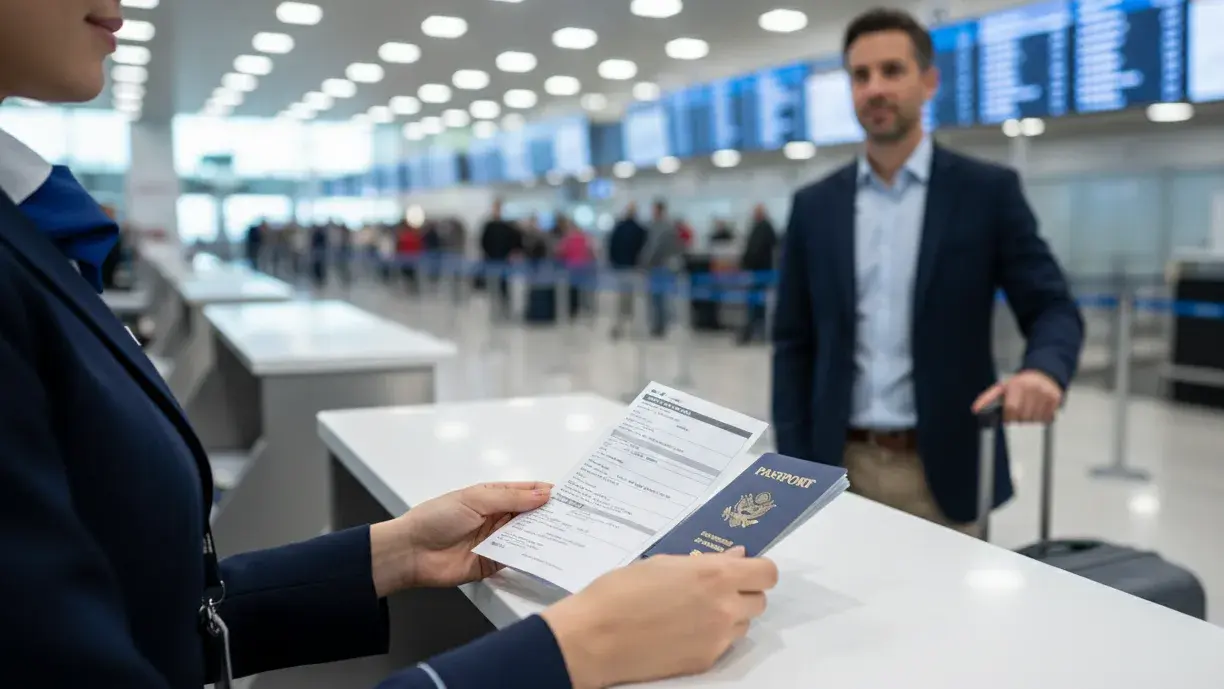
Most passengers walk up to the counter thinking about boarding time, baggage, and seat assignments. The airline staff standing across from you is thinking about something else entirely: whether your trip could become the airline’s problem before the aircraft even leaves the ground.
Why An Airline Sees Your Booking As A Financial Risk Before It Sees You As A Customer
When you check in for an international flight, your reservation is not just a travel document. It is part of a risk calculation.
The airline has to decide whether carrying you could expose it to penalties, extra handling, or a forced return if border officials refuse your entry. That changes the whole tone of the interaction. You see a valid booking. The airline sees a possible compliance issue tied to your route, visa status, and onward plan.
This is why a weak or incomplete flight setup draws attention fast. A booking with unclear exit timing, a one-way entry into a destination known for onward-proof checks, or mismatched travel dates can look expensive from the airline’s side. It is not personal. It is operational.
Carrier Liability Changes The Entire Tone Of The Conversation
Airlines do not want to become responsible for a passenger who cannot be admitted. If that happens, the carrier may face fines, paperwork, coordination with authorities, and the cost of flying that passenger back.
That risk sits behind many check-in decisions that feel stricter than expected.
You may feel your case is reasonable. You may know you have funds, a genuine purpose, and plans that make sense to you. But the airline is not rewarding flexibility. It is trying to avoid a situation where immigration says no and sends the problem back to the carrier.
Once you understand that pressure, a lot of airline behavior stops looking random. Extra questions about return timing. More attention on onward reservations. Less patience for vague answers. All of it fits the same logic.
Why Staff Often Prefer A Defensible Refusal Over A Generous Assumption
Frontline staff rarely get praised for taking chances. They are expected to make safe boarding decisions that the airline can defend later.
That creates an important imbalance. Letting through a borderline passenger can cause financial and procedural consequences. Refusing a passenger with visible gaps in the travel plan is easier to explain internally. From the staff member’s position, caution is often the safer choice.
This is why emotional arguments usually do not help. Saying you are a genuine traveler, that you have traveled before, or that immigration can sort it out on arrival does not remove the airline’s exposure.
What helps more is a clean, coherent itinerary. Your documents need to make the boarding decision easy to justify.
Why One-Way Travel, Open Plans, And Loose Return Timing Trigger Extra Attention
Flexible travel sounds normal to passengers. To an airline, it can sound unfinished.
A one-way booking to a country with strict entry rules immediately raises a question: how do you leave if your admission is limited, denied, or tied to a short stay? The same problem appears when your return date is undefined, your onward segment is missing, or your travel window does not match the reason for the trip.
These patterns often trigger closer review:
-
One-way entry without clear onward travel
-
Return dates that look detached from the visa timeline
-
Very open-ended stays with no visible exit structure
-
Separate tickets that do not connect into a clear travel path
The Airline Is Not Trying To Predict Your Intentions Perfectly From Travel Documents
Airlines are not running deep character assessments at the counter. They are looking for enough clarity to reduce risk.
That is an important distinction. You do not need the perfect speech. You need documents that answer the practical questions quickly. When are you entering? How long are you staying? How are you leaving? Does the reservation line up with the rest of your case?
If those answers are visible, the airline has less reason to treat you as a liability. If those answers are missing, even a confident explanation can sound thin.
That is also why travelers get confused when they compare experiences. One person says no one asked for anything. Another gets stopped over a simple itinerary gap. The difference is often not luck. It is how much risk the airline attaches to that specific route, destination, and booking pattern, which becomes even clearer once you look at the travel patterns airlines watch most closely.
Airlines Don’t Fear Every Passenger Equally — They Fear Specific Travel Patterns
Airline scrutiny is rarely uniform across all international routes. The same document set can feel sufficient on one journey and incomplete on another because airlines react to patterns that look harder to defend if border authorities refuse entry.
Why The Same Airline Can Wave One Passenger Through And Challenge Another
Passengers often assume airline checks should feel consistent. In reality, consistency matters less than exposure.
An airline may accept a traveler on one route with minimal questions, then challenge another traveler flying the same day with a near-identical booking pattern. That usually happens because the second itinerary carries more boarding risk. The destination may have tighter entry screening. The route may see more refusals. The travel setup may leave the airline with a higher chance of return liability.
This is why comparisons between travelers often fail. Your friend may have boarded with a one-way ticket to one country, and no one cared. That does not mean your airline will treat a different destination, transit structure, or visa category the same way.
Airlines do not apply one global comfort level. They react to the risk profile of the exact trip in front of them.
Destination Rules Matter, But So Does How Airlines Interpret Them
Official entry rules are only part of the picture. Airline enforcement often sits one layer above them.
A destination may technically allow entry if you can show funds, explain your onward plan, or book a departure later. But an airline may still want to see a cleaner flight structure before letting you board. It is not trying to rewrite immigration law. It is trying to avoid becoming the party that misjudged the situation.
That creates a gap many travelers do not expect. You read the rule and think you are covered. The airline reads the same situation and decides it is still too exposed.
This difference becomes sharper when the destination has any of the following:
-
strict onward-travel enforcement
-
frequent carrier fines
-
high refusal sensitivity at arrival
-
extra document review for certain visa or nationality combinations
-
transit arrangements that collapse if one segment fails
So even if the law sounds flexible, your reservation still needs to look stable enough for the airline to defend boarding you.
When A Weak Exit Plan Looks Worse Than A Weak Cover Story
Airlines can live with a traveler who is brief, nervous, or not especially polished. What they struggle with is a traveler whose exit plan looks unfinished.
If your departure from the destination is unclear, the airline sees a direct operational risk. If your explanation is slightly clumsy but your flight path is coherent, the airline has something concrete to rely on.
That is why an unclear onward setup often causes more trouble than an imperfect verbal explanation. A traveler can say all the right things about tourism, meetings, or family visits. But if the reservation ends at arrival with no visible path out, the airline is left holding the real problem.
Your booking should answer questions such as:
-
When do you leave the destination?
-
Does that timing fit the purpose of travel?
-
Is the onward route realistic?
-
Can the airline staff understand it quickly?
When those answers are missing, the airline starts seeing gaps instead of a journey.
Why Transit Chains, Separate Tickets, And Last-Minute Bookings Raise Red Flags
Complex travel structures are not automatically wrong. But they demand more trust from the airline.
Separate tickets are a common example. You may have booked one carrier into a region and another carrier out of it because it was cheaper or more flexible. That can work. But if the second segment is detached, on another booking reference, or scheduled in a way that looks fragile, the airline may worry that the onward plan will fail in practice.
The same goes for multi-stop chains. A reservation that jumps through several airports without an obvious reason may look less like a planned trip and more like an unstable one. If one missed connection breaks the exit plan, the airline has another reason to hesitate.
Last-minute bookings can also attract attention when paired with weak timing. A very recent reservation, a short-notice departure, and an unclear return plan together can make the trip look improvised rather than settled.
What matters is not complexity alone. It is whether the itinerary still looks defensible under pressure.
Route Logic Often Matters More To Immigration Officials & Airlines Than Travelers Realize
Airlines pay close attention to whether the route makes sense on its face. That judgment happens fast.
A reservation with an unnecessary detour, a return from an unrelated city, or a stay length that does not fit the stated purpose can trigger questions even before anyone studies your wider paperwork. The issue is not that unusual travel is forbidden. The issue is that odd routing forces the airline to ask why this structure exists and whether it will hold up at the border.
A simple example makes the point. If you claim a short business visit but your return date sits far beyond the expected trip window, the airline notices. If you present a short tourist stay but the onward segment leaves from a different region with no clear connection, the airline notices that too.
Good route logic usually looks like this:
-
The entry city matches the stated purpose
-
The duration fits the trip
-
The exit point is believable
-
The sequence does not create obvious unanswered questions
The more natural the route feels, the less work the airline has to do.
Why “I’ll Buy The Return Later” Sounds Reasonable To You But Risky To The Airline
From a traveler’s point of view, waiting can be sensible. You may want flexibility. You may be watching prices. You may not know the exact return date yet.
From the airline’s point of view, that answer often means one thing: the exit plan is not solved.
That changes the check-in conversation immediately. The airline is no longer looking at a complete travel arc. It is looking at a promise that the missing part will be handled later. For a risk-sensitive route, that promise is weak.
This is exactly why flight reservation strategy matters long before you reach the airport, because the best way to reduce airline friction is to build a booking that answers these questions before anyone has to ask them.
If you need the traveler-facing version of this risk logic, start with the what is a dummy ticket guide so you understand what a temporary reservation can and cannot prove. For a wider visa-itinerary framework across embassy and airline checks, compare the same idea with BookForVisa’s visa flight itinerary requirements guide.
What This Means For Your Flight Reservation Strategy Before You Reach The Airport

Once you understand what the airline is trying to avoid, your planning changes. You stop treating your reservation as a simple attachment and start treating it as part of the boarding decision.
Build A Reservation That Reduces Airline Anxiety, Not Just Embassy Doubt
A smart reservation does more than sit inside your visa file. It helps remove doubt at check-in.
That means your booking should answer the same questions airport staff will ask themselves in a few seconds. Do you have proper documentation? Does your route make sense for the destination country? Is there a clear way out if immigration officials review your case closely at immigration control?
A strong setup usually does three things at once:
-
shows a believable entry point
-
matches the length and purpose of the trip
-
gives the airline a visible exit plan
This matters because airlines do not want to assume responsibility for flight passengers whose paperwork creates avoidable exposure. If your booking looks unfinished, the airline may treat it as inadequate documentation even when you feel your overall case is reasonable.
Proper Documentation: Your Dates Must Make Sense Together Or The Airline Will Notice First
Date logic is one of the fastest ways to strengthen or weaken your booking.
If your reservation shows a short visit, but your return timing suggests a much longer stay, the airline sees a mismatch. If your visa category points to a brief business trip but your outbound and return spacing looks more like an open-ended visit, the problem appears before the plane leaves the ground.
Your dates should line up with the full travel process:
-
visa validity
-
trip purpose
-
arrival city
-
return timing
-
transit practicality
You should also check whether your booking still makes sense if someone reviews it quickly beside your passport. Airline staff do not have hours to decode a complicated plan. They scan for coherence. If the timeline looks forced, they may question whether you can legally arrive and depart as planned.
A Verifiable Reservation For Undocumented Passengers Calms More Risk Than A Pretty PDF Alone
A polished PDF can help with a presentation. It does not solve the real issue on its own.
Airlines care more about whether a reservation can hold up when checked through their system, internal tools, or linked databases. That is why a document that looks formal but cannot support quick verification may fail when the airline wants a clean resolution instead of guesswork.
A dummy flight ticket, legal for embassy use, works best when it is not just visually tidy but operationally believable. The airline wants something that fits its training and its compliance workflow. That is especially true on routes where carriers fear sanctions, extra review, or denied boarding disputes.
If you use a service like DummyFlights.com, you get instantly verifiable reservations, PNR with PDF, free date changes within the same day of booking, transparent pricing at $15 (~₹1,300), worldwide visa use, and credit card access through the website. That helps when you need a booking that looks organized inside a real check-in system, not just on your device.
Why Timing Matters: Too Early, Too Late, Or Too Detached From Your Case
Timing changes how your reservation is read.
If the booking was created far too early and no longer fits your current visa stage, it can look stale. If it appears at the last minute with no clear connection to the rest of your file, it can look rushed. In both cases, the airline may become worried that the reservation exists only on paper and not as part of a stable trip.
You want your booking to feel current and connected. It should not force the airline to guess why the dates changed, why the route shifted, or why the return suddenly moved.
A good check is simple. Ask whether the reservation still matches what you would calmly explain if someone asked, “Why this route, and why now?” If the answer feels strained, the airline may see the same weakness.
Separate Airline Risk From Embassy Risk, Then Prepare For Both
A reservation can satisfy an embassy file and still create friction at check-in. That happens when travelers build for documentation but not for airline review.
Embassies often assess your broader case. Airlines focus on whether they are obliged to carry someone who can be admitted without creating downstream responsibility. That is a narrower test, but it has real power because it happens before boarding.
We should prepare for both audiences separately.
For the embassy, your reservation should support the travel purpose. For the airline, it should reduce the live boarding risk. Those are related, but they are not identical. A return segment that looks acceptable in an application can still raise questions if the route is odd, the timing is weak, or the onward plan depends on too many moving parts.
What To Review The Night Before Departure
The final review should be practical, not obsessive. You are not collecting more paperwork. You are removing weak points.
Check these details before leaving for the airport:
-
Your reservation dates still match your purpose of travel
-
Your exit plan is visible and easy to explain
-
Your route does not create unnecessary confusion
-
Your passport and booking details match exactly
-
Your PDF is easy to open on a phone or other device
-
The booking still reflects the version of the trip you will actually present
If you are carrying supporting documentation, keep the most relevant pages easy to access. That does not mean showing your whole history or every document in your luggage. It means being ready with the few items that solve the airline’s immediate question.
If An Airline Pushes Back, The Wrong Response Can Make You Look Riskier
A tense check-in conversation can turn a manageable issue into a boarding problem in minutes. Once the airline starts probing your reservation, the goal is not to win an argument. It is to lower doubt fast.
Why Check-In Conversations Go Wrong So Fast
Most bad check-in exchanges break down because the passenger and the airline are solving different problems. You want to get on the plane. The airline wants to avoid a boarding decision that later looks careless.
That gap shapes the whole conversation. The staff member is not there to debate broad civil liberties, comment on government policy, or decide how fair a destination’s rules may be. The airline is looking at entry risk, carrier exposure, and security procedures tied to your exact route.
Things also escalate when the traveler treats a document check like a personal accusation. A simple question about your onward flight can feel hostile when you are already worried. But if you respond with irritation, the airline sees stress without resolution.
Airlines are trained to spot patterns linked to irregular migration, undocumented passengers, and other cases that can create airside liability after departure. That does not mean the staff member thinks you are part of those categories. It means your booking has to look easy to defend, not emotionally convincing.
Don’t Debate Abstract Rights When The Airline Wants A Concrete Exit Plan
Passengers often make the same mistake. They respond to a practical airline concern with a legal or moral argument.
That usually fails.
If the airline asks how you leave the destination country, it does not help to shift into a debate about what immigration control should allow in theory. It does not help to argue that you are free to book later, or that border officers might accept a flexible explanation on arrival.
The airline wants a concrete answer it can rely on now.
You do not need a long speech. You need a short response that connects your passport, reservation, and travel purpose. If you start discussing asylum, refugees, persecution, or other issues that belong to a different legal process, you move even farther from the airline’s immediate concern. The staff member at the counter is not acting as police, and it is not there to judge wider history or humanitarian context. It is checking whether your file supports boarding on this route today.
The Most Dangerous Phrase Is Often “I Haven’t Finalized That Yet”
Few answers create more doubt than an unfinished exit plan.
If you say your return is not booked yet, your dates are still open, or you will handle it after you arrive, the airline hears unresolved responsibility. From that point, your case becomes harder to defend inside the check-in system.
The same applies to soft phrases such as:
-
“We will decide after entry.”
-
“We are waiting for a better fare.”
-
“We may join friends in another country later.”
-
“The accommodation is set, but the onward flight is not.”
Each answer signals that the most important part of the trip is still unsettled. Even if your intention is genuine, the airline may see a gap that could lead to denied entry, return cost, or procedural violations.
A traveler can sound calm and still create risk with the wrong sentence. That is why wording matters almost as much as paperwork once the counter review begins.
Why Overloading The Agent With Unrelated Documents Can Backfire
When travelers feel challenged, they often attempt to solve the problem by producing everything they have.
That can backfire.
If the airline is focused on your onward flight, adding unrelated documents may create more delay without fixing the weak point. A stack of papers about meetings, funds, local accommodation, or old travel stamps does not automatically solve a missing exit plan.
Too much paper can also send the wrong signal. It can make the booking look less settled, as if you are searching for any document that might hit the right answer. Check-in staff work quickly. They respond better to focused documentation than to volume.
What helps more is simple:
-
Your flight reservation
-
Your matching travel dates
-
Any directly relevant visa or entry document
-
One clear explanation that fits the record
That kind of response shows control and expertise. It makes the review efficient.
What A Calm, Strong Response Actually Looks Like
A strong response is brief, direct, and tied to the airline’s actual concern.
You acknowledge the question. You show the relevant document. You explain the route without extra storytelling. You do not argue. You do not speculate. You do not invite a side discussion that has nothing to do with boarding.
A good response often sounds like this in practice: your return is on a specific date, the timing matches your visit, and the reservation is available on your device and in PDF. That is far more useful than trying to educate the airline with an article you read or asking the agent to make exceptions based on personal confidence.
Calm does not mean passive. It means precise.
If the agent raises a concern, answer that concern only. Do not assume prejudice just because the review feels strict. Once the conversation stays factual, the airline has less reason to keep expanding the check.
When To Adapt Immediately Instead Of Forcing The Original Plan
Some travelers keep pushing the same weak explanation because they think changing course looks suspicious. In reality, refusing to fix an obvious gap can make the case worse.
If your onward segment is unclear, your route is fragmented, or your dates no longer support the story cleanly, adapt. Do not force the airline to accept a setup it already finds unstable.
That does not mean panic. It means reading the moment correctly. If the airline keeps returning to the same issue, that issue is the problem. Fixing it is often smarter than repeating the same answer in different words.
Once you see that pattern, the airline’s behavior stops feeling random and starts looking like a clear, defensible response to risk.
Make Your Reservation Easy For The Airline To Defend
The key shift is simple. You are not only preparing for a visa file or a border officer. You are also preparing for an airline that wants a clear, low-risk boarding decision. When your flight reservation, dates, and exit plan fit together cleanly, you give the check-in desk fewer reasons to slow you down or question the trip.
That is where confidence should come from now. We do not need a perfect speech or a pile of extra papers. You need a booking that looks coherent, verifiable, and ready for scrutiny before the aircraft door closes. Review your route once more through the airline’s eyes before you head to the airport.
Need onward proof that makes the airline check-in conversation easier? DummyFlights helps you prepare a temporary, document-ready reservation with route, dates and passenger details that support your exit plan before you reach the counter.
Create your dummy ticketFAQ
Why do airlines care so much about immigration fines?
Airlines care because carrying an inadequately documented passenger can create financial liability, return-transport costs and operational scrutiny. Staff at check-in are therefore trained to avoid assumptions when visas, ETAs, onward proof or passport details are unclear.
Can an airline deny boarding even if I think my documents are enough?
Yes. The airline must decide whether it is comfortable carrying you under its document-check responsibilities. If staff cannot verify the route, visa status, onward plan or destination eligibility, they may refuse boarding rather than risk liability.
Does a dummy ticket prevent airline immigration fines?
No. A dummy ticket does not protect the airline by itself. It helps only when it supports a realistic, current and consistent exit plan alongside the correct visa, passport, transit documents and destination-entry proof.
What documents do airlines usually check before international boarding?
They usually check passport validity, visa or ETA status, destination-entry eligibility, transit requirements, ticket details and sometimes onward or return proof. The exact check depends on route, nationality, destination and airline systems.
Why are one-way tickets checked more often?
One-way tickets can make the exit plan less obvious. If the destination expects return or onward proof, the airline may ask how you will leave, where you are going next and whether you hold the right documents for that next step.
Are airline checks the same as embassy checks?
No. Embassy checks focus on whether your application is credible and eligible. Airline checks focus on whether the carrier can safely transport you under destination and transit rules without taking on avoidable liability.
What should I show if airline staff ask for onward proof?
Show the most direct evidence first: passport, visa or ETA, onward or return reservation, next-country visa if required, and any itinerary summary that explains the route. Keep it calm, simple and consistent.
Can a paid ticket still cause boarding problems?
Yes. A paid ticket can still fail if the passenger lacks the correct visa, the route creates transit problems, the name does not match, or the onward plan conflicts with entry rules.
Is it better to argue with airline staff or adapt the proof?
Adapt the proof when possible. A calm explanation plus a clear document is usually stronger than debating policy at the counter, especially when staff are trying to avoid a carrier-liability mistake.
Can onward proof guarantee boarding or entry?
No. It can reduce confusion, but boarding and entry still depend on passport validity, visa or ETA status, transit rules, destination rules, airline policy and the final decision by airline or border staff.
Friendly reminder: DummyFlights provides temporary travel-proof documents for planning and application support. Requirements vary by destination, airline, route and applicant situation. A dummy ticket can support a file, but it does not guarantee approval, boarding or entry.