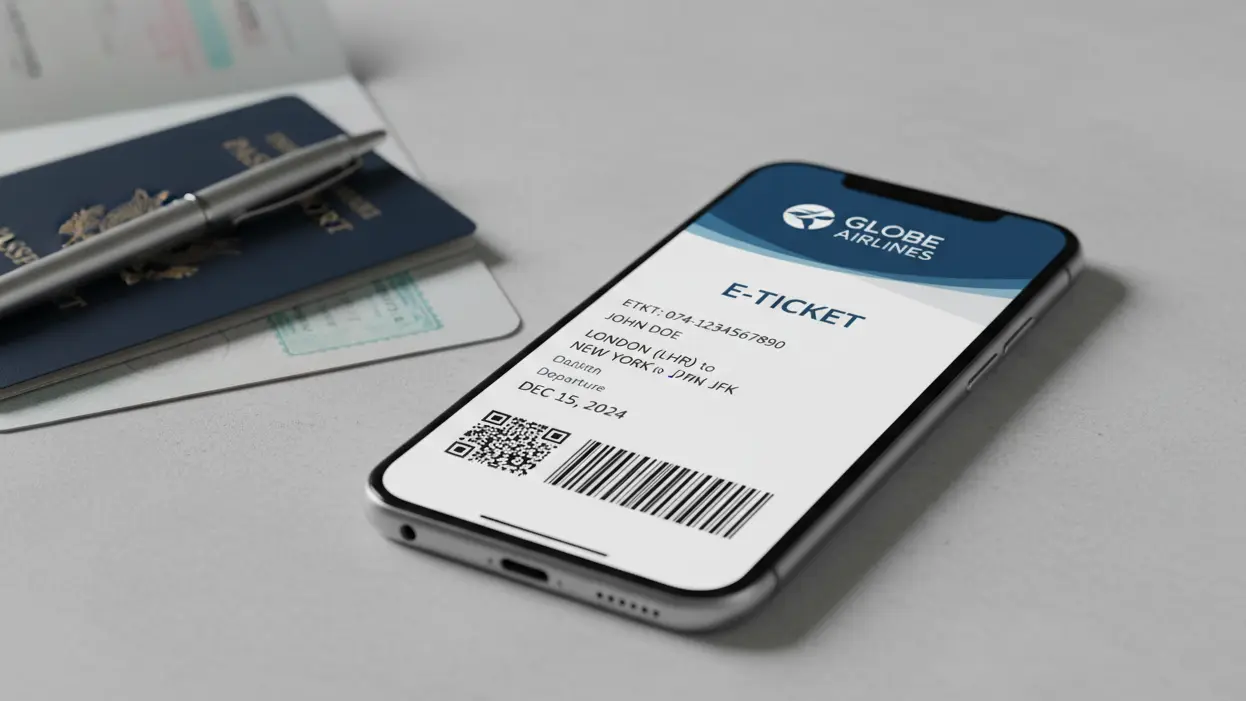
A dummy ticket gets flagged when the document cannot survive a basic reality check: the PNR does not retrieve, the route looks artificial, the passenger name does not match the passport, the dates clash with the application, or the file changes too often during processing. Most flags are not automatic refusals. They are verification triggers that tell an embassy, visa center or airline desk to look closer before trusting the travel proof.
Your appointment goes fine, then the file stalls. A week later, the officer asks why your booking reference cannot be verified, why the itinerary changed, or why the flight dates do not match the rest of the application. That is the moment most applicants realize a dummy ticket is judged by more than how polished the PDF looks.
The aggressive truth is simple: a dummy ticket works when it behaves like credible travel proof. It fails when it behaves like a decoration. Embassies do not need every applicant to buy final airfare before a decision, but they do need the travel story to make sense. That means the route, dates, name, booking reference, accommodation, insurance and purpose of travel should all point in the same direction.
This guide explains why dummy tickets get flagged by embassies, which signals create doubt, how verification usually works, and how to prepare a cleaner dummy flight ticket before submitting a visa file.
Key facts before submitting a dummy ticket:
- A flag usually means the travel proof needs closer review, not that the visa is automatically refused.
- PNR, passenger name, route, date and status mismatches are the fastest trust killers.
- A fake edited PDF can damage the whole application because it shifts attention from travel planning to credibility.
- Schengen files often use travel proof to test timeline, return intent and route logic.
- UK and US files usually treat flight bookings more cautiously, so the document must solve a specific question.
- The safest dummy ticket is clean, current, retrievable when needed and aligned with every date-bearing document.
Need travel proof that looks clean under review? Create a dummy ticket with realistic route logic, aligned dates and readable booking details before your file reaches the verification lane.
Create Your Dummy TicketIn This Guide
Official-source check: Schengen rules allow consulates to request documents about travel purpose, accommodation, financial means and intention to leave, including travel plans or return/round-ticket reservations. UK visitor guidance says flight bookings are usually less useful unless the traveler is transiting. US visa guidance says applicants should not buy tickets or make final travel plans before a visa is issued. Sources: EU Visa Code, European Commission Schengen guidance, UK visitor supporting documents guidance, and US visitor visa guidance.
Reviewed for: embassy verification wording, Schengen return-proof logic, UK and US caution, PNR terminology, passenger-name consistency and document-risk clarity.
Flagged Does Not Always Mean Rejected
A flagged dummy ticket rarely destroys an application on the spot. More often, it quietly changes what happens behind the counter. Your file moves from “looks normal” to “confirm this” before anyone stamps a decision.
That shift matters because verification is where weak travel proof gets exposed. A document can look clean on a screen and still fail when someone checks the booking reference, compares the dates, reads the cover letter or asks the applicant to explain the route.
What a flag looks like in practice
Embassies and visa centers do not usually send a message saying “your dummy ticket was flagged.” Applicants notice the side effects instead. The case may slow down, a short request may ask for updated travel proof, or interview questions may zoom in on flight details instead of funds or employment.
A flag can be as small as a note inside the file. It can also mean the application is routed for a closer consistency check. The applicant may never see the internal label, but the document has changed the level of attention.
Common ways a flag appears:
- An officer asks, “How did you book this?” or “Can you access this booking now?”
- The embassy asks for a current itinerary even though you already submitted one.
- Processing time stretches with no clear explanation.
- A date, airport, passenger name or booking reference is questioned.
- The file receives additional scrutiny after travel proof is reviewed.
A key nuance: a flag is not a moral judgment. It is rarely “we caught you.” It is usually “we need to be confident this travel proof is stable, realistic and connected to the applicant’s real plan.”
That is why reacting the wrong way can make things worse. If you panic and generate three different reservations in two days, the pattern of changes becomes louder than the original issue.
The three common moments travel proof gets checked
Most checks happen at predictable points. The applicant usually cannot see those internal milestones, so the safest assumption is that the dummy ticket may be checked more than once.
- Intake or triage: the file is scanned for fast anomalies such as template-like documents, conflicting dates, weak route logic or passenger-name mismatch.
- Processing review: an officer compares the ticket against the application form, cover letter, insurance, hotel proof, leave letter and funds.
- Final decision review: the file receives a last look, especially if the travel proof expired quickly or changed near decision time.
At intake, officers are not trying to reconstruct the entire trip. They are looking for anything that does not pass a fast confidence test. During processing, the review becomes more detailed. Near final decision, the question becomes whether the travel plan still looks stable enough to support the file.
What embassies are really confirming
A dummy ticket is not only about “will this applicant leave?” It is a consistency anchor. It helps a reviewer understand whether the applicant’s stated purpose, travel window, route, accommodation and return logic all belong to the same story.
In a strong file, the ticket supports the rest of the evidence. In a weak file, the ticket exposes the contradiction first.
- Does the applicant have a believable reason to enter on this date?
- Does the return or onward plan match the allowed stay?
- Do insurance and accommodation cover the same window?
- Does the route fit the purpose of travel?
- Does the passenger identity match the passport and application form?
- Does the booking reference behave like a real record when checked?
The strongest dummy ticket answers those questions quietly. The weakest one forces the officer to ask them out loud.
Why “looks real” fails when “acts real” is missing
This is the trap many applicants fall into. They judge the document by the screenshot. Officers judge it by behavior. A ticket can look official, use airline-style language and still fail if the data cannot be reconciled with the application.
A clean-looking PDF is only the surface layer. The deeper test is whether the document acts like travel proof when it is read beside the rest of the file. Does the passenger name match? Does the date window match? Does the route make sense? Does the booking reference support what the document claims? Can the applicant explain the trip without changing the story?
If the answer is yes, the dummy ticket usually reduces friction. If the answer is no, the design quality can make the problem worse because the officer sees a polished document attached to an unstable travel story.
Quick self-test: are you in a likely verification bucket?
Some applicants should assume their travel proof may receive a closer look. That does not mean the application is weak. It means the dummy ticket needs to be cleaner, calmer and easier to explain.
- You are applying close to the intended travel date.
- Your route includes multiple countries, transit points or open-jaw travel.
- Your return date is flexible, unclear or dependent on another decision.
- You recently changed passport, name, route or appointment timing.
- Your nationality, travel history or route is commonly reviewed more carefully.
- Your funds, leave approval or accommodation cover a different window from the ticket.
If two or more of those points apply, treat the dummy ticket as a serious evidence item. Do not treat it as a simple upload box to fill. The document should be chosen, timed and written around the same facts used in the rest of the file.
Why the applicant may never see the real reason
Visa applicants often want one clean explanation: “Was it the ticket, the bank statement, the cover letter or the interview?” Real review is rarely that simple. A dummy ticket may not be listed as the refusal reason, but it can still influence how the rest of the file is read.
For example, a weak booking reference may push the officer to compare the file more carefully. During that closer review, the officer may find a date mismatch, funds concern or purpose-of-travel gap. The final note may focus on travel purpose or credibility, while the ticket was the document that started the deeper look.
This is why the right question is not only “will the embassy check the ticket?” The better question is: if this ticket is checked, does it make the rest of the file easier to trust?

Data Signals That Make a Dummy Ticket Look Manufactured
The easiest mistake is believing that design quality equals document quality. A polished PDF can still feel manufactured if the underlying data does not behave like travel proof.
PNR problems that trigger doubt
A PNR is one of the first things people associate with a verifiable dummy ticket. But a booking reference helps only when it supports the document. If it fails, it becomes a red flag.
PNR risk signals:
- The reference cannot be retrieved where the document implies it should be retrieved.
- The passenger name does not match the retrieval record.
- The airline shown on the PDF is not the system where the booking appears.
- The booking status looks expired or inconsistent with the stated travel dates.
- The route on the document does not match the retrieved itinerary.
A booking code is not decoration. If the article, PDF or provider makes a strong “verifiable” claim, the record should be able to support that claim during the relevant checking window.
Timestamp and lifecycle red flags
Embassies understand that temporary reservations can expire. The problem is not always expiry itself. The problem is timing that looks careless, unstable or artificial.
A ticket created too early may expire before the file is reviewed. A ticket created too late may look rushed. A ticket changed repeatedly may make the applicant look uncertain about basic travel plans.
- The reservation expires before the appointment or upload date.
- The issue date is long before the application timeline.
- The ticket is replaced several times with different routes.
- The booking date conflicts with the cover letter or appointment history.
- The travel dates move, but insurance and accommodation do not move with them.
Freshness is powerful only when the rest of the file is also fresh. A current dummy ticket beside old insurance, outdated hotel proof and a stale cover letter does not look stronger. It looks misaligned.
Route and fare patterns that do not look human
Some dummy tickets get flagged because the route feels built for a form rather than for a person. A reviewer may not know every fare rule, but strange travel behavior is easy to notice.
Common examples include impossible connection times, unnecessary backtracking, multi-city loops with no stated purpose, airport pairs that do not fit the destination, or premium-looking routes for an applicant whose funds do not support that travel style.
The best route is not always the cheapest or most complicated. It is the route a real applicant with that purpose, budget, destination and timeline would plausibly use.
Passenger-name formatting that breaks confidence
Name mismatch is one of the most frustrating problems because the applicant may think the name is “basically correct.” Systems and officers do not always treat it that way.
- Middle names appear on the passport but not on the ticket.
- Given name and surname are reversed.
- Long names are cut in a way that creates ambiguity.
- Hyphens, apostrophes or spacing differ across documents.
- A family member’s name format differs from the group booking.
Before submission, compare the passport, application form, dummy ticket, hotel proof and insurance side by side. If a human has to guess whether the passenger is the same person, fix the formatting before the file is reviewed.
PDF design tells officers notice
Design matters less than data, but design can still create suspicion. A document that looks heavily edited, overly generic or inconsistent with normal booking outputs invites a closer look.
Watch for uneven fonts, inconsistent spacing, cropped logos, missing passenger details, vague route labels, unrealistic status wording, or screenshots that look assembled from multiple sources. A clean dummy ticket should look readable and restrained, not theatrical.
The myth: embassies only check dates and destination
Dates and destination matter, but they are not the whole check. A reviewer can use the ticket as a gateway into the rest of the file. Once one item looks off, other details become easier to question.
For example, the officer may start with the return date, then compare it with insurance, then notice the hotel proof ends too early, then read the cover letter again. The original flag may be small, but the review becomes wider because the file no longer feels effortless to trust.
This is why a dummy ticket should not be optimized in isolation. It belongs to a document set. The safest version is the one that makes the whole set easier to understand.
When “cheap” becomes the red flag
Low price is not automatically a problem. A temporary reservation should cost less than full airfare. The problem starts when the low-cost document looks disposable, generic or impossible to verify.
A cheap dummy ticket can still work if the route is realistic, the dates match, the booking information is readable and the claim is honest. A cheap-looking fake PDF can fail because it suggests the applicant did not prepare real travel proof at all.
Cheap-ticket warning signs:
- No clear passenger identity or route sequence.
- No readable booking reference where one is claimed.
- Airline, airport or date fields that look pasted or inconsistent.
- Generic template wording that does not fit the destination.
- Claims like guaranteed approval, guaranteed boarding or embassy endorsement.
Provider claims that create avoidable risk
Some providers sell aggressively by promising embassy approval, guaranteed acceptance or universal verification. That language may sound attractive to a nervous applicant, but it can create the wrong expectation. A provider can create travel proof. It cannot control the decision of an embassy, airline, border officer or visa center.
The stronger promise is narrower and more useful: the document should be readable, realistic, current and aligned with the applicant’s file. That is the part the traveler can control. The decision still depends on the full application and the rules of the destination.
When choosing a dummy ticket provider, look past the loudest claim. Check whether the output supports the real file: correct passenger details, believable route, proper timing, readable booking information and a clear distinction between temporary travel proof and paid final airfare.

How Embassies Actually Verify Flight Proof
Applicants often imagine verification as one dramatic moment where an officer types the PNR and makes a final decision. Reality is usually more practical. Travel proof can be checked through several routes, and the method depends on the country, visa type, staff workflow, document quality and risk profile.
The three verification routes to assume are possible
You do not need to know exactly which route a specific embassy uses. You only need to prepare as if any of these checks could happen.
| Verification route | What they look at | How dummy tickets usually break |
|---|---|---|
| Visual review | Name, route, dates, formatting and document realism | The PDF looks edited, generic or inconsistent. |
| File comparison | Ticket against form, hotel, insurance, cover letter and leave proof | The travel story changes from document to document. |
| Booking check | PNR, airline record, status or itinerary retrieval | The reference does not retrieve or shows different details. |
The most common failure is not one dramatic fake-ticket discovery. It is a small inconsistency that makes the officer stop trusting the file as a whole.
How a clean record can still fail the file comparison
A booking can be technically clean and still be strategically wrong. This happens when the ticket answers one question while the application creates another. The flight record may show a return date, but the applicant’s funds, leave approval or cover letter may not support the trip length.
In that situation, the officer is not only checking whether the ticket exists. They are checking whether the whole plan is believable. A real-looking document attached to a weak story does not become stronger because the PDF is polished.
Before submission, read the application in the order a reviewer might read it: form, purpose, funds, accommodation, travel proof, cover letter. If the dummy ticket feels like it belongs naturally inside that sequence, it is doing its job. If it feels like a separate object pasted into the file, adjust the route or explanation.
Codeshare and partner-flight confusion
Codeshares can confuse applicants because one airline sells the flight and another operates it. That can be normal, but the document must make it understandable. If the PDF shows one airline, the booking code appears under another, and the route details are unclear, the applicant may look like they cannot explain their own travel plan.
For a simple visa file, avoid unnecessary complexity. If a codeshare is used, keep the operating carrier, marketing carrier and route logic easy to understand. The goal is not to impress the officer with airline complexity. The goal is to make the travel plan easy to trust.
Low-cost carriers and missing traditional PNR views
Low-cost carriers can create another issue: not every airline record behaves like a traditional full-service booking. Some systems rely on airline-specific confirmation pages, booking management portals or email records rather than the kind of PNR retrieval applicants expect.
That does not automatically make the document weak. It means the proof must be honest about what it is. Do not present a low-cost booking screenshot as if it were a full GDS-style reservation if it cannot be checked that way.
The silent mismatch problem
Sometimes the reservation itself is not the problem. The application story is. The dummy ticket may be perfectly readable, but the file around it says something different.
- The cover letter says tourism, but the route looks like a business sprint.
- The hotel proof is in one city, but the arrival airport and itinerary point elsewhere.
- The leave letter covers fewer days than the ticket.
- The bank balance supports a short trip, but the itinerary suggests a long multi-country stay.
- The stated return reason is weak, but the ticket is being used as if it solves intent by itself.
A dummy ticket cannot repair a confused file. It can only support a file that already has a believable plan.
What triggers a deeper check
Some checks happen randomly, but many are triggered by practical document signals. If one signal suggests the file may be unreliable, the officer has a reason to slow down and compare more carefully.
- The document says confirmed, but the rest of the file says dates are tentative.
- The route shows a country that does not match the stated main destination.
- The reservation expires before the likely decision window.
- The passenger name or passport detail differs from the form.
- The applicant submits multiple versions of travel proof without explaining why.
- The ticket creates a travel pattern that does not fit funds, leave or family situation.
Deeper checking is not always hostile. Sometimes the officer simply needs to understand which document is current. The problem is that many applicants respond by changing the story again, which makes the file look even less stable.
Why one weak document can contaminate the whole file
Travel proof has a credibility effect. If the dummy ticket looks questionable, the officer may become more skeptical of other documents too. That does not mean every file with a weak ticket is refused. It means the trust margin becomes smaller.
The safest goal is to keep the dummy ticket boring in the best way: clean name, clear route, believable dates, no fake promise, no unnecessary drama. If the officer spends only a few seconds on it and moves on, the document has done its job.

When the Paper Trail Disagrees, the Ticket Takes the Blame
A dummy ticket often gets blamed because it is the easiest document to point at. But the real issue may be the paper trail around it. Officers compare the application as a system, not as isolated uploads.
The consistency triangle embassies compare
Think of the file as three connected points: identity, timeline and purpose. If one point is unstable, the travel proof becomes vulnerable.
Three-part consistency check:
- Identity: passport name, date of birth, nationality and traveler details match every document.
- Timeline: entry, exit, insurance, hotel, leave and appointment timing make sense together.
- Purpose: the route and stay pattern support tourism, business, study, family visit or transit logic.
If the ticket is the only document with a clear date, it becomes the anchor. If other documents disagree with that anchor, the ticket appears suspicious even when the reservation itself is not the original problem.
The “too perfect” itinerary effect
Some applicants overbuild the travel plan. Every hour is mapped, every city is stacked, every flight looks exact, and the whole file feels more polished than believable. That can backfire.
A strong itinerary is not a fantasy brochure. It is a realistic plan that a person with your time, budget and purpose would actually follow. If the route is too ambitious, the dummy ticket can look like it was created for the visa officer rather than for travel.
Mismatch clusters to fix before submission
Most flagged files can be improved before submission by removing obvious contradictions. You do not need to rewrite everything. You need the major proof points to agree.
- Travel dates: form, ticket, insurance, hotel proof and leave letter should support the same period.
- Main destination: hotel nights and route should support the consulate or country focus.
- Return logic: exit proof should match employment, school, family or residence ties.
- Route order: arrival, transit, onward movement and return should make geographic sense.
- Document version: avoid mixing old tickets, new hotel proof and outdated cover letters.
If you cannot make the story perfectly consistent, make it explainable. A file can survive complexity when the reason is obvious. It struggles when the applicant forces the officer to guess.
Examples of flagged dummy ticket situations
A tourist submits a seven-day Schengen plan with fourteen days of travel insurance and a hotel booking for only two nights. The ticket may be real, but the file does not explain the missing accommodation period.
A business traveler shows a return flight after the meeting but the invitation letter gives different dates. The officer now has to decide whether the event, the ticket or the cover letter is wrong.
A student uses an onward ticket because the return date is uncertain. That may be reasonable, but the file should explain why the trip is one-way, what happens after arrival, and why the onward proof fits the visa category.
A family application uses group travel proof, but one child’s name is shortened differently on the ticket than on the passport. The officer may not assume fraud, but the file now needs clarification because the group record does not read cleanly.
A business applicant books a dummy flight ticket into one city because it was convenient, but the invitation letter names a different meeting location. The route can still be explained, but only if the travel plan shows how the applicant moves from the arrival city to the business destination.
What to do if the story is not perfectly consistent
Real travel plans are not always perfectly neat. A family may stay with relatives for part of the trip. A business traveler may combine meetings and tourism. A student may not know the final return date. Complexity is not the enemy. Unexplained complexity is.
If the itinerary has a natural complication, explain it once and make the documents support that explanation. Do not hide the complexity by forcing an artificial route. A believable imperfect plan usually reads better than a perfect-looking plan that no real traveler would use.
When the file is complex, add clarity around:
- Why the arrival city is different from the main stay city.
- Why the return or onward date matches the allowed stay.
- How accommodation covers the real nights of the trip.
- Why the traveler can afford the route shown.
- Which document is the latest version if anything changed.

Build a Dummy Ticket That Is Harder to Flag
The safest workflow is not “generate a ticket and hope.” It is building the travel proof after the real document logic is already clear. Your dummy ticket should be the final alignment layer, not the first random document in the file.
Step 1: decide the level of verifiability you need
Not every application needs the same travel proof. A low-risk tourism file with a simple route may need a straightforward reservation. A high-scrutiny route, complex itinerary or tight appointment window may need stronger verifiability and stricter timing control.
Use stronger proof when the file has more moving parts: multiple countries, one-way travel, last-minute submission, prior refusal, changed passport, uncertain return date or high-scrutiny route history.
| Application situation | Dummy ticket approach | Why it helps |
|---|---|---|
| Simple tourism | Round-trip proof with clean dates | Shows a clear visit window and return plan. |
| Multi-country Schengen trip | Route that supports main destination and first entry | Prevents consulate and itinerary confusion. |
| One-way or onward travel | Onward ticket with clear exit logic | Answers what happens after the first destination. |
| High-scrutiny route | Cleaner PNR, conservative routing and matching documents | Reduces avoidable questions during verification. |
| Flexible dates | Ticket created after appointment timing is stable | Prevents expired or repeatedly changed proof. |
Step 2: lock identity fields first
Before creating a dummy flight ticket, lock the passenger identity exactly as it should appear. Use the passport as the master source, then make the application form, ticket, hotel proof and insurance follow that format.
Identity details to verify:
- Full name order matches the passport.
- Middle names are handled consistently.
- Passport number is current if shown.
- Date of birth and nationality match the application.
- Group travelers use consistent family-name formatting.
Step 3: choose a route that looks human
A human route has a reason. It enters where the trip begins, exits where the trip ends, uses realistic connection timing and does not create unnecessary complexity. If there is a transit, city change or open-jaw pattern, the rest of the file should make that normal.
Do not choose a route only because it is easy to generate. Choose the route that best supports the actual travel plan.
Step 4: make the timing survive processing
Processing time is where many dummy tickets fail. A record that was valid on the day it was created may not be useful if the embassy reviews it later. Build around the appointment, upload date and likely review window.
If dates change, update every connected document together. A new ticket with old insurance is not an update. It is a contradiction.
Also think about when the officer may actually see the file. The appointment date, upload date and decision date are not always the same. If the reservation is valid only for a very short window, make sure it is still useful for the moment when it may matter most.
Applicants often make this mistake after a rescheduled appointment. They update the ticket because it is obvious, but forget the insurance certificate, hotel proof or cover-letter dates. That creates a new mismatch right when the file should be getting cleaner.
Step 6: keep one clean version history
If the application allows uploads or follow-up documents, version control matters. Do not send three different tickets, two hotel proofs and a cover letter that mentions the first route. Keep one current version of the travel story and make sure every supporting document follows it.
If you must update the file, label the update clearly in your own records. The embassy does not need a long explanation for every internal draft, but you should know which ticket is current, why it changed, and which documents were updated with it.
One-version rule:
- One current route.
- One current travel date window.
- One current accommodation plan.
- One current insurance period.
- One current cover-letter explanation.
Step 5: run the pre-submit verification checklist
Before upload, confirm:
- The passenger name matches the passport and application.
- The route matches the purpose of travel.
- Entry and exit dates match insurance, hotel proof and leave approval.
- The PNR or booking reference is readable and consistent when used.
- The ticket does not pretend to be a paid e-ticket if it is temporary proof.
- The document version is current and not mixed with older proof.
- The cover letter explains any route complexity calmly.
Want cleaner travel proof before submission? Create a dummy ticket that supports your route, timing and return story instead of leaving weak details for the officer to find.
Create Your Dummy TicketRisky Cases Where Dummy Tickets Get Flagged More Often
Some applications naturally attract more questions. That does not mean a dummy ticket should be avoided. It means the document needs a stronger explanation and cleaner alignment.
One-way itineraries and vague returns
One-way travel can be legitimate for students, workers, relocation, family migration, long-term stays or onward travel patterns. It becomes risky when the file cannot explain what happens after arrival.
If the return date is unknown, the file should still answer the officer’s practical question: why is there no return flight, where does the traveler go next, and what proof shows the stay is temporary or authorized?
An onward ticket can be stronger than a vague return promise when the traveler genuinely plans to continue to another country. But it must look like a real next step. A random destination chosen only because it is cheap can create more doubt than no onward proof at all.
Multi-city and open-jaw routes
Multi-city routes can work when they match the purpose of travel. They fail when they look like a route created only to satisfy a checklist. If the applicant enters one country, spends most nights in another and exits through a third, the file must make that path easy to understand.
For Schengen, main-destination logic matters. The longest or clearest stay should usually support the consulate choice. If the route makes another country look more important, the travel proof can weaken the file.
Last-minute applications
Last-minute travel proof can look rushed if everything else is old or inconsistent. The fix is not to hide the timing. The fix is to make the file clean enough that last-minute proof does not look careless.
Use current documents, avoid unnecessary route complexity, and make sure the ticket, insurance, hotel proof and cover letter all show the same plan.
The last-minute version of this mistake is stacking urgency on top of inconsistency. A rushed applicant buys or generates the first available proof, then notices the hotel dates are different, then changes the ticket again. By the time the file is submitted, it has three timelines instead of one.
Name changes and passport renewals
A reissued passport, marriage-name change, spelling correction or old visa history can create identity friction. The dummy ticket should use the current passport name unless the embassy instructions clearly require another format.
If old documents use an old name, explain the transition rather than letting the officer discover it by comparing records.
Transit-heavy routes
Transit can create hidden questions. Some routes need airport transit visas, separate tickets, baggage re-checks, or proof that the traveler can enter the next country. If the dummy ticket uses a complicated transit chain, the file should show that the applicant can legally and practically complete it.
A simple route often beats a clever route. The best travel proof is the one that reduces questions.
Repeat applications and old travel proof
Repeat applicants sometimes reuse old formats, old providers or old habits because a previous application worked. That can be risky if the destination, visa type, passport, route or checking environment has changed.
Do not reuse a previous dummy ticket style automatically. Build each travel proof document around the current application. Old success is useful experience, but it is not a guarantee that the same document pattern fits the next file.
Group and family travel
Group files create extra opportunities for mismatch. One traveler’s name format, passport number, date of birth or return date can break the clean pattern for everyone else.
For family or group travel, check the entire set together. If one person returns earlier, explain it. If children use different surnames, make the identity relationship clear through the correct supporting documents. The ticket should make the group story easier, not harder.
Applications after refusal
After a refusal, travel proof receives a different kind of attention. The next file is often judged against the weakness of the previous file. If the earlier refusal involved purpose, finances, return intent or credibility, the new dummy ticket should not look like a cosmetic fix.
Use the ticket to support a stronger application, not to hide the old issue. If the previous problem was unclear return intent, the new file needs a better overall return story: employment, study, family, property, funds, travel history or a cleaner itinerary. The dummy ticket should support that evidence, not replace it.
Destination-specific wording
Different destinations use different document language. One checklist may say travel itinerary, another may say return ticket, another may say proof of onward travel, and another may say travel plans. Do not force one phrase into every application. Match the document to the wording and intent of the checklist.
For DummyFlights content, the practical user language is still dummy ticket, dummy flight ticket and onward ticket. Inside the file itself, the safest wording is the wording that accurately describes what the document is: temporary travel proof, reservation-style evidence, itinerary support or onward proof, depending on the use case.
What to Do If Your Dummy Ticket Is Questioned
If an embassy questions the ticket, slow down. The worst reaction is to panic-buy a final ticket, edit the submitted document, or replace the whole travel story without understanding the concern.
Signs your file may have entered verification
- You receive a request for updated travel proof.
- The officer asks for booking access, PNR details or route explanation.
- Processing slows after document review.
- The embassy asks for clarification about return or onward travel.
- A mismatch is mentioned between ticket, form, hotel or insurance dates.
Damage control: what to do now
First, identify the exact issue. Is it a PNR problem, a date mismatch, a route logic issue, an expired record, or a document-version problem? Do not change everything at once.
Second, fix the master timeline. If the travel dates move, update every connected document. If the route changes, update the explanation. If the PNR cannot be retrieved, provide current clean proof if the embassy allows it.
Third, answer with calm specifics. Give the corrected document, explain the change in one clear sentence, and avoid emotional claims such as “this is 100% approved” or “everyone accepts this.” Officers trust precise answers more than loud ones.
Fast answers when an officer questions the booking
If you are asked about the dummy ticket, stay practical. Do not oversell the document. Explain what it is, why it matches the application, and how it supports the trip timeline.
| Officer concern | Calm answer pattern |
|---|---|
| Why does the booking not show as paid? | It is temporary travel proof used before final ticket purchase, and the dates match the application. |
| Why did the itinerary change? | The appointment or travel timing changed, so the updated proof now matches the current file. |
| Why is the route through another city? | The transit or gateway city is part of the route, while the destination and stay plan are shown in the supporting documents. |
| Why is there an onward ticket instead of return travel? | The next destination is part of the planned travel pattern and the exit date stays inside the allowed window. |
The answer should not sound rehearsed or defensive. It should sound like the applicant understands their own trip.
If the embassy asks for a paid ticket
Follow the exact request. Some situations may require stronger proof, especially after a document question. But do not buy non-refundable airfare only because you are nervous. Read the request carefully and choose the safest compliant option.
If the instruction specifically asks for confirmed paid travel, temporary proof may not be enough. If it asks for updated itinerary, route proof or travel plans, a clean current dummy ticket may still solve the issue.
What not to do
Avoid these reactions:
- Do not edit the already-submitted PDF to “fix” one line.
- Do not submit multiple different routes without explanation.
- Do not claim the ticket guarantees approval, boarding or entry.
- Do not invent a new travel purpose to match the ticket.
- Do not ignore the rest of the file after updating the travel proof.
The recovery goal is not to look perfect. It is to look consistent, honest and easy to verify.
Final 48-hour check before appointment or upload
The last two days before submission are not the time to reinvent the trip. They are the time to remove friction. Open every date-bearing document and compare them in one sitting. If something does not match, fix the system rather than patching one PDF.
Final 48-hour check:
- Passport name matches ticket, form, insurance and hotel proof.
- Entry and exit dates match the stated travel window.
- Accommodation covers the trip or the gap is explained.
- Insurance covers the full travel period.
- Cover letter does not mention old dates or old routes.
- Return or onward proof matches the purpose and allowed stay.
- The dummy ticket is current enough for the appointment and likely review window.
If all seven checks pass, the dummy ticket is far less likely to become the distracting problem in the file. It may still be reviewed, but it gives the reviewer a cleaner path to trust the application.
Keep Your Visa File Calm, Clean and Verifiable
Dummy tickets get flagged when they create more questions than answers. The document may be visually polished, but if the PNR fails, dates drift, the route looks artificial or the paper trail contradicts itself, the officer has a reason to slow down.
A strong dummy ticket does the opposite. It makes the travel plan easier to understand. It shows a believable entry, exit, route, passenger identity and timing. It supports the application without pretending to guarantee the decision.
For Schengen, use the dummy ticket as a timeline anchor. For UK or US files, use it only when it clarifies a real travel-planning issue. In every case, keep the document clean, current and aligned with the rest of the file.
Frequently Asked Questions
Why do dummy tickets get flagged by embassies?
Dummy tickets get flagged when the PNR cannot be checked, dates do not match the file, the route looks unrealistic, the passenger name is inconsistent, or the document appears edited or unstable.
Does a flagged dummy ticket mean my visa will be rejected?
No. A flag usually means the document needs closer review. The outcome depends on whether the issue is a small mismatch, a weak explanation, an expired record or a serious credibility problem.
Can embassies verify a dummy ticket PNR?
They may verify a booking reference, compare it with the file, request updated proof, or question the applicant about the route. The exact method depends on the embassy, visa type and document risk.
What is the safest way to use a dummy ticket?
Create the ticket after your travel dates, route, insurance, accommodation and cover letter are aligned. Use a clean document that does not pretend to be a paid e-ticket unless it truly is one.
Are fake edited dummy tickets risky?
Yes. Fake edited PDFs can create credibility problems because they make the officer question not only the travel proof but also the reliability of the wider application.
Why does a valid dummy ticket still get questioned?
A valid record can still be questioned if the route, dates, name format, hotel proof, insurance or cover letter do not match. Embassies judge the whole file, not only the ticket.
Should I buy a real ticket if my dummy ticket is questioned?
Only if the embassy specifically requires confirmed paid travel or that is the safest option for your case. If the request is for updated travel plans, a corrected current dummy ticket may be enough.
Does a dummy ticket guarantee visa approval?
No. A dummy ticket can support travel-proof requirements, but it does not guarantee approval, boarding or entry. The full application still needs to be credible and consistent.
Friendly reminder: DummyFlights provides temporary travel-proof documents for planning and application support. Requirements vary by destination, airline, route and applicant situation. A dummy ticket can support a file, but it does not guarantee approval, boarding or entry.