Your Japan flight is booked, and your visa file looks clean. Then a clerk asks, “Where’s your onward ticket?” or the embassy flags your itinerary because it shows arrival but no exit. That moment is not about guesswork. It is about satisfying the right gate with the right proof.
In this guide, we help you decide when airlines check onward travel, when a visa reviewer cares, and what “good enough” evidence looks like under pressure. You’ll learn how to pick dates that fit your stay plan, keep routes consistent across documents, and avoid the traps that trigger scrutiny on one-way, separate-ticket, or open-jaw trips. For Japan check-in, keep a verifiable dummy ticket that clearly shows your flight out of Japan.
Key takeaways:
-
Japan’s MOFA visa pages distinguish visa issuance from landing permission, so a valid visa does not automatically guarantee entry.
-
Visa-exempt short-term stays generally cover tourism, business or visits without paid work, with stay periods depending on nationality.
-
Japan visa applications may require an itinerary in Japan, and local mission requirements can vary by residence country and purpose.
-
Airlines may still ask for onward or return proof because they run travel-document checks before boarding.
-
The safest onward proof is simple, current and aligned with your real Japan entry, stay length and exit plan.
Need Japan onward proof before check-in gets tense?
Create one clean dummy ticket with route, exit date, passenger details and booking-reference support you can show quickly.
Create Your Dummy TicketOfficial-source check: Japan MOFA says visa requirements should be checked with the Japanese diplomatic mission that has jurisdiction over where the applicant resides, and that requirements can vary by local situation and purpose. MOFA also states that a visa is one requirement for entering Japan, but does not guarantee entry; landing permission is granted by an immigration officer at the port of entry. MOFA’s short-term visa-exemption page lists 74 countries and regions and says the landing-period grant is 15 days for Indonesia and Thailand, 30 days for Brunei and Qatar, and 90 days for other listed countries and regions. MOFA’s visa document section includes an “Itinerary in Japan” form among application documents, and Japan’s Digital Agency says Visit Japan Web is used for arrival procedures including immigration and customs. Sources: MOFA Japan visa guidance, MOFA visa exemption page, MOFA visa FAQ and Digital Agency Visit Japan Web.
Reviewed for: Japan visa versus landing-permission wording, visa-exemption stay-period accuracy, airline check-in onward-proof logic, Timatic terminology, open-jaw Japan route clarity, long-stay risk framing, PNR wording and safe dummy-ticket claims.
In This Guide
The Real Question: Which “Gate” Is Asking You For An Onward Ticket To Japan?

Japan does not “ask for an onward ticket” in one single, predictable way. You clear Japan-bound travel by satisfying whoever is checking you at that moment, with proof they can accept quickly.
The Three Gates You Must Satisfy (And Why They Don’t Use The Same Standard)
Think of your Japan trip as moving through three separate checkpoints, each with a different job. If you treat them as one rule, you end up preparing the wrong document for the wrong person.
First is the visa file gate. This is the Japanese embassy or consulate team reviewing your application. Their focus is credibility. They want to see that your trip has a clear start and a clear end, and that your dates and routes do not clash with the rest of your paperwork.
Second is the boarding gate. This is the airline, usually at your first departure airport, deciding whether they can carry you to Japan. Their focus is risk. If they suspect you might be refused entry, they may deny boarding because the airline can be responsible for transport and compliance costs.
Third is the arrival gate. This is Japan's border control after you land. Their focus is on admission. If they ask about your departure plan, they are checking whether your story and your permission to stay align.
Here is the practical takeaway: you can pass one gate and fail the next. A tidy visa itinerary does not always satisfy a rushed check-in agent. A ticket that satisfies a check-in agent can still look inconsistent inside your visa file if it clashes with your stated dates.
Example: your Japan tourist visa itinerary shows Tokyo arrival on May 12, but no flight out. The reviewer may question your planned stay window. On travel day, the airline sees a one-way booking to Narita and asks for proof that you will leave Japan, even if your visa was approved.
Will Anyone Ask You For Onward Proof On Your Japan Flight?
Use this quick flow before you lock dates. Your goal is to predict where the question will come from.
-
Are you entering Japan visa-free on a short stay and flying on a one-way ticket?
-
Expect the boarding gate to ask. Prepare onward proof that clearly shows you exit Japan within your intended stay.
-
-
Are you applying for a Japan short-stay visa with a schedule plus flight details?
-
Expect the visa file gate to care that your itinerary includes both arrival and departure, and that the dates match your trip length.
-
-
Are you flying on a round-trip ticket that already shows a return flight from Japan?
-
You are less likely to be asked at check-in, but keep the booking details accessible in case you are sent to the desk.
-
-
Are you flying on separate tickets, such as one booking to Tokyo and a different booking leaving Japan?
-
Expect extra questions at boarding because verification takes longer, and the agent must connect the dots.
-
If you cannot answer these questions in under a minute, you are not ready for the counter conversation. Build proof that reduces explanation, not proof that requires a speech.
What “Onward Ticket” Means In Practice
For Japan flights, “onward” usually means a believable, checkable plan to leave Japan. The key is not the label of the reservation. The key is whether the person checking you can treat it as reliable.
In practice, your onward proof needs to do five things.
-
Show an exit from Japan, not just an arrival into Japan.
-
Fit your timing. The exit date should sit inside the stay you are claiming in your visa file or at check-in.
-
Match your identity. Your name should match your passport format closely.
-
Look coherent. The route should make sense with your entry city and your schedule.
-
It is easy to verify. If the agent tries to confirm it, they should see a reservation reference or clear flight details.
This is why onward checks often appear on one-way Japan trips. A one-way flight is not wrong. It just shifts the burden onto you to show the exit plan in a way that works under time pressure.
Visa File Reality Check: Why Your Japan Itinerary Must Show Both Arrival And Departure
Japan short-stay visa files commonly include a schedule and a flight itinerary. Even when your dates are flexible, your application still needs a clear travel window. A missing departure is not a small omission. It creates a gap that the reviewer must interpret.
A strong visa itinerary does not try to impress. It tries to be consistent. Check these alignment points before you submit:
-
Your trip length matches your leave dates. If you say “14 days,” your arrival and departure should reflect that.
-
Your entry and exit cities make sense. If you arrive in Tokyo and depart from Osaka, your schedule should show movement that justifies the change.
-
Your departure does not undercut your purpose. If you claim a single-city business visit but show an exit from a distant airport, it invites questions.
-
Your dates match your appointment reality. If your biometrics or visa appointment is close to departure, make sure your itinerary timing does not look rushed.
Pressure-test your file like a reviewer. Ask, “If this applicant lands in Japan on this date, how do they leave, and when?” If you cannot answer that with one document, you are creating friction.
Border Entry Reality Check: When Japan Might Ask (And When It’s Usually The Airline Instead)
Most travelers face the onward question before they ever see the Japanese immigration. Airlines often do the screening at the start of the journey, especially on one-way bookings or unusual routings.
Still, you should be ready for arrival questions. A border officer may ask about your plans, your length of stay, and your departure date. The safest posture is simple: keep your story aligned with your documents and keep your onward proof easy to access.
If you are asked upon arrival, the goal is to show that you have an exit plan that matches your permitted stay and that your travel story is stable.
Keep two things ready in your travel folder:
-
Your onward proof with dates and route that match what you will say out loud.
-
A clear explanation of why your exit plan looks the way it does, especially if you are leaving from a different city than you entered.
Once you understand which gate is likely to ask, the next step is predicting what triggers the boarding gate to slow you down on Japan routes.
What Triggers Onward-Ticket Checks For Japan At Airline Check-In
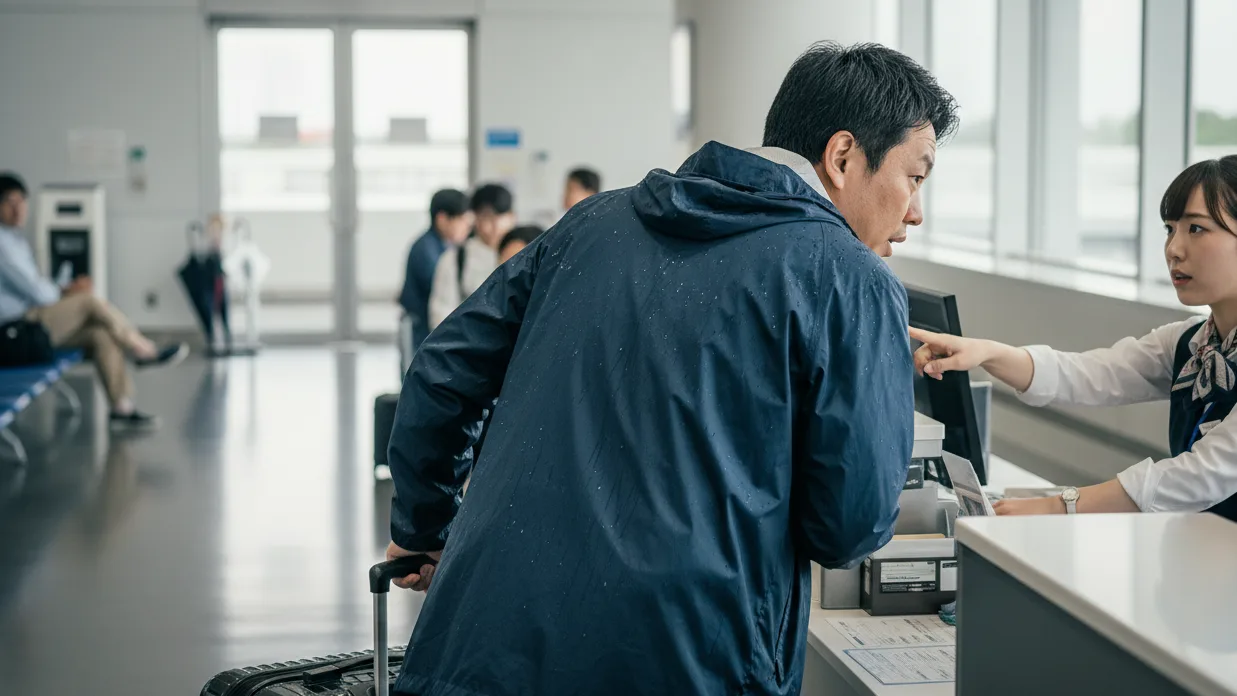
Most “Japan onward ticket” problems happen in the departure hall, not at the embassy desk, and not after you land. Here, we focus on what makes an airline pause your boarding pass and ask for proof that you will leave Japan.
The Hidden System Behind The Counter: Timatic-Driven Rules And Carrier Liability
IATA describes Timatic as a real-time source for international travel document requirements used by airlines, ground handlers and travel agents, which is why check-in staff may ask for onward proof even when your visa file looked complete.
Airline staff do not decide onward-ticket rules based on opinion. They follow a requirements database built into their check-in systems, plus internal compliance prompts.
When your passport details get entered, the system evaluates your destination, your transit points, your nationality, and your visa status. If anything in that combination suggests a risk, the agent gets a prompt that forces a document check before they can complete check-in.
The pressure on the airline is simple. If you arrive in Japan without meeting entry conditions, the airline can be held responsible for returning you or handling penalties. So when the system says, “Verify onward travel,” staff will act conservatively.
This is why the same route can feel different depending on the airline and airport. Two agents can be equally friendly, but one system may demand proof before it prints your boarding pass.
You should assume the agent is trying to close a compliance task, not debate your travel philosophy. Your goal is to hand them proof that lets them click “verified” fast.
The Trigger Matrix For Japan-Bound Flights (What Consistently Raises A Flag)
Japan-bound checks spike when your booking pattern looks like it could end in a long stay with no clear exit. These are the factors that repeatedly trigger questions at check-in.
Ticket Structure Triggers
-
One-way into Japan with no visible return segment on the same booking
-
Separate tickets where your exit from Japan is on another airline or another reservation
-
A Japan ticket that ends at Narita or Haneda, but your “exit” plan is from a different city with no clear link
-
A departure from Japan that is booked, but the date sits far beyond the stay you are likely to be granted
Profile And Status Triggers
-
Traveling under a visa-waiver short-stay profile with a one-way ticket
-
Holding a visa that allows entry, but arriving with a story that sounds open-ended
-
A passport that appears valid but has no context in the booking, such as no onward plan and no return address pattern
Itinerary Logic Triggers
-
A route that looks “unfinished,” like arriving in Tokyo with no next step
-
An onward leg that exists but looks hard to trust at a glance, such as a tiny screenshot without clear flight details
-
Exiting Japan from an airport that does not match your schedule or stated plan
These triggers do not mean you did something wrong. They mean your booking does not answer the airline’s one question: Can you leave Japan within a permitted stay, and can we document that you have a plan?
If you want a quick self-check, ask this before travel day:
-
If an agent had 30 seconds, could they see your exit from Japan and the date clearly?
-
If they tried to verify, would the proof give them a booking reference or clear flight identifiers?
-
If they asked one follow-up question, would your answer match the document without extra explanation?
Online Check-In vs Airport Desk: Why Your Risk Changes Depending On Where You’re Processed
Your chance of being asked for onward proof changes based on how the airline processes you.
Online check-in is automated. If the system cannot validate your documents without a human, it often blocks your boarding pass. You might see messages like “Document check required” or “See agent.” That is not random. It is a controlled handoff to an airport desk where staff can review your proof and record the verification.
Airport desk check-in is different. A human sees your booking and your passport together. They can ask for onward proof even if the online system would have let you through, especially when your itinerary is one-way or split across tickets.
Here is how to prepare for both paths.
If You Expect Online Check-In To Work
-
Keep your onward proof saved offline on your phone so you can open it without airport Wi-Fi.
-
Keep a second copy in email or cloud storage as backup
-
Make sure the file opens instantly and shows the key details on the first screen
If You Expect A Desk Check
-
Arrive earlier than usual, because document checks can create a queue
-
Keep your proof in a “one-swipe” folder on your phone, not buried in downloads
-
Print a single page if you know your departure airport is strict about phone-only documents
A common Japan-bound failure mode looks like this: online check-in fails, you get pushed to the desk, and you start searching for the right file while the agent waits. That delay invites more questions. It also increases the chance that the agent treats your proof as unreliable, even if it is valid.
What Airline Staff Actually Need To See (So They Can Clear You In Under 60 Seconds)
Agents do not need your entire trip plan. They need enough to document compliance.
Build a “60-second” proof pack for Japan that answers these points immediately.
What Must Be Visible
-
Your name matches your passport name format closely
-
A departure from Japan, not just an arrival in Japan
-
A departure date that fits your stay plan
-
Route clarity, showing the city you leave from and the destination you fly to
What Makes Verification Easier
-
A booking reference or locator that can be checked quickly
-
A clean layout where the onward segment is not hidden among unrelated legs
-
A file that does not rely on zooming, cropping, or scrolling to find the exit flight
What Slows You Down At The Counter
-
A screenshot that cuts off the date or passenger name
-
A document where the exit flight is on page two, after marketing banners or clutter
-
An onward segment that exists but looks disconnected from your Japan arrival
If your onward booking is on a separate ticket, help the agent connect the dots without guessing. Put the two items side by side on your screen, in this order:
-
Japan arrival booking showing your entry date and city
-
Japan departure proof showing the exit date and city
Then use one simple sentence that matches the documents, such as: “We arrive in Tokyo on May 12 and fly out from Tokyo on May 25.” Short answers reduce follow-up questions.
If you are departing Japan from a different airport than the one from which you arrived, make that difference easy to understand. A fast way is to show:
-
Arrival Tokyo
-
Departure Osaka
-
A departure date that makes sense for moving between cities
You do not need to defend the choice. You just need to make it legible.
Transit And Through-Ticketing: When The First Airline Decides Everything
For Japan routes, the most important document check often happens at the first airport where you start your journey. That is true even if you have a connection in another country.
Airlines treat the check as their responsibility from the start. If you are denied boarding at your origin, you do not get a second chance at the transit hub. Your connection airport is not a reset button.
This matters most in two situations.
Situation One: One Booking All The Way Through
If your itinerary is ticketed as a single booking that includes your Japan segment and your onward segment, the agent sees the complete story in one system. That reduces friction. It also reduces misunderstandings, because your exit leg is visible as part of the same reservation.
Situation Two: Separate Tickets
If you have one booking into Japan and another booking out of Japan, the agent must evaluate your onward proof as an external document. That takes time. It also increases the chance of scrutiny if the proof is hard to verify.
Here is a common scenario: you fly from Paris to Tokyo on one airline, then Tokyo to Manila a week later on a different airline under a separate booking. At check-in in Paris, the agent may ask for your Tokyo to Manila proof, because they need to confirm you have a realistic exit plan before they let you board the first flight.
Through-ticketing also affects how questions are asked. If the agent sees a complete itinerary, they may never mention “onward ticket.” If they do not see it, they may ask the most direct version of the question: “How are you leaving Japan?”
If the request is coming from a visa file rather than the airline counter, compare the broader visa flight itinerary requirements logic before choosing your Japan exit proof. For the dummy-ticket side, the dummy ticket for visa guide explains how to keep a temporary reservation useful without making it look like a fake ticket.
Build Onward Proof That Works For Japan (Without Buying The Wrong Ticket)

Japan-bound onward proof works best when you design it like a checkpoint document, not like a travel dream. Here, we focus on building an exit plan that airline staff can accept fast and that still fits your Japan visa story.
Step 1: Lock Your “Exit Logic” Before You Touch Any Booking Tool
Start with one decision: how you plan to leave Japan. Not the airline. Not the price. Just the logic.
Pick one of these exit patterns and commit to it for your first draft:
-
Return to Your Origin Region: You fly back toward where you started your trip.
-
Exit To A Third Country: You leave Japan and continue to another country.
-
Loop Exit: You depart Japan, then later return to your home country by land or sea elsewhere, but your first exit is still a flight.
Now set a date window that matches how Japan travel is usually reviewed.
Use two anchors:
-
Your arrival date in Japan
-
Your intended stay length, based on your visa request or your visa-free plan
Then set your exit plan with a buffer.
A simple and realistic structure is:
-
Choose an exit date that is inside your claimed stay window
-
Keep a 2–5 day flexibility band around it so you can move it if your appointment timing or flight prices shift
Avoid the two mistakes that trigger questions:
-
An exit date that looks too far beyond a short-stay plan
-
An exit date that is so tight it looks like you cannot realistically complete the trip you described
If you are applying for a short-stay visa, your schedule of stay and your flight itinerary should tell the same story. If your schedule says 12 days, your onward plan should not look like 30 days unless you have a clear reason and matching paperwork.
Step 2: Choose The Lowest-Risk Proof Method For Your Profile (Not For Someone Else’s Blog Post)
For Japan flights, your proof method should match the risk profile of your booking.
Your decision should depend on three factors:
-
How likely are you to be questioned at check-in
-
How often your dates may change before departure
-
How quickly must your proof be verifiable if an agent tries to check it
Here is a practical way to choose.
If You Hold A Round-Trip Ticket Already
You often do not need a separate onward document. Your focus should be on access and clarity.
-
Save the booking confirmation so you can open it fast
-
Make sure the return segment is visible without scrolling
If You Are Flying One-Way To Japan
You should expect a boarding desk question. Pick proof that clears quickly.
-
If you want maximum simplicity, use a single onward flight out of Japan that is easy to read and shows a clear date.
-
If you know you will change dates, use a proof method that can be updated without breaking your story.
If You Are Flying On Separate Tickets
This is the situation where airlines hesitate most, because the exit is not in their system.
-
Choose proof that provides a clear record of your Japan departure and can stand alone.
-
Plan to show both your Japan arrival booking and your Japan exit proof together.
If Your Stay Plan Is Long Or Unusual
Long stays can be legitimate. They can also trigger a “tell us how you leave” moment.
-
Choose an onward date that still fits your declared plan.
-
Avoid “floating” dates that look like placeholders with no connection to your schedule.
When you choose a method, also decide how you will present it.
Airline staff do not want options. They want one clear exit.
So avoid showing two competing onward flights “just in case.”
Pick one primary exit plan and keep the backups private unless asked.
Step 3: Build Verifiability First, Then Format (PDF Second)
For Japan onward checks, verifiability beats design.
Your document can look clean, but if it cannot be confirmed quickly, it creates friction.
Aim for proof that passes these two tests:
The Counter Glance Test
In 10 seconds, the agent can see:
-
Your name
-
The Japan departure city
-
The departure date
-
The destination
The Quick Check Test
If the agent decides to verify, the proof includes:
-
A booking reference or locator that looks standard
-
Enough flight identifiers to confirm it is a real reservation record
Now format your proof so it behaves well under stress.
Do these practical steps:
-
Save it as a file that opens instantly on your device
-
Keep a second copy that works offline
-
Rename the file so you can find it fast, such as “Japan Exit Flight May 25.”
Avoid formats that create delays:
-
A web page that requires a login
-
A screenshot where the key details are cropped
-
A multi-page PDF where the exit segment is buried
If your proof spans multiple pages, make the exit flight the first page or the first visible section. This is not about aesthetics. It is about reducing time and questions at the desk.
Step 4: Align Your Onward Proof With Your Visa File Itinerary (Dates, Cities, Story)
Japan visa files often include a schedule of stay that lists cities and dates. Your onward proof should support that schedule, not fight it.
Use this alignment checklist before you submit your visa and again before you fly.
Date Alignment
-
Your onward date falls within your stated stay duration.
-
Your onward date does not conflict with key fixed events you listed, such as a conference date or a tour start date.
-
Your onward date does not create awkward gaps, like arriving on the 10th and departing on the 11th, when your schedule shows a week of activities.
City Alignment
-
If you depart from Tokyo, your schedule should reasonably end around Tokyo
-
If you depart from Osaka, your schedule should include travel toward Kansai
-
If you depart from a different airport than you entered, your schedule should make that movement feel planned
Story Alignment
-
The purpose of your trip matches your routing
-
Your departure destination makes sense with your onward plan
-
Your proof does not introduce a new narrative that you never mentioned elsewhere
Here is a common Japan-specific mismatch: your schedule focuses on Tokyo and day trips, but your onward proof shows departure from Fukuoka with no mention of that region. It reads like a stitched plan, even if you could technically do it.
If your exit is from a different city than your entry, add one simple line in your schedule notes, not a long explanation. A short, clear line reduces doubts.
Sometimes you want onward proof that is clear, checkable, and easy to update without committing to a full fare.
DummyFlights.com can provide instantly verifiable reservations with a PNR with PDF, free date changes within the same day of booking, transparent pricing of $15 (around ₹1,300), trusted worldwide for visa use, and it accepts credit cards.
Step 5: Do A “Counter Test” Before Travel Day (So You Don’t Discover Problems In Line)
Treat this like a rehearsal. You should know exactly what you will show and how fast you can show it.
Here is a practical counter test you can do in five minutes.
Open-Speed Check
-
Put your phone on airplane mode
-
Open your onward proof from where you saved it
-
Confirm it loads in under 5 seconds
Legibility Check
-
Can you read the departure city and date without zooming?
-
Is your name visible on the first screen?
-
Is it obvious that the flight leaves Japan?
Consistency Check
-
Compare your onward proof to your Japan arrival booking
-
Compare both to your visa schedule or stated trip dates
-
Confirm there are no silent contradictions
Two-Question Drill
Practice answering these two questions in one sentence each, using the exact dates on your documents:
-
“When do you leave Japan?”
-
“Where do you fly to after Japan?”
If your answer requires qualifiers like “maybe” or “we might,” your documents are not aligned tightly enough for a busy check-in desk.
Also, prepare for a verification attempt. Some agents will type your reference into a system or ask for the booking locator.
So keep this ready:
-
The locator or reference number is copied into notes for quick pasting.
-
A second copy of the document in case the first file fails to load.
If you are traveling with companions, do a quick naming check. Mixed name formats across documents create delays. Your onward proof should match your passport name layout as closely as possible.
Once you have a workflow that produces clean onward proof, the next step is understanding how the Japan visa reviewer’s expectations differ from the airline’s boarding standards, so you do not solve one gate and accidentally trigger problems at the other.
Japan Visa Application vs Boarding Gate: Two Different Moments, Two Different Failure Modes
You can do everything right for your Japan visa file and still face a problem at the airline counter. You can also build perfect check-in proof and accidentally weaken your visa story. Here, we focus on how the two moments differ and how you keep your flight itinerary consistent across both.
What The Visa Reviewer Wants From Your Flight Itinerary (And Why Onward Travel Gets Attention)
A Japan visa reviewer reads your flight itinerary as a credibility signal. They are not checking whether you can board a specific airline on a specific day. They are checking whether your trip looks planned, time-bounded, and consistent with the rest of your file.
For a short-stay application, the reviewer usually wants to see an arrival and an exit. That exit does not need to be emotionally final. It needs to show that your trip has a defined endpoint.
A missing departure creates three problems inside a Japanese visa file.
-
Unbounded Stay: If you show an arrival date but no exit, the reviewer must guess how long you plan to remain in Japan.
-
Schedule Conflict Risk: Your schedule of stay becomes harder to trust because it is not anchored to a return date.
-
Weak Ties Signal: A file that looks open-ended invites more scrutiny, especially when other documents also feel flexible.
Your itinerary should support the specific stay window you are applying for. If your schedule says you will be in Japan from June 2 to June 12, your flight plan should not hint at a longer window without a clear reason.
Use this Japan-focused file check before submission:
-
Your flight dates match the stay period you wrote in your schedule.
-
Your entry and exit airports match the city flow in your plan.
-
Your itinerary does not show overlapping travel that contradicts leave approvals, work letters, or time off documentation.
If your plan is still flexible, keep flexibility inside a realistic band. Reviewers tend to accept small movement. They notice big, unexplained jumps.
What The Airline Wants When You Fly (And Why They Don’t Care About Your Hotel Plan Here)
At the boarding gate, the airline is not reviewing your life story. They are solving one risk question before they let you travel to Japan.
That question is simple: Do you meet the conditions to be carried to Japan, including proof that you will leave if required?
This is why your hotel plan is not central at check-in. The agent is not assessing your daily schedule or where you sleep. They are assessing whether you are likely to be admitted and whether the airline can document compliance.
So your onward proof at the airport should be optimized for speed.
It should:
-
Show you leaving Japan within a plausible stay window
-
Be readable in seconds
-
Be consistent with what you say out loud
It should not:
-
Require scrolling through unrelated legs
-
Force an agent to interpret your full itinerary narrative
-
Introduce a new destination that creates questions you did not plan to answer
A common Japan boarding failure mode is not “no onward flight exists.” It is “your onward proof exists, but it is hard to understand quickly.”
The “Consistency Trap”: When Your Valid Japan Visa Itinerary And Your Actual Ticket Drift Apart
The most dangerous situation is not a flexible itinerary. It is an itinerary that changes quietly, so your documents stop matching each other.
Japan travel plans often drift for practical reasons.
-
Flight schedules change.
-
Your visa appointment date has moved.
-
You find a cheaper routing.
-
You switch entry cities because of availability.
None of that is a problem by itself. The problem appears when your visa file shows one set of dates and your travel day shows another, with no clear explanation.
Here are the three drift patterns that cause the most friction.
Pattern One: Arrival Moves, Exit Stays
You shift your inbound flight by a few days, but your onward flight still shows the old departure date. Now your stay window looks odd. It can look too short or too long compared to what you wrote in your schedule.
Fix it fast:
-
Update the onward date first, then align your schedule of stay to match.
-
Keep the trip length stable unless you have a strong reason.
Pattern Two: Entry City Changes, Exit City Does Not
You planned to land in Tokyo but rebooked to Osaka. Your schedule and onward proof still point to Tokyo. Now your trip looks stitched.
Fix it cleanly:
-
Choose one city pair and make your documents agree: entry airport, city sequence, and exit airport.
Pattern Three: Separate Tickets Multiply
You add an onward flight later, but it lives in a different inbox, with a different name format, and a different set of dates. At check-in, the agent sees your main booking and asks for proof. You open a separate document that looks disconnected.
Fix the presentation:
-
Keep your Japan arrival and Japan exit proof in one folder.
-
Make sure both show the same passenger name format.
-
If your exit is from a different city, make sure your schedule includes that move.
If your visa has already been issued and your travel dates shift, you still need consistency for the airline desk. Airlines do not care that the visa was approved if the travel story in front of them looks unstable.
If You’re Applying With A Support Center Workflow, Build For Their Format Expectations
A support center workflow adds a different type of pressure. The documents may be checked for completeness and format before they even reach a visa officer. Small gaps stand out because the file is processed as a set.
This is where people get surprised. They assume a flexible flight plan is fine, then their submission is flagged because the itinerary does not match the schedule of stay cleanly.
Keep the file tight.
-
If your schedule lists specific dates, your flight plan should bracket those dates.
-
If your schedule lists multiple cities, your entry and exit points should reflect the flow.
-
If your flight plan is open-jaw, your schedule should show why.
An applicant submitting in Delhi or Mumbai often experiences this as a fast checklist review, where “arrival without exit” or “dates don’t match the schedule” becomes an immediate correction request rather than a question later.
Your best defense is a flight itinerary that reads like a bracket around your stay plan.
What To Do If You’re Asked For “Return To Home Country” Specifically
Sometimes you will be asked for something narrower than “onward travel.” The person checking you might say, “Do you have a return ticket to your home country?” That can happen at check-in or during visa file review.
You do not want to argue the wording. You want to answer the concern.
First, understand what they are really asking.
They want proof that you will not remain in Japan without an exit plan.
If your onward flight is to a third country, you can still keep your response aligned and safe.
Use one of these approaches:
Approach A: Show The Immediate Exit From Japan, Then Show The Next Step
-
Present your flight leaving Japan as your primary proof.
-
If questioned, show how you continue from the third country back to your home country, even if that later segment is not fixed.
This works well when:
-
Your Japan exit is clear and dated
-
Your third-country destination is a realistic continuation point
Approach B: Align Your Exit Destination With A More Obvious Return Path
If you have flexibility, choose an onward destination that naturally reads as a return path, such as a major hub where onward connections are common. The point is not geography. The point is to make your story easy to accept quickly.
Approach C: Avoid Over-Explaining
The fastest safe sentence is:
-
“We depart Japan on this date, and we continue onward right after.”
Then let the document speak.
What you should not do is introduce new complexity at the counter.
Avoid lines like:
-
“We might stay longer if we like it.”
-
“We will figure it out later.”
-
“We have options.”
Those answers create a new problem, because the agent now has uncertainty that they must resolve before boarding you.
A Japan travel file works when your flight itinerary is consistent across both moments, and your explanation matches your documents in one sentence. Once that consistency is in place, the next risks come from complex routings like transit connections, open-jaw city pairs, and separate-ticket structures that often trigger extra scrutiny on Japan routes.
Itineraries That Trigger Extra Scrutiny For Japan Entry (Transit, Open-Jaw, Separate Tickets, Long Stays)
Japan-bound checks spike when your routing forces staff to interpret your plan instead of simply confirming it. Here, we focus on the itinerary patterns that most often slow down check-in and how you keep your onward proof clear in each one.
Separate Tickets: The #1 Reason Your Onward Proof Gets Treated As “Not Confirmed”
Separate tickets change the airline’s job. The agent can no longer rely on one booking that shows your full journey. They must decide whether your onward plan is real, readable, and connected to the Japan flight you are checking in for.
Separate tickets trigger extra scrutiny for three practical reasons:
-
Verification Friction: The agent cannot see your onward segment in their reservation view, so they may treat it as external information.
-
Connection Risk: If you miss the onward flight, it is not protected by the first ticket, so the airline worries that your “exit plan” is fragile.
-
Baggage Logic: If you must collect bags and re-check, your onward plan might require extra steps that staff know can fail.
Here is how to present separate-ticket onward proof so it reads like one journey.
Show It In A Two-Screen Sequence
-
First, open your Japan arrival booking.
-
Next, open your Japan departure booking.
-
Keep the dates visible on both.
Make The “Japan Exit” Obvious
-
Your exit should show a Japanese departure airport and a clear date.
-
If the onward flight leaves from a different Japanese city from your arrival, keep a simple reason ready that matches your schedule.
Avoid Overloading The Agent
-
Do not show multiple possible exit flights.
-
Do not scroll through unrelated legs.
-
Do not hand over a folder of backups unless you are asked.
Example: you fly from Los Angeles to Haneda on one booking. You plan to leave Japan a week later from Kansai to Bangkok on a separate booking. The agent’s concern is not Bangkok. The concern is whether you have a real, dated exit from Japan that fits the trip you are taking.
If you set up the presentation correctly, you remove the need for debate. The agent sees a clean arrival and a clean exit, and they can move on.
Open-Jaw Japan Trips (Arrive Tokyo, Depart Osaka) Without Looking Suspicious
Open-jaw itineraries are normal for Japan. They are also easy to misunderstand when your documents do not explain the city shift.
What triggers questions is not the open-jaw structure. It is the lack of a visible bridge between the entry city and the exit city.
Here is what makes open-jaw trips look stable at a check-in desk:
-
Your schedule of stay includes the cities you will visit between entry and exit.
-
Your timing feels realistic for moving across Japan.
-
Your onward proof clearly shows you leaving Japan from the exit city you claim.
If your file or your travel-day proof shows “Tokyo in, Osaka out,” keep the middle of the trip simple and believable.
A clean open-jaw flow looks like this:
-
Arrive Tokyo
-
Travel within Japan over several days
-
Depart Osaka
A messy open-jaw flow looks like this:
-
Arrive Tokyo
-
Depart from Osaka the next morning
-
No reason shown anywhere
When staff see a mismatch, they do not know whether it is a real plan or a patchwork itinerary. Your job is to remove that uncertainty.
Use this quick open-jaw check before you finalize your onward proof:
-
Does your exit city appear in your schedule of stay or trip plan?
-
Does the number of days between entry and exit make the city shift plausible?
-
Can you state your trip in one sentence without adding new details?
If you need a one-line explanation that does not create more questions, keep it grounded in geography:
-
“We enter Tokyo and depart from Osaka after traveling across Japan.”
Then stop. Let the documents carry the rest.
Transit Through Japan vs Entering Japan: Why The Same Proof Doesn’t Always Apply
Transit is where travelers get trapped by assumptions. You may think you are “just connecting,” but your ticket structure can force you to enter Japan, which changes what you may be asked to show.
The key distinction is not your intention. It is whether your connection keeps you airside or requires you to clear immigration.
These are the situations that often force entry even when you expected transit:
-
Separate tickets that require you to collect baggage and re-check for the next flight
-
Overnight connections where the airline cannot keep you in a sterile transit area
-
Airport changes within Tokyo, such as arriving at one airport and departing from another
-
A connection that requires re-documentation at a counter instead of a sterile transfer
If you truly stay in transit and never clear immigration, the onward question may focus on your final destination rather than “leaving Japan.” But if your itinerary forces entry, you should be ready to show proof that you can exit Japan, even if Japan was never meant to be a stop.
Here is a practical way to self-audit your Japan “transit” plan:
-
Do you have one ticket from origin to final destination with Japan as a connection point?
-
Does your baggage check through to the final destination?
-
Do you stay in the same airport for the connection?
-
Does the connection stay within the operating transfer window?
If you cannot confidently answer yes to all of these, treat your journey as a likely “entry required” situation and prepare onward proof accordingly.
A common friction scenario looks like this: you book Singapore to Tokyo on one ticket, then Tokyo to Honolulu on a separate ticket the next day. You planned it as a transit. The airline desk sees it as “Japan entry plus a later outbound,” and they may ask for Japan exit proof during the first check-in.
Long Stay Plans: When Your Dates Make Staff Nervous, Even If You’re Within The Rules
Long stays are legitimate. They also raise a predictable check-in question: “How do we know you are leaving?”
This happens more often on one-way bookings, because staff cannot see a built-in return segment. It also happens when your exit date is far out, and your travel purpose sounds flexible.
Here is what makes a long-stay plan feel credible at the counter:
-
You can state a clear departure date from Japan without hesitation.
-
Your exit date aligns with your stated purpose and any supporting documents you carry.
-
Your route out of Japan looks realistic for someone staying that long.
Here is what makes it feel risky:
-
Your exit date is vague or shifting.
-
Your onward proof looks like it was created without matching your trip length.
-
Your exit city changes in a way that your trip plan does not support.
If you are staying for a longer period, your onward proof should look like an intentional end date, not a placeholder.
Use these decision checks:
-
If your dates are still flexible, pick an exit date that fits your plan and is easy to adjust without breaking your story.
-
If your plan includes multiple regions of Japan, choose an exit airport that matches where your trip naturally ends.
-
If your plan is single-city, do not add a distant exit airport unless you can explain the movement simply.
A clean long-stay setup is one where your onward proof feels like the final page of your trip, not an unrelated extra page.
Scenario Pack: Three Japan-Bound Patterns And The Best Proof Strategy For Each
Here are three patterns that repeatedly trigger extra scrutiny, plus the most practical proof approach for each.
Pattern One: One-Way Arrival To Tokyo With A Later Exit To Seoul
You arrive in Tokyo on a one-way ticket. You plan to leave Japan for Seoul after several days.
Best proof strategy:
-
Keep a clear Tokyo-to-Seoul departure document with a visible date and your name.
-
Keep your Tokyo arrival booking ready, so the agent can see the full time bracket.
-
If the exit is from a different city, make the city shift obvious in your trip plan.
Pattern Two: Round-Trip To Japan, Then A Side Trip That Creates Confusion
You have a round-trip to Tokyo, but you also booked a domestic hop to Sapporo and back, or a side trip out of Japan in the middle.
Best proof strategy:
-
Lead with the round-trip confirmation first, because it already proves exit.
-
Only show extra legs if asked.
-
Make sure your return flight out of Japan remains easy to spot, even with extra segments in your folder.
This avoids a common mistake where you accidentally present the “wrong” document first and create questions that did not exist.
Pattern Three: Open-Jaw Plus Separate Tickets
You arrive in Tokyo, travel across Japan, and depart from Osaka on a different reservation.
Best proof strategy:
-
Present entry and exit in a clean sequence, with the exit clearly labeled and dated.
-
Keep a simple line ready that links the cities, without adding unnecessary detail.
-
Avoid showing backups unless the agent requests them.
If you build proof to match these patterns, you make your itinerary easy to approve quickly. Next, we shift from routing patterns to document quality, because many Japan onward problems come from small mistakes that make a perfectly valid exit plan look unusable.
Why Your Onward Ticket For Japan Looks “Unusable” Even If It’s Technically Fine
Most Japan onward-ticket problems are not about having zero proof. They are about showing proof that looks incomplete, inconsistent, or hard to trust under desk pressure. Here, we focus on the specific mistakes that make an otherwise acceptable Japan exit plan look unusable.
The “Unverifiable” Look: What Makes Staff Say No Even Without Running A Check
Airline agents often make a judgment before they attempt any verification. If your document looks messy or incomplete, they may treat it as unreliable and ask for something else.
These are the Japan-specific presentation issues that trigger that reaction.
Unverifiable At A Glance
-
Your proof does not clearly show a flight leaving Japan on the first visible screen.
-
The departure airport is missing or unclear, so the agent cannot confirm it is a Japan exit.
-
The date is present but buried in a corner, cut off, or formatted in a confusing way.
Identity Is Not Obvious
-
Your name is missing from the document.
-
Your name appears, but the order or spelling is different from your passport enough to create doubt.
-
You booked using a nickname or shortened name, then show a passport with a longer legal name.
The File Behaves Badly
-
You can only open the proof by logging into an account.
-
The file requires internet access to load.
-
The document opens, but the screen is zoomed, and you must scroll to find the exit.
For Japan routes, the agent’s time pressure is real. If the proof forces them to interpret, they may push you toward another document check.
Fix this with a simple “desk-ready” format rule:
-
Make your Japan departure segment visible immediately.
-
Make your name visible on the same view.
-
Keep the file accessible offline.
If you want a fast self-test, hand your phone to a friend and ask them to find your Japan exit date in five seconds. If they cannot, the check-in desk will not be patient either.
Date Logic Errors That Scream “This Was Made For A Form”
Japan onward proof is often because the dates do not behave like real travel.
Agents see thousands of itineraries. They can spot date logic that looks manufactured, even when it is technically possible.
Here are the most common Japan-bound date mistakes.
Exit Date Does Not Fit Your Stay Window
-
You claim a short stay in your visa schedule, but your onward proof shows a departure far beyond that.
-
You arrive with a one-way ticket to Japan and show an onward flight that is so distant it feels uncommitted.
Exit Date Is Too Tight For Your Story
-
You say you will visit multiple cities, but your stay is within 24 to 48 hours.
-
You claim a business trip with meetings, but your onward flight is the next day without context.
Time Zone And Date-Line Confusion
Japan itineraries often involve time zone shifts and date changes. If your document formatting creates ambiguity, the agent may treat it as unreliable.
Examples that create confusion:
-
A departure date written without a month name, such as 03/04, can be interpreted differently.
-
A flight that lands “the next day,” but the proof makes it look like a same-day connection.
-
A Japan departure that appears before the Japan arrival due to misread date formats.
Fix date logic with three rules:
-
Use a date format that is unambiguous, such as “12 May 2026.”
-
Keep your exit date inside the trip length you are presenting.
-
Avoid last-minute exit dates that clash with your stated purpose.
If your plan is flexible, choose flexibility that still looks intentional. A narrow, plausible window looks better than a wide, vague one.
Route Logic Errors: When Your Exit Leg Looks Random Or Hard To Believe
Japan onward proof gets questioned when the routing feels detached from the trip you described.
This happens in two ways.
First, your exit city does not match your travel flow.
-
You arrive in Tokyo, your schedule only mentions Tokyo, but your onward flight departs from a distant region.
-
You depart from Osaka, but your plan never mentions traveling toward Kansai.
Second, your onward destination looks unrelated in a way that invites questions.
-
You claim a short tourist visit, but your onward flight goes somewhere that implies a bigger relocation plan.
-
Your onward destination creates the impression you are “moving” rather than “visiting,” even if that is not your intent.
We do not need to judge the destination. We need to make the routing legible.
Use these route alignment checks:
-
Does your exit airport match the last part of your schedule?
-
If the exit airport differs from the entry, is that difference reflected somewhere in your documents?
-
Can you explain your routing in one sentence without adding new details?
A clean one-sentence routing explanation for Japan looks like:
-
“We enter Tokyo and depart Osaka after traveling across Japan.”
-
“We leave Japan from Tokyo on this date and continue to our next destination.”
Avoid explanations that raise new topics, such as jobs, long-term moves, or plans you did not include in your file. Your goal is to reduce questions, not broaden the conversation.
Name And Document Matching Mistakes (Small Typos, Big Consequences)
Japan check-in questions can turn into a hard stop when names do not match across documents.
Agents do not have time to interpret whether “M. Khan” and “Muhammad Khan” are the same person. Some will accept it. Some will not. You cannot predict which desk you will face.
These are the name mismatches that cause the most friction:
-
Missing middle name on one document, but present on the passport
-
Extra surname spacing or hyphenation differences
-
Transposed order of names when your passport uses a different sequence
-
One document uses a shortened first name, while the passport uses the full legal name
Fixing this is simple, but it must be done early.
Do this before you finalize onward proof:
-
Copy your name exactly as it appears on the passport MRZ-style name line, including spacing where relevant.
-
Use the same name order across your Japan arrival booking and your Japan exit proof.
-
If your passport includes multiple given names, use them consistently.
If you already have a mismatch, do not try to explain it at the counter first. Lead with a corrected proof if you can, or present the document that matches your passport most closely.
If you travel with multiple passports, or your visa is in a different passport than your ticketed identity, keep the matching logic clear and consistent. The agent’s job is to verify that you are the same traveler across documents.
The “Over-Prepared” Trap: When Too Many Reservations Create More Suspicion
Some travelers think showing more proof will make them safer. For Japan onward checks, too many overlapping reservations can do the opposite.
Agents see conflicting exit flights and assume your plan is unstable.
These are the patterns that cause problems:
-
Two different Japan exit flights on different dates, both presented as “possible.”
-
Multiple onward destinations, shown together, with no clear primary plan
-
A return flight on one document and a third-country onward flight on another, both active
This creates a simple issue. The agent cannot document which plan is real.
Instead, build a clean “one exit” presentation.
Use this structure:
-
One primary piece of evidence that you will show first
-
One backup saved privately, not shown unless asked
If your travel changes, update the primary proof and retire the old one. Do not carry both as “options” in the same folder.
A good standard for Japan is: one clear exit flight, one clear date, one clear route, one matching name.
If you follow that standard, most desk conversations stay short.
Onward Ticket Requirement For Japan: When Your Japan Flight Changes at the Last Minute

Some Japan trips draw extra scrutiny even when your onward proof is clean. Other trips become risky because one change breaks your exit plan right before you board the plane. Here, we focus on the situations that trigger tougher checks and the moves that keep your Japan departure story stable.
When A One-Way To Japan Is Usually Fine (And When It’s Not)
A one-way ticket to Japan can work smoothly when your documents make your exit plan obvious. Problems start when the airline sees gaps and treats onward travel as unresolved.
A one-way is usually fine when you have these three pieces aligned:
-
A valid Japanese visa if your nationality requires one
-
A valid passport with enough remaining validity for your trip
-
A clear onward flight leaving Japan on a date that fits the stay you are prepared to state
A one-way turn becomes high-risk when it forces the agent to guess your intent. That often happens when your proof looks incomplete, or the date looks open-ended, or the exit city does not match your trip plan.
Here are one-way patterns that regularly trigger desk questions:
-
Your booking shows arrival in Japan, but your exit plan is missing from your ready folder
-
Your onward date sits so far out that it looks like you are postponing the decision
-
Your onward proof is on a separate ticket, and the document looks hard to verify
-
Your answer changes when the agent asks a follow-up question
Sometimes, the risk is not just the counter. If an airline cannot document your exit plan, they worry you could be refused at arrival, and immigration officers could deny entry.
If you want a fast pre-flight test, run this:
-
Can you show your Japan exit date in 10 seconds, offline?
-
Can you say where you depart from in one sentence?
-
Can you show a document that matches that sentence exactly?
If any answer is no, fix it before travel day. Do not plan to improvise at the desk.
If you are an applicant profile that tends to be questioned more, keep your folder tighter, not bigger. For example, indian citizens on a one-way Japan itinerary should avoid presenting multiple “options” and instead show one clean exit plan that matches the dates in the visa file.
Residency, Re-Entry, And Long-Term Visas: The “Exception” That Still Gets Asked
Long-term status does not guarantee you avoid onward questions. Agents still ask when the check-in system cannot close the compliance prompt quickly.
This happens when:
-
Your one-way booking looks like a short-stay visitor profile, even if you hold a long-term status
-
Your travel history suggests frequent entries, but your current trip has no visible exit plan
-
Your status is valid, but the agent cannot interpret it fast enough to clear you
If you hold a work visa for Japan, you still benefit from having a simple exit plan ready, even if you can stay longer. Not because you must leave within days, but because your documents should remove doubt.
Keep your desk-ready set minimal:
-
Your passport and status document
-
One clear exit plan if you already know your next trip
-
A short answer that matches the dates on your proof
If an agent asks for additional information beyond onward travel, do not react as if you are being accused. Treat it like a checklist. Answer directly, then stop.
If you are staying long and do not have a fixed exit yet, you should still avoid vague language. Vague answers create more questions than they solve.
Minors, Group Travel, And Mixed Passports: Why The Strictest Rule Gets Applied
Group travel to Japan often gets evaluated by the strictest case in the booking. One person can trigger a document review for everyone.
This is common when:
-
A minor is traveling, and the agent wants clarity on the group’s return timing
-
One traveler has a different passport, and the requirements prompt changes
-
One person has a one-way booking, while others have a round-trip
Airlines prefer one consistent story. If each traveler shows a different exit flight, the agent has to interpret. That slows check-in and can lead to extra scrutiny.
Here is how we keep group travel simple:
-
Use one shared Japan exit date if your itinerary allows it
-
Keep one primary proof document per traveler, not a pile of alternatives
-
Make sure each document shows the traveler's name clearly
If a minor is involved, keep your Japan exit proof even more straightforward. The agent wants certainty, not creativity.
If your group includes travellers who will split after Japan, choose one primary plan for check-in presentation, then keep the individual variations ready only if the agent asks.
Disruptions: Rebookings, Missed Connections, Weather Cancellations, And Suddenly Missing Onward Proof
Japan's onward plans often break because a schedule change occurs at the worst possible time. A rebooking can move your arrival date. A missed connection can compress your trip. A cancellation can remove your exit flight entirely.
When this happens, your job is to rebuild a clean Japan exit plan that matches the new timeline.
Use this disruption protocol.
Step 1: Identify What Changed
-
Did your arrival date move?
-
Did your arrival airport change?
-
Did your Japan exit flight cancel or become unusable?
Step 2: Fix The Stay Window First
If your arrival moves, your exit date may now look too tight or too long. Adjust the exit date so it still fits the trip you are ready to explain.
Step 3: Rebuild One Clean Exit Segment
Do not try to preserve every detail of the old plan. You need one dated flight leaving Japan that matches the new situation.
Step 4: Remove Conflicting Files
Outdated PDFs cause trouble. Agents do not know which one is current. Archive the old one so you do not accidentally show it.
Step 5: Prepare For Payment Decisions
If you must book a new exit flight at the airport, speed matters. Choose an option you can obtain quickly, and keep proof of payment in case you are asked for confirmation. If you buy a fare with a refund option, confirm whether you must cancel within a specific window to recover money.
A disruption can also create a second risk: supporting documents no longer match your timeline. If an officer asks why your trip dates changed, you may be asked to show a bank statement or other proof of sufficient funds. This comes up when the trip becomes longer or more complex than originally planned.
Also watch for “transit turns into entry.” If you are connecting and your routing changes, you may be forced to clear immigration, pass through customs, and then re-check bags. That can move the onward question from “final destination” to “show your exit from Japan.”
The Calm Script: How To Answer The Onward Question Without Over-Explaining
When you are asked about onward travel on a Japan route, your tone matters. Short, confident answers reduce follow-ups.
Use scripts that mirror your document.
If You Have A Clear Japan Exit Flight
-
“We leave Japan on May 25. Here is the booking.”
If You Exit From A Different City
-
“We depart from Osaka on May 25 after traveling across Japan. Here is the flight.”
If Your Onward Is On A Separate Ticket
-
“We arrive on this booking and depart Japan on this booking. The dates are here.”
If the agent asks, “Return to your home country,” answer the concern, not the wording. You can show your exit from Japan first, then explain how you continue to other countries after that.
If you are flying onward to South Korea, keep that destination visible and dated, and keep your answer simple.
If you are on a longer multi-country plan that includes Europe, Australia, Canada, or the USA, do not list the whole itinerary at the counter. Show the next step that proves you exit Japan, then wait.
If you are asked whether you are eligible to board without a return ticket, keep your response grounded in documents. A short-stay plan with a clear exit date is easier to accept than a story with multiple contingencies.
Your Japan Onward Plan Should Feel Simple At The Counter
For Japan flights, you succeed when your documents answer one question fast: when and how you will leave Japan. We’ve built a process that keeps your visa itinerary, your booking pattern, and your check-in proof aligned, so you are not forced to explain gaps under pressure.
Before you travel, keep one clear Japan exit flight ready, make sure the dates fit your stay plan, and remove outdated files that create confusion. If you want extra confidence, do a quick offline check of your onward proof the night before you fly.
Keep your Japan onward plan easy to clear.
Use one verifiable dummy ticket that shows your exit route clearly and avoids multiple conflicting reservation versions.
Get Your Dummy TicketFAQ
Is an onward ticket required for Japan?
Japan does not publish one universal onward-ticket rule for every traveller, but airlines, visa reviewers or immigration officers may ask for proof that your stay is temporary and your exit plan is credible.
Can I use a dummy ticket for Japan onward proof?
Yes, a dummy ticket can support onward-proof needs when it is current, coherent and aligned with your visa status, permitted stay, hotel plan and actual route. It should not be fake or edited.
Does a Japan visa guarantee entry?
No. MOFA says a visa is one requirement for entering Japan, but landing permission is granted by an immigration officer at the port of entry.
Do visa-exempt travellers need onward proof for Japan?
Many visa-exempt travellers are not asked, but airline staff can still request onward or return proof before boarding if the route, ticket type or stay pattern looks unclear.
What should Japan onward proof show?
It should show your name, route, exit date, destination after Japan and booking-reference support where available. The dates should fit your allowed stay and travel story.
Is an open-jaw Japan trip suspicious?
Not automatically. Arriving in Tokyo and departing from Osaka can look normal if the accommodation and internal route explain the movement clearly.
What if my Japan flight changes after visa approval?
Update the onward proof if the exit date, airport or route changed materially. Keep the new version aligned with hotel, insurance, leave and visa-file dates.
Can airline staff reject my onward proof?
Yes. Airline staff can reject a document they cannot understand, verify or connect to the travel-document rule they are checking at departure.
Should I buy a fully paid return ticket before applying for a Japan visa?
Only if your dates are fixed and the fare risk is acceptable. If the dates may shift, a refundable ticket, hold or verifiable reservation can be safer.
Can a dummy ticket guarantee boarding or Japan entry?
No. It can support onward-proof needs, but boarding and entry depend on airline policy, official requirements, your nationality, route and officer review.
Friendly reminder: DummyFlights provides temporary travel-proof documents for planning and application support. Requirements vary by destination, airline, route and applicant situation. A dummy ticket can support a file, but it does not guarantee approval, boarding or entry.