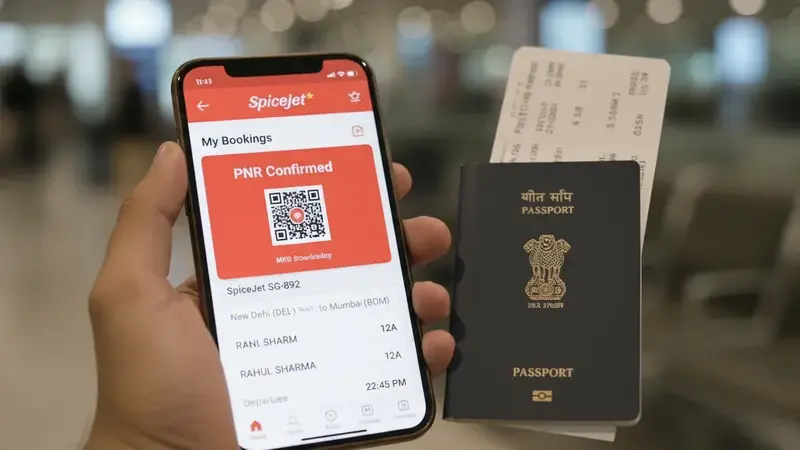

Your Vietnam visa file lands on a desk, and the itinerary gets scanned quickly: entry city, exit city, date sequence, and whether the route behaves like a real trip. A neat Hanoi to Da Nang to Ho Chi Minh City plan can look normal. A jumpy chain with tight connections, backtracking and impossible same-day movements can look manufactured. Delays often start with nothing more dramatic than a flight sequence that does not add up.
This guide helps you decide when a multi-city itinerary strengthens a Vietnam application and when a simple round-trip or open-jaw route works better. We walk through believable routing, date spacing, internal flight logic, change resilience, and the red flags that make reviewers slow down. The goal is not to make the trip look more complicated. The goal is to make the flight proof match the route you can actually defend.
For Vietnam, this matters because the country invites multi-city travel. Hanoi, Ha Long Bay, Hoi An, Da Nang, Ho Chi Minh City and Phu Quoc can all belong to a real trip, but not every combination fits every timeline. Your itinerary should feel travelable, not like a tourism brochure turned into flights.
Key Facts
- Multi-city Vietnam itineraries are strongest when the entry city, internal movement and exit city follow a clear direction.
- Vietnam e-visas can be single or multiple entry and are valid for a maximum of 90 days, but entry and exit must use approved border gates.
- The bookends matter most: your first arrival and final departure should match the route you describe elsewhere.
- Internal flights should add clarity, not create fragile date chains that collapse after one change.
- A dummy ticket is safest when it reflects realistic travel behavior, not an overbuilt “proof-only” route.
Need a Vietnam itinerary that reads cleanly? Create a dummy ticket with a clear entry city, realistic internal movement, exit proof and dates that match the travel story you plan to submit.
Create Your Vietnam Dummy TicketIn This Guide
Official-source check: Vietnam’s official e-visa portal says a Vietnamese visa is a travel document granting permission to travel to and enter Vietnam, and that Vietnam e-visas are valid for a maximum of 90 days for single or multiple entries. The same portal says foreigners using e-visas must enter and exit through approved international border gates, including listed air, land and sea checkpoints. Vietnam’s Ministry of Public Security public-service guidance also warns that dishonest information can cause an e-visa application to be denied. Sources: Vietnam official e-visa portal, Vietnam Ministry of Public Security e-visa procedure and Vietnam Immigration portal notice.
Reviewed for: Vietnam e-visa entry and exit logic, approved border-gate wording, multi-city route realism, domestic-hop timing, open-jaw clarity, onward-proof consistency, PNR terminology and safe dummy-ticket claims.
When A Multi-City Vietnam Itinerary Looks Normal Vs. When It Looks Suspicious
A Vietnam visa itinerary can look perfectly reasonable with three cities, or questionable with two. The difference is not “multi-city” itself. The difference is whether the flights create a clean, believable travel story that holds up when someone checks the sequence quickly.
The “Story” Your Flights Need To Tell In 15 Seconds
Visa teams often scan an itinerary fast. They want to understand the trip without doing detective work. A normal-looking Vietnam route usually answers three questions immediately: where you enter Vietnam, what direction you travel while inside the country, and where you exit Vietnam.
If the flights show a clear direction, the itinerary feels human. If the flights bounce around without reason, the route can look assembled for a visa file rather than planned for travel.
These patterns usually read as natural:
- You land in Hanoi, spend time in the north, move to Da Nang, and finish in Ho Chi Minh City.
- You land in Ho Chi Minh City, work your way north, and exit from Hanoi.
- You land in one city, move once, and leave from the last city you actually plan to be in.
- You use an open-jaw plan because your trip genuinely moves through the country in one direction.
These patterns make a reviewer pause:
- Teleporting days: Hanoi in the morning, Phu Quoc by afternoon, Da Nang the next morning, Ho Chi Minh City the same night.
- Backtracking: Hanoi to Ho Chi Minh City to Hanoi again without a clear reason.
- Overpacked rhythm: a flight every day, with no breathing room.
- Paperwork symmetry: every segment looks selected to “prove” planning rather than support a real route.
A simple test works before you submit anything. Read the itinerary like a stranger and ask: “Would I believe this person can actually take these flights on these dates?” If the answer feels shaky, the fix is usually not a new city. The fix is a clearer sequence and better spacing.
Vietnam-Specific Logic: Entry/Exit Coherence Beats Number Of Cities
For Vietnam, the strongest part of the flight plan is usually the bookends. Your first arrival and final departure carry the most weight because they anchor the visa, e-visa, entry point and exit proof. Even if the internal plan changes later, clean bookends can keep the overall story stable.
A multi-city itinerary looks stable when the arrival city matches the first planned stop, the departure city matches the last planned stop, and the trip length matches the number of movements. If you say you start in Hanoi, the entry flight should support Hanoi. If you say you end in Ho Chi Minh City, the exit flight should not leave from Hanoi the next morning unless you have time to reposition.
Examples of clean exit logic include:
- Final day in Ho Chi Minh City, and the international departure leaves from SGN.
- Final day in Hanoi, and the departure leaves from HAN.
- Final day in Da Nang, and the onward route leaves from DAD or the route explains how you reposition.
Examples that can trigger questions include claiming you end in Ho Chi Minh City but exiting from Hanoi the next morning, exiting from a city you never planned to visit, or showing a final route that leaves the itinerary feeling unfinished.
Vietnam e-visa planning adds another reason to keep this clean. E-visa holders must enter and exit through approved border gates. If your route relies on one airport, land border or sea port, make sure the itinerary and visa details do not contradict that choice.
What Triggers Doubt Fast: Timing Math, Airport Realism, And Connection Behavior
Most itinerary issues come from time math. Reviewers do not need to be aviation experts to spot a plan that does not breathe. Same-day stacking, tight connections and no recovery space make even a real trip look fragile.
Common timing problems include:
- International arrival followed by an internal flight a few hours later, then another movement the next morning.
- Connections that work only if every flight lands perfectly on time.
- No recovery space after long-haul travel, late-night arrival or airport transfer.
- Internal flights scheduled so tightly that one change ruins the whole route.
A safer pattern is to keep internal hops at least a day apart unless the trip genuinely demands speed. If you land late in Vietnam, avoid placing a domestic flight early the next morning unless there is a strong reason. A calm first day reads more believable than a route that starts with airport stress.
Airport choices matter too. If you say “Da Nang” but the flight or hotel plan points elsewhere, it can look careless. The same applies when an internal hop does not match the route narrative. Connection behavior can also look odd when it feels like you optimized for paper instead of travel: unnecessary third-country detours, multiple connections for short distances, or routes that bounce through hubs with no clear reason.
You do not need a perfect itinerary. You need a route that looks like something a real person would choose when planning Vietnam travel.
Choosing Between Multi-City, Round-Trip, And Open-Jaw For Vietnam
Choosing the right structure matters more than adding extra flights. Use the shape that fits the trip and keeps the file simple.
Use multi-city when you will enter Vietnam in one city and leave from another, when at least one internal flight is central to the plan, and when you have enough days to make the movements feel normal. A multi-city route can be strong when the journey is directional and the internal flight explains itself.
Use round-trip when you plan to base yourself mainly in one hub, such as Hanoi or Ho Chi Minh City, and your other stops are flexible, short or by ground transport. Round-trip is often the cleanest structure because it has fewer moving parts and fewer opportunities for date mismatch.
Use open-jaw when you arrive in one city and depart from another, but you expect to move overland or with only one internal flight between them. This can create a multi-city feel without listing several internal segments that could break if the schedule changes.
The more uncertain your dates, the fewer chained segments you should submit. A route that needs three legs to remain consistent can break quickly if one date changes. When the file needs a broader itinerary framework rather than only a dummy ticket, use a dedicated visa flight itinerary requirements guide to keep the transport proof aligned with the full application story.
Build A Multi-City Flight Reservation Pack That Doesn’t Collapse Under Scrutiny
Once you choose a multi-city shape for Vietnam, your next job is making sure every segment supports the same trip story. A good reservation pack feels consistent even if someone checks it quickly or asks for a small date adjustment later.

Workflow (Build Order That Prevents Contradictions)
Build the flights in an order that prevents accidental conflicts. Start with the anchors, then add complexity only when it helps.
- Lock your Vietnam travel window first. Pick the entry date you can defend and the exit date that matches the trip length.
- Choose the entry city based on your real first stop. If your first two days are in Ho Chi Minh City, land there. If you plan to start in Hanoi, land there.
- Choose the exit city based on your real last stop. Your last city should match the departure airport, or the route should explain how you reposition.
- Add internal flights only after the bookends look clean. Each domestic leg should explain itself.
- Space legs like a real trip, not a spreadsheet. Avoid stacking flights on consecutive mornings or landing late and flying early the next day.
- Run a consistency scan before saving anything. Check passenger details, dates, airports, order and local time changes.
Examples that usually explain themselves include Ho Chi Minh City to Da Nang for a central coast stop, Da Nang to Hanoi for a northern finish, or Hanoi to Phu Quoc when the trip length supports a beach detour. Examples that need more caution include long backtracking routes, late arrivals followed by early domestic departures, or a final exit from a city your plan never actually reaches.
If you run the scan before you finalize, you prevent the small errors that create big questions. Passenger details should match across all segments. Dates should not overlap or create impossible same-day sequences. Airports should match the stated cities. The order should read entry, movement, exit in one glance. Local times should be checked carefully, especially when midnight crossings flip the date on paper.
Internal Flights Vs. “Leave It Implied”: When Fewer Legs Look More Believable
Not every Vietnam trip needs every movement written as a flight segment. Sometimes fewer legs look stronger because there is less that can contradict the timing.
Decide what the itinerary must prove. If you mainly need to prove that you will enter Vietnam and leave Vietnam, a clean entry and clean exit can carry the file. If the plan depends on flying between regions, add the internal flight that supports that route. Do not add domestic legs merely to make the itinerary look busy.
It often helps to keep internal flights minimal for short trips, flexible middle days and applications where dates may change. A 5–7 day visit may need only one internal flight if the traveler is changing regions. Too many segments lock the applicant into a schedule they may not keep.
Internal flights can be worth including when there is a clear must-fly jump, such as a tight window between far-apart regions, or when you enter one region and exit another and want the movement to look intentional. The useful rule is simple: one proof leg beats three placeholder legs. If a flight adds clarity, include it. If it only adds complexity, leave it out.
The “Change-Resilience” Test: Will One Date Change Ruin Everything?
Vietnam plans change. Visa timing shifts. Work leave moves. Hotel dates adjust. Your reservation pack should survive small edits without creating a chain reaction.
Run this test on the itinerary:
- If the entry date moves by two or three days, does every internal leg still make sense?
- If you remove one city, can the route still read naturally?
- If one flight time changes, do you still have realistic buffers?
- If the exit city changes, does the rest of the file still explain why?
To make the pack more resilient, avoid domino chains. Do not schedule internal flights so tightly that one change forces you to rebuild everything. Use buffer days intentionally. Keep at least one flexible day between key moves when possible. Keep the middle lighter than the ends because the entry and exit matter most.
A simple rebuild strategy is to separate the core route from the optional add-on. The core route can be entry city, one internal move and exit city. The optional add-on can be one extra stop that you can drop without damaging the story.
If you are departing from Delhi, Mumbai, Singapore, Bangkok or another regional hub and your first leg lands in Vietnam late in the evening, avoid adding an internal Vietnam flight early the next morning. Keep at least one full day in the arrival city so the timeline reads calm and doable on paper.
If you need a verifiable reservation while you finalize Vietnam dates, a dummy ticket for visa can help when it keeps entry, internal movement and exit proof consistent. The value is not the number of segments; it is the way the document supports one believable trip.
Multi-City Itinerary For Vietnam Visa: The Checklist That Prevents “This Was Made for a Visa” Vibes
A multi-city itinerary for a Vietnam visa can look solid on paper and still raise questions if the pattern feels copied, rushed or inconsistent. This section focuses on the signals that make a reviewer slow down and scrutinize the flight sequence.

Visa Applicant Mistake Checklist (Multi-City Edition)
Use this checklist before you submit your itinerary, especially if you built it from Vietnam tour packages, sample routes or destination lists and then tried to fit flights around the cities.
- Your route looks like a brochure, not a trip. If your notes read like marketing copy, keep the flight sequence clean and let the route speak for itself.
- You packed too much into one travel window. Hitting North Vietnam, Central Vietnam and South Vietnam in a few days can look unrealistic.
- Your flight chain zigzags without a reason. Directional movement is easier to believe than a route that jumps around the map.
- You mixed direct and connecting flights randomly. Both can be valid, but unnecessary extra stops make the plan harder to read.
- Your airport choices do not match the city story. If you start in Hanoi, the arrival should align with Noi Bai. If you end in Ho Chi Minh City, the exit should support that.
- You used round-trip flights when the itinerary does not return to the same place. If the last stop is different, open-jaw may fit better.
- You added domestic flights that create impossible days. Domestic flights should support the trip, not compress it into nonstop transfers.
- Your season and timing logic feel copied. Do not build an itinerary around generic “best time to visit Vietnam” language if the dates and regions do not fit.
- You over-specified money details inside the flight plan. The flight sequence should focus on dates, movement and exit proof.
The practical danger is not ambition. It is time math. If the trip cannot be explained in plain language without apologizing for the schedule, the itinerary is probably doing too much.
Myth-Busting (Vietnam Itinerary Myths That Cause Bad Decisions)
Some multi-city problems start with a myth, not a mistake.
Myth: “More stops look more credible.” A tight circuit that tries to include Ha Long Bay, Cat Ba Island, Hoi An and Phu Quoc can look like a checklist run. Credibility comes from spacing and direction, not quantity.
Myth: “A luxury-looking plan helps.” Luxury travel language does not strengthen a visa file. A clean flight sequence does. Keep the plan grounded and consistent.
Myth: “You must build the itinerary around attractions.” Attractions are fine, but flights need to explain movement. If the reason for a flight is only “because the place is famous,” the route can look thin.
Myth: “If Vietnam feels complex, add more segments to prove planning.” Extra segments create extra points of inconsistency. If you are unsure, simplify the route instead of adding more flights.
Patterns that often look believable are those where flights match geography and pacing. Start in Hanoi, add breathing room for the north, move into central Vietnam for Da Nang or Hoi An, and finish in Ho Chi Minh City with enough time before departure. Or reverse the direction. Either way, the route should look like movement through the country, not a list of famous places stitched together. If you need the broader timing foundation first, use the dummy ticket for visa 2026 complete guide to connect route logic, PNR timing and document consistency before adding Vietnam-specific city choices.
Patterns that feel risky include Hoi An ancient town followed by an immediate jump to Phong Nha-Ke Bang, then down to the Mekong Delta the next morning, all while every flight leaves at similar hours. A Phu Quoc add-on can work, but not if the flights leave no time to actually be there. Ha Long Bay can fit beautifully, but not if it is paired with a same-day departure from a different city.
When you draft examples like these, make sure the flight plan still works if one leg shifts. A Vietnam itinerary that survives small changes looks more real than one that only works in a perfect world.
“What If My Plan Changes?” Risk Control For Vietnam Itineraries
Some Vietnam applications get stronger with a multi-city structure, but only when you choose the right shape and keep it stable under change. This is where uncommon situations create avoidable risk, and where a few practical moves can keep the flight reservation pack coherent if dates or cities shift.
Open-Jaw + Internal Hop: The Safest “Multi-City Feel” For Many Applicants
If you want a plan that looks natural to a Vietnam reviewer, open-jaw often does the job with fewer moving parts. You arrive in one city, depart from another, and include only one internal flight when it truly supports the route.
This structure works well when the trip is directional, such as south-to-north or north-to-south. It also fits travelers moving through Southeast Asia, where Vietnam may be one part of a wider regional route. The key is to keep the Vietnam portion itself coherent.
Open-jaw can fit a real travel story without forcing extra segments:
- Arrive in Hanoi, move south, and depart from Ho Chi Minh City.
- Arrive in Ho Chi Minh City, move north, and depart from Hanoi.
- Arrive at one hub and depart from another after one clear internal move.
Add one internal hop only when it adds clarity. If the plan includes central Vietnam and you want a clean pivot between regions, one domestic flight can make the timeline easier to understand. Avoid building an open-jaw plan that looks like a tour slogan. Flights should show movement, not sell a holiday package.
Third-Country Transits And Long Layovers: When They Raise Questions
Transits are normal. What creates doubt is when the routing looks like you chose complexity for paperwork rather than travel. Long layovers can trigger extra scrutiny when the layover pushes the arrival date forward, the itinerary still claims same-day activities, or the route adds a detour that makes no sense for reaching Vietnam.
Watch for timings that imply you will clear immigration, move across terminals, and still catch an onward segment with no buffer. If the itinerary includes a long layover, keep the stated plan consistent with that reality. Do not schedule a city-center plan immediately after landing if arrival is late.
A practical safeguard is to keep the first day light in the narrative. It also makes later changes easier if the flight time shifts. If you are applying for an e-visa, consistency matters because the entry date and border gate should match what you submit. A route that relies on fragile connections can force last-minute edits.
Short Trips, Many Cities: The “Overpacked Weekend” Problem
A short trip can still be credible, but a packed flight chain often looks like you tried to fit every highlight into a tiny window. That is where a multi-city Vietnam itinerary starts to feel manufactured.
Overpacking is easy when the plan includes an overnight cruise, a UNESCO World Heritage Site, central Vietnam, a beach detour and a major southern city all within a few days. None of those places is the problem. The problem is when the flights leave no real time to experience them.
Use this realism check before locking segments:
- If you fly into a city late, do not fly out early the next morning.
- If you add a signature activity day, protect it with a buffer day.
- If the route covers long travel distances, reduce the number of flight legs.
- If the trip is meant to feel relaxed, make fewer city changes.
A calm route often reads more believable than a rushed circuit. It also survives date changes better. If one city needs to be removed later, the itinerary should not collapse.
Last-Minute Changes And Rebooking: How To Avoid Inconsistency Shock
Plans change after you submit. What matters is how the updated flight itinerary looks if someone compares it to what you originally provided. The most damaging mismatch is a revised segment that breaks the trip story.
When dates change, update in this order:
- Update the entry date and entry city first. These are the anchors.
- Update the exit flight next. Departure should still match the last planned city and total trip length.
- Rebuild internal flights last. Internal legs are the most likely to shift, so keep them flexible.
- Update hotel, insurance, cover-letter and activity references so they match the new route.
- Remove old copies before submitting the replacement itinerary.
Avoid common rebooking traps: changing one segment while leaving impossible gaps, adding a new internal flight while the written narrative still references another region, or using a new departure time that makes the last-day plan unrealistic.
A simple stability rule helps: keep experiences separate from flights. Flights should show movement. Activity notes can mention food, markets, beaches and local culture without forcing exact hour-by-hour commitments that become brittle when flight times change.
Visit HaLong Bay, Hoi An, And Phu Quoc With An Itinerary That Looks Travelable, Not Overbuilt
For a multi-city itinerary for a Vietnam visa, the route should read cleanly from entry to exit and still make sense if dates shift. Keep the movement realistic, keep the segments consistent, and make sure any e-visa entry or exit details match what you submit.

Once the sequence feels stable, you can apply without forcing cities just to “look planned.” Vietnam is worth visiting, and the itinerary should support that travel goal instead of becoming a risk. If your plan includes Ha Long Bay, Hoi An, Phu Quoc, Da Nang or Ho Chi Minh City, give each stop enough breathing room to feel like a real stay.
For many applicants, the strongest version is not the itinerary with the most cities. It is the itinerary where the entry flight, one sensible internal move, and the exit proof all fit together. That gives the reviewer a clear route and gives you enough flexibility if the appointment, leave approval or travel dates move.
Before submitting, read the itinerary one final time in 15 seconds. If you can see the entry, understand the movement and identify the exit without explaining anything, the route is doing its job.
Ready to make the route cleaner? Create a Vietnam dummy ticket with realistic city order, readable booking details and exit proof that matches the trip you can actually defend.
Get Your Vietnam Dummy TicketFAQ
Is a multi-city itinerary risky for a Vietnam visa?
No, not by itself. It becomes risky when the route looks unrealistic, the dates do not align, the entry and exit cities are unclear, or the itinerary feels overbuilt for the stated travel purpose.
What is the safest Vietnam multi-city route structure?
A directional route is usually safest, such as Hanoi to Da Nang to Ho Chi Minh City, or the reverse. Open-jaw with one internal hop often gives a multi-city feel without too many fragile segments.
Do Vietnam e-visa entry and exit points matter?
Yes. Vietnam’s official e-visa portal says e-visa holders must enter and exit through approved border gates. Your itinerary should not contradict the entry or exit logic you submit.
Should I include every domestic flight inside Vietnam?
Not always. Include internal flights when they clarify the route. If middle days are flexible or the trip is short, fewer legs can look stronger because there are fewer details to contradict.
Can I use a dummy ticket for a Vietnam visa itinerary?
A dummy ticket can support a Vietnam visa file when the details are truthful, coherent and aligned with the passport, travel dates, entry plan and exit proof. It should not be fake, altered or used to hide contradictions.
What makes a Vietnam itinerary look manufactured?
Backtracking, too many cities in too few days, same-day stacked flights, unclear airport choices, repeated similar flight times and routes copied from tour brochures can make an itinerary look built for paperwork rather than travel.
Is open-jaw better than multi-city for Vietnam?
Open-jaw is often better when you enter one city and depart from another but do not need to show every internal movement. It keeps the route clear while reducing the number of segments that can change later.
What if my Vietnam travel dates change after submission?
Update the entry date first, then the exit flight, then internal flights. After that, update hotel, insurance, cover-letter and activity references so the new route does not conflict with older documents.
How much buffer should I leave between Vietnam city changes?
When possible, leave at least one full day between major city changes. Avoid landing late and flying out early the next morning unless the route has a strong practical reason.
What is the final check before submitting a Vietnam itinerary?
Read the itinerary in 15 seconds and confirm that the entry city, travel direction, internal movement and exit proof are clear. If you need to explain the route heavily, simplify or re-align it before submission.
Friendly reminder: DummyFlights provides temporary travel-proof documents for planning and application support. Requirements vary by destination, airline, route and applicant situation. A dummy ticket can support a file, but it does not guarantee approval, boarding or entry.