

Your visa may be issued, your passport may be valid, and your ticket may still face review at the airport. Airlines do not only sell seats on international routes. They also screen passengers before departure because one boarding mistake can create a border problem later.
We need to think about the trip the way the airline does. Your route, transit point, onward plan, ticket structure, timing and documents must make sense under pressure at the desk. Once you understand how airlines spot risk, you can build a cleaner itinerary that is easier to explain and easier to board.
In This Guide
- Why airlines care about immigration rules before departure
- Where airline checks start before the airport
- Rules airlines try to enforce at check-in
- Why technically valid reservations can still look operationally wrong
- How airline staff judge onward travel proof
- When visa, route and airline rules pull in different directions
- How to build a flight plan that survives airline scrutiny
- FAQs about airline immigration checks
If your flight reservation is being prepared for a visa file first, do not treat the airline review as a separate universe. The dummy ticket for visa 2026 complete guide explains how travel dates, proof of stay, insurance dates and onward-route logic should stay consistent from application submission through departure day.
Why Airlines Care About Immigration Rules Before Departure
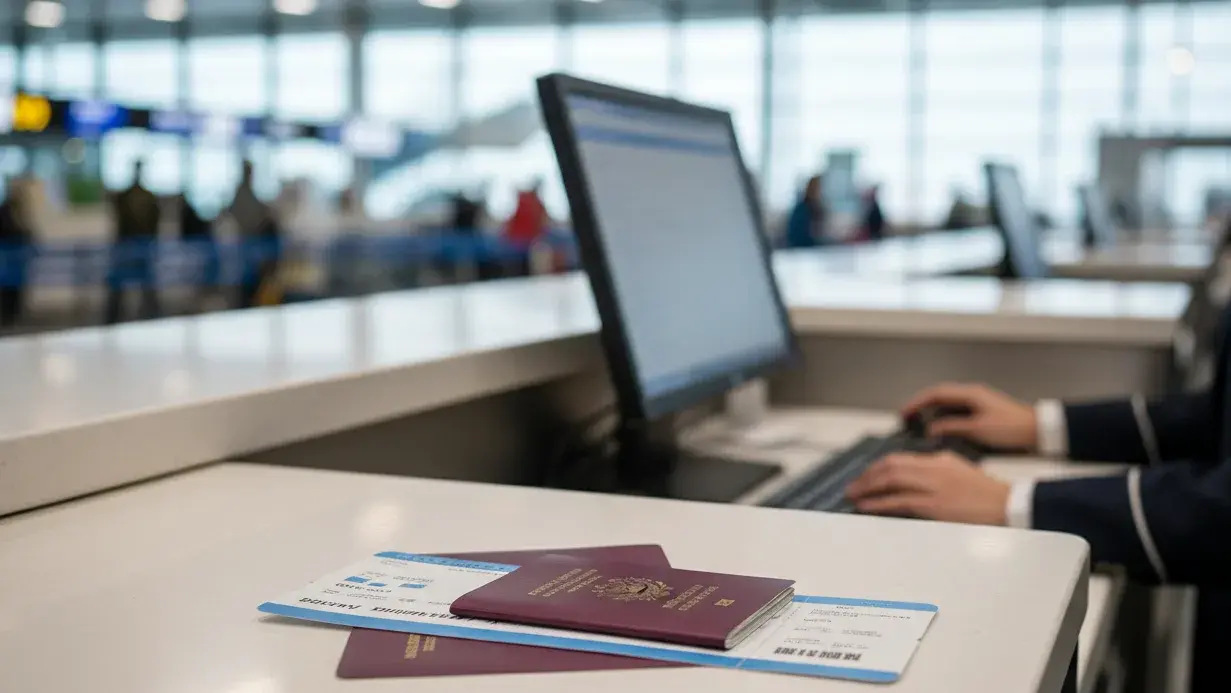
A lot can look fine on paper and still raise concern at the airport. Once you see how airlines read risk, their check-in questions start to make more sense. The airline is not trying to re-decide your visa application. It is deciding whether it can carry you on this exact route today without creating an avoidable immigration problem.
Why Carriers Care Before Immigration Officers See You
When an airline boards you on an international route, it accepts a passenger who must be admissible at every point that matters: origin exit, transit and destination arrival. If border authorities refuse you, the carrier may need to return you, coordinate custody or support, absorb operational disruption, and face compliance consequences.
From the airline’s side, stopping a weak itinerary at the desk is less costly than carrying a passenger who later becomes an inadmissible-passenger case. That is why staff may sound more cautious than travelers expect. You may see your reservation as a travel document. The carrier sees it as part of a compliance decision.
The Hidden Contract Behind Every International Departure
Every international departure has an unspoken compliance bargain. You present a passport, visa or travel authorization where needed, plus a route that makes sense. The airline accepts you for carriage because it believes the trip is workable under the rules that apply to that exact journey.
That bargain changes by passenger. The same flight can carry two travelers with different screening outcomes because the rule set changes with nationality, passport validity, residence status, transit country, destination policy, ticket type, length of stay and onward plan.
- One traveler may be visa-free while another needs a visa.
- One traveler may transit airside while another needs landside permission.
- One traveler may have a return ticket while another must explain onward travel.
- One traveler may have residence proof for the return country while another does not.
This is why airline screening can feel inconsistent. It is not one universal standard for everyone on the same flight. It is a passenger-by-passenger document and route assessment.
How Travel-Document Databases Fit Into the Decision
Most passengers imagine the airline agent personally memorizing every visa rule. That is not how modern international boarding usually works. Airlines rely on travel-document databases, internal procedures and route-specific prompts to decide which documents should be checked for a given passenger.
Those systems can ask for different evidence based on details that look small to travelers:
- passport nationality;
- country of residence;
- visa or visa-free category;
- destination and transit countries;
- ticketed route and stopover time;
- final destination after transit;
- return or onward journey evidence;
- health, customs or local-entry conditions where applicable.
That is why a traveler can clear online check-in on one route but be sent to the counter on another route one month later. The airline may not have changed its attitude toward the traveler. The document question changed because the route, transit point or destination rule changed.
This matters for visa applicants because a flight reservation created only for the visa file may not be enough if the live travel route changes later. The reservation should be built around the journey you can still explain at check-in, not just the route that looked neat in the application.
Why “The Embassy Accepted My File” Does Not Settle Airline Review
An embassy or consulate reviews an application file. It may consider purpose, funding, itinerary, ties and supporting documents over days or weeks. The airline performs a live departure review. That review is faster, narrower and more operational.
At the airport, staff are not asking whether your file looked credible three weeks ago. They are checking whether your actual trip today still works. If dates shifted, the transit point changed, or the onward plan no longer matches the trip, the airline may care more about that same-day mismatch than the earlier visa approval.
- Your visa is valid, but the new transit point creates a document issue.
- Your return date changed, and the stay length no longer matches the visa purpose.
- Your visa file showed a round trip, but you now present a one-way route with unclear onward proof.
- Your reservation is real, but the route depends on an unrealistic self-transfer.
How Airlines Think About Preventable Immigration Issues
Airlines try to stop preventable problems before the aircraft door closes. They look for missing documents, but they also look for weak logic: a valid visa attached to wrong dates, a transit point that changes the document question, an onward plan detached from the rest of the trip, or answers at the desk that do not match the ticket.
The carrier is trying to avoid three outcomes:
- Denied boarding at origin because the document issue is found late.
- Refusal during transit because the connection plan does not work under local rules.
- Refusal on arrival because entry conditions are incomplete, inconsistent or unsupported.
Who Usually Gets a Closer Look?
Airlines do not need a trip to look fraudulent before slowing down. They only need it to look uncertain. Closer review often comes from cumulative complexity rather than one dramatic factor.
- Long-haul one-way ticket with weak onward explanation.
- Tight or unusual transit through a stricter airport.
- Separate tickets that split the journey into disconnected pieces.
- Route changed after visa issuance.
- Return or onward date that does not match the stated purpose.
- Online check-in block that forces airport review.
- Traveler cannot explain the trip simply.
One unusual feature can be manageable. Three at once can turn a routine check-in into a longer document conversation.
How Different Traveler Profiles Create Different Airline Questions
The same route can create different questions for different travelers. A tourist, student, resident, digital nomad, family group and business visitor may all hold valid tickets, but the airline may need different supporting evidence before boarding.
| Traveler profile | Airline question | Useful preparation |
|---|---|---|
| Short-stay tourist | Will this passenger leave within the allowed stay? | Onward or return proof, hotel dates and funds that match the visit length. |
| Student or worker abroad | Can this passenger return to the residence country? | Residence card, visa, re-entry permit or student/work status evidence. |
| Family or group traveler | Do all travelers have matching permissions and documents? | Separate passports, visas, onward proof and accommodation details for every traveler. |
| Transit passenger | Can this passenger legally make the transit connection? | Transit visa status, through-ticket details, baggage handling and connection timing. |
| Flexible long-stay traveler | Does the trip look open-ended or unsupported? | Clear stay length, funds, accommodation and onward plan inside the permitted stay. |
This profile layer is why copying another traveler’s route can be risky. Their passport, residence status, return rights or transit permission may be different from yours. Airline checks are personal to the traveler and the route.
What This Means for Travelers Using Reservations Strategically
A reservation does not stop mattering after the visa file is submitted. In many cases, it has a second life at the airport. The airline may use the same date and route logic to decide whether the trip is boardable. That means the strongest reservation is not the one that only looks tidy in a PDF. It is the one that still makes sense when a human asks about it under time pressure.
Before you rely on any flight reservation, ask four airport-facing questions:
- Can I explain the trip purpose in one sentence?
- Do the travel dates match my stay permission and supporting documents?
- Does the onward or return route prove a usable exit?
- Can I enter every country named in the route, including transit and onward destinations?
If the answer is weak, the reservation may still be a document, but it is not doing enough work. Airline screening rewards clarity. The cleaner your route is, the less you need to argue at the counter.
Where Airline Checks Start Before the Airport
Most boarding problems do not begin at the check-in desk. They begin earlier, when booking structure, routing and timing create questions the airline eventually needs answered.
The Booking Itself Creates a Pattern
A booking can be valid and still create future review because of its shape. One-way long-haul travel into a destination that often expects onward proof usually gets more attention than a round trip with aligned dates. Separate tickets, airport changes, short layovers and late route changes can do the same.
The issue is not that these bookings are wrong. The issue is that they create explanation burden. The airline wants to know whether the reservation behaves like a real, workable journey.
| Booking pattern | Why the airline may review it | Cleaner preparation |
|---|---|---|
| One-way international ticket | Destination may expect proof of departure or return. | Carry onward proof that matches stay length and entry rights. |
| Separate tickets | Carrier may not see protected through-travel or baggage continuity. | Allow realistic buffers and carry full onward itinerary details. |
| Tight transit | Connection may fail if immigration, baggage or terminal changes are needed. | Check transit permissions and minimum practical connection time. |
| Route changed after visa | New transit or destination timing may differ from the approved file. | Update supporting documents and verify rules for the new route. |
| Late onward date | May suggest overstay or unclear stay purpose. | Match onward date to visa validity, hotels, funds and purpose. |
Online Check-In Is Often the First Admissibility Filter
Online check-in is not only a convenience feature. On international routes, it can act as an automated filter. If the system cannot verify document fields or sees that the route needs manual checks, it may refuse to issue a boarding pass and tell you to see an agent.
That does not always mean something is wrong. It means the airline wants a human to check the documents, route and answers before boarding. Travelers often panic at this stage, but the best response is to prepare the missing clarity: passport, visa, residence permit, onward proof, accommodation evidence and explanation of the route.
Online check-in blocks are especially common when the system cannot comfortably resolve one of these issues:
- visa status requires manual document inspection;
- passport validity or document type needs a desk check;
- destination requires onward or return travel evidence;
- transit rules depend on whether the passenger stays airside or enters landside;
- the booking includes separate tickets or unusual routing;
- the passenger must show residence evidence for the return leg;
- health, customs or local-entry requirements need confirmation.
The mistake is treating an online check-in failure as a surprise on departure morning. If your route is complex, assume online check-in may push you to the desk. Arrive earlier, keep documents accessible, and prepare a short explanation of the route. The traveler who can calmly show passport, visa, onward proof and transit logic is in a much better position than the traveler trying to buy or invent proof at the counter.
The Airport Desk Is the Decisive Checkpoint
At the airport desk, the agent can ask direct questions and inspect documents. This is where a technically valid but messy plan either becomes clear or becomes a boarding problem.
- “How long are you staying?”
- “Where are you going after that?”
- “Do you have the visa or permission for the transit point?”
- “Can you enter the next country on the onward ticket?”
- “Why does the return date differ from the visa file?”
If your answer is short and supported by documents, the review becomes easier. If every answer creates a new contradiction, the desk may escalate.
The desk is also where “technically possible” meets “operationally believable.” A flight search engine can show a route with a risky layover, a separate-ticket transfer or a late-night airport change. The airline desk may see the same route and decide it creates too much uncertainty for the passenger’s documents. This is not always about one written rule. It is about whether the carrier can reasonably carry the passenger without creating a preventable problem.
Good airport preparation therefore has two layers. First, you satisfy the rule. Second, you make the route easy to process. Many travelers focus only on the first layer and then feel blindsided when the second layer causes questions.
The Gate Can Still Become a Second Filter
Even after check-in, gate staff can re-check documents for high-risk routes, late system alerts, aircraft changes, transit concerns or destination-specific rules. This is why travelers should not pack their visa, onward proof or residence card deep inside checked baggage.
Gate checks tend to feel more stressful because there is less time to fix anything. A counter question may still leave you room to retrieve a document, contact a booking provider or clarify a route. A gate question happens closer to departure, when boarding pressure is higher. Keep the documents needed for entry and onward proof with you until you are seated on the aircraft.
Transit Points Add Another Review Moment
Transit can change the entire document question. A route that looks simple as “A to C” may actually require permission in country B. Some passengers need only airside transit permission. Others need landside permission because of airport transfer, baggage collection, overnight timing or separate tickets.
Airlines often review transit before departure because a passenger refused in transit can still become a carrier problem. Do not assume destination permission solves transit permission.
Why “I Flew This Route Before” Is a Weak Defense
Travelers often defend a route by saying they used it before. That can be true and still not solve the current check. Travel-document rules change, airline procedures change, passenger status changes and itinerary details change. A previous trip may have involved a different passport validity period, a different transit time, a different onward ticket or a different agent’s review.
Use past experience as context, not as the main document. At the desk, the airline is checking today’s route with today’s rules and today’s passenger data. The strongest answer is not “I did this last year.” It is “Here are the documents that make this route work today.”
Rules Airlines Try to Enforce at Check-In
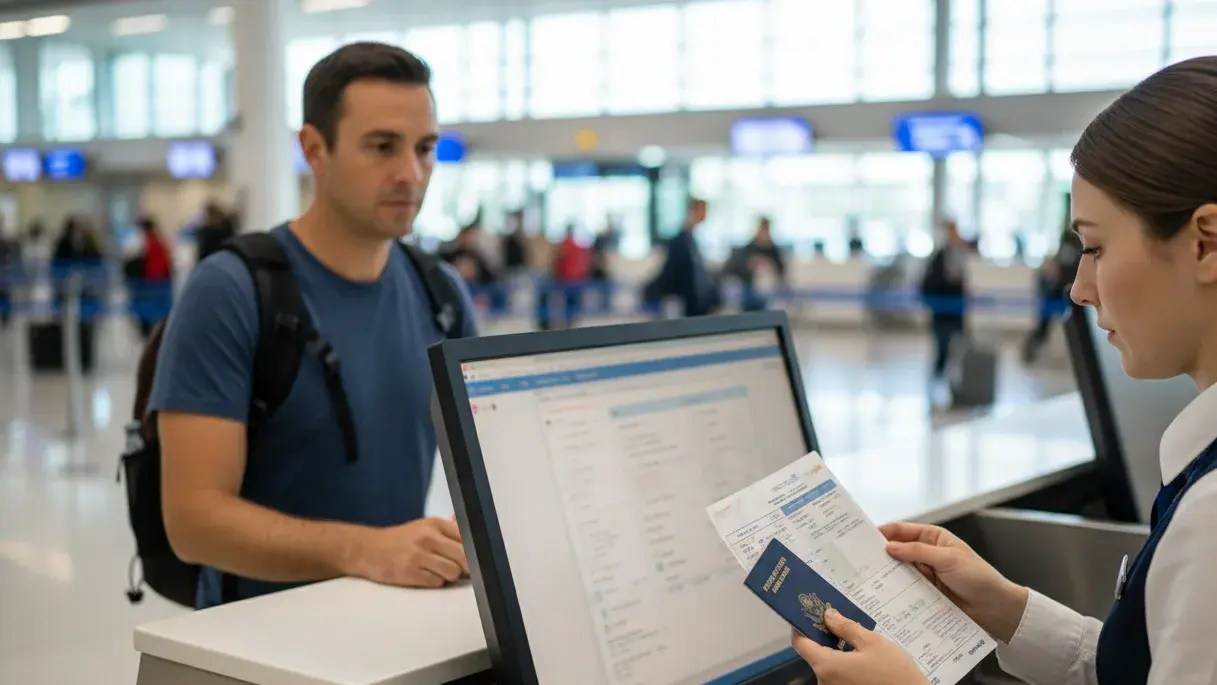
Check-in rules are more specific than most travelers expect. A valid passport and visa may be only the first layer. The airline also checks whether the whole route is boardable.
Entry Permission Is Only the First Layer
A visa, eVisa, ETA, residence card or visa-free entitlement answers one question: do you have a route into the destination under the relevant conditions? It does not automatically answer transit, onward travel, purpose, funds or return-residence questions.
That is why a traveler can hold a valid visa and still face questions if the route now differs from the visa file, if the onward travel does not fit, or if the passport validity requirement is not met for the destination or transit country.
Onward and Return Proof Matter Because of Stranded-Passenger Risk
Airlines care about onward and return proof because they do not want to carry a passenger who appears likely to be refused entry or stranded. Some destinations explicitly expect return or onward travel. Others may assess it as part of visitor intent, funds or admissibility.
Onward proof is strongest when it shows a usable exit: the date fits the stay, the departure point makes sense, and the next destination is one the traveler can enter.
Transit Permission Is a Common Failure Point
Many otherwise valid trips fail because transit was treated as invisible. Separate tickets can force baggage collection. Overnight connections can require landside entry. Airport changes can create a border crossing. Visa-free transit rules can depend on nationality, ticketing, arrival time, departure time and final destination.
Before flying, ask whether you can remain airside, whether baggage is checked through, whether the connection is protected, and whether the transit country requires a visa for your passport.
Passport Validity, Blank Pages and Residence Evidence Still Matter
Airlines may check passport validity beyond the visa label. Some destinations require months of validity after arrival or departure. Some require blank pages. Some return journeys require residence cards, re-entry permits or proof of legal residence in the return country.
For travelers living outside their passport country, return-to-residence evidence can be just as important as destination permission. The airline may ask whether you can return to the country where your trip begins or ends.
Purpose, Job Title and Trip-Length Inconsistencies Can Surface at the Desk
Airline staff are not doing a full visa interview, but they may ask enough questions to catch obvious mismatch. If the ticket shows a six-week stay, the traveler says “short meeting,” and there is no onward or accommodation evidence, the plan becomes harder to clear quickly.
Keep your explanation aligned with the ticket. A tourism trip should sound and look like tourism. A family visit should match invitation or host logic. A conference trip should fit event dates. A transit trip should fit transit timing.
How Airlines Use Simple Questions to Test Trip Stability
Airline staff usually do not need a long interrogation to understand whether a trip is stable. A few simple questions can reveal whether the documents tell one story or several competing stories.
- If the traveler says “ten-day holiday” but the ticket shows a six-week stay, the date logic needs explanation.
- If the traveler says “transit” but the connection requires airport exit, the transit rule becomes central.
- If the traveler says “I am returning home” but lacks residence evidence for that country, the return leg may need support.
- If the traveler says “I will book onward later,” the airline may not accept that as enough for a destination expecting proof of exit.
These questions are not random. They are shortcuts for assessing whether the passenger has thought through entry, stay, transit and exit. If the answer is consistent with the documents, the check can move quickly. If the answer conflicts with the documents, the airline has a reason to slow down.
Why a Neat Reservation Can Still Fail if Route Logic Is Weak
A neat reservation is helpful, but it cannot fix an incoherent route. The airline is not only checking whether the document has a name and flight number. It is checking whether the journey can actually be completed by this passenger.
Weak route logic includes:
- onward departure from a city the traveler cannot reach in time;
- transit through a country where the traveler lacks required permission;
- return to a residence country without proof of re-entry rights;
- destination stay longer than the traveler can explain with funds, hotel or purpose;
- multiple separate tickets where one missed segment breaks the whole route.
This is why the goal is not a beautiful itinerary. The goal is a boardable itinerary.
Why Technically Valid Reservations Can Still Look Operationally Wrong
The fastest way to get stopped is to carry a reservation that looks fine in isolation but awkward as a real journey. Airlines think operationally: can this passenger actually take this route, make this transfer, enter this country and leave within the expected stay?
Separate Tickets Depend on Too Many Assumptions
Separate tickets can be useful, but they create risk because each airline sees only part of the trip. If the first carrier cannot see a protected onward segment, it may treat the first destination as your real endpoint and check entry rules accordingly.
Carry full onward proof and allow generous buffers. Do not rely on “I have another flight later” if the next flight requires baggage collection, re-checking, terminal transfer or landside entry you cannot use.
Unrealistic Layovers Signal Paperwork-First Planning
A very tight layover may look like the itinerary was built for documents rather than travel. International transfers, terminal changes, immigration checks, baggage collection and delays need time. A 45-minute self-transfer at a busy hub may technically appear in a search result, but it may not look boardable to staff.
One-Way Bookings Need a Stronger Story
One-way travel is not automatically wrong. It simply asks for more context. Where are you going after arrival? How long are you staying? Can you enter the next destination? Do your funds, accommodation and visa conditions support the trip length?
A one-way booking with clean onward proof can be straightforward. A one-way booking with vague answers often becomes the opposite.
Date Misalignment Is Avoidable
Date mismatch is one of the easiest airline problems to prevent. A visa file may show one travel window, the ticket another, the hotel a third and the onward proof a fourth. Each mismatch gives the airline a reason to slow down.
- Flight arrival should match the first night of accommodation.
- Return or onward date should fit the visa stay and trip purpose.
- Insurance dates should cover the travel period where relevant.
- Transit dates should not require permission you do not hold.
- Host invitation dates should not contradict departure dates.
Route Changes After Visa Issuance Can Create Trouble
A visa may remain valid after you change routes, but the airline still checks the route in front of it. If you switch transit countries, add a stopover, remove the return flight or change the length of stay, the airport review may change too.
Reservation Behavior That Feels Normal to Travelers but Risky to Staff
Travelers often view itinerary changes as normal flexibility. Airline staff view some of those same changes through a compliance lens. A passenger may think, “I will figure out the return later.” The airline may think, “This passenger has no clear exit plan.” A passenger may think, “I found a cheaper self-transfer.” The airline may think, “This route may require landside entry or baggage re-check.”
Common traveler habits that create airline questions include:
- booking the first leg before confirming the onward leg;
- using screenshots instead of retrievable booking details;
- changing the return date without updating hotel and insurance dates;
- choosing a transit city only because it is cheaper, without checking transit permission;
- using separate tickets with no buffer because the route appears cheaper online;
- assuming a visa approval covers any route into the region.
None of these choices automatically means a traveler cannot fly. But each one increases the explanation burden. When several appear together, the airline may decide the route is too fragile for routine boarding.
How Airline Staff Judge Onward Travel Proof
Airlines are not judging the document alone. They are judging the travel narrative around it. A neat PDF can fail if the route logic is weak. A simple reservation can work better when the date, destination and explanation are clear.
What Makes Onward Proof Stronger at the Airport
- Passenger name matches passport identity.
- Booking reference or airline record is retrievable where applicable.
- Departure date sits inside the stay period and matches trip purpose.
- Departure airport makes sense from the city where the traveler will be.
- Next destination is one the traveler can enter.
- Route does not depend on impossible transfers or hidden border crossings.
What Makes Onward Proof Collapse Under Questioning
- Onward ticket leaves from a city the traveler cannot realistically reach.
- Onward date is beyond the stay period or close to the edge without reason.
- Traveler cannot enter the onward destination.
- Ticket was manually edited or booking reference cannot be explained.
- Hotel dates and onward dates create a gap.
- Traveler says the route is flexible but carries no coherent plan.
Why “I’ll Book It Later If They Ask” Is Risky
The airport is a poor place to solve a document problem. Wi-Fi may fail, card payments may be blocked, flights may be expensive, and time pressure may push you into a bad purchase. It is better to prepare onward proof before travel when the route, timing and entry rights can be checked calmly.
Last-minute airport booking also creates a second problem: the new proof may not fit the rest of the trip. A rushed onward ticket can leave from the wrong airport, depart too late for the stay period, depart too early for the stated purpose, or send the traveler to a country they cannot enter. That can turn one missing-document issue into several route-logic issues.
If a destination may ask for onward proof, prepare it before travel. If your dates may move, use a flexible method that still keeps the trip shape coherent. Do not leave the airline to decide whether your promise to book later is enough.
How to Stay Flexible Without Creating Doubt
Flexibility is useful when visa dates may shift, but it should be controlled. Keep the shape of the trip stable even if exact flight times change. Use a realistic onward window. Avoid changing the main destination, transit country or length of stay without updating every supporting document.
Controlled flexibility means deciding which parts of the trip can change and which parts should stay fixed. Flight time can often change without creating much confusion. Airline can change if the route remains similar. But entry country, transit country, exit country, stay length and onward destination are bigger changes. Those should not move casually once the visa file or travel proof has been built.
Use this hierarchy:
- Low-impact changes: flight time, similar airline, similar connection city, same travel dates.
- Medium-impact changes: moving travel by a few days while keeping the same route and stay length.
- High-impact changes: changing entry country, transit country, exit country, trip purpose or one-way/round-trip structure.
The higher the impact, the more documents need to be updated before departure.
When a Verifiable Reservation Helps More Than a Vague Plan
A vague plan sounds flexible to the traveler but fragile to the airline. “I will decide later” does not tell the carrier how the passenger will leave, where they will go, or whether they can enter the next country. A verifiable reservation can reduce that uncertainty when it matches the real travel logic.
The useful reservation is not necessarily the most complex one. Often it is simple: correct name, clear route, realistic date, usable onward destination and booking details that can be explained. If the reservation creates more questions than it answers, it is not helping.
If you are new to the document category, read what a dummy ticket is before using a temporary reservation. The difference between a real temporary reservation and a fake edited ticket matters when airline staff ask for booking details.
Keep your travel dates and airline-facing itinerary coherent with a verifiable reservation from DummyFlights.
When Visa, Route and Airline Rules Pull in Different Directions
The hardest cases happen when each piece seems reasonable by itself but the combination creates friction. The visa file says one thing, the live route says another, and the airline must decide what matters for boarding.
The Classic Mismatch: The Trip Changed After the Visa File
A traveler applies with a round trip, then later books a one-way entry and a separate onward leg. The visa may still be valid, but the airline now sees a different risk profile. If the new itinerary is legitimate, carry updated documents that explain the new travel pattern.
Transit-Country Rules Can Overpower Destination Confidence
You may be fully admissible to the destination and still fail transit. If the route crosses a country where your passport requires a transit visa, or if separate tickets force landside entry, the airline can refuse boarding for that route even though your destination visa is fine.
Airline Practice Can Feel Stricter Than Public Rules
Public rules may not capture every operational detail at the desk. Airlines use document databases, internal procedures and carrier-liability risk controls. If a rule is ambiguous, the airline may choose the conservative path because it bears the consequence of carrying the passenger.
This is especially true when public guidance uses broad language such as “may be asked,” “must satisfy,” “sufficient funds,” “proof of onward travel,” or “documents may be required.” Those phrases leave room for judgment. Airlines often operationalize that judgment into desk procedures. The passenger may feel the airline is adding rules, but the carrier may be applying the cautious version of an entry condition.
For travelers, the practical answer is not to argue that a public page did not list every possible document. The stronger answer is to carry a document set that satisfies the obvious risk questions: identity, permission, route, funds, stay address and exit plan.
Return-to-Residence Logic Matters
If you are not returning to your passport country, the airline may need to see whether you can enter or re-enter your residence country. A student visa, work permit, residence card or re-entry permit can become important even when the outbound leg looks clear.
This catches many travelers living abroad. They focus on the destination visa but forget that the return leg points to a country where their passport alone may not be enough. If you live in the UK, UAE, Canada, Schengen Area, Australia, Japan or another country as a foreign resident, carry the residence proof that lets you return. If the residence document expires before the return journey, that can create airline questions even if the outbound destination is fine.
Return-to-residence proof is also important for students, workers, dependents and long-term visitors. The airline may ask not only “can you enter the destination?” but also “can you leave and return where your itinerary says you will?”
Legal Possibility Versus Check-In Practicality
A route can be legally possible and still impractical for check-in. The airline agent does not have unlimited time to resolve every edge case. Your job is to remove friction: clear documents, clear dates, clear route, clear onward plan.
How to Resolve a Mismatch Before It Becomes a Boarding Problem
- Check destination and transit rules for the actual passport and route.
- Update flight proof if dates changed after visa issuance.
- Carry evidence of residence or re-entry rights when relevant.
- Make onward proof usable, not merely present.
- Avoid separate-ticket transfers that require permission you do not hold.
- Prepare a one-sentence explanation that matches the documents.
If the mismatch is serious, solve it before departure rather than hoping the desk agent overlooks it. Rebook the transit point, update the onward proof, adjust the accommodation dates, or choose a simpler route. The closer you get to departure, the fewer good options remain.
How to Build a Flight Plan That Survives Airline Scrutiny
The strongest traveler at check-in is not the one with the most documents. It is the one whose documents make the route obvious.
Start With the Airline’s Question
The airline’s question is not “does this itinerary look impressive?” It is: can this person be carried on this route today? Build the plan around that question.
- Can the passenger enter the destination?
- Can the passenger transit through each intermediate country?
- Can the passenger leave within the permitted stay?
- Can the passenger enter the onward destination?
- Does the route work physically and operationally?
Keep the Route Explainable in One Sentence
If the route needs a long speech, simplify it. Cleaner examples sound like this:
- “I am visiting Thailand for ten days and then flying to Malaysia.”
- “I have a Schengen visa, I enter through Paris and leave Schengen from Vienna.”
- “I am transiting airside through Doha and my baggage is checked through.”
- “I live in the UAE and this residence card allows me to return after the trip.”
Use Dates That Line Up Across the Whole Story
Dates should agree across flight reservation, visa, hotels, insurance, invitation, work leave and onward travel. If one date changes, review the whole chain.
Prefer Routes That Minimize Transit Ambiguity
Direct routes or simple one-stop routes reduce the number of rules that can interfere. If a route requires multiple stops, separate tickets or airport changes, prepare stronger documents and more time.
Prepare for the Questions Staff May Ask
- How long are you staying?
- What is the purpose of the trip?
- Where are you staying?
- Where are you going after this country?
- Can you enter the next country?
- Can you return to your residence country?
Review 48 Hours Before Departure
- Passport validity and blank pages.
- Visa, eVisa, ETA or residence permit validity.
- Transit rules for every stop.
- Onward or return proof.
- Accommodation or host evidence.
- Insurance or health documents where required.
- Names, dates and route consistency.
- Airline app or online check-in messages.
Do the 48-hour review as if you are the airline agent. Start with the passport and route, then walk forward through every country and every date. If you cannot explain a segment to yourself, it is not ready for the airport.
A strong 48-hour review includes these practical checks:
- open the airline app and confirm passenger names match the passport;
- check that the visa or authorization covers the actual entry date;
- review whether transit is airside, landside, same airport or different airport;
- confirm baggage is checked through if you rely on airside transit;
- save offline copies of visa, residence card, onward proof and hotel proof;
- make sure onward proof is not dated outside the permitted stay;
- confirm the next country on the onward ticket is one you can enter;
- prepare a short, factual answer for the trip purpose and stay length.
How to Handle Questions Without Making the File Look Worse
If staff ask questions, answer the question asked. Do not volunteer a long story that introduces new uncertainty. A calm answer with one supporting document is stronger than an anxious explanation with five unrelated screenshots.
Good answers are short:
- “I am staying twelve days and leaving for Malaysia on this date.”
- “My baggage is checked through and I remain airside in Doha.”
- “I live in Dubai; this residence card lets me return.”
- “The hotel dates match my arrival and departure dates.”
Weak answers create new questions:
- “I might stay longer if I like it.”
- “I will book onward later if they ask.”
- “I do not know if I need a transit visa.”
- “My friend has the hotel details somewhere.”
You do not need to sound rehearsed. You need to sound aligned with your documents.
For country-specific flight-proof planning, use the dummy ticket for visa guide to keep the visa-file side aligned with the airline-facing route side.
Bottom Line
Airlines prevent immigration-rule violations by checking the trip before the border does. They look at documents, but they also look at logic. The easiest trip to board is the one that can be understood quickly: correct passport, correct visa or permission, clean transit, realistic dates, usable onward travel and answers that match the itinerary.
FAQs About Airline Immigration Checks
Why do airlines check immigration documents before boarding?
Airlines check documents because they may face costs, operational disruption or compliance consequences when a passenger is refused entry or onward travel. They try to catch preventable issues before departure.
Can an airline deny boarding even if I have a visa?
Yes. A valid visa does not automatically solve transit rules, passport validity, onward travel, route changes or next-country entry permission. Airlines check the actual route on departure day.
What is an inadmissible passenger?
An inadmissible passenger is generally a traveler refused admission by a state or refused onward travel during transit. Causes can include improper documentation, entry-condition problems, insufficient funds, overstay concerns or interview issues.
Do airlines use Timatic or IATA travel-document data?
Many airlines and travel businesses use IATA Travel Centre or Timatic-style travel-document requirement data to check passport, visa, health and entry rules for international routes.
Why does online check-in tell me to see an agent?
It often means the route or document set needs manual review. It does not always mean you cannot fly, but you should prepare passport, visa, transit, residence and onward-travel proof for the desk.
Why do airlines ask for onward or return tickets?
They ask because some destinations expect proof of departure, and because unclear exit plans can increase the risk of refusal or stranded-passenger issues. The onward ticket should be usable and consistent with the stay.
Can separate tickets create immigration problems?
Yes. Separate tickets can require baggage collection, re-checking, landside transit or a new document check. If the first airline cannot see protected onward travel, it may assess the first destination as your endpoint.
What documents should I review before an international flight?
Review passport validity, visa or travel authorization, transit permissions, residence or re-entry proof, onward or return ticket, accommodation evidence and date consistency across the whole route.
Can a dummy ticket help with airline checks?
A temporary reservation can help when it shows a realistic onward or return plan with correct passenger details, dates and routing. It should not be a fake edited PDF or a route you cannot explain.
What is the best way to avoid airline document issues?
Build a route that is easy to explain, check every destination and transit rule, align dates across documents, prepare onward proof where needed, and review the full file before departure.